
Specs are compiled from manufacturer listings and verified buyer reviews and can change over time — please confirm the key details on the product page before buying.
The single most important decision you make about a smoke alarm isn’t the brand name on the front plastic — it’s the power source hiding inside. A sealed 10-year lithium battery means you install it once and forget it, while a 9-volt or AA-powered unit means you’re back on a step stool every year or two chasing a low-battery chirp at 2 a.m. That one difference shapes everything else about how these detectors live in your home.
I’m Mohammad Maruf — the founder and writer behind KitchPrep. This guide is built by comparing the manufacturers’ published specifications and the patterns across verified customer reviews, so you get each pick’s real strengths and trade-offs instead of marketing spin.
Households replacing aging detectors after a decade of service will find the basic smoke alarm that best fits their wiring and their patience for maintenance.
Our Picks at a Glance

How To Choose The Best Basic Smoke Alarm
Before you buy, you need to answer one question about your house: do you have wires hanging from the ceiling, or not? That answer narrows your options immediately because a battery-powered alarm and a hardwired alarm are not interchangeable without an electrician.
Match The Power Source To Your Home
If you see a bare wire or an old mounting bracket on your ceiling, you likely have a hardwired system that a battery-only unit cannot replace. If you’re just adding coverage to a closet or a finished attic with no wiring, a battery-powered alarm is the simplest path forward without breaking out the drill.
Decide How Much Battery Maintenance You Tolerate
A sealed 10-year battery is the biggest quality-of-life improvement in this category; you install it once and never touch it again. Replaceable battery models are cheaper upfront but trade that savings for a chore you will repeat, and a chirp that always seems to start in the middle of the night.
Quick Comparison
| Model | Best For | Power Source | Sensor Type | Housing Depth | Amazon |
|---|---|---|---|---|---|
| X-Sense SD2J0AX★ Best Overall | Zero-maintenance install | 10-Year Built-in Lithium | Photoelectric | 2.4″ | Amazon |
| Kidde 10SDRCompact Pick | Small spaces, no drilling | 2 AA Batteries | Advanced Sensing | 1.88″ | Amazon |
| SITERWELL GS509ABudget Champion | Budget battery backup | 1-Year 9V Battery | Photoelectric | 1.37″ | Amazon |
| Siterlink GS562A | Whole-home replacement | Hardwired + 9V Backup | Photoelectric | — | Amazon |
| First Alert 9120BA | Fast-flaming fire response | Hardwired + 9V Backup | Ionization | — | Amazon |
| SITERWELL GS525A | Sealed 10-year photoelectric | 10-Year Built-in 3V Lithium | Photoelectric | 1.38″ | Amazon |
| First Alert SMI105-AC | Interconnected hardwire homes | Hardwired + 10-Year Backup | Precision Detection | 2″ | Amazon |
| First Alert SMCO200 | Combined smoke & CO coverage | AA Batteries | Dual Precision | 1″ | Amazon |
| Kidde i12040 | Large interconnected systems | Hardwired + 9V Backup | Ionization | — | Amazon |
In‑Depth Reviews
1. X-Sense SD2J0AX
Our pick — over 4.5★ from 850+ verified ratings; the strongest balance of quality and price.
The install-once-and-forget pick that ends midnight battery chirps for a full decade.
This is the alarm for anyone tired of the yearly ritual: the step stool, the twist, and the beep that wakes the whole house when the battery finally gives out. X-Sense sealed a lithium battery inside the SD2J0AX that powers the unit for 10 years, which means no battery drawer, no replacements, and no annual chore. Buyers report they picked up multiple units to swap out detectors that were more than 20 years old and had been chirping through the night — and the relief is immediate.
The sensor here is photoelectric, which is the type that responds best to slow smoldering fires that fill a room with smoke before the flames take off. It is also the same technology that filters out the steam from a shower or the fumes from a pan of searing meat, so you are less likely to be yanked out of bed by a false alarm. The unit runs a silent automatic self-test to monitor its own status, and a faint blinking LED confirms it is alive without lighting up your bedroom like a nightlight.
Installation is genuinely tool-light: the included screws mount the base to your ceiling or wall and there is no wiring to touch and no electrician to book. It is a standalone alarm, so if you want units that all sound together when one triggers, you would need to step up to an interconnected model instead. But for a simple bedroom, hallway, or living room swap, this delivers the longest stretch of hands-off protection in this lineup.
No-Fuss Ownership
- Sealed lithium battery runs 10 years with zero swaps
- Photoelectric sensor ignores cooking steam and shower fog
- Automatic self-test means no manual status checks
Keep In Mind
- Standalone only — no wireless linking between rooms
- Installed on the ceiling, the status LED can read a touch bright for sensitive sleepers
Reach for this if: you want to mount a detector and not think about it again until the end of its service life.
Look elsewhere if: you need all your alarms to sound together through a hardwired or wireless network.
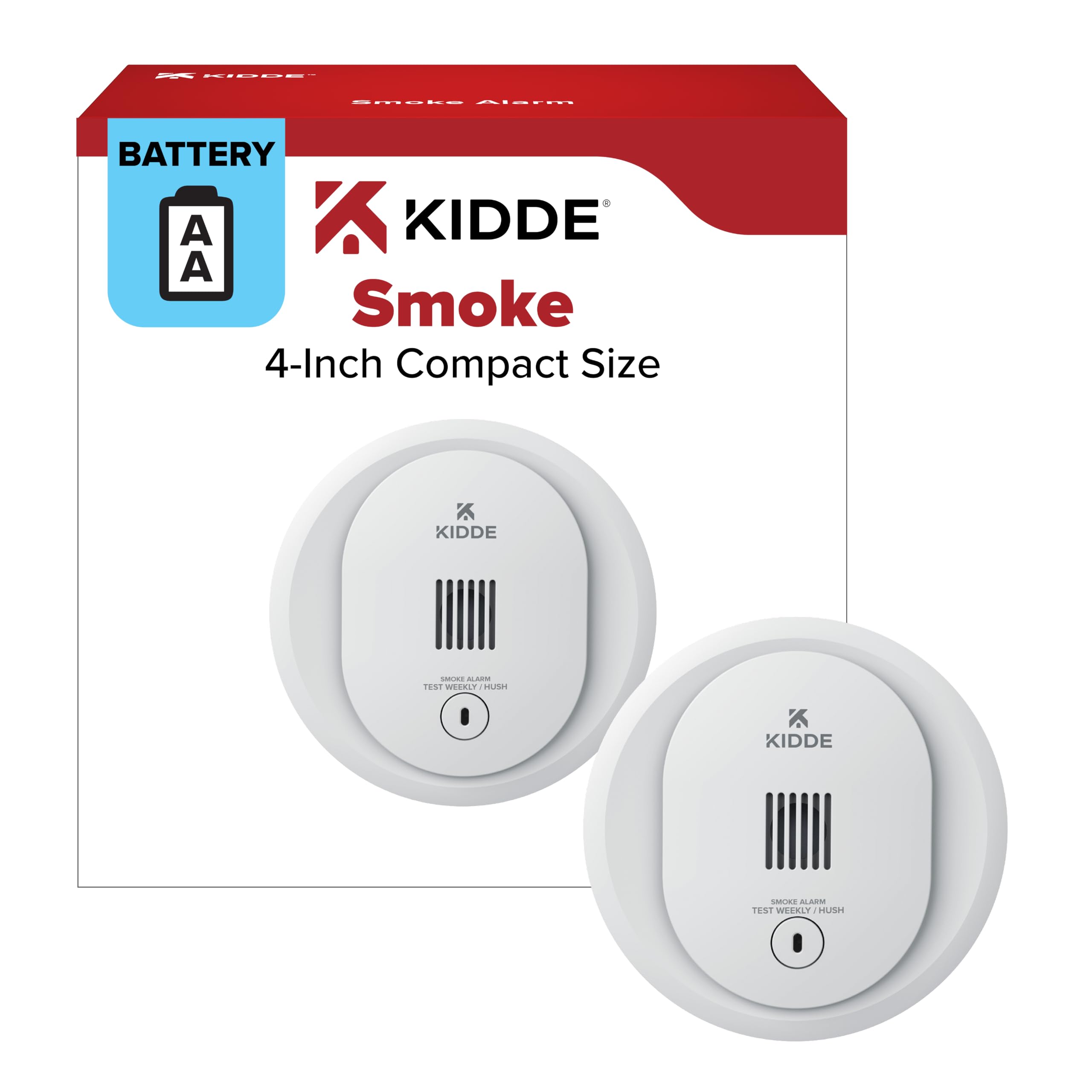
2. Kidde Compact Smoke Detector 10SDR
A wafer-thin detector that mounts without a drill bit in sight.
The Kidde 10SDR answers a different question: what if you do not want to put a single screw into your wall? Owners mention pressing a sticky plate onto the surface, attaching a magnetic piece, and being done in under a minute — no stud finder, no drill, no mess. At just 1.88 inches deep, this is a unit that disappears into a hallway or a closet rather than announcing itself like a bulky smoke detector.
It is powered by two AA batteries that slide into a back compartment, a design owners specifically praise versus the cramped little battery drawers found on other brands. The trade-off for that slim profile and easy power access is a battery you will replace every year or two, and indeed some customers note low-battery chirps arriving after only about a week with the included cells. Swapping in fresh alkaline batteries at the start solves that, and the alarm itself is rated to meet UL 217 10th Edition standards.
When it does trigger, it sounds off at a loud 85-decibel alarm with a red LED flashing for a clear visual cue — a red light that matters if someone in the house has hearing loss. Reviewers point out the brand’s prior unit lasted a full 10 years before replacement, which is the expected service life of these devices, so the lineage here has proven staying power even if the batteries themselves need attention.
easy Setup
- Sticky-mount and magnetic design needs no drilling
- Slim 1.88-inch depth fits tight spaces
- Red LED gives a visual alarm in addition to sound
Worth Watching
- AA batteries need replacing every year or two
- Some included batteries triggered low-battery chirps within a week, so have spares handy
Grab it when: you rent, you hate drilling, or you are outfitting a small space like a laundry room.
Think twice if: you want a sealed battery that outlives the alarm itself.
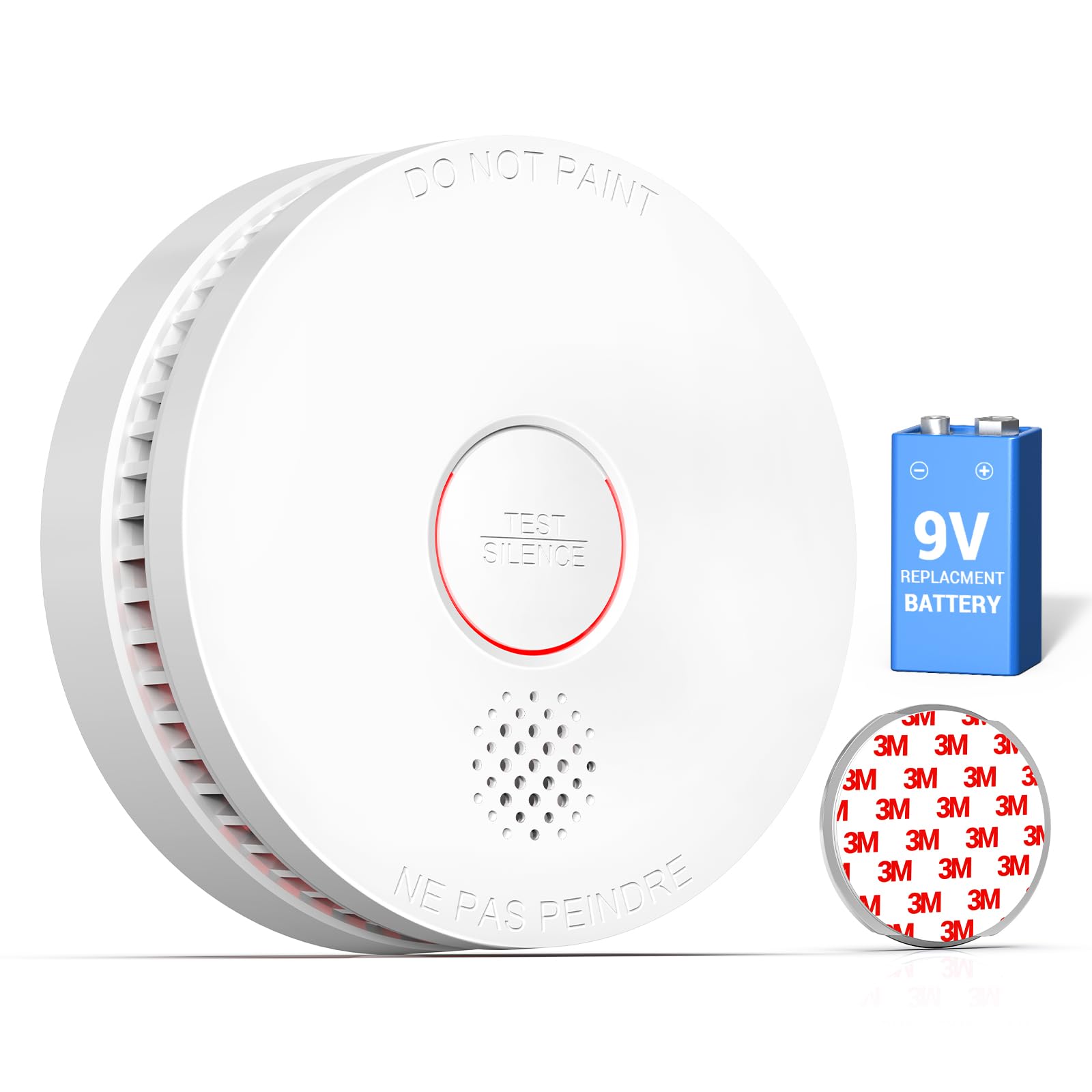
3. SITERWELL GS509A
A featherweight 3.52-ounce alarm that goes anywhere a grabber tool can reach.
You can install the GS509A without ever climbing a ladder — an 80-year-old owner reported mounting it with a grabber tool from the floor. At 3.52 ounces and just 1.37 inches deep, it is the lightest unit in this roundup. This budget-friendly photoelectric detector (which uses light to sense smoke) runs on a single replaceable 9V battery that the manufacturer says lasts about a year before you swap in a fresh one.
The sensor is photoelectric, meaning it excels at catching slow smoldering fires that generate light smoke and little heat, the kind that can smolder for hours before bursting into flames. When it does go off, it pushes past 85 decibels — loud enough that one buyer, surprised by the size, described it as very, very loud. The alarm includes a Test/Mute button for weekly checks and a low-battery signal that chirps to tell you it is time for a new cell.
Owners praise quality most by a wide margin in the review data, with easy installation the second most-cited strength. A magnetic fastening kit is listed in the box, though several owners note the magnetic piece did not actually ship with their unit — so use the included screws and plugs for dependable wall or ceiling mounting. This is a simple, honest detector for bedrooms and hallways where you want real protection at the lowest possible cost.
Easy And Affordable
- Featherlight 3.52 ounces is easy to mount
- Photoelectric sensor catches slow smoldering fires
- 9V battery is cheap and simple to replace
Check The Box
- Battery lasts only about a year before it needs a swap
- Magnetic attachment piece did not arrive with every order — use the screws
Pick this for: a spare room or rental where cost matters more than a decade of hands-off life.
Skip this for: anyone who refuses to climb a ladder for a yearly battery change.
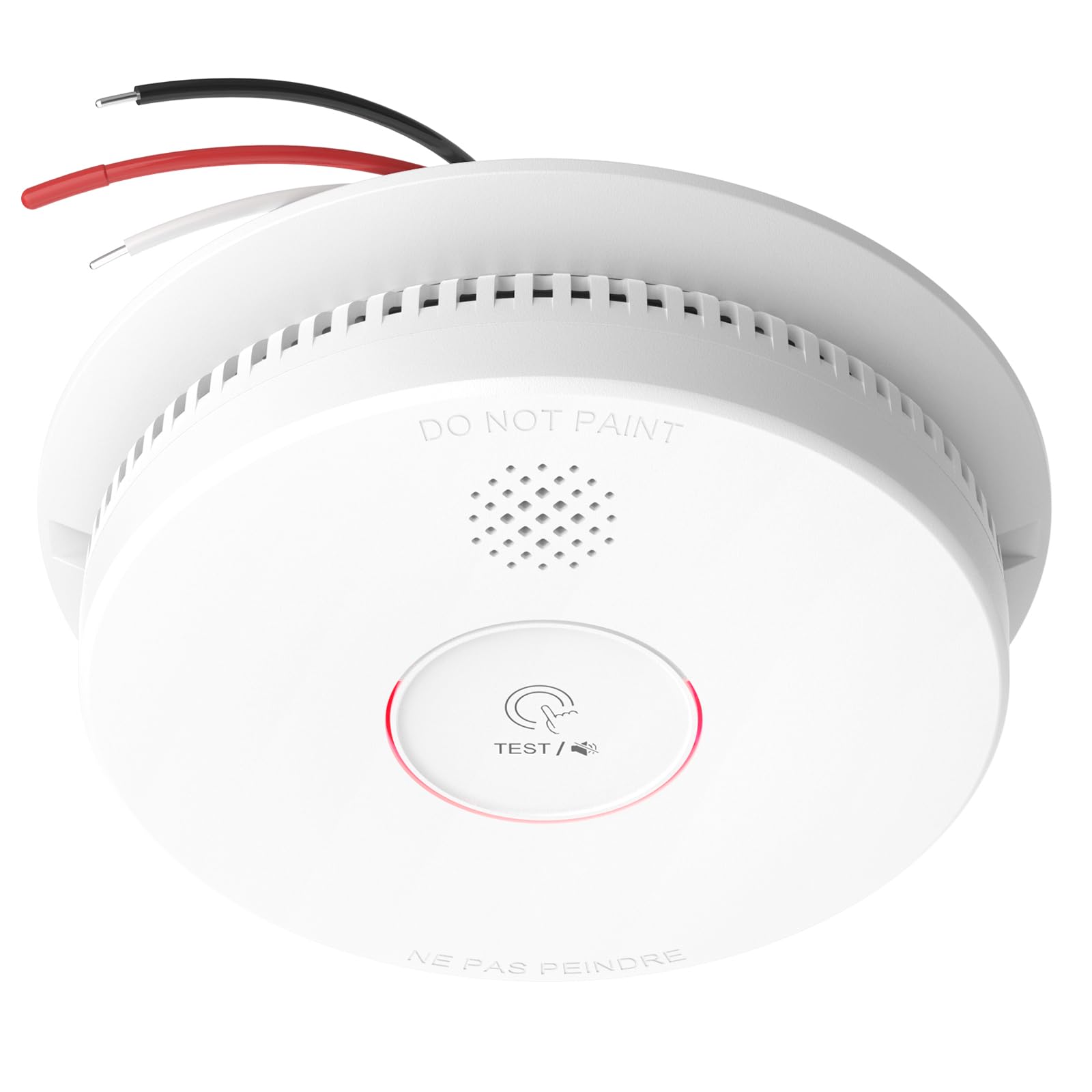
4. Siterlink GS562A Hardwired Interconnected
The whole-home swap that makes every alarm on every floor scream at once.
If you are staring at a ceiling full of two-decade-old wired detectors, the Siterlink GS562A is your upgrade path. It runs on your home’s standard 120V AC wiring, and when one unit detects smoke, every interconnected alarm in the house sounds simultaneously — shoppers say this is a genuine safety leap over the old single-room detectors they replaced. So someone asleep on the second floor hears an alarm triggered in the basement.
It carries a 9V battery backup so it keeps working through a power outage. A one-touch silence mode mutes nuisance alarms for up to 10 hours at a stretch — a long window for clearing out cooking smoke. The built-in indicator LED (a small light) is designed to be soft and visible enough to check status at a glance in a child’s room without disturbing sleep. Buyers who swapped out five obsolete wired detectors reported the whole job took under an hour, including fitting new mounting bases.
Built quality earns the most praise in the review data, and owners describe it as a clean, accurate replacement that needs no junction box modifications. The honest caveat — and the topic with the most owner chatter — is reliability: some units have been reported going off for no obvious reason, and a few owners found the included backup battery started chirping within a month. Swapping in a quality alkaline 9V up front fixes that. If you are replacing aging hardwired units, this delivers modern interconnected protection at a far lower cost than premium rivals.
Whole-Home Safety
- Interconnected design sounds every alarm at once
- 9V backup keeps protection alive during outages
- Built-quality praise dominates the owner feedback
Realistic Caveats
- A few units have triggered without any smoke present
- Included backup battery may chirp within a month — swap in a quality brand
Choose this if: your home already has wired detectors and you want them all linked without paying premium prices.
Pass on this if: you have no existing wiring — you would need an electrician to add it.
5. First Alert 9120BA Hardwired Ionization

The ionization specialist built to catch fast-flaming fires before they spread.
If your priority is detecting a fast-flaming fire — the kind that erupts from a grease pan or a short circuit — then an ionization sensor is the technology tuned for that job. The First Alert 9120BA wires directly into your home’s 120-volt electrical system and carries a 9-volt battery backup, so a power outage does not leave you unprotected. It is the classic workhorse design that has been guarding American homes for generations.
Installation is genuinely low-maintenance because there is no rewiring — buyers simply swapped out their old hardwired units and plugged these in. This model integrates with up to 12 other First Alert or BRK hardwired smoke detectors, so you can build a consistent whole-home network one room at a time. The 9-volt battery slides into an easy-to-access drawer, and the battery itself is included in the box.
Owners who replaced detectors that were beeping with a label dated for replacement noted the swap bought them another full decade of coverage, calling it a cheap fix with fast delivery. The recurring sentiment is that these units simply work and keep working for a long stretch. Remember that ionization sensors are more prone to nuisance triggers from cooking than photoelectric models, so this suits hallways and bedrooms better than a spot directly beside the stove.
Fast-Fire Response
- Ionization sensor detects fast-flaming fires quickly
- Hardwired with an included 9V backup battery
- Links with up to 12 other First Alert or BRK detectors
Note The Trade-Off
- Ionization tech triggers more on cooking fumes than photoelectric
- Position it away from the kitchen to cut false alarms
Best suited to: replacing aging hardwired units in hallways and sleeping areas.
Not ideal for: mounting right next to the stove where cooking steam sets it off.
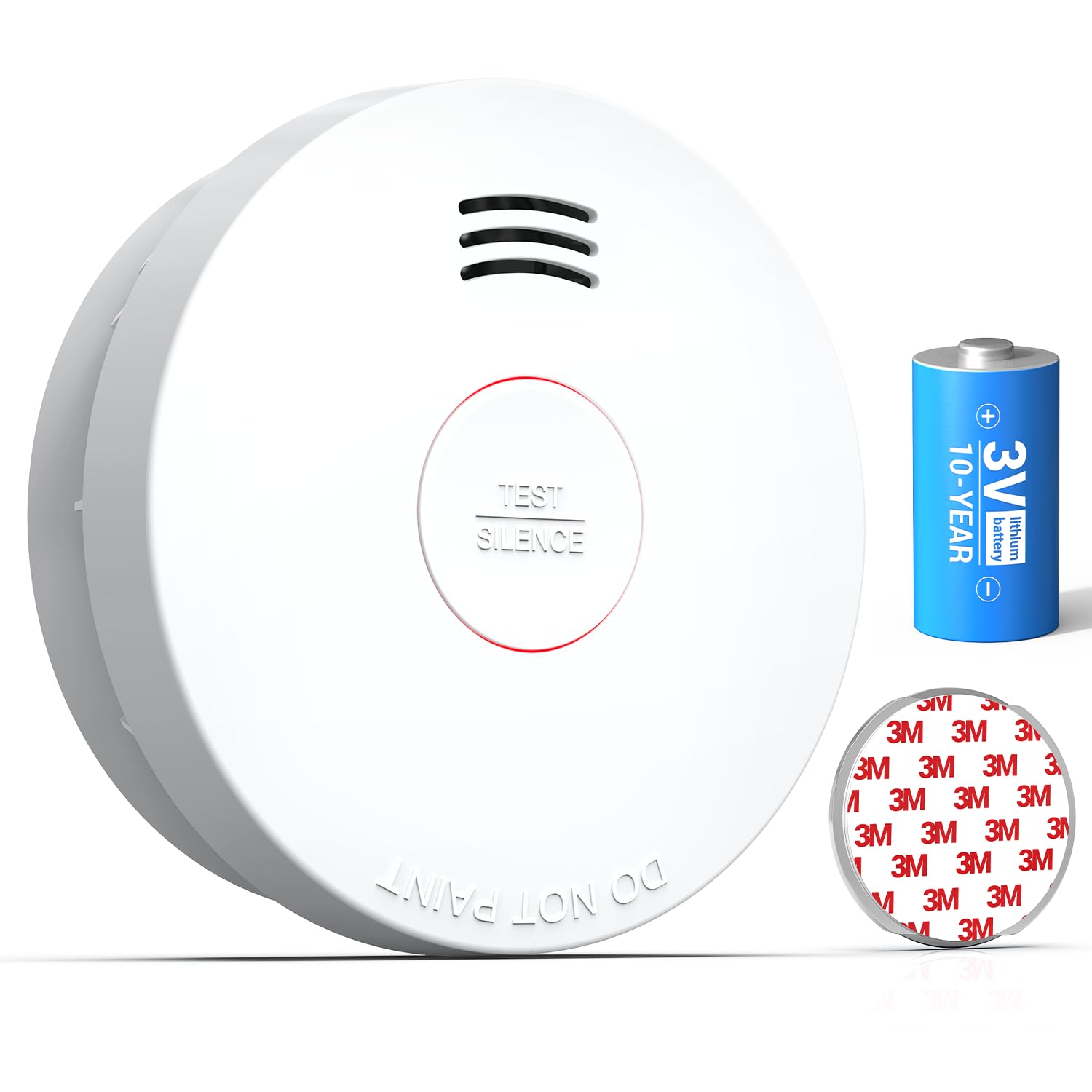
6. SITERWELL GS525A 10-Year Battery
A sealed-lithium photoelectric alarm that refuses to nag you for a decade.
The GS525A delivers the same install-once-and-forget philosophy as our top pick but in a smaller, rounder body at 3.93 inches across and 6.4 ounces. Inside is a built-in 3V lithium battery that cannot be replaced — it simply runs for 10 years and then signals you to replace the whole unit. Owners love that there is no battery drawer to fuss with and no annual climb up a ladder, describing it as a set-and-forget solution.
It is a UL217-listed photoelectric alarm, so it is tuned to catch slow smoldering fires while an tune sensing algorithm filters out the daily steam and cooking smoke that plague cheaper units. When it does sound, the 85-decibel alarm is designed to carry across every room and wake sleepers. Installation is unusually flexible: a magnetic fastening kit and screws both come in the box, so you can either drill it in or simply stick the magnet plate on a smooth ceiling and drop the alarm onto it.
Quality is what wins owners over most here, with the safety coverage a distant second in the feedback. The practical gripes are worth knowing before you buy. The mounting magnet is strong, but on textured or rough ceilings adhesion can fail, so the screw method is safer there. And while the alarm is loud, the red status light blinks once a minute — perfectly fine in a hallway, but a small number of owners find that pulse distracting in a dark bedroom. One owner even tested the unit physically near a small outdoor fire to confirm the sensor actually responds, which is the kind of real-world verification that builds trust.
True Zero-Maintenance
- Sealed lithium battery runs the full 10-year service life
- Magnet mount means no drilling on smooth ceilings
- Filters cooking steam to cut false alarms
Two Small Quirks
- Magnet mount needs a smooth ceiling — textured surfaces need screws
- Red status LED blinks each minute and can distract light sleepers
Go for this when: you want sealed 10-year convenience in a pint-sized package at a bargain price.
skip it if: a blinking status light in your bedroom would drive you up the wall.
7. First Alert SMI105-AC Hardwire

The hardwired flagship whose 10-year backup means you may never change a battery again.
This is what you buy when you want hardwired interconnected protection and you also want to retire the step stool permanently. The First Alert SMI105-AC plugs into your existing wiring for primary power but carries a 10-year sealed battery as backup, so even a long power outage will not leave a dark house unprotected. Owners specifically praise ditching their old 9V-backup detectors for this feature, with one noting a fire inspector tested the unit and gave it a thumbs up on the spot.
It uses First Alert’s Precision Detection sensing technology, which the maker designed to comply with newer industry standards that reduce nuisance alarms from cooking while still giving early warning in a real fire. The unit communicates through early-warning interconnect, so when one alarm sounds, every compatible alarm in the home sounds with it. An alarm indicator LED visually pinpoints which unit actually triggered first, which saves you from wandering from room to room trying to find the source of the beeping.
Functionality and build quality are the two most-cited strengths in the owner feedback, and buyers describe the swap as an exact fit that needs no rewiring — it simply replaces aged detectors and interconnects with existing units. An end-of-life warning tells you when the 10-year mark arrives. The honest asterisk is durability: while some buyers report units lasting 7 years and running strong, others question whether the sealed battery truly reaches the full 10-year claim, and a few note mounting screws were missing from the box. Have a spare screw or two on hand, and this is a premium, set-and-forget detector for a wired home.
Premium Wired Protection
- 10-year sealed backup battery means no annual swaps
- Interconnects so every alarm sounds together
- Indicator LED pinpoints the initiating alarm
Honest Check
- Some owners question whether the backup truly lasts the full 10 years
- Screws for mounting were missing from some boxes — keep spares
Worth it for: homeowners with wired detectors who want the longest maintenance-free backup available.
Reconsider if: you are on a strict budget and have no existing wiring to justify the hardwire setup.
8. First Alert SMCO200 Combo

One low-profile unit that guards against both smoke and silent carbon monoxide.
This is the 2-in-1 answer for anyone who wants to cover two threats with a single device and a single installation. The SMCO200 pairs smoke detection with carbon monoxide sensing, which matters because CO is colorless, odorless, and invisible — you will not know it is there without a detector built to catch it. Buyers describe it as an easy upgrade over bulky older units, with installation taking only a few minutes.
At just 1 inch deep, this unit is roughly half the depth of a standard alarm, per the maker, so it hugs the ceiling and looks far cleaner than the chunky detectors it replaces. It is battery-powered and runs on AA cells, which owners mention lasting a long stretch — some note the unit effectively runs a decade before needing attention. Since the batteries are replaceable, you can refresh this alarm instead of throwing it out at the 10-year mark.
It uses the same Precision Detection sensing technology as the wired First Alert above, tuned to cut down cooking nuisance alarms while giving early fire warning. The slim profile and build quality earn steady praise, and the alarm includes an end-of-life warning so you know when replacement is due. The trade-off in the owner feedback is the classic combo-alarm compromise: some users report frequent false alarms, which is the recurring ask of any detector that must be sensitive enough to catch both slow smoke and trace CO. If you want one device guarding a hallway near bedrooms, the convenience of dual coverage is hard to argue with.
Dual Coverage, Single Mount
- Detects both smoke and carbon monoxide in one unit
- Slim 1-inch profile sits nearly flush on the ceiling
- Replaceable AA batteries extend the usable life
Know This
- Combo units balance two sensors, and some customers note false alarms
- Position it away from the stove and bathroom to minimize triggers
Ideal for: a hallway or bedroom area where you need both smoke and CO protection in one tidy unit.
Not the pick for: a spot right beside the stove where steam will test its patience.
9. Kidde i12040 Hardwired Interconnect
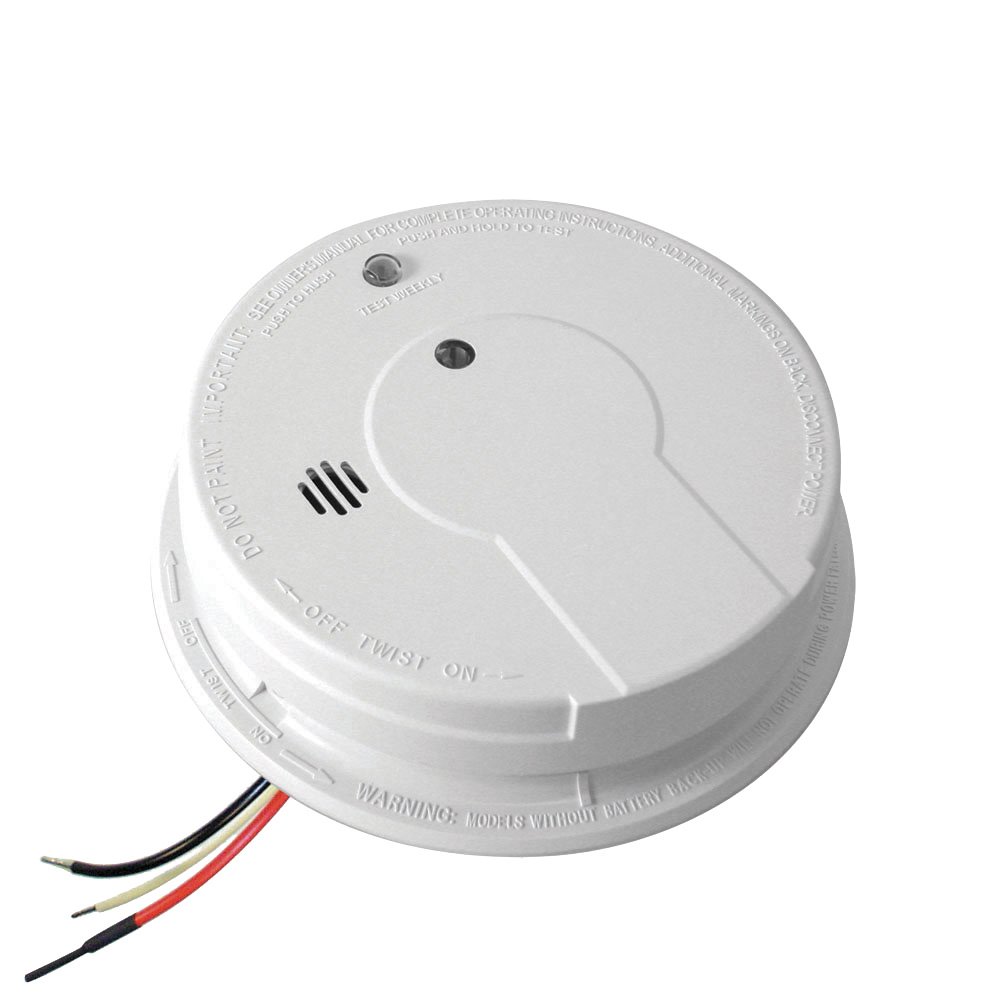
The contractor-grade hardwire unit that links a stunning 24 devices at once.
If you are managing a larger home or a property with many rooms, this is the detector built for scale. The Kidde i12040 interconnects up to 24 devices — of which 18 can be initiating alarms — covering smoke, CO, and heat alarms in one network. That means a fire in the basement workshop sets off every unit in a sprawling house, which is exactly the kind of coverage a property manager or homeowner with a big layout wants. Installation ease is the single most-praised trait in the owner feedback, and reviewers point out swapping out four detectors an hour once the bracket is in place.
The packaging shows real thought for the installer. The front battery pull tab lets you activate the alarm without removing it from the mounting bracket. The pre-stripped wiring harness has an easy-off cap that needs no wire stripper, and the large mounting base protects your paint and covers up blemishes from the old unit. A tamper-resistant locking feature deters theft, which matters in rentals or shared buildings. The 9V battery backup is included and slides in for outage protection.
It uses ionization sensing technology, so it is strongest at catching fast-flaming fires, and the one-button design runs both the Hush feature for silencing nuisance alarms and the alarm test — no confusing multi-button menus. Owners replacing identical units that failed note that regular vacuuming per the instructions matters for longevity. The memory feature flashes a red LED on the unit that initiated the alarm, so in a large interconnected system you can find the source instantly rather than hunting room to room. This is the capable, professional-grade choice when your detector count climbs into double digits.
Built For Scale
- Interconnects up to 24 devices for whole-property coverage
- Front battery tab and pre-stripped wiring speed installation
- Red LED memory pinpoints which alarm started the alert
Fair Warning
- Ionization sensor is prone to nuisance alarms — vacuum it regularly per instructions
- Battery and durability feedback is mixed, with some units failing before their expected life
Bring this home if: you need one alarm to coordinate an entire house or property of interconnected devices.
Consider another if: you have a single room to cover and do not need 24-device networking.
Understanding the Specs
Photoelectric vs. Ionization
Photoelectric sensors use a light beam to detect smoke particles, making them faster at catching slow smoldering fires — the kind that fill a room with smoke before bursting into flame. They also ignore cooking steam better. Ionization sensors use a tiny electrical current and respond faster to fast-flaming fires, but they trigger more often on normal cooking fumes. Neither is universally better; they each excel at one fire type.
Battery Power Sources
A sealed 10-year lithium battery lives inside the alarm and powers it for the entire service life — you install once and never change a cell. Replaceable 9V and AA batteries cost less upfront but need a yearly swap, and the low-battery chirp always seems to start at 2 a.m. Your tolerance for that chore should drive the decision more than the upfront sticker price.
FAQ
How often should I replace my smoke alarm?
Will a battery-only alarm work in a home with hardwired detectors?
Is a 10-year sealed battery really better than a replaceable one?
What does photoelectric mean for cooking false alarms?
Do all the alarms in my house need to be the same brand?
How long does the 9V backup battery last in a hardwired alarm?
What is the difference between a smoke alarm and a carbon monoxide alarm?
Can I mount a smoke alarm without drilling holes?
Final Thoughts: The Verdict
For most buyers, the basic smoke alarm winner is the X-Sense SD2J0AX because its sealed 10-year lithium battery removes the single biggest annoyance in this category — the yearly battery swap and the 2 a.m. chirp. If you want interconnected whole-home coverage without paying premium prices, grab the Siterlink GS562A. And for a combined smoke and carbon monoxide guard that sits nearly flush on the ceiling, the First Alert SMCO200 is the one to reach for.
How We Picked
We do not accept paid placement. Every pick is matched to a real buyer and a real use-case; we do not hands-on test units.
Sources & Methodology
Specifications: manufacturer listings and product documentation. Review insights: verified customer reviews, as of September 2026. Pricing: not shown on this page (it changes often); check the current price via the retailer link.
As an Amazon Associate, KitchPrep earns from qualifying purchases. This does not affect which products we feature.
Related Guides
