
Specs are compiled from manufacturer listings and verified buyer reviews and can change over time — please confirm the key details on the product page before buying.
If your basement takes on water every spring, the pump you choose is the difference between a damp floor and a finished room you can actually use. The short answer: buy cast iron if you want it to still be running years from now, and match the horsepower to how much water you actually get. A 1/3 HP pump handles a normal sump pit fine; a 1 HP unit is for serious flooding or draining a pool. Below are nine pumps that real homeowners run, sorted so the strongest all-rounder sits first.
I’m Mohammad Maruf — the founder and writer behind KitchPrep. This guide is built by comparing the manufacturers’ published specifications and the patterns across verified customer reviews, so you get each pick’s real strengths and trade-offs instead of marketing spin.
Every pick here is judged on the things that actually keep a floor dry — the horsepower, the switch that turns it on, and the material it is built from. That is the whole job of a basement water pump, and it is what separates a ten-year unit from a one-season one.
Our Picks at a Glance

How To Choose The Best Basement Water Pump
Most buyers get this wrong in the same way: they buy the biggest horsepower number on the box. Horsepower tells you how hard the pump pushes, but it is useless if the switch fails in eighteen months or the housing rusts. Here is what actually matters, in the order you should care about it.
Match the horsepower to your water, not the flood stories
A 1/3 HP pump (like the Little Giant below) moves around 46 gallons per minute and clears a normal residential sump pit without breaking a sweat. Jump to 1 HP and you get roughly 72 to 77 gallons per minute — that is pool-draining, crawl-space-emptying territory. If your pit fills during every heavy rain, go bigger. If it trickles, a smaller unit cycles less and lasts longer.
Check the switch type before anything else
The float switch is the part that fails first on almost every sump pump. A vertical float rides up and down a rod inside the pit and is the most common design. A tethered float swings on a cord and handles solids better but needs a wider pit. A diaphragm switch (a pressure pad instead of a moving float) has no float to snag on debris at all. Whichever you pick, keep a spare switch on the shelf — replacing a switch is far cheaper than replacing a flooded floor.
Cast iron versus thermoplastic — the honest trade-off
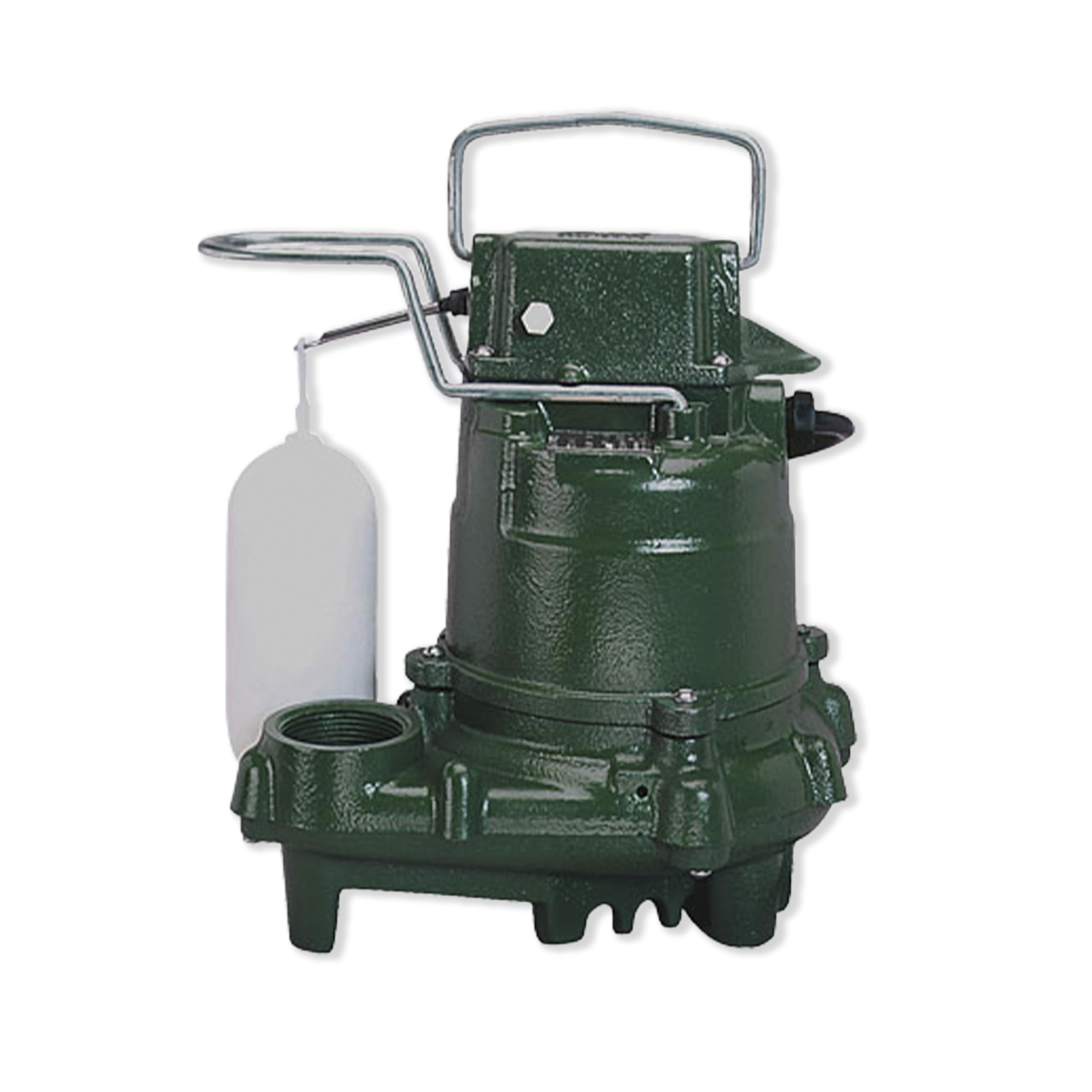
Cast iron housings spread heat better, which is why an oil-filled cast iron motor holds up over years of duty. The catch: iron pumps are heavy — the Zoeller below weighs 27.1 pounds — so you need the carrying handle and a second set of hands. Thermoplastic units are lighter, cheaper, and corrosion-resistant, but they run hotter and generally do not last as long. For a permanent basement install, cast iron is the smarter buy.
Quick Comparison
| Model | Best For | Horsepower | Max Flow (GPH) | Max Lift | Amazon |
|---|---|---|---|---|---|
| Zoeller M57 Mighty-Mate★ Best Overall | Permanent sump installs | 3/10 HP | 2,580 GPH | — | Amazon |
| Acquaer 1HP Sump PumpMost Versatile | Hot tubs and pool draining | 1 HP | 4,345 GPH | 30 ft | Amazon |
| FOTING 304 Stainless SteelFastest Drainer | Fast water removal | 1 HP | 4,600 GPH | 32 ft | Amazon |
| WAYNE RUP160 | Rain barrels and light debris | 1/6 HP | 3,100 GPH | 5 ft | Amazon |
| Rainbro PSU051V | Flooded crawl spaces | 1/2 HP | 3,600 GPH | 31 ft | Amazon |
| Green Expert 1.5HP | Sewage pits and solids | 1.5 HP | 6,000 GPH | 36 ft | Amazon |
| Westinghouse WH50TP | Narrow sump pits | 1/2 HP | 4,100 GPH | 28 ft | Amazon |
| Basement Watchdog SIT-50D | Tight 11-inch pits | 1/2 HP | 4,400 GPH | 25 ft | Amazon |
| Little Giant 1/3 HP | Standard sump systems | 1/3 HP | 2,760 GPH | 18 ft shut-off | Amazon |
In‑Depth Reviews
1. Zoeller M57 Mighty-Mate Submersible Sump Pump – 3/10 HP Cast Iron – 115V
Our pick — 4.5★ from 850+ verified ratings; the strongest balance of quality and price.
The cast-iron tank that treats a basement flood like a minor annoyance.
If you want a pump you install once and forget about, the Zoeller M57 is the one to beat. It is rated 4.5 stars across 800+ ratings, and it wears the Best Overall badge because of what the reviews keep coming back to: the build. The housing is fully cast iron, the motor is oil-filled, and that combination pushes heat out of the pump instead of letting it build up inside. Heat is what kills a sump pump motor, so a cooler motor is a longer-lived motor.
It moves 2,580 gallons per hour and its non-clogging vortex impeller passes solids instead of jamming on them, which means fewer trips to pull the pump out and clear it. That same weight is exactly why it stays put when the pit is churning.
What wins people over is the quality of the thing — it is the most-praised aspect of this pump by a wide margin, with reliability right behind it. Buyers report one of these ran 11 years continuously in rainy Seattle with zero maintenance and zero failures. That is the kind of run that turns a purchase into a one-time job.
What Holds Up
- Fully cast iron housing with an oil-filled motor that sheds heat, so it runs cooler and lasts longer.
- Solid polypropylene float that cannot waterlog and sink like a foam float can.
- Vortex impeller passes solids up to 1/2 inch without clogging.
- Quiet enough that owners forget it is running.
Where It Bites
- Comes with no warranty, so you are buying on the brand’s reputation alone.
- Weighs 27.1 pounds — a two-hand install, not a one-hand swap.
- The float switch is the usual failure point on any sump pump; keep a spare on the shelf.
Reach for this if: you want a permanent basement pump that a plumber would nod at, and you care more about a decade of service than a lower sticker.
Look elsewhere if: you need a lightweight portable pump to carry between jobs — the thermoplastic options further down shed the pounds.
2. Acquaer 1HP Sump Pump, 4345GPH Submersible Water Pump
A single horsepower of brute force that empties a hot tub almost as fast as it fills.
The Acquaer is the pump you buy when the water in your basement is not a trickle but a problem. It runs a full 1 HP motor and moves 4,345 gallons per hour, and it does it for a mid-range price that punches well above its weight. That flow rate is far ahead of the Zoeller’s 2,580 GPH — the Zoeller is the better permanent fixture, but the Acquaer is the faster drainer.
Two things make this one easy to live with. First, it is astonishingly portable — 9.06 by 6.11 by 13.19 inches with a top carry handle, so you can haul it from a flooded crawl space to a full hot tub without help. Second, it drains down to 1/5 inch of standing water, which means it gets the floor drier than most pumps in this class and leaves less for you to mop up. The built-in thermal overload protector shuts the motor down if it ever runs dry, so a forgetful moment will not burn it out.
The reviews back the power. Owners say it handles heavy water situations with confidence and drains a pool spa faster than gravity ever could. One buyer, a pool remodeler by trade, says they tried a lot of pumps before settling on these. The catch to know: it runs on 1/5-inch solids, so it is built for fairly clean water — this is a dewatering pump, not a sewage pump.
The value read: you are getting a full 1 HP motor and a 4,345 GPH flow rate at a price that sits below most of the cast-iron competition here — that is where the value lives.
The pick for: anyone draining a spa, a pond, a pool, or a genuinely flooded basement who wants speed and portability over a permanent install.
Skip it for: a sewage pit with solids in the water — the 1/5-inch solids limit means this one is for clean water.
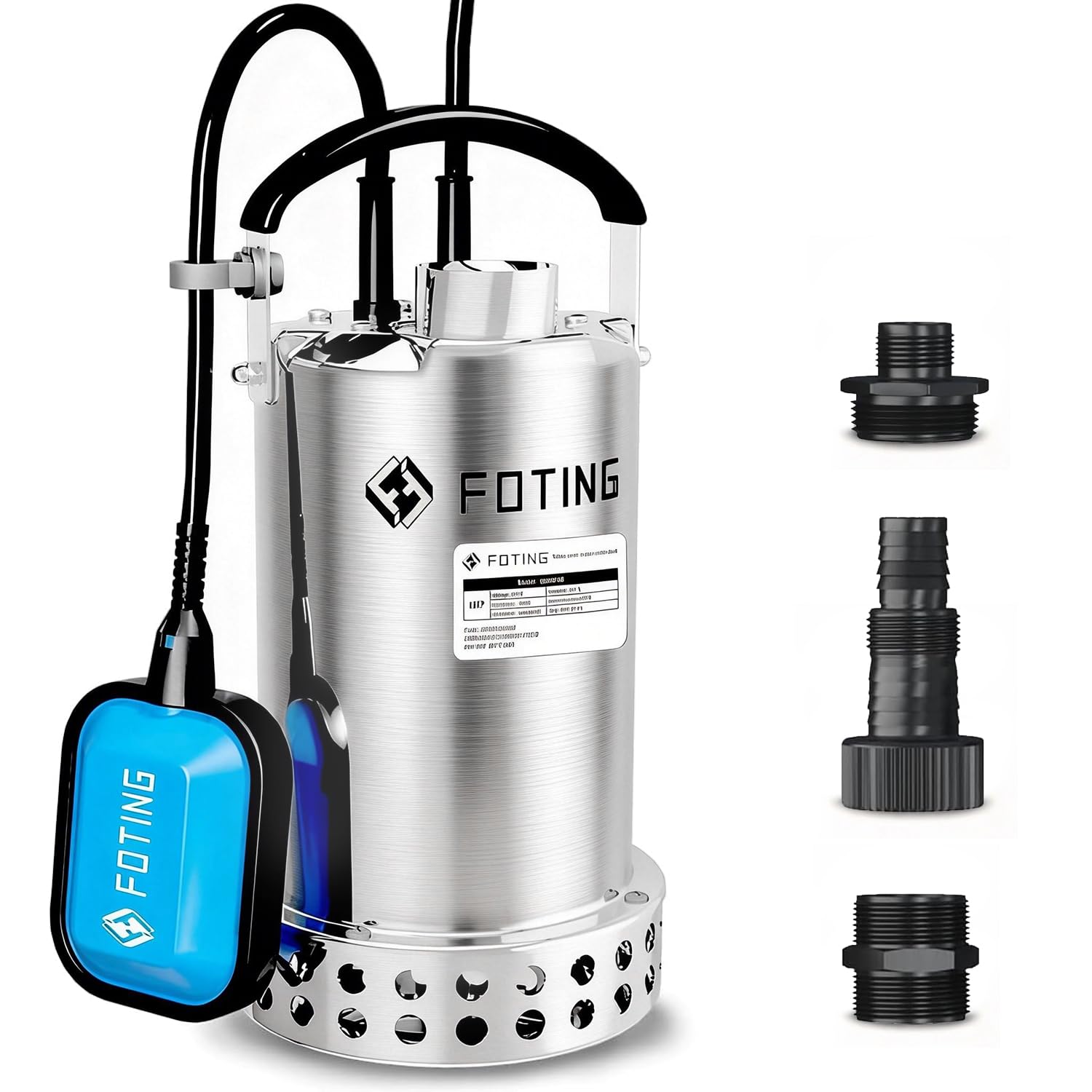
3. FOTING Full 304 Stainless Steel Sump Pump with Float Switch – 1HP 4600GPH
The pump that turns a flooded hot tub into a dry one in a single sitting.
Speed is the whole story here. The FOTING moves 4,600 gallons per hour — the highest flow rate in this lineup — and lifts water up to 32 feet, which is 7% more head than the Acquaer’s 30 feet. If your discharge pipe has to push water up and out of a deep basement, that extra two feet of lift can be the difference between the water leaving and the water backing up into the pit.
The housing is fully 304 stainless steel — the grade used for kitchen sinks and dairy equipment precisely because it does not rust — so it handles a wet pit far better than plain steel. It removes water down to 0.43 inches, the lowest suction level here, which means a near-dry floor after the cycle. And the float switch is automatic: it kicks in when the water rises past 7 inches and shuts off when it drops below 1-1/2 inches, so it runs only as long as it needs to.
The build quality is what buyers praise most. A customer reports it empties a 275-gallon hot tub in 15 minutes. Be honest with yourself about the trade-off though: this is the pick with the widest spread of experiences. Some owners mention the switch arriving stiff and needing adjustment to float freely, and a few had units that quit inside a year. The stainless body is excellent; the switch is the part to watch, so buy from a seller with a solid return window.
What the 304 buys you: a corrosion-resistant shell that will not flake or rust like painted steel, which matters when the pump sits in water for weeks at a time.
What to plan for: the float switch arrives stiff from the start and may need freeing up before it swings correctly — every FOTING owner who flagged a problem flagged that switch.
Buy this for: maximum GPH at a stainless-steel price, and for hot tubs, pools, or shallow pits where fastest-drain wins.
Pass if: you want zero fuss with switch adjustment and total durability is your priority — the cast-iron picks below are the safer long game.
4. WAYNE RUP160 – 1/6 HP Reinforced Thermoplastic Submersible Multi-Use Pump

The little utility pump that has outlasted a full decade of abuse.
This is the workhorse for anything except a permanent sump hole. The WAYNE RUP160 is oil-free and fully submersible, pumps down to 3/8 inch, and moves up to 3,100 gallons per hour with a 3/4-inch garden hose adapter on the end. Its functionality is what buyers rely on most, and its water flow earns consistent praise — A customer reports it emptying a clawfoot tub in about two minutes through a 3/8-inch hose.
What makes it different from everything above is what it can eat. Owners run it through shingle grit, bugs, and pine needles without complaint, and One buyer reports it surviving a freeze solid during a 2021 cold snap and still running. Another says they have used one weekly for aquarium water changes since 2014, running plant matter and sand through it. That is a 12-year service record from one unit.
Two things to know before you order. There is no on/off switch — you control it by plugging and unplugging, so it is manual, not automatic. And this is a utility pump, not a sump pit pump: with no float, it cannot turn itself on when the water rises. That makes it perfect for draining a tub, a rain barrel, or a shallow flooded corner, and wrong for a pit that needs to self-start during a storm.
The right tool for: homeowners who want a portable, debris-tolerant pump for draining tubs, rain barrels, and low flooded spots with zero setup fuss.
Not the one for: a permanent sump pit that must start on its own — with no float switch, this pump only runs when you plug it in.
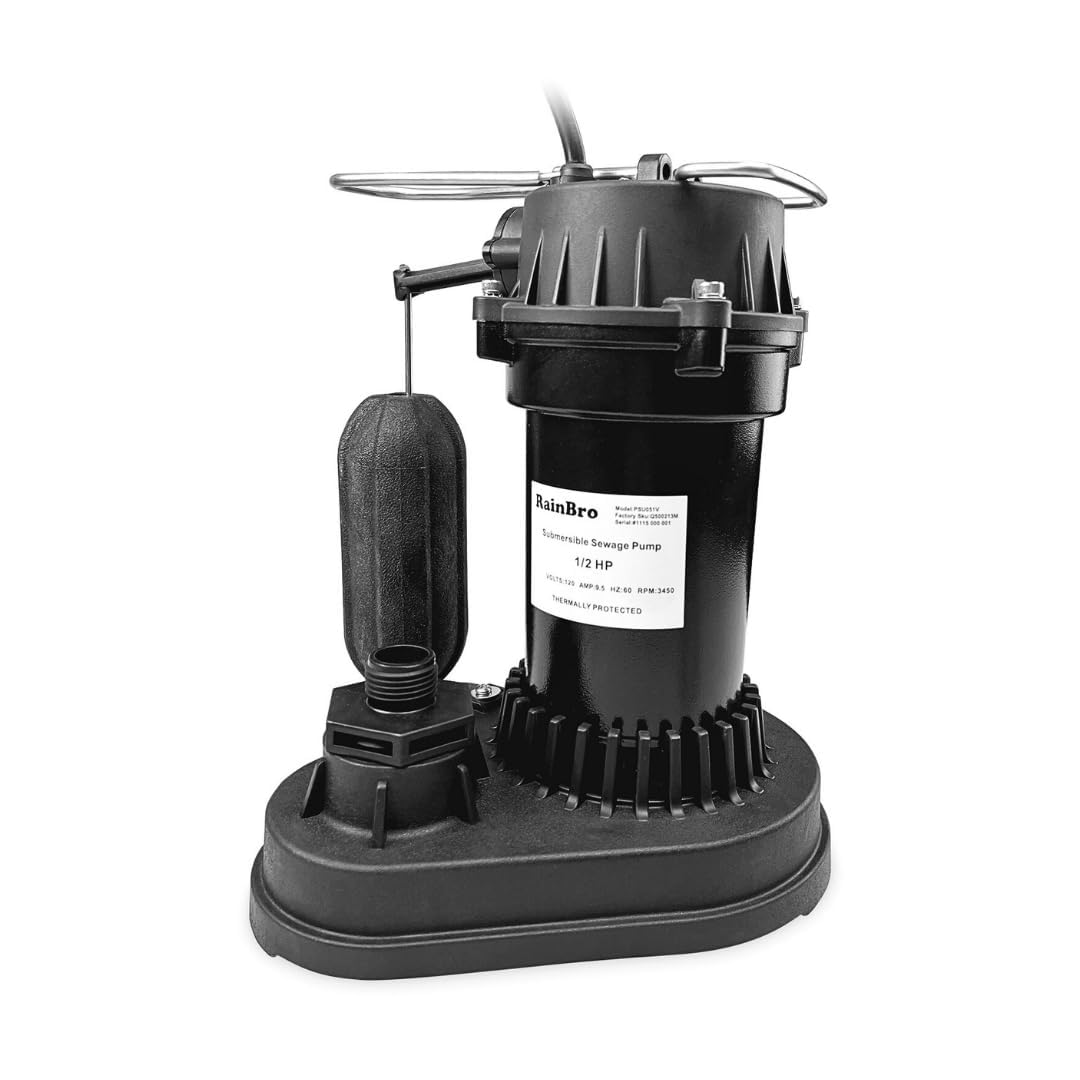
5. Rainbro 1/2 HP Thermoplastic Submersible Sump Pump With Vertical Float Switch
A half-horsepower pump that punches like a much bigger one, for a lot less.
The Rainbro is the smart buy for a standard basement. It runs a 1/2 HP motor and moves 3,600 gallons per hour — more flow than the 1/3 HP Little Giant below it, and a fraction of the price of the cast-iron premium picks. It also carries a 22-foot maximum immersion depth, so it is happy in a deep, permanently wet pit, and it lifts water 31 feet, which clears most residential discharge runs with room to spare.
You get easy, hands-off operation thanks to the vertical float switch (a float that slides up and down a rod to turn the pump on and off). It starts the pump once water hits about 10 inches and shuts it off as the level falls — no cord to snag, no float to tangle in a tight basin. At just 10 pounds, one person can lift it into the pit alone. It also comes with a 10-foot power cord and a built-in thermal overload protector (a safety cut-off that stops the motor from overheating).
The one hard requirement: your sump basin needs to be at least 14 inches across for the vertical float to work without hitting the wall. Measure before you buy. Customers note it clears a flooded crawl space in under an hour and runs quietly enough that you only hear the water moving through the pipe.
The bottom line: 1/2 HP of power, a vertical float that self-starts, and a 22-foot immersion rating, all at a value-tier price — it is the easiest recommendation for a typical home sump pit.
Pick this if: you have a standard 14-inch-or-wider pit, want automatic operation, and would rather spend less than the cast-iron tier without giving up real flow.
Measure first if: your basin is a narrow 11-inch well — this pump’s float needs the wider footprint.
6. Green Expert 1.5HP Submersible Sump Pump, Max 6000 GPH

Eighteen hundred gallons an hour more than anything else here, and it eats solid waste.
This is the biggest pump in the lineup and it is built for the worst jobs. The Green Expert runs a 1.5 HP copper-wired motor and moves 6,000 gallons per hour against the next-fastest pump’s 4,600 — that is the most flow you can get in this group. It lifts water 36 feet, the highest of the nine, and it handles solids up to 1-1/2 inches, which makes it the only pump here suited to a sewage pit rather than a clean-water sump.
The tethered float switch is different from the vertical designs above, and you need to know why. Because the pump base is lifted to reinforce its solids-sucking ability, this pump needs deeper water to trigger — it starts at about 18 inches of depth and shuts off at 7 inches. In a shallow pit it will sit there doing nothing while the water climbs past the danger line. The 25-foot power cord is the longest here, which helps in a deep well or a far-flung corner of a crawl space.
Owners call it a beast: one customer reports it still running after years of use, and another says it pumps out a 13,000-gallon pool in under 3.5 hours. The honest catch is the durability spread — most units run for years, but a few reviewers point out the circuitry shorting out within a couple of years. For a high-flow, solids-capable pump at a mid-range price, that is the trade-off you are accepting.
Why It Earns Its Place
- 6,000 GPH max flow — the fastest pump in this guide by a clear margin.
- Handles solids up to 1-1/2 inches, so sewage and debris do not jam it.
- 36-foot max lift, the tallest discharge capability here.
- 25-foot grounded cord reaches a far corner without an extension.
The Fine Print
- Needs at least 18 inches of water depth to trigger the tethered float.
- Not compatible with expandable hoses, which restrict flow.
- Some units have shorted within two years, so check the warranty terms.
Go here for: sewage pits, deep basins, and any job where solids and volume are the whole problem.
Choose the Rainbro instead if: your pit runs shallow — the Green Expert’s 18-inch trigger depth will leave a shallow sump pumping late.
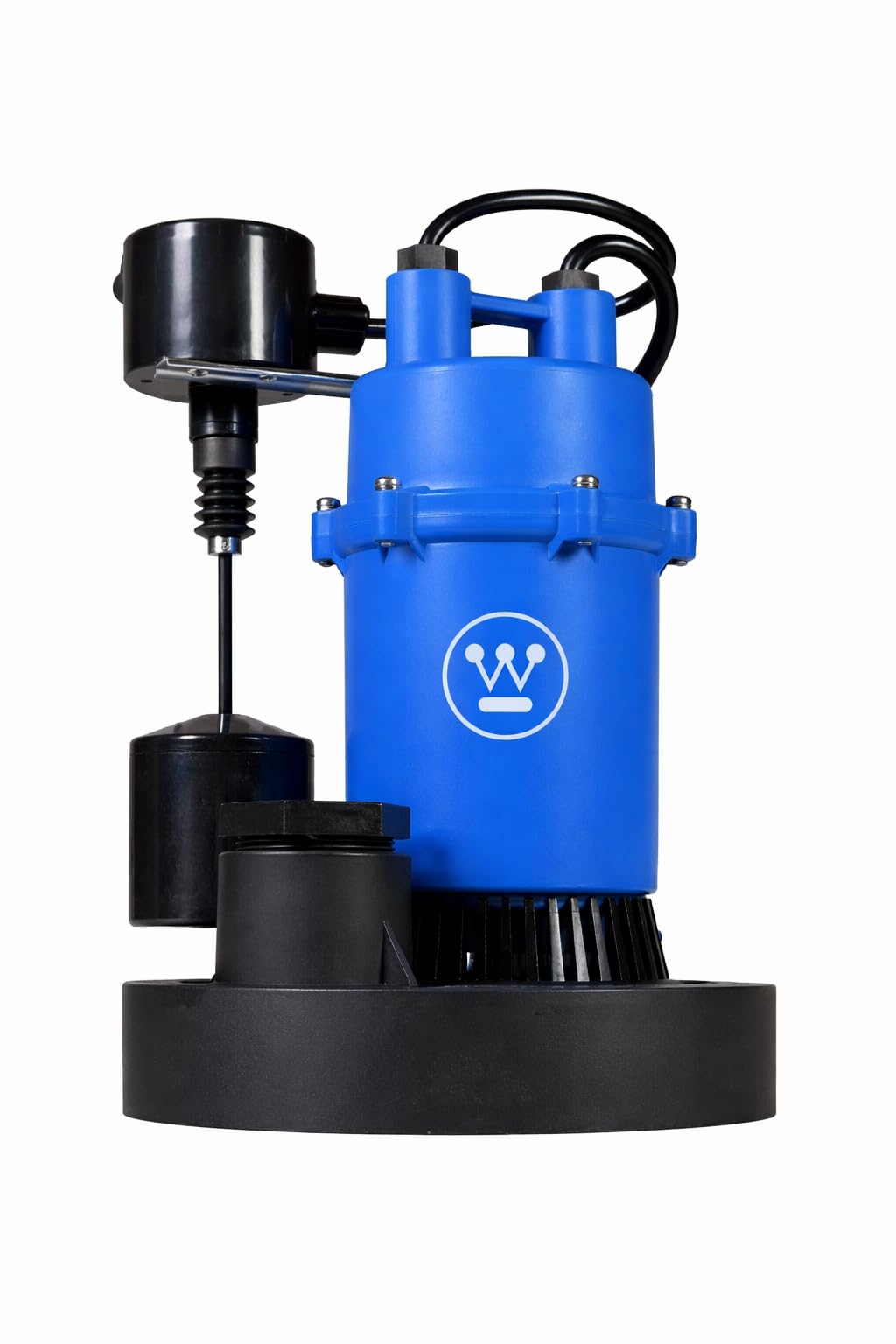
7. Westinghouse Sump Pump 1/2 HP 69 GPM Submersible Water Pump
Compact enough that a buyer ran it inside a five-gallon bucket.
If your sump pit is tight or your space is cramped, this is the one to look at first. It is the smallest natural footprint here — 9 by 8 by 11 inches — and it moves 4,100 gallons per hour while lifting water 28 feet. That is more flow than the Basement Watchdog’s 4,400 GPH would suggest at first glance, though it gives up a few feet of lift. The design uses a top suction anti-airlock system that filters debris and reduces clogging, keeping flow steady and the pump quieter.
The motor is where the Westinghouse earns its premium-tier spot. It is an oil-filled PSC motor with thermal overload protection, housed in epoxy-coated aluminum that helps it shed heat — heat being the enemy of pump life. It also starts earlier as the water rises than many competing units, which gives you a little more margin before the pit overflows. Owners describe it as quiet and quick to install.
Here is the honest note: the top plastic housing is brittle. A few shoppers say it cracking if it takes a knock during installation, though the damage typically does not affect how the pump runs. Handle it gently when you set it in, and you will get the quiet, reliable half-horsepower performance that makes this a strong mid-range choice. Also mind the 1/5-inch-class build — this is a clean-water dewatering pump, not a sewage pump.
Worth knowing: the anti-airlock top suction is the feature that keeps this pump flowing steadily in a shallow, debris-prone pit where lesser pumps stall.
Handle with care: the plastic top housing is the weak point — a modest bump during install can crack it, so set it in gently.
Best for: tight basements, shallow pits, and crawl spaces where a compact pump with anti-airlock suction keeps the water moving.
Think twice if: you want the ruggedness of a full cast-iron body — this one trades some armor for its small size.
8. The Basement Watchdog Cast-Iron 1/2 HP Submersible Sump Pump (SIT-50D)

A cast-iron pump and dual float cage built for pits that barely fit a pump.
Two things set the Basement Watchdog apart, and both matter if your pit is narrow. First, it is genuinely small — 6.25 by 6.25 by 11.75 inches — and its top discharge design means the outgoing pipe leaves from the top, freeing the sides for the pump body. Buyers report it dropping cleanly into an 11-inch well. Second, its float design is smarter than a single float: two floats sit inside a protective cage so debris or stray wires cannot jam them, giving you redundant triggering.
The motor is a copper-wound permanent split capacitor (PSC) design, which is a quieter, more efficient style than a basic induction motor — and a cast-iron housing around it spreads heat away for longer life. It pumps 4,400 gallons per hour at zero lift and 3,540 at 10 feet of lift. The shaft seals are built to keep water out of the motor, which is ultimately what most sump pumps fail from.
Two things to verify before you buy. First, know your pit diameter — this unit is designed for narrow pits and owners specifically report the 11-inch fit working. Second, the top-discharge layout can be awkward to install in tighter spaces, and a few buyers found it harder to fit a check valve around it. The manufacturer’s support team, though, has a strong reputation for sending replacement parts quickly, which is worth knowing if something arrives damaged.
Built for: narrow, hard-to-reach pits where a small cast-iron pump with a protected float cage is the only thing that will fit.
Measure your pit first if: you have a wide basin — that is where the top-discharge install becomes more fiddly than it needs to be.
9. Little Giant 1/3 HP Cast Iron Submersible Sump Pump, Blue
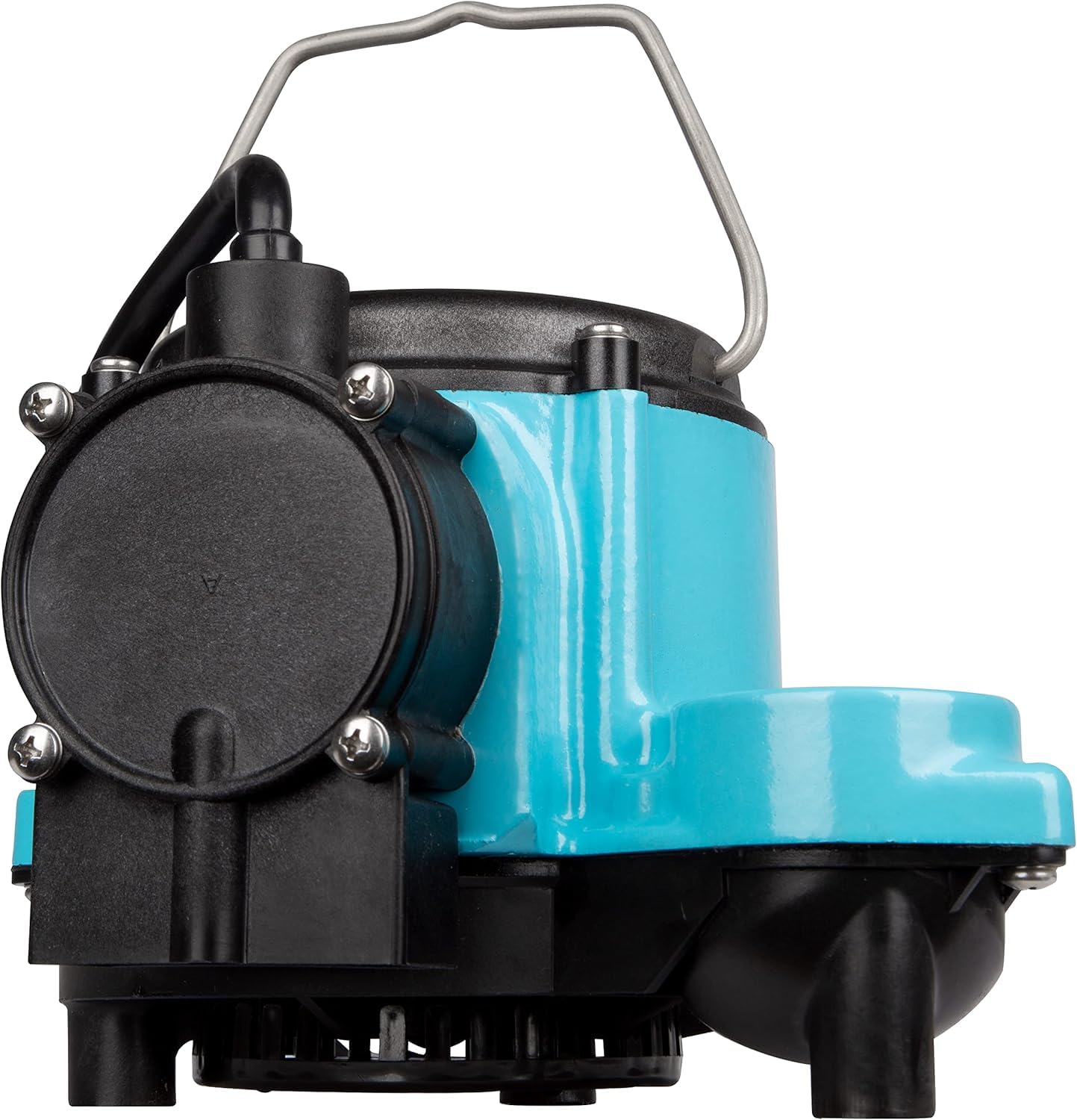
No float to snag, no float to fail — the pump that reads water pressure instead.
This is the pick for the homeowner whose last pump died because the float got stuck. The Little Giant uses a built-in diaphragm switch — a pressure pad that senses the water instead of a moving float — and it activates when the water is roughly 7 to 10 inches deep. That eliminates the single most common point of failure on a sump pump: a float that hangs up on debris, wires, or the pit wall. It runs on a 1/3 HP shaded pole motor, draws 9.0 running amps and 14.3 starting amps, and is thermally protected.
The build is genuinely premium: an epoxy-coated cast iron housing, a non-clogging vortex impeller, upper and lower bearings, and a nitrile/carbon/ceramic mechanical shaft seal. It is CSA listed in the USA and Canada and carries a 3-year manufacturer warranty. Owners describe it as well-built and easy to install, with the diaphragm sensor removing the headaches a traditional float can cause.
Expect the switch to be the part that needs attention, not the motor. A few owners mention the pressure switch failing after roughly six to seven years — when it goes, the pump either will not shut off or will not start at all, and the fix is usually to replace the unit rather than repair it. Weigh that against the strong record of these pumps running for years through heavy flooding, and it is a fair, long-run trade for a cast-iron unit.
The Float-Free Edge
- Diaphragm switch has no float to snag — the most common sump pump failure mode is designed out.
- Epoxy-coated cast iron housing with a non-clogging vortex impeller.
- Continuous-duty rated, and covered by a 3-year manufacturer warranty.
Set Expectations
- The diaphragm switch is not adjustable and typically fails first, at around six to seven years of service.
- Not recommended for general dewatering or emergency water removal — it is a sump system pump, not a utility pump.
- At 1/3 HP and 2,760 GPH, it is the smallest-flow pump here, so volume-heavy pits need a bigger unit.
The right fit for: a standard sump system where you are tired of float-triggered failures and want a backup-free, hands-off automatic pump.
Not built for: rapid emergency dewatering or a big, fast-filling pit — that calls for the higher-flow picks above.
Understanding the Specs
Horsepower and GPH — how hard it pushes and how fast it moves
Horsepower is the motor’s strength; GPH (gallons per hour) is how much water that strength actually moves. The two track each other, but not perfectly — the impeller design matters too. In this lineup, a 1/3 HP pump moves around 2,760 GPH, while a 1.5 HP pump moves 6,000 GPH. Match this to your pit: a normal residential sump fills slowly and a mid-range pump keeps up easily, while a fast-filling pit or a crawl space under standing water needs the higher numbers.
Max lift (head height) — the spec most buyers ignore
Max lift, or head height, is how high the pump can push water straight up before it gives out. If your discharge pipe runs up the basement wall and out above the foundation, you need enough lift to clear that climb. A pump rated for 18 feet of shut-off head cannot push water up a 25-foot run — it will just stall. Check the distance from the bottom of your pit to the top of your discharge point, then add a few feet of margin, before you buy.
Float switch type — the part that decides how long you own the pump
Three switch styles appear here: vertical floats on a rod (Rainbro, Westinghouse), tethered floats on a cord (Green Expert), and a diaphragm pressure switch with no float at all (Little Giant). Vertical floats suit narrow pits and self-start cleanly. Tethered floats need wider basins and handle solids better. Diaphragm switches avoid clogging entirely but cannot be adjusted. Whichever you choose, the switch is the first component to fail — factor in its life when you compare the pumps.
Housing material — cast iron versus thermoplastic versus stainless
Cast iron (Zoeller, Basement Watchdog, Little Giant) spreads heat best and lasts longest, but it is heavy — the Zoeller tips the scale at 27.1 pounds. Thermoplastic (WAYNE, Rainbro) is much lighter and resists corrosion, but runs hotter. Stainless steel (FOTING) sits in the middle: lighter than iron, tougher than plastic, and fully rust-proof. For a permanent install, weight barely matters and cast iron wins. For a pump you will carry between jobs, plastic or stainless is the practical choice.
FAQ
What size sump pump do I need for a standard basement sump pit?
How long should a basement sump pump last before I replace it?
What is the difference between a sump pump and a utility pump?
Can a basement water pump handle solids in the water?
Why does my pump need a certain water depth to start?
Should I choose cast iron or thermoplastic construction?
Do I need a check valve with a submersible sump pump?
What happens if my sump pump runs dry?
How much discharge lift does a basement pump need to clear my wall?
Will a submersible pump fit in a narrow sump pit?
Final Thoughts: The Verdict
For most homeowners, the basement water pump that gets it right is the Zoeller M57 Mighty-Mate, because its cast-iron build, oil-filled motor, and solid float are the combination that keeps water out for the long haul — and the reviews that keep repeating show it. If you need maximum flow to drain a pool or a flooded crawl space, reach for the Acquaer 1HP. And if you have a narrow, hard-to-fit pit, the Basement Watchdog SIT-50D is the one engineered to squeeze in where others cannot.
How We Picked
We do not accept paid placement. Every pick is matched to a real buyer and a real use-case; we do not hands-on test units.
Sources & Methodology
Specifications: manufacturer listings and product documentation. Review insights: verified customer reviews, as of September 2026. Pricing: not shown on this page (it changes often); check the current price via the retailer link.
As an Amazon Associate, KitchPrep earns from qualifying purchases. This does not affect which products we feature.
Related Guides
