
Specs are compiled from manufacturer listings and verified buyer reviews and can change over time — please confirm the key details on the product page before buying.
If your basement smells musty or feels like a damp cave, the fix usually starts with fresh air — and that means getting the window opening right the first time. Basement hopper windows hinge at the bottom and tilt inward from the top, so they pull in ventilation without sticking out over a walkway or yard. The real challenge isn’t finding one; it’s picking the exact size and build that fits your rough opening without a weekend of carpentry swearing.
I’m Mohammad Maruf — the founder and writer behind KitchPrep. This guide is built by comparing the manufacturers’ published specifications and the patterns across verified customer reviews, so you get each pick’s real strengths and trade-offs instead of marketing spin.
From a lightweight slider for tiny glass block holes to a heavy-duty 32-inch unit with a drainage system, this look at the best basement hopper windows sorts out which one belongs in your wall.
Our Picks at a Glance

How To Choose The Best Basement Hopper Windows
The first rule of basement windows is that one inch of measurement error costs you an entire afternoon. Before you even look at materials, measure the width and height of the rough opening — the framed hole in your wall — and compare it against the window’s actual listed dimensions, not the nominal size in the title.
Glass Block Holes vs. Wood Framing
Some hopper windows are built for masonry, brick, and glass block openings, which have their own nailing requirements. A window with no mounting flange means you’ll likely need extra framing if you’re fitting it into a wood-framed opening. Meanwhile, a unit with a removable vinyl installation fin can be stripped for replacement work or left in place for new construction.
How the Sash Opens
A true hopper opens inward from the top, hinged at the bottom, which keeps the exterior area clear and sheds rain. Some smaller units are actually sliders — the sash moves side to side — which changes how they mount and how much airflow you get. Know which action you’re buying before you commit to a hole in your wall.
Quick Comparison
| Model | Best For | Size | Weight | Opening Style | Amazon |
|---|---|---|---|---|---|
| 2408 Compact Hopper Vent Window★ Best Overall | Bathrooms & masonry walls | 23.23 x 7.72 in | 5.5 lbs | Hopper | Amazon |
| Croblissful Sliding Basement Window | Sheds & tiny tight spaces | 16 x 8 in | 3.79 lbs | Sliding | Amazon |
| COLORPAPA Vinyl Hopper Window | Larger basement replacements | 32 x 14 in | 17.96 lbs | Hopper | Amazon |
| Aristoclass Hopper Window | Serious DIY replacements | 33 x 20.75 in | 16.9 lbs | Hopper | Amazon |
In‑Depth Reviews
1. 2408 Compact Hopper Vent Window
Our pick — 4.5★ from 650+ verified ratings; the strongest balance of quality and price.
The contractor’s favorite for awkward crawl spaces and glass block walls that need airflow without a full remodel.
This unit is built for the tricky spots — brick, block, and glass block openings where a standard window won’t seat properly. It measures 23.23 x 7.72 inches and weighs just 5.5 pounds, so it’s light enough for one person to handle during a solo install. The double pane obscure glass lets natural light pour in while keeping your bathroom or basement truly private, and the removable insect screen keeps bugs out when you want the sash wide open.
Buyers report it outperforms what they found at home improvement stores, with the quality earning the most praise by a wide margin — over 50 buyers single out the build. It opens and closes with ease and fits perfectly in shower and glass block projects. As owners mention: “I installed four of these last summer. So far, no issues.” The catch is size expectations — a few note it’s smaller than it looks in photos, so measure your opening first. Unlike the Croblissful slider at 3.79 pounds, this is a true hopper with a heavier, more substantial feel at 5.5 pounds.
The UV-resistant PVC will not rot, rust, or need painting, which makes it genuinely maintenance-free once it’s in the wall. It’s made in the USA, and there’s no mounting flange, so plan on some additional framing if you’re fitting it into a wood opening rather than masonry.
What Wins People Over
- Sturdy, heavy, well-built feel that beats big-box store options
- Easy install with smooth open/close action
- Double pane obscure glass offers genuine privacy
Before You Buy
- Runs smaller than photos suggest
- No mounting flange means extra framing for wood openings
- Removable screen requires occasional cleaning
Reach for this if: you’re working with glass block or masonry and want a quality window that installs cleanly.
Look elsewhere if: you need a large basement opening — this compact size suits bathrooms and crawl spaces best.
2. Croblissful Sliding Basement Window
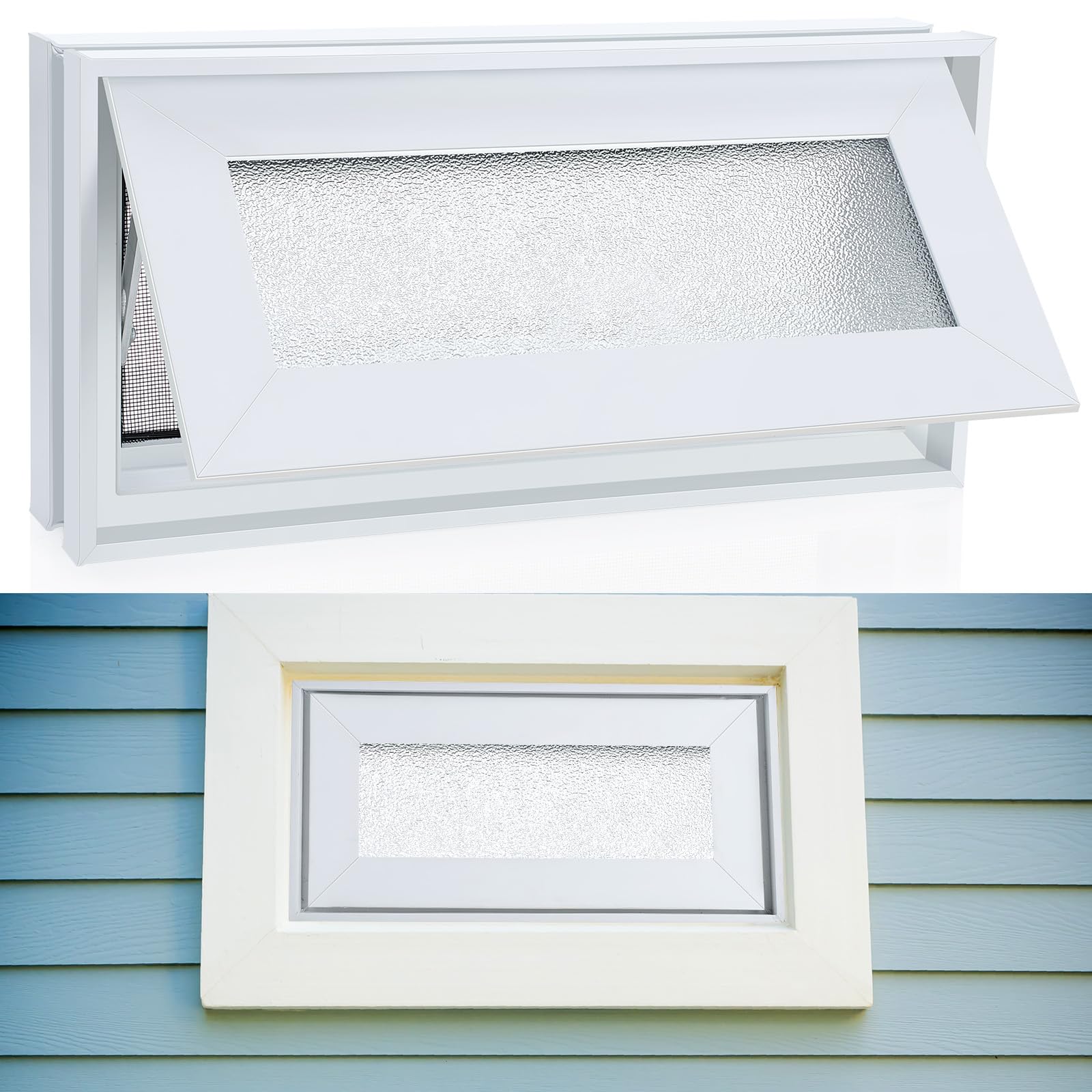
A featherweight 16 x 8-inch slider that sneaks ventilation into sheds, chicken coops, and tiny shower nooks.
At just 3.79 pounds, this is the lightest option here — about one-fifth the weight of the 32-inch COLORPAPA unit — which makes it the easiest to lift into place when you’re working alone on a ladder. Note that this is a sliding sash, not a true bottom-hinged hopper, so the pane moves sideways rather than tilting inward from the top. The insulated aluminum alloy frame pairs with double-layer frosted glass to block cold air while keeping your space private.
The wide application list tells you who this is for: sheds, cabins, barns, garages, and small bathrooms. As customers note: “Tiny functional window installed in BR over shower,” and it’s also been used to replace broken windows on an old stick-built garden shed. The sliding sash interlocks with the main frame and is windproof and rainproof, plus it ships with a screen window included for insect protection.
Because it’s a slider rather than a hopper, it behaves differently in the wall — after installation the windows sit level with the building. The honest trade-off shows up in the feedback: one owner found it “too small,” so this is strictly for compact glass block or masonry openings, not a full basement replacement.
Where It Shines: ultra-light DIY-friendly handling and genuine versatility for outbuildings, with a variable opening that lets you dial in airflow.
The Fit Check: pros note they’d use it again for clients on sheds and small buildings, while homeowners planning a basement refresh should size up to the 2408 or COLORPAPA instead.
3. COLORPAPA Vinyl Hopper Window 32″ x 14″
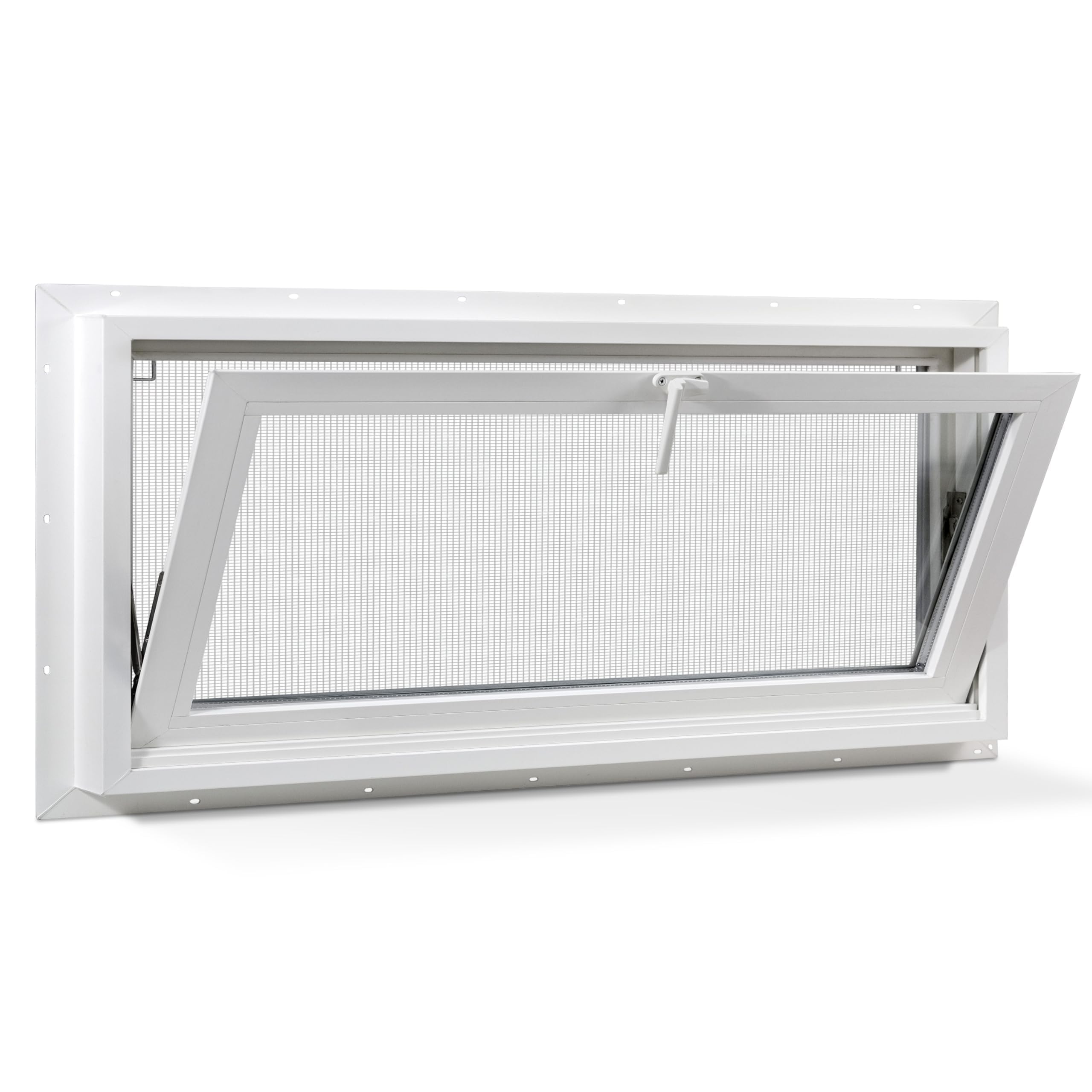
The heavy-duty 17.96-pound vinyl unit with a built-in drainage system for garages and basements starved of light.
This is the biggest and most substantial pick here, spanning a full 32 x 14 inches and weighing 17.96 pounds — roughly 4.7 times the Croblissful slider. Its defining feature is the built-in drainage system, which channels rainwater away from the frame to prevent buildup and leakage, keeping your basement dry. The bottom-hinged hopper design opens inward from the top, delivering reliable ventilation while leaving the exterior area clear of obstruction.
The double pane insulated tempered glass cuts heat transfer while boosting safety, and the heavy-duty vinyl frame resists warping, cracking, and corrosion without ever needing paint. Owners who bought it for garages with no natural light report it provides both light and ventilation with only basic DIY skills needed for install. Reviewers point out the build quality is strong for the cost — as one put it: “I ordered 3 more the next day.” It’s a noted step up in usable area versus the 23-inch 2408 unit, making it the better call when you have a larger rough opening to fill.
The honest catch is weight — at nearly 18 pounds, this is a two-person job to lift and seat into the opening. The manufacturer is COLORPAPA, and the fiberglass-and-vinyl construction is built for long-term use, but the size means precise measuring matters more here than on any other pick.
Built To Handle
- Drainage system keeps rainwater away from the frame
- Double pane tempered glass reduces heat transfer
- Uninterrupted view praised by owners who swapped other windows
Weigh The Trade-Off
- 17.96 pounds needs two people for a safe install
- Larger rough opening required — measure twice
- Exterior trim work left to you after install
Choose it for: a full-size basement, garage, or utility room window where drainage and light matter most.
skip it if: you’re patching a small glass block hole — this needs a proper framed opening.
4. Aristoclass Hopper White 32″ x 19″
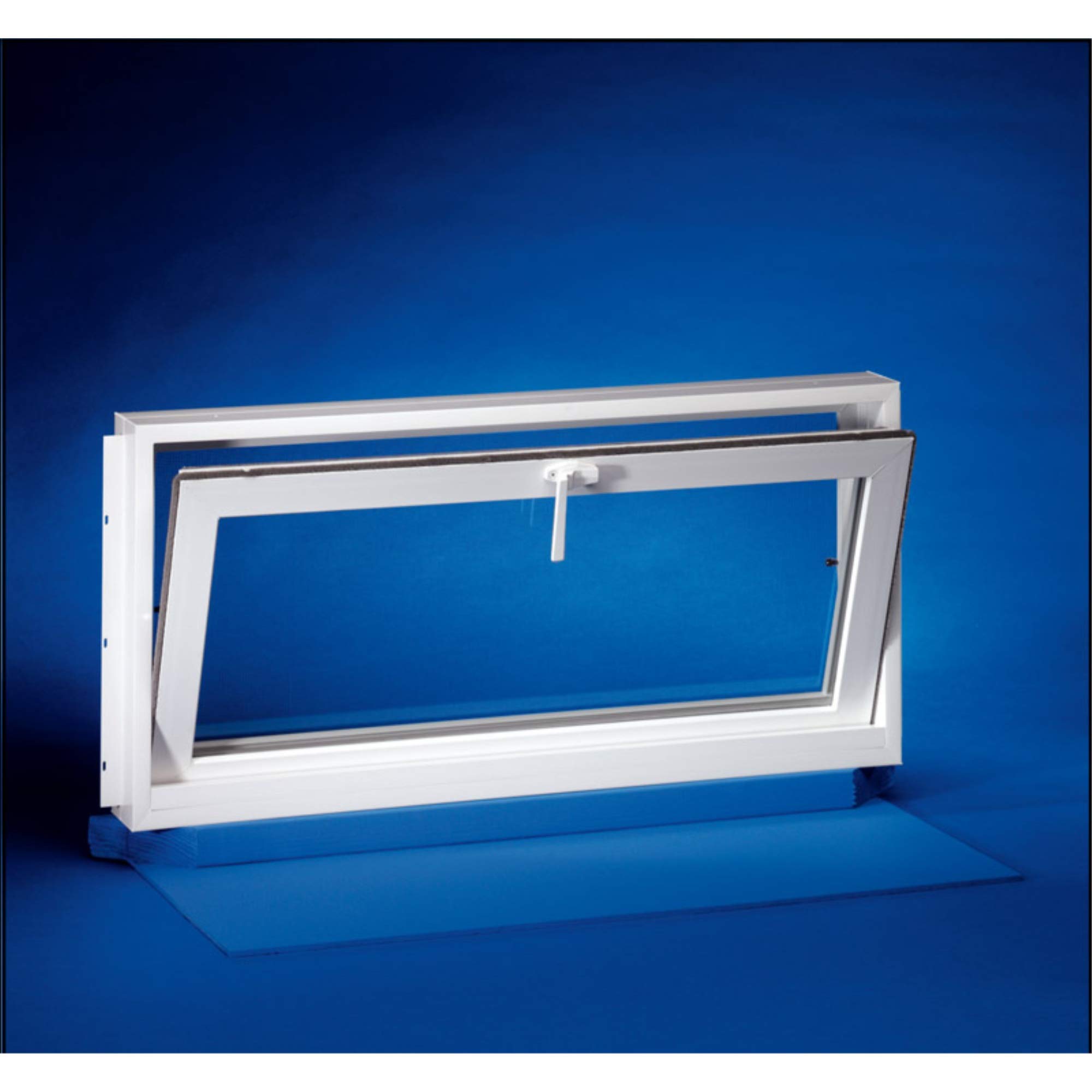
A fusion-welded vinyl classic with a pivoting friction hinge that holds your sash open exactly where you set it.
This premium unit runs at 33 x 20.75 inches in product dimensions — about 42% more cubic presence than the compact 2408 unit — so it commands a real wall opening. The fusion-welded, maintenance-free all-vinyl frame and sash construction is the headline here, paired with an energy-efficient 3/4-inch insulated glass standard. The true-sloped sill is engineered for efficient water removal, which means rain runs off instead of pooling against the frame.
The pivoting friction hinge system is what sets this apart: the sash rotates and stays at the desired opening without propping. Owners who replaced rotted wooden windows praise the sturdy construction and good seal, and the window arrives with pre-drilled installation screw holes and a removable vinyl installation fin on both sides and bottom — strippable for replacement jobs or kept for new construction. The extruded fin on the sill grabs mortar for masonry work, and the cam locking handle secures it shut when you want it closed.
The honest limitation is delivery. The recurring gripe across reviews is packing — the corners arrive vulnerable, and some units have shown up damaged, including one with a broken latch. It’s a solid window that fits exactly what buyers wanted, but the box deserves care in transit. The fully weather-stripped frame and no-tool sash removal make the install itself straightforward once it arrives intact.
The Standout Feature: the pivoting friction hinge holds the sash at any position you choose, so you can crack it an inch on a rainy day without it slamming shut.
What To Watch: this ships heavy at 16.9 pounds in packaging that owners say doesn’t always protect the corners — inspect on arrival.
Understanding the Specs
Hopper vs. Sliding Sash
A true hopper window hinges at the bottom and opens inward from the top, which keeps the exterior face clear and sheds rain away from the frame. A sliding sash moves side to side instead, which changes the mounting hardware and how much air can pass through. If you want the classic basement air-catch action, look for “bottom hinged” language; if you just need airflow in a tiny hole, a slider is lighter and simpler.
Obscure and Tempered Glass
Obscure glass is frosted or textured so light passes through but you can’t see shapes clearly — essential for bathrooms and ground-level basement windows where privacy matters. Tempered glass is heat-treated to shatter into small blunt pieces rather than sharp shards, which adds safety in low sills. Double pane means two layers with an air gap between, which slows heat transfer and keeps your basement warmer in winter.
FAQ
What is the actual size I need to measure for my basement window?
Will a basement hopper window fit into a glass block opening?
What’s the difference between a hopper window and a sliding window?
Is obscure or frosted glass important for a basement window?
How heavy is a typical vinyl hopper window?
Can these windows keep rain and drafts out of my basement?
What should I do if my window arrives damaged?
Do I need an insect screen with my basement hopper window?
Can a hopper window open from the bottom instead of the top?
Final Thoughts: The Verdict
Across the board, the winner for basement hopper windows is the 2408 Compact Hopper Vent Window because it balances a quality build with genuine privacy glass at a workable size for bathrooms and crawl spaces. If you want the larger heavy-duty route with a drainage system, grab the COLORPAPA 32-inch unit. And for a tiny shed or shower nook where every pound counts, the Croblissful slider at just 3.79 pounds is the one to reach for — the lightest pick here by far.
How We Picked
We do not accept paid placement. Every pick is matched to a real buyer and a real use-case; we do not hands-on test units.
Sources & Methodology
Specifications: manufacturer listings and product documentation. Review insights: verified customer reviews, as of September 2026. Pricing: not shown on this page (it changes often); check the current price via the retailer link.
As an Amazon Associate, KitchPrep earns from qualifying purchases. This does not affect which products we feature.
Related Guides
