
Specs are compiled from manufacturer listings and verified buyer reviews and can change over time — please confirm the key details on the product page before buying.
Replacing a failing basement hatch is a job you do once and then live with for years, so the wrong pick hurts every time it rains. The real questions are simple: does it keep water out of your stairwell, does it open without wrenching your back, and will the metal still hold up after a decade of weather. This guide walks through six hatch doors and access panels, what each one is genuinely good at, and who should buy which.
I’m Mohammad Maruf — the founder and writer behind KitchPrep. This guide is built by comparing the manufacturers’ published specifications and the patterns across verified customer reviews, so you get each pick’s real strengths and trade-offs instead of marketing spin.
Steel hatches dominate this shelf because they survive decades of weather, while insulated wood panels win when the opening is inside the house. Below is a plain-English breakdown of the basement hatch door choices worth your money.
Our Picks at a Glance

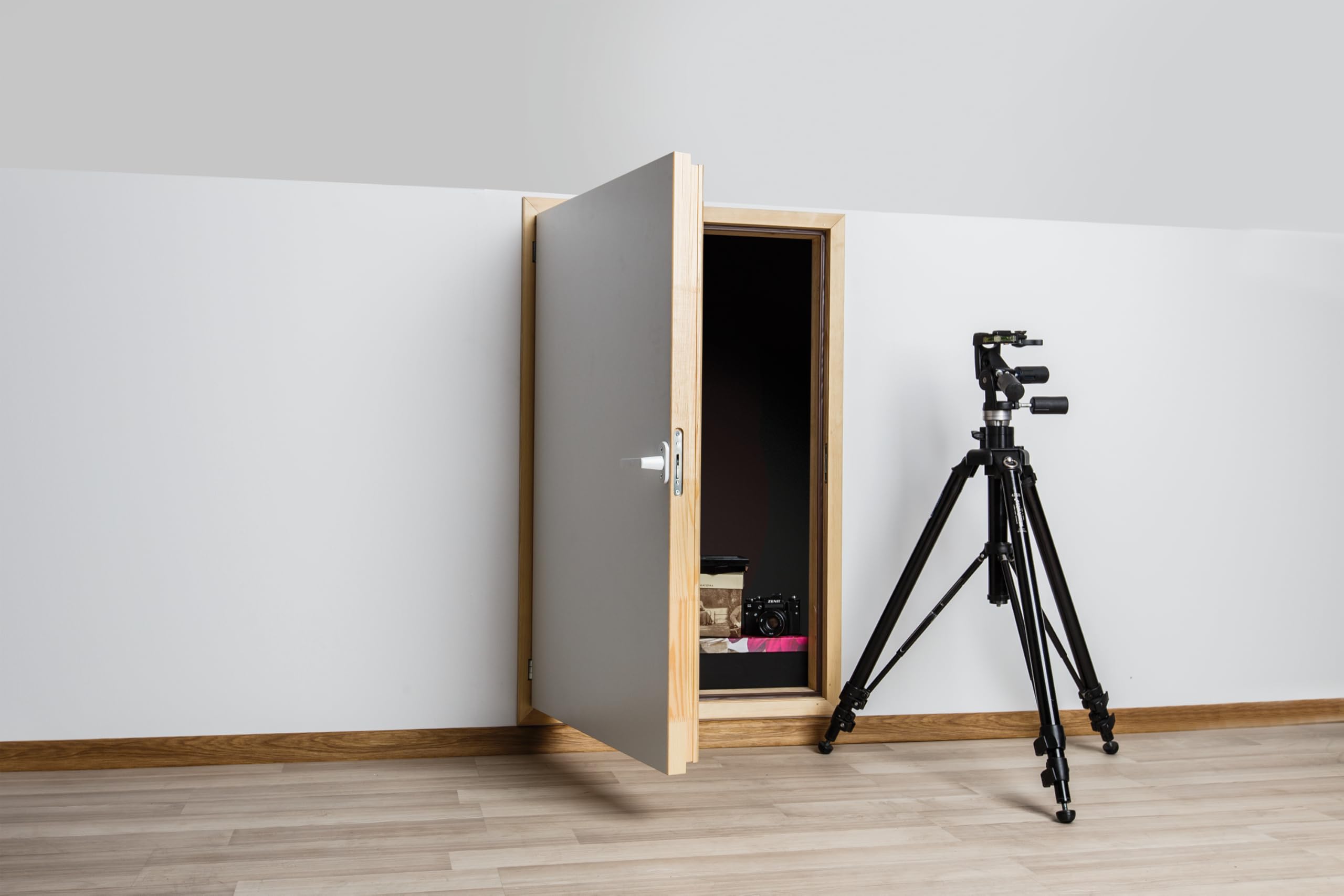
How To Choose The Best Basement Hatch Door
Every one of these doors does the same basic job: it covers the stairwell or opening that leads down into your basement. What separates them is how they handle water, how much they weigh when you lift them, and whether they need painting to survive the weather.
Measure the rough opening first
Nothing matters more than size. Measure the concrete opening itself, not the old door sitting on top of it, because these are not adjustable. A BILCO Size C opening runs 55 inches wide by 72 inches long, while a Size O is 47 inches wide by 58 inches long. If your measurement falls between those, neither will drop in without concrete work.
Decide between steel and insulated panel
Steel areaway doors shed water off the top and survive being walked on or buried in snow. An insulated access panel, on the other hand, is built for an opening inside the house, like a wall hatch into a crawl space or an attic, where trapping heat matters more than shedding rain.
Check the lift assist before you commit
Steel lids run from 179 pounds up to 205 pounds, which is more than most people want to dead-lift one-handed. Gas spring lift assistance does that work for you and keeps the door from slamming shut on your fingers, so confirm it is part of the package on any steel model.
Quick Comparison
| Model | Best For | Width | Length | Weight | Amazon |
|---|---|---|---|---|---|
| BILCO Size C Basement Door (Primer)★ Best Overall | Wide areaway openings | 55 in | 72 in | — | Amazon |
| DWT 27 in. x 35 in. Wall Hatch Wooden Thermo Insulated Access DoorBest Insulated Panel | Interior wall and attic access | 27 in | 35 in | 23 pounds | Amazon |
| BILCO Size O Basement Door (Primer Finish) | Compact areaway footprints | 47 in | 58 in | 196 pounds | Amazon |
| Size C Ultra Series Basement Door | Rust-free, paint-free owners | 56 in | 73 in | — | Amazon |
In‑Depth Reviews
1. BILCO Size C Basement Door (Primer)
Our pick — over 4★ from 80+ verified ratings; the strongest balance of quality and price.
The big-opening steel hatch that takes the strain out of a heavy lid
If your areaway is on the generous side, this is the door the crowd keeps coming back to — 4.3 stars across 80 ratings, and the strongest all-rounder on this list. It measures 55 inches wide and 72 inches long, so it covers the sort of roomy stairwell opening that most other hatches here simply will not span. That extra span matters, because it means you are not pouring a new concrete curb just to shrink the hole.
The baked-on Sherwin Williams primer is what protects the steel out of the crate, and you do still have to topcoat it. A finish coat on the inside and outside surfaces is required once the door is installed. Owners who took that step report it goes on easily. The flanged construction is the other water detail worth understanding: the flange is the raised lip around the edge that channels rainwater away rather than letting it pool, and it also stops the doors binding when ice and snow build up along the frame.
What wins people over is the build. Buyers describe it as “heavy and well put together,” and the gas spring lift gives you smooth one-hand operation instead of a two-arm heave. The lift assist also prevents the doors slamming shut. The honest catch is the closure. Several owners find the doors do not shut completely every time, and rust is the recurring theme once the factory primer has taken a season of weather — which is exactly why the topcoat is not optional.
Where it delivers
- 55 in x 72 in footprint fits the widest areaway openings here — no concrete resize needed
- Gas spring lift gives one-hand operation and stops the doors slamming shut
- Baked-on Sherwin Williams primer means it arrives ready for its finish coat
- Flanged edge sheds water and resists ice and snow binding
What to weigh first
- You must apply a finish coat inside and out after installation or the steel is exposed
- Closure is hit and miss for some, and rust shows up if the topcoat is skipped
- It is a heavy steel unit, so plan for a truck delivery rather than a doorstep drop
Put it head to head with the Size O and the size gap is the whole story: the Size C runs 72 inches long against the Size O’s 58 inches, and the Size C measures 55 inches wide versus 47 inches. That is a real difference when you are standing over an oversized opening.
Reach for this if: your concrete opening is wide and you want the best-reviewed steel hatch on the shelf.
Look elsewhere if: your opening is compact, since an oversized lid will not drop into a smaller curb.
2. DWT 27 in. x 35 in. Wall Hatch Wooden Thermo Insulated Access Door
The interior wall hatch that keeps the warm air where it belongs
A 23-pound door is a different animal from a 205-pound steel lid, and the size difference tells you these two are built for opposite jobs. The DWT panel spans a rough opening of 27-1/2 inches by 35-1/4 inches and is designed for a wall, attic, or interior access point rather than an outdoor areaway. Because it weighs 23 pounds instead of 205, one person can hang it alone without a lift assist or a second set of hands.
The number that decides this one is the R-value of 10, which is how well it resists heat escaping through it. That is the whole point of an insulated access panel: it sits between a heated room and an unconditioned space. The 2-1/2 inch thick insulated panel is built on a solid pine frame with an HDF finish, and it arrives fully assembled with a 1-3/8 inch wide natural wood trim kit included. The trim comes pre-cut, and buyers report it fits cleanly.
It also swings either way. You can hang it left or right depending on which side you want the handle, and the included handle gives it a secure closure. One home builder notes having bought several of these for attic accesses and plans to keep buying them. The trade-off is scope: this is not a weatherproof outdoor hatch, so rainwater and snow shedding are simply not part of its job description.
The insulation math: an R-value of 10 in a 2-1/2 inch panel is the reason to pick this over a plain wood board, and it ships assembled with its trim kit so installation is a one-person afternoon rather than a carpentry project.
Where it stops: this is an indoor access door. Mount it in a wall between conditioned and unconditioned space, not over an outside stairwell.
The confident pick for: anyone closing off an attic or crawl-space opening inside the house who wants insulation and a clean white finish.
Not your door if: the opening faces the weather, since this panel has no areaway water-shedding flange.
3. BILCO Size O Basement Door (Primer Finish)

The tighter steel hatch for areaways that do not have room to spare
Here is the door for the smaller areaway. At 47 inches wide and 58 inches long, the Size O covers a footprint that neither the Size C at 55 inches by 72 inches nor the Size B at 51 inches by 64 inches will fill correctly. Measure your opening before ordering anything, because the Size O runs 14 inches shorter down its length than the Size B above and 11 inches narrower across the top. Owners here replaced hatches that had been in place for over thirty years, and the unpainted original frames reportedly held up well even with rust showing.
It weighs 196 pounds in heavy-gauge steel, with concealed hinges shielded from the weather so the door keeps working through every season. Gas spring lift assistance handles the one-hand opening and stops the slam. The primer finish is the part you should not ignore: the same baked-on primer logic applies, and a topcoat is what keeps the steel alive long-term.
What buyers keep flagging is the paperwork side rather than the door. Delivery forecasts from both the marketplace and the manufacturer’s own site proved unreliable, and the fix owners landed on was calling BILCO directly to confirm measurements and timing. One experienced tradesman’s unit turned up with poorly welded hinges and incomplete brackets, though that is the exception rather than the norm across these reviews. The installation drawings also caused confusion for at least one buyer, who ended up pouring the concrete base from the question-and-answer dimensions instead.
Buy it when: your opening is a compact areaway and you want proven steel construction in a smaller footprint.
Think twice if: you cannot confirm your concrete base dimensions ahead of time, because the supplied drawings left some owners guessing.
4. BILCO Size SL Basement Door (Primer Finish)

A driftwood-finish hatch that never needs paint and never rusts
Corrosion is the enemy that every steel door on this list spends its life fighting, and this one walks away from the fight entirely. The Ultra Series is built from corrosion-resistant high-density polyethylene, so it will not rust and it never needs painting. It measures 73 inches deep by 56 inches wide by 19.5 inches high, which puts it right alongside the widest steel options here. The simulated wood grain in a driftwood colour is meant to blend with the house rather than announce itself.
Two features set it apart from its steel cousins. The interchangeable side panel inserts let you add light or ventilation to the areaway, so you can brighten the stairwell or move fresh air through it depending on the season. And the slide bolt lock with internal mounting flanges gives you a real security point rather than a simple lift-handle. Buyers who love it call it a clear step up from traditional metal options, and the light through the side windows is a repeated bright spot.
Set expectations on lifespan, though. The composite body lacks the steel doors’ decades-long record — one owner reported leaking, warped, bowed doors after nine years, another centre sagging and water leaking into the stairway within roughly a year. The warranty is 5 years, prorated. Steel lasts longer; polyethylene never rusts or needs paint.
The paint-free argument: no topcoat, no rust, no annual maintenance — the polyethylene shell is genuinely the low-effort option here, backed by a 5-year prorated warranty.
Pick this one if: you are tired of repainting steel and want light, ventilation and a locking latch built in.
Lean steel instead if: you are buying for the longest possible service life, since the composite body has shown shorter real-world durability.
Understanding the Specs
Rough Opening Size
The rough opening is the actual hole in your concrete or wall framing, and it is the one number that decides whether a door works at all. Measure the opening itself, not the old door. A BILCO Size B needs a nominal 51-inch by 64-inch opening, while the DWT wall panel is built around a 27-1/2 inch by 35-1/4 inch rough opening. Get this wrong and you are pouring concrete, not installing a door.
Gas Spring Lift Assist
A gas spring is a pressurized strut that pushes the door open for you, the same way a car hatch lifts itself. On a 196 to 205 pound steel lid, that assistance is the difference between one-hand operation and a two-arm struggle. It also holds the door open and stops it slamming shut, which protects both your fingers and the frame. Confirm it is included on any steel hatch you consider.
R-Value and Insulation
R-value measures how well a panel resists heat passing through it, so a higher number means a warmer interior room. The DWT access door carries an R-value of 10 in a 2-1/2 inch thick insulated panel, which is why it suits a wall between a heated space and an attic or crawl space. Steel areaway doors are not rated this way because their job is keeping water out, not holding heat in.
Primer Versus Finished Surfaces
A baked-on primer is a factory-applied base coat that protects the steel during shipping but is not a final finish. That is why a topcoat on both the interior and exterior is required after installation for the primed BILCO doors. If you skip that step, the steel is exposed to the weather and rust begins. A polyethylene door removes that maintenance step entirely.
FAQ
How do I know which BILCO size fits my areaway opening?
Do I have to paint a primed basement hatch door?
Can one person open a steel basement hatch door?
What is the difference between a basement areaway door and an insulated access panel?
Does the composite Ultra Series basement door rust?
What does the side panel insert do on the Ultra Series door?
Can the DWT access door swing either left or right?
Will rainwater get through a steel basement hatch door?
How long does a basement hatch door typically last?
Should I check the delivery before signing for a basement door?
Final Thoughts: The Verdict
The basement hatch door that earns the top spot is the BILCO Size C Basement Door (Primer), because it covers the widest opening here at 55 inches by 72 inches while gas spring lift takes the strain out of a heavy steel lid. It is the crowd favourite for good reason — 4.3 stars across 80 ratings. If you are closing off an indoor attic or crawl space opening instead, grab the DWT Wall Hatch Wooden Thermo Insulated Access Door with its R-value of 10 and single-person 23-pound install. And for a no-rust, no-painting hatchway with light and ventilation built in, the Size C Ultra Series Basement Door is the one to reach for.
How We Picked
We do not accept paid placement. Every pick is matched to a real buyer and a real use-case; we do not hands-on test units.
Sources & Methodology
Specifications: manufacturer listings and product documentation. Review insights: verified customer reviews, as of September 2026. Pricing: not shown on this page (it changes often); check the current price via the retailer link.
As an Amazon Associate, KitchPrep earns from qualifying purchases. This does not affect which products we feature.
Related Guides
