
Specs are compiled from manufacturer listings and verified buyer reviews and can change over time — please confirm the key details on the product page before buying.
If your basement ceiling is stained, sagging, or holding onto that damp-paper smell, the fastest fix is a drop-in tile swap — and most homeowners can finish a standard room in an afternoon without a contractor. The trick is picking tiles that actually fit your existing grid size and stay rigid once the room gets humid. This guide covers the eight strongest options, what each one does well, and the real trade-off you are buying into.
I’m Mohammad Maruf — the founder and writer behind KitchPrep. This guide is built by comparing the manufacturers’ published specifications and the patterns across verified customer reviews, so you get each pick’s real strengths and trade-offs instead of marketing spin.
Below: a fit-and-material breakdown, one comparison table, and eight reviews to help you choose basement ceiling tiles.
Our Picks at a Glance


How To Choose The Best Basement Ceiling Tiles
Three numbers decide almost everything: your grid width in inches, your tile size, and your tile thickness. Get those three right and the rest is surface preference.
Match the grid width first
A suspended ceiling grid has a visible face width, measured in inches. The most common is 15/16″ (about 24 millimeters), the chunkier, more common commercial style. Several tiles in this list also work with a full 1″ T-bar grid, which you find in older commercial spaces, while thin 9/16″ grids (a slimmer profile) reject a standard tile. If you get this wrong, the tile itself is fine — it just will not sit in your frame.
Tile size has to match the opening
Measure one opening across, not the whole ceiling. A 2×2 tile drops into a 2×2 opening, and a 2×4 tile (the long rectangles common in offices) covers twice the area. A 2×4 ceiling needs longer rectangles, a 2×2 ceiling needs squares — you can’t swap them without redoing the whole grid.
Thickness versus sag
This is where the marketing gets slippery. Thicker tiles resist sag but sit heavier on the grid; ultra-thin vinyl tiles resist moisture perfectly but a few buyers find them fussy around vents and lights. Pick thick PVC for a heavily humid room, and thin vinyl if grid weight is the concern.
Quick Comparison
| Model | Best For | Tile Size | Waterproof | Material | Amazon |
|---|---|---|---|---|---|
| uDecor DuraClean★ Best Overall | Washable wipe-clean jobs | 2′ x 2′ | Yes | 4mm PVC | Amazon |
| Art3dwallpanels 3DBest Ceiling Glow-Up | Covering tired basement ceilings | 24″ x 24″ | Yes | PVC | Amazon |
| Art3d Smooth 12-PackBest Budget Swap | Straight-up budget substitution | 2′ x 2′ | Yes | PVC | Amazon |
| Gigrwiin PVC Drop Tile | Big rooms with lots of grid | 24″ x 24″ | Yes | PVC | Amazon |
| IMXPW Drop Ceiling Tile | smooth replacement over existing tiles | 24″ x 24″ | Yes | PVC | Amazon |
| Ceilume Stratford 2×2 | Feather-light remodels | 2′ x 2′ | Yes | Vinyl | Amazon |
| Genesis Stucco Pro | Ding-resistant low-traffic spaces | 2′ x 2′ | Yes | PVC | Amazon |
| Ceilume Stratford 2×4 | Large rectangular grids | 2′ x 4′ | Yes | Vinyl | Amazon |
In‑Depth Reviews
1. uDecor DuraClean Smooth White 2ft x 2ft Vinyl Drop Ceiling Tiles – Box of 10
Our pick — 4.5★ from 400+ verified ratings; the strongest balance of quality and price.
The wash-and-wipe smooth white tile that turns a stained basement into a clean room in one afternoon.
You can stop worrying about a pipe drip or a spilled drink ruining your ceiling. This 4mm PVC (a plastic sheet four millimeters thick) tile wipes clean with warm water and mild detergent, so you never have to buy a new ceiling. It also carries a Class A fire rating (the least-flammable of the three building fire classes) and FDA and USDA compliance, which matters if the room sits over a food prep space, laundry, or a commercial kitchen.
What wins people over is the whole package — the honest glossy white reads as a proper finished ceiling, and the 23.75″ x 23.75″ square edge handles a 15/16″ grid without fuss. Zero-clearance surface mount also works here, so it is fine if your grid sits flat against a joist. And a lot of buyers cut corners with a utility knife — score once, snap, done.
Here is the honest limit: the vinyl is thin, and a couple of buyers describe it that way. If you plan to hang anything heavy from it, or your basement regularly swings to extreme temps, that trait shows. For everyone else — rec rooms, offices, bathrooms, kitchens — it stays flat and bright. Compare this to the uDecor pool leader status and you see why it sits up here.
The core reasons it wins
- 4mm PVC wipes clean with warm water and mild detergent.
- Class A fire rating plus FDA and USDA compliance.
- Standard 15/16″ grid drop-in — no glue, no special tools.
- Warm white glossy face brightens dark low-ceiling rooms.
Where it is not as strong
- Thin vinyl means minimal weight capacity — do not plan to hang heavy fixtures.
- Will not fit a thin 9/16″ grid, only the standard 15/16″ size.
Ideal pairing: a humid basement, laundry room, or commercial food space where repeated wipe-downs beat a decorative pattern.
Think twice if: you want to mount track lighting or heavy fixtures from the tile itself, since the vinyl is not built for weight.
2. Art3dwallpanels Ceiling Tiles, 24 x 24 Inch, 12 Pcs, White
The 3D-raised panel that hides a nasty old ceiling without you tearing a single tile down.
If your basement is running on decades-old stained tiles, this is the budget path to a total look change. The raised 3D pattern turns a flat grid into something with dimension, and a 12-pack covers 48 square feet — enough for one modest bedroom or partial rec room. You drop these straight in over the existing tiles and skip the removal work entirely.
Cutting is the part buyers like most: scissors, utility knife, or a table saw all work. There is a small technique note — cut slowly at the bevel (the angled edge), or the panel can crack. On the material side, the PVC is PVC, so fire and heat resistance and washability are standard, and the tiles are paintable if you want to change the color later.
Compared with the uDecor option above, this is a decor play, not a maintenance play. The uDecor tile has a thicker profile in the shop spec, this one does not, and that matches buyer talk — people rave about the instant ceiling glow-up and less about long-term wear. Do not overthink it: pick this one for the look, not for heavyweight durability.
Why the pattern wins: a raised 3D surface covers an ugly old grid without removing it, and a 48 sq.ft. pack matches a small-to-medium room.
The honest caveat: cut slowly at the bevel, and plan two boxes if your room runs larger than a small bedroom.
Reach for this if: you want a dramatically better-looking basement ceiling this weekend without demolition.
Look elsewhere if: you care most about a thick commercial feel — that is not what this panel is built to be.
3. Art3d 12-Pack Smooth Drop Ceiling Tiles, No Sag and Breakage, White
The no-sag, no-rot smooth tile that lets you spot a water leak before it soaks through.
Here is the number that earns this pick its slot: 0.16 inches of thickness, which is 5.3x thicker than the ultra-thin Art3dwallpanels option above. That extra body matters — you get a smooth, blank panel that sits solid in a 15/16″ T-grid and refuses to sag, rot, or rust. Same 48 square feet of coverage per case, same square-edge drop-in install, but a sturdier feel once it is up.
The main reason buyers pick this one is simple: it survives a wet basement. It is Class A fire-rated, low-emission, waterproof, and washable, so a leak does not soak into the material. Cutting ability is the top praise category — a utility knife or table saw slices it cleanly, and the material snaps off with almost no fraying. A few owners note the paneling can chip when you cut around a recessed light or vent hole. Cut from the finish side, slowly, and that goes away.
Color is where you want to be a little choosy — some buyers find the finish reads slightly off-white in certain lighting, and a small group finds the tiles lighter than expected. For a basement rec room or storage space, either trait is invisible. In bright natural light, it might not match a fresh coat of warm white paint above the trim.
What stands out on spec: 0.16-inch thickness — roughly 5.3x the thickness of the ultra-thin Art3dwallpanels — paired with waterproof PVC and 48 sq.ft. per case.
The real-world limit: paneling can chip when cutting recessed light or vent holes, so cut slowly and from the finished face.
Built for: a damp basement living room, laundry, or workshop where moisture and sag are the headline worries.
Steer clear if: you need a perfect color match to a specific warm-white wall — the finish reads slightly cool in bright light.
4. Gigrwiin PVC Drop Ceiling Tiles 2×2 ft – Waterproof, Fire-Rated, 48 Sq.Ft, Pack of 12

The virgin-grade PVC tile that shrugs off oil, moisture, and the occasional dust storm.
Virgin PVC (new plastic never recycled from scrap) is the differentiator here, and it earns its keep in messier rooms. The surface is waterproof, oil-resistant, and anti-corrosion treated, which is why you see this tile spec’d for restaurants, gyms, food processing plants, and daycare centers in the same breath as a home basement. Class A fire and heat rating is standard across this whole category, and it is printed on this one too.
Where this one pulls ahead of the Art3d budget option above is surface toughness. Scratch-resistant and stain-resistant are both named on the spec sheet, and a lot of buyers describe the panels as sturdier than competitors they returned. The 24″ x 24″ tile drops into a standard 15/16″ grid, no glue or paint needed, and cutting with a straight edge and utility knife gets the job done.
The dark tile colors are beautiful and legitimately harder to keep pristine — that is physics, not a defect. One buyer mentions a few slightly bent corners on arrival, and a handful arrive with small non-removable marks used as edge pieces. Tuck those behind a light fixture or on a wall-adjacent edge and the finished ceiling is clean. Not a dealbreaker, just a fact of the PVC category.
Where this panel pulls ahead
- Virgin PVC with waterproof, oil-resistant, and anti-corrosion surface.
- Scratch-resistant and stain-resistant finishes hold up to traffic.
- Class A fire and heat rated for commercial and home use.
- Fits standard 15/16″ grid — no glue, no paint, no special tools.
What to be prepared for
- Dark finishes show dust more than white; wipe-downs are more frequent.
- A small share of panels arrive with minor marks or a bent corner, best reserved for edge pieces.
Suits you best if: the room sees real foot traffic — a rec area, workshop, or commercial-adjacent space — and you want a surface that fights back.
Pass on it when: you want pure white; the deeper colors here look great but ask for more upkeep.
5. IMXPW Drop Ceiling Tiles 2×2, Waterproof Smooth White PVC, 12-Pack, White
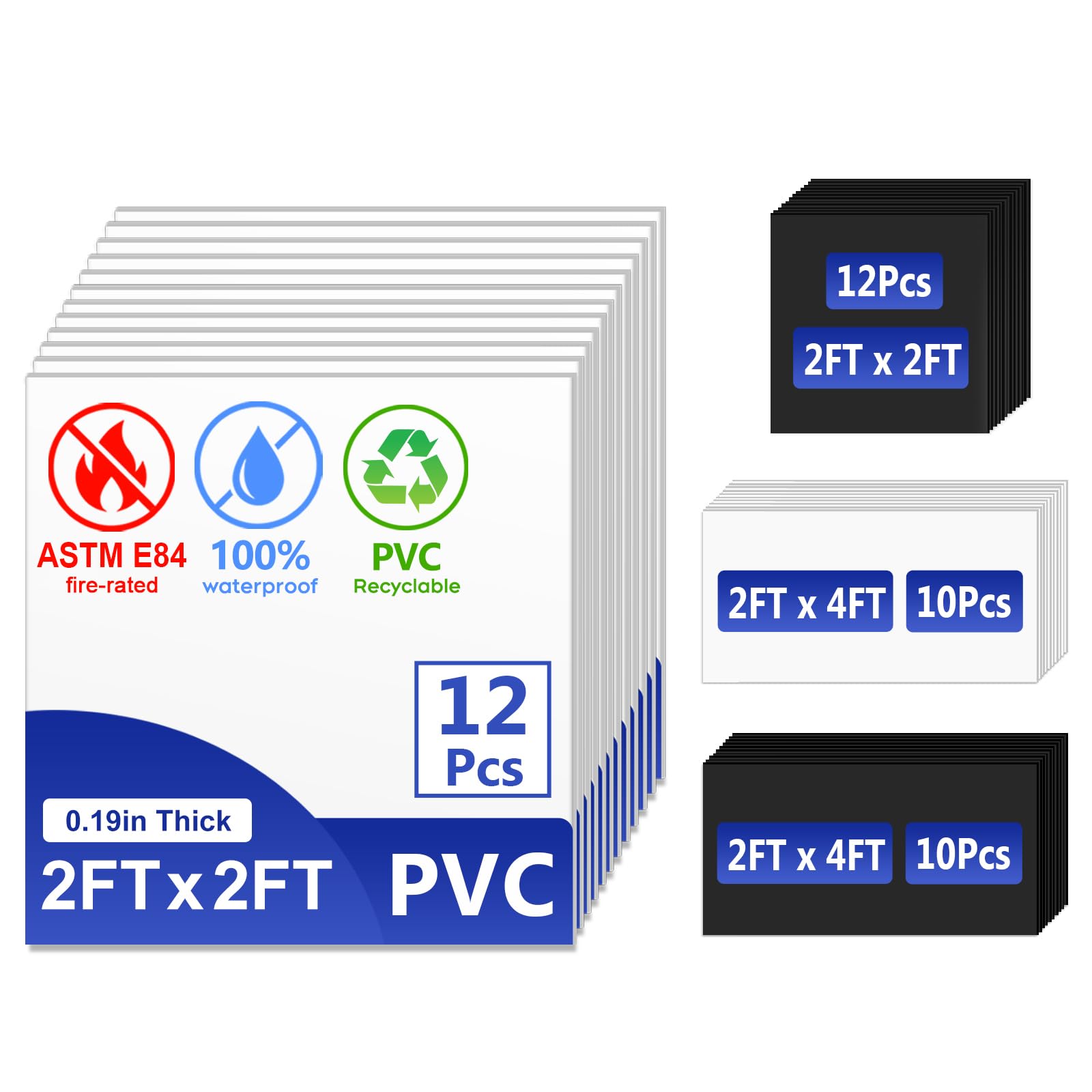
At 0.19 inches, the thickest panel in this roundup — and the one buyers report feels solid, not flimsy.
The number to remember here is 0.19 inches — a touch thicker than the Art3d 0.16-inch a few picks up, and noticeably beefier in the hand. That extra body matters most when you are dropping tiles around can lights, speakers, and sprinkler heads. Buyers describe a solid weight to each panel that feels durable rather than thin, which is the whole point of choosing a premier PVC tile over the cheaper plastic sheets.
A smooth white finish reflects light and brightens a low basement without any paint, and the surface wipes clean and holds its color over time. This tile is also the most smooth replacement of the bunch — a 15/16″ suspended system lets you swap old or damaged tiles without pulling down the entire grid. The panels are a straight 24″ x 24″ and cover 48 sq.ft. per case.
Buyers consistently point to the non-porous surface as the reason they no longer swap ceiling tiles every few years. Rust-free, mildew-resistant, waterproof — same promise as every PVC tile here, but the thicker cut makes the promise feel more real when you hold it. The one thing to plan for: cutting around oddly shaped vents is more work when the panel is this dense. Take your time and it is fine.
What buyers keep coming back to: the thickness. 0.19 inches puts it at the top of this group and stops the sag that haunts thinner sheets.
The fit note: cutting through a heavy panel around tricky vents takes more patience than a thin vinyl tile would.
Made for: a basement you plan to finish properly — a real room, not a utility pocket — where clean looks and long-term durability both count.
Probably overkill if: your only goal is a quick one-weekend cover-up, since the extra thickness asks more effort at every cut.
6. Ceilume Drop Ceiling Tile; 2×2 – Stratford Ultra-Thin Feather-Light

Less than four ounces per tile — the lightest way to make an ugly drop ceiling look new.
If your grid is old and you are worried about weight, this is the safe answer. Each tile weighs 3.2 ounces and sits at 0.013 inches thick, so it drops into a standard 15/16″ suspended T-bar grid with almost no load. The 12-panel case covers 48 sq.ft., and the rigid vinyl cuts easily with scissors for can light openings and edge strips — no shop tools required.
The catch is thickness feel. A small pushback lands on how paper-thin the panel is, and the honest answer is: that is the trade-off for zero weight on the grid. Buyers who install this over an existing set of older tiles, keeping them as a backer, report the combination holds beautifully. Installed solo, the tile is fine for quiet basements but is not the one to pick if a door slams right under it.
The product earns its keep where most thin vinyls fail: real small-business ceilings and standard residential remodels that just need a fresh face. It is also one of the few options here that is Made in the USA with a small customer service team. Pair it with the Art3d Smooth above and you have both ends of the thin-versus-thick spectrum sorted.
The quiet superpower: 3.2 ounces per tile — the lightest pick in this article — so old or tired grids barely notice it.
Where it lets you down: the 0.013-inch vinyl can wander in a room with strong door draft, and reinforcing around mounted hardware is worth the extra step.
Your best bet when: the grid is delicate, the room is quiet, and the goal is a fast cosmetic refresh.
Better skip when: the room sees heavy air movement or you plan to hang hardware from the panel itself.
7. Genesis 2ft x 2ft Stucco Pro White PVC Ceiling Tiles (12 Tiles)
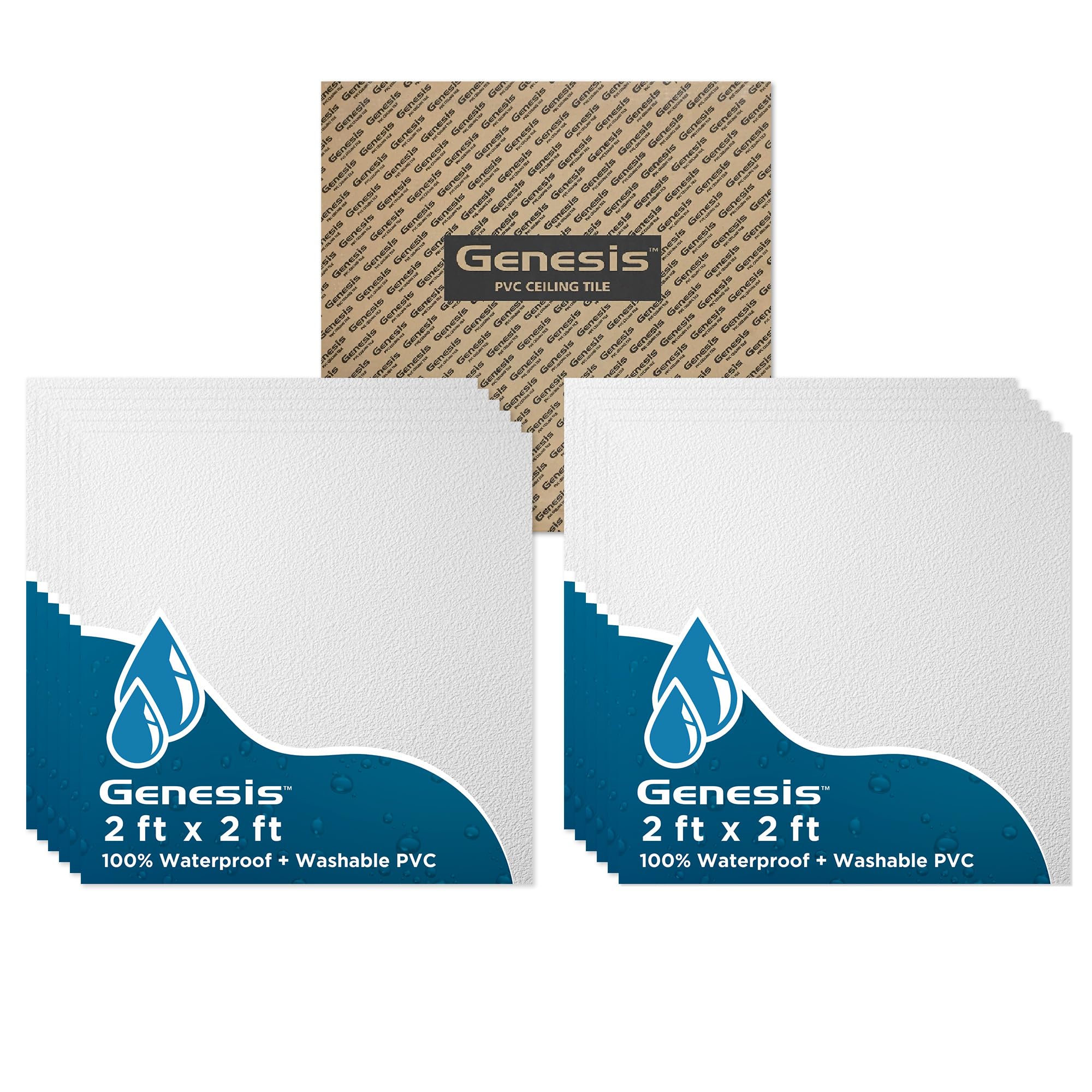
A featherweight PVC panel that trims like paper and sits smooth in any 15/16″ grid.
At 2.4 pounds per tile, this is one of the lightest picks in the article. That means you can handle a panel alone, cut it with a utility knife, and drop it into a standard 15/16″ grid in a single afternoon. It is virgin-grade PVC, Class A fire rated, waterproof and washable, so it handles the humid side of a basement without much drama. Twelve tiles per case cover a standard room.
Surface behavior is where this one earns honest talk. It does not absorb water and cuts easily into any shape or size, which a lot of buyers mention as the reason to buy again. But the surface is soft — dings and indents show if you are rough around it. Handle the panels flat, avoid dragging a ladder across a stack, and this stays neat for a long time.
Compared with the IMXPW above, this panel is lighter and easier to maneuver, but the IMXPW’s 0.19-inch thickness gives it more rigidity in the hand. Choose Genesis when you need to move quickly and cover a lot of grid; choose the IMXPW when denser feel matters more. Both hold their own in the same basement.
What makes it easy to live with
- 2.4 lb per tile — manageable for one person to install solo.
- Trims easily with a utility knife into any shape.
- Virgin-grade PVC with Class A fire rating.
- Waterproof and washable surface for humid basements.
What takes some care
- Surface dings and indents if handled roughly.
- Soft enough that dragging tools across a stack leaves marks.
Pick this one if: you are installing alone and want the lightest tile that still checks every waterproof and fire-rated box.
Skip it when: the room hosts kids or tools that will inevitably meet the panels, since the surface is softer than PVC gets.
8. Ceilume Stratford 2×4 Drop Ceiling Tiles – Waterproof, Fire-Rated PVC – 12-Pack, White

Twice the coverage per tile — 96 square feet per case, and only a bit of vinyl on the grid.
If your grid is laid out in long rectangles, this is the pick. Each 2×4 tile is ultra-thin vinyl at 0.013 inches, and the 12-panel case covers 96 sq.ft. — twice the coverage of the 2×2 boxes above. The panels are Made in the USA and GREENGUARD Gold certified (a standard for low chemical emissions in indoor air), which matters in a space you spend real time in. Wet basements welcome: they will not hold moisture and owners mention the musty smell disappears once the old fiberboard is gone.
This tile is far lighter than mineral fiber tiles (the traditional cardboard-feeling panels), so your grid catches a break on weight and there is no sag over the years. It trims easily with scissors or aviation snips, and the surface is Class A fire rated and waterproof. Same consumer care instructions as the other Ceilume panel, so quality of the ceiling really depends on careful handling.
Being honest about the downsides: this is thin vinyl, so it feels flimsy in the hand, and a few owners find it too light for vent cutouts or hanging hardware. Buyers also mention the price is on the premium side and you will almost certainly order more than one box. Anchor the perimeter, weight the first row, and the finished ceiling holds up beautifully — especially over existing tile you leave in place.
The standout spec: 96 sq.ft. per case of ultra-thin, GREENGUARD Gold certified vinyl — twice the coverage of the 2×2 boxes here.
The honest catch: too light to work around vent openings, and the up-front cost runs premium, so budget for an extra case.
Suits a setup like this: a long, low basement or office grid with 2×4 openings where one case covers the whole ceiling.
Better to look past it if: you need a rigid panel around HVAC vents or ceiling hardware — this one is built to be light, not sturdy.
Understanding the Specs
Class A Fire Rating
Class A is the top fire-performance tier in building materials, and it means the panel resists catching and spreading flame. Basements get Class A a lot because code often requires it around mechanical rooms and furnace areas. Every tile reviewed here prints the rating on the box, so you are covered as long as it fits your grid.
PVC vs Vinyl Thickness
Two different materials sit behind the word “tile.” Thick PVC (think 0.16 to 0.19 inches) holds its shape and handles years of wiping. Ultra-thin vinyl (around 0.013 inches) is feather-light and cuts with scissors but is meant for quiet, low-draft rooms. Neither is better — you are trading weight against rigidity.
Grid Width and Tile Size
Most basement grids measure 15/16″ across the visible face of the metal bar. Some commercial spaces run a full 1″ T-bar. Tile sizes come in 2×2 and 2×4, and they are not interchangeable — pick the size that matches your existing openings or you will redo the grid.
Waterproof and Washable
Every tile in this list is waterproof, meaning it will not soak up water or feed mold. Washable means you can wipe it down with a damp cloth or mild detergent instead of replacing it. For a basement, this is the single biggest upgrade over old mineral fiber ceiling tiles, which stain, sag, and hold smell.
FAQ
Will these tiles fit my existing drop ceiling grid?
Do I need to remove my old ceiling tiles first?
Are these tiles really waterproof?
What does Class A fire rated actually mean?
2×2 tile vs 2×4 tile — which do I need?
Can I cut these tiles around lights and vents?
How long do PVC ceiling tiles last in a basement?
Are these safe to use in a bathroom or kitchen ceiling?
Do ceiling tiles add sound absorption to a basement?
What is the difference between a thin vinyl and a thick PVC tile?
Final Thoughts: The Verdict
To pick basement ceiling tiles that fit your room, match grid size first, then thickness. For most humid basements where wiping down matters more than a pattern, the uDecor DuraClean earns the top spot — It rates 4.5 stars across 400+ ratings, with waterproof 4mm PVC and a wipe-clean surface. If a quick cosmetic makeover is the goal and you want a raised 3D look over an older ceiling, the Art3dwallpanels 3D tile is the one to grab. And for a long 2×4 grid that needs twice the coverage per case, the Ceilume Stratford 2×4 is the practical call — just add an extra case to your order.
How We Picked
We do not accept paid placement. Every pick is matched to a real buyer and a real use-case; we do not hands-on test units.
Sources & Methodology
Specifications: manufacturer listings and product documentation. Review insights: verified customer reviews, as of September 2026. Pricing: not shown on this page (it changes often); check the current price via the retailer link.
As an Amazon Associate, KitchPrep earns from qualifying purchases. This does not affect which products we feature.
Related Guides
