
Specs are compiled from manufacturer listings and verified buyer reviews and can change over time — please confirm the key details on the product page before buying.
If your baseboard heater looks like a rusted eyesore, you do not need a plumber or a full remodel — you need a slip-on cover that hides the old metal in minutes. A slip-on cover hides rusted fins, blocks kids and pets from hot metal, and refreshes a bathroom or hallway in minutes.
I’m Mohammad Maruf — the founder and writer behind KitchPrep. This guide is built by comparing the manufacturers’ published specifications and the patterns across verified customer reviews, so you get each pick’s real strengths and trade-offs instead of marketing spin.
Here is the short version: measure your heater first, then match the cover to your system type. Most buyers land on a hydronic (hot-water) cover, and the leading pick — the TALL NeatHeat 6ft — earns 4.6 stars across 300+ owners. This guide ranks the strongest baseboard heater replacement covers by fit, material, and real-world durability.
Our Picks at a Glance


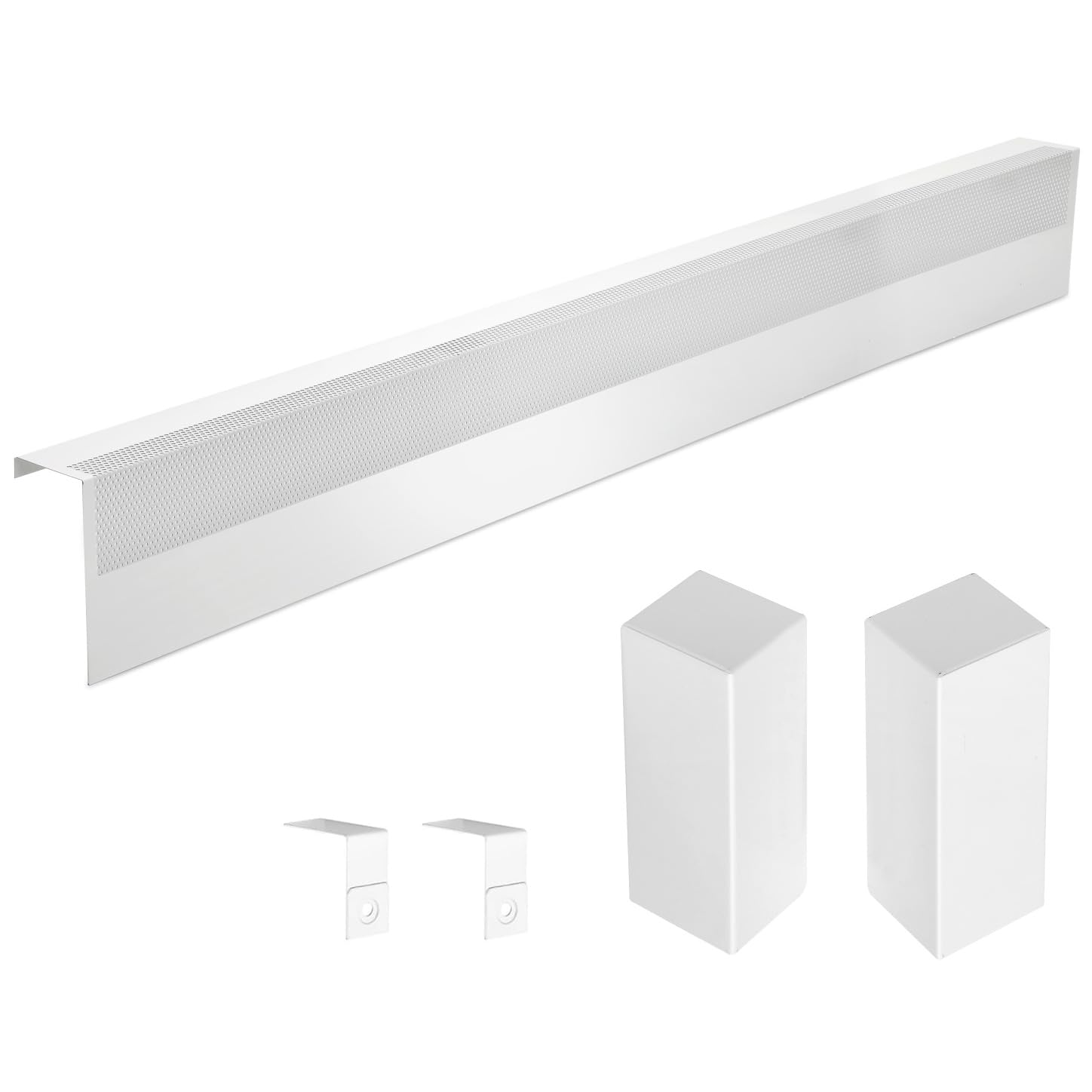
How To Choose The Best Baseboard Heater Replacement Covers
Three things decide whether your new cover fits: your heating system, your measurements, and the material. Nail all three and installation takes minutes. Miss one and you will be boxing it back up.
Match the cover to your heating system
Most slip-on replacement covers are designed for hydronic (hot-water) baseboard heaters. On electric models — which run hotter at the surface — a plastic cover can warp or discolor under heat, so a metal cover rated for higher temperatures is the safer route. Always check the product’s own description before buying, because many covers are labeled for hydronic systems only.
Measure before you order
A measuring mistake is the number one reason a cover gets returned. Check three dimensions: the length of the heater (the cover must be equal to or longer than it, and cuttable covers help), the height from the floor to the top of the backplate (the flat panel the heater mounts on), and the depth of the heating element. A cover built for a specific height and depth range only fits units inside that range — no amount of adjusting fixes a mismeasured order.
Pick your material: steel versus plastic
Galvanized steel covers resist warping, cracking, and brittleness under heat, and a powder-coated finish fights rust for years. Plastic covers are lighter and often cheaper, and they snap together without tools — but they are not suited to electric heat and can discolor over time. If you want the longest-lasting result, steel wins.
Quick Comparison
| Model | Best For | Length | Material | Item Weight | Amazon |
|---|---|---|---|---|---|
| *TALL* NeatHeat TALL 6ft Cover★ Best Overall | Oversized high-output heaters | 6 ft | — | — | Amazon |
| neatheat 6ft Front CoverBudget Champion | Budget-friendly quick refreshes | 6 ft | Plastic | 2 lb | Amazon |
| Redants 4 FT CoverCoolest Surface | Cooler surface and safety | 4 ft | Galvanized Steel | 8.13 lb | Amazon |
| Saree 4 FT Square Cover | Hiding rusty electric and hydronic fronts | 4 ft | Galvanized Steel | — | Amazon |
| Base Pro 4FT Slip-On | Classic American interiors | 4 ft | Galvanized Steel | 7.19 lb | Amazon |
| Gandeer 3 Ft Cover | Short bathroom runs | 3 ft | Stainless Steel | 5.29 lb | Amazon |
| SDSNTE 3 Ft Steel Cover | Non-plastic quality at 3 ft | 3 ft | 21-gauge Steel | 1.14 lb | Amazon |
| Jeevony 4Ft Steel Cover | Whole-house replacement project | 4 ft | Galvanized Steel | 7.09 lb | Amazon |
| Baseboarders Basic 4 ft Set | Buy-once, never-again upgrades | 4 ft | Galvanized Steel | 7.68 lb | Amazon |
In‑Depth Reviews
1. *TALL* NeatHeat TALL 6ft Baseboard Heat Cover
Our pick — over 4.5★ from 300+ verified ratings; the strongest balance of quality and price.
The oversized cover that turns a rusted bathroom radiator into a finished wall in an afternoon.
If your baseboard heater stands taller than the standard profile, this is the pick — the extra-tall build is exactly what separates it. It is made for high-output baseboard heaters only, so it fits over oversized units that standard covers simply will not reach around. Installation needs no special tools, and owners trim it to size with basic household equipment.
What wins people over here is how quickly it erases rust. The review pages sum it up: “Solved my ugly rusty bathroom radiator problem! Looks great. Be careful to measure as mine was the extra tall size. I did have mine dented in shipping which I was able to fix. Seller was reputable and offered to replace.” Buyers also report trimming it down in less than ten minutes, and the design keeps spills from penetrating the metal underneath, which is why the rust never comes back.
A couple of things to know before ordering. It is not for use with electric baseboard heaters, so check your system first. And it should never be cleaned with bleach or bleach-containing products, because bleach can cause the finish to yellow. The end caps need a smooth, texture-free wall behind them to sit flush — on a textured wall you may need to shim underneath.
The case for the tall profile
- Fits over high-output baseboard heaters that standard covers cannot reach
- No special tools needed for a full install
- Deters rust because the design keeps spills off the metal underneath
Before you order
- Not for use with electric baseboard heaters
- Never clean with bleach or bleach-containing products — it can cause yellowing
- The tall sizing means measuring first is essential
Go for it if: you have an oversized, high-output hydronic heater that standard covers leave exposed.
Measure first if: your heater is electric — this cover is not built for that system.
2. neatheat 6ft Baseboard Front Cover
The lightweight snap-together panel that refreshes a whole room for very little money.
Weight is the headline here. This cover is made of plastic and tips the scales at just 2 pounds, which is 4.1 times lighter than the galvanized steel Redants cover at 8.13 pounds. That lightness makes it easy to position alone and simple to snap pieces together — no special tools required. One size is designed to fit most, covering many common baseboard brands.
The install is genuinely tool-free, and it cuts with ordinary household tools. Buyers report it fits perfectly over old, damaged baseboards and clicks together easily. The classic complaint is that the 6-foot piece is not as easy to cut with scissors or a box cutter as the packaging suggests — a saw gives a cleaner, more even edge. The white finish reads as a clean, bright upgrade over the metal it covers.
The trade-off is heat tolerance: plastic warps on hot electric elements. It is plastic, and it is not suitable for electric heat. Some owners find it very durable while others report it warping from heat within 8 minutes, so if your heater runs hot, steel is the safer choice. Fit is also mixed — it works with many common brands, but not every baseboard model.
The value read: at a budget-friendly price, this is the cheapest way to cover a long run of ugly baseboard — and it still looks good in white.
The catch: plastic and electric heat do not mix; keep this one for hydronic systems and cooler-running units.
Reach for this if: you want a light, inexpensive cover for a hydronic heater and you are comfortable cutting it to length.
Look elsewhere if: your baseboard is electric or you know it runs hot.
3. Redants 4 FT Baseboard Heater Covers with Left and Right Endcaps
The steel cover built to run cooler while guarding little hands and paws from hot fins.
Redants leads with a 3-minute slide-on install: the cover slips straight over the old plate with no tools, and two wall brackets are included for extra stability if you want them. It is built for hydronic baseboard heaters — on electric models the adjustment knob will be hidden, so you pop off an end cap to reach it. Exact fit is capped at units that do not exceed 7-1/2 inches from floor to backplate top, with an element depth under 3-1/4 inches.
The standout is the safety engineering. Oversized vent slots drop the surface temperature, shorten heating cycles, and create a barrier against the hot element. The 24-gauge powder-coated galvanized steel will not chip, yellow, or corrode through seasons of hot-water use, and the maker backs it against failure under normal use. What reviews rave about most is the finished look — this is the kind of cover that makes a bathroom register stop collecting dust and Q-tips.
Two honest notes. At 8.13 pounds it is the heaviest cover on this list — that heft is the steel, and it is what makes it feel solid, but it is not a featherweight to hang. And it can arrive scratched from the factory, though it is not prone to denting and repaints easily. There is no closable vent for heat control.
Safety-first build: the oversized vent slots lower surface temperature — a real benefit in homes with toddlers or pets who like to climb on the heater.
Fit honesty: measure carefully; the 7-1/2-inch height and 3-1/4-inch depth limits are firm.
Best for: families who want a cooler-to-the-touch steel cover and do not mind a heavier panel.
Think twice if: you need a closable vent to control heat output.
4. Saree 4 FT Baseboard Heater Cover with Left and Right Endcaps

A square-profile steel cover that fits flush and freshens a room for the cost of a dinner out.
If you want the sharpest-looking upgrade with the least effort, this is a strong candidate. It slides straight over the old plate in about 3 minutes with no tools, hiding rusty fronts immediately. The build is 24-gauge powder-coated galvanized steel that will not chip, yellow, or corrode after seasons of hot-water use — and the maker will replace it if it ever fails under normal use.
The square profile and included left and right end caps give it a clean, finished look. Matching straight couplers and inside corner connectors are sold separately, so plan those into a longer run. Two crucial fit facts: this is built to go over units no taller than 7-1/2 inches from floor to backplate top and no deeper than 3-1/4 inches — and it is designed for hydronic systems (hot-water baseboards), with a note that on electric models the knob will be hidden behind the cover.
What buyers keep coming back to is the aesthetic payoff — this is the cover that makes people say their bathroom finally looks remodeled. It is inexpensive relative to the visual result. One quirk: it does not click onto the existing baseboard the way some covers do, so it rests in place rather than snapping — easy to install, just a different mechanism.
Best for: anyone updating a bathroom or kitchen where the baseboard heater is visible and ugly.
Skip if: you want a snap-click lock to the baseboard — this one slips on instead.
Ideal for: a single-room refresh where the cover will be seen and the price needs to stay moderate.
Not for: mismeasured heaters — the tight 7-1/2-inch height and 3-1/4-inch depth limits leave little room for error.
5. Base Pro 4FT Baseboard Heater Cover with End Caps
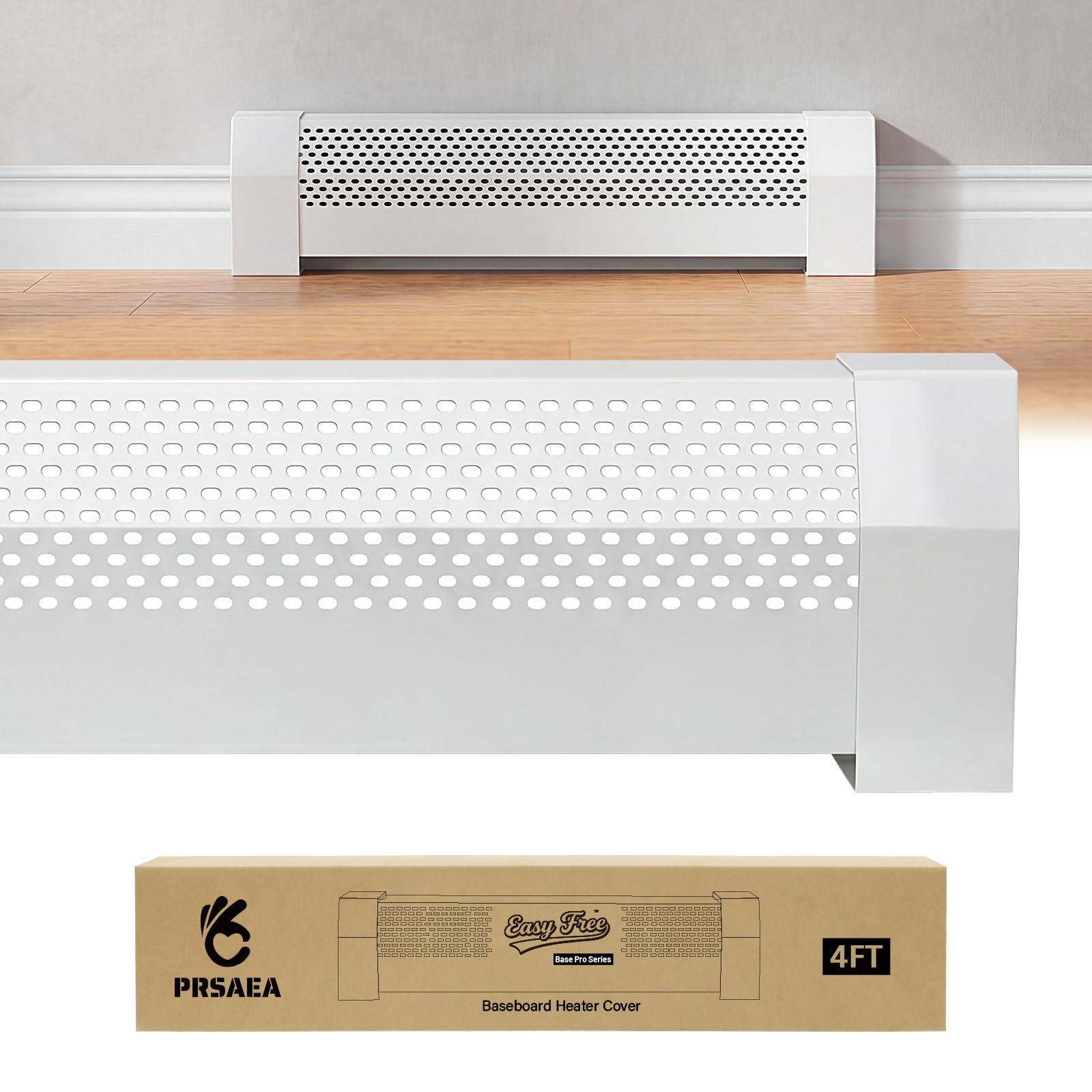
The cover engineered around airflow, with an angled vent that sends heat up and out naturally.
This one is about the shape of the heat. The angled vent outlet follows the way warm air rises, guiding it upward for a more natural spread and less cold-air hang near the floor. It is a 4-foot slip-on with a refined, balanced profile, finished with a smooth baked coating over a solid metal feel for a more premium look. At 7.19 pounds it is substantial without being the heaviest on the list.
The no-hole top and bottom also limit dust and debris behind the panel. The no-hole top and bottom help limit dust and small debris from entering the cover, and the included end caps give it a finished edge. Wall mount clips are in the box too. It is made for hydronic baseboard systems, and it is not for electric baseboards — keep that in mind when you match it to your heater.
The verdict from the homes that have installed it is consistent: this replaces the old cover rather than sitting over it, which modernizes exposed runs in kitchens and baths. A few owners mention the perforations are slightly larger than they expected compared to plain originals — purely a cosmetic preference, not a performance issue. It arrives well packed and goes on fast.
The airflow angle: the angled outlet is the differentiator here — it is designed to push heat away from the floor instead of pooling cold air at your feet.
Plan for it: it is a replacement, not an overlay, so confirm your heater length before ordering.
Pick this if: heat distribution matters to you and you want a classic profile with a solid metal feel.
Choose a different fit if: your heater is mismeasured — this cover has a firm length requirement.
6. Gandeer 3 Ft Baseboard Heater Cover with End Caps

A short stainless-steel cover sized for the compact runs you find in small bathrooms.
Three feet is the length you need for tight bathroom installations, and Gandeer targets exactly that. It is made of quality stainless steel with white baking paint, tested for thickness, and it ships with a left end cap and a right end cap so you can finish both ends cleanly. The install is a slide-on sequence: remove the old cover, slide the new one onto the heating element, snap the bottom into place, and attach the end caps. No special tools are required unless you cut to an exact length.
Fit is where you need to be careful. This cover is meant for floor heaters under 3 feet long — pushing past that works against the airflow design that keeps the panel from touching the element. Get the length right and it goes right over the original heater, as customers note. Several say the fit is perfect, and the look is clean and bright against older flooring.
Two honest notes: it costs more than most 3-foot covers, and a few reviewers point out dents from shipping on this thin metal panel. It is a 5.29-pound cover, so it is solid without being a chore to handle. The stainless steel construction is what justifies the step up from plastic.
What stands out: stainless steel construction with a baked-paint finish — a real step up from the plastic covers you see at this size.
One caution: the packaging has drawn some comments; inspect the panel on arrival before install.
Perfect for: a small bathroom baseboard heater that needs a precise 3-foot cover in metal, not plastic.
Skip if: your heater exceeds 3 feet — this one is sized for shorter runs.
7. SDSNTE 3 Ft Steel Baseboard Heater Cover with End Caps

The 3-foot steel cover that makes plastic versions feel like a temporary patch.
Here is the number that matters: 21-gauge steel for the body, 16-gauge steel for the end caps. That is a thicker build than plastic alternatives, and it shows in the way the cover holds its shape and resists flex. The white stoving varnish finish is durable and clean. At 1.14 pounds, it is remarkably light for a metal cover.
The fit requirements are specific and worth reading twice. It suits baseboard heaters that are less than 3 feet long, with height under 8-1/2 feet and a maximum width no greater than 3-1/4 inches. The single-panel construction keeps airflow moving around the heating element while keeping direct contact — and hot surfaces — behind the panel, which is why families with kids and pets reach for it.
The installation is a true slip-on: remove the old cover, slide the new one on, attach the end caps. No tools, no fuss. The buyer verdict is overwhelmingly about the visual transformation — a fresh coat of paint on the walls makes an old rusty baseboard stand out, and this cover puts it right back into the background. A few owners note that if your measurement is off, it simply will not fit, so measure carefully.
Build quality: 21-gauge steel with 16-gauge end caps — noticeably sturdier than the plastic covers that dominate the low end.
Fit discipline: the sub-3-foot length and 3-1/4-inch width limits mean there is no room for guessing.
Choose it if: you want a metal cover at 3 feet and refuse to settle for plastic.
Look at a longer model if: your heater exceeds 3 feet or runs wider than 3-1/4 inches.
8. Jeevony 4Ft Galvanized Steel Baseboard Heater Cover with End Caps
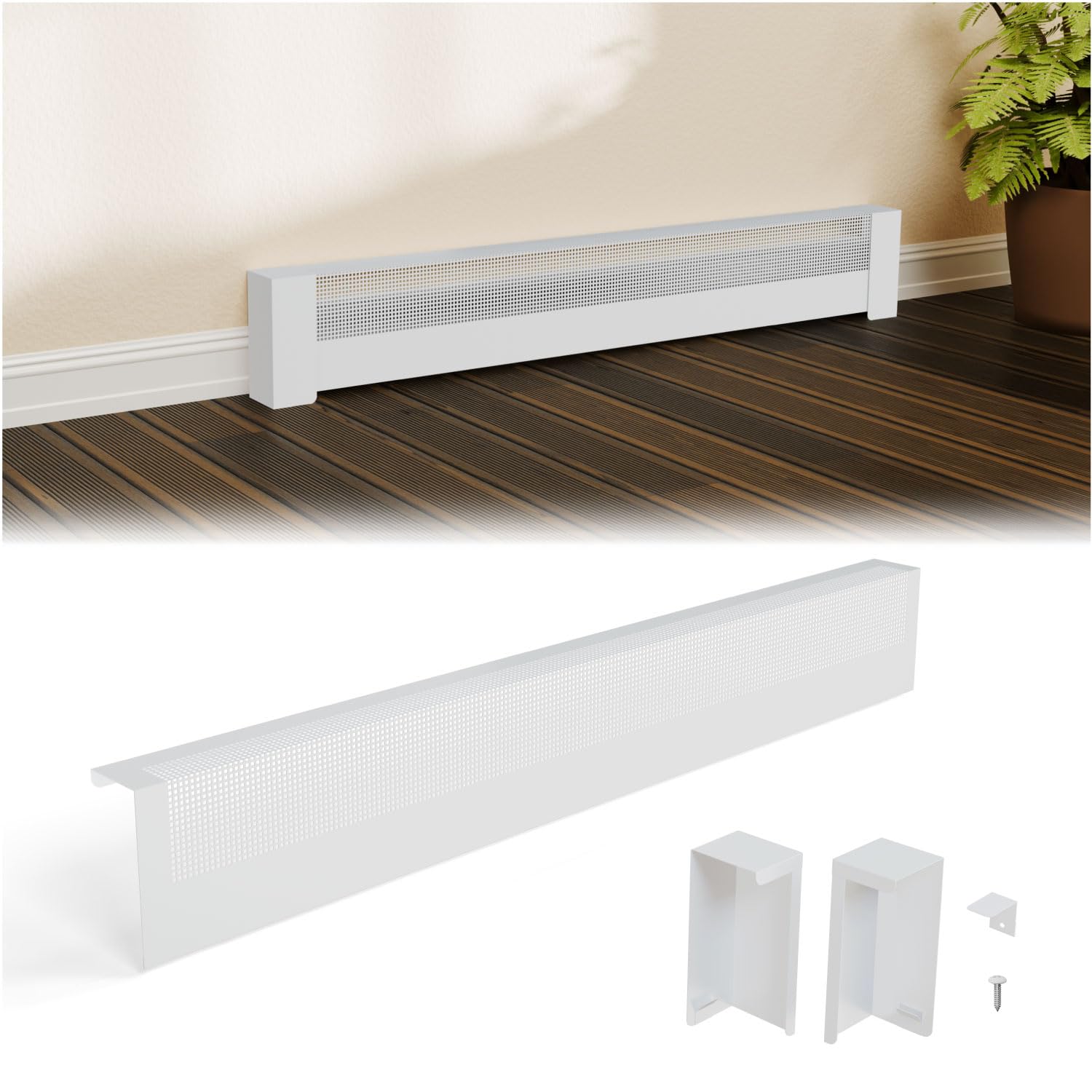
A 4-foot steel cover with a 2-year rust guarantee and venting tuned for electric heaters.
This one stands out because it is genuinely versatile on system type. The maker tune the ventilation holes to increase heat dissipation area and says the cover can be used with electric baseboard heaters — a claim most covers on this list cannot make. The build is premium galvanized steel with a white powder-coated finish, and the maker backs it with a 2-year rust protection guarantee. At 7.09 pounds, it feels like a permanent fixture rather than a temporary fix.
The kit is complete from the start: the 4-foot (48-inch) cover plus left and right end caps, so you have everything needed for a clean installation. It slides onto the existing heater without a professional, which makes it a smart fit for a whole-house upgrade — replace one room at a time as budget allows. Internal and external corner connectors and extenders are sold separately if your run turns a corner.
The one caution is heat: electric baseboards run hotter at the surface than hydronic ones. Electric baseboards run hotter at the surface than hydronic ones, and the maker explicitly advises caution during installation on electric models for that reason. A few shoppers say the end caps take a bit of work to snap on, but once seated they hold tight. The finish looks even better in person than in the photos.
The standout: electric-compatible venting and a 2-year rust guarantee — two things that are hard to find together in this category.
Take it slow: electric heaters run hot, so install carefully and let the cover seat fully before heating.
Go here if: your system is electric or you want a rust guarantee in writing.
Consider a hydronic-only cover if: you would rather save the electric-safety margin for a lower price point.
9. Baseboarders Basic Series 4 ft Galvanized Steel Slip-On Cover
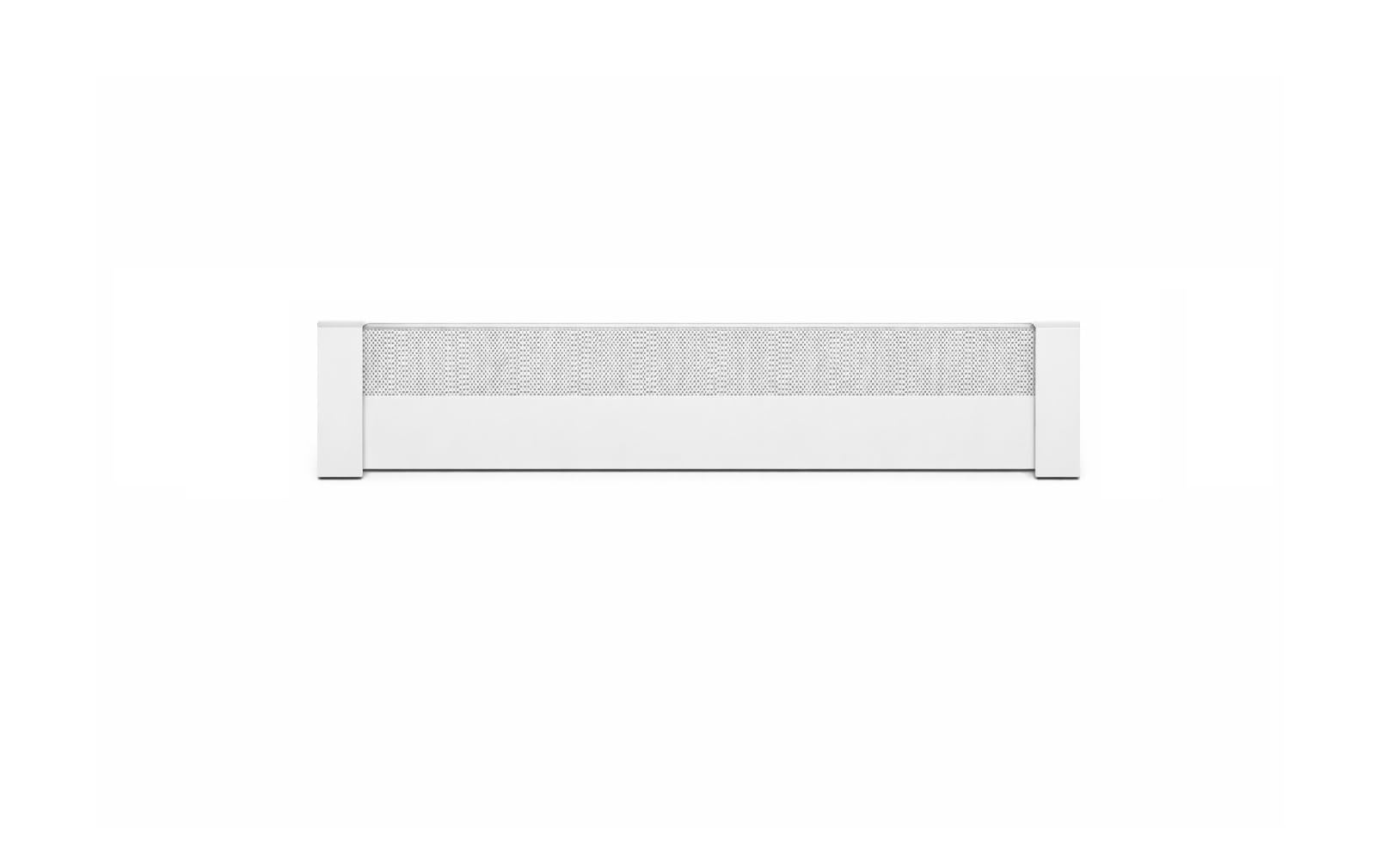
The premium cover that treats rust protection as a lifetime promise, not a warranty footnote.
Baseboarders positions this as the buy-once option, and the numbers back it up. It is made from heavy-duty 22–24 gauge galvanized steel — stronger and more dent-resistant than thinner or plastic covers — and it resists warping, cracking, and brittleness under heat. The finish is a corrosion-resistant white coating that stays clean for years. Then there is the guarantee: a Lifetime Rust Protection Guarantee. That is the kind of backing you rarely see at this size.
The installation is genuinely tool-free. It slips over most existing baseboard heater backplates and endcaps in minutes, with no contractors and no demolition. For 3–5 ft sizes the maker recommends 2 brackets, and for 6–7 ft sizes, 3 brackets. The conductive metal surface is designed to improve energy efficiency compared to insulating plastic covers, and the cover does not block or trap heat. It is made for hydronic (hot water) systems.
Two practical notes round out the picture. The smooth edges and covered heating element make it a safer choice around children and pets, and cleanup is a quick wipe with a damp cloth. The one recurring note is value — this is the most premium pick on the list, and some buyers report the price stings for a single 4-foot run. Those same owners tend to add that they would buy it again.
The long view: a 22–24 gauge steel build with a Lifetime Rust Protection Guarantee — this is the cover you install once and forget about.
Budget honesty: it costs more than the rest of the field; the value argument rests on never needing to replace it.
Worth it for: homeowners who plan to stay put and want to end the baseboard-cover conversation for good.
Possibly overkill if: you are covering a single run and price is the deciding factor — the steel covers at 3 and 4 feet can do the job for less.
Understanding the Specs
Steel Gauge and Why It Matters
Gauge measures the thickness of the metal — and here, lower numbers mean thicker, stronger steel. A 21-gauge or 22–24 gauge cover resists dents and holds its shape better than a thinner panel, which matters because a cover that flexes will never sit flush on the wall. Thicker steel also resists warping from heat far better than plastic, which can soften and discolor when a heater runs hot.
Hydronic vs. Electric Compatibility
Hydronic (hot-water) baseboards run cooler at the surface than electric ones, so most slip-on covers are designed for hydronic systems. Putting a cover on an electric heater is not automatically unsafe — some covers are explicitly built for it with venting designed to dissipate the extra heat — but a plastic cover on an electric heater is a known warping risk. Always check what the manufacturer says your cover is rated for before you buy.
FAQ
Will a baseboard heater cover work if I have electric baseboard heat?
How do I measure my baseboard heater for a replacement cover?
Can I use a slip-on cover over my existing endcaps?
Is a plastic cover or a steel cover better for rust protection?
Do I need to remove the old cover before installing a slip-on replacement?
How long does a galvanized steel baseboard cover last?
Will a baseboard cover block or trap heat?
Can I paint a baseboard heater cover to match my walls?
Are baseboard heater covers safe around children and pets?
Do covers come in different lengths for bathrooms and larger rooms?
Final Thoughts: The Verdict
For an oversized or high-output hydronic heater, the *TALL* NeatHeat TALL 6ft Baseboard Heat Cover is the one to beat — it is the only tall-profile pick here, and it hides rust fast with no special tools. Want a cooler-to-the-touch steel cover with genuine safety engineering? The Redants 4 FT Baseboard Heater Cover leads on vent design and surface temperature. And to end the replacement cycle entirely, the Baseboarders Basic Series 4 ft Set is the buy-once pick with a Lifetime Rust Protection Guarantee — the honest trade-off is that it asks more upfront than the budget champions.
How We Picked
We do not accept paid placement. Every pick is matched to a real buyer and a real use-case; we do not hands-on test units.
Sources & Methodology
Specifications: manufacturer listings and product documentation. Review insights: verified customer reviews, as of September 2026. Pricing: not shown on this page (it changes often); check the current price via the retailer link.
As an Amazon Associate, KitchPrep earns from qualifying purchases. This does not affect which products we feature.
Related Guides
