
Specs are compiled from manufacturer listings and verified buyer reviews and can change over time — please confirm the key details on the product page before buying.
That row of dented, yellowed, or rusty metal running along your baseboards doesn’t just look dated — it can feel like a permanent eyesore you can’t do much about without a full renovation. The good news: you can swap those tired covers for something fresh in minutes, using nothing more than your hands. The secret is knowing which material, gauge, and fit strategy match your specific heating system.
I’m Mohammad Maruf — the founder and writer behind KitchPrep. This guide is built by comparing the manufacturers’ published specifications and the patterns across verified customer reviews, so you get each pick’s real strengths and trade-offs instead of marketing spin.
Whether you are dealing with a single rusty bathroom unit or a whole house of mismatched covers, choosing from the best baseboard heater covers is about matching the right material and dimensions to your setup for a fast, lasting upgrade.
Our Picks at a Glance


How To Choose The Best Baseboard Heater Covers
Replacing a baseboard heater cover is one of the fastest cosmetic upgrades you can make to a room, but picking the wrong one can mean a poor fit or even a safety issue. Here is what really matters when you are shopping.
Material: Steel vs. Plastic
Steel covers, especially those made from 21- to 24-gauge galvanized steel, resist rust, handle heat without warping, and feel solid under everyday bumps. Plastic versions are lighter and cheaper, but buyers report they can yellow under UV light and are more vulnerable to cracking over time. For a permanent fix, steel is almost always the better long-term bet.
Fit: Measure Before You Click
The single biggest mistake buyers make is skipping the measuring step. You need three dimensions: the height from the floor to the top of your existing backplate, the depth of the heating element, and the total length of the unit. Most covers state exact fit ranges (like “under 3-1/4 inches deep”) — ignoring those limits is the top reason for returns.
Compatibility: Hydronic vs. Electric
The vast majority of slip-on covers are designed for hydronic (hot-water) baseboard systems. Using them on electric baseboard heaters can block airflow, hide the thermostat knob, or create a fire hazard. Always check the product description: if it says “not for electric heaters,” take that seriously. Some steel covers are now engineered to work with both, but you must verify the clearance.
Gauge and Build Quality
The gauge number tells you the thickness of the steel — a lower number means thicker metal. A 22-gauge cover is noticeably more dent-resistant than a 24-gauge one. Look for white baked-enamel or powder-coated finishes, which resist chipping and yellowing far better than basic paint.
Quick Comparison
| Model | Best For | Length | Material / Gauge | Item Weight | Amazon |
|---|---|---|---|---|---|
| NeatHeat TALL 6ft★ Best Overall | Oversized hydronic heaters | 6 ft | Plastic | 2 lbs | Amazon |
| neatheat 6ft Front CoverBest Value | Value-minded buyers | 6 ft | Plastic | 2 lbs | Amazon |
| Original 3FT Base Pro SteelMost Refined | Modern looks & dust reduction | 3 ft | Galvanized Steel | 5.74 lbs | Amazon |
| Redants 4 FT Steel | Tool-free slip-on install | 4 ft | 24-Gauge Galvanized Steel | 6.98 lbs | Amazon |
| Original 4FT Base Pro Steel | High-end hydronic refresh | 4 ft | Galvanized Steel | 7.19 lbs | Amazon |
| Ceelpeopar 4FT Steel | Durable electric-compatible option | 4 ft | 24/22-Gauge Galvanized Steel | 7.33 lbs | Amazon |
| Gandeer 2 Ft Steel | Tight spots & small bathrooms | 2 ft | Stainless Steel | 4.29 lbs | Amazon |
| SDSNTE 3ft Steel | Premium build & easy install | 3 ft | 21-Gauge Steel | — | Amazon |
| Baseboarders 4 ft Steel | Lifetime rust protection | 4 ft | 22–24 Gauge Galvanized Steel | 7.68 lbs | Amazon |
In‑Depth Reviews
1. NeatHeat TALL 6ft Baseboard Heat Cover
Our pick — over 4.5★ from 300+ verified ratings; the strongest balance of quality and price.
The lightweight plastic cover that solves ugly oversized radiators without a fight.
Owners mention this cover “solved my ugly rusty bathroom radiator problem” — and it is easy to see why. At 2 pounds versus the Redants 4 FT at 5.74 pounds, the NeatHeat TALL is an ideal pick for the oversized hydronic heaters that nothing else fits. The material is a thick semi-rigid polymer that resists rust and cleans with a wipe, so spills in the bathroom are no longer a permanent stain risk.
Installation draws the most praise from owners: no tools, no special hardware, just a slide-on-and-snap process that takes minutes. The catch is cutting to size — customers note that a utility knife struggles here and you may need metal snips around for a clean edge. Fit is mixed, because “oversized” can mean different things depending on your heater, so you absolutely must measure first. One unit also arrived dented in shipping, though the seller was quick to offer a replacement.
What Owners Love Most
- Installs in minutes — no tools at all
- Transforms the look of old, rusty radiators
- Lightweight at just 2 lbs, easy to handle alone
- Resists rust and cleans up easily
The Trade-Offs
- Cutting it to length requires good metal snips, not just a utility knife
- Fit is tricky — only buy if your heater matches the tall oversized specs
- Occasional shipping damage reported
Reach for this if: you have an extra-tall hydronic baseboard that standard covers won’t touch, and you want a lightweight rust-proof fix.
Think twice if: your heater is a standard size or electric — this is built strictly for oversized hydronic units only.
2. neatheat 6ft Baseboard Heat Front Cover
A crowd-favorite plastic cover that is cheap, easy, and instantly cleans up a room.
This is the entry-level workhorse that tens of thousands of buyers have turned to. The 2-pound plastic panel snaps over your existing hydronic heater, and owners confirm “the register covers were easy to work with, and look great.” Installation is the top-rated aspect — no special tools, cut it with common household shears, and it clicks together in minutes. The “one size fits most” approach works for many common baseboard brands, and the white finish gives a clean, updated look.
The trade-off is durability. While most owners are thrilled, a vocal minority warns that this cover can warp or yellow when exposed to higher heat levels. One reviewer noted melting and a strong plastic odor, though that appears tied to a specific heater that ran hotter than the cover’s design range. Value for money gets mixed reviews — it is cheap enough to replace, but not as permanent as steel. The other catch: end caps and accessories are sold separately, so factor that into your total cost.
Why It Wins
- Very low price for a 6-foot run of coverage
- Installation is genuinely simple — cut and snap
- Lightweight enough for anyone to handle alone
- Hides rust and gives a clean white look fast
Where It Falls Short
- Not for electric heaters — fire hazard risk
- Plastic can discolor or warp near very hot hydronic units
- End caps cost extra
Grab this for: a quick, budget-friendly refresh on a standard-sized hydronic baseboard where appearance matters more than lifelong durability.
skip it if: your heater runs unusually hot, you need electric system compatibility, or you want a permanent steel solution.
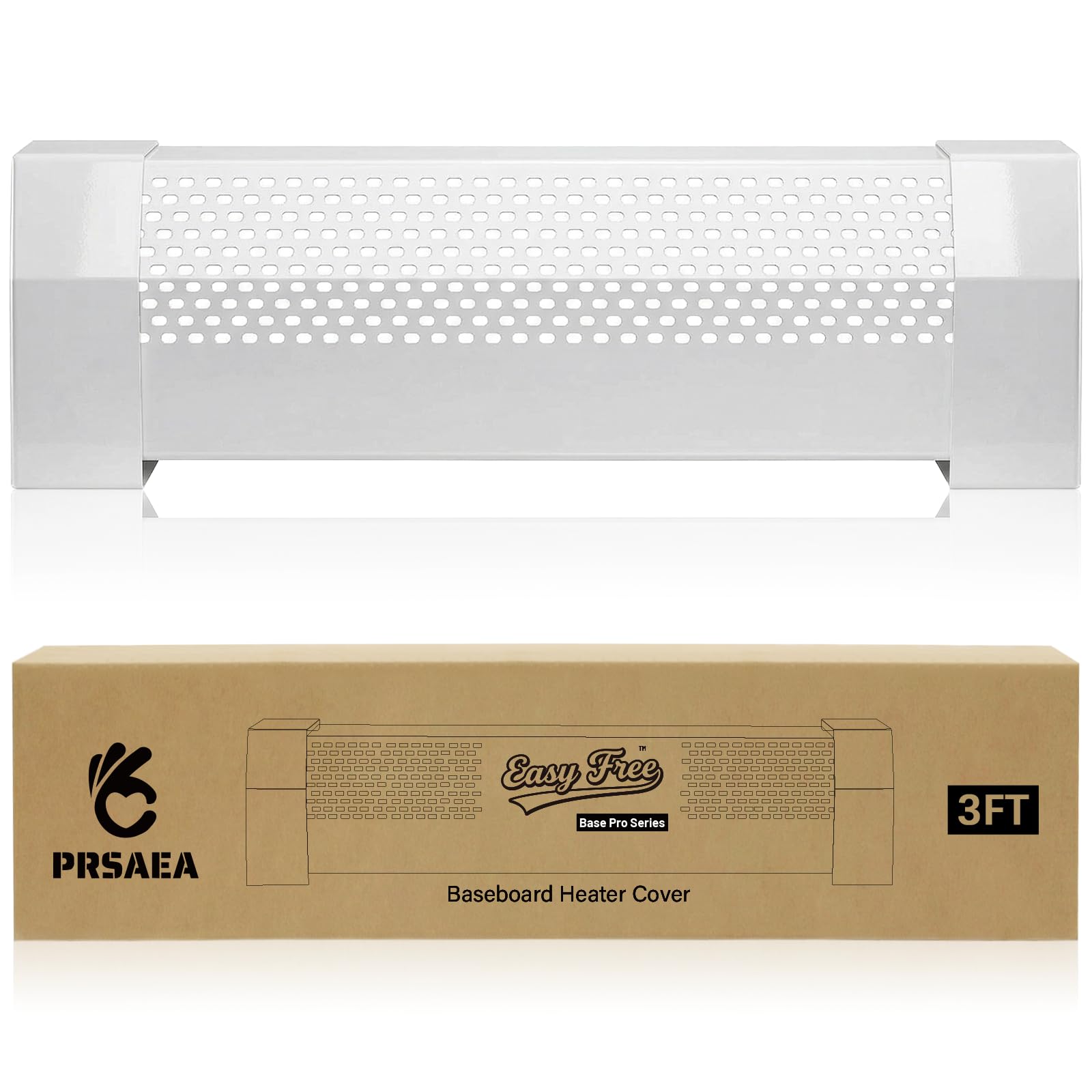
3. Original 3FT Baseboard Heater Covers, Base Pro Series
The galvanized steel cover that feels like a permanent upgrade, not a patch job.
At 5.74 pounds with a smooth baked coating, this 3-foot section delivers a solid metal feel that plastic covers simply cannot match. The clever details matter: an angled vent outlet that guides warm air upward to reduce cold pockets near the floor, and a “no-hole top and bottom” design that keeps dust and small debris from gathering inside. Owners call it “extremely easy to put on” and praise how it “fit perfect and looks really nice.”
The Base Pro series is built for hydronic hot-water systems only, and it includes both left and right end caps plus wall-mount clips in the box — nothing else to buy. The soft geometric lines give it a clean, classic profile that suits most interiors. The catch: at 5.74 pounds it is noticeably heavier than the NeatHeat (2 pounds), so handling a long stretch of these alone takes a bit more care. A small number of buyers mention the price feels a little steep for a 3-foot section, but the included end caps offset that.
What Stands Out
- Solid galvanized steel with a premium powder-coated finish
- Angled vent pushes heat up for better room circulation
- Enclosed top and bottom keep dust and pet hair out
- End caps and wall clips are included in the box
The Fine Print
- Heavier than plastic — 5.74 lbs for a 3-ft section
- Only works with hydronic (hot-water) systems
- A few owners expected a lower price per foot
Ideal for: anyone remodeling a room who wants a dust-resistant, beautifully finished steel cover that installs in minutes and looks built-in.
Not for you if: you need to cover an electric baseboard, or you want a lighter panel that is easier to cut on the fly.
4. Redants 4 FT Baseboard Heater Covers with Endcaps
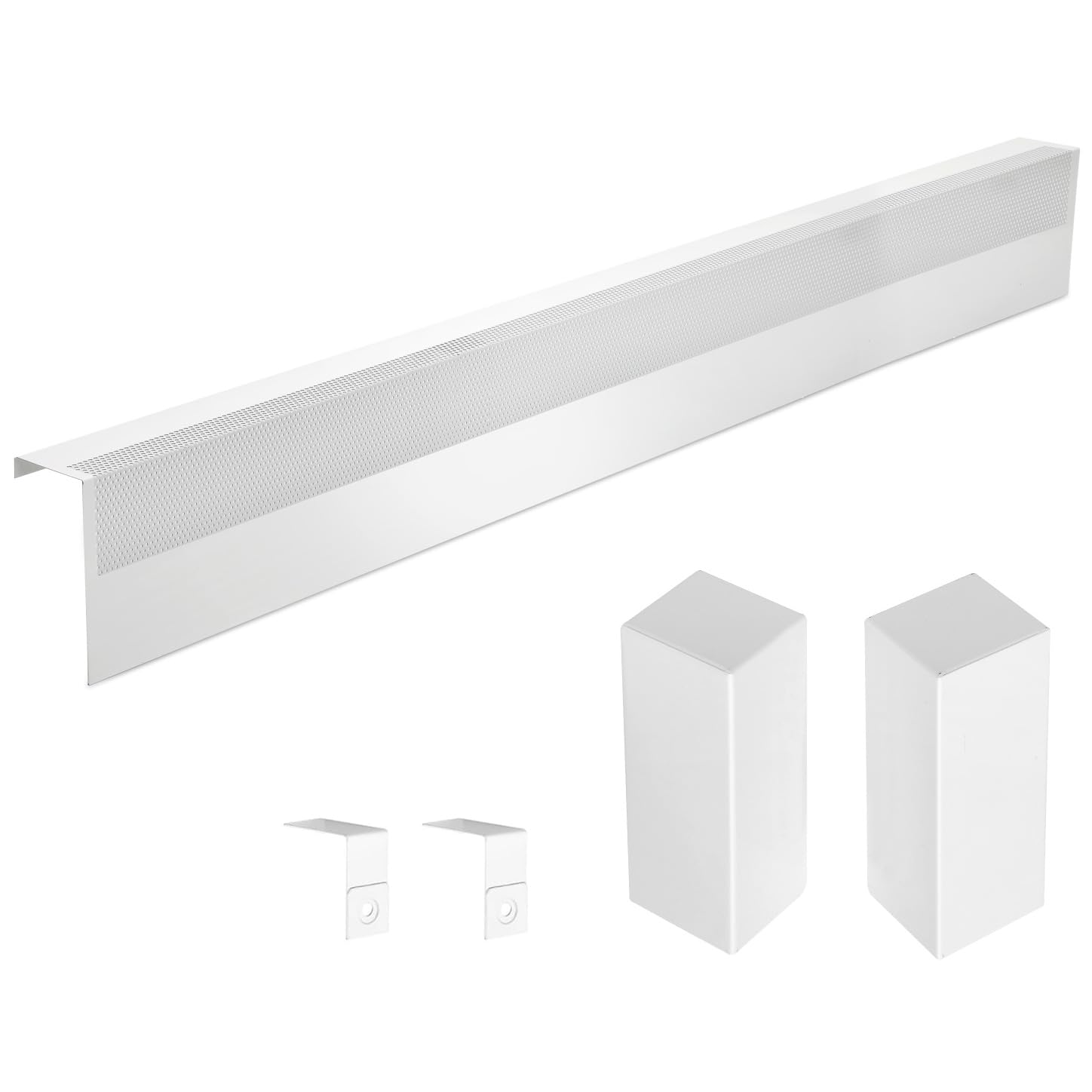
A 24-gauge steel cover that slides over the old plate in about three minutes flat.
Redants markets a “3-Minute Slide-On Install,” and the feedback backs that up — installation and appearance are the top two praised aspects, with 15 and 17 mentions respectively. This 4-foot unit is made from 24-gauge powder-coated steel, so it resists chipping and rust, and the oversized vent slots lower the surface temperature, creating a cooler, safer barrier for kids and pets. It weighs 6.98 pounds, making it heavier than the NeatHeat (2 pounds) but still manageable for a single-person install.
The unique selling point here is the “Exact Fit Guarantee” — the cover fits units that are no taller than 7-1/2 inches from floor to back-plate top and with an element depth under 3-1/4 inches. It is designed for hydronic heaters, but the listing notes that on electric models the knob will be hidden, requiring you to pop off the end cap to adjust the thermostat. That is a workable trade-off, but worth knowing before you buy. A few owners found the sizing off for their specific heater, so careful measuring is non-negotiable.
Best for: DIYers who want a no-tools, rust-proof steel cover that installs fast and includes a clear fit guarantee. Keep in mind: electric baseboard owners will need to manage the hidden knob situation.
Pick this if: your heater fits the exact dimensions and you want a fast, kid-safe steel cover. Pass if: your heater is electric and you cannot work around a hidden thermostat knob.
5. Original 4FT Baseboard Heater Covers, Base Pro Series
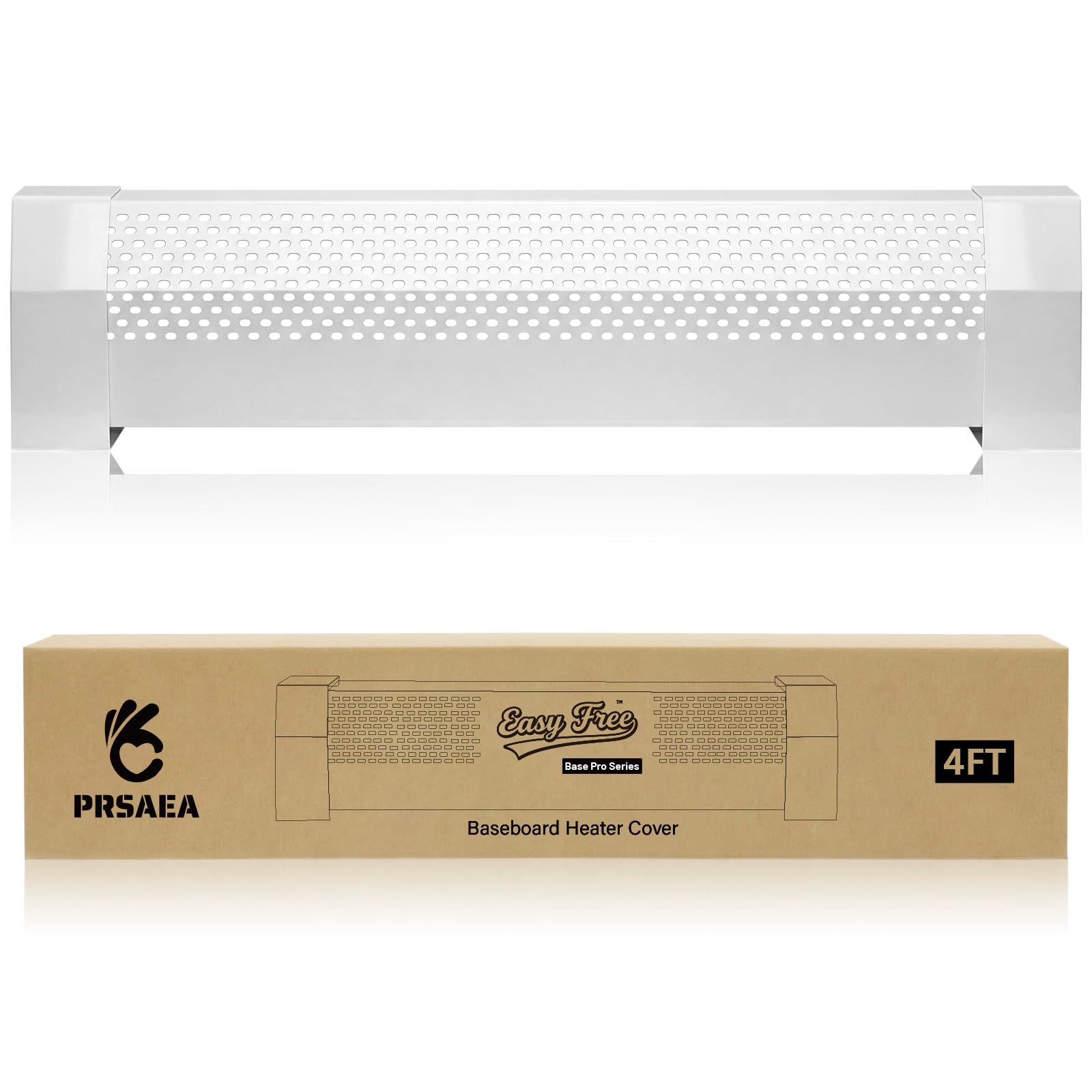
The 4-foot version of the Base Pro series, scoring the highest owner satisfaction in this guide.
This is the same refined design as the 3-foot Base Pro — galvanized steel, smooth baked coating, angled vent outlet, and a no-hole top-and-bottom layout that minimizes dust — but stretched to 4 feet for longer runs. Owners are emphatic about how it transforms a room: “Best I ever spent! I installed it in 30 seconds,” one buyer wrote. At 7.19 pounds, it has a reassuring heft without being unmanageable.
The slip-on design works over existing hydronic heaters, and the included end caps and wall-mount clips mean you have everything you need. The cons are honest and limited: the steel can get hot to the touch during operation (which is normal for any metal cover), and an occasional unit may arrive with a minor dent from shipping. One owner noted that the cutout holes felt slightly larger than they would have liked, though not a dealbreaker for most.
Reach for this when: you want a premium-feeling, dust-fighting steel cover for a 4-foot hydronic heater that looks like it came with the house. The catch: not for electric heaters, and shipping dents are a rare but real possibility.
Pick this for: a long-lasting, beautifully finished hydronic cover where first impressions matter most. pass on it if: your system is electric or you need a lighter panel.
6. Ceelpeopar 4FT Baseboard Heater Cover
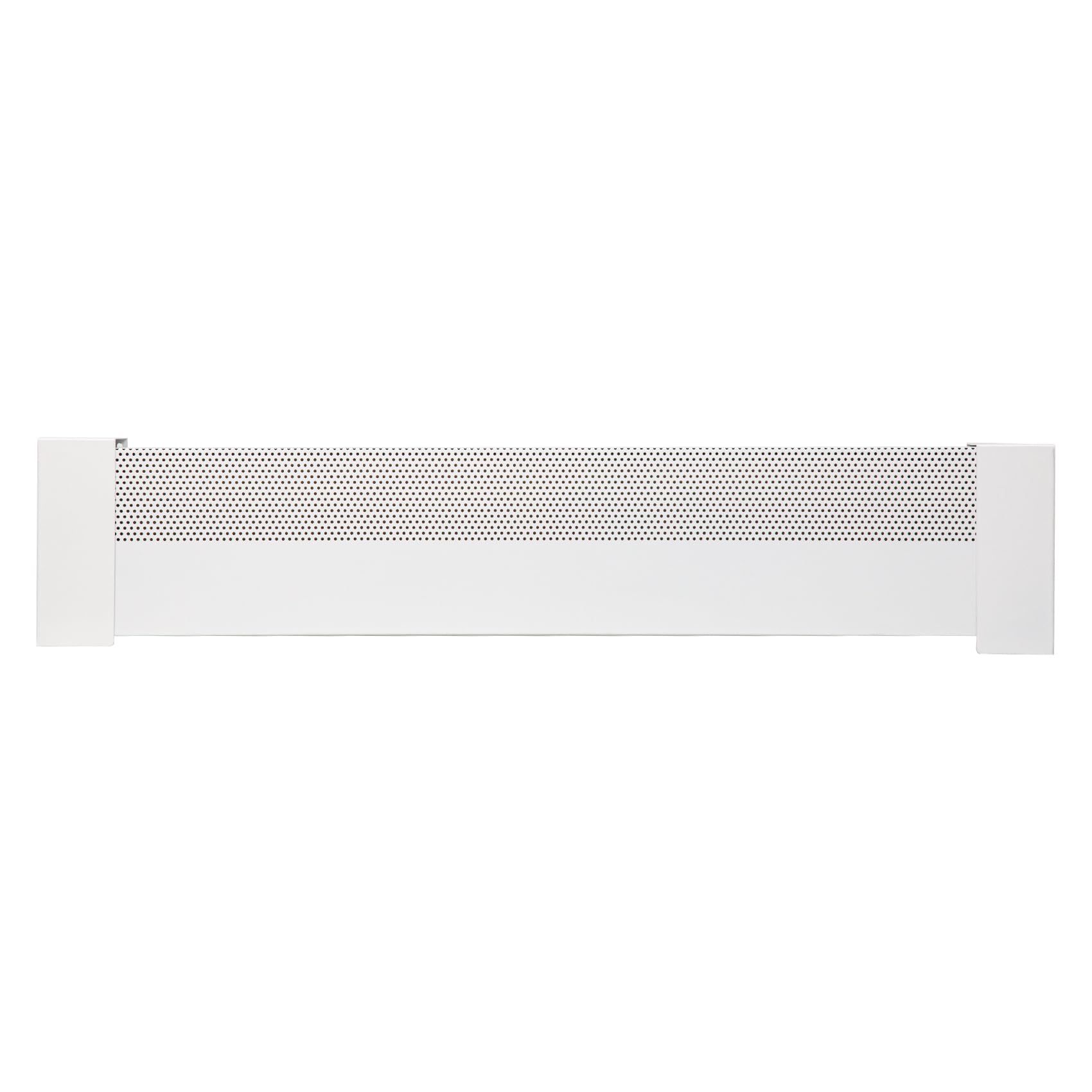
A dual-compatible steel cover that works with both hydronic and electric baseboard heaters.
Unlike most covers in this guide that explicitly forbid electric heaters, the Ceelpeopar unit is designed to work with both systems — a rare and valuable trait. The body is 24-gauge galvanized steel, while the end caps bump up to 22-gauge, making them extra rugged. Owners highlight how “strong metal, looks great” and how the design “helps to keep debris out.” It installs by removing the old cover, snapping on the new end caps, and pressing the assembly into place.
There is a catch with electric heaters: the knob may be hidden behind the cover, so you either pop the end cap off to adjust it or install a wall thermostat. For hydronic users, it is a straightforward swap. Fit is the biggest variable here — the listing gives precise measurement ranges (backplate height between 7-1/2 and 9-1/2 inches, depth under 3-1/4 inches), and ignoring those is why some buyers end up with a poor fit. If your dimensions match, owners call it a “perfect fit.”
Grab this if: you need one cover that can handle both electric and hydronic heaters, with extra-thick end caps. Measure twice: the fit window is specific, and accuracy makes or breaks the install.
Best for: homes with mixed heating system types or anyone wanting a steel cover that explicitly works with electric. Not for: heaters that fall outside the stated 7-1/2 to 9-1/2 inch height range.
7. Gandeer 2 Ft Baseboard Heater Cover
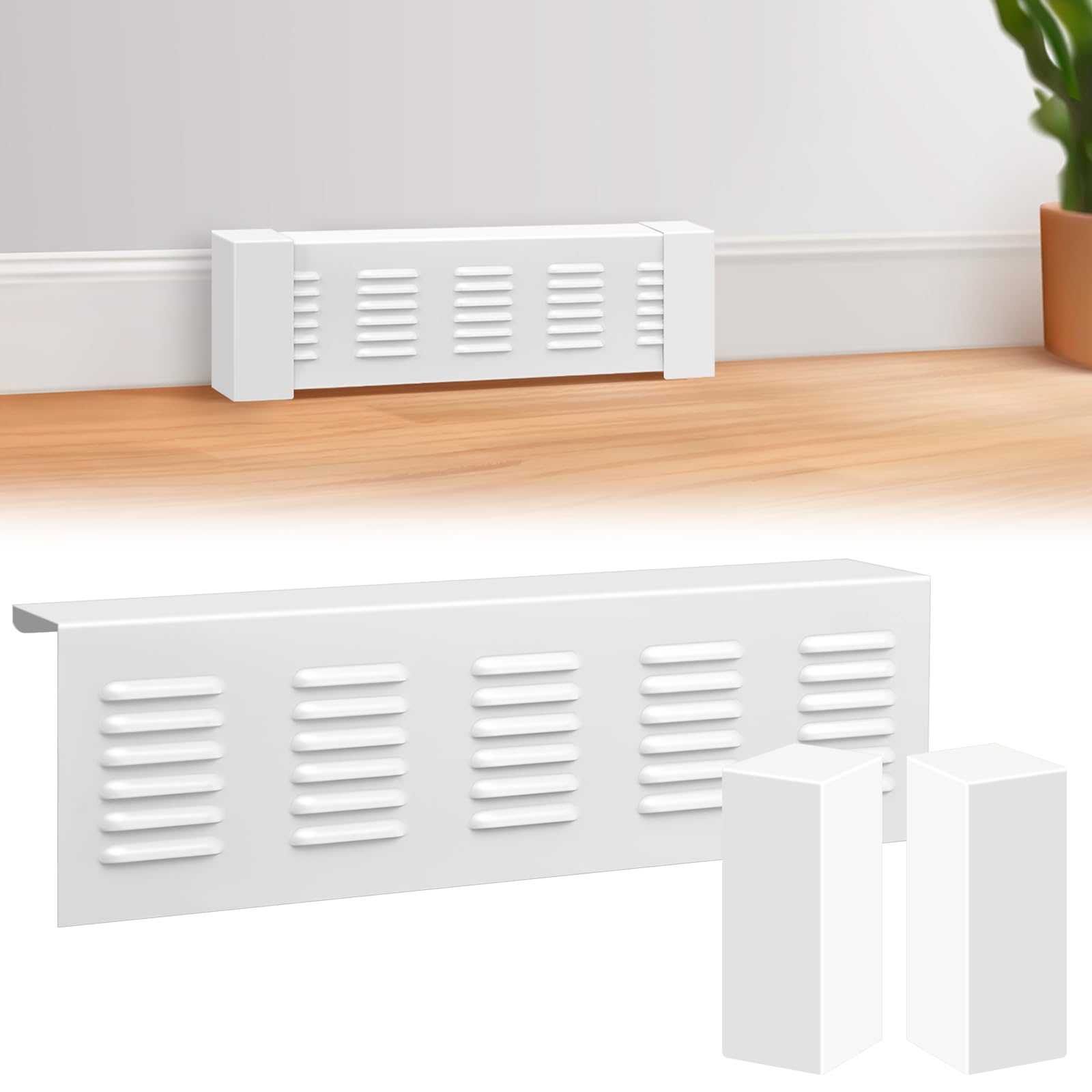
The short-run specialist for tight bathroom spaces and awkward nooks.
Smaller heaters need their own covers, and the Gandeer 2-foot unit fills that gap neatly. It is made from quality stainless steel with a white baking-paint finish that resists rust, and owners consistently call it “very very easy to install — goes right over the original heater.” The compact 4.29-pound weight makes it the lightest steel option here, which helps when you are working in a cramped corner.
The main knock from buyers is the price — at this length, the per-foot cost is higher than longer covers, and several owners mention it feels “a bit over priced” compared to bigger panels. Still, those same people admit it is “way better than the rusty one that was there.” Packaging is another area flagged for improvement; a few units arrived with minor scuffs. For the right application — a small bathroom or a powder room — the fit and look are tough to top.
Pick this for: any sub-2-foot hydronic heater where standard 3- or 4-foot covers would overlap wastefully. The downside: the premium per-foot cost, which you pay for the convenience of the exact size.
Ideal for: small bathrooms, laundry rooms, or any spot with a short baseboard run. it’s not for you if: you are on a tight budget and can find a longer cover you can cut down.
8. SDSNTE 3ft Steel Easy Slip-On Baseboard Heater Cover

The steel cover that feels substantially thicker than most, with dent-resistant 16-gauge end caps.
Most baseboard covers use 22- to 24-gauge steel. The SDSNTE 3-foot unit steps up to 21-gauge steel for the body and 16-gauge for the end caps — visibly thicker and tougher. Reviewers point out it “pops on easily” and makes a “huge difference” in rooms where an old rusted cover was dragging the whole look down. The white stoving varnish coating is a baked-on finish that holds up better than basic paint.
Installation is tool-free: remove the old cover, slip on the new one, attach the end caps. The honest trade-off is the 3-foot size limit: you need a heater that is less than 3 feet long, with a height under 8-1/2 inches and a maximum width of 3-1/4 inches. If your heater fits those windows, owners call it “a beautiful upgrade.”
Best for: anyone who wants the heaviest-gauge steel in this guide for maximum dent resistance. Measure carefully: the fit criteria are specific, and the listed weight of 1.14 lbs seems inconsistent with 21-gauge steel.
Choose this for: a thick, premium-feel cover that resists bumps and looks sharp. Look elsewhere if: your heater exceeds a 3-foot length or 3-1/4 inch depth.
9. Baseboarders Basic Series 4 ft Galvanized Steel Cover
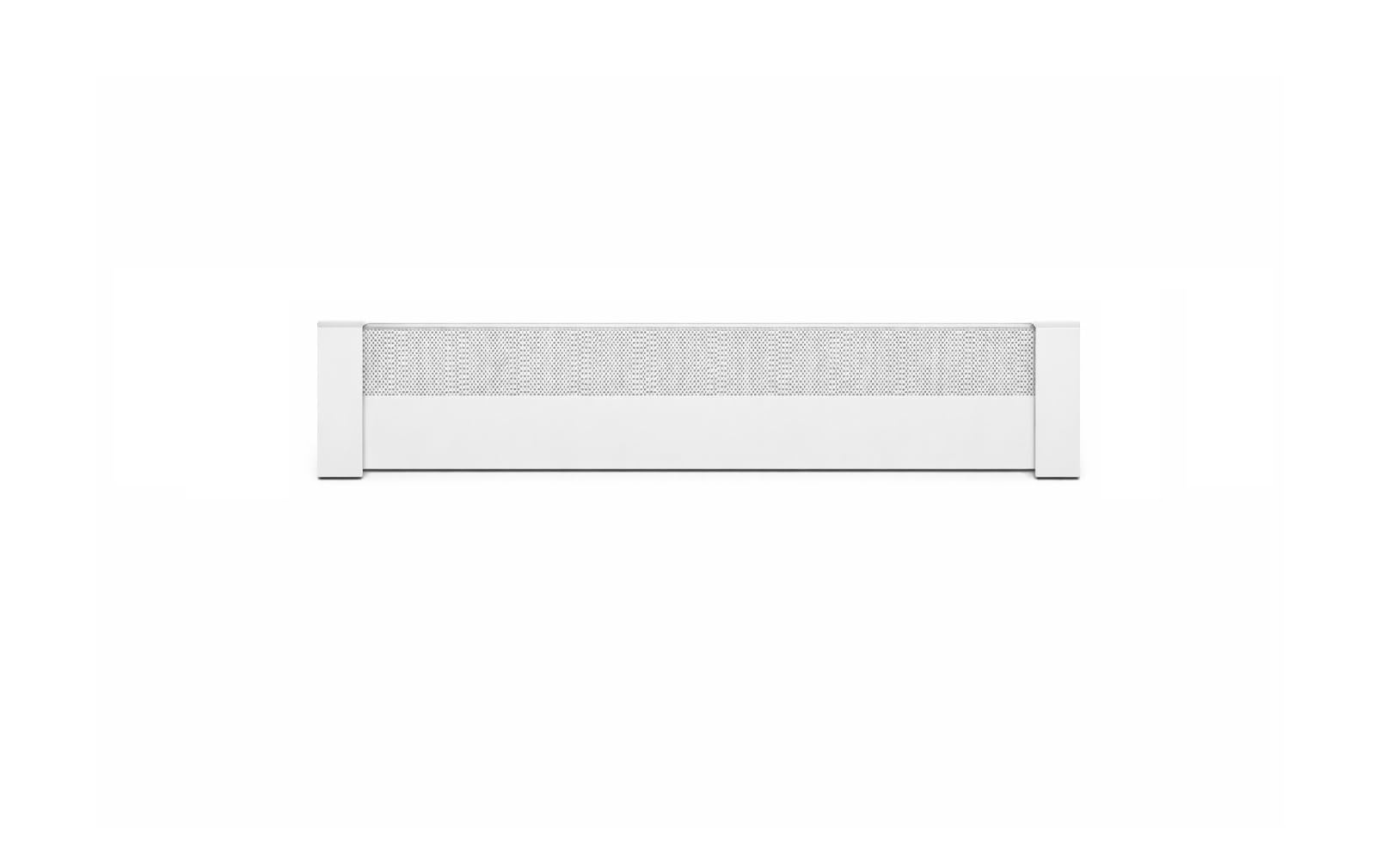
The premium pick with a Lifetime Rust Protection Guarantee behind heavy-duty steel.
Baseboarders was the first brand to bring slip-on steel covers to the market, and the 4-foot Basic Series still sets the standard. It uses 22–24 gauge galvanized steel that is noticeably more dent-resistant than thinner or plastic competitors, and the white corrosion-resistant finish is backed by a Lifetime Rust Protection Guarantee — meaning you upgrade once and never worry about replacing them again. Installation is the #1 praised aspect, with owners calling it “solid and easy to install, in under 5 minutes.”
The child-safe design hides sharp fins and hot surfaces, and the conductive metal surface improves energy efficiency compared to plastic covers that can trap heat. The biggest honest objection is the price — owners consistently call it “too expensive” relative to alternatives, with one buyer noting it feels “2-3x too high.” You are paying for the guarantee, the thicker steel, and the brand reputation. The other minor issue: at 7.68 pounds, it is the heaviest cover in this guide, so maneuvering it into place alone takes a little planning.
The Upside
- Lifetime Rust Protection Guarantee — buy it once
- Heavy-duty 22–24 gauge steel resists dents and warping
- Child-safe design with smooth edges and hidden fins
- Conductive metal surface doesn’t block or trap heat
The Honest Trade-Off
- Significantly more expensive than most alternatives
- Heaviest cover here at 7.68 lbs
- Only for hydronic (hot-water) systems
Reach for this when: you want a truly permanent solution with a lifetime guarantee, and the upfront cost is secondary to long-term confidence.
Pass if: you are covering electric heaters or your budget prioritizes lowest upfront cost over a lifetime warranty.
Understanding the Specs
Gauge Thickness
The gauge number tells you how thick the steel is — and a lower number means thicker, tougher metal. A 21-gauge cover is significantly more dent-resistant than a 24-gauge one. Most covers in this guide range from 21 to 24 gauge, with the SDSNTE using the thickest 21-gauge body. Thicker steel adds weight but gives you a cover that can withstand an accidental bump from a vacuum cleaner or a moving piece of furniture without showing a mark.
Hydronic vs. Electric Compatibility
This is the most critical safety distinction. Hydronic (hot-water) baseboard heaters circulate warm water through pipes, and slip-on covers are designed to fit over them without blocking airflow. Electric baseboard heaters generate higher surface temperatures and often have a thermostat knob that must remain accessible. Using a hydronic-only cover on an electric heater can cause overheating, melted plastic, or a fire hazard. Always check the product listing for a “not for electric heaters” warning — unless the cover is explicitly dual-compatible like the Ceelpeopar model.
Slip-On vs. Screw-Mount Installation
The vast majority of modern covers use a slip-on design: you remove the old front plate, slide the new cover over the heating element, and snap on the end caps. No tools required. This makes it a true DIY project for anyone. A few older or more industrial covers may require screws or brackets for extra stability, but every product in this guide is designed for a tool-free install, with wall-mount clips included as an optional safety add-on for longer spans.
Rust Resistance and Finish
Galvanized steel resists rust naturally, and most covers add a white baked-enamel or powder-coated finish for extra protection. The Baseboarders cover goes the furthest with a Lifetime Rust Protection Guarantee. Plastic covers resist rust by nature but can yellow or become brittle with heat and UV exposure over time. If your baseboard is in a bathroom or a basement with high humidity, a steel cover with a sturdy finish is the better long-term investment.
FAQ
Can I use a hydronic baseboard cover on an electric heater?
How do I measure my baseboard heater for a new cover?
Is plastic or steel better for a baseboard heater cover?
Can I paint my baseboard heater cover a different color?
How long does a steel baseboard cover last?
Do I need special tools to install a slip-on cover?
Will a new cover reduce the heat output of my baseboard?
What does the gauge number mean on a steel cover?
Are baseboard heater covers safe for children and pets?
Can I install a longer cover by combining multiple sections?
Final Thoughts: The Verdict
For most buyers, the baseboard heater covers winner is the NeatHeat TALL 6ft because it solves the specific pain of oversized hydronic heaters with a lightweight, rust-proof, tool-free install that owners consistently rave about. If you want a classic steel cover with a dust-blocking design and a refined look, grab the Original 3FT Base Pro Steel. And for the absolute longest-lasting solution with a lifetime rust guarantee, the Baseboarders 4 ft is the one to reach for — if your budget allows.
How We Picked
We do not accept paid placement. Every pick is matched to a real buyer and a real use-case; we do not hands-on test units.
Sources & Methodology
Specifications: manufacturer listings and product documentation. Review insights: verified customer reviews, as of July 2026. Pricing: not shown on this page (it changes often); check the current price via the retailer link.
As an Amazon Associate, KitchPrep earns from qualifying purchases. This does not affect which products we feature.
Related Guides
