
Specs are compiled from manufacturer listings and verified buyer reviews and can change over time — please confirm the key details on the product page before buying.
Every storage shed eventually fights two enemies: ground moisture that rots the floor from below, and soft soil that lets the whole structure settle into a crooked mess. A good base improve the shed, distributes weight, and maintains a level floor. This guide cuts through the gravel-pad-versus-paver confusion to show you which foundation style truly protects your shed.
I’m Mohammad Maruf — the founder and writer behind KitchPrep. This guide is built by comparing the manufacturers’ published specifications and the patterns across verified customer reviews, so you get each pick’s real strengths and trade-offs instead of marketing spin.
Your shed will only last as long as the ground under it stays level and dry. These foundation options—a permanent grid, a quick deck block, or a steel frame kit—each solve that problem differently, so you can pick the one that matches your site and your skill level.
Our Picks at a Glance


How To Choose The Best Base for a Storage Shed
Choosing a base hinges on shed weight and ground conditions. A heavy shed full of tools needs a base that spreads weight across a wide area. A small resin shed on solid ground can get away with a simpler support. Aligning base type with soil and load prevents sinking.
Spread the load vs. point support
Gravel-filled paver grids spread the shed’s weight over the entire footprint, which is why they excel on soft or uneven soil. Deck blocks support the shed at discrete points along the frame. Point supports are easier to level, but they concentrate weight into a smaller area, so they need firm, well-drained ground beneath them.
Drainage is not optional
Trapped water rots wood and corrodes metal shed frames. Permeable grids allow rain to seep into the soil, avoiding puddles. With solid blocks, verify drainage holes exist to avoid trapped moisture.
Match the base to the shed’s footprint
Paver grids come in fixed coverage areas, so you might need multiple packs to cover a large shed. Deck blocks are sold in sets of 8 or 10, and you place them under the frame at intervals. Measure your shed’s exact footprint first, then figure out how many units actually cover that area.
Quick Comparison
| Model | Best For | Coverage | Item Weight | Material | Amazon |
|---|---|---|---|---|---|
| TRUEGRID PRO LITE★ Best Overall | Heavy-weight stability | 72 sq ft / 18 units | 2.5 lb per tile | Recycled HDPE | Amazon |
| VEVOR Ground GridBudget Champion | Large areas on a budget | 237.5 sq ft / 1 roll | 41 lb per roll | HDPE | Amazon |
| CAMO Block Deck BlockQuick Build | Fast point-support bases | 8 blocks | 2.16 lb per block | Polyolefin | Amazon |
| BULLKE Round Foundation Block | Circular post supports | 10 blocks | 3.92 kg per block | Recycled HDPE | Amazon |
| Superjackwang Adjustable Block | Fine-tuning height on slopes | 50 blocks | — | Polypropylene | Amazon |
| Arrow FDN109 Base Kit | Matching Arrow 8’x8′ sheds | 8’x8′, 10’x8′, 10’x9′ | 32 lb | Galvanized steel | Amazon |
| Arrow FDN1014 Base Kit | Matching Arrow 10’x12′ sheds | 10’x12′, 10’x13′, 10’x14′ | 43 lb | HDG steel | Amazon |
| Vodaland HexPave | Mid-size gravel bases | 65 sq ft / 22 units | 20.41 kg | Recycled PP | Amazon |
| Standartpark EasyPave | Large driveable areas | 315 sq ft / 126 units | — | Recycled plastic | Amazon |
In-Depth Reviews
1. TRUEGRID PRO LITE Permeable Paver
Our pick — over 4.5★ from 850+ verified ratings; the strongest balance of quality and price.
The heavy-lifting grid that shrugs off a skid steer and still drains instantly.
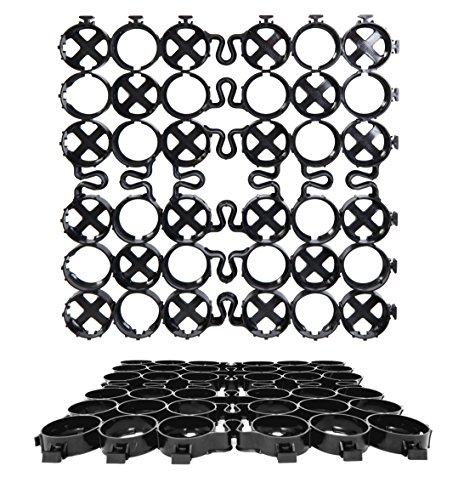
You want a shed base you never think about again, and the TRUEGRID PRO LITE delivers that. The tiles snap together tool-free with small tabs, so a first-time DIYer can lay a 72-square-foot pad from 18 tiles without special skills. Each 24 x 24 x 1 inch tile weighs just 2.5 pounds, yet the finished grid carries a 120,000 lb load class (the total weight the whole surface can bear once filled). Buyers report parking heavy pickups and even a 4,000 lbs forklift on top without the surface budging.
What wins people over is the build quality, with more than 120 owners singling it out. The recycled HDPE plastic is 100% post-consumer and made in the USA, and it stands up to snow plows and all climates while staying fully permeable so rain drains straight through. For a shed base, you only need about a 1-inch dig before laying the tiles, and you can saw-cut them for a custom fit around obstacles.
There is one honest catch: the tiles measure 24 inches, but when snapped together they install closer to 23 inches due to the overlap. Owners mention checking the installed dimension when calculating how many packs you need. “Handles skid steer, F250, mower without budging/crimping,” as owners put it — a steep price per tile, but the durability is exactly why this grid outlasts cheaper alternatives that shift and trip under load.
Why owners love it
- 120,000 lb load class handles heavy trucks and equipment
- Snaps together with no tools and cuts with a skill saw
- Fully permeable — puddles and mud are gone
What to watch
- Installed size runs about an inch smaller than the 24-inch spec
- Premium price compared to basic grid options
Reach for this if: you want a permanent, drive-on-worthy shed foundation that handles soft soil.
Look elsewhere if: you need maximum coverage for the lowest cost — a roll-out grid covers more ground per dollar.
2. VEVOR Ground Grid 25 ft x 9.5 ft
A single 41-pound roll that covers 237.5 square feet for less than most paver packs.
If your shed site is large and the ground is soft, the VEVOR Ground Grid gives you the most coverage for your money. One roll measures 25 feet by 9.5 feet and covers 237.5 square feet—more than triple the area of the TRUEGRID pack at 72 square feet. The 3-inch-deep cells lock infill in place and handle up to 1885 lbs per square foot when filled, so it works for slopes and unstable areas where water and soil keep shifting.
Owners call the install simple and the results stable, with the grid holding up to heavy equipment once filled. The material is cuttable HDPE at 0.06-inch thickness, resistant to acids, alkalis, and photooxidation aging, meaning it survives all climates without degrading. Water flows horizontally through the structure, so drainage is a genuine strength, and grass can establish itself right through the cells.
The honest caveats come from install experience. Customers note the included plastic clips are near useless and recommend galvanized bolts instead, and the edges and seams are weak enough that they need extra support. “Cost-effective, simple install; cells lock up like concrete curb,” as owners describe it — but only if you pin it down thoroughly. One owner saw cells raise 6 inches during filling despite extra side pins, so plan to anchor the center and edges before you pour gravel.
Smart budget move: the best value-per-square-foot of any grid on this list, ideal for large or sloping shed sites.
Fair trade-off: skimpy clips and delicate edges mean you’ll spend extra on bolts and pins to make it bulletproof.
3. CAMO Block Heavy Duty Deck Block
A deck block that lifts your shed frame off the ground without hauling concrete.
If you want a raised shed floor fast and hate wrestling 40-pound concrete blocks, these are the answer. Each CAMO Block weighs just 2.16 pounds, yet it accepts 4×4 posts, 6×6 posts, 2×4, 2×6, and 2×8 wood joists, plus 2-inch metal joists. An 8-pack gives you enough supports for a modest utility shed, and they nest together so you can stack the whole set in any vehicle for easy transport.
What wins people over is versatility — owners use them for utility sheds, chicken coops, and floating decks alike. The slots are precision-molded to fit standard lumber without chipping, and you can reposition each block during install until everything sits level. Reviewers point out “1 year in and everything is stable,” and many note the blocks are far easier to work with than concrete, with several recommending them to family and friends.
The main fit note: these blocks are designed for 2-inch corners, so a 4×4 post application won’t slot in. “These will only work for a 2″ corner,” as one owner put it after switching to 4×4 lumber. They’re also point supports, not a full pad, so they demand firm, level ground — not soft soil where they could sink unevenly.
Fastest setup: a complete raised base in an afternoon, no digging or pouring required.
Check your lumber: standard 2-inch framing slots perfectly, but 4×4 posts need a different block.
4. BULLKE Round Foundation Block
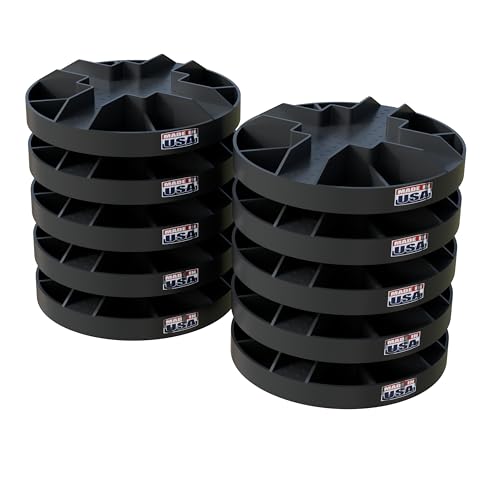
A round 10-inch pedestal rated for 1,250 lbs that sets a floating shed deck in place.
These circular pedestals give a floating shed or deck a stable perch without digging or pouring. A 10-pack supports a small shed platform, and the round shape spreads weight evenly while keeping a low profile.
Owners praise the quality and say the blocks work perfectly for 4×4 post construction, with one describing how treated 2x4s slipped tightly into the grooves. The recycled HDPE construction is 100% recyclable and made in the USA, and each block is rated to support up to 1,250 lbs on level, solid ground — plenty for a storage shed frame.
The recurring gripe is drainage: there are no drain holes, so water can pool inside the block. Owners note you’ll need a drill to add your own holes for water to escape. “Have a drill handy,” as the review pages sum it up. On level ground with sand for leveling, though, these have held floating decks rock-solid.
Shed-ready: a dependable 1,250 lbs-per-block pedestal that floats posts off damp ground.
Drill first: you’ll add your own drainage holes to keep water from collecting inside.
5. Superjackwang Adjustable Deck Blocks
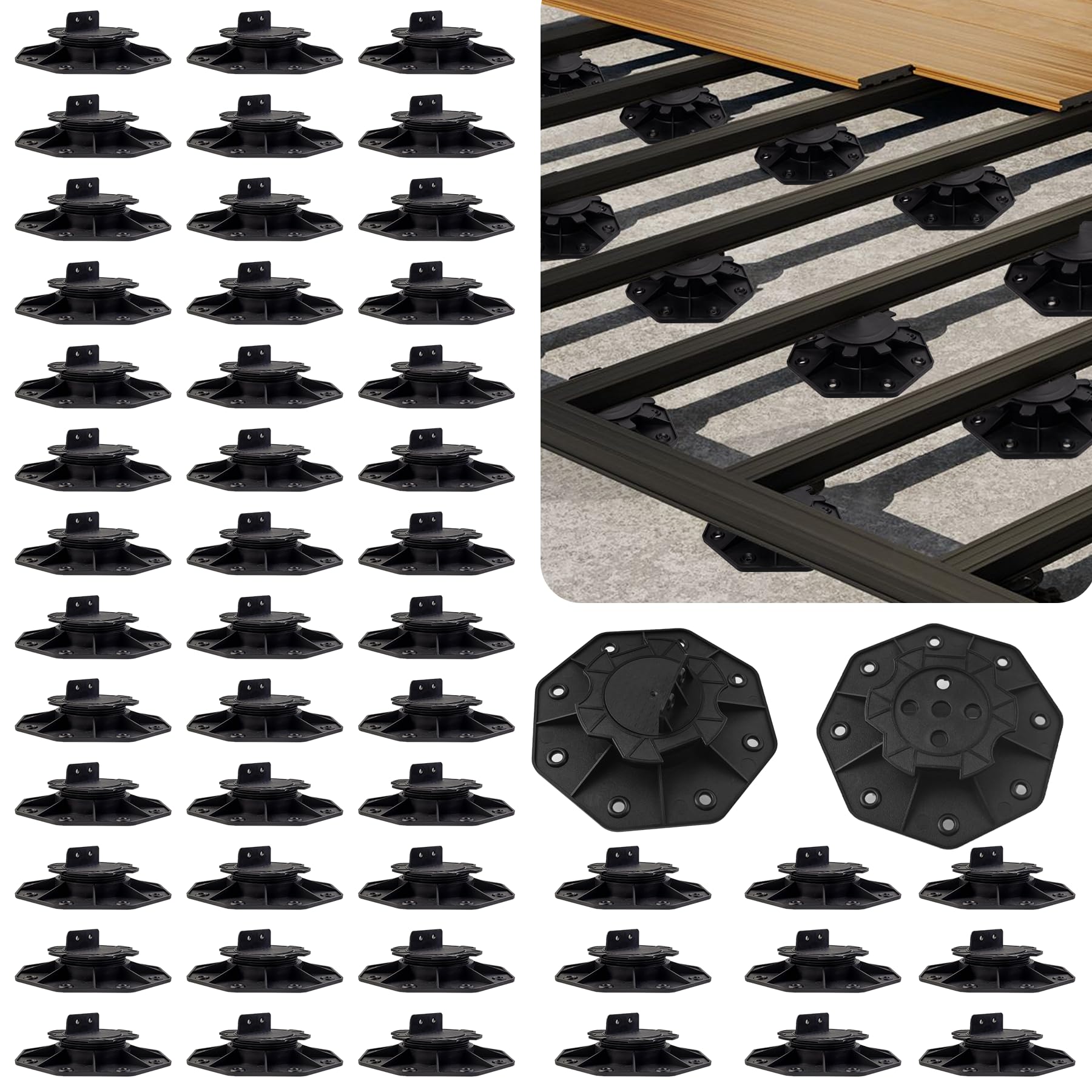
Fifty threaded pedestals that fine-tune a shed base’ height on uneven ground.
Leveling a shed on a slope is the hardest part of any base build, and these blocks solve it with a twist. Each pedestal has two adjustment holes and screw rings that raise or lower the joist support from 0.71 inches to 1.18 inches, so you dial in each corner independently instead of shimming with scrap wood. A 50-pack covers a full shed perimeter plus interior supports, and each block handles up to 5800 lbs.
The 15-centimeter base diameter gives joists a stable platform, and the recycled polypropylene construction shrugs off low and high temperatures, corrosion, and UV. Owners building a 12 x 20 deck found the adjustability made leveling easy and the blocks held everything securely. The compact size is a plus in tight spaces, with owners noting they’re “smaller than expected but worked great” on uneven ground with tree roots.
Know the limits before you buy. These are lighter-duty blocks suited to smaller or non-structural projects, and one owner noted that pricier versions have a pivoting top for perfectly flat seating on unlevel ground. “Small but mighty,” as one assessment put it — the fine-tuning is the standout feature, not brute-force load capacity.
Slope solution: the screw-ring height adjustment makes leveling a shed on uneven ground genuinely easy.
Right-sized: excellent for smaller builds; heavy structural decks may want beefier blocks.
6. Arrow FDN109 Storage Shed Base Kit
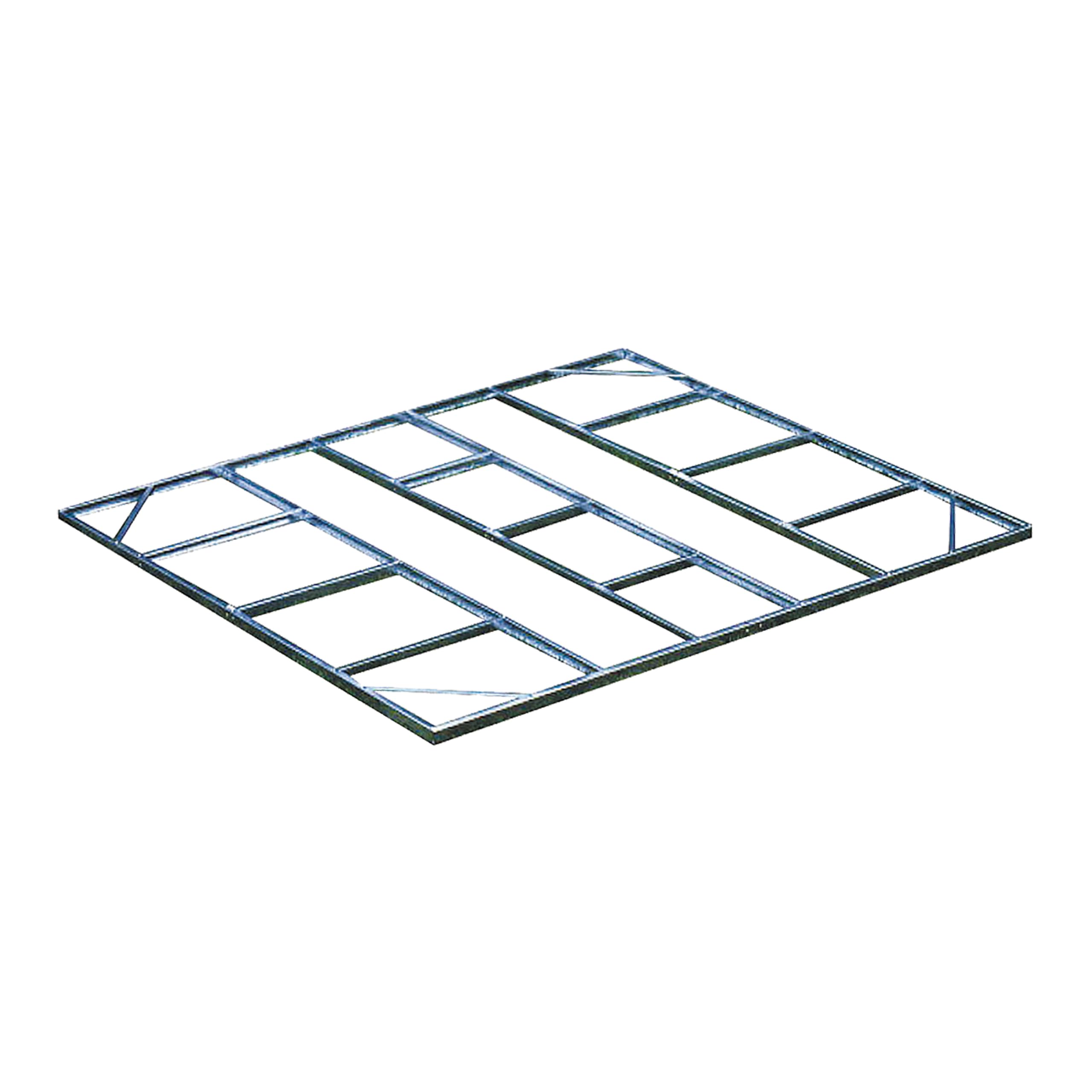
A galvanized steel frame that keeps an 8-foot Arrow shed square and off the ground.
If you already own (or plan to buy) an Arrow resin or steel shed, this kit is the exact match for its footprint. The FDN109 base fits 8×8, 10×8, and 10×9 foot Arrow sheds — except the Elite and Ezee models — and it’s built from hot-dipped electro-galvanized steel so it resists rust outdoors. It includes all hardware and, at 32 pounds, two people can move it into place without machinery.
The base keeps stored items off the ground and helps you keep the building square before you finish the floor. Owners found assembly light and fast, with one describing it as an easy one-hour build that avoids hauling and cutting 2x4s. It’s the ideal underlayment for plywood beneath a resin shed, and it worked well on leveled earth with no warping or insect issues.
Assembly does take patience, and the instructions have drawn mixed feedback. “Not hard to put together but it was time consuming,” as one owner put it. The real fit note: this is just the metal frame — plywood is not included, so budget for exterior-grade plywood cut to the base dimensions. A rare owner reported the frame buckling underfoot while screwing down flooring, so pair it with solid, level ground rather than relying on it alone.
Perfectly matched: the no-guessing floor frame for common Arrow shed sizes.
Plan the plywood: the frame ships alone, so budget for your own floor boards to finish the job.
7. Arrow FDN1014 Storage Shed Base Kit
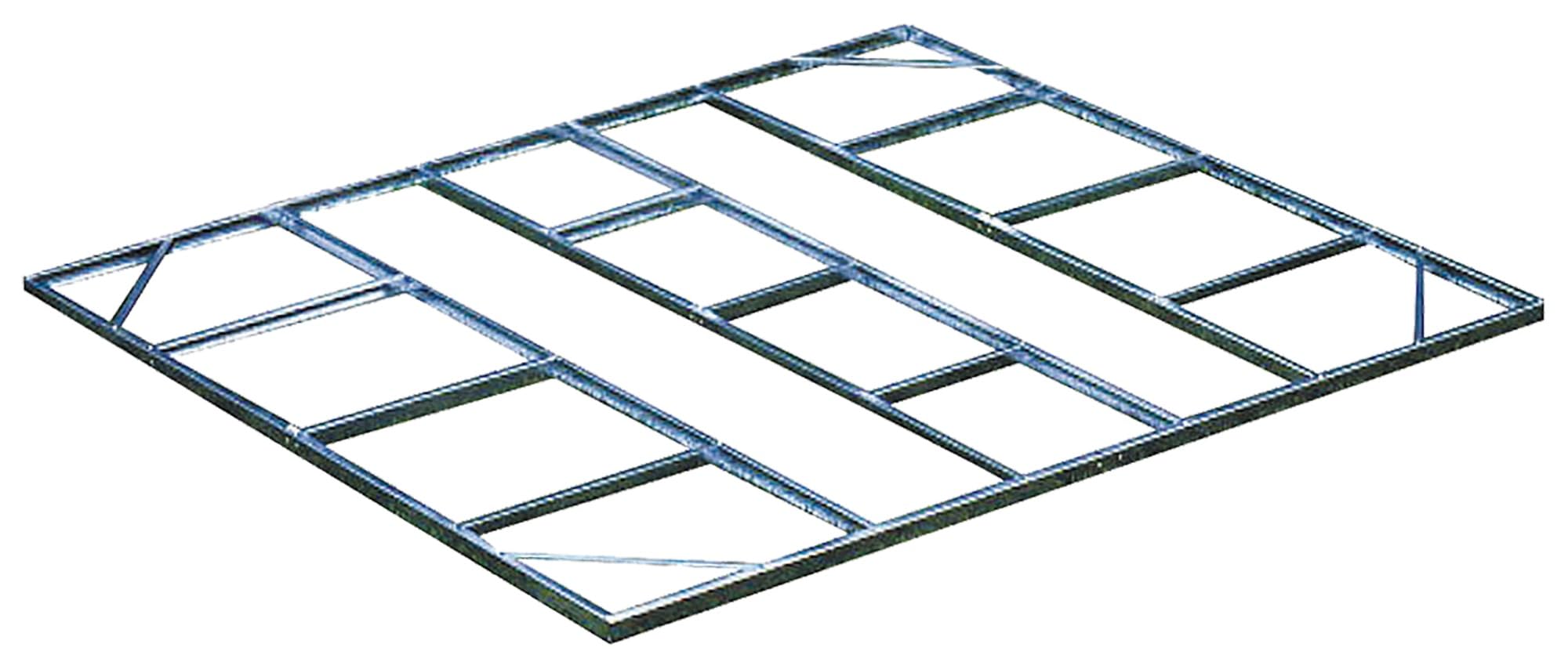
The bigger Arrow base frame that self-squares the shed before you finish the floor.
Stepping up to a 10×12 or larger Arrow shed, this is the matching steel frame. The FDN1014 fits Arrow and Storboss buildings in 10×12, 10×13, and 10×14 foot sizes — though not models with swing doors — and it’s made from durable HDG steel. At 43 pounds it’s heavier than the smaller FDN109, reflecting the larger footprint it must square up.
The clever part is that the base self-squares your building before you complete assembly, removing the guesswork of getting the shed frame true. You can finish it with plywood, gravel, or concrete — and it even works as a form for pouring a concrete pad. Owners using it to hold drainage stones under a shed found it did the job well, and several found it easy to install.
Stability is the honest weak point, and it’s the most-discussed topic in owner feedback. “Very flimsy, bends in with any weight put on it,” as one reviewer noted directly, and another found the frame bent back easily with pliers. The takeaway: this is a positioning frame for a proper base, not a load-bearing foundation on its own. Use it on solid, prepared ground and pair it with your chosen flooring to get the support a heavy shed needs.
Right for large Arrow sheds: self-squaring frame that also doubles as a concrete pour form.
Handled with care: not meant to bear weight alone — prepare firm ground beneath it.
8. Vodaland Permeable HexPave System

A 1-inch hex grid that handles 27,000 lbs and stops gravel from washing away.
This hex-shaped paver grid sits between the budget rolls and the premium tiles — a sturdy mid-size option for a shed base. Each set covers 65 square feet with 22 units, each measuring 22 7/8 inches by 19 7/8 inches with a 1-inch chamber depth. The recycled PP plastic carries up to 27,000 lbs depending on the base and fill, so it’s more than enough for a heavy shed.
Functionality is the top praise point, with owners calling it a lifesaver for erosion problems that years of grass planting couldn’t fix. The panels interlock easily and keep stones in place, and one owner held a private gravel road together for 2 years with just minimal gravel top-ups. As a concrete alternative for a shed base, owners found it sturdy and level, with tool-free assembly and no cutting needed.
The trade-offs are price and panel connection. “These work and look good once they are installed and filled. The price takes away one star,” as one buyer summed it up. Durability gets mixed feedback because some panels come apart easily, so treat the interlocking edges gently during install. Level ground is essential — owners note most of the install time goes into preparing a flat surface underneath.
Erosion fix: a 27,000 lb-rated grid that locks gravel in place and ends muddy runoff.
Gentle connections: some panels separate easily, so install on well-leveled ground and handle edges with care.
9. Standartpark EasyPave Permeable Pavers

A 315-square-foot paver system that carries delivery trucks and even aircraft.
For the largest shed sites or a shed you also drive up to, this is the most substantial grid on the list. The EasyPave system ships 126 units covering 315 square feet, with each paver measuring 24 inches by 16 inches at a 2-inch depth. The wave-type design tapers at the edges for added strength, and the True Lock system fastens all four sides of every connection so panels stay firmly joined.
Shoppers say these withstand the weight of large UPS and FedEx trucks, and one even used them to solve mud on a grass runway — “Works for Airplanes, too!” as the review reads. The quality is the top praise point, with owners noting the pavers work well around barns and don’t interfere with lawn care since grass grows through the cells. Green color blends into the yard after grass seed establishes.
Install honesty: the included stakes had a mixed record, with one owner’s failing and being replaced by rebar. The color can differ from expectations, and you should measure your exact spot before ordering this much coverage. Owners found it installed well on existing grass, settled within a week, and supported three cars with grass growing through and mowing cleanly.
Maximum coverage: a delivery-truck-rated pad that turns a muddy shed site into a stable green surface.
Plan the pins: stake it firmly — some owners swap the included stakes for rebar on hills.
Understanding the Specs
Load class vs. load capacity
You’ll see “load class” and “lbs per block” on different products. Load class is the total weight a finished grid can bear across its entire surface once filled—the TRUEGRID’s 120,000 lb class covers a truck, while a single deck block’s 1,250 lbs rating supports just that one point. Match the rating to what actually crosses your shed base.
Chamber depth and coverage
Chamber depth is how deep the cell is that holds your gravel or soil — 1-inch grids work for lighter shed bases, while 2-inch and 3-inch depths handle more weight and vehicle traffic. Coverage tells you how much ground one pack covers, so divide your shed’s footprint by that number to know how many packs you truly need.
FAQ
How many paver grid packs do I need for my shed?
What’s the difference between a paver grid and deck blocks for a shed base?
Can a shed base prevent floor rot?
Can I drive a vehicle over my shed base?
How much ground preparation is needed before laying a paver grid?
Will the Arrow base kits fit sheds from other brands?
Do I need to pour concrete before using deck blocks?
How do I level a shed base on a slope?
Final Thoughts: The Verdict
For the most durable and low-maintenance foundation, the base for a storage shed winner is the TRUEGRID PRO LITE because its 120,000 lb load class and tool-free install deliver permanent, drive-on-worthy stability that owners consistently rave about. If you’re covering a large site on a budget, grab the VEVOR Ground Grid for the most square footage per dollar. And for a raised shed floor you can build in an afternoon, the CAMO Block is the one to reach for—just confirm your lumber size fits the slots.
How We Picked
We do not accept paid placement. Every pick is matched to a real buyer and a real use-case; we do not hands-on test units.
Sources & Methodology
Specifications: manufacturer listings and product documentation. Review insights: verified customer reviews, as of September 2026. Pricing: not shown on this page (it changes often); check the current price via the retailer link.
As an Amazon Associate, KitchPrep earns from qualifying purchases. This does not affect which products we feature.
Related Guides
