
Specs are compiled from manufacturer listings and verified buyer reviews and can change over time — please confirm the key details on the product page before buying.
You know the drill: a glass sits in the sink, you soak it, scrub it, and stack it on the counter to dry. A bar glass rinser is a small sprayer that mounts through a hole beside your sink and blasts residue out of a glass in about a second, so you skip all that. If you just want the short answer, the Delta SpotShield GR150-SP is the one most buyers end up happiest with — it cleans baby bottles, wine glasses, and travel mugs with water jets, not elbow grease. The rest of this page sorts out the details that actually change your day: how much water each unit pushes, what the body is made of, and whether a countertop model makes more sense for a bar than a sink-mounted one.
I’m Mohammad Maruf — the founder and writer behind KitchPrep. This guide is built by comparing the manufacturers’ published specifications and the patterns across verified customer reviews, so you get each pick’s real strengths and trade-offs instead of marketing spin.
The differences that matter come down to flow rate, body material, and install hole size, and this page walks you through a genuinely useful pick for every kind of sink and bar setup. That is the point of this guide to the bar glass rinser, a small fixture that removes the worst part of washing up.
Our Picks at a Glance

How To Choose The Best Bar Glass Rinser
Before you spend anything, check four things: the flow rate it pushes, what the body is made of, whether it drops into an existing sink hole or sits on the counter, and how wide an opening it will accept. Get those four right and the rest is finish and price tier.
Flow rate decides how hard you press
Flow rate is measured in gpm, or gallons per minute — the volume of water the unit pushes through its jets each minute. A rinser rated at 1.2 gpm moves less water than one rated at 1.8 gpm, so the spray feels gentler and you press a little longer on stubborn residue. Buyers who rinse milk, formula, or smoothie out of deep bottles tend to prefer the stronger number.
Material is the honest trade-off on most of these
A lot of sink-mounted rinsers look like brushed metal but are built from ABS plastic — a tough, molded plastic that resists water but reads lighter in the hand than steel. Solid 304 stainless steel or brass bodies feel denser and hang onto their finish longer. This choice separates the models people rave about from the ones they tolerate.
Countertop or sink-mounted — the two families
A sink-mounted rinser replaces a soap dispenser, side sprayer, or an unused hole in your counter, so dirty water runs straight into the sink. A countertop pitcher rinser is a freestanding unit with its own drain and drip tray, which is why bars and coffee carts favor them — you can set one down and start rinsing without touching the plumbing.
Measure your hole and your tallest glass first
Sink-mounted units drop into an existing accessory hole, and most ask for roughly a 1-1/4 inch opening. On top of that, check the drinkware opening the unit accepts — some list a wide 5-inch mouth that swallows tumblers, while others top out around 4-1/4 inches. Measure both before you buy and you skip the return.
Quick Comparison
| Model | Best For | Flow Rate | Material | Mount Type | Amazon |
|---|---|---|---|---|---|
| Delta GR150-SP SpotShield Stainless★ Best Overall | Everyday kitchen duty | 1.2 gpm | Metal body, plastic handle | Single hole sink | Amazon |
| Glass Rinser with Pull-Out SprayBest Value | Deep sinks and small bars | — | ABS + stainless steel | Single hole sink | Amazon |
| Homewerks GR001SSStrongest Spray | Replacing a soap dispenser | 1.8 gpm | Stainless steel handle | Single hole deck-mount | Amazon |
| YBB Portable Pitcher Rinser | Countertop bar stations | — | 304 stainless steel | Countertop, freestanding | Amazon |
| DIBTSA Automatic Cup Washer | Coffee carts and espresso bars | — | 304 stainless steel + ABS | Single hole sink | Amazon |
| KRAUS CleanMate KGR-500SFS | Wide-mouth tumblers | 1.2 gpm | ABS plastic | Single hole sink | Amazon |
| KRAUS CleanMate KGR-500MB | Matte black kitchens | 1.2 gpm | ABS plastic | Single hole sink | Amazon |
| MaxSen Brass & 304 Stainless Pitcher Rinser | Self-contained rinsing station | — | Brass + 304 stainless steel | Sink mount | Amazon |
| Delta GR150 Chrome | Long-haul durability | 1.2 gpm | Metal body, plastic handle | Single hole sink | Amazon |
In‑Depth Reviews
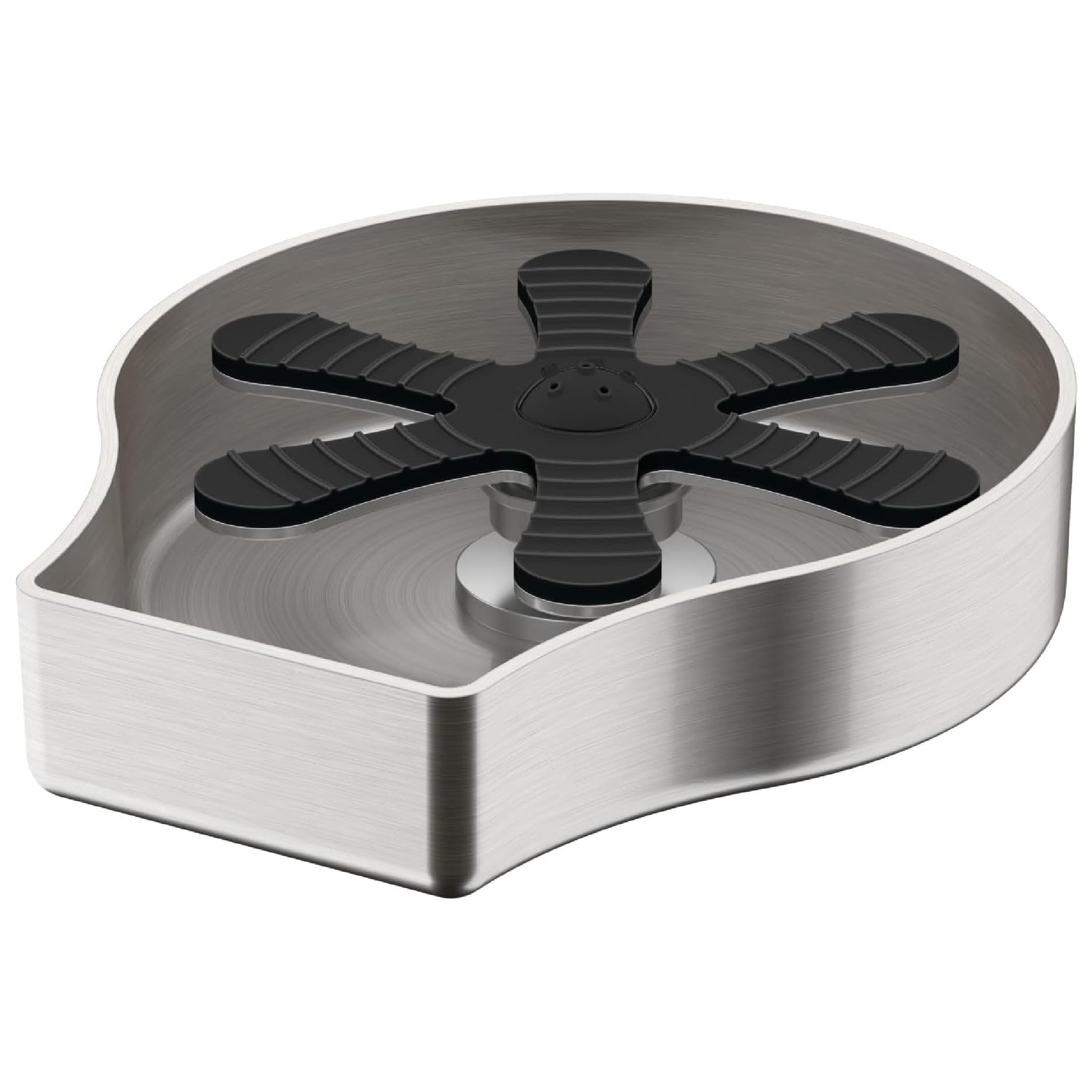
1. Delta Faucet Glass Rinser for Kitchen Sinks, Kitchen Sink Accessories, Bar Glass Rinser, SpotShield Stainless GR150-SP
Our pick — 4.5★ from 2,500+ verified ratings; the strongest balance of quality and price.
The job-site favorite for anyone who wants one rinser that just works for years.
If you want the version of this fixture that people stop thinking about because it keeps working, this is it. Delta sells it into a 1.2 gpm flow rate, and the subtle overhang angles the runoff straight into the basin instead of across your counter. It fits an existing single hole where a soap dispenser, sprayer, or sink-hole cover used to sit, and the supply line comes in the box so it can hook to hot or cold water.
The build is what wins nearly everyone over. It feels like a permanent fixture rather than an accessory, and it holds up to a genuinely heavy rotation of baby bottles, Yeti tumblers, and espresso cups. Installing it is a small project most people knock out in about ten minutes, and there is a bonus that surprises a lot of first-time buyers — a cover ships in the box that sits over the unit when it is not in use, so the hole in your counter looks intentional instead of abandoned.
The honest catch is cost and material feel. This one lives in the premium tier and the handle is plastic, which some buyers notice when they unbox it. Owners also report the cover rests on top rather than snapping into place, and the unit is sized for most mugs but not the widest ones. None of that stops it from being the most-recommended rinser in its class, and the recurring theme in the longer-term reports is that it still performs years in. As owners sum it up: “Sprays powerfully enough to remove formula residue. 10-min install.”
Where it earns its keep
- Rinses residue in seconds and drains into the sink through the overhang
- SpotShield finish resists water spots and fingerprints on a busy counter
- Includes a cover, so nothing looks unfinished when the unit is idle
- Supply line included and connects to hot or cold
What to weigh before you buy
- Plastic handle on a premium-tier body
- Cover rests on top instead of latching
- Sized for most mugs, not the widest ones
Grab this one: for a home kitchen sink that sees constant use and you want the safest single choice.
Look elsewhere: if you need ultra-wide mouth capacity or a solid metal body throughout.
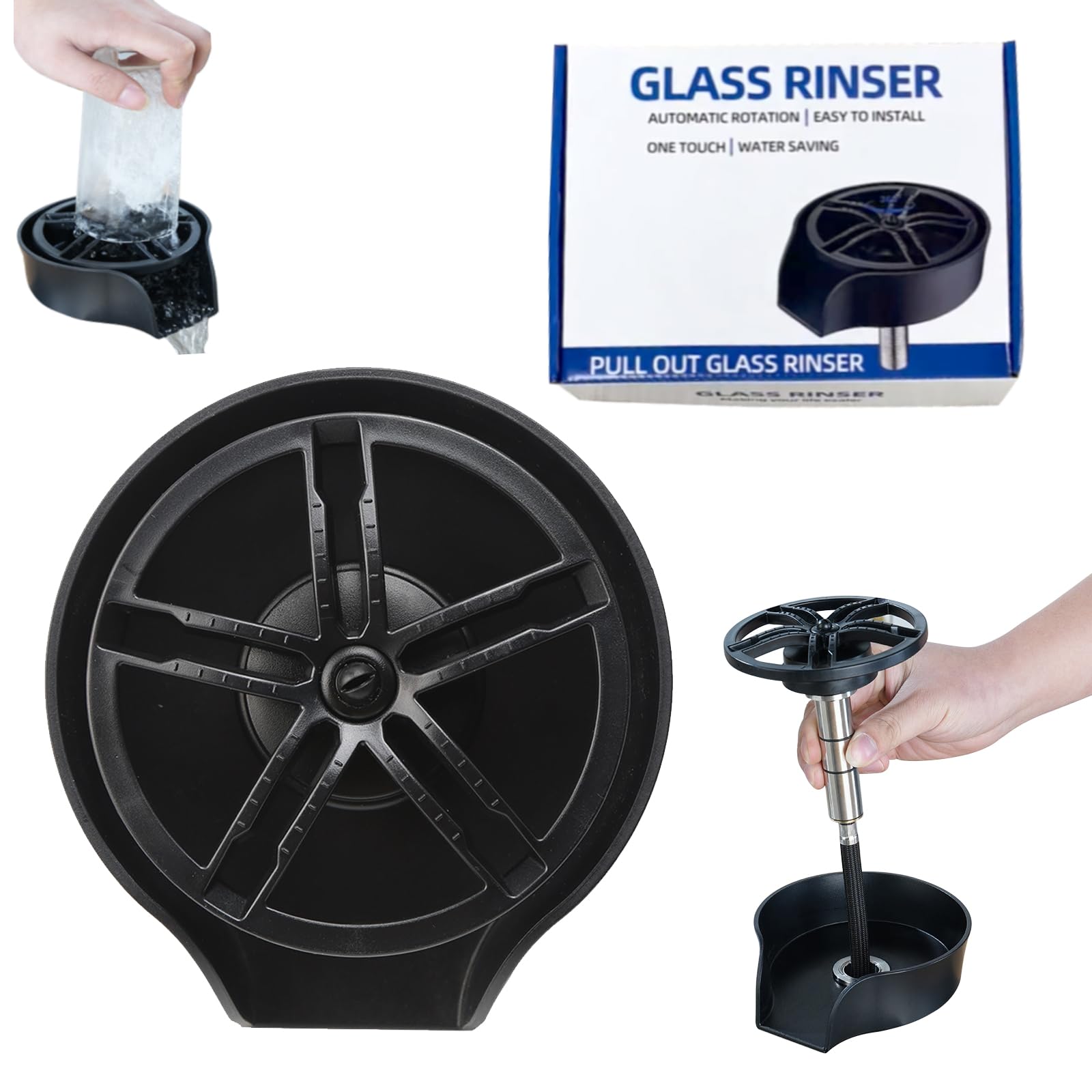
2. Glass Rinser for Kitchen Sink Glass Rinser with Pull-Out Spray
A budget-priced rinser that reaches corners your faucet cannot.
The pull-out nozzle is the reason to look here. It stretches to a claimed 80cm of reach so you can chase grime around a large basin instead of hunching over one spot, and the head spins a full 360° so cups and bottles get water from every angle rather than one fixed jet. If you have ever tried to rinse a tall travel mug in a wide farmhouse sink, that reach is the difference between useful and annoying. It mounts into a single sink hole with basic tools and hooks up without any plumbing work.
The build is a two-material mix — a stainless steel body with ABS plastic components. It handles cups, baby bottles, coffee mugs, and sports bottles, and it will rinse barware just as happily. Buyers report strong success with it on small containers you cannot get a hand into, which is the whole point. One recurring note: the diverter fitting in the box is plastic, and a few owners have had that fitting crack and leak, replacing it with a metal one from the hardware store.
If you have a faucet with its own built-in pull-down sprayer, the retractable nozzle here will not add much on top of what you already have — owners mention the pull-out does not extend as dramatically as they pictured. It also works best when you dial in your water pressure first, since too much pressure makes the glass stiff to push down.
Reach for this: if you want the pull-out reach and 360° spray without spending much.
Skip if: your faucet already has a pull-down sprayer or you want an all-metal body.
3. Homewerks GR001SS Glass Rinser for Kitchen Sinks, Bar Glass Rinser Stainless Steel
The unit that moves the most water through its jets in this whole lineup.
Flow rate is the story here. Homewerks rates this one at 1.8 gpm, and it also lists a 1.2 GPM figure for performance and water savings — enough either way that the jets feel like a pressure wash rather than a trickle. Compare that to the Delta at 1.2 gpm and you can feel the difference on dried-on smoothie residue. It rinses cups, glasses, bottles, and travel mugs in seconds and the stainless steel finish coordinates with matte black fixtures, so it does not fight the rest of your kitchen.
Installing it is the part owners like most. It drops into the hole left by a soap dispenser, sink sprayer, or plug, connects to hot or cold water with the included supply line, and the extender tee in the box means you are not hunting for extra parts. A lot of people report going from unboxing to rinsing in under ten minutes, and buyers who upgraded say the hot-water connection melts residue away almost on contact. There is a limited lifetime warranty backing it too.
The recurring gripe is leakage at the tee fitting. It is note this is a fitting issue rather than a flaw in the rinser itself, and a fresh fitting solves it for the buyers who hit it. The unit is also on the bulkier side compared to slim sink-mounted models, so it takes up a little more counter space around the hole. Neither point dents the core job — this one cleans hard and it is built from stainless steel rather than plastic. As owners put it: “Rinses cups fast/thoroughly in seconds; works for cups, glasses, bottles, travel mugs; durable stainless steel; easy install under 10 min.”
The case for the Homewerks
- Rated at 1.8 gpm for a stronger push than the 1.2 gpm Delta
- Stainless steel finish that matches matte black fixtures
- Supply line and extender tee included for a quick install
- Backed by a limited lifetime warranty
The honest trade-offs
- The tee fitting can leak — replacing it fixes the problem
- Bulkier footprint than slim sink-mounted models
Best for: stubborn residue and buyers who want maximum water pressure.
Look at the Delta instead: if you would rather have a slimmer, better-known unit with fewer install quirks.
4. YBB Portable Pitcher Rinser Table Bar Glass Rinser 304 Stainless steel

A freestanding rinser you can drop on any bar counter without a single hole.
Not every setup has a vacant sink hole, and this is the answer for those. It sits on the counter as a freestanding unit built from 304 stainless steel, so you set it down and start rinsing. No power is required — you press the rim of a pitcher or cup against the star-shaped base to engage the nozzle and the spray stops the moment you take the vessel off. That matters in a bar or lab setting where you want zero fiddling between drinks.
The performance numbers are unusual for a piece this compact. YBB rates it at 800pcs/h and claims over 70% water savings versus a running tap, which fits the shutoff-on-release design — water flows only while a glass is on the head. It is designed to take big vessels from 2.6cm to 10cm in diameter, so red wine glasses, beer cups, coffee cups, milk cylinders, and tea cups all fit.
The thing to know before you buy is hardware. A buyer who had one running for a month reports needing to reinstall it with washers from the hardware store after about two weeks, and flags that the plastic threading on the arm could be a weak point under heavy industrial use. That is a light caution rather than a deal-breaker for home, cafe, or bar use — the feedback trend is positive and the thing works. It also makes a great low-effort gift for anyone who hosts.
Where it shines: no plumbing, no holes, no power — a 304 stainless freestanding unit that rinses pitchers and tumblers in 1-3 seconds.
What to watch: budget for a spare set of washers and check the arm threading if you plan to run it hard in a commercial setting.
Pick it for: countertop bar stations, pop-ups, and any setup without a sink hole.
Go sink-mounted instead: if you want dirty water draining straight away and no parts to re-tighten.
5. DIBTSA Automatic Glass Cup Washer, 304 Stainless Steel Coffee Milk Tea Cup Cleaner

Built for coffee carts that need to keep cups moving between orders.
The DIBTSA is a sink-mounted rinser designed for people who work one-handed. Press a cup down and the water comes out; lift it and the spray stops. It is aimed squarely at milk and formula residue in narrow bottles, the kind of job that is genuinely hard when you only have one free hand. The body is 304 stainless steel — a grade that resists rust and corrosion — with the rinser head in a mix of stainless steel and ABS plastic.
The package here is what separates it from a bare sprayer. It ships with an inlet pipe, an outlet pipe, and a 3-way tee connector adapter sized 3/8″, 3/8″, and 1/2″, plus a 25-inch hose in the box. That is a full plumbing kit, not a loose handful of parts, which is why espresso carts and small coffee trailers keep landing on it. The finely crafted stainless drip tray gives clean cups a place to sit and air-dry instead of dripping across the counter.
One buyer who runs a small coffee cart mentions that in hindsight they would have chosen the deeper model — worth heeding if your cups are tall. The trade-off is that this unit is built for a dedicated workspace rather than a casual home kitchen, so if you just rinse the occasional wine glass it is more fixture than you need. For a working coffee setup it is close to ideal, and the espresso-bar crowd keeps coming back to it for one reason: sparkling clean cups without ever touching a rag.
Reach for this: if you run a coffee cart, espresso bar, or small cafe and need fast one-handed rinsing.
Think twice if: your glassware runs tall or you only rinse casually and want the simplest possible install.
6. KRAUS CleanMate Glass Rinser for Kitchen Sink in Spot-Free Stainless Steel, KGR-500SFS

The rinser for wide-mouth tumblers and anyone with kids or pets in the kitchen.
Kraus solved the two things that bug people about small rinsers: the opening and the accidental splash. This one has a 5-inch-wide opening that fits anything from a wine glass to a baby bottle, capped by a max drinkware opening of 4-1/4 inches and a minimum of 1-1/2 inches. Nine powerful jets fire from a ring of 6 prongs, each coated in soft silicone so your glassware gets cleaned without chips or scratches. Then there is the safety lock — a 1/8-turn mechanism that prevents accidental activation, which protects your cabinets and walls from a surprise spray.
The install kit ships ready. You get the rinser, a quick-connect water line, a tee connector, and an optional spacer for sinks with a ledge. The water line hooks to hot or cold and the quick-connect bottom makes assembly fast. The sloped design lets water drain easily, and the Spot-Free finish resists water spots and fingerprints — a real benefit if you have ever watched a shiny fixture build up hard-water rings. Max flow rate is rated at 1.2 gpm.
The honest trade-off is that the unit is made from durable ABS plastic, not stainless steel. That surprised quite a few buyers who expected metal on a Kraus-branded product, and it is worth knowing before you order. The bigger practical catch is fit: this needs a minimum 1-3/8 inch sink opening, so a standard 1-inch hole will not work. Measure your opening before you commit, then enjoy the tightest fit in the lineup.
The winning detail: a 5-inch opening that swallows wide tumblers, backed by 9 jets and silicone-coated prongs that spare glassware from chips.
The trade-off you should know: the body is ABS plastic, and the unit needs at least a 1-3/8 inch sink opening to mount.
Buy this if: you use wide-mouth tumblers or want the safety lock for a busy household with kids or pets.
Walk away if: your sink hole is a standard 1 inch or you want a solid steel body.
7. KRAUS CleanMate Glass Rinser for Kitchen Sink in Matte Black, KGR-500MB
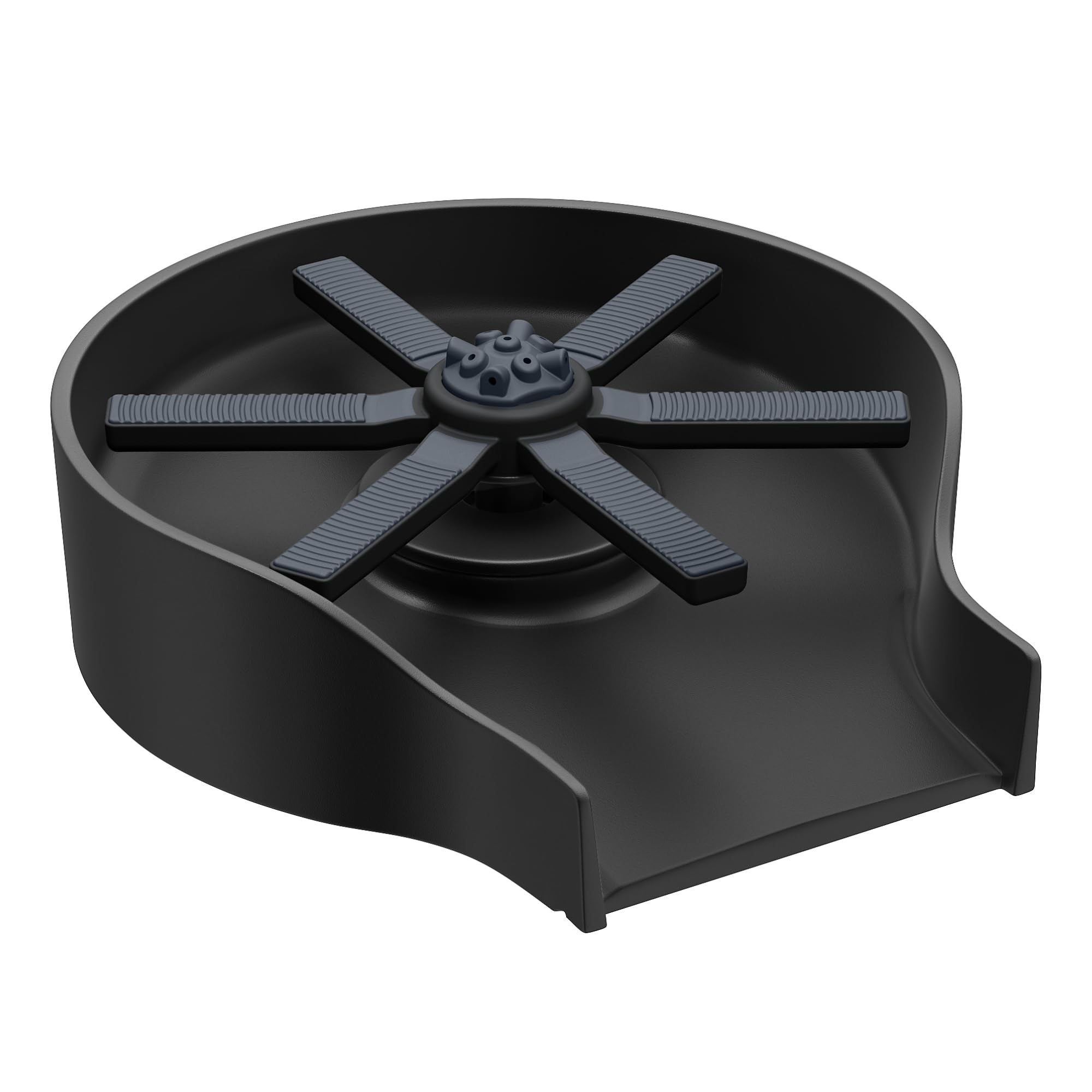
The same CleanMate hardware, dressed to match a black faucet and sink.
This is the matte black twin of the Kraus above — same 5-1/2 inch by 4-7/8 inch by 1-3/8 inch body, same 1.2 gpm max flow rate, same 9 jets and 5-inch opening, same 1/8-turn safety lock. The only thing that changes is the finish, and for a lot of kitchens that is the whole decision. If your faucet, sink, or handles are matte black, this is the version that blends in instead of standing out, and the wear-resistant matte coating is built to hold up to daily rinsing.
The practical side is identical to its stainless sibling. It drops into a single 1-1/4 inch hole where a soap dispenser used to be, installs into a counter up to 2-1/4 inches thick, and works with limited backsplash clearance and all sink brands. The quick-connect water line handles hot or cold, and the optional spacer helps on sinks with a ledge. The 6 silicone prongs protect glassware, and the press-and-turn activation is deliberate, so you will not trigger it by accident while wiping the counter.
Two things come up honestly with owners. The body is ABS plastic — several buyers expected stainless at this price tier and were disappointed when they opened the box. A few also report that the unit can loosen slightly at the counter surface over the first month, though it does not leak. Neither stops it from being a strong pick; it is the one to choose when black-matte styling is the non-negotiable part of your kitchen, and it delivers the same powerful cleaning as the stainless version.
The one to choose: if your kitchen runs matte black and you want the fixture to disappear into the look.
Be aware: the body is plastic, and it can develop a slight surface wobble at the counter over time without leaking.
8. MaxSen Pitcher Rinser Glass Rinser with Drain and Drip Tray, Solid Brass and 304 Stainless Steel

The rinser that is really a tiny sink with a sprayer inside it.
MaxSen took the concept and turned it into a complete station. The body is solid brass and 304 stainless steel with a POM plastic rinser head, so the materials feel genuinely substantial in the hand. It sits inside its own minimal basin, so the water runs down a miniature drain instead of pooling on the counter, and it comes with a drip tray where clean glasses can rest. If your problem is not just rinsing fast but rinsing cleanly without puddles spreading across the bar top, this solves both at once.
The operation is the same one-push design as the rest — press the glass down and the spray runs, lift it and the spray stops. It is gentle on delicate drinkware like champagne flutes and wine glasses, and it handles the standard lineup of red wine cups, beer cups, coffee cups, milk cylinders, and tea cups. The included kit covers the plumbing, with two braided hose inlet pipes in the box and the ability to connect to its own water supply or tie the drain into your existing sink through a tee fitting.
Two honest notes. The unit is priced in the premium tier because of the brass and stainless construction, so it is a real spend. And a minority of buyers have hit a dud unit — one who received a defective one that went moldy within the first couple of months and could not be cleaned, then got attentive service with a replacement and a refund after reaching out. That is the kind of both-sides story worth knowing: when it works, it is excellent; if yours arrives wrong, the support line makes it right.
Why it earns its spot: an all-in-one rinsing station in solid brass and 304 stainless steel, with its own drain, drip tray, and braided hose kit — no wet countertop to follow behind you.
What you are signing up for: a premium-tier commitment, a heavier fixture in the lineup, and the small chance you will need to lean on customer service.
Suits you if: you want a self-contained rinsing station that keeps wet mess off the counter.
Not the fit if: you would rather spend less and drop a slim unit into an existing sink hole.
9. Delta Faucet Glass Rinser for Kitchen Sinks, Kitchen Sink Accessories, Bar Glass Rinser, Chrome GR150

The chrome original that quietly outlasts everything else in the lineup.
This is the classic Delta the others are measured against, and the chrome version is the one people tend to keep for years. It runs 1.2 gpm through its jets and uses the same design that directs runoff into the sink with a subtle overhang — no chasing water across the counter. You swap it into an existing hole where a soap dispenser, side sprayer, or sink-hole cover used to sit, and it pairs with a matching faucet without looking like an aftermarket add-on.
Owners famously use this one for the tough stuff: soda stream bottles, protein shakes, water bottles, and baby bottles. Long-term customers note it still working the same way after three years with no problems. It also ships with a lifetime limited warranty from Delta, so if something goes sideways, you are covered. The Touch-Clean spray holes let you wipe away calcium and lime buildup with a touch of your finger, which keeps the unit working and looking new for years.
The fair caveat is that the body is plastic with a chrome finish, not solid stainless steel, and some buyers find it sits about a quarter inch off the counter rather than flush. It is also comfortably the highest-tier pick in this lineup, so buyers looking for value will do better further down this list. If you want the model with the longest practical track record and a warranty to back it, though, none of that changes the recommendation.
Track record: the most proven unit here, with a lifetime limited warranty and a design that keeps working after years of daily use.
Reality check: plastic body under the chrome, a slight gap at the counter, and a premium-tier price point.
Buy this if: durability backed by a warranty matters more to you than saving money.
Spend less elsewhere: if you want the same core spray design without the premium-tier premium.
Understanding the Specs
Flow rate (GPM)
GPM stands for gallons per minute, and it tells you how much water the jets push through in that time. A higher number means a stronger, sharper spray that blasts dried-on residue faster — but also uses more water per rinse. Most sink-mounted rinsers here run at 1.2 gpm, while the Homewerks unit lists 1.8 gpm. For a home sink, 1.2 gpm is plenty for typical cups and glasses; if you regularly rinse milk, formula, or smoothies, the stronger option saves scrubbing time.
Body material — stainless, brass, or ABS plastic
This is the spec that most affects how a rinser feels and lasts. Solid 304 stainless steel and brass bodies resist rust and corrosion and keep their finish for years. ABS plastic is a tough molded plastic that resists water and is lighter in the hand — it is what the Kraus and Delta sink-mounted units use. Neither is wrong; the difference shows up over time in weight, finish durability, and how the unit looks after heavy daily use. Read the material list, because a brushed stainless look does not always mean a stainless body.
FAQ
Will a bar glass rinser fit my existing sink hole?
What drinkware can I rinse in one of these?
Do I need hot water or cold water for the rinser?
How hard do I have to press a glass to activate the spray?
What is the difference between a sink-mounted and countertop rinser?
Will a countertop pitcher rinser work without plumbing modifications?
Do glass rinsers leak or drip water onto the counter?
Is a stainless steel rinser better than a plastic one?
How long does a bar glass rinser last?
Can I install a bar glass rinser myself or do I need a plumber?
Final Thoughts: The Verdict
For an everyday kitchen, the safest choice is the Delta GR150-SP in SpotShield Stainless — premium build quality, an included cover, and a SpotShield finish that fights off water spots. If you would rather spend less, the Glass Rinser with Pull-Out Spray gives you a pull-out reach of 80cm and a full 360° spray for a fraction of the ask. And for anyone setting up a bar or coffee station without a spare sink hole, the YBB Portable Pitcher Rinser sits straight on the counter and rinses pitchers in seconds.
How We Picked
We do not accept paid placement. Every pick is matched to a real buyer and a real use-case; we do not hands-on test units.
Sources & Methodology
Specifications: manufacturer listings and product documentation. Review insights: verified customer reviews, as of September 2026. Pricing: not shown on this page (it changes often); check the current price via the retailer link.
As an Amazon Associate, KitchPrep earns from qualifying purchases. This does not affect which products we feature.
Related Guides
