
Specs are compiled from manufacturer listings and verified buyer reviews and can change over time — please confirm the key details on the product page before buying.
The quick answer: if you want one structure that handles sun, rain and bugs without looking like a temporary tent, the Covered Outdoor StoneCreek wall-mounted gazebo is the smartest buy here, because its galvanized steel roof sheds water on its own and never clouds over the way plastic panels eventually do. Everything below sorts nine real backyard shade structures by what they actually do once they are standing in your yard.
I’m Mohammad Maruf — the founder and writer behind KitchPrep. This guide is built by comparing the manufacturers’ published specifications and the patterns across verified customer reviews, so you get each pick’s real strengths and trade-offs instead of marketing spin.
Some patio shelters bolt flat against your house wall and free up your whole deck, while others stand free and cover a table in one sweep of fabric. The nine options here split cleanly along that line, and the rundown of best backyard shade structures covers which type fits which yard.
Our Picks at a Glance
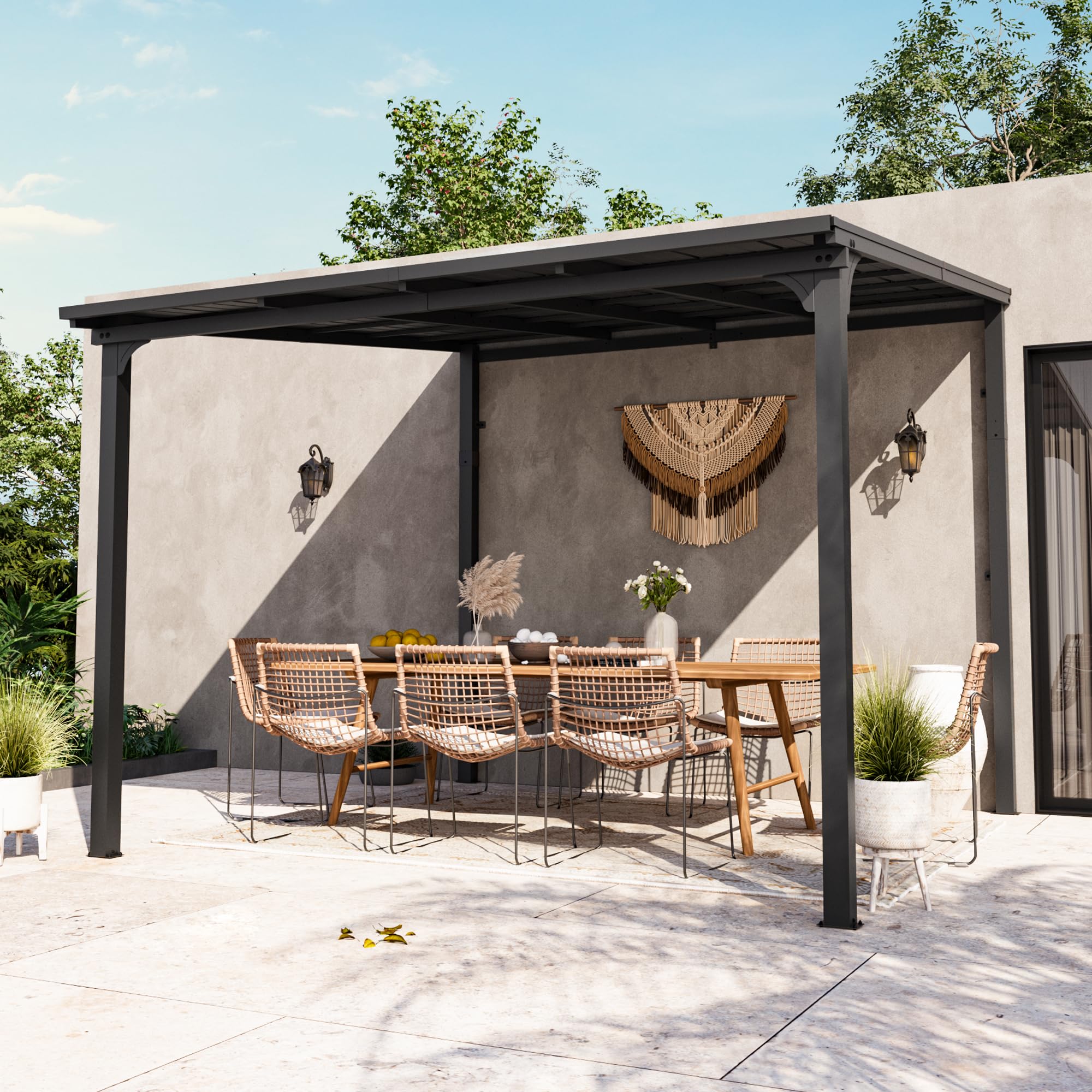

How To Choose The Best Backyard Shade Structures
Your yard tells you which type to buy before any spec sheet does. A narrow strip of deck beside the house wants a lean-to shelter that bolts to the wall, because it uses the house itself as one of its four sides. A wide open lawn or a patio with a dining table in the middle wants a freestanding canopy or a big umbrella that you can move around.
Wall-mounted or freestanding
A wall-mounted gazebo leans against your home and skips the two back posts, so you keep floor space you would otherwise lose. The trade-off is that it only works on a solid wall, and it has to be bolted to that wall and to the ground or slab beneath it. A freestanding canopy stands on its own four legs anywhere you plant it, but it needs its own weight or stakes to stay upright in wind.
The roof decides your summer
A solid metal roof blocks the sun completely and stays cooler underneath, with no greenhouse warmth building up. A polycarbonate roof lets daylight through, which keeps the space bright but lets some heat in with the light. Fabric canopies are the lightest and cheapest to replace, but they are also the part that wears out first when the sun is relentless.
Weather ratings are your winter insurance
Wind ratings tell you how hard a gust the frame is built to shrug off, usually given in miles per hour. Snow load tells you how much weight the roof can sit under before it sags, given as pounds per square foot or as inches of snow. Both numbers only mean something once the shelter is anchored, so plan the bolts before you plan the party.
Quick Comparison
| Model | Best For | Shade Coverage | Roof Type | Frame Material | Amazon |
|---|---|---|---|---|---|
| Covered Outdoor StoneCreek 10’x10′★ Best Overall | All-season wall shelter | 100 square feet | Galvanized steel | Metal | Amazon |
| DomeShade 15ft Double-Sided UmbrellaMost Coverage, Least Effort | Covering a dining set fast | 135 square feet | Polyester canopy | Alloy steel | Amazon |
| LAUSAINT HOME 8’x8′ Patio GazeboBest for Bug-Free Evenings | Bug-free dining | 64 square feet | Double-tier canopy | Metal | Amazon |
| Aoxun 8’x5’ Aluminum Pergola | Small patios and decks | 40 square feet | Polycarbonate | Aluminum | Amazon |
| ALAULM 10’x14′ Hardtop Pergola | Big deck coverage | 140 square feet | Polycarbonate | Aluminum Iron | Amazon |
| RTDTD 10’x14′ Lean to Gazebo | Windy open yards | 136.71 square feet | Polycarbonate | Alloy Steel, Aluminum | Amazon |
| Pamapic 10x14FT Wall Mounted Gazebo | Tight deck footprints | 140 square feet | Polycarbonate | Aluminum | Amazon |
| Aoxun 12’x10’ Gazebo for Patio | Everyday backyard shade | 115.73 square feet | Polycarbonate | Metal | Amazon |
| Domi 10′ x 14′ Lean to Gazebo | Year-round entertaining | 140 square feet | Galvanized steel | Metal | Amazon |
In‑Depth Reviews
1. Covered Outdoor StoneCreek 10’x10′ Lean to Gazebo, Wall Mounted Gazebo with Galvanized Steel Sloped Roof & Drainage Gutter
Our pick — over 4.5★ from 100+ verified ratings; the strongest balance of quality and price.
A solid steel roof that never clouds over and drains itself while you sit underneath it.
Covered Outdoor StoneCreek 10’x10′ Lean to Gazebo earns the top slot because of one material choice: the roof is galvanized steel (steel dipped in zinc so it resists rust), not the plastic panel most lean-tos use. That matters on a hot afternoon, because a solid steel roof blocks the sun completely and keeps the space under it cooler, while polycarbonate panels let light and some heat through. At 100 square feet of floor area and dimensions of 120″L x 120″W x 96″H, it covers a square patch roughly the size of a small dining set, tucked against your wall instead of standing in the middle of your deck.
The drainage is the detail that separates it from a plain canopy. A built-in gutter runs along the roof and channels rain away instead of letting it pool or drip along the edge. Buyers report “4-month use: excellent metal with black coating, no rust despite humid climate.” That is the galvanized coating doing its job — you get a structure that stays looking the same after a wet season rather than spotting over.
The honest catch is weight and assembly. At 221 pounds it is a permanent fixture, not something you move twice a year — compare that to the 15ft umbrella at 34.2 pounds, which you can relocate on a whim. Assembly runs about two hours with two people according to buyers, and the top panel is thin enough that you have to set it gently to avoid bending it. A wall-fixing kit is included, and since it attaches directly to your house, it stays put rather than shifting in breezes.
Where it pulls ahead
- A galvanized steel roof blocks sunlight completely instead of letting heat through like a plastic panel
- The built-in gutter sends rain away so your patio stays dry instead of puddling under the edge
- Wall fixing hardware is included, so the structure attaches to your home and won’t wander in wind
What to know before you buy
- At 221 pounds it’s a permanent install — plan where it lives before the boxes arrive
- Assembly runs about two hours and the thin top panel needs a careful second pair of hands
Buy it if you want: a fixed, year-round covered corner against your house that won’t yellow, crack, or blow around.
Think twice if: you need something you can take down or move seasonally — this one is built to stay where you bolt it.
2. 15ft Patio Umbrella with Base, Large Double-Sided Rectangular Umbrella, Beige
One handle, thirty seconds, and 135 square feet of shade over the whole patio table.
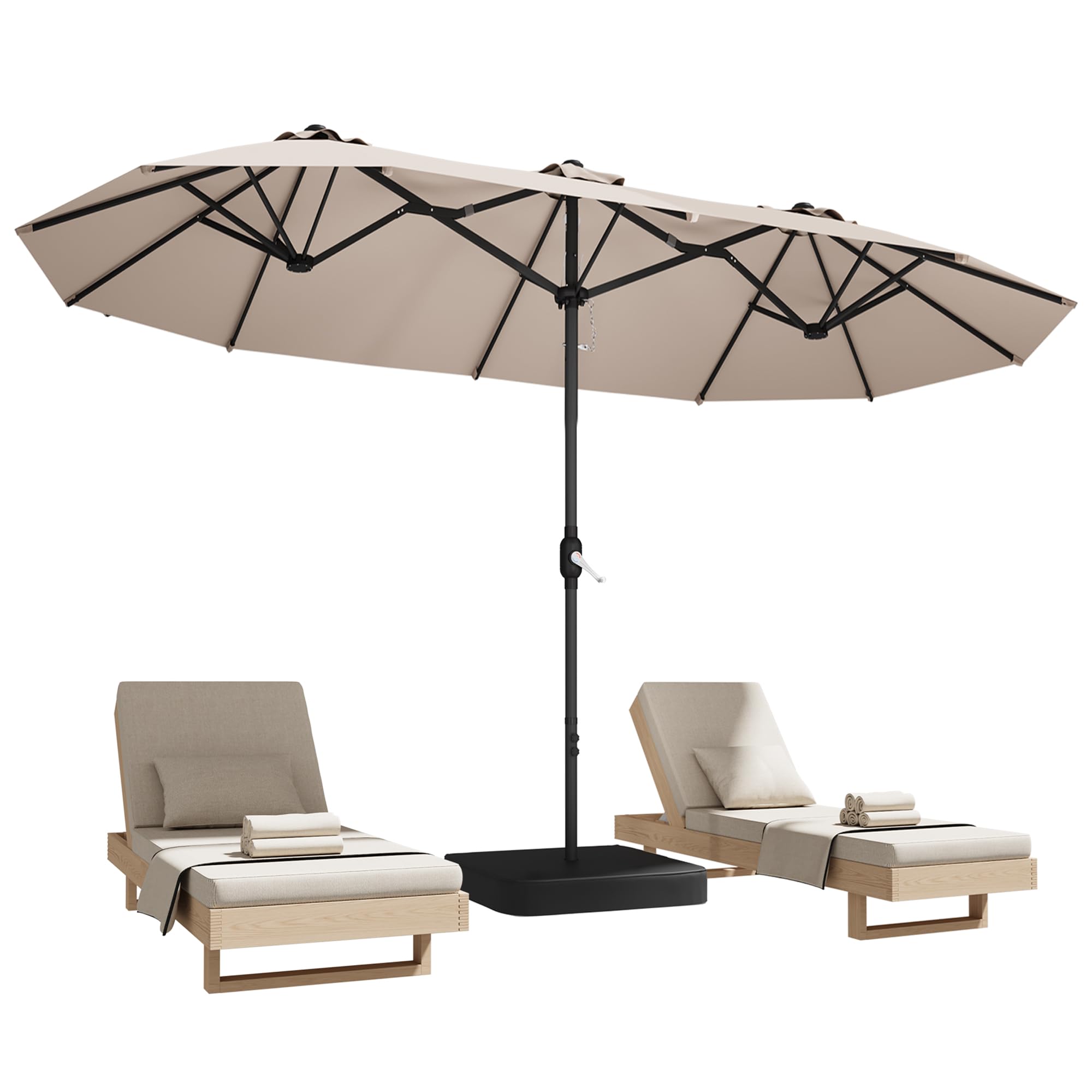
If you want shade over a dining set without a single wrench, the DomeShade 15ft double-sided umbrella is the fastest route. It opens to 135 square feet of coverage when fully spread — that’s 35 square feet more shade than the 100 square feet the StoneCreek gazebo gives you, over a shape that fits a long table instead of a square corner. The double-sided design means one canopy stretches across two poles, so it shelters both benches of a picnic setup at once.
What wins people over is how little work it takes. Assembly is measured in minutes rather than hours, with a crank handle that opens and closes the canopy with one hand. Owners mention “15ft Dome Shade umbrella: easy self-install <30min, smooth crank, included water-fillable base stays stable in breeze.” The base, cross base, two sandbags and a cover cloth all come in the box, and the fabric carries a water-repellent coating so a passing shower rolls off instead of soaking through.
The reality check is that the fabric is thinner than a hardtop roof, and once assembled the whole thing weighs 34.2 pounds, so the base needs its sandbags filled to stay planted. The manufacturer asks for 66 to 100 lbs of sand per bag, and sand isn’t included. On a Florida patio, some customers note the sun still bleeds through the fabric rather than staying out completely — so treat this as excellent shade, not a sealed roof, and close it before a storm.
Weigh before you water: the sandbags are the difference between a stable umbrella and a tipped one, so budget the sand before the first windy day.
Who ends up happiest: a family that wants a cool dining table in ten minutes, not a construction project on the weekend.
Reach for this if: you want the biggest patch of shade with the least permanent commitment.
Look elsewhere if: you need complete sun block or a shelter you can leave up through winter storms.
3. LAUSAINT HOME Patio Gazebo 8’x8′, Outdoor Heavy Duty Party Tent Shelter with Double Roofs, Mosquito Nettings and Privacy Screens
A screened-in room for the yard that mostly keeps the mosquitoes and one rude gust out.
The LAUSAINT HOME 8’x8′ is the pick for anyone whose real enemy is bugs, not sun. Zippered mosquito netting runs around it and waterproof privacy curtains hang over it, so you can seal up at dusk and still see out. The double-tier roof lets hot air escape through mesh between the layers, which keeps the inside cooler than a single flat roof, and the canopy fabric blocks up to 99.99% of UV rays behind a UPF 50+ rating.
The frame is thickened galvanized steel designed to withstand winds up to Level 7, with expansion bolts included for anchoring into concrete or decking. That anchoring point is the whole story with a shelter this light at 58.4 pounds, and it is also where the recurring feedback lands. Buyers tell it straight: one condensed review reads “Wind panels pricey but worth it,” while another satisfied owner says the frame “held in 30mph winds with curtains closed; contents stayed dry” after sandbagging the legs. Between the two, the pattern is clear — it survives weather when you take anchoring seriously.
On the trade-off side, assembly feedback splits. Some find it straightforward, and the 64 square feet of floor area is described as covering all corners so no bugs slip through gaps. Others report the instructions need patience. The zippers can also snag over time and the top cap has a habit of flying off in high wind, so a little securing tape in advance saves a hunt across the lawn.
The two-minute setup test: if you want a hut you can zip shut against bugs and shade at the same time, this is the shape to buy.
Set your expectations: this is a canopy shelter, not a permanent structure, so it belongs in the yard on the good-weather days — not bolted down year-round.
Choose this if: bug-free evening dining and a sealed, screened space matter more than a permanent roof.
skip it if: you expect to leave a shelter standing through a full winter without extra anchoring and prep.
4. Aoxun Premium Gazebo with Aluminum Frame & Polycarbonate Panel 8’x5’, Black
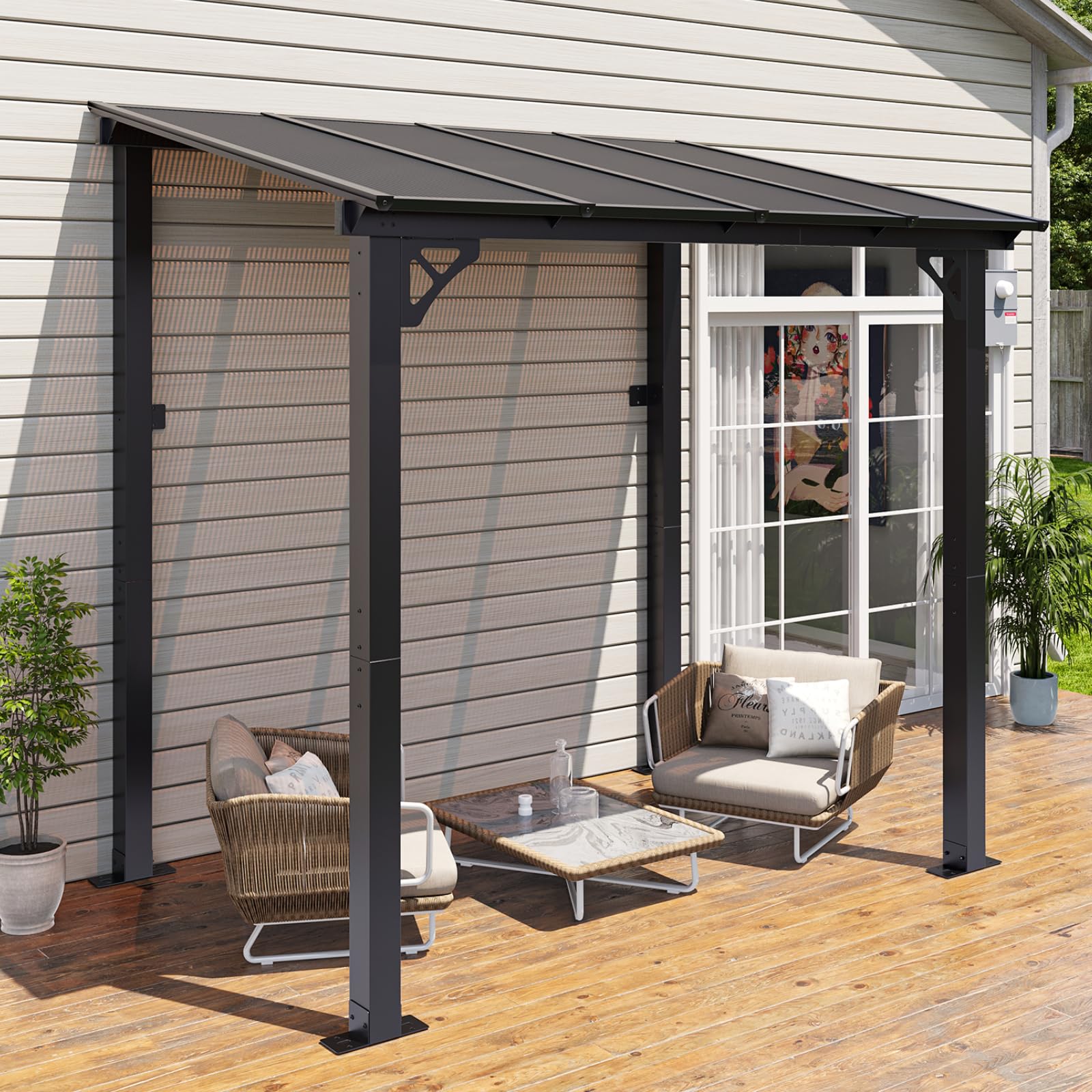
A narrow wall awning that turns a skinny deck into a dry, shaded corner.
For a porch or deck too tight for a full gazebo, the Aoxun 8’x5’ aluminum pergola slips into the space and gives you 40 square feet of cover — the smallest footprint of the shelters here, and exactly what a narrow walk-out deck needs. The aluminum top frame and columns are engineered to attach firmly to both the wall and the ground, and Aoxun rates that setup for wind resistance up to 40 mph and a load-bearing capacity of 55 lbs/㎡, which the manufacturer says supports up to 6 inches of snow.
The frame is aluminum, so it shrugs off rust in a way steel can’t, and the multi-walled polycarbonate panels block 99% of UV rays while letting daylight in. That’s the opposite feel from the StoneCreek’s solid steel roof above — bright rather than shaded — which suits a patio where you still want light. Buyers describe the build as well-engineered and worth the price, with one noting the polycarbonate roof “blocks sun/light rain, lets in natural light.”
Where it asks something of you is the install. Assembly runs several hours and depends on getting the L brackets on the ceiling runs right, and once it’s built it takes a few people to lift into place. The one consistent gripe is drainage in heavy rain, where water can pour off the edge before you fit a gutter. There are also occasional reports of a cosmetic dent arriving from shipping, so inspect the boxes on arrival.
Best for: a slim patio or deck that needs shade and rain cover without swallowing the walkway.
Not ideal for: anyone wanting full darkness underfoot or a one-person, one-afternoon build.
5. ALAULM 10’x 14′ Outdoor Hardtop Pergola, Wall Mounted Lean to Gazebo with Curtains and Netting, Galvanized Metal Frame
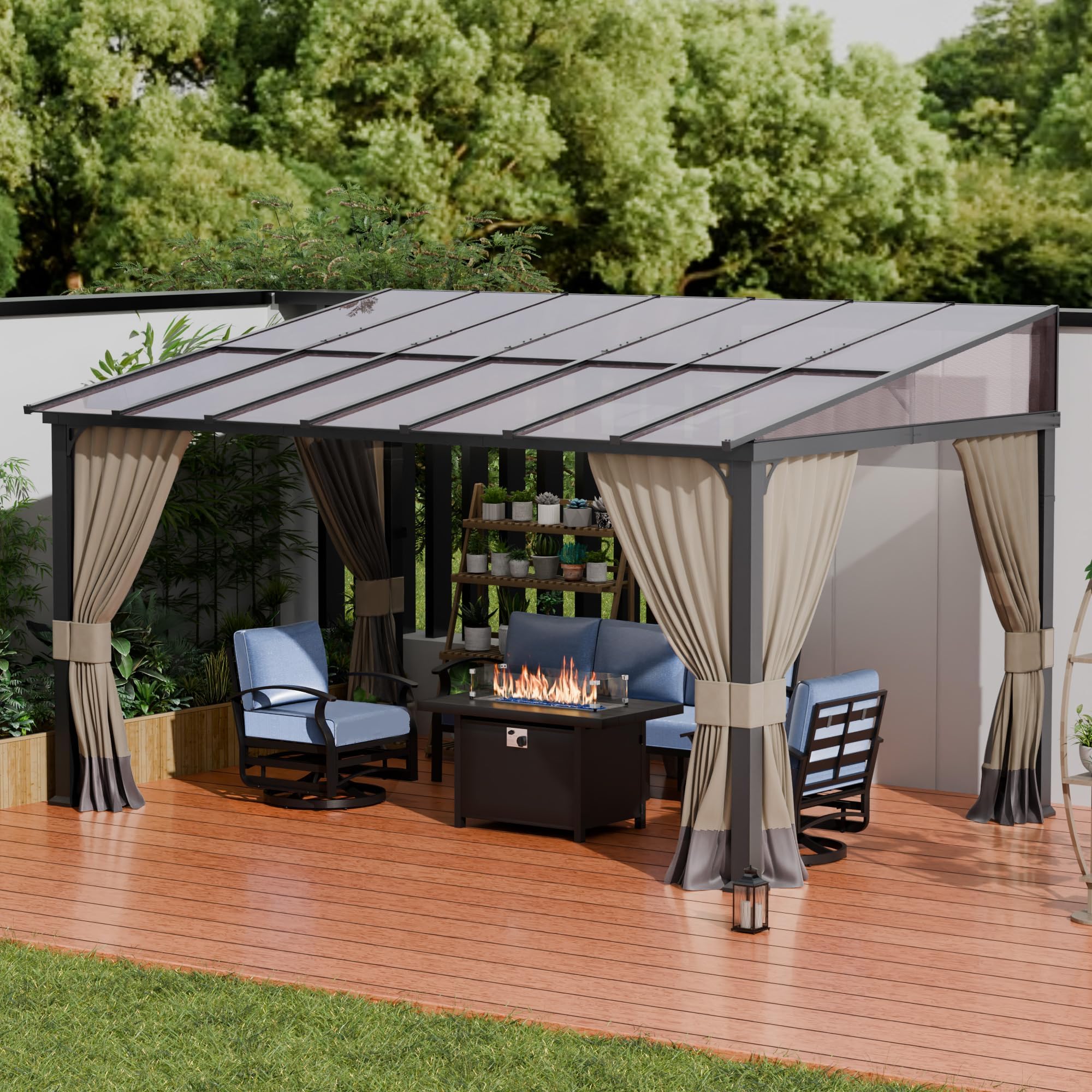
A wide, bright-roofed span for decks that need to host a whole dinner party at once.
Step up in size and the ALAULM 10’x14′ delivers 140 square feet of floor area — the same coverage as the Domi and Pamapic picks below, but this ALAULM sits in a comfortable middle range. The canopy is a translucent greenish-blue polycarbonate panel, so it filters the light rather than blacking it out, and the sloped roof channels rain off the low edge. Curtains and mesh run on a dual track so you can drop the privacy layer, the bug layer, or both depending on the evening.
Buyers call it sturdy and worth the money, with the water resistance earning mention — one condensed review says it “shields against wind and rain during colder months,” and another confirms “no leaks when rained.” The frame is aluminum-iron finished with a zinc-coated metal spray to resist rust, and each column base comes with ground anchors. Wall-mounted with included nails and grounded with stakes, ALAULM rates it to handle gusts up to 40 mph.
The build is the honest trade-off here. Reviewers consistently report two people needing about three days, and parts arrive across three separate boxes that may show up on different days. Poles arrive unnumbered, which can cause corner-hole misalignment, and panels come unmarked with no orientation guide. A few roof panels have arrived bent, though fixable. Where the product does shine is support — customers who messaged about missing or damaged parts got a quick replacement response.
Plan the weekend, not the afternoon: this is one of the larger builds on the list, so line up a helper and clear three days before unpacking.
What you get for it: 140 square feet of bright, filtered cover that stands up to wind once it’s anchored on both ends.
Worth it for: a big deck that hosts gatherings and can spare three days of assembly.
Rethink it if: you have one free afternoon or a single set of hands — the panels and unnumbered poles make this a two-person job.
6. RTDTD 10′ x 14′ Lean to Gazebo, Large Wall Mount Heavy Duty Gazebos Pavilion with Curtains and Netting, Brown

A brown lean-to that reviewers point out standing through weather that flattened trees around it.
What gets told again and again about the RTDTD 10’x14′ is durability in extreme conditions. One customer’s shelter, they report, “withstood an EF2 tornado” and stayed in perfect condition while hail damaged the house beside it — a vivid account of a structure that held its ground. The frame is steel and aluminum with a spray-molded surface for corrosion resistance, the roof is semi-transparent amber polycarbonate with overlapping panels and water-blocking foam strips, and the 136.71 square feet of floor area gives you a long, wide span against the wall.
The curtain setup is a nice practical touch: an inner mesh layer keeps bugs out, and an outer 210g yarn-dyed sunshade curtain blocks glare and gives privacy. Both open and close so you control how covered or how open the space feels at any hour. Assembly feedback is genuinely split — some owners inventory the parts in a couple of hours and build across two days, while others report the directions being vague in places.
The other honest note is the roof panels. They are described as flimsier than the frame, though they are removable, which makes winter storage and gutter cleaning easier. A couple of buyers had a parts problem or found the instructions confusing, but the company resolved issues, including shipping free replacement panels when hail pitted the roof.
Why owners keep it
- Steel-and-aluminum frame with corrosion-resistant spray finish that has held up through extreme weather
- Dual-layer curtains — mesh for bugs, 210g sunshade for glare and privacy — that open and close as needed
- Overlapping polycarbonate roof panels with foam strips block rain from seeping in
The fair caveats
- Roof panels feel thinner than the frame, though they’re removable for storage
- Instructions get vague in spots, so expect to puzzle through a few steps
Pick this when: you want a heavy-duty look and wind-tested toughness at a value-tier price.
Heads-up on: the printed directions — having a second pair of hands makes the fuzzy steps manageable.
7. Pamapic 10x14FT Wall Mounted Gazebo, Hardtop Lean to Gazebo with Aluminum Frame & UV Resistant Polycarbonate Roof
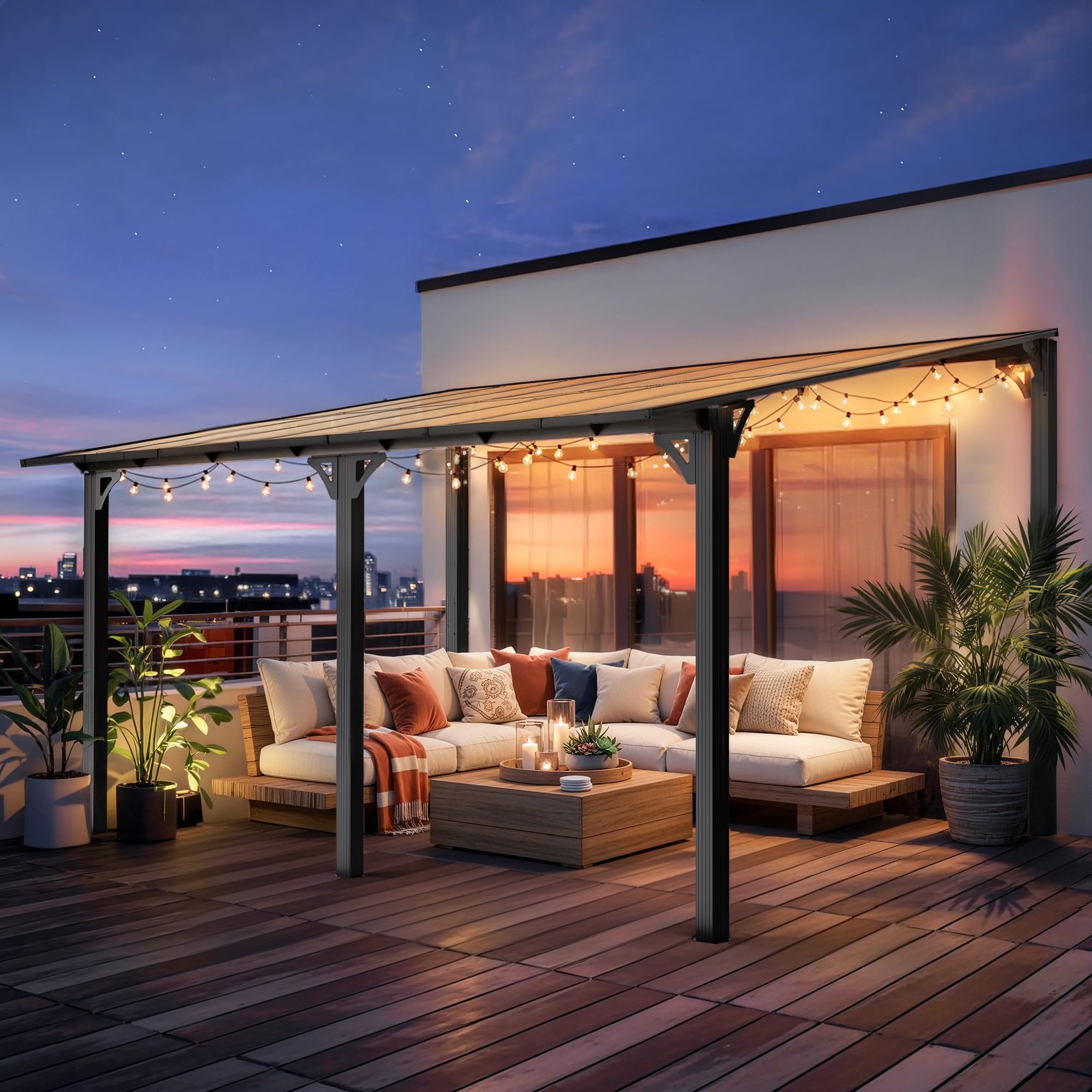
A streamlined sloped shelter that squeezes big coverage into a narrow footprint.
The Pamapic 10x14FT covers 140 square feet of floor area, and the whole reason to pick it over a freestanding gazebo is geometry. Because it attaches to your home’s exterior and needs no back posts, the sloped roof boost usable space without extra supports — a real difference on a small deck where four legs would crowd everything. The frame is aluminum, which resists rust, and the polycarbonate hollow sheets filter soft light while blocking UV, so you get a cooler, bright space in summer and rain and snow protection in winter.
Assembly is where this one earns its keep. The package arrives pre-numbered and pre-labeled, with an illustrated manual and step-by-step video tutorials, so you’re following numbered parts rather than guessing from a drawing.
The trade-offs are modest but real. A returning customer notes the entry tie-back straps are short, and daylight only fully penetrates the middle span of the ceiling, so the outer edges sit dimmer. Because the roof slopes from the wall, you also need to anchor it properly — it leans on your house, so the wall has to be solid. In a storm, checking that all hardware is tight is the difference between a quiet shelter and a rattling one.
Ideal for: tight patios and narrow decks where you want to boost every square foot of shade.
Consider another if: you want to move the structure around — this is a fixed, wall-dependent frame.
8. Aoxun 12’x10’ Gazebo for Patio, Gazebo Pergola with Sloped Roof, Black

A middle-of-the-yard shelter that reflects almost all the sun and drains fast when it pours.
If you want a shelter that works beside a pool or as a dining alcove without hogging the walkway, the Aoxun 12’x10’ is the pick. It gives you 115.73 square feet of floor area, and the carbon steel frame is braced with a triangle metal structure for stability. The polycarbonate top reflects 99% of UV rays, so the space underneath stays noticeably cooler, and the sloped roof works with gap drainage to send rainwater off the eaves rather than letting it puddle.
Owners echo that sun control, with one noting the sloped roof “looks great against the house” and gives them “a nice covered area to enjoy the backyard.” It’s rated for a maximum wind grade of 7 (31-38 mph) and a snow load depth of 4 inches once you’ve installed the ground nails and expansion bolts. Attach it to both your wall and your ground and the structure holds firm; skip either, and the wind rating means nothing.
The main thing to plan for is the build. Assembling it runs about 3-4 hours with 2-3 people, and shoppers say it earns that allowance — one notes it is “very happy with design, sturdy and well-built” but the size was smaller than the description implied, so measure your spot against the 140.94″L x 114.17″W footprint before ordering. It also only functions when wall-mounted, so plan the wall first and the rest falls into place.
Honest sizing note: the structure runs slightly smaller than some buyers expect from the listed footprint, so space your furniture around the actual 115.73 square feet.
Where it shines: hot afternoons when you want a cool, shaded nook beside the pool without a full permanent gazebo.
Worth it for: a solid, rust-resistant shelter beside a pool or hot tub that still lets light through.
Not the one for: someone without a solid wall, since this model only works mounted.
9. Domi 10′ x 14′ Lean to Gazebo Outdoor Wall Mounted Gazebo Pergola, Grey

The heavy steel-roofed shelter rated for the weather that sends other covers running for the shed.
Spend up on shade and the Domi 10′ x 14′ is what you get: a galvanized steel roof, a reinforced heavy-duty frame the maker says supports 50% more weight than standard gazebos, and ratings for 60 mph wind and 22 lbs/sq ft snow load. Those steel panels resist rust and the improved gutter design channels rain and snow away, which is the combination that makes a shelter feel permanent rather than seasonal. Inside, the 140 square feet of floor area is listed for 8-12 people, so it seats a real dinner party without anyone crowding an edge.
The build quality earns the price, and owners make that clear in different ways. One shopper calls it the easiest to set up they have ever had, while a 37-year-old woman reports assembling the frame alone in about 1.5 days before needing help on the roof panels. Seniors who tackled it report finishing under 9 hours with clear pictorial instructions. The consistency across those varied hands is the real signal — the numbered parts and picture-only directions are enough to get most people through, though a helper makes the heaviest steps far easier.
What you should pack patience for: the roof panels arrive with lots of protective wrap and sharp edges, so wear gloves when peeling the film off, and posts show occasional small dents from shipping, though the seller is responsive about replacements. The legs also bend if only two people try to lift the frame upright, so plan for three during that step. Get it square and anchored and it settles in as a sturdy, rustproof outdoor living room you can grow with — two or more of the same width can even be linked to expand the layout.
What the price buys you
- Galvanized steel roof rated for 60 mph wind and 22 lbs/sq ft snow load
- Reinforced frame the maker says holds 50% more weight than standard gazebos
- 140 square feet sized for 8-12 people, with a linking kit option to expand the setup
Before you order
- Roof panels come wrapped in film with sharp edges — gloves help and the unwrapping is slow
- Lifting the frame upright wants three people, since two can bend the legs
The splurge pick: for a host who wants the biggest shelter here with the heaviest steel roof and the highest wind rating, this is the one.
What to arrange first: a solid wall and three sets of hands for the upright step, or it turns into a slow solo weekend.
Understanding the Specs
Wind rating (mph)
This is how hard a gust the frame and anchoring are built to take, measured in miles per hour. A shelter rated for 40 mph handles a blustery afternoon, while one rated for 60 mph is built for the kind of storm that snaps branches. The number only holds if you bolt the shelter down as the maker specifies — a high wind rating with loose anchors is meaningless. Match the rating to the strongest storms your area actually gets, and remember to roll up curtains and netting when wind picks up, since they catch the air like sails.
Snow load (lbs/㎡ or inches)
Snow load is simply how much weight the roof can hold before it sags or fails, written as pounds per square foot or as a depth of snow in inches. A shelter rated for 4 inches of snow handles a light dusting, while one rated for 6 inches or about 7 inches carries more before you need to clear it. If you live where winter snow piles up, this number matters as much as wind. It also tells you how seriously the maker built the roof, because a light polycarbonate panel bends far sooner than a solid steel sheet under the same weight.
FAQ
Do I need a solid wall to install a wall-mounted gazebo?
How do I keep a patio umbrella from tipping in the wind?
Is a galvanized steel roof better than a polycarbonate panel?
How long does assembly usually take?
Will a canopy gazebo keep bugs out?
Can I leave a shade structure up through winter?
What size shade structure do I actually need?
Do these structures handle rain, or just sun?
Can I make a wall-mounted gazebo bigger?
What tools and prep does a hardtop install need?
Final Thoughts: The Verdict
For most backyards, the winner among these backyard shade structures is the Covered Outdoor StoneCreek 10’x10′ Lean to Gazebo, because its galvanized steel roof blocks the sun completely and its built-in gutter keeps the patio dry without you touching a thing. If covering a long dining table in minutes matters more than permanence, grab the 15ft DomeShade umbrella. And for a big-deck host who wants the heaviest steel roof and the highest wind rating on the list, the Domi 10′ x 14′ is the one to reach for.
How We Picked
We do not accept paid placement. Every pick is matched to a real buyer and a real use-case; we do not hands-on test units.
Sources & Methodology
Specifications: manufacturer listings and product documentation. Review insights: verified customer reviews, as of September 2026. Pricing: not shown on this page (it changes often); check the current price via the retailer link.
As an Amazon Associate, KitchPrep earns from qualifying purchases. This does not affect which products we feature.
Related Guides
