
Specs are compiled from manufacturer listings and verified buyer reviews and can change over time — please confirm the key details on the product page before buying.
When the grid drops, the clock on your freezer starts ticking — and a full freezer only holds its temperature for so long before everything inside starts to thaw. The right backup battery for a freezer buys you hours you did not have, runs the compressor’s startup surge without sputtering, and switches over automatically so you never have to stand in the dark pulling cords. Below are eleven battery-powered stations that actually carry a freezer load, each one matched to a different kind of household.
I’m Mohammad Maruf — the founder and writer behind KitchPrep. This guide is built by comparing the manufacturers’ published specifications and the patterns across verified customer reviews, so you get each pick’s real strengths and trade-offs instead of marketing spin.
Two things decide everything here: how much stored energy the battery holds, and how much continuous wattage it can push out without tripping. Read on for the picks that get both right — the strongest backup battery for a freezer here is the EcoFlow DELTA 3 Max.
Our Picks at a Glance

How To Choose The Best Backup Battery for a Freezer
A freezer is one of the trickiest appliances to back up. It draws a steady trickle most of the time, then spikes hard for a moment when the compressor starts. Pick a battery that handles both, and your food stays frozen. Pick wrong and you find out at the worst possible time.
Start with the surge, not the average
A running freezer tends to sit in a modest wattage range, but the compressor’s startup pull is the number that trips weak inverters. Look for a station whose peak surge comfortably clears your freezer’s startup draw, then confirm the continuous rating covers everything else you plug in beside it. A unit that lists a strong surge figure keeps the compressor from stalling mid-cycle.
Do the watt-hour math before you buy
Capacity is listed in watt-hours, and that figure sets how long you can run the load. Add up the watts your freezer draws, divide into the stored watt-hours, and you get a rough runtime — then discount it, because conversion is never perfectly efficient. Bigger numbers mean more breathing room, so a 2,000Wh-plus pack buys you far more margin than a 1,000Wh one.
Auto-switchover keeps you hands-off
Transfer time is how long the unit takes to wake up and take over when the wall power dies — the lower the number, the smoother the handoff. A station with a fast switchover behaves like an uninterruptible power supply (UPS), so it takes over automatically instead of leaving you to notice the outage first. That matters when you are asleep or away.
Lithium iron phosphate lasts the distance
Battery chemistry is the quiet long-game decision. LiFePO4 packs — lithium iron phosphate — hold up over thousands of charge cycles and tolerate heat better than older lithium-ion cells. That chemistry is why the better freezer backups here are rated for many years of service rather than a couple of seasons.
Quick Comparison
| Model | Best For | Capacity | Continuous Output | Battery Chemistry | Amazon |
|---|---|---|---|---|---|
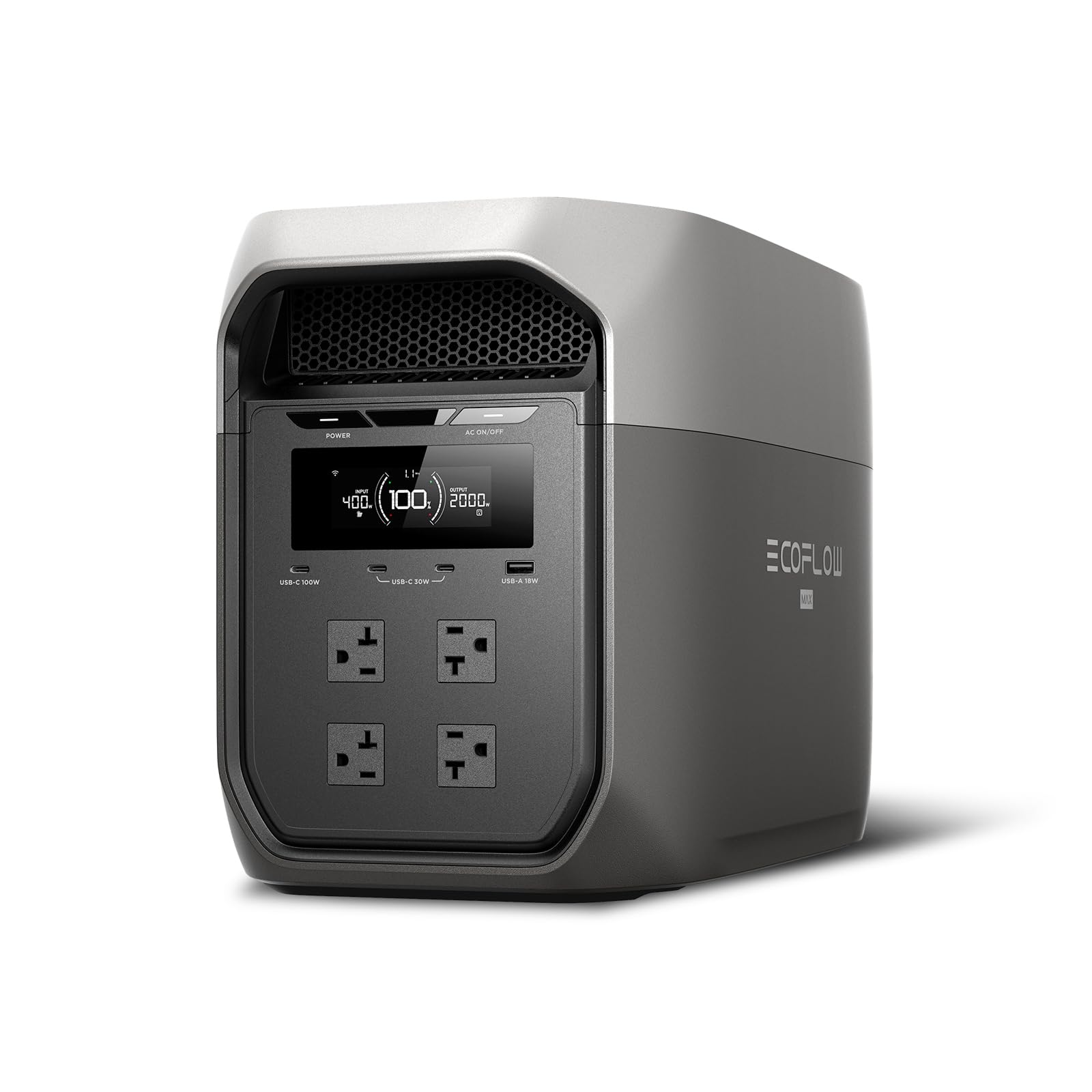
| EF ECOFLOW DELTA 3 Max★ Best Overall | Best all-round freezer backup | 2048 Wh | 2400 W | LiFePO4 (LFP) | Amazon |
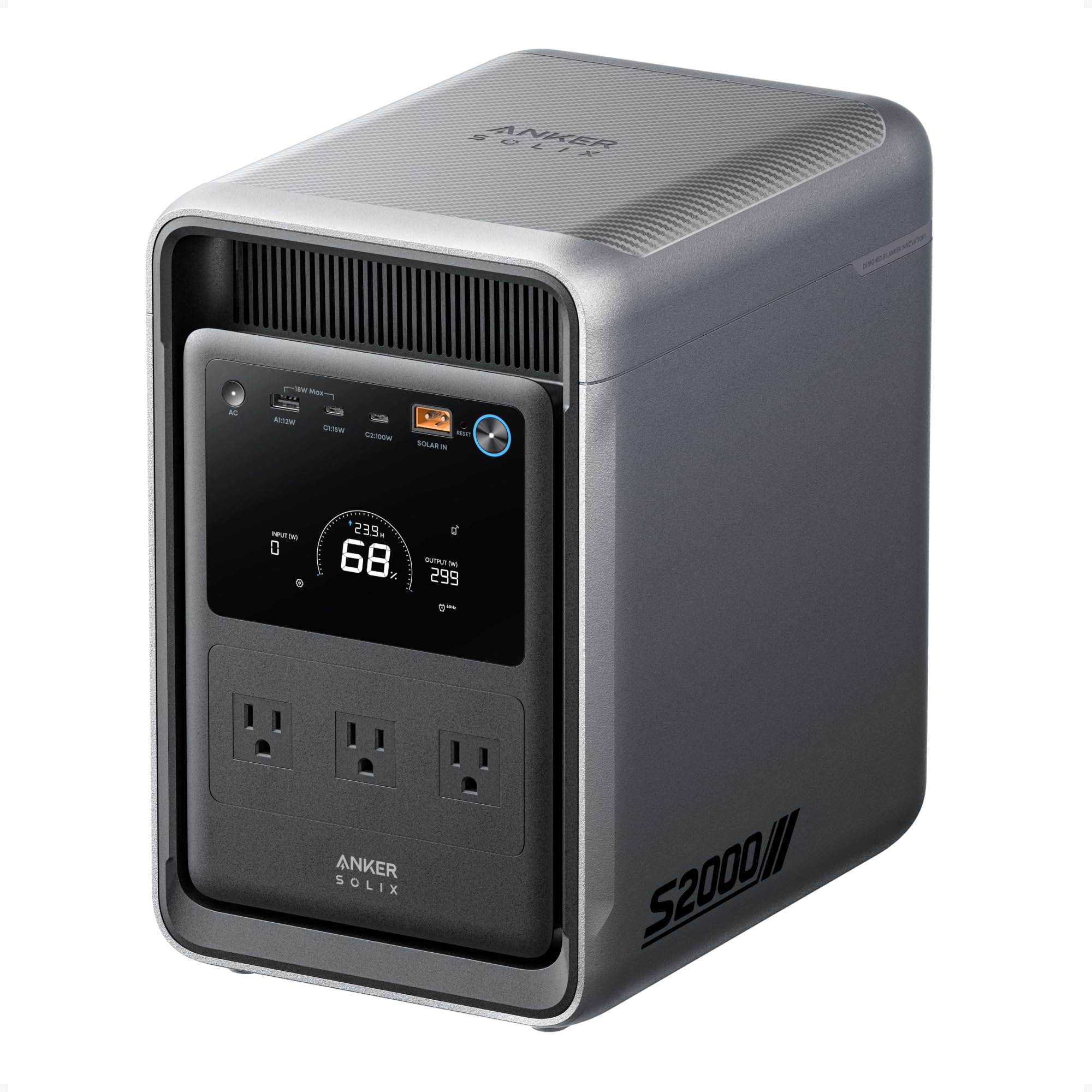
| Anker SOLIX S2000Fridge-First Pick | Small, light, fridge-first backup | 2,010 Wh | 1,500 W | LFP (314Ah cells) | Amazon |
| BLUETTI Elite 200 V2Long-Life Battery | High-cycle longevity | 2073.6 Wh | 2600 W | LiFePO4 (LFP) | Amazon |
| Dabbsson DBS2300 | Expandable storage | 2330 Wh | 2200 W (5 outlets) | EV semi-solid LiFePO4 | Amazon |
| Jackery Explorer 2000 v2 | Lightest 2kWh-class option | 2042 Wh | 2200 W | LiFePO4 (LFP) | Amazon |
| AFERIY P210 | Big output with 16 ports | 2048 Wh | 2400 W | LiFePO4 (LFP) | Amazon |
| Jackery HomePower 3000 | Whole-home essentials | 3072 Wh | 3600 W | LiFePO4 (LFP) | Amazon |
| EF ECOFLOW DELTA Pro | Highest capacity, expandable | 3600 Wh | 3600 W | LFP | Amazon |
| BLUETTI Elite 100 V2 | Compact everyday backup | 1024 Wh | 1800 W | LiFePO4 (LFP) | Amazon |
| UDPOWER S1200 | Entry-level emergency backup | Not stated | 1200 W | LiFePO4 (LFP) | Amazon |
| GRECELL 1000W Power Station | Budget portable backup | 999 Wh | 1000 W | Lithium-ion | Amazon |
In‑Depth Reviews
1. EF ECOFLOW DELTA 3 Max Portable Power Station, 2048Wh LFP Battery, 2400W
Our pick — over 4.5★ from 550+ verified ratings; the strongest balance of quality and price.
The freezer backup that recharges faster than most people run their first errand of the day
For a household that wants one box to sit ready for the next storm, the DELTA 3 Max is the pick that balances stored energy against how quickly it gets usable again. It holds 2048 Wh of power in a lithium iron phosphate (LFP) battery, which is the chemistry that survives thousands of charge cycles without fading fast. Pair that with a 2400 W continuous output, and a freezer compressor’s startup surge has room to breathe.
Where it pulls ahead of the cheaper GRECELL 1000W Power Station is raw muscle. The EcoFlow pushes 2400 W continuous against the GRECELL’s 1000 W, and holds 2048 Wh versus 999 Wh — roughly double the stored energy and more than double the output. On peak, the EcoFlow’s 3400 W dwarfs the GRECELL’s 2000 W, which is the margin that decides whether a compressor surge stalls the inverter.
The charging speed is the headline nobody expects. EcoFlow’s X-Stream technology refills 0–80% in about 1.13 hours, so a partially drained station is back in service before the next outage. Add a transfer time under 10ms, and this unit behaves like a proper UPS (uninterruptible power supply) for a chest freezer — it hands off automatically without you touching a cable. Owners consistently cite value and charging speed as the two things that sold them.
What buyers keep praising
- 2048Wh LFP capacity that handles a freezer plus other essentials
- 0–80% recharge in 1.13 hours via X-Stream charging
- 3400W X-Boost peak output rides through compressor surges
- Under-10ms UPS transfer keeps sensitive gear running
- App control for real-time energy monitoring
Worth knowing before you buy
- Heavy enough that “portable” means moving it deliberately
- Wall charging can be audible from the cooling fan
- Front buttons are hard to read in dim light
Who it’s built for: Anyone who wants a single, powerful, fast-refilling station to protect a full freezer through repeated outages.
Think twice if: you need something you can lift one-handed or you only have very light voltage demands — a smaller, lighter unit will do.
2. Anker SOLIX S2000 Portable Power Station, 2,010Wh, 3,000W Peak
Built to sip power, not gulp it — so a fridge keeps running while you sleep right through the outage
Anker designed the S2000 around efficiency, and it shows. A 6W idle draw and a claimed 10% efficiency edge translate into runtimes that outlast other 2kWh systems, with a stated 35-hour fridge backup. For freezer owners, that idle figure is the quiet hero — a station that barely sips when nothing is running wastes less of your stored 2,010 Wh.
What stands out beside the BLUETTI Elite 200 V2 is the footprint. Where the Elite 200 V2 packs 2073.6 Wh into a 53.4 lb body, the Anker does almost the same job in a 35.7 lb shell that measures just 8.2 × 11.1 × 12.7 in. That is a real difference when you are carrying it down basement stairs to park beside a freezer.
The 314Ah LFP cells carry a 10,000-cycle rating, which Anker frames as a 15-year lifespan of everyday use. You get front and rear outlets for a tidier setup, and a sub-10ms switchover that mimics a UPS for always-on appliances. The trade-off buyers report is mixed feedback on noise and power output — a fan that bothers some light sleepers.
Efficiency-first design: The low idle draw and high runtime are the reasons this pick exists for freezer duty — you are buying hours, not peak watts.
Compact for its class: At 35.7 lbs and 8.2 × 11.1 × 12.7 in, it fits where larger 2kWh stations crowd the floor.
Reach for this if: you value long, quiet runtime and a small footprint over maximum outlet count.
Look elsewhere if: noise sensitivity during charging matters to you, or you want the very top surge headroom among 2kWh units.
3. BLUETTI Elite 200 V2 Portable Power Station, 2073.6Wh, 2600W
The 6,000-cycle workhorse that treats your freezer as the long game
The number that defines this Elite 200 V2 is its 6,000-plus cycle battery. BLUETTI specifies a 17-year lifespan of everyday use — an unusually long service window that matters if you are buying a station to sit charged for when the power dies. It also carries a 2600 W continuous output and 3900 W Power Lifting mode, plenty to ride a freezer compressor’s surge.
The energy management is genuinely efficient. Standby draw sits at just 10W, which BLUETTI calls roughly three times lower than similar stations, so more of your 2073.6 Wh actually reaches the freezer instead of bleeding away. Owners notice that extra usable power on longer runs.
Charging flexibility is strong too: three modes let you choose speed versus peace and quiet, from a Turbo mode that hits 0–80% in about an hour to a Silent mode that runs at 16–30dB. That covers both a fast pre-storm top-up and overnight operation. The ELITE 100 V2 below is the lighter sibling for smaller jobs; this one is the heavier anchor unit.
Built for the long haul: The 6,000+ cycle rating and 17-year service claim are the reasons to pay for this tier — it ages slowly and tolerates being ignored between outages.
Quiet when you want it: Silent mode trims noise to 16–30dB, so a basement freezer backup does not keep the house awake.
Pick this if: you want maximum battery lifespan and are happy to settle it in one spot near the freezer.
Keep searching if: you need something genuinely light — the Elite 200 V2 tips the scales as a stationary-class unit.
4. Dabbsson Portable Power Station DBS2300, 2330Wh Expandable

Start with a full-house backup and grow it later — the freezer included
If you expect to run more than just a freezer during an outage, the DBS2300 gives you the unusual option to grow. It starts at 2330 Wh and expands to a massive 8330 Wh if you link two extra batteries, so the same unit scales from a single-chest-freezer job to keeping the whole home powered for days. Five 2200 W pure sine wave AC outlets mean you can plug in a fridge, freezer, and router without juggling plugs.
The battery construction is the standout spec. Dabbsson uses EV semi-solid state LiFePO4 cells and a UL94 V0-rated fireproof outer shell — that rating is a flame-resistance standard for the casing. Owners describe the freezer-friendly runtimes as solid, and praise the app for remote monitoring and the clear on-unit display.
A good fit beside the BLUETTI Elite 200 V2: the Dabbsson trades lighter weight for greater expandability, since it sits around 53 lb while offering growth the BLUETTI does not. Charging is fast too, hitting 98% in about 1.5 hours on its 1800W AC input. What owners flag honestly is weight and a quirk where very low-wattage devices under 30W are not always recognized — note if you plan to run small gadgets alongside the freezer.
Where it earns its keep
- Expandable from 2330Wh up to 8330Wh with extra batteries
- Five 2200W AC outlets for freezer plus household gear
- Recharges to 98% in about 1.5 hours
- App-controlled charging from 200W to 1800W
Before you commit
- Heavy — this is a move-in-and-stay unit
- Very low-wattage devices under 30W may not register
- Default AC auto-off can shut low draws down until you adjust it
The fit: households that want a freezer backup today and headroom to power more of the home tomorrow.
The mismatch: someone who wants a featherweight they can shuffle room to room.
5. Jackery Explorer 2000 v2 Portable Power Station, 2042Wh, 2200W

The 2kWh-class station that saves your back as well as your freezer
For a 2,000Wh-class battery, the Explorer 2000 v2 is unusually easy to move. It weighs 39.5 lbs, which Jackery frames as 41% lighter and 34% smaller than typical 2kWh LiFePO4 stations. If your freezer lives in a tight utility corner or a garage, that smaller footprint is a daily-use benefit, not a spec-sheet curiosity.
Capacity and output are both solid for freezer duty: 2042 Wh of storage and a 2200 W AC output across three AC ports, with a 2700W-class surge headroom for compressor startup. The 20ms UPS switching is a touch slower than the sub-10ms stations above, but it still takes over automatically during a blackout. Owners mention running a fridge for roughly 21 hours on one cycle, which is the kind of real-world freezer-adjacent runtime that matters.
Charging is brisk: 0–80% in about 66 minutes on AC, or a full charge in 102 minutes via the app’s Emergency Super Charging mode. The recurring gripes in owner feedback are a Bluetooth app connection that does not always stay put, and solar barrel ports that flex slightly under load. Neither sinks the unit; both are worth knowing before the storm.
Portability is the point: At 39.5 lbs with a hidden handle, this is the pick for anyone who has to physically haul their backup to the freezer.
Real runtime, mild app quirks: Fridge-friendly hours and fast charging land well; the app connection and solar ports are the honest caveats.
Suits you when: lighter weight and a compact shell outrank the fastest possible switchover.
Not for you when: you need the lowest transfer time or rock-solid app tethering above all else.
6. AFERIY P210 Solar Generator, 2048Wh, 2400W

Sixteen ports and a beefy inverter — plenty of room for the freezer and everything around it
If your outage routine involves the freezer plus half the kitchen, the AFERIY P210 has the outlet count to match. Six 20A AC outlets sit among 16 total ports, running off a 2400 W inverter with a 4800 W surge. That is the headroom a freezer compressor wants, and there is still capacity left for a fridge or coffee maker beside it.
The pure sine wave output — clean, wall-outlet-like power — protects sensitive electronics from the rough current that cheaper inverters can produce. Combined with a 3500-cycle LiFePO4 battery and a sub-10ms server-level UPS function, it behaves like a serious home-backup unit rather than a camping toy. Silent operation is another plus: under 30dB at full load and just 16dB at normal load.
The honest catch is expandability of charging inputs. Owner reports flag that the MPPT solar charging caps out below the headline figure, and that when AC input is connected the unit drops into a bypass mode that limits output far under its 2400 W rating. For freezer backup that is fine — you run it on the battery during an outage — but it is worth understanding before you plan a solar-heavy setup.
Outlet-rich and quiet: 16 ports and 16dB normal-load operation make this a tidy, unobtrusive freezer companion.
Know the bypass mode: AC-connected output is limited below the full 2400 W rating, so plan to run on battery when the grid is down.
Best for: households that want lots of outlets and quiet operation around a full kitchen of essentials.
Skip if: your setup depends on pushing the full inverter rating while plugged into AC.
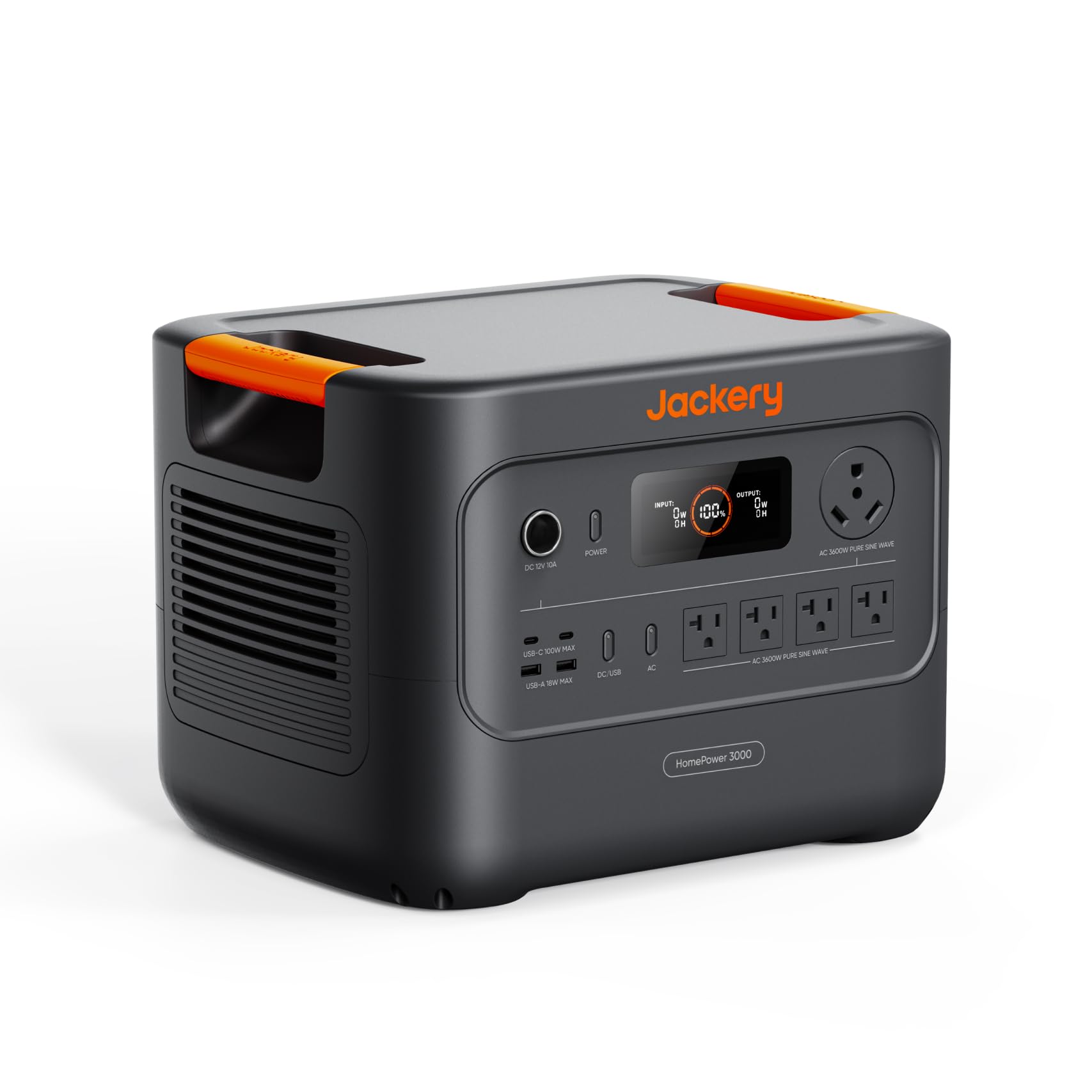
7. Jackery HomePower 3000 Portable Power Station, 3072Wh, 3600W
A 3kWh wall of power that treats a freezer as one small part of the job
When a single freezer is only one item on your outage list, the HomePower 3000 steps up. It holds 3072 Wh and pushes a 3600 W output with a 7200 W surge, which Jackery says keeps a refrigerator running for one to two days. That is whole-kitchen-essentials territory with the freezer folded in comfortably.
This is the pick for true home backup. A ≤20ms UL-certified UPS switches over automatically, and a built-in TT-30 RV port lets you plug a camper straight in without an adapter — a detail travelers appreciate. Owners describe running an entire travel trailer for several days, and fridge-plus-fans setups through multi-hour outages.
The trade is weight and noise. At 59.5 lbs it is a park-and-stay unit, and the fan runs audibly under load, so it is not built to sit as a desk UPS. Live with those and you get serious capacity, a fast 1.7-hour hybrid recharge, and the reassurance that a 4,000-cycle LFP battery should last a long time.
Why it earns a spot
- 3072Wh capacity with a 7200W surge for heavy startup loads
- Full recharge in about 1.7 hours via hybrid AC and DC
- Built-in TT-30 RV port needs no adapter
- ≤20ms UL-certified UPS switchover
The honest downsides
- 59.5 lbs — heavy and best left in one place
- Fan is audible under any real power draw
- Not suited as a quiet desktop UPS
Right call when: you want one large battery to cover the freezer and the rest of the house through a long outage.
Wrong call when: portability and near-silent operation are your top priorities.
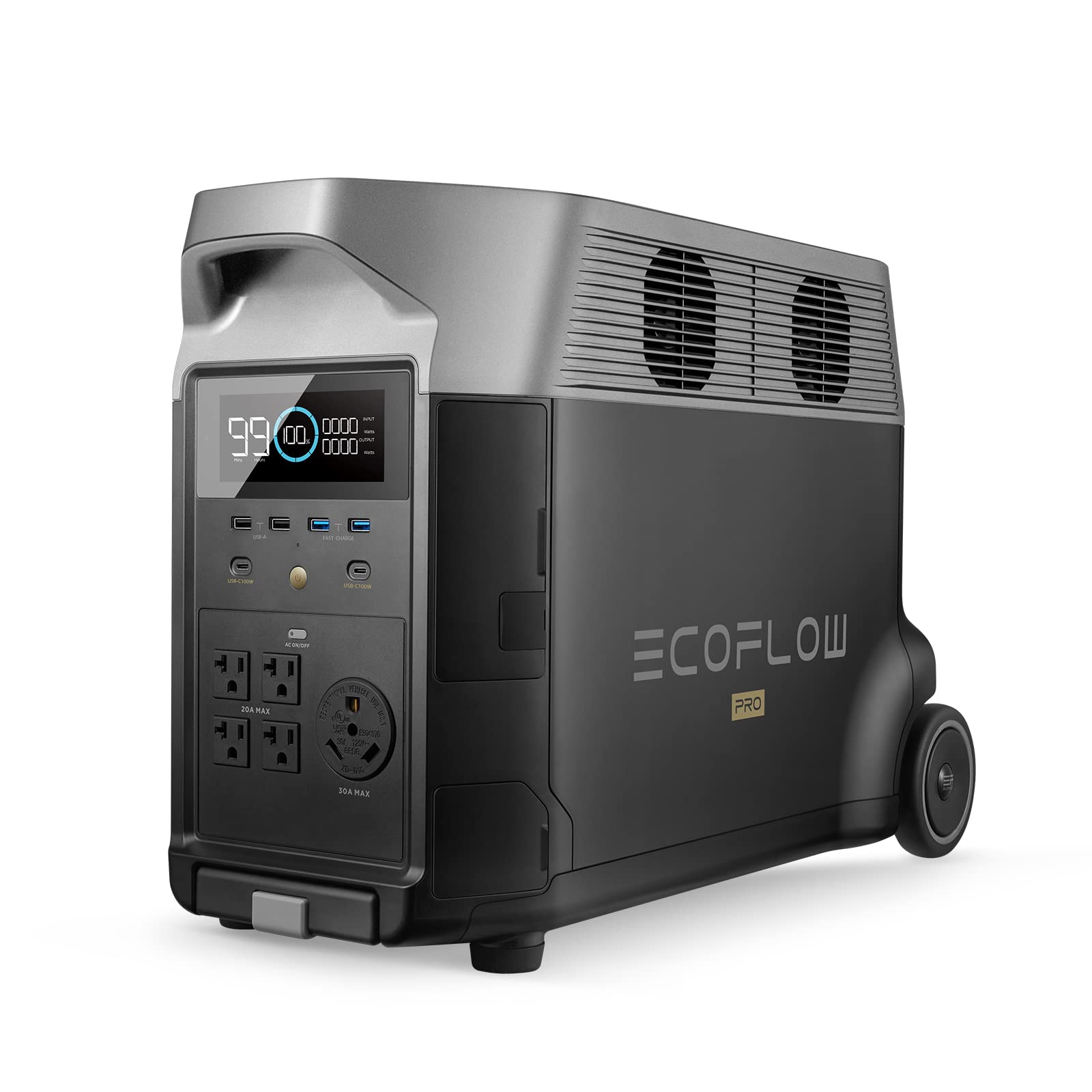
8. EF ECOFLOW DELTA Pro Portable Power Station, 3600Wh, 3600W
The biggest battery in the room — a freezer is barely a warm-up for it
When capacity is the deciding factor, the DELTA Pro sets the bar for this group. It carries 3600 Wh from the start and can expand all the way to 25kWh with extra batteries or smart generators — a level of storage that turns a few freezer-hours into days of household uptime.
The power delivery matches the storage. A single DELTA Pro runs 3600 W of AC output, expandable to 4500 W with X-Boost, and two units paired together reach 7200 W. Fifteen output methods include five AC outlets, dual 100W USB-C ports, and an Anderson port, so the whole kitchen can stay on during an outage.
Charging is quick for this size: about 1.8 hours on 240V and 2.7 hours on standard 1800W wall power, or 2.8 hours on four 400W solar panels. Owners repeatedly call the performance and the 2.7-hour recharge the standout traits. The catch is weight — at 99 pounds this is a permanent fixture, not something you carry around.
Capacity that ends the debate: 3600Wh, growable to 25kWh, means even a large freezer plus a fridge is a small load.
It stays put: At 99 lbs, count on finding a home for it and leaving it there.
The one to buy if: you want maximum storage and expandability and never intend to carry the unit by hand.
Pass on it if: you need something you can move yourself — the smaller LFP picks suit that better.
9. BLUETTI Elite 100 V2 Portable Power Station, 1024Wh, 1800W
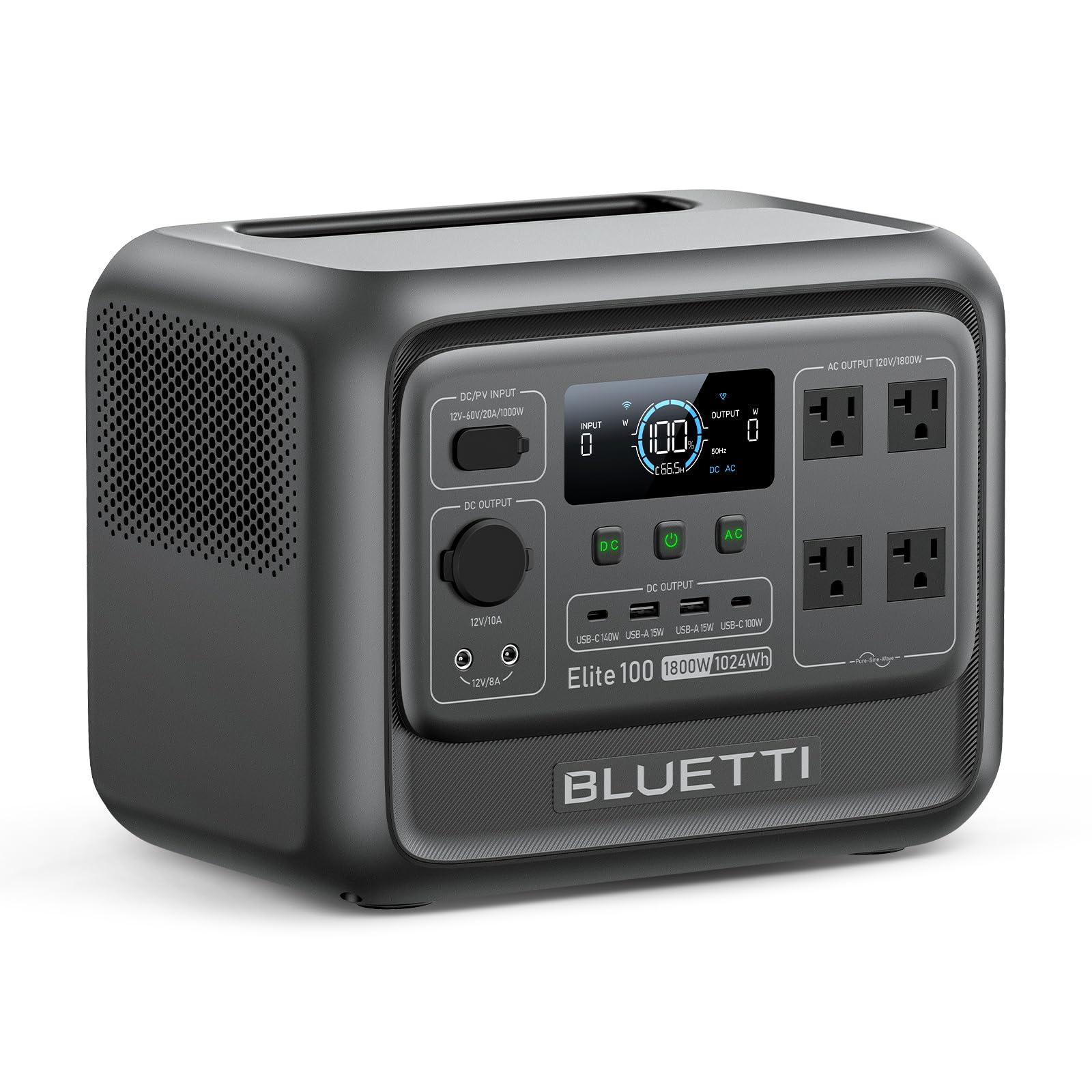
A 1kWh all-rounder that charges in barely more than an hour
Not every freezer backup needs to be a heavyweight. The Elite 100 V2 carries 1024 Wh with an 1800 W AC output and 2700 W Power Lifting, and it recharges in about 70 minutes on 1200W TurboBoost AC or up to 1000W solar — a fast turnaround for its capacity class.
Its value is portability and cost. At 25 lbs with a compact 17L body and a hidden carry handle, it is built to be picked up one-handed, which suits a small apartment freezer or a fridge that only needs a few hours of cover. A 10ms UPS switchover keeps a router or PC alive through blips, and silent mode runs at 30dB.
Customers note running a refrigerator for up to 48 hours during outages, which is a genuinely strong figure for a 1kWh unit. Over 4,000 life cycles round out a ten-year-lifespan LiFePO4 battery. The honest limit is scale: run a large chest freezer plus other heavy appliances and you will empty a 1024Wh pack fast. Size matters here.
Fast, light, affordable: 70-minute recharging and 25 lb portability make this the practical everyday pick for lighter freezer duty.
Know the ceiling: 1024Wh covers short outages and small freezers; heavier loads will drain it in hours.
Ideal for: small freezers, apartments, and short outages where a light, fast-charging pack wins.
Stretch higher for: a full chest freezer or multi-day coverage — this pack has less runway.
10. UDPOWER S1200 Portable Power Station, 1200W, UPS, UL2743
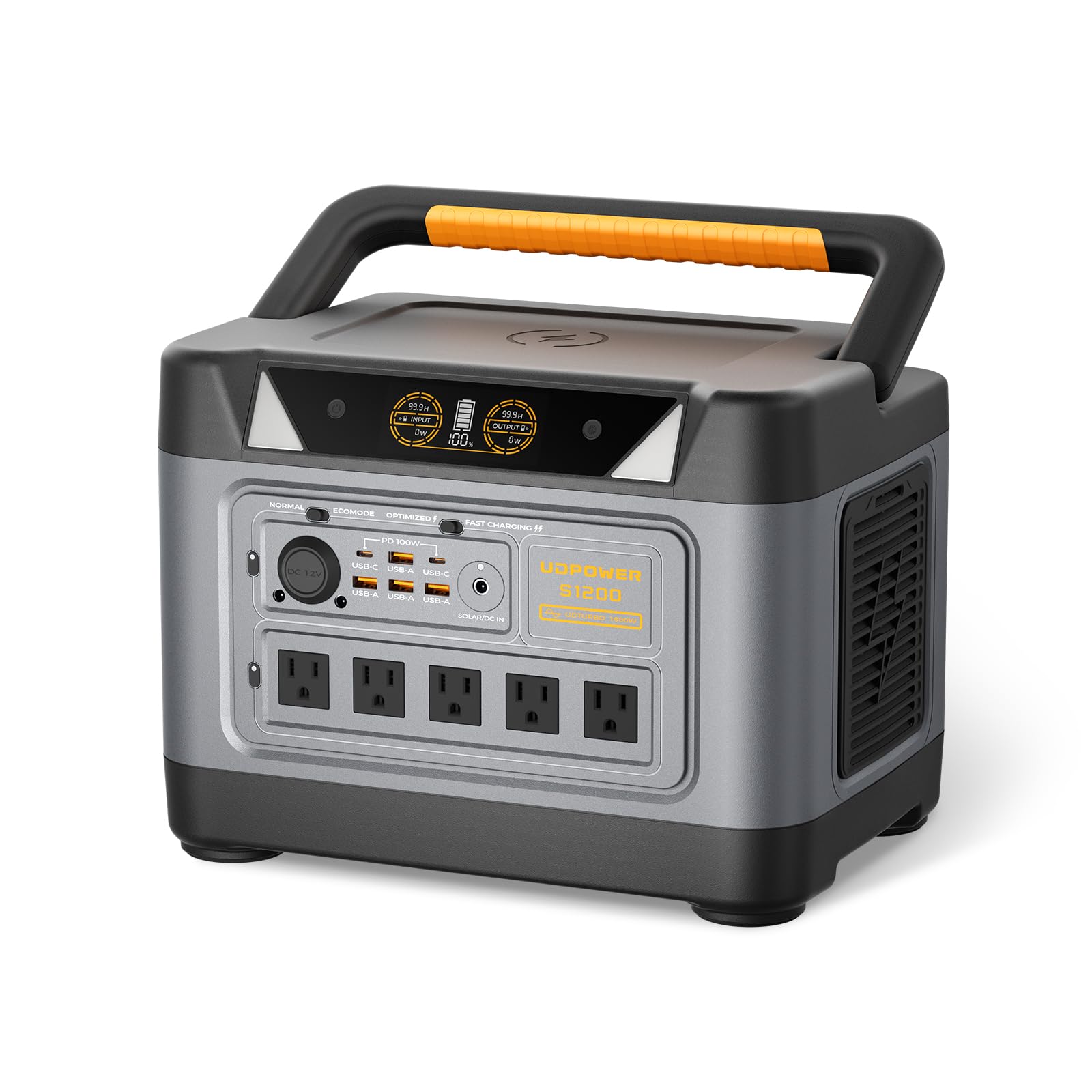
An emergency-ready starter pack with the fastest switchover in the group
For a first backup battery, the S1200 keeps things simple and safe. It runs a 1200 W pure sine wave output with an 1800 W surge and lists an almost instant switchover — under 0.01 seconds — so it takes over the moment the grid drops. That speed is exactly what a freezer or CPAP setup wants.
The battery is built to last: UDPOWER specifies a 4,000-plus cycle LiFePO4 pack that works from -4°F to 140°F. Charging is quick too, with an 800W AC input reaching 0–80% in about 1.5 hours, and a 12-month standby drain of just 0.3W so it stays ready between outages.
Owner feedback centers on build quality and quiet operation — under 25dB cooling keeps it unobtrusive, and reviewers describe running a fridge and freezer for multiple hours during an outage. Note that UDPOWER has fewer owner ratings behind it than the mainstream brands here, so you are leaning more on the specifications than on a long track record. For a compact, UL2743-listed emergency unit, that is a reasonable starting point.
Safety-first design: UL2743 listing and a triple-protection system back up a 1200W pure sine wave output.
Thin review history: Fewer owner ratings than the bigger brands, so weigh it on specs rather than longevity evidence.
Good first step for: a compact, fast-switching unit to keep a small freezer or CPAP powered.
Look further if: you want a long public track record or higher continuous output.
11. GRECELL 1000W Portable Power Station, 999Wh, Peak 2000W
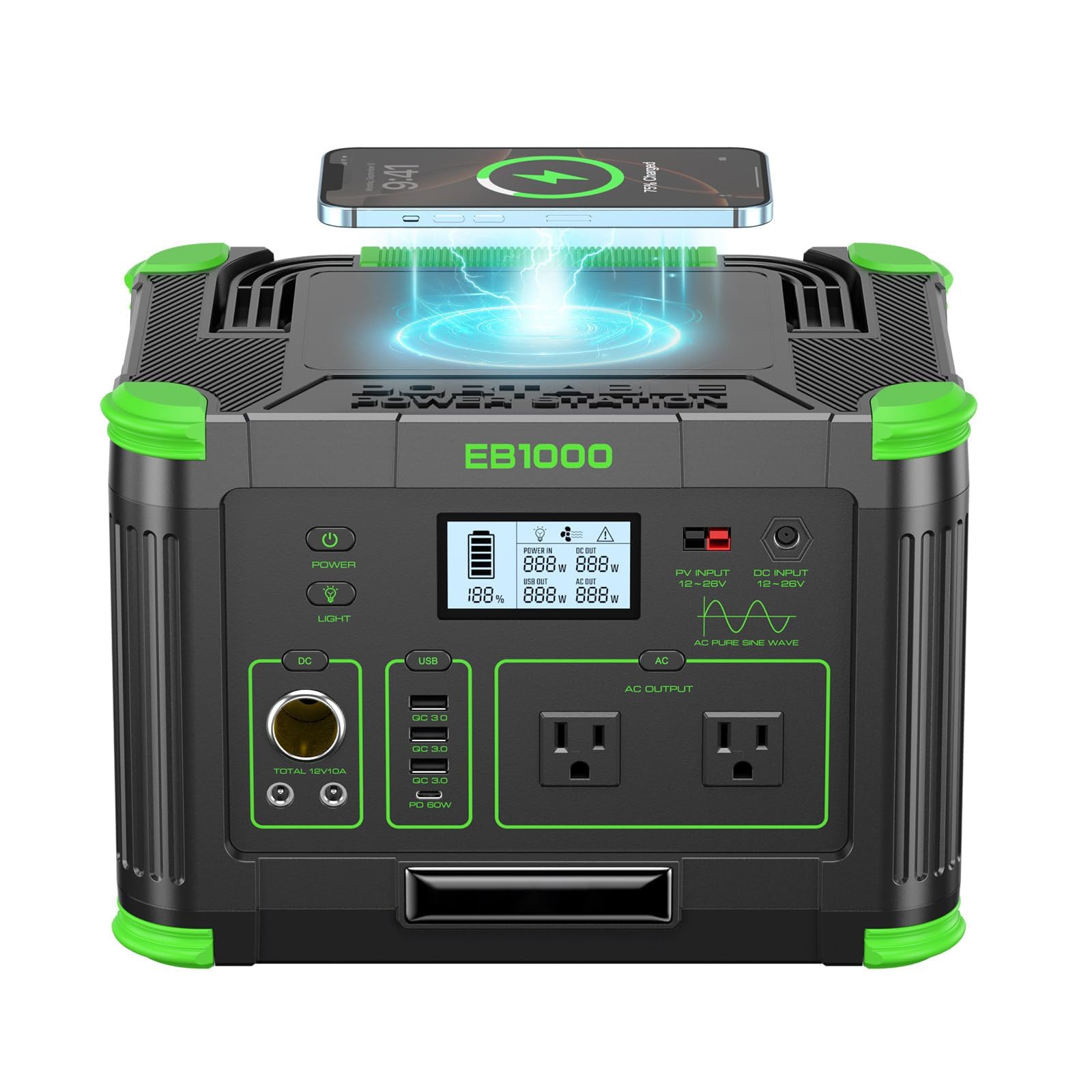
Small, affordable, and light enough to follow the fridge anywhere
The GRECELL is the value end of this list, and it earns its spot with flexibility rather than brute force. It stores 999 Wh and, at just 17 lbs with an ergonomic handle, it is the most portable station here — light enough to relocate next to a small fridge or freezer without a second thought. The 1000 W pure sine wave output with 2000 W surge covers modest compressor loads.
Where the pricier stations pull ahead is raw capacity. The EF ECOFLOW DELTA 3 Max holds 2048 Wh against the GRECELL’s 999 Wh, and pushes 2400 W continuous versus the GRECELL’s 1000 W — the practical difference between covering a large freezer and covering a small one. But the GRECELL counters with its portability: it can sit beside the load instead of being parked nearby.
Owners rate its versatility, and one overlanding use case ran a small fridge, a diesel heater, and device charging together while the 2000 W peak absorbed a coffee percolator’s surge. The honest snag reviewers point out is charging speed: a 155W maximum input caps how fast it refills from solar, car, or an alternator, so plan for a slow field recharge.
What it does well
- Only 17 lbs — the lightest station on this list
- 999Wh with a 2000W peak surge
- Good value at the entry level
- Handles light appliance pairings with a proper surge buffer
Where it comes up short
- 1000W continuous is modest for larger freezers
- 155W max input makes recharge slow off-grid
- Smaller capacity shortens runtime versus bigger units
Perfect when: budget and portability matter most, and the freezer is small or the outage is short.
Trade up when: you need more capacity and faster charging — the mid-range units cover that.
Understanding the Specs
Watt-Hours (Wh) vs. Running Watts
Two numbers drive every freezer-backup decision, and they do different jobs. Watt-hours (Wh) measure how much energy the battery can store — think of it as the size of the fuel tank. Running watts (W) measure how much power it can push out at once — think of it as the width of the pipe. A freezer needs enough running watts for the compressor and enough watt-hours for the hours you need to cover. A station with a huge tank but a narrow pipe will still trip; one with a wide pipe but a tiny tank runs out fast. Look for both.
Surge Watts and Battery Chemistry
Freezer compressors do not draw steady power — they spike for a moment at startup, then settle down. That spike is the surge, and a station’s peak or surge rating is what rides it out without stalling. Buy a unit whose surge comfortably clears that kick. Chemistry decides how long the pack endures over the years: LiFePO4 (lithium iron phosphate) batteries tolerate heat and hold up over thousands of charge cycles, while older lithium-ion packs fade sooner. For a battery that sits idle waiting for an outage, that longevity is worth paying attention to.
FAQ
How long can a backup battery run a freezer during an outage?
What size battery do I need for a chest freezer?
Can these power stations handle a freezer’s startup surge?
What does UPS transfer time mean for a freezer?
Are LiFePO4 batteries better than lithium-ion for backup?
Do I need solar panels to charge a freezer backup battery?
How heavy are these freezer backup batteries?
Can I run a freezer and a fridge on the same backup battery?
How long does a freezer stay cold during a power outage?
Can these battery stations replace a gas generator for freezer backup?
Final Thoughts: The Verdict
For most households, the strongest backup battery for a freezer here is the EF ECOFLOW DELTA 3 Max, because its 2048Wh LFP battery and 2400W continuous output cover a freezer’s startup surge, and its 0.80-in-1.13-hour recharge means it is ready again before the next storm. If you want the most battery lifespan, grab the BLUETTI Elite 200 V2 with its 6,000-plus cycle rating. And for compact, lighter freezer duty, the BLUETTI Elite 100 V2 is the one to reach for. One last nudge: the Jackery Explorer 2000 v2 sits at the light end of the 2kWh class at 39.5 lbs, which is worth considering if you will be moving your backup to the freezer by hand.
How We Picked
We do not accept paid placement. Every pick is matched to a real buyer and a real use-case; we do not hands-on test units.
Sources & Methodology
Specifications: manufacturer listings and product documentation. Review insights: verified customer reviews, as of September 2026. Pricing: not shown on this page (it changes often); check the current price via the retailer link.
As an Amazon Associate, KitchPrep earns from qualifying purchases. This does not affect which products we feature.
Related Guides
