
Specs are compiled from manufacturer listings and verified buyer reviews and can change over time — please confirm the key details on the product page before buying.
If you are shopping for a backflow preventer for your sprinkler system, the single most important thing to know is which type your water authority actually requires. A pressure vacuum breaker (a device that stops dirty water from being sucked back into your clean supply) is the workhorse for lawn irrigation. A double check valve does the same job for non-health-hazard lines. Buy the wrong type and your annual inspection fails no matter how good the part is.
I’m Mohammad Maruf — the founder and writer behind KitchPrep. This guide is built by comparing the manufacturers’ published specifications and the patterns across verified customer reviews, so you get each pick’s real strengths and trade-offs instead of marketing spin.
The picks below cover both device types, brass and plastic bodies, and the connection sizes that fit most residential sprinkler lines. By the end you will know exactly which backflow preventer for sprinkler system fits your setup.
Our Picks at a Glance
How To Choose The Best Backflow Preventer for Sprinkler System
Picking the right backflow preventer for your sprinkler system starts with one question: what does your local water utility require? Before you buy anything, call your city or water district and ask which device type they accept for irrigation. That one phone call saves you from buying a part that fails inspection.
Pressure Vacuum Breaker or Double Check Valve
A pressure vacuum breaker, often shortened to PVB, protects against back-siphonage, which is the reversal of water flow caused by a sudden drop in supply pressure. It has an air inlet that opens to break the vacuum. This is the type most cities require on lawn irrigation because irrigation lines sit below the potable supply and represent a potential health hazard. A double check valve, by contrast, uses two independent check modules to stop both back-siphonage and backpressure. It is rated for non-health-hazard applications. It is the better fit for fire lines and commercial service connections where the risk level is lower. Buying a double check valve for a residential sprinkler system is usually overkill unless your utility specifically asks for it.
Connection Size and Flow
Connection size is the second thing to check. A 3/4 inch device matches 3/4 inch pipe and is common on smaller residential systems with a handful of zones. A 1 inch device matches 1 inch pipe and offers more flow for larger systems with long runs or many heads. The most common mistake is ordering the wrong size and discovering it at the pipe, so measure your existing connection before you order. Both sizes use threaded NPT connections in most of the picks here, which is the standard tapered pipe thread that seals with tape or paste.
Body Material and Freeze Risk
Brass bodies resist corrosion and cracking better than plastic over many seasons of sun, rain, and winter. Plastic units are lighter and less expensive but more vulnerable to freeze damage if water is left inside. In freeze-prone regions, a brass body paired with a proper winterization routine is the safer long-term bet. Some units here also include a freeze sensor that can alert you when temperatures approach freezing. That is a genuinely useful feature if you have ever forgotten to drain the line in November.
Quick Comparison
| Model | Best For | Type | Connection | Max Pressure | Amazon |
|---|---|---|---|---|---|
| Febco 765 Bronze PVB 1″★ Best Overall | All-around residential irrigation | Pressure Vacuum Breaker | 1 inch | 150 psi | Amazon |
| ONDAQUA 3/4″ Brass PVBBudget Brass | Budget brass replacement | Pressure Vacuum Breaker | 3/4 inch | 400 psi | Amazon |
| YEE 1″ Brass PVB AssemblyKing of Flow | Cheap complete assembly swap | Pressure Vacuum Breaker | 1 inch | 400 psi | Amazon |
| Zurn Wilkins 34-710 3/4″ PVB | Tight spaces, low-hazard lines | Pressure Vacuum Breaker | 3/4 inch | — | Amazon |
| Toro 53300 1″ PVB | Easy winterizing, plastic body | Pressure Vacuum Breaker | 1 inch | — | Amazon |
| Watts LF007 3/4″ Double Check | Non-health-hazard service lines | Double Check Valve | 3/4 inch | — | Amazon |
| Zurn Wilkins 1-350 1″ Double Check | Fast install and flush tool | Double Check Valve | 1 inch | — | Amazon |
| Watts 007M1QT 1″ Double Check | Premium long-term reliability | Double Check Valve | 1 inch | 175 psi | Amazon |
In-Depth Reviews
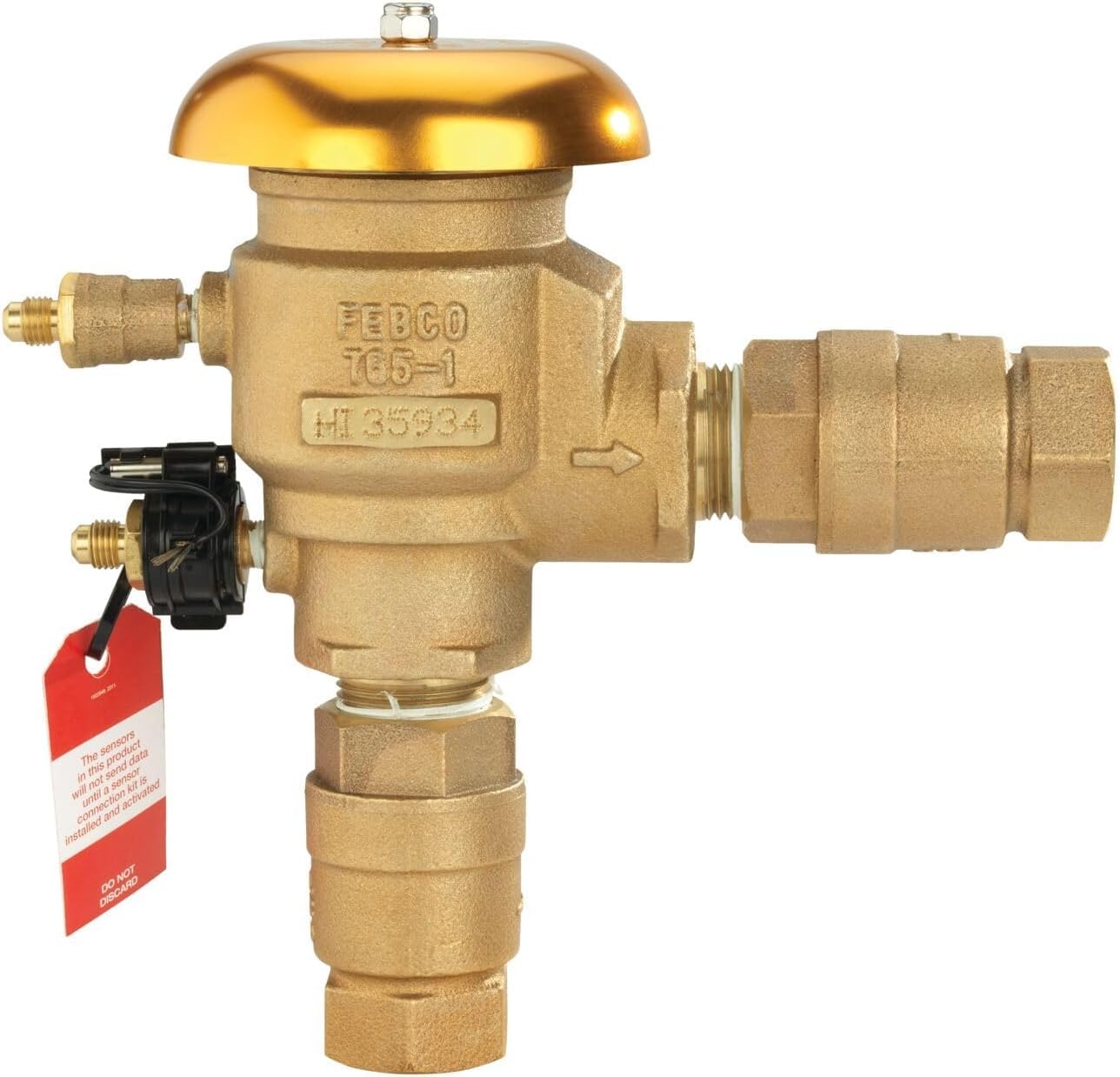
1. Febco 765 Bronze Pressure Vacuum Breaker Backflow Preventer 1″ Inlet
Our pick — over 4.5★ from 200+ verified ratings; the strongest balance of quality and price.
A 1-inch bronze PVB with test cocks and shutoffs built in for annual inspection
If you want your irrigation line protected without thinking about it again, the Febco 765 is the most direct answer. It bolts onto 1 inch threaded pipe, which matches the main line on most residential sprinkler setups, so you avoid adapters. The bronze body handles outdoor exposure without the corrosion worries of plastic. The 150 psi (pounds per square inch, a measure of how much water pressure the body can handle) maximum working pressure covers typical residential supply, so your system runs normally. The temperature range runs from 32 degrees F to 140 degrees F, so it tolerates both summer heat and shoulder-season cold.
What draws experienced owners back is the mechanical package: a spring-loaded check valve, an air relief valve with an opening port, two resilient seated shutoffs, and test cocks for annual inspections. The test cocks matter because many cities require certified testing every year, and having them built in means your tester can attach gauges without adding parts. Owners who replaced older units describe the swap as straightforward PVC work and note the valve seals properly against back-siphonage once installed. One verified buyer put it plainly: “Installed, tested, and working well. Exact replacement for a very old unit.” That is the core value — a known part that behaves the way the last one did.
The catch is the freeze side. The plastic bonnet is there specifically to shield the body from freeze damage, but that only helps if the device is properly drained before winter. As one reviewer noted, the unit looks identical to the original that lasted roughly 20 years — so the lifespan depends heavily on your winterization habits, not on the part alone. A separate freeze sensor is available if you want the option to pair it with a monitoring system. The other thing to know is the 10 x 7 x 7 inch footprint, which is larger than some compact alternatives, so measure your install spot before you commit.
Where it earns its keep
- Bronze body with 150 psi working pressure and a spring-loaded check valve rated for continuous irrigation pressure
- Test cocks, shutoffs, and an air relief valve come built in — no extra fittings needed for annual testing
- Plastic bonnet designed to shield the assembly from freeze damage
- NPT threaded connections match standard residential 1 inch pipe
Where it makes you work
- Freeze protection only works if you actually drain the line before winter
- At 10 x 7 x 7 inches it needs more install room than compact alternatives
- Some buyers report the handle nuts needing a tighten after install to stop a slow leak
Go with it if: you want the most established bronze PVB for a mainstream 1 inch residential line with test cocks ready for inspection.
Think twice if: your install space is tight, or you know you will pull the line late in the season and have no drain plan.
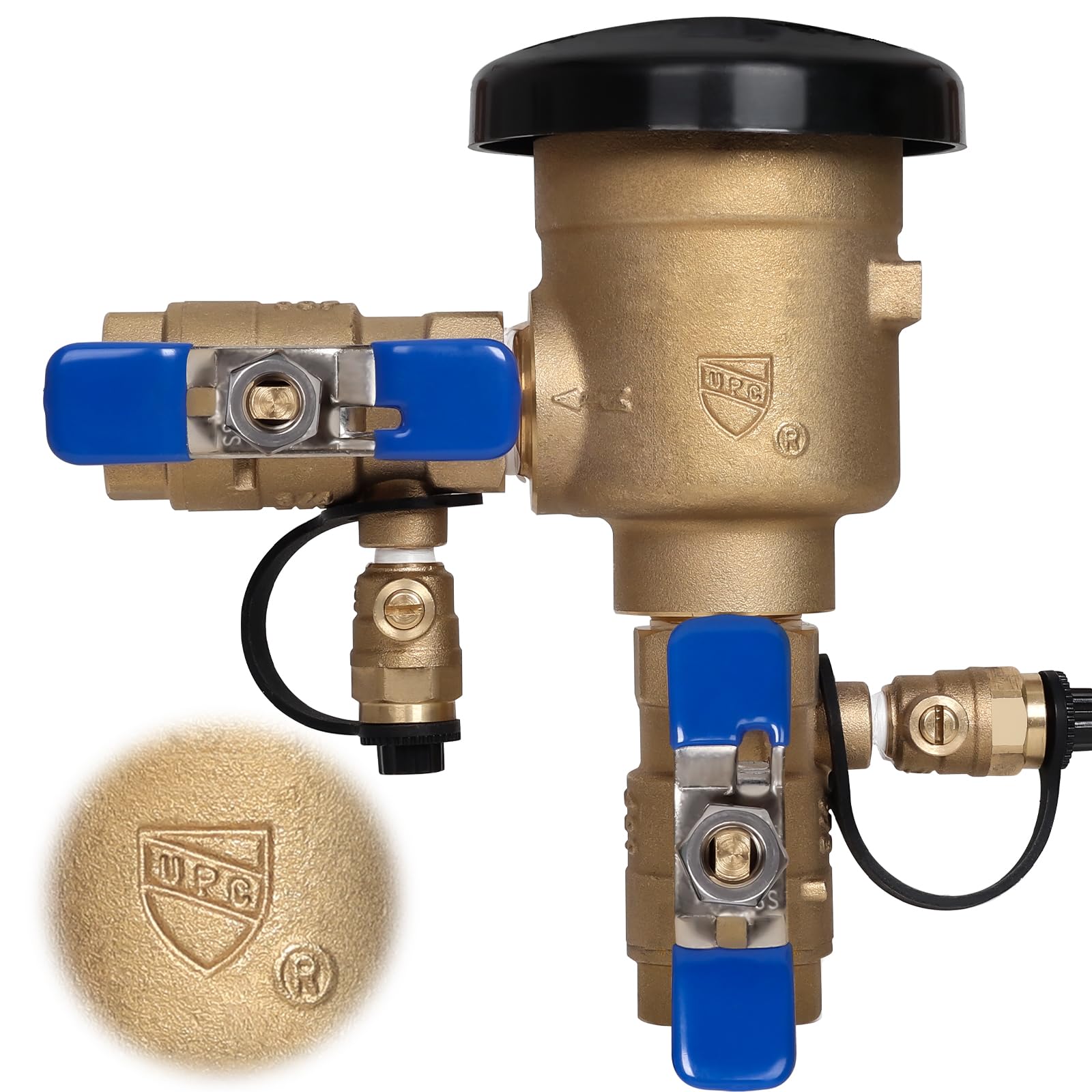
2. ONDAQUA 3/4″ Brass Pressure Vacuum Breaker, 400 PSI Max
A UPC-certified 3/4-inch brass PVB rated to 400 psi with a 5-year warranty
The number that jumps out first is 400 psi (pounds per square inch). That is a maximum pressure rating — well above what any typical residential sprinkler supply delivers — and it means the body has headroom against pressure spikes. It matters if your system sits near a municipal booster or a well with a pressure tank that surges. For the everyday buyer, the plain-English translation is simple: this device is not the weak point in a high-pressure line.
It is a 3/4 inch device with threaded NPT connections, so measure your existing pipe before ordering — this is the smaller of the two common residential sizes. ONDAQUA holds a UPC certification issued by IAPMO and states the unit is compliant with the ASSE 1020-2020 standard. For anyone whose city requires a certified device for the annual test, that paperwork matters more than any spec sheet bragging. The body uses plumber-grade PTFE tape rather than a lower-grade thread seal, and the manufacturer states the unit has undergone over 1,000 tests to ensure a service life exceeding 15 years. Those are manufacturer claims, not independently verified figures, but the physical construction backs the intent.
Installation is where owners consistently say this one wins. The arrow-marked flow direction on the body removes guesswork, and the maker claims a 30 percent faster setup from that marking. The recurring honest note is that the brass is heavier than plastic, and the device may need thread seal tape even though some is included. There is also a 5-year warranty, which is a real safety net on an entry-tier part. The most practical comparison in this whole list lives here: this unit is 3/4 inch across the inlet versus 1 inch on the Febco 765 above. If your pipe is 3/4, sizing down to this is correct — if your main is 1 inch, stay with the larger device.
Best-fit buyer: a homeowner with 3/4 inch pipe who wants certified brass construction and a real warranty without paying premium-brand pricing.
Honest limitation: the unit ships without printed instructions, so plan on looking up the install before you start — and heavier brass means you should support the pipe if your run is unsupported.
Reach for this if: your line is 3/4 inch and certification paperwork matters in your municipality.
Look elsewhere if: your main line is a full 1 inch — undersizing the connection will restrict flow, not protect it.
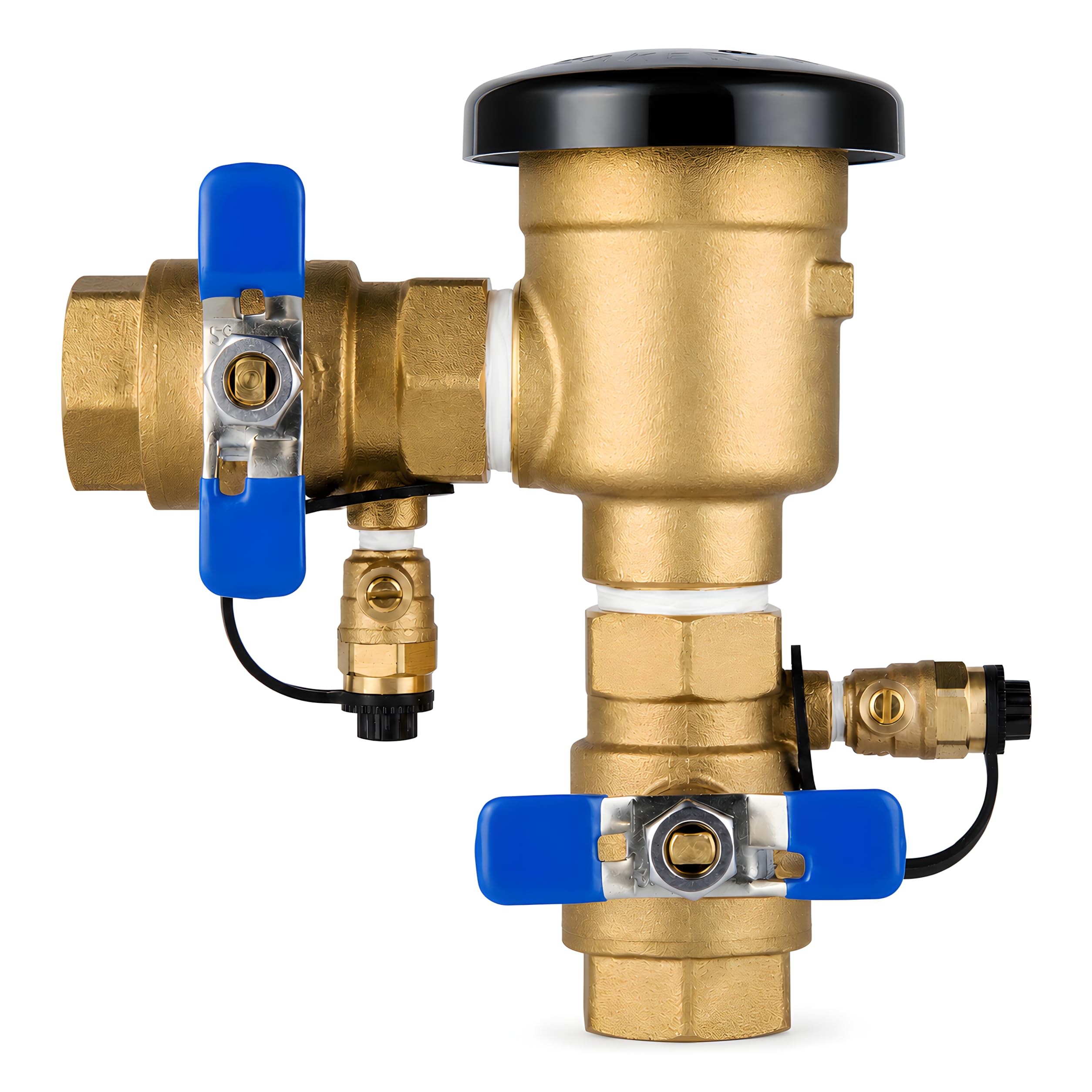
3. YEE 1 Inch Backflow Preventer, Brass Pressure Vacuum Breaker Assembly, 400 PSI
A full 1-inch brass PVB assembly rated to 400 psi at a lower price than bronze
If you need a full 1 inch connection but the bronze options feel like more money than you want to spend, this is the natural middle. It matches 1 inch threaded pipe and rates to 400 psi, the same maximum pressure as the ONDAQUA unit above — but the ONDAQUA is a 3/4 inch inlet while this is a full 1 inch. That difference is the whole reason to pick one over the other. On a long-run sprinkler system with multiple zones, a 1 inch connection keeps flow healthier than a 3/4 inch restriction would.
The body is thickened brass with a marked flow-direction arrow and a centerline test plug, and both of those help on inspection day. The complete assembly ships as one piece, so you are not hunting down valves separately. Owners describe the kit as ready to go right from the start — pretaped, with the two valves already connected to the breaker, plus an extra roll of tape in the package.
Now the honest part, and it is the single most important thing to check on this pick. There is no serial number on the unit. Several cities require backflow preventers to be registered and annually tested under a serial number, and without one, the device generally will not pass that certification. If your municipality does not require annual testing — many rural and small-town jurisdictions do not — this is a non-issue and the value is exceptional. If it does require testing, this is the wrong device regardless of how good the brass is. The second thing to know is the install height requirement: a pressure vacuum breaker typically needs to sit above the highest sprinkler head on the system. Some installations make that awkward, so check your yard layout before ordering.
Why buyers like it
- Full 1 inch inlet at 400 psi max pressure — no need to step down on larger systems
- Ships as a complete assembly with pretaped connections and extra tape included
- Marked flow-direction arrow and centerline test plug simplify setup
- Thickened brass body for corrosion resistance in outdoor conditions
What to verify first
- No serial number — this unit typically will not pass municipal annual backflow testing
- Must sit above the highest sprinkler head on the system, which some yards make difficult
For you if: your jurisdiction does not require serial-numbered annual testing and you want a full-flow 1 inch brass assembly for less.
Pass if: your city registers and tests backflow devices every year — you will fail on the missing serial alone.
4. Zurn Wilkins 34-710 3/4″ 710 Pressure Vacuum Breaker Assembly

A 3/4-inch bronze PVB at 6.63 x 2.9 x 6.25 inches for tight install spots
When the install spot is a tight corner behind the shutoff, this is the device that fits. It is a 3/4 inch bronze assembly at 6.63 x 2.9 x 6.25 inches, notably smaller than the 10 x 7 x 7 inch Febco 765, and the compact body is the point. The design uses fewer parts than a full-size bench, which simplifies maintenance and keeps replacement straightforward. The single-part number means a low-cost repair kit spans both the 3/4 inch and 1 inch versions of this line, so future servicing does not depend on a particular size.
Where it stands out on paper is the certification stack. The assembly is ASSE Listed and IAPMO Listed, and it is approved by the Foundation for Cross-Connection Control and Hydraulic Research at the University of Southern California. For a utility inspector, that documentation trail is the whole ballgame. The unit is rated for high-hazard irrigation applications in both commercial and residential settings, so it is not just a residential-grade part with a smaller body.
Two honest notes here, and neither is a reason to avoid the product. First, the assembly can sometimes arrive with a cracked bonnet if a prior buyer over-tightened it — a hand-tight practice avoids that with new units, and the manufacturer is known for responsive replacement part support when a problem does occur. Second, the recurring feedback on the durability side is real: in freeze-heavy areas this unit does not always survive a hard winter if the line is not properly drained, and some owners mention leaks that need internal adjustment. Both are true of nearly every PVB (pressure vacuum breaker, a device that stops water from flowing backward) on this list, which is why winterization is a routine, not an option. If a leak does develop from a threaded connection, re-taping and re-seating is the standard first step.
Pick it if: you have 3/4 inch pipe, limited install space, and want a compact assembly with strong third-party listings for inspection.
Skip if: you want a brass-only budget body and do not need the compact footprint — the larger bronze unit above will last similarly and cost similar.
5. Toro 53300 1-Inch Sprinkler System Pressure Vacuum Breaker

Built-in unions and a twist-off drain cap let you empty the body without cutting pipe
Picture a homeowner who has forgotten to winterize a sprinkler line more than once. This Toro is designed around that exact scenario. The 1 inch body uses built-in unions, which are swivel connections that let you separate the device from the pipe without cutting anything. The twist-off cap on top is the drain point, and once open, gravity empties the body. On a cold November evening that is the difference between draining the line in two minutes and lying under the pipe with a hacksaw. The body is plastic — 16 ounces total, noticeably lighter than bronze units — but the flow rate is a real 5 gallons per minute, which is enough for typical residential zones.
The rest of the design is honest and workmanlike. It uses 1 inch female NPT inlet and outlet, works with any brand of irrigation system, and prevents back-siphonage into the potable supply just like the bronze units. Owners consistently say install is simple — about 15 minutes with an adjustable wrench and Teflon tape — and that the unit is an exact replacement for the part that came off. The straightforward plumber-avoidance value shows in the pricing tier, though the plastic body is the trade-off against longer-lived brass.
Two things to know before you buy this one. First, the body is plastic rather than brass, which means it is more vulnerable to cracking if water is left inside over a hard freeze — the twist-off cap helps, but it does not replace a proper drain. Second, the device is a pressure vacuum breaker and must be mounted above the highest sprinkler head on the system. Some owners mention that requirement catching them off guard. The manual is basic rather than detailed; confident DIY installers do fine, and others typically watch a short video and follow the same steps.
Easy-winterizing angle: built-in unions plus the twist-off cap turn seasonal draining into a two-minute job instead of a project.
Fair caveat: the plastic body and the above-sprinkler-head mounting requirement are the two things that trip up first-time installers.
Great for: cold-climate homeowners who want fast seasonal draining and simple DIY install on a 1 inch line.
Not for: installs where the device must sit low or where the highest sprinkler head is above the practical mounting point.
6. Watts LF007 Lead-Free Double Check Backflow Preventer Assembly 3/4″ NPT
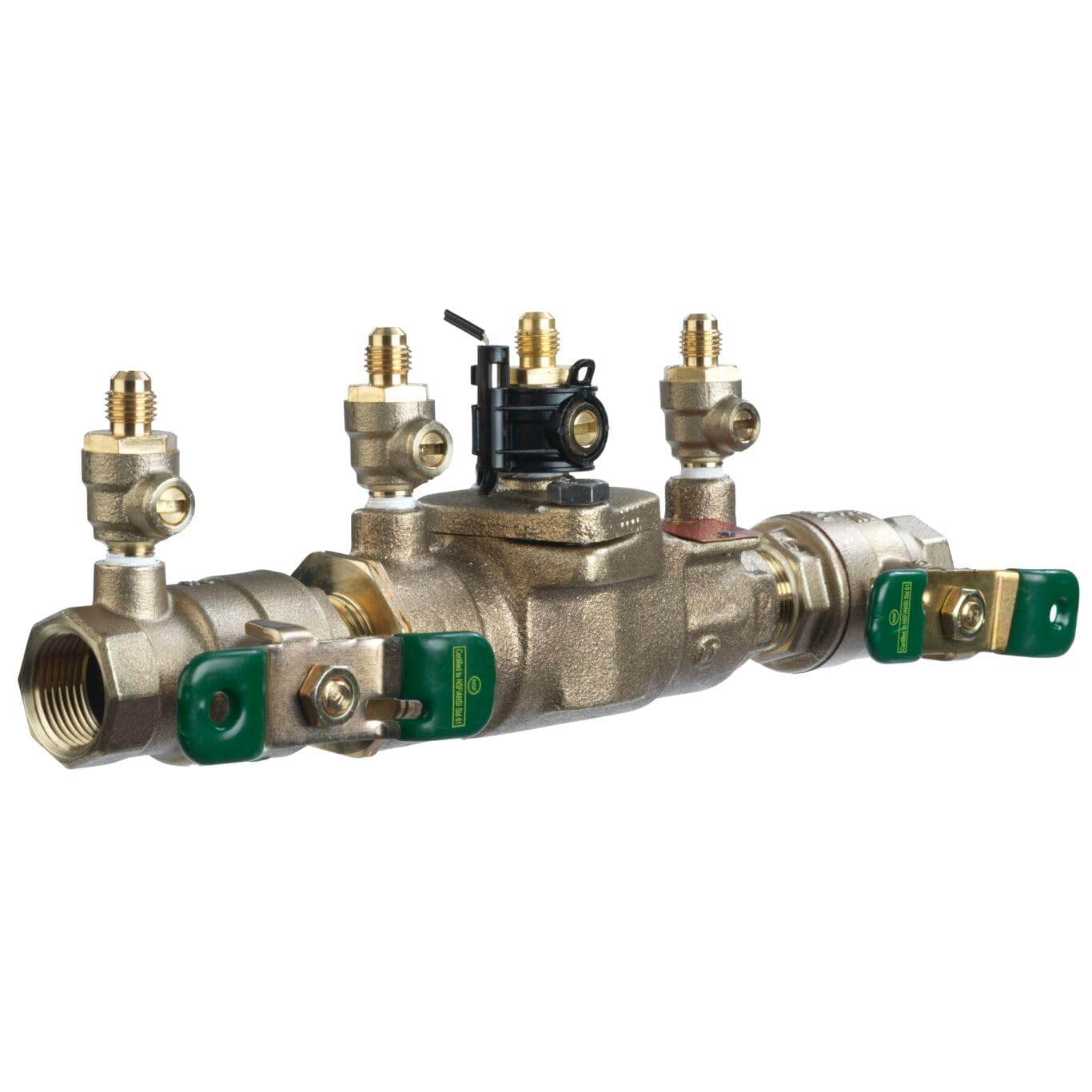
A lead-free double check valve with top-entry access and replaceable check discs and seats
Pick the Watts LF007 when your application calls for a double check valve rather than a pressure vacuum breaker. Double check valves handle non-health-hazard applications — think fire lines, service entrances, and irrigation lines where the utility code does not call for a PVB. The LF007 uses a lead-free copper silicon alloy body, which is the lead-free side of the LF designation, so you get safe water contact. It carries NPT connections (standard threaded pipe fittings), quarter-turn ball valve shutoffs for quick on/off, top-mounted test cocks for easy testing, and two in-line independent positive seating check modules. That dual-check design is the whole safety mechanism: two seals in series rather than one, so if one fails the other still blocks backflow.
Where it separates from the pack in daily use is serviceability. The unit is designed with a modular build, top-entry access, and a single access cover, so repairs happen from the top without pulling the whole assembly. Check discs and seats are replaceable, which means a failed internal component does not mean replacing the entire body. A freeze sensor is included that can signal when temperatures near freezing if you add the optional connection kit. The 11.75 x 7.25 x 5 inch body footprint is smaller than some commercial units, so it fits a tighter vault. On the flow side, it is a 3/4 inch connection rated for continuous pressure service, and owners consistently report that the assembly operates as designed.
The honest trade-off is that the LF007 is a premium-tier part, so if you do not need a double check valve, you are paying for capability you will not use. The other thing to check is your authority’s requirement: some irrigation lines must use a PVB specifically, not a double check. Confirm the device type your city accepts for your specific application before committing. Watts has been manufacturing water-related components since 1874, so the design lineage here is long, and the unit is built to match. For tight budgets, the plastic-body Toro above will handle many of the same jobs — but the LF007 is the one you call when the application demands the more sturdy mechanical design and top-entry serviceability.
What sets the design apart
- Lead-free copper silicon alloy body with NPT connections and top-mounted test cocks
- Two in-line independent positive seating check modules for dual protection
- Top-entry modular design with replaceable check discs and seats — serviceable in place
- Built-in freeze sensor compatible with SentryPlus Alert monitoring
Where it holds back
- Premium-tier pricing — this is not the mid-range value pick
- Wrong device type if your municipality requires a pressure vacuum breaker specifically
Best for: a service line or irrigation setup where a double check valve is the required device type and you want top-entry serviceability.
Not for: anyone whose water authority requires a pressure vacuum breaker for the application — this is not that device.
7. Zurn Wilkins 1-350 1″ 350 Double Check Backflow Preventer
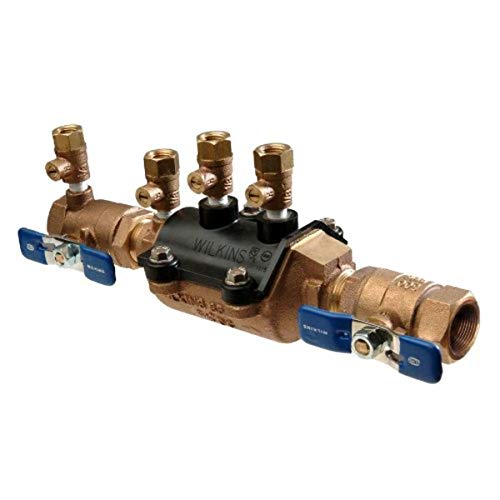
A 1-inch double check valve with a flush tool and an EZSwap vessel that repairs off-line
What separates this assembly from every other pick here is the flush tool (Zurn calls it FLUSH). It blasts the line clear right at the device, which the maker states saves up to 15 minutes per installation. On a retrofit — pulling an old valve out of a system that has sat through a winter — that saves real time and cursing. The body is 1 inch, and construction mixes stainless steel with UV-resistant reinforced nylon for corrosion resistance. That combination is designed to survive year-round outdoor sun exposure, unlike bare plastic bodies that can degrade under prolonged UV.
The other standout is the EZSwap removable pressure vessel. That component separates from the assembly so repairs can happen off-line instead of on the pipe, which is genuinely different from the bolted-together layouts of most competitors. The maker states the lifecycle savings from reduced labor and repair kit costs are substantial versus a traditional build, though the specific percentage is a manufacturer figure, not an independent measurement. The design also includes a water-saving feature. Owners consistently describe this as well-made, and the water authority approval mentioned by buyers is a meaningful vote of confidence for anyone whose city tests backflow devices annually. Compared with the Watts LF007 above, this is the larger 1 inch option in the double-check category, which matters on higher-flow lines.
The honest caveat is the pricing tier — this is a premium-backed premium unit, and it belongs on applications that actually require a double check valve with the Zurn feature set. If you are just replacing a leaking PVB on a residential line, the pressure vacuum breaker picks above are simpler and cheaper. But for a commercial or large residential install where serviceability and line flushing are real ongoing concerns, the EZSwap design pays back over the years. The unit carries a 1 year manufacturer warranty, so factor that into your expectations for long-term support.
The real advantage: EZSwap lets the internal vessel come off for repair without cutting into the line — a different maintenance model than most double checks use.
The trade-off to accept: premium pricing and a 1 year manufacturer warranty mean this pick is built for applications where the install matters as much as the part.
The right call if: you are installing a double check valve where ongoing serviceability and line flushing outweigh initial cost.
Wrong fit if: you are on a standard residential PVB replacement and want the simplest, cheapest path.
8. Watts 1 inch 007M1QT Double Check Valve

A 1-inch double check valve with a 175 psi rating and a bronze and cast iron body
For higher-flow non-health-hazard installations on 1 inch pipe, this is the double check valve with the most headroom on pressure. The 175 psi maximum working pressure is above what most residential supplies need, but it is a real comfort margin if your system sits below a booster or tall building. The bronze and cast iron body construction sticks to the material choices plumbers trust for long-term service, unlike the plastic bodies on the entry-tier devices. Service is designed to be easy, which is the reason the model has lived in plumbing supply houses for decades.
Where this one clearly fits is maintenance and replacement. Owners consistently note that it replaces a failing unit exactly, and that heading off a plumber-driven repair saves money over the long term. The purchaser is usually confident after reading the model number against the dead unit — this is a drop-in for a failed original, not a creative exploration. Watts has manufactured water components since 1874, and the LF007 above shares that lineage at 3/4 inch and a lead-free alloy body. The 007M1QT serves the 1 inch side of the same household application, which is why it shows up in so many replacement orders. The instruction from Watts to check with local inspection authorities before installing is worth taking seriously, because the installation requirements for double check valves vary by jurisdiction.
There is no backflow prevention feature missing here — this device does exactly what a double check valve is supposed to do, with the two ports and fitting layout that plumbers expect. One point worth setting straight is that some owners will need a plumber to do the actual installation, especially where soldered or specific pipe connections are involved. That is not a defect in the unit; it is the reality of working on a pressurized service line where a leak downstream can cause real damage. If you are comfortable with PVC work and threaded connections, this is a straightforward drop-in, but if the connection type is unfamiliar, plan on a licensed pro.
Reasons to pick this one
- 175 psi maximum working pressure for high-pressure or boosted residential supplies
- Bronze and cast iron body construction for long-term outdoor durability
- 1 inch inlet and outlet with two ports, matching common residential service lines
- Designed for easy maintenance and service across a long lifecycle
What to plan around
- Premium-tier pricing — most buyers only justify it on a real replacement job
- Some installations are best handled by a licensed plumber, especially on soldered lines
Best paired with: a straight replacement of a failing 1 inch double check valve where matching the original matters more than exploring alternatives.
Consider skipping if: you are building a new line from scratch and want to explore the PVB picks above — different conversation entirely.
Understanding the Specs
Maximum Pressure Rating and Why It Matters
Maximum pressure is measured in psi, which stands for pounds per square inch — the amount of water pressure the device body can hold without failing. A higher rating means more headroom against pressure spikes from a municipal supply or a booster pump. Residential sprinkler lines typically see far less pressure than any device on this list is rated for, so the rating is really a durability signal rather than a limit you will hit in normal use. Pick a device with a rating comfortably above your system’s working pressure and it will never be the weak link.
Pressure Vacuum Breaker vs Double Check Valve
A pressure vacuum breaker and a double check valve solve slightly different problems. A PVB stops back-siphonage only — the flow reversal caused by a pressure drop upstream — and uses an air inlet to break the vacuum. A double check valve stops both back-siphonage and backpressure using two independent check modules. PVBs are the standard for lawn irrigation because irrigation lines sit below the potable supply and carry a potential health hazard. Double check valves handle non-health-hazard applications such as fire lines and service connections. Buying the wrong type for the required application is the most common reason a backflow preventer fails inspection, so confirm the type your water authority requires before ordering.
Mounting Height — The Rule Nobody Tells You
A pressure vacuum breaker must typically be mounted above the highest sprinkler head on the system. This is because the air inlet on a PVB needs to sit in air, not water, to do its job. If your highest sprinkler head is on a slope above the practical install location, a PVB can be difficult to fit correctly. Double check valves do not have the same mount-height requirement, which is one reason they show up in tight retrofits. Check your yard layout before you buy a PVB, or plan on moving the device higher than you expected.
Freeze Protection and Winterization
Backflow preventers contain water, and water expands when it freezes — that is the leading cause of cracked bodies and failed seasons. A proper winterization means shutting off the supply, opening a drain or using a twist-off cap, and letting the body empty completely. A freeze sensor that signals when temperatures approach freezing helps you notice, but it does not replace a real drain. In freeze-prone regions, a brass body paired with a real winterization routine is the safer combination over many years.
FAQ
Do I need a pressure vacuum breaker or a double check valve for my sprinkler system?
Can I install a backflow preventer myself or do I need a plumber?
Why does a pressure vacuum breaker need to sit above the highest sprinkler head?
How do I winterize a backflow preventer without cracking it?
Will a backflow preventer reduce the water pressure to my sprinkler zones?
Why does a backflow preventer need a serial number?
How often do backflow preventers need to be tested?
What is the difference between ASSE 1020 and ASSE 1015 certification?
Can a brass backflow preventer use a cheaper repair kit?
Does a double check valve work for lawn irrigation?
Final Thoughts: The Verdict
For most homeowners shopping for the backflow preventer for sprinkler system, the Febco 765 Bronze Pressure Vacuum Breaker 1″ Inlet is the pick that wins on both quality and proven longevity — 4.6 stars across 200+ ratings, and the review pages read like a slow chorus of repeat buyers replacing the same device every 20 years. If your line is a 3/4 inch and you want a certified brass body at entry-level pricing, the ONDAQUA 3/4″ Brass Pressure Vacuum Breaker carries UPC certification and a 5-year warranty at a friendlier price. For cold-climate installs where fast seasonal draining matters more than brass durability, the Toro 53300 1-Inch Sprinkler System Pressure Vacuum Breaker with its built-in unions and twist-off cap is the one you will actually winterize. Whatever you choose, call your water utility first and match the device type and connection size to your system — that single check saves more headaches than any spec sheet difference between these picks.
How We Picked
We do not accept paid placement. Every pick is matched to a real buyer and a real use-case; we do not hands-on test units.
Sources & Methodology
Specifications: manufacturer listings and product documentation. Review insights: verified customer reviews, as of September 2026. Pricing: not shown on this page (it changes often); check the current price via the retailer link.
As an Amazon Associate, KitchPrep earns from qualifying purchases. This does not affect which products we feature.
Related Guides
