
Specs are compiled from manufacturer listings and verified buyer reviews and can change over time — please confirm the key details on the product page before buying.
You want floors that look and feel clean without spending your weekend pushing a vacuum. The problem is that picking the right robot vacuum is harder than it should be — every model promises the moon, but the real difference between a gadget that gathers dust and one that truly frees your time depends on three things: suction power, navigation smarts, and whether it can empty its own bin.
I’m Mohammad Maruf — the founder and writer behind KitchPrep. This guide is built by comparing the manufacturers’ published specifications and the patterns across verified customer reviews, so you get each pick’s real strengths and trade-offs instead of marketing spin.
Whether you are dealing with pet hair, multiple floor types, or just want to set a schedule and forget it, the right automatic vacuum cleaner will make that happen — and this guide breaks down the ten best options to help you find the one that fits your home and your habits.
Our Picks at a Glance

How To Choose The Best Automatic Vacuum Cleaner
Every robot vacuum does the same basic job, but the ones that actually save you time share a few key traits. Before you shop, understand what separates a daily-workhorse from a unit that needs constant rescue.
Navigation: Random Bump vs. Smart Mapping
The cheapest robots move in random patterns, bouncing off furniture until they eventually cover most of the room. That works in small, open spaces. A LiDAR (a laser-based sensor that measures distance) or camera-based mapping system, however, scans your home in minutes and cleans in organized rows — it covers every inch without repeats and lets you send the robot to a specific room from your phone.
Suction Power and Floor Types
Suction is measured in Pascals (Pa). On bare hard floors, even 2,000 Pa is plenty. For carpets — especially medium-pile or high-pile — you want 6,000 Pa or more to pull out embedded dirt and pet hair. Some models automatically boost suction when they detect a rug, which saves battery on hard floors and delivers the extra power where you need it.
Self-Emptying: The Real Time-Saver
A robot that empties its own dustbin into a dock bag is the feature that turns a weekly chore into a monthly one. Look for the bag capacity in liters — a 3-liter or 4-liter bag can hold up to three months of debris, meaning you only think about the vacuum when the app tells you to swap the bag. Without self-emptying, you are cleaning the bin after every run or two.
Mopping: Bonus or Core Feature?
A trailing mop pad dragged behind the vacuum is good for light dust-mopping. A robot with a built-in water tank and a pump-controlled mop does actual wet cleaning. If you have hard floors throughout, a vacuum-mop combo with a carpet-detection sensor (which lifts the mop or avoids the rug) is the most useful setup — otherwise you end up with wet rugs.
Quick Comparison
| Model | Best For | Suction (Pa) | Battery Life | Self-Emptying | Amazon |
|---|---|---|---|---|---|
| MONSGA MR7 Pro★ Best Overall | Best Overall | 8,000 | 160 min | 4L bag, ~90 days | Amazon |
| eufy 11S MAXBudget Champion | Budget / Quiet | 2,000 (BoostIQ) | 100 min | No | Amazon |
| KILGONE Robot VacuumBest Battery Life | Mid-Range Value | 6,000 | 200 min | 2.5L bag, up to 90 days | Amazon |
| Tikom L8000 Plus | Pet Hair at Mid-Price | 6,000 | 150 min | 3L bag, ~90 days | Amazon |
| iRobot Roomba 105X | Trusted Brand (Vacuum Only) | 70X Power-Lifting | 200 min | No | Amazon |
| iRobot Roomba 105 Combo | Branded Vac & Mop + AutoEmpty | 70X Power-Lifting | 100 min | Bag, 75 days | Amazon |
| DREAME L40 Ultra Gen 2 | Premium Suction & Auto-Dock | 25,000 | 231 min | All-in-one dock | Amazon |
| MOVA V50 Ultra Complete | Hot-Water Mopping & Hair-Free | 24,000 | 220 min | All-in-one dock | Amazon |
| Roborock Qrevo Edge 2 | Ultra-Slim & AI Navigation | 25,000 | 188 min | Auto-empty dock | Amazon |
| DREAME X60 Max Ultra | Maximum Suction & Slim Design | 35,000 | 180 min | 10-in-1 dock | Amazon |
In‑Depth Reviews
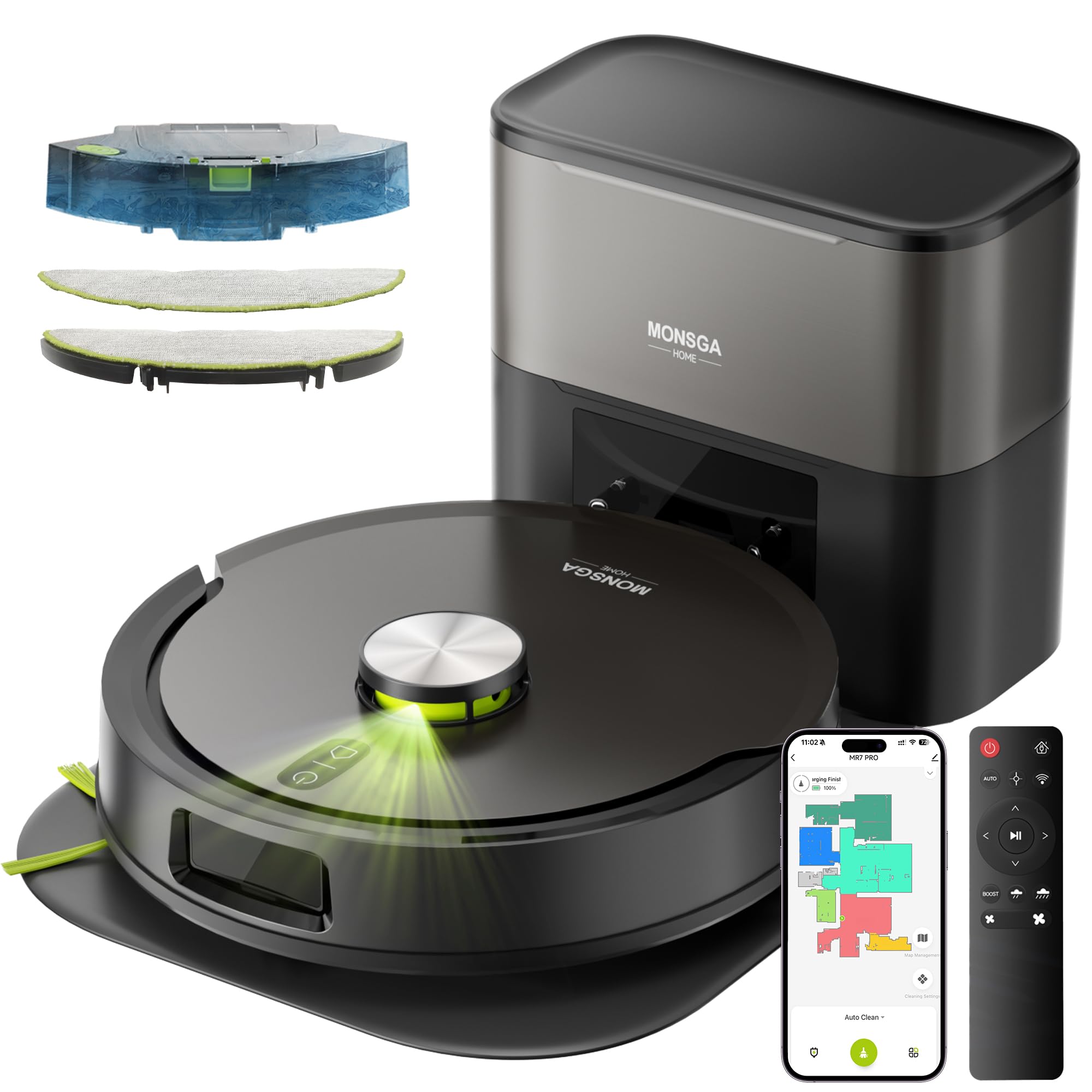
1. MONSGA Robot Vacuum and Mop Combo (MR7 Pro)
Our pick — over 4.5★ from 350+ verified ratings; the strongest balance of quality and price.
The vacuum that sets the benchmark for value — self-emptying, smart mapping, and serious suction at a mid-range price.
What makes this the pick to beat is the 8,000Pa suction — 33% more pulling power than the 6,000Pa Kilgone below — paired with a LiDAR sensor that maps your home in minutes and cleans row by row. You get a 160-minute runtime from its 3,200mAh battery, which covers up to 2,690 square feet before needing a recharge. And when it does run low, the smart recharge-and-resume feature calculates exactly how much power it needs to finish the job, tops off, and continues where it left off.
The self-emptying dock holds a 4-liter dust bag, meaning you go about 90 days without touching the dirt. Buyers report that this “picks up pet hair from two dogs” and runs “quiet” — the dual anti-tangle brush system (a Zero-Tangle arched side brush plus an all-rubber main roller) is the reason the hair wraps up rather than snarling the works. The 460ml water tank covers about twice the area per fill of standard tanks, and a protection plate seals out excess moisture during mopping so wood floors do not warp.
The only real trade-off compared to the budget eufy 11S MAX (100-minute runtime) is that this unit relies on a 2.4GHz Wi-Fi connection for its app and voice controls — no offline remote option. But the app lets you set no-go zones, virtual walls, and target specific rooms, which the simpler eufy cannot do at all.
The Crowd-Pleasers
- 8,000Pa suction delivers noticeably more power on carpets than the Kilgone (6,000Pa)
- 4-liter self-emptying bag means ~90 days of hands-off use
- LiDAR mapping with 5-map memory handles multi-level homes smoothly
The Honest Caveats
- Requires 2.4GHz Wi-Fi for app and voice control — no offline operation
- Mopping is best for maintenance cleaning, not deep grime removal
The one to buy: If you want the best balance of power, smart navigation, and self-emptying convenience without jumping to the premium tier, this is your vacuum.
Look elsewhere if: You need the absolute longest single-charge runtime — the Kilgone runs 200 minutes vs. 160 here — or you prefer a brand name for long-term parts availability.
2. eufy 11S MAX Robot Vacuum Cleaner
The simplest, quietest path to clean floors — no app, no Wi-Fi, just a remote and a slim chassis that glides under furniture.
At 2.85 inches tall, this is the thinnest vacuum on this list — it slides under most sofas, bed frames, and TV stands where the others cannot reach. It runs up to 100 minutes on hardwood floors, and its BoostIQ Technology automatically adjusts suction within 1.5 seconds depending on the surface. Buyers sum it up plainly: “BoostIQ on, charge lasts 100 minutes on floors and low-pile rugs.” The anti-scratch tempered glass top cover and drop-sensing tech (infrared sensors that prevent it from tumbling down stairs) add durability you do not always see at this price tier.
The trade-off is the navigation. This is a random-pattern robot, not a mapping one — it bumps and turns until it covers the area. In an 800-square-foot apartment, owners find it reaches “70%+ of a complex layout” daily, but it will occasionally get stuck on cords or rug tassels. There is no self-emptying, so you empty the 600ml canister after each cleaning session. The single-side brush design is actually intentional — it prevents scattering debris sideways — but it means less edge coverage than the dual-brush units.
The 100-minute runtime is notably shorter than the MONSGA’s 160 minutes, but for a single-floor apartment under 1,000 square feet, one charge does the whole job. The full charge time is 4 to 5 hours, which is slow compared to newer models.
What Owners Love
- Quiet operation — owners say it is “similar to a microwave” in volume
- Super-slim 2.85″ profile fits under nearly every piece of furniture
- No Wi-Fi or app needed, so it works for anyone who prefers a simple remote
The Fine Print
- Random navigation means it can miss spots or bump into obstacles
- No self-emptying dock — you empty the bin after every cleaning run
- 100-minute runtime falls short of the 160-minute MONSGA and 200-minute Kilgone
Reach for this if: You want a no-frills, dead-silent vacuum for a small apartment and do not care about phone control or self-emptying.
Think twice if: You have a multi-floor home, need mapping to target specific rooms, or cannot handle emptying the bin after each use.
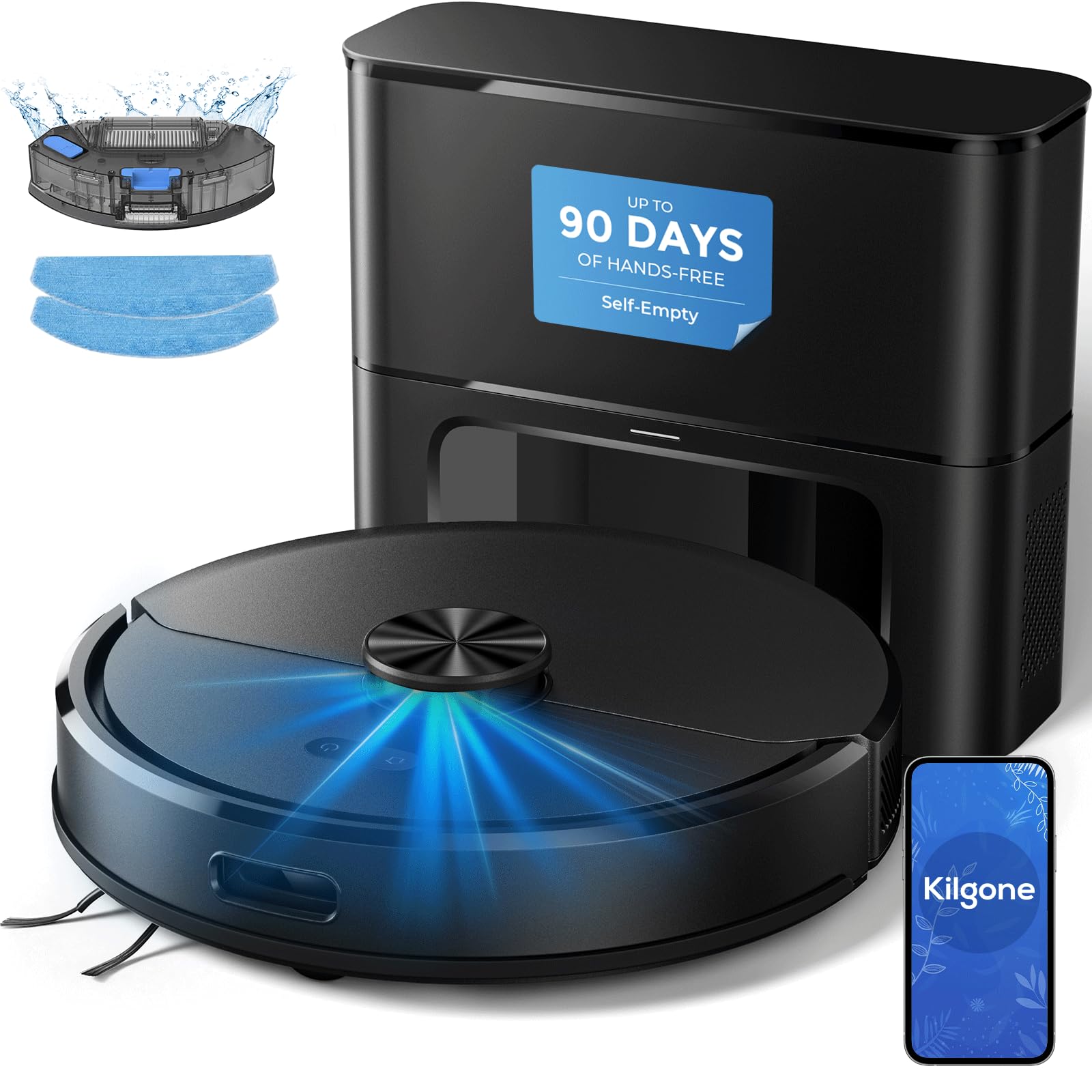
3. Kilgone Robot Vacuum and Mop Combo
Two hours of cleaning on a single charge — the longest runtime in the mid-range class, with a self-emptying base to match.
The 200-minute battery life is the standout number here — it beats the MONSGA’s 160 minutes and the Tikom’s 150 minutes handily, covering up to 1,615 square feet on one charge. When the battery does run low, the smart auto-resume feature sends it back to the dock, recharges, and returns to the exact spot it stopped. Its 6,000Pa suction is the same peak power as the Tikom, though the MONSGA pulls ahead at 8,000Pa — but for most pet hair and carpet cleaning, 6,000Pa is already strong enough. As owners note, “the suction power is impressive; it does a great job cleaning up pet hair.”
The self-emptying station uses a 2.5-liter sealed dust bag that locks away hair and dander for up to 90 days. The LiDAR NavSmart scanning system creates 360-degree maps in real time and stores up to 5 floor plans, so you can move it between levels without remapping. At 65dB, it is quiet enough to run while you watch TV — quieter than many of the other units in this mid-range group. It also climbs 18mm thresholds, so it transitions from hard floors to rugs without hanging up.
The catch is the 300ml dustbin capacity — smaller than the MONSGA’s 460ml water tank and the Tikom’s 3L bag— so the self-emptying feature handles the bin emptying, but the mopping water tank also needs more frequent refills. A few owners mention it can get stuck under lower furniture, so measure your sofa clearance first.
What Shines
- 200-minute runtime leads the mid-range tier — 40 minutes more than the MONSGA
- Self-emptying dock with 2.5L sealed bag for up to 90 days of hands-off use
- Quiet 65dB operation and 18mm threshold climbing for smooth room-to-room cleaning
What to Note
- 6,000Pa suction trails the MONSGA’s 8,000Pa for deep carpet cleaning
- Smaller dustbin capacity (300ml) compared to the MONSGA’s mopping tank (460ml)
- Occasional reports of the unit snagging under furniture with low clearance
Best fit for: Large single-floor homes where you need a robot that can clean the whole space without stopping to recharge.
Skip it for: Deep-pile carpets that demand the extra 2,000Pa of suction the MONSGA provides, or if your furniture sits lower than 4 inches from the floor.
4. Tikom L8000 Plus Robot Vacuum and Mop
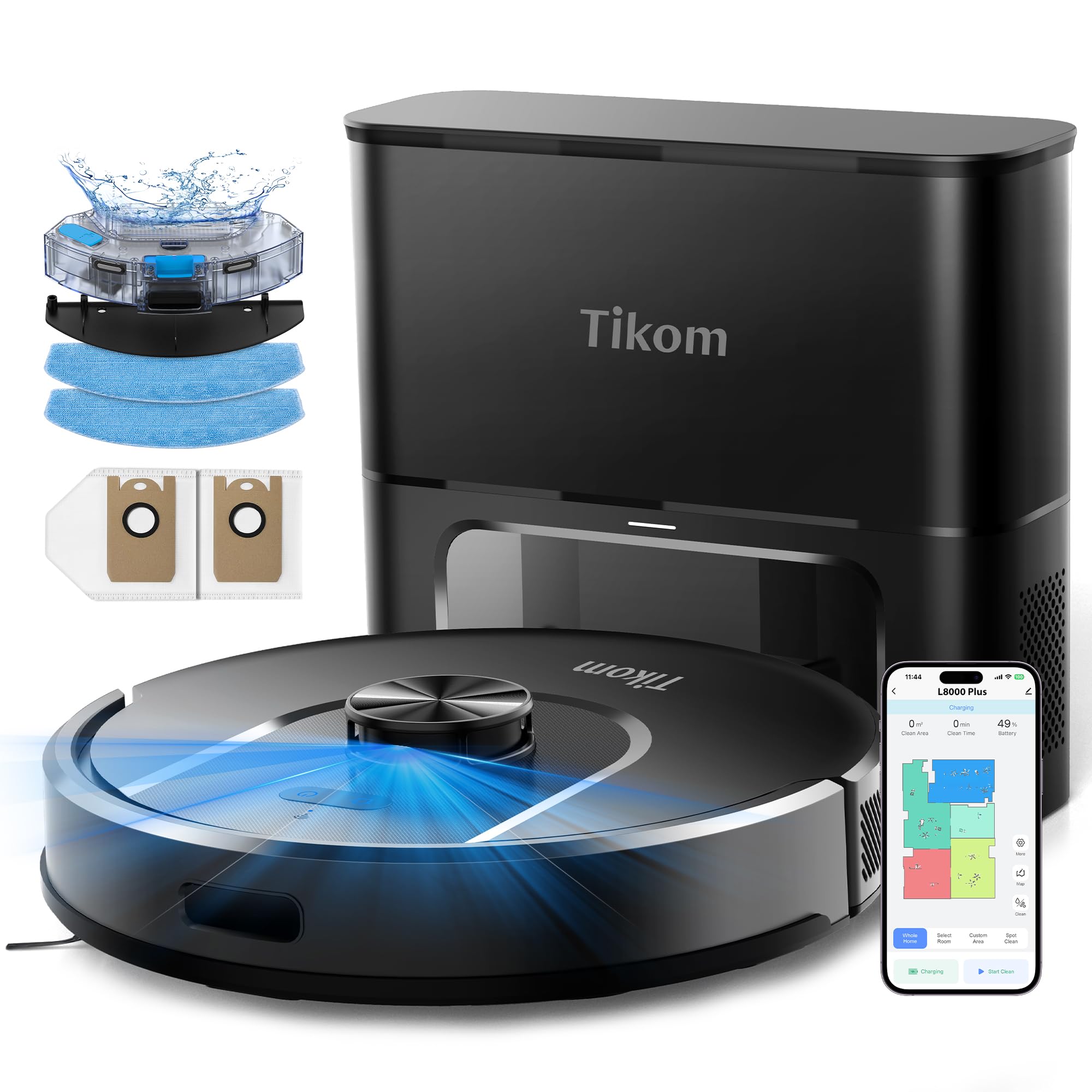
A dedicated pet-hair fighter with 6,000Pa suction, a 3-liter self-emptying dock, and LiDAR that dodges the obstacles your pets leave behind.
The 6,000Pa suction is identical on paper to the Kilgone, but the Tikom adds a 3-liter self-emptying dustbag that holds weeks of debris — slightly larger than the Kilgone’s 2.5L bag. The 360-degree LiDAR navigation creates real-time maps and saves up to 5 floor plans, and the app lets you draw no-go zones and no-mop zones to keep the robot away from pet bowls or wet areas. Owners say it is “quiet” and that the “6000Pa suction, LiDAR navigation, and self-emptying base” make it an excellent value for households with shedding animals.
Its 150-minute runtime in Gentle suction mode is shorter than the Kilgone’s 200 minutes but still enough for most mid-sized homes (the auto-recharge-resume feature handles any leftover space). It supports both 2.4GHz and 5GHz Wi-Fi, which is a convenience over the MONSGA and Kilgone, both of which only work on 2.4GHz. The mopping function uses 3 water flow settings, but owners note it is “just a damp cloth, not true mopping” — useful for light dust-mopping between deep cleans, but not a replacement for a wet mop.
The main difference from the Kilgone is the shorter runtime and a slightly more compact 13.5-inch body. The 3-liter bag also means you change it less often than the Kilgone’s 2.5L, though the bag capacity itself is roughly a wash in real-world use.
5. iRobot Roomba 105X Robot Vacuum
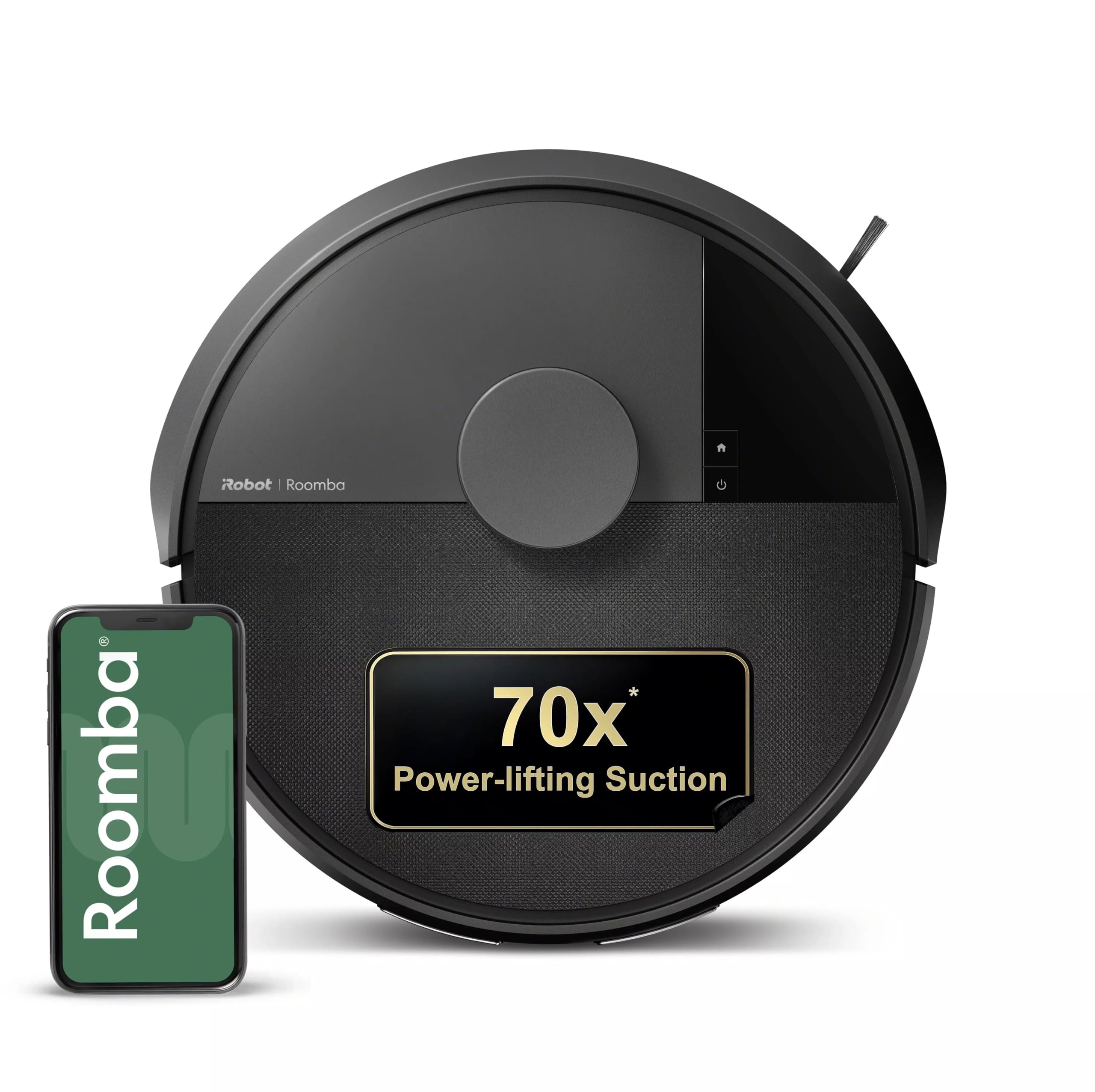
The vacuum-only Roomba with LiDAR mapping and 70X power-lifting suction — a simple, effective choice from the brand everyone knows.
This Roomba uses ClearView LiDAR to map your home and clean in efficient rows rather than random patterns, which is a big step up from the budget eufy. It pulls embedded dust, crumbs, and pet hair from carpets and hard floors with what iRobot calls “70X more power-lifting suction” compared to the Roomba 600 series. The 3-stage cleaning system combines intense suction, a Multi-Surface brush, and an Edge-Sweeping brush to reach corners and baseboards. Its 200-minute battery life ties the Kilgone for the longest in the mid-range tier.
However, this is a vacuum-only unit — there is no mopping at all. The bin is not self-emptying either, so you empty the dirt tray after each cleaning session. Owners mention the “setup was easy and the iRobot went through the rooms and picked up dust I did not know I have,” but the broader feedback reveals a mixed picture: effectiveness scores well (1,300+ mentions), but battery life gets a negative skew (630 mentions), and getting stuck under obstacles is a common complaint (531 mentions). The model is designed for homes where the robot stays on one floor and vacuums daily, not for deep-mopping needs.
At 4.1 inches tall, it is thicker than the eufy’s 2.85 inches and the Roborock’s 3.14 inches, so low-clearance furniture may block it. The app provides keep-out zones and custom room cleaning, but you do pay extra for the brand name compared to the MONSGA or Kilgone, which include more features at a lower price.
What Works
- 200-minute runtime matches the Kilgone for long single-charge cleaning
- ClearView LiDAR mapping avoids random bumping — cleans in organized rows
- Roomba brand means broad parts availability and long-term support
Where It Falls Short
- No self-emptying dock and no mopping function — more hands-on than the MONSGA
- Tends to get stuck under low furniture, per owner feedback
- Battery life satisfaction is mixed; some find the charge drains faster than expected
Go for it if: You trust the iRobot ecosystem and just need a reliable vacuum (no mopping) with smart mapping and long battery life.
Pass if: You want self-emptying or a vacuum-mop combo — the MONSGA and Kilgone offer both at comparable or lower prices.
6. iRobot Roomba 105 Combo with AutoEmpty Dock
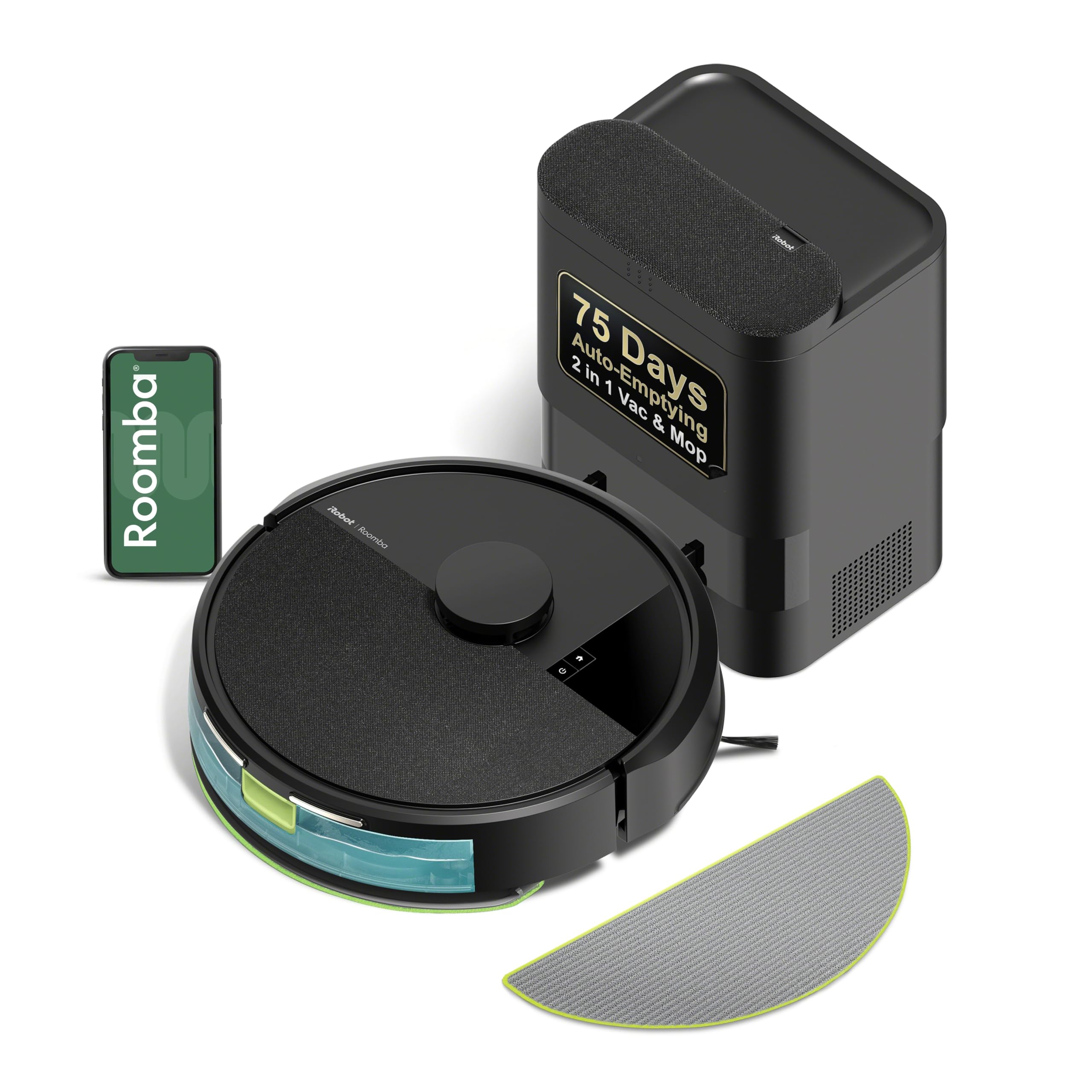
The Roomba that empties itself and mops carpets-free — a true daily companion for pet owners who hate messy bins.
This is the vacuum-mop version of the 105X, adding a self-emptying AutoEmpty dock that traps 99% of allergens as small as 0.7 microns and holds up to 75 days of debris. It still delivers 70X power-lifting suction through a multi-surface brush and an edge-sweeping brush, plus a microfiber mop pad for wet cleaning. The key difference from the 105X is the auto carpet detection — when mopping, it raises the mop pad or avoids the rug so you do not end up with a wet carpet. As buyers put it, this unit “picks up cat litter well” and runs easily through scheduled daily cleaning.
The ClearView LiDAR still maps your home and cleans in rows, and the Roomba Home App lets you set schedules, drop keep-out zones, and switch between vac-only, mop-only, or combo vac-mop modes. The SmartScrub feature delivers “2x deeper scrubbing” by oscillating the mop pad for stained spots. The battery, however, runs 100 minutes — half the runtime of the 105X — because the mopping system draws extra power. In a 700-square-foot apartment, owners find it “thoroughly cleans on one charge,” but larger homes may require a recharge mid-cleaning.
The biggest trade-off versus the MONSGA is the self-emptying capacity: 75 days here versus 90 days on the MONSGA, and the Roomba’s 100-minute runtime is the shortest among the self-emptying units on this list. It also bumps into furniture — owners note it “bumps objects roughly” — and needs a separate virtual wall for pet bowls.
What It Does Well
- AutoEmpty dock traps 99% of allergens down to 0.7 microns — great for allergy households
- Auto carpet detection lifts the mop pad so rugs stay dry during mopping cycles
- SmartScrub provides 2x deeper scrubbing for sticky spots on hard floors
The Catch
- 100-minute battery is the shortest among self-emptying models here
- Random navigation pattern (some customers note bumping) rather than pure row-by-row on all runs
- AutoEmpty holds 75 days vs. the MONSGA’s 90-day capacity
For you if: You want a trusted brand with self-emptying convenience and the ability to vacuum and mop carpets without getting them wet.
Not ideal if: You have a large home (over 1,000 sq ft per floor) where the 100-minute battery will need a mid-cycle recharge.
7. DREAME L40 Ultra Gen 2 Robot Vacuum and Mop
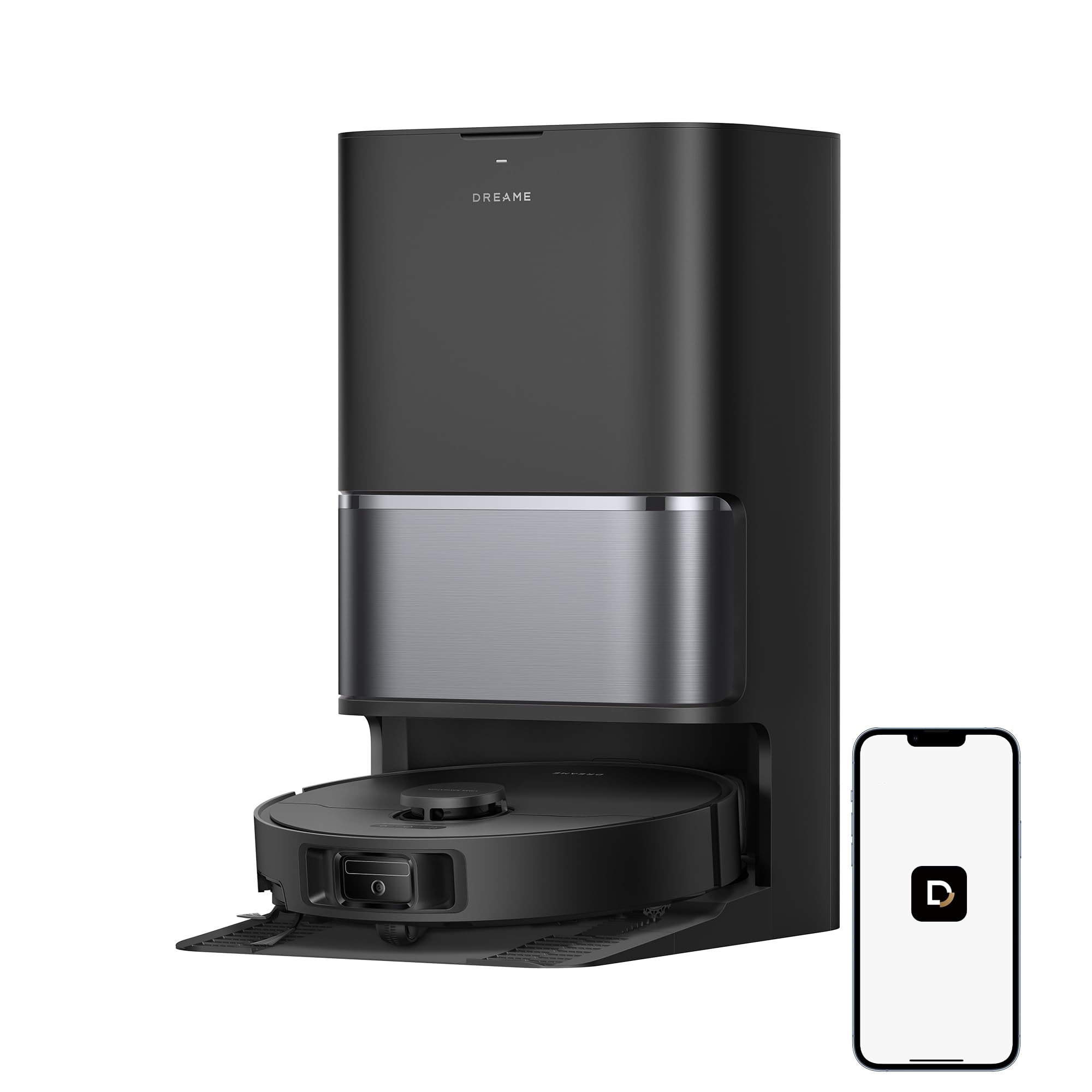
A premium robot that vacuums and mops with authority — 25,000Pa of suction and a self-cleaning dock that handles the dirty work.
Jumping to the premium tier, the L40 Ultra Gen 2 delivers 25,000Pa suction — more than triple the MONSGA’s 8,000Pa and the same peak power as the Roborock Qrevo Edge 2. That level of pull lifts deeply embedded dirt from high-pile carpets and handles pet hair in a single pass. The all-in-one self-cleaning dock not only empties the dustbin but also washes and dries the mop pads using hot water, so you never touch a dirty pad. The extendable side brush and mop reach into corners and under toe-kick areas where standard robots leave a trail of dust.
The 5,200mAh battery powers up to 231 minutes of quiet-mode cleaning (covering 1,679 square feet). Off-peak charging means you schedule it to recharge when electricity rates are lower. The Smart Pathfinder and 3DAdapt technologies map your home with precision and avoid shoes, cables, and toys. Owners say the “excellent suction, picks up dust/pet hair/debris easily” and call the self-cleaning station a “huge plus.” The extendable brush and mop are the standout feature — no other pick at this level has both extendable arms for edge cleaning.
The downside? It only supports 2.4GHz Wi-Fi, not 5GHz. The optional auto-detergent dispenser is a separate purchase, so the full hands-free experience costs extra. At this price, the MOVA V50 Ultra below offers 24,000Pa suction but adds hot-water mop cleaning and a 2.28-inch obstacle-overcoming ability — trade-offs to weigh if budget allows.
The Premium Perks
- 25,000Pa suction — the highest peak power in its class, matching the Roborock Qrevo Edge 2
- Extendable side brush and mop clean corners the other robots miss
- Self-cleaning dock washes and dries mop pads automatically
Money vs. Features
- Only 2.4GHz Wi-Fi support — no 5GHz option for modern routers
- Auto-detergent dispenser is an optional extra purchase, not included
Pick this if: You want room-level suction power and a self-maintaining dock that handles both vacuuming and mopping with minimal human input.
Consider the MOVA if: You need to overcome higher thresholds (the MOVA climbs 2.28″ vs. standard) or prefer hot-water mop washing for grease removal.
8. MOVA V50 Ultra Complete Robot Vacuum and Mop

The robot that climbs over door thresholds — 2.28-inch obstacle overcoming paired with 24,000Pa suction and hot-water mop cleaning.
The MOVA V50 Ultra is the best pick if your home has raised door saddles, thick rugs, or step transitions that stop other robots cold. The StepMaster system uses extendable wheels to lift the device over obstacles up to 2.28 inches tall (a vertical step of 1.6 inches). Its 24,000Pa suction is a hair lower than the Dreame L40’s 25,000Pa but still vastly stronger than the mid-range options. The FlexiRise navigation retracts the LDS sensor when it detects narrow spaces under sofas, letting the body drop to a more compact height for better clearance.
The DuoSolution system lets you choose between an all-purpose cleaning solution and a pet-odor removal agent that is automatically sprayed onto the mop pad. The dock washes the mop pads with 176°F hot water and dries them with hot air — a step up from the Dreame L40’s warm-water wash. The Zero Tangling DuoBrush and double anti-tangle mechanisms keep long hair from wrapping around the roller. As one owner put it, the “24,000Pa suction is excellent on pet hair, dust, and crumbs” and the “hot-water self-cleaning mop with hot air drying is a standout.”
The main trade-off: the 220-minute battery is slightly shorter than the Dreame L40’s 231 minutes. And at 14.2 kg (31.3 lbs), the whole package is heavy to lift into a new room. The self-cleaning dock uses spray nozzles (20 of them) to wash the mop, but the system uses more water than typical, so you refill the tank every few cleaning cycles.
What Makes It Unique
- Overcomes obstacles up to 2.28″ tall — the best in this list for homes with raised thresholds
- 176°F hot water mop washing with hot-air drying, plus a pet-odor removal solution
- Zero Tangling DuoBrush prevents hair wraps without manual cleanup
Considerations
- Heavy total package (14.2 kg) — not easy to carry between floors
- Higher water consumption means more frequent refills of the dock tank
- 220-minute battery is 11 minutes shorter than the Dreame L40
Best for: Homes with thick rugs, door thresholds, or steps where other robots get stuck — plus anyone who wants hot-water mop sanitation.
Skip if: Your home is single-level with no obstacles; the Dreame L40 offers similar power with slightly longer runtime at a lower weight.
9. Roborock Qrevo Edge 2 Robot Vacuum and Mop
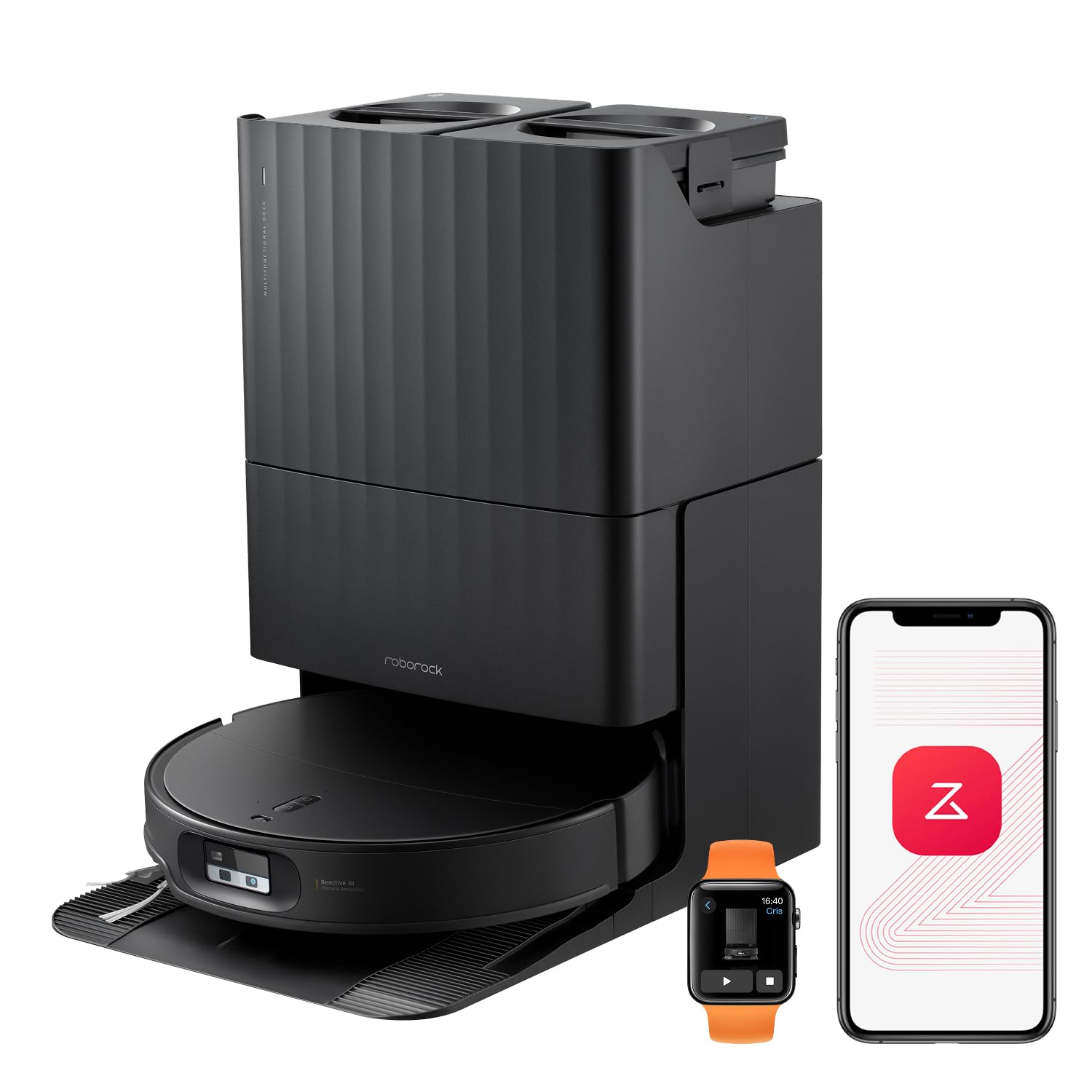
The thinnest high-end robot at 3.14 inches, with AI that recognizes over 280 objects to avoid cables, shoes, and pet bowls.
The Qrevo Edge 2 is designed to slide under low beds and sofas — its 3.14-inch profile is only 0.29 inches taller than the budget eufy 11S MAX but packs premium features. The RetractSense Navigation System retracts the LDS sensor when the robot detects low clearance, so it does not get trapped. The 25,000Pa HyperSuction rivals the Dreame L40, and the FlexiArm Arc Side Brush extends to clean corners down to 0.98 inches — meaning it sweeps debris from toe-kicks and baseboards that standard side brushes miss. The dual anti-tangle system prevents hair wraps, and the 8N downward pressure on the mop tackles dried-on stains.
Reactive AI recognizes over 280 types of objects using structured light, an RGB camera, and an LED light — it dodges charging cables, pet bowls, shoes, and toys without bumping. SmartPlan 3.0 automatically learns your habits, adjusts suction in high-traffic areas, and re-washes the mop after kitchen cleaning. The dock uses 176°F hot water for mop washing, 131°F warm air drying, and auto-empties for up to 65 days. The 188-minute battery covers most large homes on one charge, though it is 12 minutes shorter than the Dreame L40.
The trade-off: the streak removal feature gets mixed reviews — some reviewers point out immaculate floors, others note residue spreading. The 27.1-pound total weight is heavy to move. And at this premium price, the DREAME X60 Max Ultra below offers 35,000Pa suction, though it lacks the RetractSense low-clearance navigation and the AI object library.
The Tech Highlights
- Ultra-slim 3.14″ design with retractable LDS for cleaning under low furniture
- AI recognizes 280+ obstacle types — cables, bowls, shoes — for true collision-free cleaning
- 25,000Pa suction + FlexiArm side brush reaches corners a standard robot misses
Small Gripes
- Mopping streak removal is mixed — some surfaces may show residue
- Heavy unit (27.1 lbs) makes moving between floors a workout
- 65-day auto-empty is shorter than the Dreame L40’s 100-day bag (on the X60)
Best for: Tech enthusiasts who want the smartest obstacle avoidance on the market and a slim profile for low-clearance furniture.
Look elsewhere if: You need the absolute longest hands-free interval (the DREAME X60 runs 100 days) or if streak-free mopping is your top priority.
10. DREAME X60 Max Ultra Complete Robot Vacuum and Mop
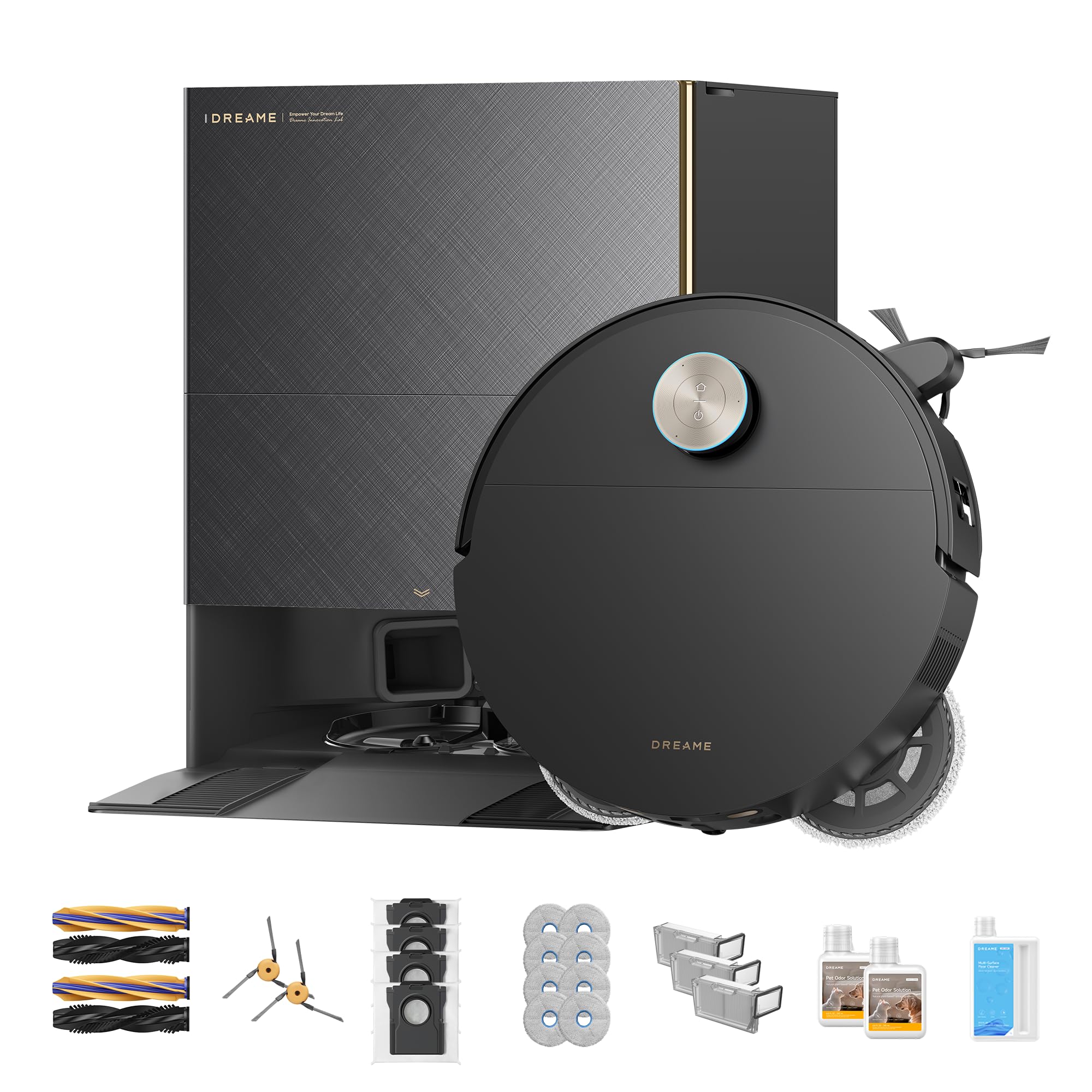
The most powerful vacuum on the list at 35,000Pa, packed into a 3.13-inch body that slips under the lowest furniture.
The X60 Max Ultra takes the DREAME name and pushes everything further. The enhanced DuoBrush uses a retractable pressure plate that creates a semi-sealed chamber, concentrating that suction into a narrow channel for maximum lift. At just 3.13 inches tall, it is Dreame’s thinnest robot and ties the Roborock Qrevo Edge 2 for the slimmest high-end profile — it glides under sofas, bed frames, and cabinets where the L40 (at 13.8 x 13.4 x 23.3 inches) cannot fit.
The 10-in-1 multifunctional dock handles everything: 212°F hot-water mop washing, hot-air drying, 100-day dust disposal, and a dual-solution compartment for cleaning solution and pet-odor remover. The MopExtend RoboSwing reaches into corners and under toe-kick areas, while the SideReach cleans along edges. The dual AI cameras with proactive illumination detect obstacles and adapt cleaning modes — it identifies steps up to 3.47 inches (8.8 cm) and navigates around them. Owners note “35,000Pa suction handles large debris and pet hair without tangling” and that the “intelligent obstacle avoidance” dodges cables, toys, and even slippers.
The 180-minute battery is shorter than the L40’s 231 minutes, though the 100-day self-emptying interval is the best in this entire list. The 52-pound total weight makes it the heaviest unit here — plan on keeping it on one floor. Some shoppers say that the initial customer service experience can be slow if a unit arrives with issues, though replacements are eventually provided.
The Undisputed Power
- 35,000Pa suction — the highest in this guide, ideal for deep-pile carpets
- 3.13″ slim profile fits under the lowest sofas and beds
- 100-day self-emptying interval is the best in class for hands-off maintenance
- Dual AI cameras with proactive illumination for exceptional obstacle avoidance
The Price of Power
- 180-minute battery trails the L40’s 231-minute runtime
- Heaviest unit at 52 lbs — not portable between floors
- Premium price tag that only makes sense for carpet-heavy homes or allergy households
The ceiling-scraper pick: If you have thick carpets and want the strongest suction available in a robot that also cleans itself, this is it.
Realistic about value: The Dreame L40 offers 25,000Pa suction and a longer battery for significantly less — only go for the X60 if you truly need the extra 10,000Pa and the 100-day dust bag.
Understanding the Specs
Suction Power (Pa)
This is the vacuum’s pulling strength, measured in Pascals. Think of it as the engine size for a car. On bare hard floors, even 2,000 Pa is adequate — the suction just needs to lift surface dust. On carpets, especially medium-pile or high-pile, you need more force to yank out the dirt that gets trapped deep in the fibers. The models here range from 2,000 Pa (the eufy) all the way up to 35,000 Pa (the DREAME X60). If you have wall-to-wall carpet, do not go below 6,000 Pa. If your home is all tile or hardwood, you can save money with a lower-suction model and still get spotless results.
LiDAR vs. Random Navigation
LiDAR (Light Detection and Ranging) uses a rotating laser on top of the robot to scan the room and create a live map. The robot then cleans in methodical, overlapping rows — like a lawnmower. A random-navigation robot moves in straight lines until it hits an obstacle, then turns in a new random direction. LiDAR is far more efficient: it covers every inch in one pass, remembers where it has already been, and lets you send it to a specific room from your phone. Random navigation works fine in an open studio but will miss spots in a complex layout and often repeats areas it already cleaned.
Self-Emptying Base
A self-emptying base is a dock that automatically sucks the dirt out of the robot’s onboard dustbin into a larger bag inside the dock. The bag typically lasts 3 to 12 weeks depending on its capacity (measured in liters). A 3-liter bag might last a month in a pet-heavy home; a 4-liter bag can go 90 days. This feature eliminates the need to empty the robot’s bin after every cleaning session. Without it, you are cleaning the canister every one or two runs — a minor task that adds up over time.
Battery Life (Minutes)
This tells you how long the robot can run on a single charge before it needs to return to the dock. A longer battery means it can cover more square footage without stopping. Most mid-range units offer 100 to 200 minutes. If your home is under 1,000 square feet, 100 minutes is usually enough. For 2,000+ square feet, aim for 150 minutes or more. The “auto-recharge and resume” feature (available on all the self-emptying models here) makes battery life less critical — the robot will go back to the dock, recharge just enough to finish, and continue where it stopped. But the first pass through a large home is faster with a longer runtime.
FAQ
Will a robot vacuum work on thick carpets and rugs?
Can I use a robot vacuum and mop on hardwood floors without damaging them?
How long does a self-emptying bag actually last before I need to replace it?
Do I need a separate vacuum for pet hair?
How do I know if my home network will work with a robot vacuum?
What is the difference between a standard mop pad and a rotating mop pad?
Can I set a robot vacuum to clean only one room or a specific zone?
How often do I need to clean the robot vacuum’s sensors and brushes?
Is a robot vacuum with mopping as good as a dedicated mop for deep cleaning?
Final Thoughts: The Verdict
If you want one dependable pick, the automatic vacuum cleaner winner is the MONSGA MR7 Pro because it delivers the strongest suction-to-price ratio in the mid-range — 8,000Pa, LiDAR mapping, and a 90-day self-emptying dock at a price that undercuts many lesser models. If you want the longest battery life and a similar feature set, grab the KILGONE. And for premium performance where suction and self-maintenance matter most, the DREAME X60 Max Ultra is the one to reach for — it offers 35,000Pa of suction, the thinnest profile of any premium robot, and a 100-day self-emptying interval that sets the standard for hands-off cleaning.
How We Picked
We do not accept paid placement. Every pick is matched to a real buyer and a real use-case; we do not hands-on test units.
Sources & Methodology
Specifications: manufacturer listings and product documentation. Review insights: verified customer reviews, as of July 2026. Pricing: not shown on this page (it changes often); check the current price via the retailer link.
As an Amazon Associate, KitchPrep earns from qualifying purchases. This does not affect which products we feature.
Related Guides
