
Specs are compiled from manufacturer listings and verified buyer reviews and can change over time — please confirm the key details on the product page before buying.
If your radiators are cold at the top but hot at the bottom, trapped air is the culprit — and the fix is a small brass valve that bleeds that air out by itself, so you never kneel on the floor with a radiator key again. The trick is matching the valve to your system: hot-water radiators and steam radiators need different pressure ratings, and picking the wrong one is why so many buyers end up with a valve that hisses, drips, or does nothing at all.
I’m Mohammad Maruf — the founder and writer behind KitchPrep. This guide is built by comparing the manufacturers’ published specifications and the patterns across verified customer reviews, so you get each pick’s real strengths and trade-offs instead of marketing spin.
You will see exactly which thread size fits standard radiators, which valves suit steam versus hot-water systems, and how to avoid the bent-pin packaging problem that trips up first-time buyers. Here is the honest breakdown of the best automatic radiator bleed valve for your home heating setup today.
Our Picks at a Glance

How To Choose The Best Automatic Radiator Bleed Valve
An automatic radiator bleed valve replaces the little key-and-bleed ritual with a float inside a brass body. When air collects at the top of the system, the float drops and the valve opens a tiny port to let that air escape. Once water rises back up, the float lifts and the port seals shut on its own. That is the whole idea, and it is why these valves are sold as an upgrade over manual bleeder screws.
Match the valve to your system type
Steam radiators and hot-water (hydronic) radiators run on very different pressures. A steam system might push only a few psi at the radiator, while a hot-water boiler can run up to 150 psi. Using a low-pressure steam valve on a hydronic loop, or the reverse, is the single most common setup mistake. Check the maximum pressure on both the valve label and your boiler.
Confirm the thread before you buy
Nearly every residential radiator, boiler, and air scoop on the market uses a 1/8″ NPT connection — that is a standard tapered pipe thread, not a hose fitting. Measure your existing port or check the old valve’s stamp before ordering, because a mismatched thread means a leak you cannot seal with tape alone.
What the float and vent hole actually control
The float is the moving part that opens and closes the vent port. The diameter of the vent hole determines how fast air escapes. A smaller hole vents gradually and keeps steam loss low, which matters on steam radiators where too much venting can drop your boiler water level. A larger hole clears air fast but can be overkill on small residential systems.
Quick Comparison
| Model | Best For | Connection | Max Pressure | Pack Size | Amazon |
|---|---|---|---|---|---|
| Hydro Master Automatic Air Vent Valve★ Best Overall | All-round hydronic systems | 1/8″ male NPT | 150 psi | 2 pieces | Amazon |
| Amtrol 700-C Automatic Air VentTop Performer | Boiler-top replacements | 1/8″ NPT male | 150 psi | 1 piece | Amazon |
| Saillong 2 Pack Automatic Air Bleed Vent Valve | Bulk replacement on a budget | 1/8″ insert | 150 psi | 2 pieces | Amazon |
| Watts DUOVENT High Capacity Air Vent | Glycol systems and manual venting | 1/8″ female NPT | 100 psi | 1 piece | Amazon |
| Taco 400-4 Float Air Hy-Vent | High-pressure small systems | 1/8″ NPT | 150 psi | 2 pieces | Amazon |
| Gisafai 6 Pack Steam Radiator Valves | Whole-house steam radiator swap | 1/8″ NPT angle | 10 psi | 6 pieces | Amazon |
| Hoffman Steam Air Vent 40 | Quiet steam radiator operation | 1/8″ NPT angle | 6 psi | 2 pieces | Amazon |
In‑Depth Reviews
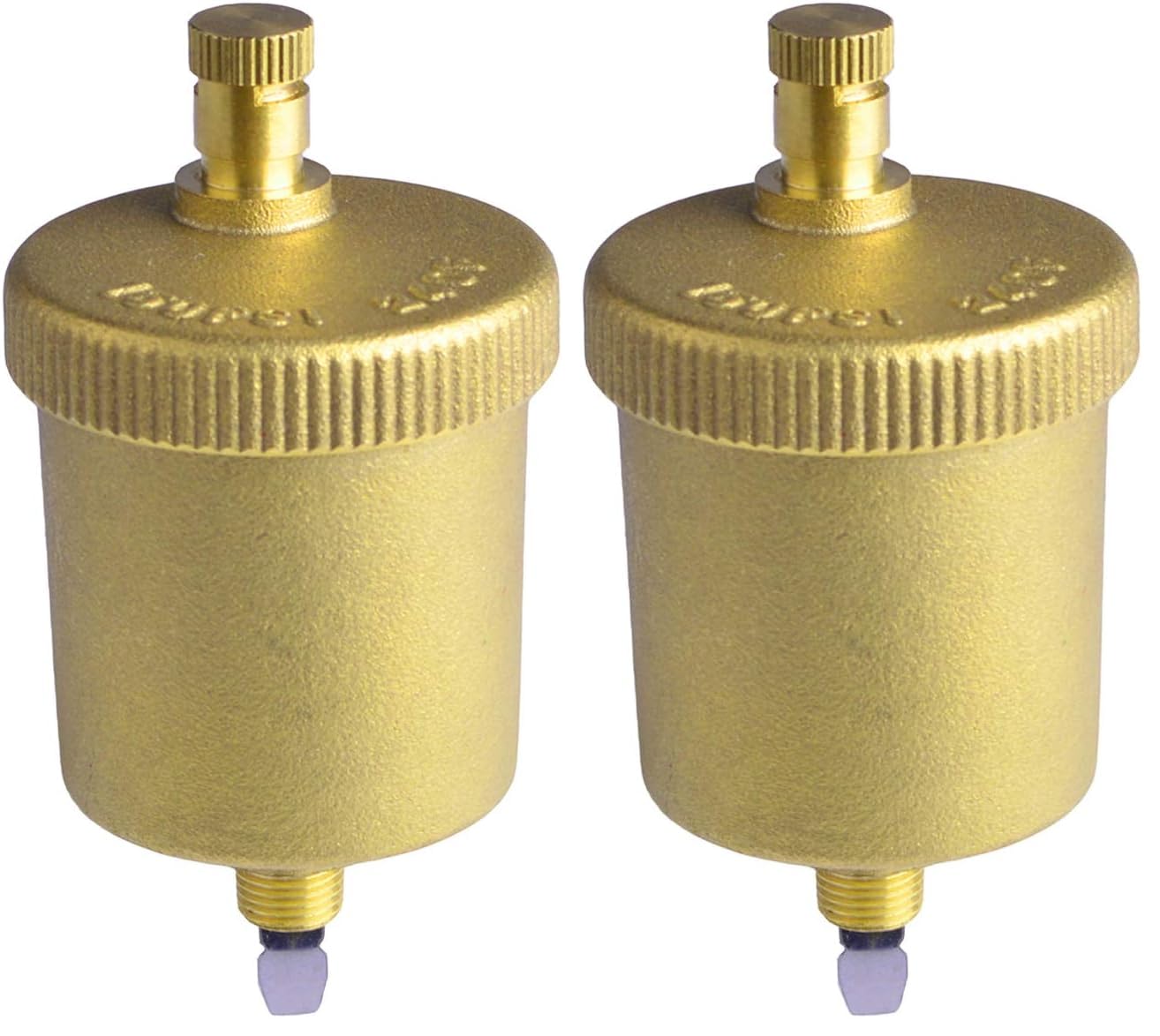
1. Hydro Master Automatic Air Vent Valve 1/8 Inch Brass (Pack of 2)
Our pick — over 4.5★ from 650+ verified ratings; the strongest balance of quality and price.
Two brass float valves that take over the bleeding job so your radiators stop cooling at the top.
For most home heating setups, this is the valve to reach for first. It runs on the widest pressure window of any pick here — a maximum of 150 psi (pounds per square inch, a measure of water pressure) and a maximum operating temperature of 240°F — so it works on hot-water radiators, boilers, and manifolds without you worrying about the system overwhelming it. The 1/8″ male NPT threaded connection (NPT stands for National Pipe Tapered, the standard tapered pipe thread on residential heating fittings) is the tapered pipe thread used on the vast majority of residential heating ports, which is why it threads straight into standard fittings.
What wins people over is the fit-and-forget replacement logic. Owners who swapped out a crusted old valve on a home boiler describe it simply working as expected, and a plumber’s review of the same unit calls out the float mechanism (a float that rises with water and closes the vent) that vents air automatically and then seals, ending the manual bleed routine. It handles hydronic and heating systems broadly, and the two-pack means you can fix a troublesome radiator now and keep a spare for later. Hydro Master notes it pairs with their 1″ and 1-1/4″ air scoops if you run that setup.
The recurring gripe is packaging, not performance. The units ship in light cardboard, and at least one buyer found the sensor stem bent on arrival from rough handling — a straighten-and-go situation rather than a dead valve, but worth a careful unboxing. That packaging is the one flaw on an otherwise well-liked valve.
Where it earns its keep
- 150 psi and 240°F ratings cover hot-water radiators, boilers, and most hydronic loops.
- Standard 1/8″ male NPT thread snaps into the common residential port.
- Two valves per pack lets you replace one and shelf the other.
- Float design vents trapped air and seals itself, ending the manual bleed.
What to watch for
- Light cardboard packaging leaves the sensor stem exposed to shipping damage.
- Some buyers still report leaks over time, though many report the opposite.
- Teflon tape is not included, so plan for the small extra.
Grab this one: if you want one dependable brass valve that fits standard 1/8″ ports and covers both hot-water and boiler setups, buy this with confidence.
Bring patience: unbox carefully — the stem can bend in transit, so inspect before installing.
2. Amtrol 700-C Automatic Air Vent
The compact bronze vent that clears bubbly air noises fast and threads in with almost no fuss.
If you have ever heard the bubbling and gurgling coming off a hydronic boiler, this is the valve that shuts it up. It handles the same 150 psi as the top pick but with a lower 230°F temperature ceiling and a smaller footprint — it measures 2 x 2 x 4 inches, versus 4.33 x 3.35 x 2.17 inches for the Saillong two-pack, so it tucks into tighter spots above the boiler. That size gap is real when you are working in a cramped mechanical closet. The 1/8″ male NPT float connection is the same residential standard, and it arrives as a single unit rather than a pack.
What owners highlight most is how quickly the air clears. One long-running case involved replacing a failed vent on a hydronic boiler, and the air-bubble noises through the radiators vanished within about twenty minutes of the swap. It also fixes the classic dripping relief valve that traces back to a blocked air vent rather than the relief valve itself. Ease of installation comes through in the feedback too: drain a little water, shut off the boiler and water line overnight, and it is a straightforward DIY job. As owners put it, one buyer simply said about replacing an older vent, “Replaced a 30 year old model that started leaking, no more leaks.”
Its position here is honest: it is the lower-rated pick overall at 4.7 stars, and it ships as a single valve rather than a pair, so if you are replacing multiple radiators you may need more than one. For a one-for-one boiler-top replacement though, it does the job cleanly.
Why it climbs: it clears hydronic air fast and, at 2 x 2 x 4 inches, fits where a bulkier valve will not.
Where it stops short: one valve per box and a lower temperature ceiling than the top pick, so it is a fit for a single boiler port, not a whole-house sweep.
Reach for this if: you need a single compact vent for a boiler-top port and want those gurgling noises gone.
Look elsewhere if: you are replacing valves across several radiators and want a multi-pack.
3. Saillong 2 Pack 1/8″ Automatic Air Bleed Vent Valve, Brass
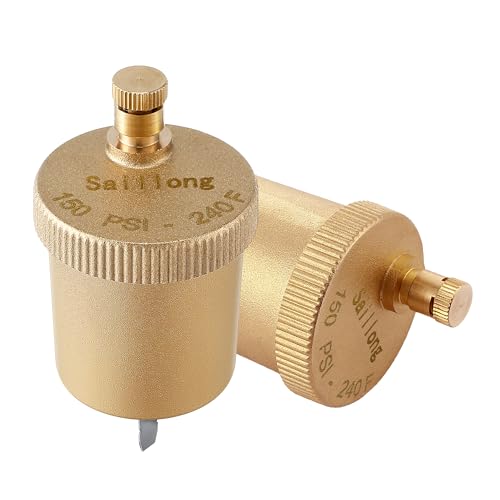
A brass two-pack built for spreading across a whole heating system without doubling the spend.
The defining number here is the count: you get 2 valves in the box, versus 1 in the Amtrol 700-C, and they carry the same 150 psi maximum pressure and 240°F maximum temperature you find on the top pick. That makes this the valve to buy when you have several high points to feed — boilers, small unit heaters, hot-water radiators. It is rated to install either on the boiler or at the high points throughout a system, but it must go in vertically to work.
Functionality is what earns the most praise, and it is banked against a budget-tier price, which is why owners keep calling it strong value for the money. The straightforward angle: fit it vertically, thread it in, and let the float do the venting. Multiple buyers used these to replace valves across their house on a single order, and one summed up the pitch perfectly — the valves are described as full brass, sturdy, and working exactly as intended.
Here is the honest catch: the packaging is flimsy. The stem sits exposed inside a thin paper box, and the recurring complaint is a bent bottom pin on arrival. A careful straighten fixes most bent pins, but it is the one flaw on this pick. If you are ordering, unpack slowly.
The value math: two brass valves rated to 150 psi and 240°F for roughly the cost of a single premium vent.
Treat the box gently: the thin packaging lets the stem take a knock, so inspect the pin before install.
Buy it when: you are replacing valves at multiple points and want brass construction without paying per-unit premium prices.
skip it if: you need extra padding in transit and would rather not risk a bent pin.
4. Watts DUOVENT High Capacity Air Vent Boiler Valve 1/8″ Female NPT

A dual-vent design that gives you automatic air release plus a manual button for instant clearing.
What sets the DUOVENT apart is the second vent. Most valves here do one job — vent automatically. This one ships with both an automatic vent under a black cap and a manual vent under a red cap, so you can crack the red cap for a fast clear when you have just refilled the system and air has rushed in. It is built for commercial and residential hydronic applications and is rated for glycol systems (systems using antifreeze) or use as an anti-vacuum device, which none of the other picks here claim. The connection is a 1/8″ female NPT, so note the female thread if you are swapping from a male-threaded unit.
Owner feedback lands on quality and problem-solving. It resolved a case where a heating line had been airlocked for months and repeated bleeding had not fixed it — the valve cleared it. The manual vent is genuinely useful at second-floor high points for quick venting when refilling, though at a flooded basement air scoop it is unnecessary. The recurring bits of feedback: the auto cap must be unscrewed about two turns to activate, one owner found the bottom flapper tab is cheap plastic, and the included instructions are thin — a look at the box sketches helps.
The pressure ceiling is the lowest of the hydronic picks at 100 psi and 140°F, which is fine for most residential and many commercial hydronic systems but worth confirming against your boiler. The female thread is also a compatibility point to double-check rather than assume.
The dual-vent advantage: automatic release day-to-day, plus a manual vent for instant clearing at high points.
Check your thread type: the 1/8″ female NPT will not swap directly into a male port, and the pressure ceiling is 100 psi.
This suits you if: you run glycol, want an anti-vacuum function, or want a manual vent for a stubborn high point.
Think again if: your boiler runs above 100 psi or your port is male-threaded.
5. Taco 400-4 1/8-Inch-NPT Float Air Hy-Vent (2)
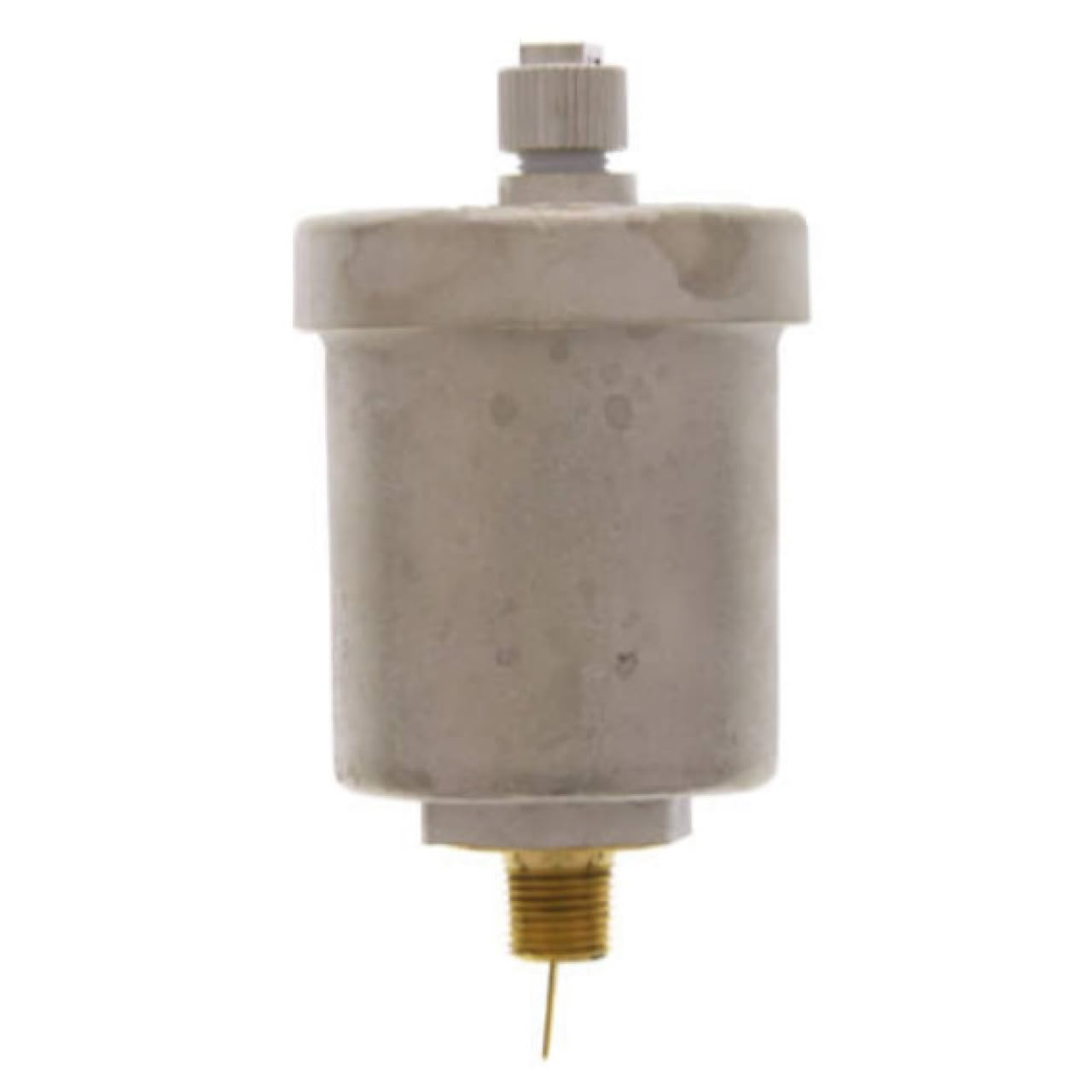
A nickel-plated brass vent you hand-tighten by feel and service by simply unscrewing the cap.
Taco builds these to be lived with. The brass body is nickel-plated, the vent is serviceable by unscrewing the cap rather than replacing the whole unit, and the 1/8″ NPT connection threads in with a few wraps of Teflon. It is rated to 150 psi, matching the top pick’s pressure ceiling. Taco recommends pairing it with their air scoops — which feature a 1/8″ outlet on top — for best performance, so this is a natural fit if your air scoop is already a Taco part.
The install detail owners stress is hand-tight only. A seasoned user’s guidance is to thread it in by hand with a little Teflon and never to crank it with a tool, because over-tightening can distort the fitting. The payoff is a valve that cancels a preseason bleed — one owner reported the boiler simply did not need bleeding once these were in. Others describe air noise disappearing and two months of quiet operation on a hydronic system.
The honest limit is lifespan. The most commonly flagged point in the feedback is a leak developing at the cap area after roughly three to five years of service, though some report a single unit going around five years before it seeped off-season. That cap-area leak is normal end-of-life wear for a brass float valve, so keep Teflon on hand for the replacement.
Nice things owners notice
- Nickel-plated brass body rated to 150 psi covers typical residential and larger installations.
- Service is easy — just unscrew the vent cap instead of replacing the whole valve.
- Hand-tight install with Teflon tape is the expected method, no special tools needed.
Be aware of
- Feedback points to a cap-area leak developing after roughly three to five years.
- Over-tightening with a tool can damage the fitting, so go by feel.
- One owner said it goes on easily but the vent hole is on the smaller side.
Best fit for: anyone who wants a serviceable, nickel-plated brass vent that installs by hand and lets you replace the internal parts without cutting the job short.
Consider the clock: plan to inspect it after a few seasons, since cap-area leaks are the recurring note.
6. Gisafai 6 Pack Steam Radiator Valves 1/8 In. Npt Angle Mount
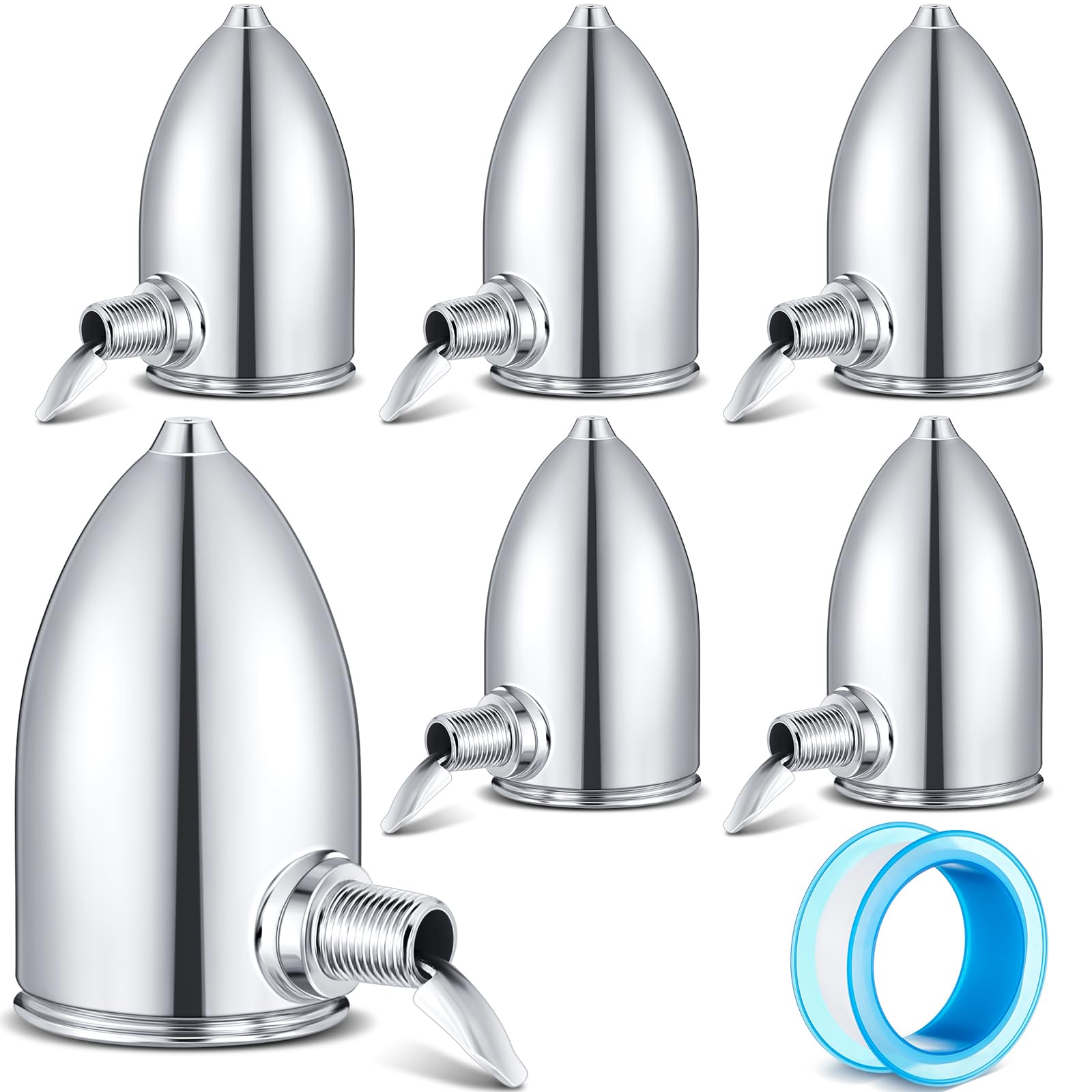
Six steam valves and a roll of sealant tape in one box — enough to redo the whole house.
This is the count play for steam radiators. You get 6 steam radiator air valves plus a roll of industrial sealant tape, which is the practical way to address a whole-house steam system in a single order. The angle-mount design uses a 1/8″ NPT thread with a float-and-stem mechanism (a float that rises with water and closes the vent), and the vent hole is approximately 0.0935 inches — deliberately small so it lets trapped air escape without dumping steam, which is exactly the failure mode on a steam radiator that vents too aggressively. The body is copper with a chrome plating for rust and corrosion resistance.
The pressure ratings here are for steam, not hot water: a maximum of 10 psi with a working pressure of 5 psi. Do not put these on a 150 psi hydronic loop. On the right system, they deliver quiet, automatic venting with no manual intervention, and the small vent hole suits a radiator near the boiler especially well. Owners describe a satisfying tink when the valves close off, an easy install, and a tight fit in cramped spots.
Two honest notes. A brand-new valve or one filled with heating water can emit a small amount of steam and water on its first discharge — that is normal, not a defect. And the vent hole is smaller than some adjustable models, so a radiator far from the boiler may heat a little more slowly than the ones closest to it. That is the trade-off of a deliberately small steam vent hole.
Why it earns its keep: six valves plus sealant tape covers a full steam radiator swap, and the small ~0.0935″ vent hole conserves steam instead of wasting it.
The steam-only limit: at 10 psi max and 5 psi working, these are strictly for steam radiators, never hydronic loops.
Made for you if: you are refreshing steam radiators across the house and want matching valves plus tape together.
Wrong tool if: your system is hot-water or operates above 10 psi.
7. Hoffman Steam Air Vent 40, 1/8 Angle Steam Radiator Air Valve 401440-2 Pack

A float-type steam air valve with a non-adjustable port built to hush a noisy radiator.
Steam radiators make the noises that keep people up — banging pipes, hissing, the occasional spray of water. This Hoffman valve is built specifically to stop that. It is a float-type steam air valve with a single non-adjustable port and a 1/8″ NPT angle connection, rated to 6 PSIG with a maximum operating pressure of 6 psi. You get both parts of the pack, so it is a value two-pack. The metal exterior houses a brass valve, and the angle connection is handy when the radiator’s port faces sideways.
What consistently comes through in the feedback is quiet. Owners describe the 3am pipe banging stopping after installing these on radiators that were not working, and radiators that were once overactive — spraying excess steam — calming down after the swap. In one case, a household reported running their heat lower because the radiators finally heated the home properly. That is what matching a valve’s vent rate to the system buys you.
One honest note: some units that arrive are not stamped or labeled as Hoffman and are described as coming from China, though the valves themselves are reported to work. The 6 psi pressure ceiling also confirms this is strictly a steam valve, so it belongs on a steam radiator and nowhere near a hydronic system.
The case for it
- Float-type non-adjustable port quiets banging, hissing steam radiators.
- Angle connection fits ports that face sideways at a radiator.
- Rated to 6 PSIG for standard steam radiator pressure.
- Two valves per pack covers a pair of radiators.
Worth knowing
- Some units arrive unlabeled and are not the original Hoffman branding.
- 6 psi ceiling makes it steam-only, never a hydronic fit.
- Non-adjustable port means you get one vent rate, not a tunable one.
Ideal for: a steam radiator home where pipe banging and hissing are the daily frustration and you want them quiet.
Stick to steam: this is a 6 psi steam valve, so keep it off any hot-water system.
Understanding the Specs
Maximum Pressure Rating
This is the highest pressure the valve can sit under before it risks failure. Hydronic hot-water boilers often run high, which is why you see 150 psi valves like the Hydro Master and the Amtrol 700-C — those fit hot-water and steam systems alike. Steam radiators run low, so a 6 psi to 10 psi valve like the Gisafai or Hoffman is correct there. Putting a 6 psi steam valve on a 150 psi loop will end in failure, so always match the rating to your system.
1/8″ NPT Thread and Connection Type
NPT stands for National Pipe Tapered, the standard tapered pipe thread on residential heating fittings. Most radiator, boiler, and air-scoop ports are 1/8″ NPT, which is why nearly every valve here uses it. Check two things before ordering: whether your port is male or female — the Watts DUOVENT is female while the Hydro Master is male — and whether the valve mounts straight or at an angle, since the Gisafai and Hoffman use an angle connection for sideways ports.
FAQ
How do I know if my radiator needs an air vent valve or just a manual bleed?
Can I use a steam valve on a hot-water radiator?
What thread size do most radiator air vents use?
Do automatic air vents need to be installed vertically?
How long does an automatic air vent last before it leaks?
Why is my new steam valve letting out steam and water at first?
Do I need Teflon tape to install an air vent valve?
Is a two-pack or a single valve better for my setup?
What is the difference between an automatic and a manual vent on the same valve?
Can I install an automatic air vent without draining the whole system?
Final Thoughts: The Verdict
For most homes, the winning automatic radiator bleed valve is the Hydro Master Automatic Air Vent Valve because it handles the widest pressure window at 150 psi and 240°F, threads into the standard 1/8″ male NPT port, and gives you a spare valve in the box. If you need a single compact vent for a boiler-top port, grab the Amtrol 700-C Automatic Air Vent. And for a whole-house steam radiator refresh, the Gisafai 6 Pack Steam Radiator Valves is the one to reach for. Whichever fits your system, confirm your thread type and pressure before you order — that single check prevents most of the leaks and mismatches buyers run into.
How We Picked
We do not accept paid placement. Every pick is matched to a real buyer and a real use-case; we do not hands-on test units.
Sources & Methodology
Specifications: manufacturer listings and product documentation. Review insights: verified customer reviews, as of September 2026. Pricing: not shown on this page (it changes often); check the current price via the retailer link.
As an Amazon Associate, KitchPrep earns from qualifying purchases. This does not affect which products we feature.
Related Guides
