
Specs are compiled from manufacturer listings and verified buyer reviews and can change over time — please confirm the key details on the product page before buying.
You never have to fumble in the dark or come home to a black house again. The three main types are motion sensors that detect you, countdown timers that shut off after a set time, and smart dimmers you control by app or voice. Your choice depends on your wiring, your habits, and how much control you want—for example, a bathroom fan that turns itself off or porch lights on a schedule.
I’m Mohammad Maruf — the founder and writer behind KitchPrep. This guide is built by comparing the manufacturers’ published specifications and the patterns across verified customer reviews, so you get each pick’s real strengths and trade-offs instead of marketing spin.
We break down the best automatic light switch options for every room, wiring setup, and budget so you can buy with total confidence.
Our Picks at a Glance


How To Choose The Best Automatic Light Switch
Before you pick a switch, you have to answer one question about your home’s wiring: is there a neutral wire in the wallbox? This single detail eliminates half your options instantly, so check it first before you fall in love with a specific model.
Match the Technology to the Room
Motion sensors are ideal for pantries, closets, garages, and laundry rooms where you walk in with your hands full and want the light to follow you. Countdown timers are the standard choice for bathroom exhaust fans, where you want the fan to run for 10 or 20 minutes after a shower and then shut off by itself. Smart dimmers and scheduled timers shine for living spaces and outdoor lights, where you want app control, voice commands, or a set dusk-to-dawn schedule.
Know Your Load and Your Circuit
Every switch has a maximum wattage and amperage rating. A countdown timer rated for 15 Amps can handle a powerful bathroom fan motor, but one rated for just 3 Amps is strictly for high-efficiency exhaust fans. For dimmable LEDs, check the wattage limit carefully because LED loads behave differently than old incandescent bulbs. Also confirm the switch is single-pole (one switch controls the light) or 3-way (two switches control the same light), because the two are not interchangeable without extra parts.
Decide How Much “Smart” You Actually Want
A no-frills motion sensor needs no app, no account, and no Wi-Fi. A smart dimmer, by contrast, can require a separate hub, an app, and your home network to reach its full potential. If you just want the garage light to turn off when you leave, a simple sensor is cheaper and more reliable. If you want to say “Alexa, dim the living room,” you need the connected route. Be honest about how much complexity you want to manage daily.
Quick Comparison
| Model | Best For | Control Type | Wiring Need | Max Load | Amazon |
|---|---|---|---|---|---|
| Lutron Caseta Diva Smart Dimmer★ Best Overall | Whole-home smart control | App / Voice / Wall | No Neutral | 150W LED | Amazon |
| Leviton DT160 Countdown TimerTop Performer | Heavy-duty fans and lights | Timer (10-60 min) | No Neutral | 15A / 1800W | Amazon |
| Leviton DT130 Countdown TimerBest Value | Bathroom fans and basic lights | Timer (5-30 min) | No Neutral | 15A / 1800W | Amazon |
| Intermatic EC200WK Countdown Timer | Simple silent shut-off | Timer (5/10/15/30 min) | Not Specified | Not Specified | Amazon |
| Lutron Maestro MA-T51MN | High-efficiency exhaust fans | Timer (5-60 min) | Neutral Required | 3A / 150W LED | Amazon |
| ECOELER 4-Pack Motion Sensor | Multi-room occupancy sensing | Motion Sensor | Neutral Required | 300W LED | Amazon |
| EverElectrix Motion Sensor 4-Pack | Budget multi-room coverage | Motion Sensor | Neutral Required | Not Specified | Amazon |
| Intermatic ST01K Astronomic Timer | Dusk-to-dawn outdoor lights | Astronomic Timer | No Neutral | 15A | Amazon |
| Deako Simple Motion Sensor | Deako smart-home systems | Motion Sensor | Deako Backplate | 600W LED | Amazon |
In‑Depth Reviews
1. Lutron Caseta Diva Smart Dimmer Switch
Our pick — over 4.5★ from 650+ verified ratings; the strongest balance of quality and price.
The full-featured dimmer that turns any home into a voice-controlled smart home
This is the pick for buyers who want the absolute most control, and the headline reason is its reach. It connects with more leading smart home devices than any other smart light switch brand, including Alexa, Apple Home, Google Assistant, Ring, Serena shades, and Sonos, so you are not locked into one ecosystem. It also does not need a neutral wire, which makes it the rare smart switch that works in older homes where other options fail.
You get precise dimming with the soft-glow light bar and slider, and a preset turns your lights on at your preferred level every time. Press again for full brightness, and buyers report flicker-free, buzz-free operation with LED bulbs. While you are away, the Smart Away feature randomly turns lights on and off so your home looks occupied. The package includes two Diva Smart Dimmer Switches.
Owners most praise reliability, with many running theirs for years without a glitch. One buyer reports: “Simple QR-guided install; works flawlessly with Caseta; reliable 6 years; expensive.” The catch is the hub—a separate Lutron Smart Hub is required for app and voice control, and the coordinating wallplate is sold separately. This is the premium route, and it costs accordingly, but the quality and ecosystem breadth are hard to match.
Why Owners Pick This
- Works in any home of any age with no neutral wire needed
- Connects with Alexa, Apple Home, Google Assistant, Ring, and more
- Precise slider dimming with flicker-free LED support up to 150W
The Trade-Offs
- Requires a separate Lutron Smart Hub for full smart features
- Premium price point that some owners note is hard to justify
Reach for this if: you want one switch that rules your whole smart home with voice, app, and wall control without rewiring for a neutral.
Look elsewhere if: you only need a simple motion-triggered on/off and do not want to pay for a hub and ecosystem you will not use.
2. Leviton Countdown Timer Switch DT160
The heavy-duty countdown timer that tames power-hungry fans and whole banks of lights
If you need to automate a serious electrical load, this is the switch. It is rated for 15 Amps and handles up to 1800W of incandescent or halogen lighting, plus ½ HP/9.8 Amp fan and motor loads, so it comfortably drives bathroom exhaust fans, attic fans, heat lamps, towel warmers, and hot tubs. Four preset buttons offer 10, 20, 30, and 60-minute counts—press once and it turns off automatically when the time expires.
The wiring flexibility is a standout for retrofit jobs. Its innovative green flex sleeve wires to ground when no neutral wire is available, or you remove the sleeve to connect to a neutral if one is present in your wallbox. The two black line and load wires can be interchanged, which makes miswiring nearly impossible. Owners mention it works well for garage lights, with one calculating that auto-off for 12 LED cans saved roughly 2.4 kWh per day.
This is the heavier-duty sibling to the Leviton DT130 below, rated for a full 15 Amps versus the 1.25 Amp requirement you see on some smart dimmers — a massive difference in what you can connect. Buyers who replaced failed timers from other brands came to Leviton specifically for reliability. The honest notes are that the push buttons can sit unevenly after pressing, and the deep body needs a multi-gang or deep wallbox.
Built for Heavy Loads
- 15A rating handles motors, fans, and up to 1800W lighting
- Green flex sleeve works with or without a neutral wire
- Interchangeable line and load wires prevent miswiring
Worth Knowing
- Deep body may not fit shallow or crowded wallboxes
- Buttons can sit unevenly after a press, per some owners
Best for: anyone automating bathroom exhaust fans, heat lamps, or heavy lighting circuits who needs a genuine 15-Amp rating without a neutral wire.
A fair warning: check your wallbox depth first, because the body is deep and needs room to breathe.
3. Leviton Countdown Timer Switch DT130
The crowd-tested 15-Amp timer that owners call a must-have for every bathroom fan
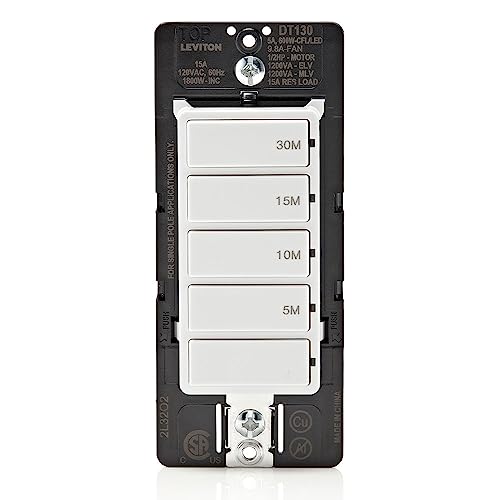
Owners recommend this switch most for bathroom exhaust fans because it ends the “did I leave the fan on?” worry for good. It offers four preset time buttons of 5, 10, 15, and 30 minutes, so after a shower you tap 15 and walk away. An LED indicator counts down the remaining time, which owners find genuinely useful, and the lights blink when under a minute is left.
The quality is what wins people over here, backed by praise from dozens of installers. It is rated for a full 15 Amps and handles 1800W of incandescent or halogen plus ½ HP/9.8 Amp motors, making it just as capable as its 60-minute sibling. It needs no neutral wire thanks to the green flex sleeve that wires to ground, and the two interchangeable black wires help prevent DIY wiring mistakes.
Owners note it solves the constant problem of teens leaving shower fans running for hours, and one electrician replaced three of four fan switches with these to work around a Broan motor’s 60-minute limit. The recurring practical note is that retrofitting into an older wallbox may require a larger electrical box, and the faceplate can be hard to find locally. For the price, this delivers genuine 15-Amp motor control that budget timers cannot touch.
Owner Favorites
- Full 15A motor rating for real exhaust fans, not just lights
- LED indicator shows remaining countdown time clearly
- No neutral wire needed with the flexible ground sleeve
Installation Reality
- May need a bigger electrical box when retrofitting old wiring
- Matching faceplate can be difficult to source locally
Grab it for: bathrooms, garages, and any room where you want a reliable auto-off for fans or lights at a fair price.
Measure first: if your wallbox is shallow or crowded, budget for a deeper electrical box during install.
4. Intermatic EC200WK Electronic Countdown Timer

The silent auto-off timer that keeps fans and lights from running all day
Quiet operation is this switch’s defining trait, so you will not hear a click when it shuts off your bathroom fan or hall light. It offers time ranges of 5, 10, 15, and 30 minutes, and it is versatile enough to manage LED and CFL lights, fans, motors, and heaters across indoor and outdoor settings. That reach makes it useful far beyond the bathroom, including ventilation systems and self-storage units.
Its longevity is remarkable. As customers note: “10 years and still working great. Every bathroom I own will have one of these for the fan/light.” One owner paired two of these timers to two 7,000 CFM blower-style whole house fans in a large garage space, and they worked great. It carries UL listing for resistive, tungsten, inductive ballast, and electronic ballast loads—the safety stamp you want on an in-wall device.
Several owners note the printed settings seem to differ from actual behavior—one reports a supposed 30-minute timer that only ran for 20 minutes. Durability feedback is mixed, with some units lasting years while others fail sooner. Some also noted the 60/30/20/10-minute options behaved differently than the advertised 5/10/15/30 set. Treat it as a solid, simple workhorse, but if you need surgical timing accuracy, verify the countdown with a stopwatch after install.
What Stands Out
- Genuinely silent operation with no audible relay click
- Handles a wide range of loads: lights, fans, motors, heaters
- Long-serving reviewers point out a decade of reliable use
Before You Buy
- Durability is mixed, with some units failing after a few years
- Actual countdown time may not match the printed minutes exactly
Choose it if: you want a no-frills, silent countdown timer that quietly handles fans and lights without smart-home complexity.
Keep in mind: if you are not handy with electrical work, professional installation is recommended for this one.
5. Lutron Maestro Countdown Timer Switch MA-T51MN

The countdown timer built specifically for high-efficiency bathroom exhaust fans
This is the specialists’ choice for low-amperage exhaust fans, because it is rated to control a 3 Amp high-efficiency fan safely. If you have a modern Panasonic or similar quiet fan, this timer is the one owners pair with it most. It gives you tap-once-to-start or double-tap for always-on, and a rocker adjusts the countdown from 5 to 60 minutes across six settings: 5, 10, 15, 30, 45, and 60. A one-minute warning tells you before the fan shuts off.
The 60-minute ceiling separates it from the 30-minute Leviton models. One owner installed it in a laundry room to vent drier heat, setting the 45-minute cycle so the fan turns off automatically when the dryer ends. The amber LEDs are easy on the eyes, and the design blends smoothly with other Lutron fixtures. It works in both single-pole and multi-location setups, meaning you can control the same light or fan from multiple switches when paired with a Maestro accessory switch.
It requires a neutral wire, which is the main wiring constraint to check before buying. It is also rated for a modest 150W of LED, so it is not the choice for big lighting arrays — think fans first. For its intended job, reviews call it flawless: responsive buttons, convenient countdown, and easy installation. The single recurring gripe is that the standby LED cannot be turned off, so you get a small always-on indicator light.
Built for the Job
- Perfectly matched to 3A high-efficiency exhaust fans
- Six timer settings from 5 up to 60 minutes
- One-minute warning before automatic shut-off
Limits to Know
- Neutral wire is required for installation
- Max 150W LED, so it is not for large light arrays
- Standby LED stays lit and cannot be disabled
Ideal for: modern quiet bathroom fans that draw low amperage and need a precise 5-to-60-minute auto-off.
Not for: lighting-heavy rooms, given the 150W LED cap, or homes without a neutral wire in the box.
6. ECOELER 4-Pack PIR Motion Sensor Light Switch
The four-pack motion sensor that kills wasted energy in windowless rooms
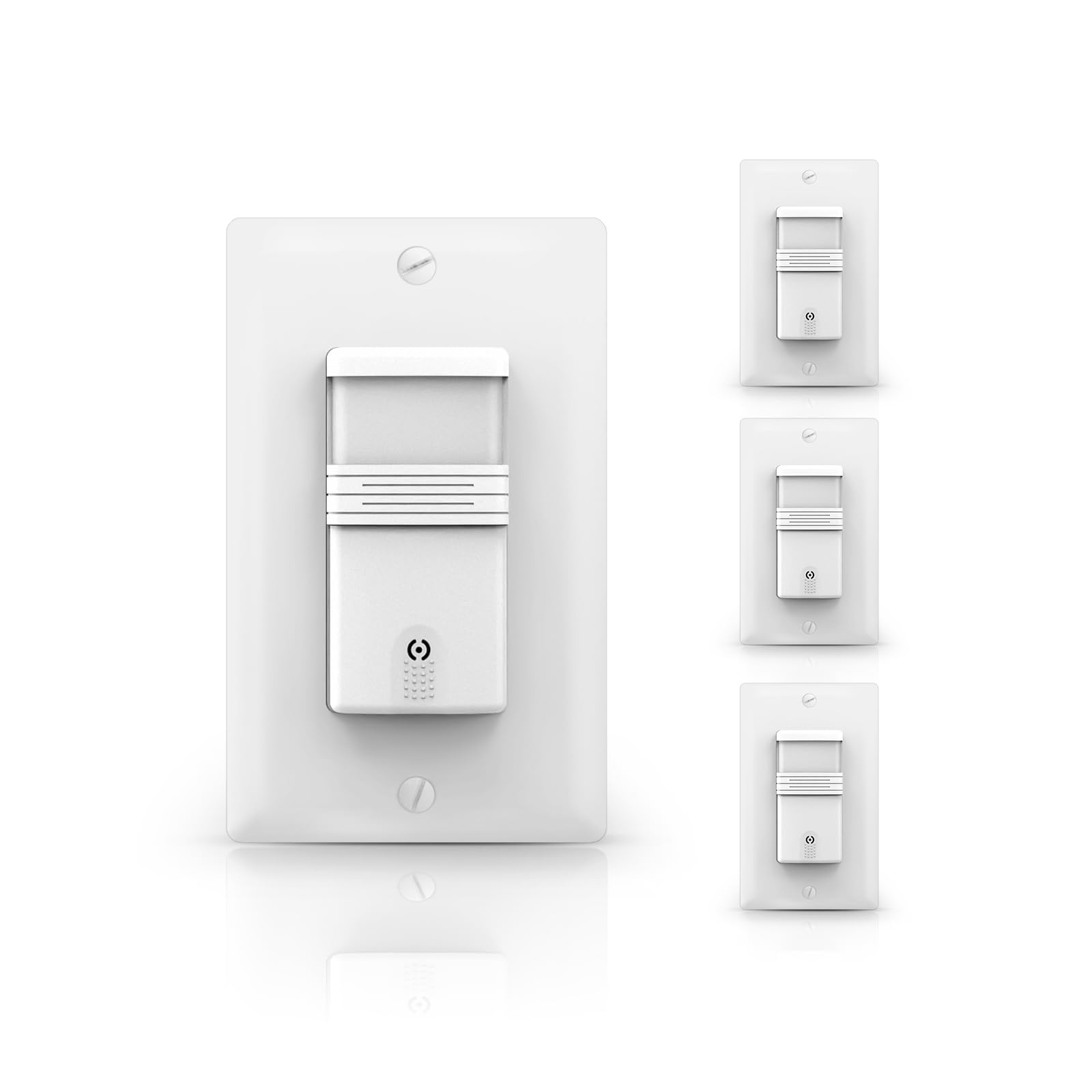
Hands-free lighting is the whole point here, and getting four sensors in one box means you can cover a hallway, pantry, garage, and laundry room in a single purchase. The PIR motion sensor (a passive infrared detector that senses body heat and movement) turns lights on when you enter and off when the space is empty. Owners love that kids can no longer leave lights burning for hours, with several reporting lower energy bills as a direct result.
Two operating modes give you real flexibility. OCC Mode (occupancy) turns lights on automatically when motion is detected and off when the room clears. VAC Mode (vacancy) requires a manual press to turn on, then shuts off automatically after you leave — ideal for rooms where you do not want the sensor deciding when the light comes on. Adjustable time delays, sensitivity, and light-level sensing give you fine control over the behavior.
The value story is strong, but quality is where opinions split. It is UL Certified, FCC Listed, and California Title 24 Compliant., and it handles 300W of LED, which is generous for a sensor switch. Most units work flawlessly, yet an occasional one in a multi-pack can misbehave, with one owner describing a third unit that “turns on randomly without any motion.” The plastic build feels cheap to some. It requires a neutral wire, so confirm that before you commit to installing four of them.
Why It Sells
- Four sensors cover multiple rooms for one low price
- Occupancy and vacancy modes suit different room habits
- Handles sturdy 300W LED loads with UL and Title 24 certification
Reality Check
- Occasional unit in a pack may trigger randomly
- Plastic construction feels less premium to some owners
- Neutral wire is required for every install
Best for: wiring up several windowless rooms at once on a budget, with plenty of adjustability per sensor.
Think twice if: you need rock-solid reliability from every single unit, because the odd flawed sensor does slip through.
7. EverElectrix Motion Sensor Light Switch 4-Pack

The wide-angle motion sensor four-pack that keeps lights off in empty rooms
What this sensor lacks in polish it makes up for in sheer coverage. A wide 180° field of view means it catches movement across a whole room without you waving your hands, and adjustable sensitivity dials help prevent unwanted shutoffs while you are sitting still. It works as both an occupancy sensor and a vacancy sensor, so you pick between automatic-on and manual-on modes depending on the room.
Owners call it a genuine lifesaver for the classic problem of lights left on. It gets strong praise for pantries, closets, and laundry rooms, where the auto-off saves real energy, and some even use it to control bathroom fans. The four-pack pricing makes it painless to cover several trouble spots at once, and the front-mounted controls are easy to reach after install.
The honest caveat is that reliability varies between units. Some shoppers say sensors failing after a few weeks, while others find them excellent, and one bought eight total, had a few stop working well after a few months, but praised the seller for sending replacements quickly. It needs a neutral wire and is single-pole only, so no 3-way setups. It is also not compatible with older homes that have mismatched wiring, where it may fail entirely. This is a budget play — treat it accordingly.
What You Get
- Wide 180° detection catches motion across a full room
- Dual occupancy and vacancy sensing modes
- Four units make whole-home coverage affordable
Set Expectations
- Reliability is inconsistent between individual units
- Not for 3-way circuits or homes with mismatched wiring
- Neutral wire required for proper installation
Pick this up for: pantries, closets, and laundry rooms where you want wide-angle auto-off without spending much per room.
Be ready for: possible unit-to-unit quality variance, so buy knowing you may need to lean on customer service.
8. Intermatic ST01K Astronomic Digital In-Wall Timer

The astronomic timer that tracks sunrise and sunset so your lights follow the seasons
This is the automatic switch for outdoor and security lighting, because it does something no motion sensor or countdown timer can: it calculates dawn and dusk for your exact location and adjusts automatically as the seasons change. The astronomic feature means your porch or driveway light turns on at sunset and off at sunrise every day, without you ever touching a schedule again. It also auto-adjusts for daylight saving time, so you never reset it twice a year.
It runs as a 24-hour or 7-day digital timer with up to 20 ON/OFF events, giving you serious scheduling power beyond simple dusk-to-dawn. A backup lithium battery holds your program through power outages and keeps the clock accurate, rated for 8000 hours of life. Professional electricians praise it as a superior alternative to photocells, which can fail from overcast weather or dirt buildup. It handles up to 15A loads, making it suitable for pool lights and other heavier draws. Notably, it requires no neutral wire, which is a blessing for retrofit and remodel projects.
One owner has installed seven of these units across properties, calling them reliable enough to replace a motion sensor on a driveway light. The recurring friction is programming: the written instructions are confusing, and owners consistently point to YouTube videos as the real manual. Mark the learning curve as real but conquerable. It is also a pricier route than a simple sensor, so it is worth it mainly if you truly want season-tracking schedules rather than just occupancy detection.
The Big Wins
- Astronomic dawn and dusk tracking adjusts with the seasons
- Auto daylight saving time adjustment means zero resetting
- No neutral wire needed, perfect for retrofits
- Backup battery holds the schedule through outages
The Friction
- Programming is confusing; owners rely on YouTube tutorials
- Written instructions earn consistent criticism
- Premium price for a non-smart timer
Reach for this if: you want porch, driveway, or landscape lights on a true sunset-to-sunrise schedule with no smart hub required.
Heads up: budget time for the programming learning curve, and have a YouTube tutorial ready before you start.
9. Deako Simple Motion Sensor Switch
The snap-in motion sensor for homes already built on the Deako switch system
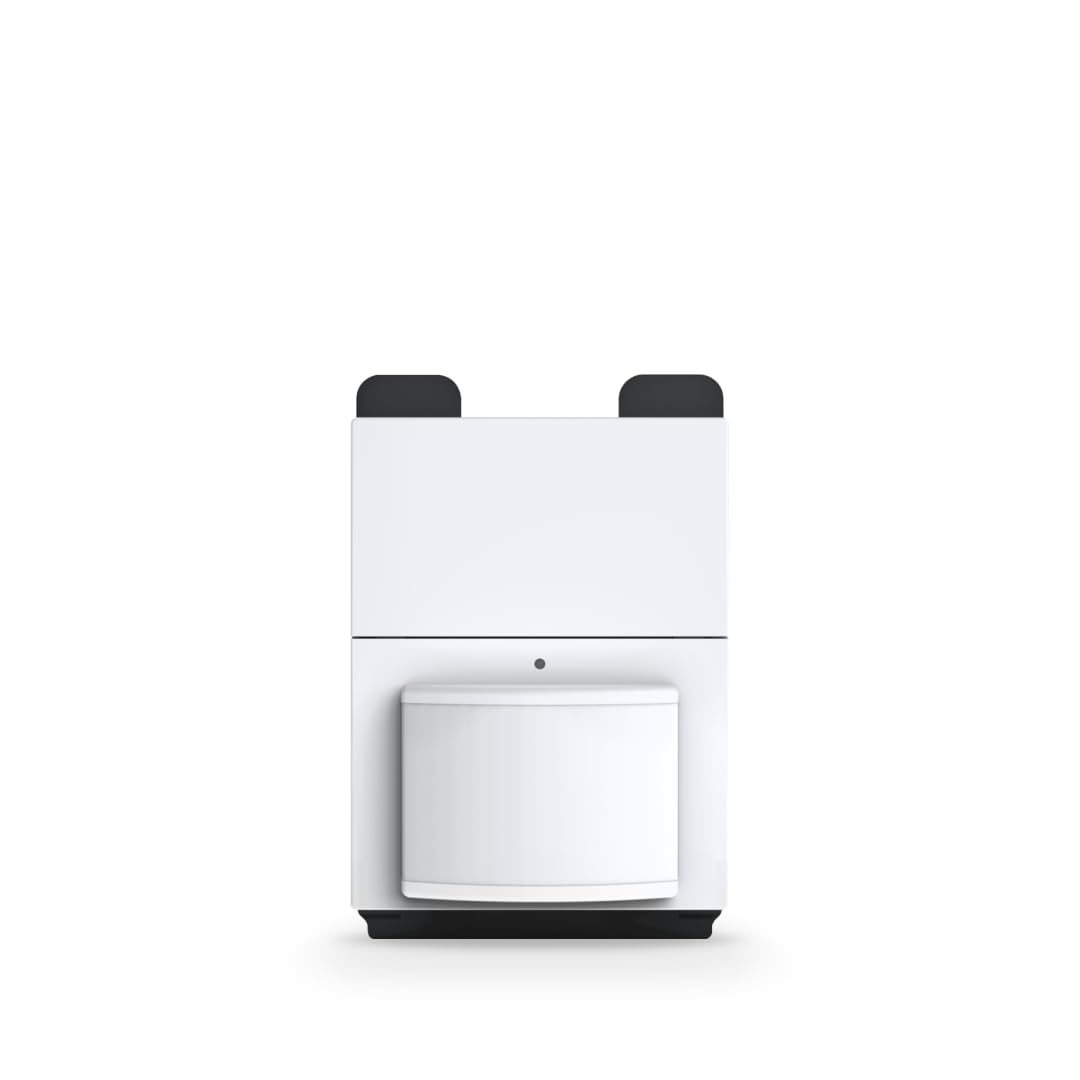
If your home already runs on Deako backplates, this motion sensor installs in literal seconds — you unplug the old switch and slide this one into place, no tools and no power shut-off needed. That ease is the defining feature, and it is why owners with the Deako system already in place call these the perfect complement. It is designed for hands-full moments: carrying groceries from the pantry, hauling clothes to the laundry room, or lighting the garage the moment the door opens.
It offers three automatic timer settings of 30 seconds, 5 minutes, or 20 minutes, so you dial in how long the light stays on after motion stops. In Occupancy mode the light turns on automatically when you enter. In Vacancy mode you press the main button to turn it on, and it shuts off after your chosen delay. It supports up to 600W of incandescent/halogen and 600W of LED, a generous ceiling that covers most household lighting without worry.
The catch is steep pricing and strict system requirements. It only works where one switch controls the light (single-pole) and must connect to a Deako backplate with a neutral wire connection — it is not a universal replacement for a standard wall switch. Owners uniformly praise the 2-minute installs and consistent performance, but several call the price “very expensive” for what is functionally a simple sensor. If you are not already in the Deako ecosystem, this is not your entry point; if you are, it is a no-brainer upgrade.
System Perks
- Snap-in install in about two minutes with no wiring
- Pets will not trigger the sensor falsely
- Supports up to 600W LED and incandescent loads
- Three timing options: 30 sec, 5 min, 20 min
System Limits
- Only works with Deako backplates that have a neutral
- Single-pole circuits only, no 3-way support
- Premium price for a straightforward sensor
Get it if: your home already has Deako backplates and you want instant motion control in pantries, closets, and garages.
skip it if: you have standard wall switches, because this requires the proprietary Deako backplate system to function.
Understanding the Specs
Amperage and Wattage Ratings
The amperage (A) and wattage (W) ratings tell you how much electrical load a switch can safely handle. A timer rated for 15 Amps can drive powerful motors like bathroom exhaust fans, attic fans, and heat lamps, while a 3 Amp switch is strictly for small high-efficiency fans. For lighting, check the wattage limit — some dimmers cap out at 150W of LED, while others handle 600W or more. Matching the switch rating to your actual load is the single most important safety step, because an undersized switch can overheat. When in doubt, pick the higher-rated model.
Neutral Wire vs. No Neutral
The neutral wire is the white return wire in your home’s electrical system that completes the circuit. Many newer smart and sensor switches need this wire for their internal electronics to stay powered even when the light is off. Homes built in the last few decades usually have neutral wires in the wallbox, but older homes often do not. If your box lacks a neutral, you need a switch specifically labeled “no neutral required” — many countdown timers and the Lutron Caseta work this way. Check your wallbox before buying, because this one detail decides which switches will even install.
Occupancy vs. Vacancy Sensing Modes
These two modes change how a motion sensor behaves. In Occupancy mode (OCC), the sensor turns the light on automatically the moment it detects motion, which is ideal for pantries, garages, and hallways where your hands are full. In Vacancy mode (VAC), you press the switch manually to turn the light on, and it only turns off automatically when no motion is detected for the set delay. Vacancy mode is better for rooms like home offices where you do not want the light flipping on every time you shift in your chair. Many quality sensors offer both modes so you can pick per room.
Single-Pole vs. Multi-Location Circuits
This describes how many switches control the same light. A single-pole circuit means exactly one switch operates that light, which is the most common setup and the only one many motion sensors support. A 3-way or multi-location circuit means two or more switches control the same light, like at the top and bottom of a staircase. If you have a multi-location setup, you need a switch rated for it, or you pair it with an accessory switch or remote (like Lutron’s Pico remote) to add control from other spots. Count your switches at the wall before choosing a model.
FAQ
What is the difference between a motion sensor switch and a countdown timer switch?
Do I need a neutral wire for an automatic light switch?
Can I install an automatic light switch myself or do I need an electrician?
Why does my motion sensor light keep turning on by itself?
What does “single-pole” mean and can I use these switches on a 3-way circuit?
What wattage of LED lights can these automatic switches handle?
Can a timer switch control a bathroom exhaust fan or just lights?
What is an astronomic timer and is it better than a motion sensor for outdoor lights?
Can I control an automatic light switch with my phone or voice assistant?
How long do automatic light switches last before they need replacing?
Final Thoughts: The Verdict
If you want the single best automatic light switch, the Lutron Caseta Diva leads because it pairs elegant dimming with the widest smart-home compatibility, and it works in older homes without a neutral wire. For bathroom exhaust fans on a budget, the Leviton DT130 delivers genuine 15-Amp motor control at a fair price. And for outdoor lights that follow the seasons, the Intermatic ST01K astronomic timer tracks sunrise and sunset with zero daily effort. The crowd favorite overall—4.7 stars across 600+ owners—is the Caseta, whose premium price buys the most flexibility for whole-home smart control.
How We Picked
We do not accept paid placement. Every pick is matched to a real buyer and a real use-case; we do not hands-on test units.
Sources & Methodology
Specifications: manufacturer listings and product documentation. Review insights: verified customer reviews, as of September 2026. Pricing: not shown on this page (it changes often); check the current price via the retailer link.
As an Amazon Associate, KitchPrep earns from qualifying purchases. This does not affect which products we feature.
Related Guides
