
Specs are compiled from manufacturer listings and verified buyer reviews and can change over time — please confirm the key details on the product page before buying.
If your gate or garage door keeps opening for nothing — or worse, refuses to open when you pull up — the sensor is almost always the culprit, not the opener. This guide cuts straight to the eight automatic door sensors worth your money, sorted by how they actually behave in a driveway: beam sensors that trip on a reflection, motion sensors that read body heat, and buried wands that feel a car pass over them. Every pick below is a real, current listing with the wiring type, power source, and range spelled out so you can match one to your opener before you order.
I’m Mohammad Maruf — the founder and writer behind KitchPrep. This guide is built by comparing the manufacturers’ published specifications and the patterns across verified customer reviews, so you get each pick’s real strengths and trade-offs instead of marketing spin.
Photoelectric, PIR, microwave, and buried-wand designs all solve the same problem in completely different ways, and picking the wrong type is the number one reason a new sensor still frustrates you. This breakdown of automatic door sensors explains each activation method in plain language and matches it to real driveways and doors.
Our Picks at a Glance


How To Choose The Best Automatic Door Sensors
Start with one question: what are you trying to detect? A person walking up to a door, a car rolling up a driveway, or a vehicle crossing a beam between two posts. Each answer points to a different sensor technology, and buying the wrong type is what makes people give up and go back to a keypad.
Match the sensor type to your trigger
A reflective photoelectric beam bounces an invisible light off a reflector and trips when something breaks the path — ideal for gates and garage doors where you want a hard, physical trip line. A passive infrared (PIR) sensor reads body heat and is the standard choice for hands-free exit on a commercial door. Microwave radar sends out radio waves and reads the Doppler shift of anything moving, which keeps working in bright sun where PIR can struggle. A buried wand is a coil of wire under the driveway that feels the metal of a car passing over it, so animals and blowing leaves will not set it off.
Check the relay type before you buy
This trips up more buyers than anything else. Some sensors only switch a normally-open (NO) circuit, meaning the contact closes to trigger and sits open otherwise. If your access panel expects a normally-closed (NC) circuit, an NO-only sensor needs an extra relay or timer module. Confirm which your panel wants first, then confirm the sensor supports it.
Weatherproofing is not optional
An outdoor sensor faces rain, condensation, and temperature swings. An IP66 rating means it is sealed against dust and strong water jets. An IP67 rating means it can survive short immersion. Either is fine for a gate post or garage wall, but a bare indoor-rated unit will fog up and start false triggering within a season.
Quick Comparison
| Model | Best For | Type / Technology | Sensing Range | Power Source | Amazon |
|---|---|---|---|---|---|
| Supreform IP67 Retro-Reflective Beam Sensor★ Best Overall | Wet driveways and gate posts | Photoelectric beam | Up to 40 feet | 10-30VDC wired | Amazon |
| Seco-Larm E-931-S35RRQ NIR SensorTop Performer | Long outdoor gate runs | Reflective photoelectric | 0.5 to 35 feet | 12-240VDC / 24-240VAC | Amazon |
| MENGQI-CONTROL Request to Exit PIR SensorBest for Commercial | Hands-free commercial exit doors | 24G microwave radar | 4 meters | Wired, to control panel | Amazon |
| KlenzMate Gate Opener Vehicle Exit Wand | Vehicle detection on driveways | Buried wand sensor | 2 to 12 feet | Wired, to opener panel | Amazon |
| RISCO Group RK-700PRP IrexPlus REX Sensor | Access-controlled office doors | PIR request-to-exit | 2.4 meters | Corded electric | Amazon |
| Kantech TREX-LT T.Rex Detector | Tight door gaps and maglocks | PIR request-to-exit | — | Wired, screw-in | Amazon |
| Cartell CW-SYS Dual Purpose System | Replacing in-ground loops | Magnetometer, wireless | Up to 150 feet | Battery powered | Amazon |
| Olideauto Touchless Swing Door Opener | Full touchless door retrofit | PIR touchless opener | — | AC100V to AC240V | Amazon |
In‑Depth Reviews
1. Supreform IP67 Waterproof Retro-Reflective Photoelectric Beam Sensor
Our pick — over 4★ from 150+ verified ratings; the strongest balance of quality and price.
The driveway sensor that shrugs off a downpour, a heat wave, or an SUV hatch left open under a closing door.
What you get here is a sealed beam sensor that reaches 40 feet across a driveway and runs on anything from 10 to 30 volts DC — the same wide input voltage range real gate and garage openers already supply. Because it works with most gate and garage openers whether the photoelectric sensor is monitored or non-monitored, you are not locked into one brand’s ecosystem. It is rated IP67, meaning the housing is sealed against dust and can survive short immersion.
What wins people over is reliability — it is the quality buyers bring up more than anything else in their feedback, followed by the build quality, and the pattern is consistent: gate sensors that had already failed get swapped for this one and simply keep working. The included weather hood and the metal cover (which the listing photos do not show) both help explain why. Installation earns its own praise because the beam emits a visible red line at night, so you can align the reflector after dark instead of guessing. One buyer summed up the whole appeal in three words: “”
The catch is honest and worth knowing. False reflection from sunlight is the one area where feedback splits — for plenty of setups there is no issue at all, while others chase a stray trigger and fix it with a better-positioned reflector and a deeper sun visor. The other thing to respect is that this is a wired DC device drawing 30 to 70 mA, so if you want a longer service life, mount it where condensation has somewhere to go and keep the reflector clean. One buyer’s unit ran about a year and a half before the beam failed, with moisture in the reflector as the early warning sign.
What holds up outdoors
- 40-foot sensing range clears a wide driveway in one span
- 10-30VDC input works with most gate and garage openers, monitored or not
- IP67 sealed housing with a weather hood and a metal cover not shown in the listing
- Visible red alignment line at night takes the guesswork out of reflector setup
Where it needs care
- Sunlight reflection splits opinion — position the reflector away from direct glare
- Wired DC power only, so you need an existing low-voltage supply at the door
- Reflector condensation is the early sign of trouble; keep it shielded
Settle on this if: you are replacing a dead gate or garage sensor and want a sealed, wide-voltage beam that installs with the wiring you already have.
Pass on it if: you need a battery-powered unit or your door has no low-voltage feed — the KlenzMate wand or the Cartell system suits those setups better.
2. Seco-Larm E-931-S35RRQ NIR Reflective Photoelectric Sensor
The one that out-reaches the field, throwing a beam 11 meters where the MENGQI-CONTROL PIR tops out at 4 meters.
Range is the number that separates this Seco-Larm from most of the list. Its sensing range runs from 0.5 feet all the way out to 35 feet — 11 meters — and that puts it well ahead of the MENGQI-CONTROL exit sensor’s 4-meter maximum. On a long driveway or a gate set back from the road, that extra reach is exactly what lets the door fire before you reach it instead of after.
The electrical flexibility is the other quiet strength. It accepts 12 to 240 volts DC or 24 to 240 volts AC, so it slides into nearly any existing gate or garage control voltage without a transformer swap, and it draws up to 40 mA at 12 volts DC. The response time is 10 milliseconds maximum — fast enough that a vehicle is detected the instant it crosses the beam, with no lag between the trip and the door moving. It is IP66 rated, so it is sealed against dust and strong water jets, and it comes with the bracket and mounting hardware plus a pre-wired 6-foot cord. Dark-on operation and an adjustable sensing distance let you tune where the trigger actually sits.
One honest note on expectations: this is a specialty-grade component with a devoted but narrow following, and the review language reflects that — terse, practical, and focused on whether it finished the job. Buyers report the two-word verdict that says it all: “” If you are chasing the longest indoor-to-outdoor beam in a compact housing and you have a 12-volt or higher supply to feed it, this is the pick.
Reach is the point: 35 feet of sensing distance and a 10ms response make this the fastest, longest-throwing beam here for tall gate posts and long approaches.
Voltage freedom: 12-240VDC or 24-240VAC means it drops into almost any existing gate or garage control wiring without extra gear.
Made for: long outdoor gates and garage approaches where the sensor needs the longest possible beam and a wide power range.
Look elsewhere if: you have no low-voltage supply at the door — this is a corded unit that needs one.
3. MENGQI-CONTROL Request to Exit PIR Motion Sensor
The commercial exit sensor that reads a moving body fast, then lets you dial in exactly where it looks.
Walk up to the door and it opens before you touch anything, which is the whole point of a request-to-exit sensor on a commercial door. This one uses 24G microwave radar — radio waves that read the Doppler shift of a moving body rather than body heat, which is why owners find it steady even in conditions where a standard PIR can get twitchy. It mounts at 3 to 4 meters high, covers a 4-meter-wide by 2-meter-deep detection area, and runs on the 24.13 GHz band with a microprocessor inside to sort real motion from noise.
What keeps it winning installers over is the sheer number of adjustment options, especially for shaping the motion viewing area — you can tune sensitivity and angle until the detection zone sits exactly where you want it and nowhere else. The build quality holds up too; owners mention setups still running with no issues after three-plus years. And when wiring gets confusing, the seller’s support answers fast — the recurring theme in feedback is that a quick message resolves a wiring question that would otherwise stall the whole job.
The one thing to nail down before ordering is the relay type. This sensor supports normally-open (NO) and COM only — it does not do normally-closed (NC). If you need NC, you will have to add a small NO/NC time-delay module, which owners confirm is inexpensive and the seller can point you to. It also expects to work alongside a master control device or power unit to trigger the relay rather than standing alone.
What installers like
- 24G microwave radar reads a moving body reliably, day or night
- Detection area of 4 meters wide by 2 meters deep, mountable at 3-4 meters
- Plenty of adjustment for fine-shaping the detection zone
- Fast, responsive seller support for tricky wiring questions
Watch these details
- Normally-open (NO) and COM only — no normally-closed (NC) output built in
- Needs a master control device or power unit to trigger the relay
- Wired installation, so plan the cable run to the panel
A strong fit for: commercial and industrial exit doors where a fast, adjustable radar sensor and a normally-open circuit match your panel.
Reconsider if: your access panel needs a normally-closed contact — budget for the extra NO/NC time-delay module or pick the Kantech TREX-LT instead.
4. KlenzMate Gate Opener Vehicle Exit Wand Sensor with 50 ft Cable
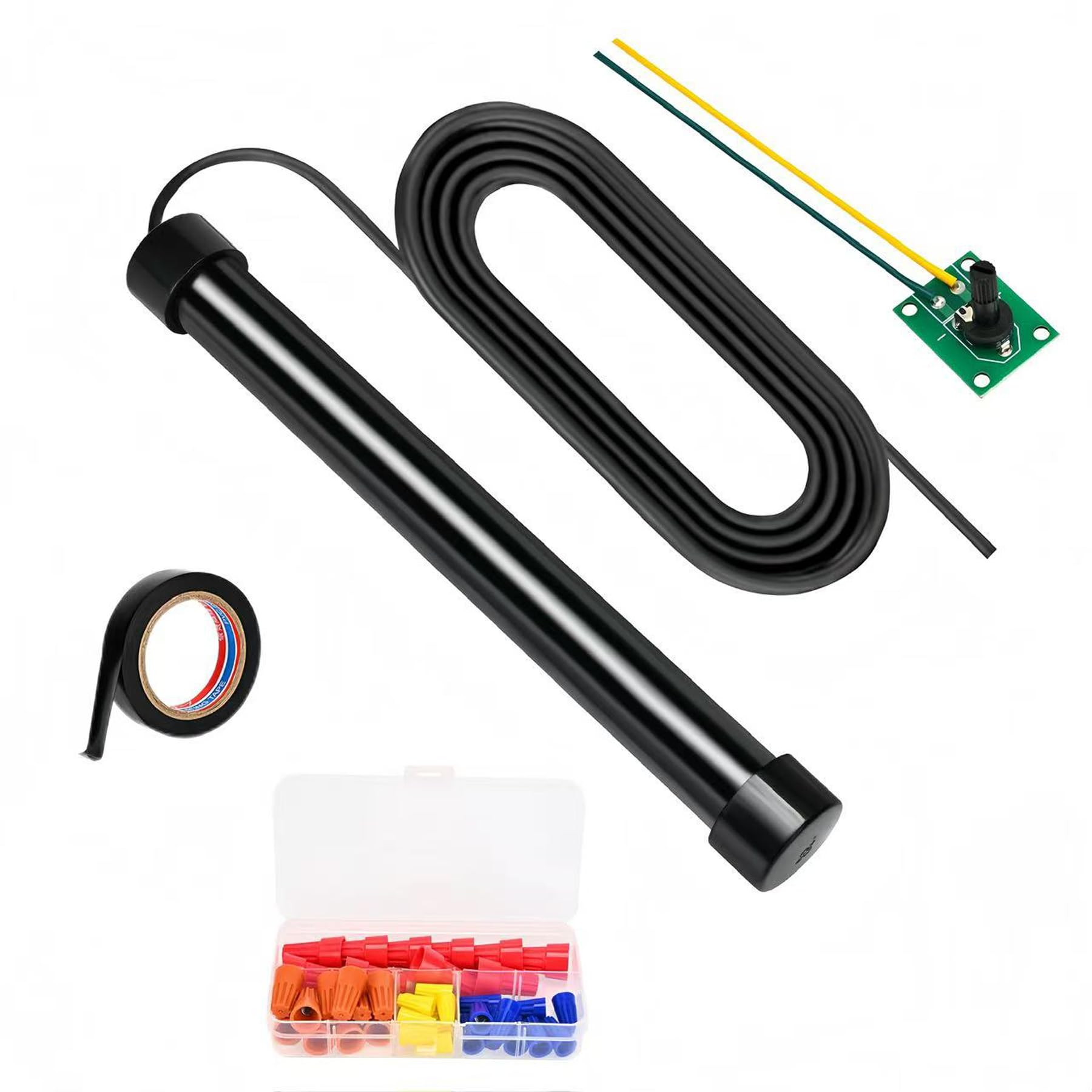
Bury it, wire it, and let the car trip the gate without a remote ever leaving the cupholder.
Instead of a beam or a motion eye, this is a wand you bury beside the driveway so it feels a vehicle passing over it and triggers the opener — no button, no remote, no keypad. The detector works across a 2 to 12 foot range, adjustable with a knob, so you can widen or narrow the detection zone to suit your driveway width. It is compatible with most automatic door openers and specifically lists Mighty Mule, Ghost Controls, LiftMaster, and TOPENS as supported systems, so check your opener model before buying.
KlenzMate ships it as a complete kit rather than a bare part: the wand with a 50-foot 5-core cable, a range adjustment board, 40 wire connectors, electrical tape, double spade connectors, battery wires, a gland, and a detailed manual. The fully sealed design with the reinforced cable is built to survive weather from -4°F to 125°F, so freezing winters and baking summers will not stop it. The catch is calibration: you have to let the unit settle for 60 seconds after power-up with no moving metal nearby, then position the wand at least 25 feet from the fully open gate and 8 inches off the driveway edge, buried 5 to 10 inches deep.
Where it stumbles is the paperwork, not the hardware. The installation instructions drew clear negative feedback from several buyers who found them unclear, though the sensor itself consistently works once it is in and dialed. One owner got a replacement wand running by reusing the original wiring layout instead of the new diagram. Once it is wired right, installs have gone in within about an hour.
Vehicle-only sensing: the buried wand reads steel moving overhead, so pets and stray objects will not false-trigger the gate the way a motion eye might.
Plan for the calibration: the 60-second settling window and the 5-to-10-inch burial depth are the parts to read carefully — the hardware itself is straightforward once those are right.
Choose this when: you want hands-free vehicle entry with no remote and your driveway lets you bury the wand a comfortable distance from the gate.
Skip this if: you are not comfortable with a multimeter and a wiring diagram — the setup rewards a patient installer and punishes a rushed one.
5. RISCO Group RK-700PRP IrexPlus Request to Exit PIR Sensor

The access-control installer’s favorite — configurable, clean to wire, and here in a cream-white housing that disappears on the wall.
The Risco IrexPlus REX is a request-to-exit motion sensor built for access control systems, using a 10 KHz frequency and wall-mount hardware to read a body approaching the door with a 2.4-meter range. what separates it in the field is configurability. Dip switches let you set fail-safe or fail-secure operation on the spot, and a terminal block takes the wiring without fiddling — attributes installers bring up again and again as the reason it lives on their trucks.
Owners who have run the Bosch equivalent say the Risco edges it out. Easier cable routing, more convenient disassembly, and extra features like remote bypass plus more reliable coverage all come up — enough that one described it as a new go-to REX solution after years of using the other brand. It carries an internal buzzer and a relay timer, so it handles the timing locally without a separate module. In offices and controlled doors it has simply worked, with no reported problems for daily use.
Narrow the range expectation before you order: 2.4 meters is short, which is a virtue at a doorway where you want the sensor to see a person and not the whole hallway. The trade-off is that it is not the longest-throwing sensor in this list — for far-field detection you would step up to the Seco-Larm’s 11-meter reach. For a door right where the traffic is, the tight, precise zone is the point.
Made for: access-controlled doors where you want a precise 2.4-meter detection zone, dip-switch customization, and easy terminal-block wiring.
Not the one for: large-area detection — you would be better served by a beam sensor with longer reach.
6. Kantech TREX-LT T.Rex Request to Exit Detector

The one that works inside six inches of the door, so a maglock retrofit open up the moment you reach for the handle.
Installers buy this when the gap is tight. The Kantech TREX-LT uses X-Y targeting to aim its detection precisely — you point it at a specific area rather than flooding the whole doorway — and it does the job even when it must sit within six inches of the door. It open up or shunts the door automatically with no buttons to push, and it carries an integrated 90 dB local door alarm sounder that the access panel controls independently for door-held-open and forced-entry situations.
Reliability is the recurring theme. The sensor holds a normally-closed contact even when unpowered, which owners say is exactly what you want from an access control device. And it integrates cleanly — installers report it works with pre-existing systems and that it fits screw-in mounting without assembly headaches. On an office door with a maglock retrofit, the pattern is that employees assume the door never locks because it opens so smoothly from their side, when in fact it is working exactly as designed.
Not everything is premium. The most common word of caution is that the plastic feels a little lighter than the price suggests, with one owner summing it up plainly: “These feel a little cheap (plastic, etc.) but they work fine. We’ll see how long they last.” The adjustment mechanism draws the same mild note. It is honest feedback from a pick that otherwise delivers: easy install, described exactly as advertised, and easy to integrate into an existing access setup.
Where it earns its place
- X-Y targeting aims detection at a specific spot with pinpoint accuracy
- Works within six inches of the door — rare in a wider-sensing REX device
- Holds a normally-closed contact even without power
- Integrated 90 dB local alarm sounder for held-open and forced-entry alerts
Small notes to weigh
- Body feels a little light on plastic compared to the feel of a premium unit
- Adjustment parts read as a bit basic
- Built for Kantech access control systems
Reach for it if: your exit sensor has to sit within six inches of the door and you want a precise, narrow detection zone plus a local alarm.
Think twice if: you want a heavier-feeling housing or are wiring into a non-Kantech access panel.
7. Cartell CW-SYS Dual Purpose System
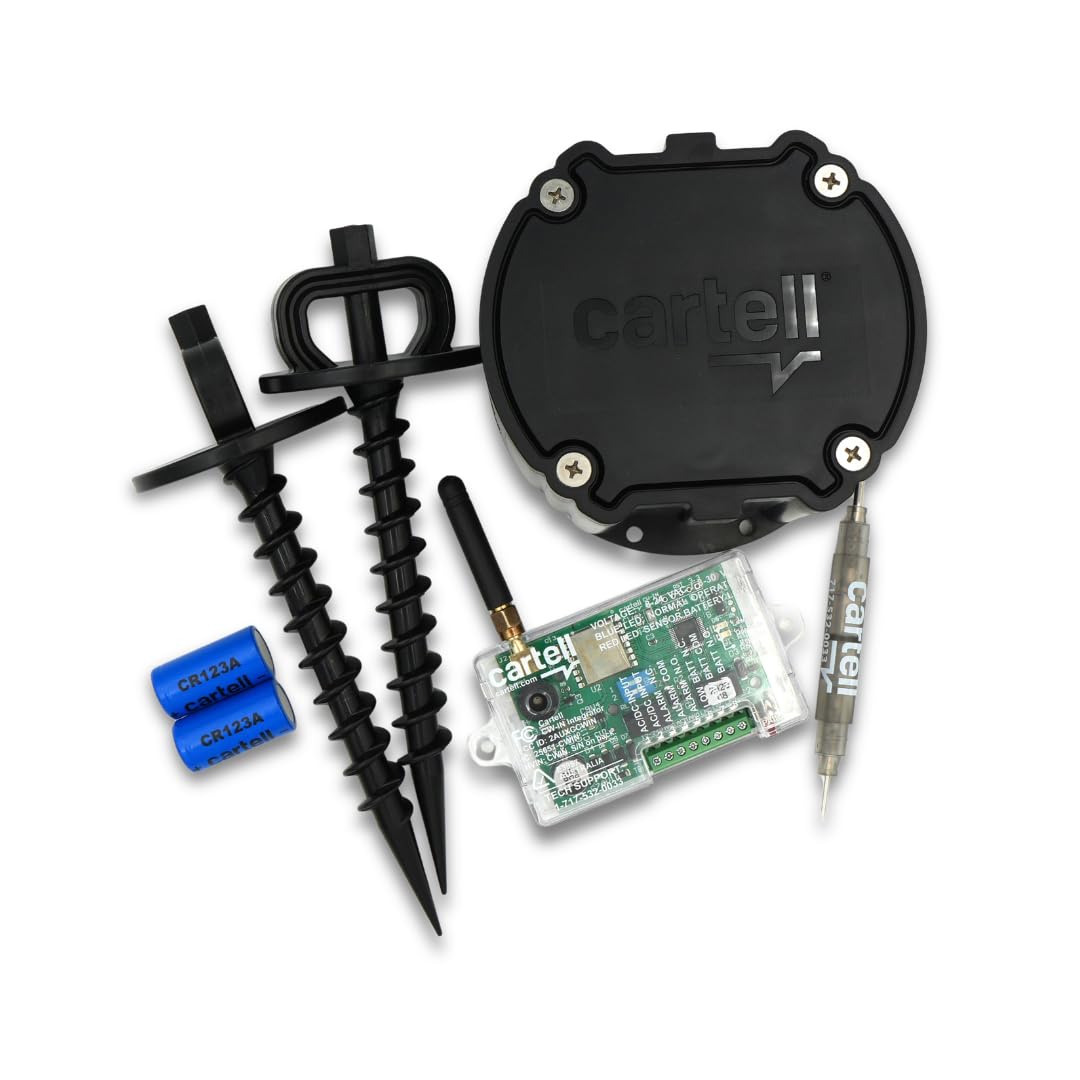
The no-trenching answer to a dead driveway loop — bury it, pair it, and the gate opens before you reach it.
When a buried in-ground loop fails, digging it up runs into real money and a torn-up driveway. The Cartell CW-SYS sidesteps all of that. It is a wireless, battery-powered system that uses magnetometer technology — a sensor that reads moving steel — with adjustable sensitivity to detect a vehicle and open a compatible gate operator hands-free. You mound the sensor puck where the car passes, connect the integrator to your gate operator or security panel, drop in batteries, and you are done. No trenching, no new wire across the driveway.
What owners rave about is how cleanly it goes in. Installation is the most-praised aspect by a wide margin, with functionality close behind, and the setup stories back it up. Customers note swapping out a failed 30-year in-ground loop for this system in about an hour — receiver plus sensor puck in an asphalt burm — with no wire pulled. It also reaches reliably to 150 feet, so gates set well back from the house still open on approach. Batteries last just over two years at three to five gate cycles per day.
Two things to plan for. The system does not ship with the connection wire, so pick some up before install day. The puck itself is rugged and waterproof, but the long-term durability is not something owners have had years to prove yet — one customer was a week in and happy, so the honest read is that reliability is promising but time-tested, the early reviews are unmistakably positive. The setup is very much plug-and-play once you have the wire in hand.
Skip the shovel: magnetometer sensing reads moving steel, so it opens for vehicles and golf carts without needing the driveway excavated or a beam aimed across it.
Runs on batteries: Reviewers point out two-year battery life at daily use, and the wireless design avoids the burial damage that kills loop systems.
Buy this if: your driveway loop is dead, your gate is a compatible powered operator, and you want vehicle detection without breaking up the concrete or asphalt.
Not the right pick if: you want a person-triggered door sensor — this is built for vehicles and gates, not walk-up entries.
8. Olideauto Touchless Sensor Open Automatic Swing Door Opener

The complete swing-door kit for a fully touchless entry — the opener, the sensors, the whole package in one box.
This is not a sensor you add to an existing door; it is a full automatic swing door opener with two passive infrared sensors included, so the door opens on approach with no handle and no push. The package ships as eight pieces with screw-in installation, and the manufacturer lists it for people with disabilities, the elderly, and children — a design intent it states outright. A built-in safety feature re-opens the door automatically if it senses an object in the closing path, and the closing force can be adjusted with a handheld programmer. The wide-voltage design works on anything from AC100V to AC240V, so a single model fits both residential and commercial power.
Upsides that come through clearly: shoppers say getting it installed and programmed with relative ease, with one running it on a 49.5-inch by 83.25-inch door weighing around 200 pounds without trouble. When something needs troubleshooting, USA technical phone support answers with a live person — that came up as the standout positive, with a real tech walking an owner through install advice and sensor recommendations over the phone.
Where you need to be careful is force and setup. A heavier or custom door may push past what the motor can deliver, since one owner reports it producing roughly 6 to 12 pounds of force, which was not enough for their application. And instructions for operation and troubleshooting are incomplete, so a rough install can leave you with a door that behaves erratically — sticking, stopping halfway, or cycling the motor. If your door is standard-size and you have phone support on standby, it delivers; if your door is unusual or very heavy, weigh the force spec against it first.
What it does well
- Complete touchless kit with two passive infrared sensors included
- Wide AC100V to AC240V input suits residential and commercial power
- Re-opens automatically if it senses an object in the closing path
- USA technical phone support answers with a live person
Where to be cautious
- Closing force is limited — heavy or oversized doors may exceed it
- Operation and troubleshooting instructions are incomplete
- Not a drop-in sensor — this is a full door hardware replacement
Ideal for: a standard-size swing door where you want a complete touchless open-and-close solution with sensors included, and you value having live phone support on call.
Best to avoid if: your door is heavy or custom-sized, or you are not prepared to troubleshoot the install — the force limits and sparse instructions will bite.
Understanding the Specs
Sensing range and mounting height
Sensing range is the distance a sensor can reliably pick up a trigger, and it decides whether your door opens as you approach or only after you are standing on the mat. Beam sensors on this list run from a long-throw unit reaching 35 feet down to a compact model that tops out around 4 meters. Mounting height matters just as much: some request-to-exit sensors want to sit 3 to 4 meters up, while a maglock retrofit sensor needs to work within six inches of the door. Match the two to your actual space before you buy, or the detection zone will land in the wrong place.
Power source and relay type
Power source tells you what the sensor needs to run. Wired units take a low-voltage DC or AC feed from your gate or door control panel, while wireless options run on batteries and report multi-year battery life at typical use. Relay type is the other half of the decision and the one that catches people out. Some sensors only switch a normally-open (NO) circuit, meaning the contact closes to trigger — if your panel expects a normally-closed (NC) circuit, an NO-only sensor needs an extra relay or timer module. Always confirm which your panel wants first.
FAQ
Will a normally-open sensor work with my access control panel?
How deep do I bury a vehicle exit wand sensor?
What is the difference between a PIR sensor and a microwave radar sensor?
Do I really need an IP66 or IP67 sensor for outdoors?
Can I replace a dead in-ground driveway loop without trenching?
How do I stop a beam sensor from false-triggering in sunlight?
Which sensor works in a tight doorway only inches from the door?
What voltage do automatic gate and door sensors need?
Will a buried wand sensor trigger for animals or stray objects?
Can a touchless swing door opener handle a heavy door?
Final Thoughts: The Verdict
The winner in this field for outdoor reliability and value is the Supreform IP67 Retro-Reflective Beam Sensor, because its 40-foot range, wide 10-30VDC input, and sealed IP67 housing let it drop into most gate and garage openers and keep working through weather that fogs cheaper units. If you have a long driveway and want the farthest reach and the widest power range, reach for the Seco-Larm E-931-S35RRQ with its 11-meter sensing distance. And for a hands-free exit at a commercial door, the MENGQI-CONTROL PIR Motion Sensor delivers a fast, adjustable radar trigger that installers keep coming back to. One nudge: this category rewards matching sensor type to your door — confirm the relay type and power source first, and any pick here will earn its place.
How We Picked
We do not accept paid placement. Every pick is matched to a real buyer and a real use-case; we do not hands-on test units.
Sources & Methodology
Specifications: manufacturer listings and product documentation. Review insights: verified customer reviews, as of September 2026. Pricing: not shown on this page (it changes often); check the current price via the retailer link.
As an Amazon Associate, KitchPrep earns from qualifying purchases. This does not affect which products we feature.
Related Guides
