
Specs are compiled from manufacturer listings and verified buyer reviews and can change over time — please confirm the key details on the product page before buying.
You want a dispenser that reacts the moment your hand is near, holds enough sanitizer for your traffic, and fits where you’ll put it. Here are three solid options, each with a clear strength and a real trade-off you should know before buying.
I’m Mohammad Maruf — the founder and writer behind KitchPrep. This guide is built by comparing the manufacturers’ published specifications and the patterns across verified customer reviews, so you get each pick’s real strengths and trade-offs instead of marketing spin.
If you want a hygienic, motion-activated clean without ever touching a shared bottle, the best automatic disinfectant spray dispenser for you depends on space, battery life, and how much sanitizer you need on hand.
Our Picks at a Glance
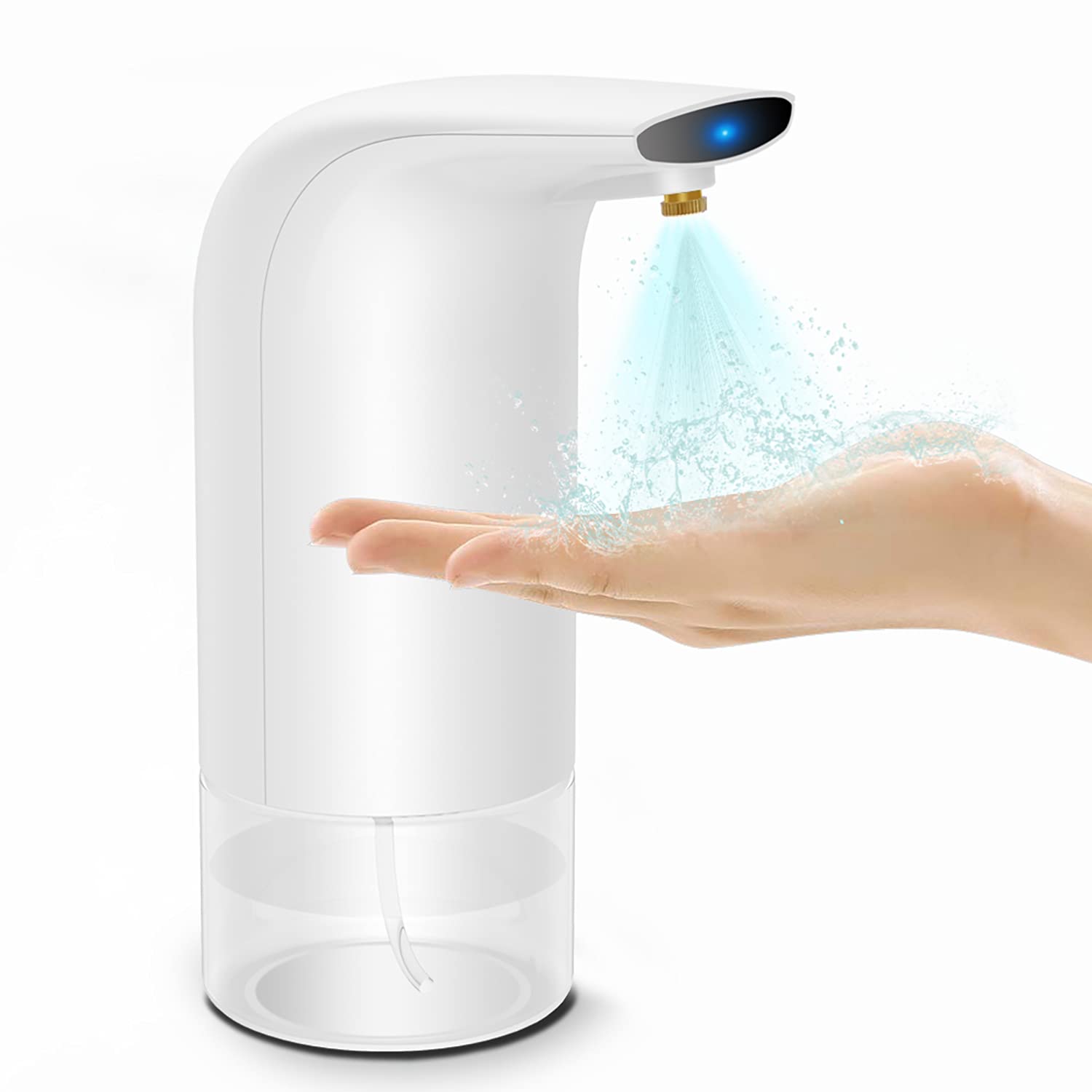
How To Choose The Best Automatic Disinfectant Spray Dispenser
First, check the sensor speed—if it lags, people will tap the unit, and you lose the touchless benefit. Then think about placement and refill frequency: a countertop unit suits a desk, while a wall-mounted one works in a hallway, and a floor stand fits a busy entryway.
Match the capacity to the traffic
A small 300 ml unit is perfect for a bathroom counter, a car, or a kitchen—anywhere one or two people sanitize a few times a day. But if you’re equipping an office lobby, a school entrance, or a church foyer, that same bottle will empty fast and demand constant refills. High-traffic spots need a refillable tank in the 1200 ml range, which holds four times the sanitizer of a 300 ml unit and pairs with a floor stand so people don’t have to reach for a countertop.
Weigh battery life against placement
Almost every touchless sprayer runs on batteries, so you’re never tethered to an outlet and can move the unit anywhere. The trade-off is remembering to swap them. Smaller units typically need 3 AA batteries, while a large floor-standing station needs 4 C-sized batteries to power a stronger pump. If the dispenser sits somewhere awkward to reach, a model with a longer working time—like one that runs 2-3 months on a set of batteries—saves you the hassle of frequent changes.
Check what the sensor actually detects
All three picks here use infrared motion detection, but the quality of that sensor determines how much sanitizer lands on your hand and whether it triggers reliably. The best ones dispense within 0.1 seconds of your hand entering the sensing area. Where the sensor sits and how it’s calibrated matters: some units are better suited to thin gel while others handle thicker, highly viscous liquids without clogging.
Quick Comparison
| Model | Best For | Sensor Speed | Capacity | Pack Size | Amazon |
|---|---|---|---|---|---|
| YCF LIFE CARE Touchless Dispenser | Compact home or travel use | 0.1 second | 300 ml | 1 Count | Amazon |
| SiissaPeksid Air Freshener Dispenser (4-Pack) | Whole-room scent scheduling | Timer-based | — | 4 Count | Amazon |
| Luxton 2-Pack Sanitizer Station | High-traffic lobbies & entrances | Touchless sensor | 1200 ml | 2 Count | Amazon |
In‑Depth Reviews
1. YCF LIFE CARE Touchless Alcohol Dispenser
The pocket-sized sprayer that answers in a tenth of a second, built for home counters, car consoles, and travel bags.
Its infrared sensor sprays within 0.1 seconds of hand detection, eliminating any lag or guesswork. This immediate response makes hand hygiene feel easy and automatic.
The 300 ml tank is deliberately personal-sized, making it a good match for a bathroom or kitchen where one or two people are the main users. It’s small enough that owners say they take it along while traveling, moving it between the car, bathroom, and kitchen as needed. And since it’s battery-operated on 3 AA batteries (not included), you’re never hunting for an outlet—just move it wherever the moment demands.
The main drawback is that you can’t adjust the dose size. The unit is compatible with thin 75% alcohol, disposable gel, or thicker viscous liquids, but with the nozzle off it can release a generous dose—buyers report it often dispenses roughly twice what your hands actually need at once. This overspray wastes a bit of product, but the hands-free convenience usually outweighs it unless you’re using pricey gel.
Why People Love It
- 0.1-second response feels genuinely instant and easy
- Motion sensor keeps hands off shared pumps to cut germ spread
- Compact 300 ml size works at home, in the car, or while traveling
- Runs 2-3 months on a set of AA batteries
- Back-side battery compartment resists moisture from spills
The Catch
- Dispenses a large dose—often twice as much as needed per use
- Single unit design means one location at a time
- Requires 3 AA batteries you must supply yourself
Grab it for: a lightweight, fast personal dispenser you can move from the kitchen counter to the car to a travel bag.
Think twice if: you want precise control over a small gel dose or need to serve a crowded entryway between refills.
Understanding the Specs
Sensor Speed
The time it takes for the infrared beam (a sensor that detects heat or motion from your hand) to trigger the spray mechanism. A response measured in 0.1 seconds feels instant—your hand arrives and the sanitizer is already there. Slower sensors make you hover awkwardly or tap the unit, which defeats the touchless purpose entirely.
Liquid Capacity
How much sanitizer the refillable reservoir holds, measured in milliliters (ml). A 300 ml unit suits a personal bathroom or car where use is light. A 1200 ml station holds four times that amount, making it the practical choice for offices, lobbies, and any space where dozens of hands pass through daily. Choose the size based on traffic, not price.
Battery Type & Runtime
Touchless dispensers run on batteries since they’re placed anywhere without outlets. Compact units typically need 3 AA batteries and can run 2-3 months with typical home use. Larger floor stations need bigger batteries—4 C-sized cells—to power a stronger dispensing mechanism. Check battery needs before buying so you’re never caught empty-handed at setup.
Mounting & Placement
You’ll choose among three physical forms: a portable countertop unit you can move anywhere; a wall-mounted or free-standing freshener that fits corners and shelves; or a full floor stand with a steel pole that puts the dispenser at waist height for busy entrances. Pick the form that matches your space before you commit.
FAQ
Will a touchless dispenser work with thick gel hand sanitizer?
How long do the batteries actually last?
Which dispenser is better for a church lobby or office entrance?
Can I mount an automatic sprayer on a wall?
My dispenser is releasing too much sanitizer at once. Can I fix it?
Do these dispensers detect hands instantly or is there a delay?
What kind of batteries do I need for a floor-standing sanitizer station?
Is a timer-based air freshener dispenser the same as a hand sanitizer dispenser?
How do I know when the refillable bottle is empty?
Can I use these dispensers for hand lotion or soap?
Final Thoughts: The Verdict
For most households the winner is the YCF LIFE CARE Touchless Dispenser, because its 0.1-second response and 2-3 month battery life deliver hands-free hygiene at a personal, portable scale. If you run a lobby or entrance with steady foot traffic, grab the Luxton 2-Pack Sanitizer Station for its 1200 ml tanks and included floor stands. And if your space needs a consistent scent rather than hand sanitizer, the SiissaPeksid 4-Pack covers multiple rooms on a timed schedule—just plan your own wall mounting.
How We Picked
We do not accept paid placement. Every pick is matched to a real buyer and a real use-case; we do not hands-on test units.
Sources & Methodology
Specifications: manufacturer listings and product documentation. Review insights: verified customer reviews, as of September 2026. Pricing: not shown on this page (it changes often); check the current price via the retailer link.
As an Amazon Associate, KitchPrep earns from qualifying purchases. This does not affect which products we feature.
Related Guides
