
Specs are compiled from manufacturer listings and verified buyer reviews and can change over time — please confirm the key details on the product page before buying.
You want café-grade espresso without standing at a machine tamping, weighing, and wiping down a mess every morning. That is exactly what a fully automatic coffee and espresso machine does for you — it grinds the beans, tamps the puck, pulls the shot, and often froths the milk with one press of a button. The catch is that these machines run from a few hundred dollars into the thousands, and the marketing language is nearly identical on every box. This guide cuts through that and shows you which machines actually earn their counter space.
I’m Mohammad Maruf — the founder and writer behind KitchPrep. This guide is built by comparing the manufacturers’ published specifications and the patterns across verified customer reviews, so you get each pick’s real strengths and trade-offs instead of marketing spin.
You will see that the biggest differences live in the grinder, the milk system, and how much daily upkeep you are willing to do. Finding the right automatic coffee and espresso machine means matching those three things to your kitchen, not just picking the flashiest screen.
Our Picks at a Glance
How To Choose The Best Automatic Coffee and Espresso Machine
The three things that separate a machine you love from one you resent are the grinder, the milk system, and how much daily maintenance it asks of you. Everything else — the screen, the recipe count, the shell material — is secondary once those three are right.
Start with the grinder, not the screen
A super-automatic machine grinds a fresh dose of beans for every single cup, so the grinder quality sets the ceiling on flavor. Ceramic burrs like the ones in the Philips 3300-Series resist heat and stay sharp, while conical burr grinders such as the one in the Jura E6 are built for consistency across a long service life. If you drink two or more cups a day, put grinder quality ahead of any other spec.
Match the milk system to your drinks
If you mostly drink black coffee, you can skip milk frothing entirely and save yourself cleaning time. If you want a daily latte or cappuccino, look at how the milk system connects. A LatteGo setup with two parts and no internal tubes rinses clean in seconds, while a steam wand gives you more manual control but requires a thermometer and a steady hand. Softer foam works better for a flat white; thicker, drier foam suits a cappuccino.
Count the minutes of upkeep you will actually tolerate
Every fully automatic machine needs you to empty the puck tray, refill the water tank, and occasionally run a cleaning cycle. Machines with an automatic milk-clean program save you a daily wipe-down. Machines with larger water tanks buy you more days between refills. If you keep the machine on a busy office counter, prioritize capacity and auto-clean features over drink variety.
Quick Comparison
| Model | Best For | Water Tank Capacity | Grinder Setup | Weight | Amazon |
|---|---|---|---|---|---|
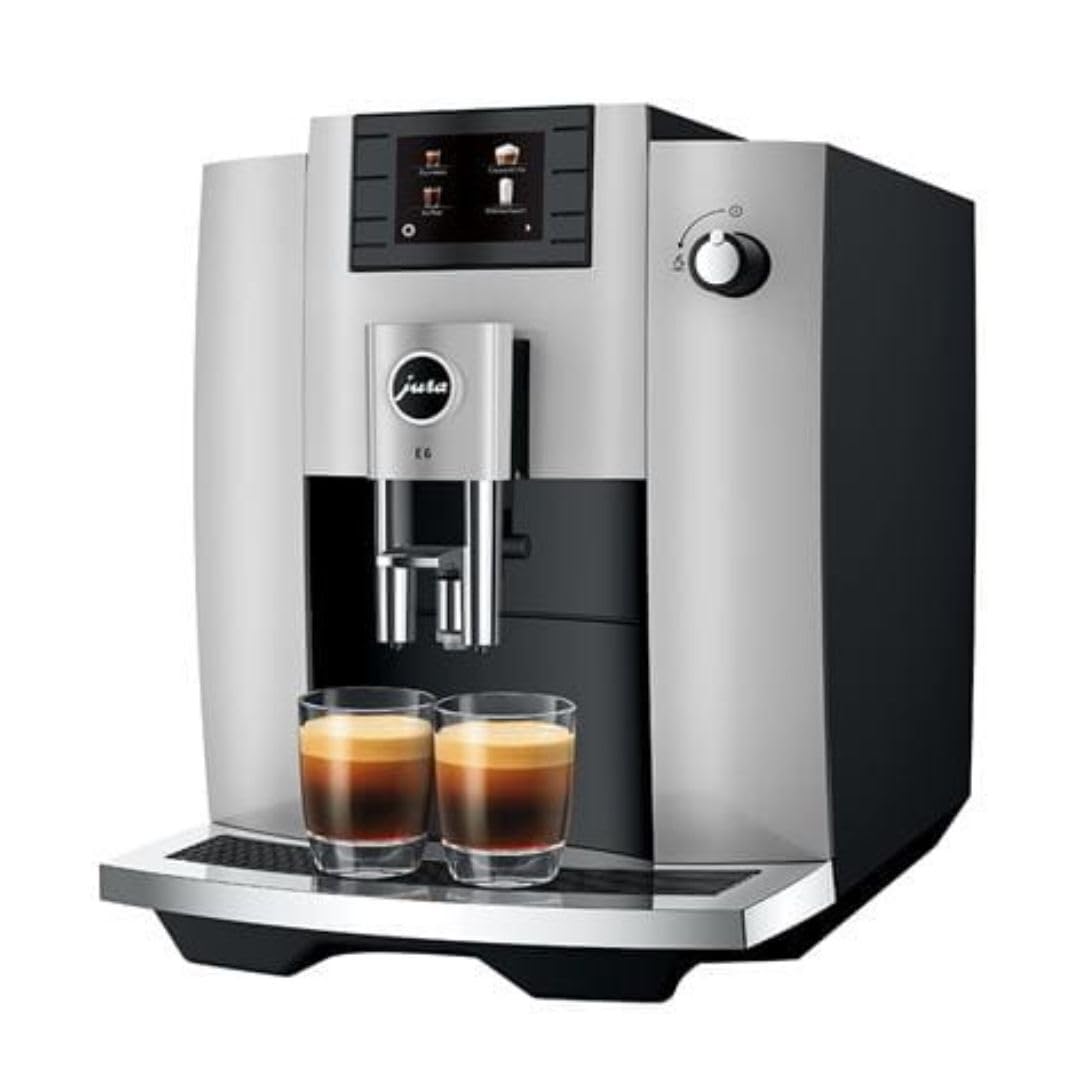
| Jura E6 Platinum 15465★ Best Overall | Daily espresso drinkers who want one-touch brewing | 1.9 liters | Professional Aroma Grinder | 22 pounds | Amazon |
| Philips 5500 LatteGo (EP5544/90)Best for Iced Coffee | Households wanting 20 drink options | 60.8 fluid ounces | Ceramic grinder | 20 pounds | Amazon |
| Philips 5500 Series (EP5544/94)Top Performer | Customizing multiple user profiles | 1.8 liters | Built-in burr grinder | 3.6 pounds | Amazon |
| KitchenAid KF2 (KES8452) | Iced coffee lovers wanting manual steam control | 1.8 liters | Intelligrind auto burr | 22.3 pounds | Amazon |
| Bosch 500 Series | Compact kitchens with pre-ground coffee needs | — | Integrated grinder | — | Amazon |
| KitchenAid KF6 (KES8556) | Removable-hopper flexibility | 2.2 liters | Smart dosing burr | — | Amazon |
| Jura E4 Piano Black | Purists who skip milk entirely | 64 ounce | Conical burr (Aroma Grinder) | 22 pounds | Amazon |
| De’Longhi Rivelia | Switching between regular and decaf beans | 47 fluid ounces | 13-setting burr grinder | 21.4 pounds | Amazon |
| De’Longhi Eletta Explore | Hot and cold foam drink variety | 60 ounce | Built-in grinder (13 settings) | 24.7 pounds | Amazon |
| Bosch 800 Series | Remote brewing through an app | — | Integrated grinder | 10 kg | Amazon |
In-Depth Reviews
1. Jura E6 Platinum 15465
Our pick — 4.5★ from 90+ verified ratings; the strongest balance of quality and price.
Grinds, tamps, brews, and froths a full milk drink in under 60 seconds.
If you want a cup that tastes like it came from a good café without you standing over a tamper, this is your machine. Jura describes the flow as grinding, tamping, brewing, frothing, and self-cleaning in under 60 seconds — that single number matters because it sets the tone for your entire morning. You press one button, and roughly a minute later you have a finished drink. The Professional Aroma Grinder grinds 12.2% more aroma into the cup from fresh whole beans, according to the brand, and the Pulse Extraction Process pulses the water through the puck to pull a fuller espresso. That pulse is what a traditional barista does with a well-tuned machine, just done for you automatically.
The customization is deep enough to actually matter. You can set coffee strength, drink volume, temperature, and the amount of milk foam, plus draw hot water on demand for tea. Got a bag of pre-ground decaf? There is an optional pre-ground chute for that. The 1.9-liter water tank holds roughly a day and a half of normal two-person use before you refill it, and the 17.6-inch width means it needs real counter real estate — plan for that.
The honest catch is the learning curve. The buttons work, but the interface is not a smartphone-style touchscreen, and a few owners mention the brew-strength adjustment takes some fiddling to get right. A small number of cupholders also find the machine noisy when it grinds, though they agree it is fast enough that it does not drag on. If you mostly drink black espresso and Americanos and never touch milk, the E4 below does the same core job in a leaner package — but if milk drinks are on the menu, this one earns its place.
What works brilliantly
- One-touch grind, tamp, brew, froth, and self-clean in under 60 seconds means almost no morning wait
- Professional Aroma Grinder pulls 12.2% more aroma from the same beans, and the Pulse Extraction Process sharpens espresso quality
- Adjustable strength, volume, temperature, and milk-foam amount, plus a pre-ground chute for decaf
Where it asks patience
- Button-based interface feels clunky next to a modern touchscreen
- Tweaking brew strength takes some practice before it feels intuitive
- Premium investment up front, and some buyers find it a pricey leap
Reach for this if: you want a dependable everyday machine that handles the whole drink from bean to foam, and you drink at least a couple of cups a day.
Look elsewhere if: you only ever drink black coffee — that milk frother and the price you pay for it would be wasted.
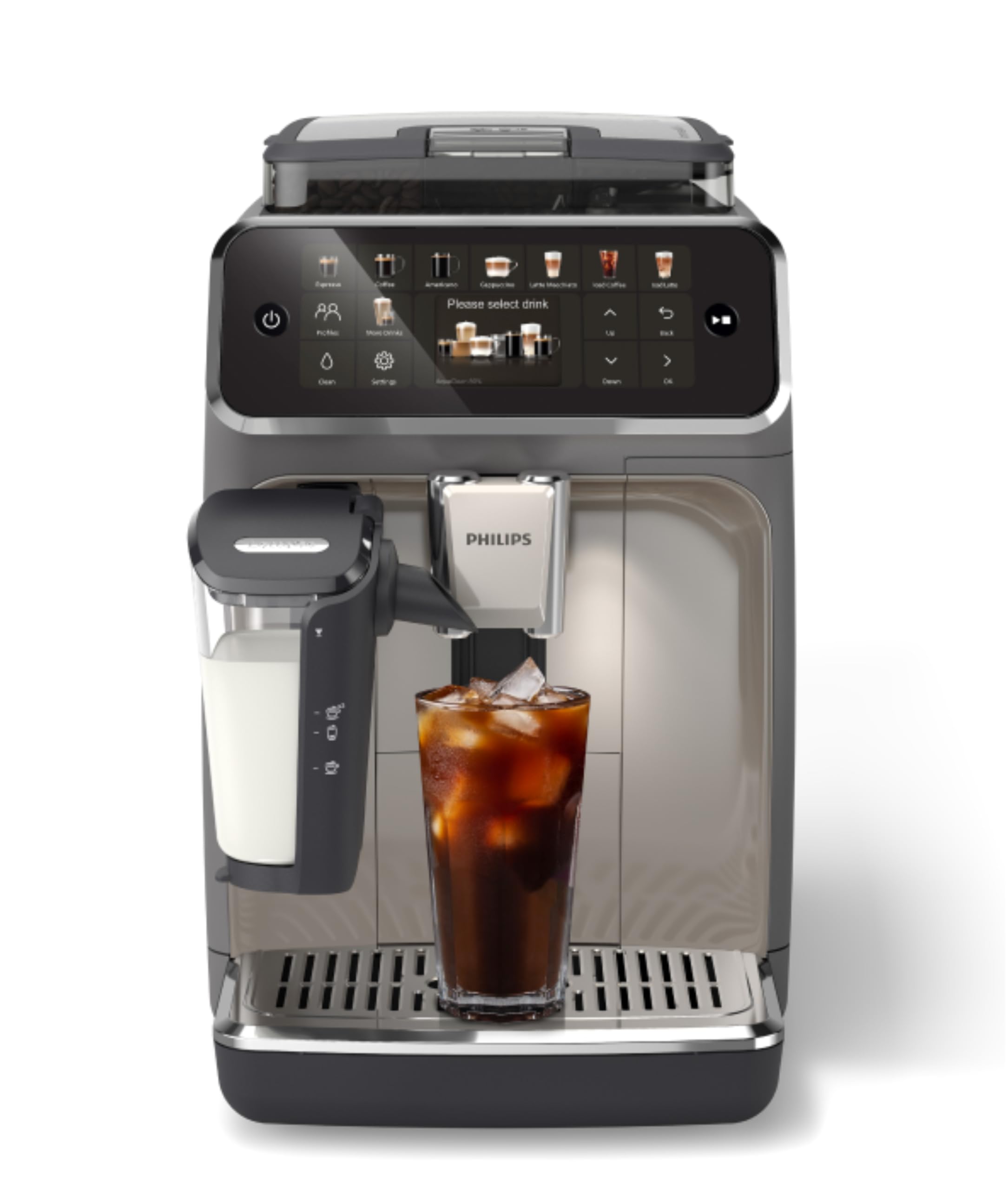
2. PHILIPS 5500 LatteGo Automatic Espresso Machine EP5544/90
Twenty recipes including an iced-coffee preset that brews cooler so the ice does not dilute the flavor.
Most machines treat iced coffee as an afterthought — the hot shot melts the ice and dilutes everything. Philips calibrated this one so the cold options hold up. Twenty recipes span hot drinks like espresso, lattes, and cappuccinos and cold drinks like iced coffee, and the machine uses a slower flow rate at a lower temperature for the iced settings so the flavor stays put when you add ice. If your summer drink is a legit iced latte, this is the pick among the Philips machines.
The interface is the other upgrade. There is a color touchscreen for selecting a recipe, adjusting strength, coffee length, and milk volume, plus four user profiles so you can save your exact drink. The LatteGo milk system cleans in under 10 seconds — two parts, no tubes, dishwasher safe — and the QuickStart function lets you brew immediately on power-up instead of waiting for a warm-up cycle. SilentBrew keeps the grind and brew 40% quieter than earlier models, and the same AquaClean system on the 3300-Series prevents descaling for a long stretch.
The trade-off is physical footprint. At 17 inches deep and 14.5 inches tall, it is a substantial box, and against the Jura E6 — which is 11 inches deep and 13.8 inches tall — it takes over noticeably more depth on your counter. Confirmed owners do report the machine is well ranked for consistency and milk quality, so it is not a leap of faith. Just measure your cabinet clearance before you commit. If space is tight, the Bosch 500 Series below is built to slide into a smaller kitchen.
Where it shines: iced coffee that stays iced coffee after the ice goes in, plus four saved profiles so every household member gets their exact drink.
Where to plan around: it takes up 17 inches front-to-back, so it wants a deep countertop and room under your upper cabinets.
Buy it for the household that wants to switch between hot espresso and iced coffee on the same machine, and wants everyone’s preference saved.
Skip it for a small galley kitchen — the depth will crowd your counter once you set it down.
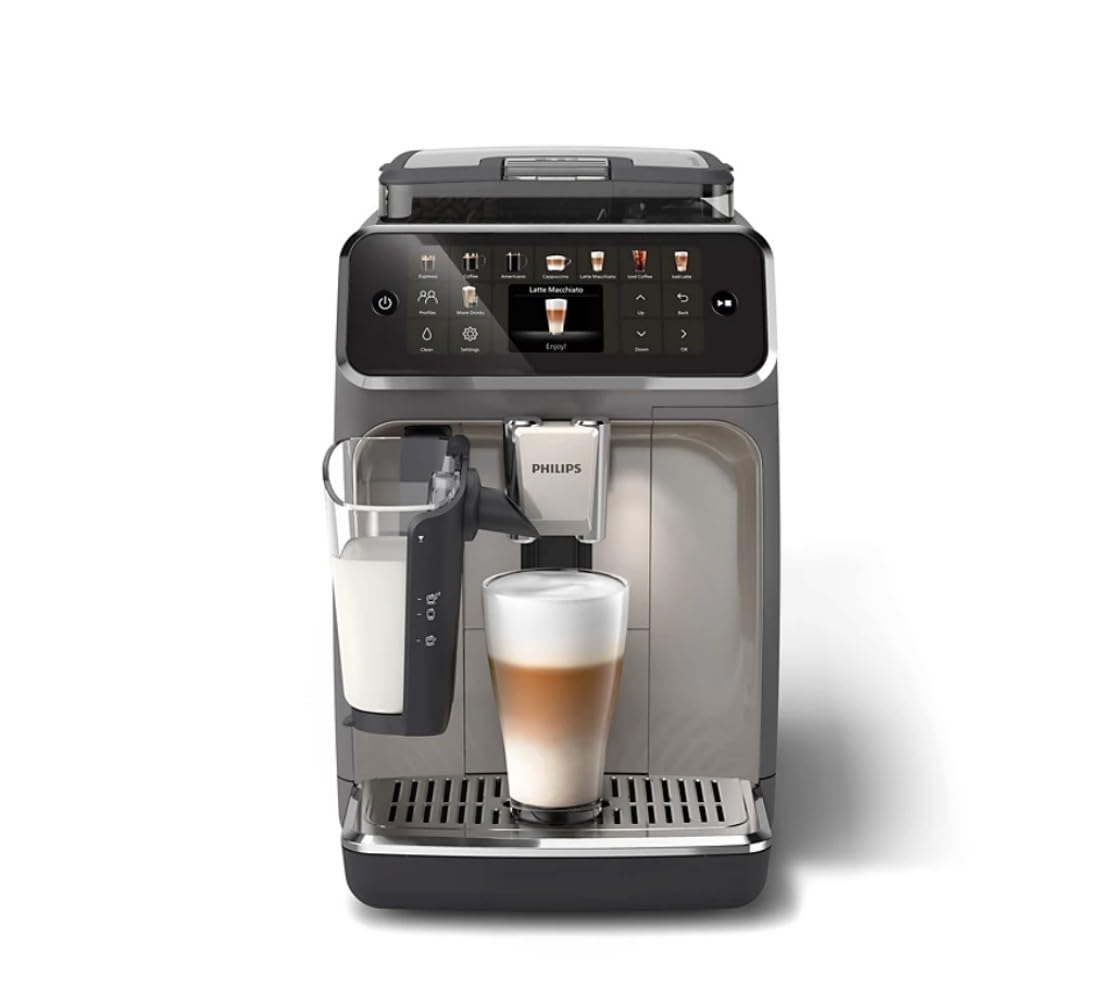
3. PHILIPS 5500 Series Fully Automatic Espresso Machine EP5544/94
Twenty presets, four saved user profiles, and a LatteGo milk system with no internal tubes to scrub.
This is the 5500 Series without the “renewed” label — the same 20-preset drink menu, the same LatteGo system, and a color touchscreen that grinds, tamps, and brews at the push of a button. The customization runs deeper than you might expect for the tier: you adjust strength, volume, and milk preferences, then save up to four profiles so you can return to your exact cup on the next press. That profile system is what makes this a genuine household machine rather than a one-person gadget.
The LatteGo system deserves a specific mention. It is the fastest-cleaning milk system Philips makes — three parts, no internal tubes or hidden compartments, dishwasher safe or rinsed clean in 10 seconds. Compare that with a steam wand, which needs a wipe after every use and a proper purge if you switch from dairy to oat. The QuickStart function gets you brewing in 3 seconds, so you do not stand around waiting while a boiler heats up, and SilentBrew keeps the grind behind a sound shield so it does not announce itself to the whole house.
Where this one raises its head is temperature consistency. A small minority of buyers report the machine arriving with a damaged delivery box or that their first cups taste watery before they tune the grind size, but the trend among the many verified owners is that the drinks come out consistent day to day and the froth is silky. One long-running theme is that owners settle on regular grinds easily, but the very first cup or two often need a tune-up. Give it a day of dialing in and the results stabilize. If you want hotter straight black coffee from the get-go, the KitchenAid KF6 below is worth a look.
Why buyers stick with it
- 20 presets including iced coffee, all saveable to four user profiles
- LatteGo cleans in 10 seconds with no tubes or hidden compartments
- 3-second QuickStart means no waiting for a warm-up
The fair caveats
- First day or two of cups often needs grind-size tweaking
- A handful of units arrive with delivery-box damage
- Not the hottest straight black coffee in this lineup
Best for: the two- or three-person household that each wants a saved drink profile and everyone wants fast milk cleanup.
Think twice if: you want scorching-hot drip-style coffee from the start, or you do not want to spend a day dialing in the grind.
4. KitchenAid Fully Automatic Espresso Machine KF2 With Iced Coffee, KES8452
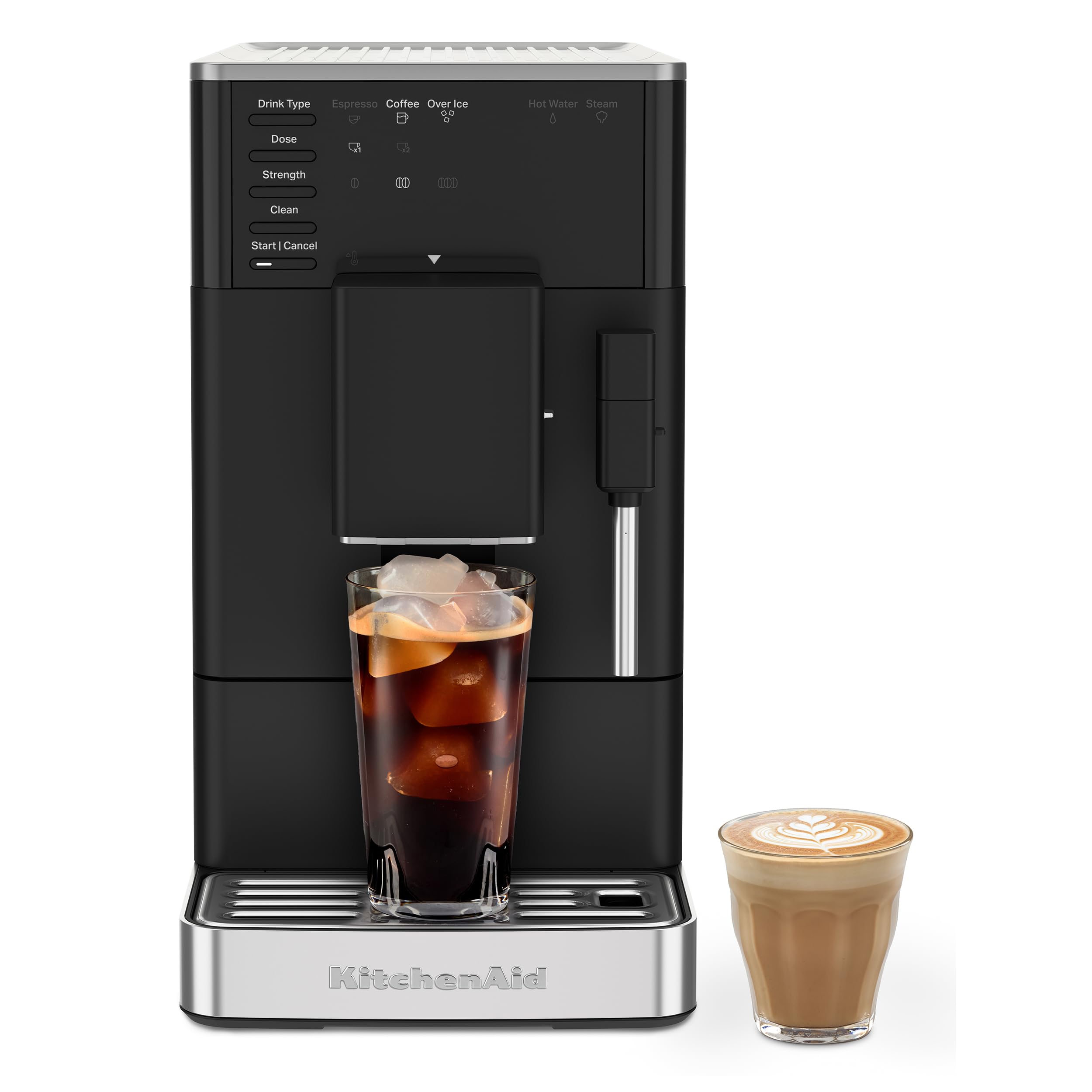
Six recipes with a dedicated over-ice setting and a manual steam wand for hands-on milk texturing.
Six recipes, one-touch operation, and a purpose-built over-ice setting. KitchenAid built this one for people who want real espresso in the morning and an iced coffee in the afternoon without swapping gear. The over-ice coffee setting brews at a lower temperature so the flavor stays intact instead of scorching on the way to the glass, and unlike the LatteGo-style systems on the Philips machines, this one gives you a manual steam wand if you want to pull air into the milk yourself and produce that fine, velvety microfoam.
The Intelligrind system is the quiet upgrade. It reads the bean type and roast, then fine-tunes the dose automatically so every new bag pours a consistent shot. And this model is 25% smaller than the KF6, KF7, and KF8 — a real number that matters if your counter is narrow. The 1.8-liter water tank stays modest, and it ships with a filter, two cleaning tablets, and a coffee spoon so you are set up on day one.
Where you need to be honest with yourself is upkeep. A fully automatic machine still asks you to empty the puck tray and top up water and beans — often daily. Multiple owners mention the machine does exactly what it says if you keep after it, and the grinder and brew quality both hold up over months of daily use. A handful of buyers found the manual upkeep heavier than expected and hit a grinder jam within the first few weeks; that is a rare miss, but if you want an espresso machine that never asks you to touch the grounds tray, the Bosch 500 below is easier on the daily ritual. The KF2 rewards people who do not mind taking thirty seconds to maintain what they brew with.
The trade you are making: you give up an automatic milk system but gain a steam wand, a dedicated iced setting, and a narrower footprint on the counter.
You will feel it daily in: the water tank refill and puck-bin empty — this machine expects a maintenance habit, not a hands-off routine.
Pick this one if iced coffee is your afternoon habit and you enjoy the hands-on part of steaming milk yourself.
Consider skipping if you want an entirely hands-off machine — the daily grounds-and-water routine will feel like a chore.
5. Bosch 500 Series Fully Automatic Coffee, Espresso Machine – Black

Nine drinks, a pre-ground decaf chute, and a Double Cup function that pulls two cups at once.
Bosch targeted this one at the person who wants a latte macchiato or an Americano without a lot of fanfare. You can prep up to 9 different drinks with the control panel, and the Double Cup Function lets you pull two beverages at once — handy when you are making a coffee for yourself and someone else at the same time. The built-in milk system with hose lets you froth directly from the carton, so you can go dairy-free with oat, soy, or almond without swapping a jug.
The 2-in-1 setup is a genuine advantage: you can grind whole beans or drop pre-ground decaf into the ground-coffee chute for a quick, caffeine-light cup. Bosch includes an AutoMilk Clean routine that steam-cleans the milk lines after every milk-based drink, so you are not scrubbing wand residue each morning. The brewing unit is removable, and many parts go in the dishwasher — a small but real convenience that saves a full minute of manual rinsing most days. The Mavea water filter and hardness strip in the box tell you exactly how hard your water is, which is what drives descaling frequency.
The recurring gripe is a small one, and it is not universal: on the 500 Series specifically, the ground-coffee chute has no indicator to tell you when it has cycled through, so an occasional cup comes out as plain water if you get the timing wrong. The trend across the reviews is still strongly positive on drink quality and setup. Treat that chute with a beat of care — wait for the machine to confirm before you press go — and this stays a pleasant daily machine. If you prefer a screen that hides less from you, the Bosch 800 below adds remote brewing and a broader beverage list.
Strongest suits here: the Double Cup Function and the ground-coffee chute for decaf make this ideal for couples with different caffeine tolerances.
Watch for: the ground-coffee chute can dispense plain water if you press too early, so give it a beat before starting the brew.
This one fits a two-person kitchen where one drinks full-caf and the other wants decaf or a half-caf from pre-ground.
Consider the 800 Series instead if you want app control for remote brewing and a wider menu.
6. KitchenAid Fully Automatic Espresso Machine KF6, KES8556

Fifteen recipes, a twist-out removable bean hopper, and a metal-clad body.
Fifteen recipes, a removable bean hopper, and a metal-clad body that does not pretend to be plastic. The hopper twist-and-lifts out so you can swap bean types, empty old grounds, or refill without dismantling anything — a small feature that pays off every time you finish a bag and want to try a different roast. The single-drink delivery system pulls the exact amount of milk you need, and smart-dosing technology tunes the grind automatically so you get a consistent shot from whatever beans are in there.
The 2.2-liter water tank is among the roomier ones in this lineup, which means fewer refills during a busy morning. Notice the direction across reviews though: cleaning is the strongest point and coffee quality ties for the top praise. Reliability, temperature, and value-for-money are the areas where opinions split. If you want a genuinely hot espresso shot, roast on the Jura machines below instead.
The other honest footnote is that the temperature setting is not as granular as some espresso snobs want — there are low, medium, and hot levels, but no fine-tuning. Several owners get around this by letting the first shot heat the cup and pouring by the second. A couple of buyers had early reliability hiccups with the machine stopping, and had it replaced without hassle. Taken together, this is a machine that rewards a patient owner who wants 15 recipes on a beautiful stainless body and is willing to dial in the temperature behavior before they fall in love with it.
The standout here: a removable bean hopper that lets you swap beans without emptying the whole machine, wrapped in a metal-clad build that looks the part.
The split opinion to know: temperature control is coarser than some owners want — espresso can pull less hot than expected, so let the shot warm your cup first.
Reach for it if 15 recipes, a stainless body, and a swappable hopper match the way you think about coffee.
Consider elsewhere if a scalding-hot espresso shot is non-negotiable — the temperature ceiling here is lower than some competitors.
7. Jura E4 Piano Black Automatic Coffee Machine
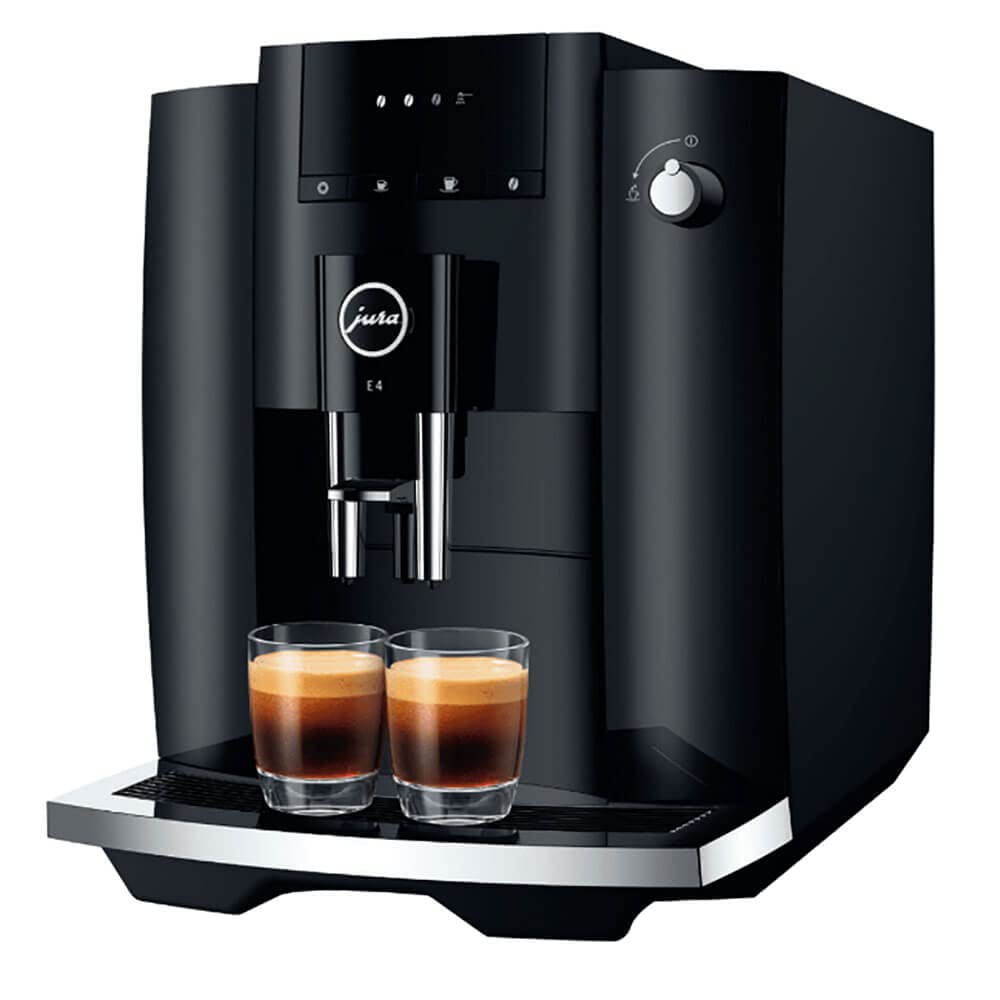
Five black-coffee specialties, no milk frother, and a conical burr grinder built for long service.
Jura built the E4 to do one thing perfectly: pull a great espresso or tall coffee from whole beans. There are 5 barista-quality specialties — espresso, coffee, Ristretto, Café Barista, and Lungo Barista — and no milk frother at all. That is intentional. Owners who want milk drinks add a standalone frother, and they say it is a cleaner, more reliable setup than an integrated system they would have to rod out. If a purist’s morning is a straight espresso or Americano, this machine is the point of the exercise.
Under the hood is Jura’s exclusive Pulse Extraction Process, the same pulse technology that sharpens espresso quality on the E6, paired with a conical burr grinder engineered for consistent results over the machine’s full service life. The 64-ounce water tank is smaller than the Philips 5500 LatteGo’s 60.8-ounce tank, but refilling is quick because the Jura keeps its water opening at the front. There is a bypass chute for pre-ground coffee when you want decaf or a different roast on a whim, and the bean container holds 10 ounces.
The honest tension with the Jura brand is that its value and reliability reviews split — some say the machine is a workhorse that runs for years, a rare few had a unit go down early. Look at the ratio: coffee quality is what draws people in, ease of use is right behind it. A couple of buyers also note the symbolic icon interface takes some learning — the icons replace words, so your first few days involve a manual and a little patience. Set it up once, save your settings, and you rarely touch it again. If milk drinks or a touchscreen guide are important to you, the Rivelia below opens that door.
What it does remarkably well
- Pulse Extraction Process pulls a deeply flavored espresso without a milk system in the way
- Conical burr grinder built for consistent results across the machine’s service life
- 64-ounce water tank plus a bypass chute adds convenient decaf flexibility
What to expect going in
- Symbolic icon interface takes a beat to learn — words would have been friendlier
- No integrated milk frother, so you buy a separate unit if you want milk drinks
- A small fraction of reviews report early reliability hiccups
This is your machine if your ideal drink is a straight espresso, a Ristretto, or a long Americano and you do not want a milk frother you will never clean.
This is not your machine if iced coffee and lattes are the whole point — you would need to add a standalone frother to the workflow.
8. De’Longhi Rivelia Automatic Espresso Machine

Two swappable bean hoppers so you can pour regular in the morning and decaf after dinner.
Eighteen preset recipes, a LatteCrema Hot milk system, and one genuinely distinctive feature: two 8.8-ounce interchangeable bean hoppers. Remove one and pop in the other, and you can switch from a sturdy dark roast at breakfast to a delicate decaf after dinner without emptying a single bean from a single container. Cooks who want a nighttime cortado or decaf macchiato without cleanout will pay attention quickly.
The grinder is a 13-setting burr, which gives you real control over extraction, and the machine ships with a step-by-step guided walkthrough that sets the ideal grind, dose level, and temperature for each of your bean types automatically. You adjust intensity and quantity, and there is an extra-shot function for when you want a punchier cup. The LatteCrema Hot System froths dairy or a plant-based alt into a velvety foam and includes an auto-clean function. The 47-fluid-ounce water tank sits in the middle of the lineup in capacity.
This is a fit-and-finish quirk rather than a failure — the same owners who mention it still rate the coffee quality and customization as first-rate. If you want a perfectly tuned coexistence with a machine that never asks you to adjust a tray, expect to spend a minute on that early on. The alternative is De’Longhi’s Eletta Explore below, which uses a less twitchy ground-tray design but weighs more on the counter.
The features that earn their place
- Two 8.8-ounce swappable bean hoppers let you switch roasts without emptying a container
- 18 preset recipes span espresso, latte, cortado, flat white, and iced options
- Guided setup sets the ideal grind, dose, and temperature for your specific beans
What to anticipate
- Recurring “empty grounds container” error requires a quick nudge of the tray
- Grinder runs louder than you might expect at 6 a.m.
- Mid-range water tank means refills every few days in busy houses
Buy it for the household that wants a sturdy morning roast and a decaf after dinner, both poured from the same machine without fuss.
Hold off if a mid-cycle false alert would genuinely ruin your morning routine — otherwise it is a minor habit.
9. De’Longhi Eletta Explore Espresso Machine

Fifty-plus recipes with a cold-brew setting that turns out coffee in under three minutes.
Hot and cold, this is the widest menu in the whole lineup. Fifty-plus one-touch recipes cover espresso, cappuccino, latte, iced cappuccino, iced latte, cold brew, and more, and De’Longhi’s Cold Extraction Technology uses precisely measured water flow and pressure plus specific extraction temperatures to produce a genuine cold brew in under three minutes. If you have been waiting overnight for cold brew in your fridge or paying a café for it, that single number changes your routine.
The two LatteCrema systems — one for hot foam, one for cold foam — let you texture dairy or plant-based milk into velvety foam across both drink temperatures, and the pair of milk jugs comes with the machine so you do not swap a single carafe from hot to cold mid-run. The 3.5-inch full-touch color display guides you through the recipe list, and Bean Adapt plus the De’Longhi Coffee Link app let you set up profiles and dial in a bean-specific program. The travel mug that ships in the box is compatible with 15 of the hot and cold recipes and can be brewed up to 16 ounces — a smart detail for commuters.
What you should plan for, and this is not from any spec sheet but from what owners repeatedly describe, is that the machine’s frequent self-clean cycles pull a real amount of water. Several owners mention topping it up more often than expected and recommend using a water hardness test strip to dial back the descaling prompts. Others note that remote brewing from the app is less useful than it sounds because the cleaning cycle waters the drink down before you get to it. Neither flaw is fatal — this is the most feature-rich machine in the list and it shows in the drink variety. If you want cold brew without the descaling and cleaning overhead of a 50-recipe appliance, the Bosch 800 below is a smaller scope.
The case for it: 50-plus recipes and genuine under-3-minute cold brew make this the one machine in the list that can replace a café menu item for item.
The cost of the variety: frequent cleaning cycles mean more water-tank top-ups and more attention to descaling prompts than a simpler machine requires.
This is right if you want cold brew in three minutes, real cold foam, and a menu you cannot exhaust in a month of mornings.
Walk past if drinking one kind of coffee is fine and you do not want to keep topping up a water tank while you learn the clean cycles.
10. Bosch 800 Series Fully Automatic Coffee, Espresso Machine – Silver
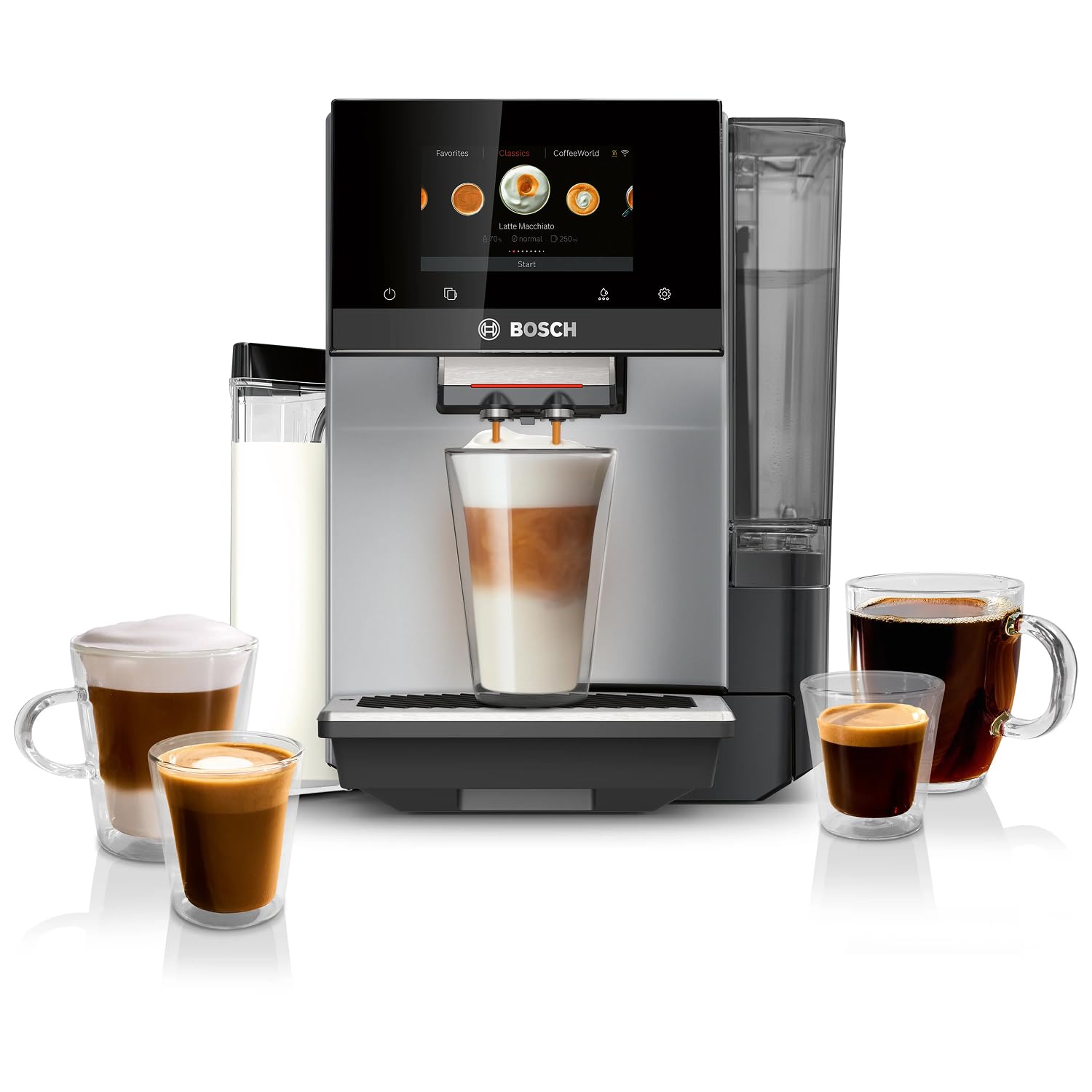
Control it from the couch through the Home Connect app, across 35-plus beverages.
The 800 Series takes the Bosch 500’s core idea and adds scale. There are 35-plus beverages on the menu, and the large touchscreen lets you personalize strength, size, and milk ratio on the spot. But what separates it from everything else here is remote brewing through the Home Connect app; start a drink from the couch or as you are heading home, so it is ready when you walk through the kitchen door. That is a real convenience for anyone whose coffee craving arrives before they do.
The clean-and-descale story is equally strong. Bosch’s combined cleaning and descaling program with Calc’n Clean walks you through a step-by-step guide so the maintenance cycle is less of a puzzle. Most of the annoyance of owning a super-automatic depends on remembering which cleaner goes where, on which cadence; a machine that combines the two major cycles pays that dividend monthly. The integrated milk container and the milk adapter both ship in the box, along with a Mavea water filter, filter insertion aid, and a microfiber cloth.
What pulls the rating down slightly is temperature consistency. Feedback on the temp and value split — some say the temperature is exactly right and the machine is worth it, others find drinks less hot than they would like. Owners who warm their cup first, or who run room-temperature milk instead of cold, report the drinks landing noticeably hotter. The non-adjustable water-to-bean ratio is another common ask. Neither defeats the machine — it does what it says, but a buyer who wants precise control over every variable will want the manual flexibility of the Rivelia instead.
Best of the bunch for: remote brewing via the app and a 35-plus beverage menu with a large touchscreenthat makes customization simple.
Plan around this: drinks can land cooler than expected, so preheat your cup or use room-temperature milk to reach the temperature you want.
Go here for app-based remote brewing and 35-plus beverages on a big, clear touchscreen.
Look at the Rivelia if you want finer control over water-to-bean ratio and drink temperature on every single cup.
Understanding the Specs
What a Pulse Extraction Process actually does
A Pulse Extraction Process pulses the water through the coffee puck in short bursts rather than a steady stream. That rhythm gives the grounds a moment to pre-soak and then release flavor. Around it sits a “brew unit” — the mechanical chamber that receives the dose of ground coffee, tamps it into a firm puck, and pushes hot water through. An “eighth-generation brew unit” like the one inside the Jura E6 means the design has been through years of refinement, so the puck forms consistently and cleaning is easier. For you, the outcome of a well-tuned brew unit is a shot that does not taste sour on some days and bitter on others. Consistency is the whole point.
Why the grinder is the single most important component
A grinder built into a super-automatic machine turns whole beans into a fresh dose each time you brew. Two types dominate: ceramic burrs, like the 12-step ceramic grinder on the Philips 3300-Series, and conical burr grinders, like the Professional Aroma Grinder inside the Jura machines. Ceramic burrs stay cool during the grind, which helps keep the flavor in the bean rather than roasting it again. Conical burr grinders are built to hold their edge across a long service life, which matters when you brew two or three cups every day. When a manufacturer says a grinder “grinds 12.2% more aroma into the cup,” they are measuring the aroma compounds released into the brewed liquid. That is a real spec to weigh when you are choosing between two machines at similar prices.
How much upkeep an automatic machine asks for
Every super-automatic makes a used coffee puck for each drink, and those pucks drop into a grounds bin. A busy household — say 4 people at 2 cups a day — will empty that bin daily. Water tanks range from 1.8 liters on the entry Philipses and KitchenAids up to a 2.2-liter tank on the KF6 and the 64-ounce tank on the Jura E4. Machine-cleans-milk systems that run an automatic milk-line rinse after every froth mean a few seconds of hands-on work, whereas a manual steam wand asks you to purge and wipe it yourself. The AquaClean-style filters on the Philips machines are the biggest long-term time-saver: swap when prompted and you go up to 5000 cups before a descale.
Reading the labels on a box
“Fully automatic” and “super-automatic” mean the machine grinds, doses, and brews with one touch. “Bean-to-cup” describes the same journey. “Iced coffee setting” means the machine brews at a cooler temperature so the drink does not melt through the ice on the way to your glass. Watch out for “renewed” or “refurbished” in the title; it just means the machine has been restored to working order, and some owners actually prefer a well-refurbished unit because they get the same machine for less. A “bypass chute” or “pre-ground chute” is a slot for ground coffee separate from the bean hopper, and it is what lets you switch to decaf without clearing whole beans first.
FAQ
What is the difference between a fully automatic and a super-automatic espresso machine?
Can I use pre-ground decaf coffee in a super-automatic machine?
Do I need a water filter or can I use tap water?
How long does it take to brew an espresso on one of these machines?
Can a fully automatic machine make iced coffee or cold brew?
Is a LatteGo or LatteCrema milk system easier to clean than a steam wand?
How often will I need to refill the water tank?
Do I need to descale the machine if I use filtered water?
Can a refurbished machine be just as good as a new one?
How loud are these machines when grinding beans?
Final Thoughts: The Verdict
For most buyers, the automatic coffee and espresso machine winner is the Jura E6 Platinum 15465 because it handles a full grind, tamp, brew, froth, and self-clean cycle in under 60 seconds with the brand’s Pulse Extraction Process and Professional Aroma Grinder backing the flavor. It is the machine that quietly holds the higher score among the top tier here — 4.5 stars across 90+ ratings — even though a couple of cheaper picks have drawn more ratings over time. The Philips 5500 Series (EP5544/94) with more reviews at a lower rung shows that volume of buyers grows faster at lower prices; that is normal and it does not change which machine makes the better daily cup.
If you want a specific drink type, match the machine to it. Grab the PHILIPS 5500 LatteGo (EP5544/90) for iced coffee and four saved profiles on one touchscreen. Choose the De’Longhi Rivelia if you want two swappable bean hoppers so a morning roast and an evening decaf live in the same machine. And for a straight-up espresso or Americano with no milk system to clean, the Jura E4 Piano Black is the purist’s answer. Whatever you pick, the one honest nudge: check that 4.5-star, 90-plus-rated Jura E6 first — that rating plus review volume is the strongest signal on this page that the machine does what it says.
How We Picked
We do not accept paid placement. Every pick is matched to a real buyer and a real use-case; we do not hands-on test units.
Sources & Methodology
Specifications: manufacturer listings and product documentation. Review insights: verified customer reviews, as of September 2026. Pricing: not shown on this page (it changes often); check the current price via the retailer link.
As an Amazon Associate, KitchPrep earns from qualifying purchases. This does not affect which products we feature.
Related Guides
