
Specs are compiled from manufacturer listings and verified buyer reviews and can change over time — please confirm the key details on the product page before buying.
You step out of a hot shower into a wall of fog, and the mirror stays useless for the next twenty minutes. That is the moment most people realize they need an automatic bathroom fan — one that senses moisture or movement and switches itself on before damp air settles into your grout and paint. This guide cuts straight to seven fans with real sensors, ranked for how well they actually clear a steamy room.
I’m Mohammad Maruf — the founder and writer behind KitchPrep. This guide is built by comparing the manufacturers’ published specifications and the patterns across verified customer reviews, so you get each pick’s real strengths and trade-offs instead of marketing spin.
Below you will find the airflow ratings, sone levels, and sensor behavior that separate a fan you forget about from one you notice every single day. Whether you are replacing a builder-grade unit or adding ventilation for the first time, this breakdown of the best automatic bathroom fan shows you exactly which model fits your space.
Our Picks at a Glance
How To Choose The Best Automatic Bathroom Fan
An automatic fan takes the decision out of your hands. Instead of reaching for a switch every time you shower, the unit reads the room and reacts on its own. That convenience only works if the fan is sized and installed correctly, so here is what to weigh before you buy.
Match CFM to Your Bathroom Size
Airflow capacity, measured in CFM (cubic feet per minute), tells you how much air the fan moves out of the room each minute. A small half-bath clears quickly with lower CFM, while a large master bath with a soaking tub needs more muscle. Getting this number right is the single biggest factor in whether steam disappears or lingers.
Decide Between Humidity and Motion Sensing
A humidity sensor watches the moisture level in the air and kicks the fan on when it crosses a threshold — usually around 60%. A motion sensor detects when someone walks in and runs the fan for a set delay after they leave. Some fans combine both, which covers showers and general bathroom use in one unit.
Quick Comparison
| Model | Best For | Airflow (CFM) | Sone Rating | Sensor Type | Amazon |
|---|---|---|---|---|---|
| Panasonic FV-0511VQC1 WhisperSense★ Best Overall | Whole-bath automatic control | 110 cfm | < 0.3 sone | Motion + Humidity | Amazon |
| VIVOHOME Bathroom Exhaust FanBest Value | Budget-conscious small bathrooms | 110 cfm | 1 sone | Humidity | Amazon |
| Delta BreezSlim SLM70H | Tight ceiling retrofits | 70 cfm | 2.0 sones | Humidity | Amazon |
| Delta Breeze 80 CFM Humidity Sensor | Wet areas with GFCI wiring | 80 cfm | < 0.8 sone | Humidity | Amazon |
| Homewerks 80 CFM Motion LED | Bathrooms needing built-in light | 80 cfm | 1.5 sones | Motion + Humidity | Amazon |
| OREiN 3-in-1 Bathroom Fan | Large bathrooms with light needs | 160 cfm | 1.0 sone | Humidity | Amazon |
| Panasonic FV-0511VFC1 WhisperFit | Slim-space retrofits | 110 cfm | Not listed | Condensation sensor | Amazon |
In‑Depth Reviews
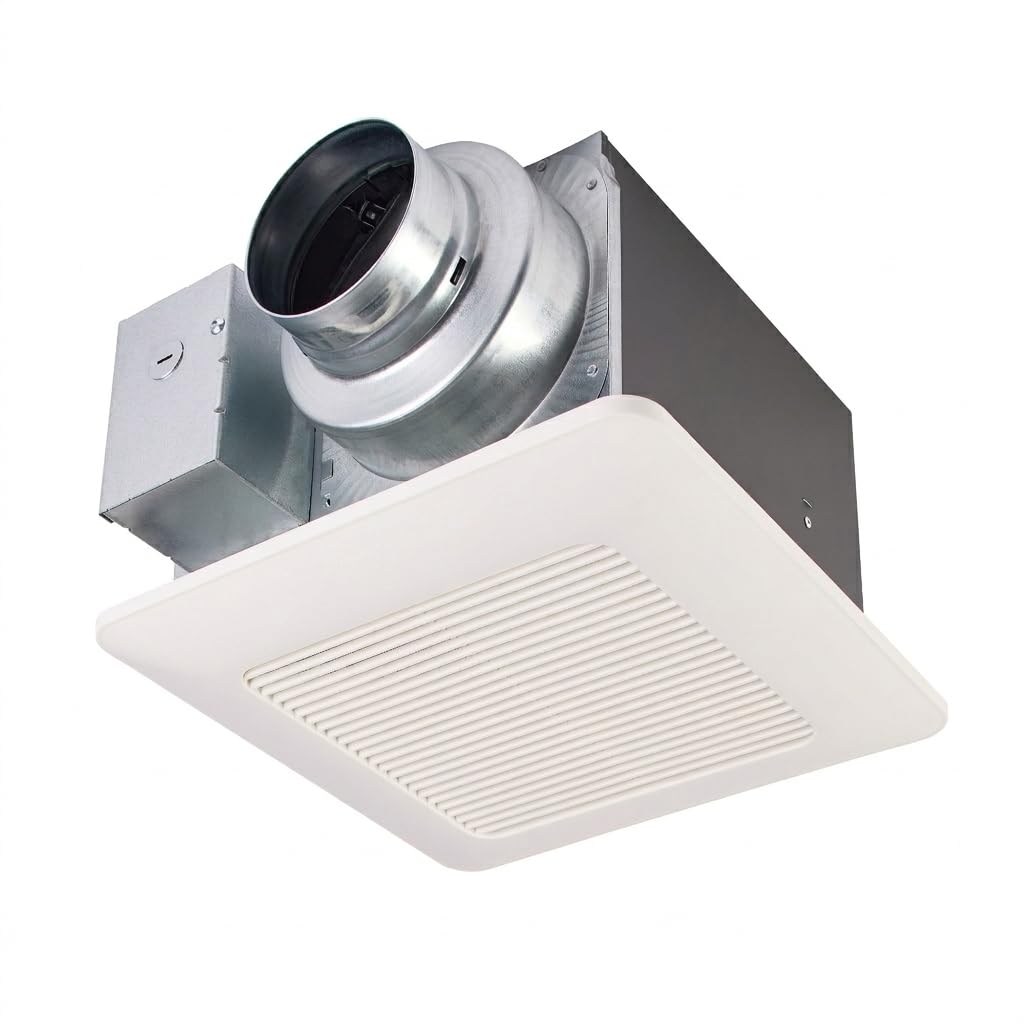
1. Panasonic FV-0511VQC1 WhisperSense Fan, Motion + Humidity Sensor, 50-110CFM
Our pick — over 4.5★ from 450+ verified ratings; the strongest balance of quality and price.
Under 0.3 sone — quiet enough to forget it’s on
If your bathroom is the one everyone in the house uses, and you want the fan to handle itself without anyone remembering to flip a switch, start here. The Panasonic WhisSense runs at under 0.3 sone — sones measure how loud a fan sounds, and this one sits at the very bottom of the scale. That means it is effectively silent while it clears the room.
The motion sensor turns the fan on automatically, and the humidity sensor takes over when moisture climbs, clearing steam in under five minutes in the scenarios buyers describe. A Pick-A-Flow selector lets you set airflow at 50, 80, or 110 CFM, so the same unit works in a powder room or a full master bath. The included Flex-Z Fast bracket simplifies the install, and the adjustable delay timer keeps the fan running after you leave.
The catch is size. At 14.17″D x 16.73″W x 11.85″H, the housing needs real overhead clearance — this is a 2.0x larger footprint than the Delta BreezSlim SLM70H, which measures just 7.2″D x 7.5″W x 3.9″H. If you are retrofitting into a tight attic space with shallow joists, you will fight the fit. In a standard ceiling with attic access, though, this is the one to beat.
Buyers report: “5’x8′ hall bath fan. Motion sensor auto-on, 10-min delay. 3 speeds; 110 CFM loud enough for cover noise.”
What Stands Out
- Runs at under 0.3 sone — near-silent even at full speed
- Motion and humidity sensors work together for hands-free operation
- Pick-A-Flow lets you switch between 50, 80, and 110 CFM for any room size
- Adjustable delay timer keeps air moving after you leave
What to Know Before You Buy
- Large housing footprint needs real overhead clearance
- The 4-inch outlet may require a reducer if your existing duct is 3 inches
- Some users tape the motion sensor to prevent false triggers from hallway traffic
Best for: Anyone who wants a large bathroom to ventilate itself with zero effort and near-zero noise.
Think twice if: Your ceiling cavity is shallow or ducted at 3 inches — you will need adapters and patience.
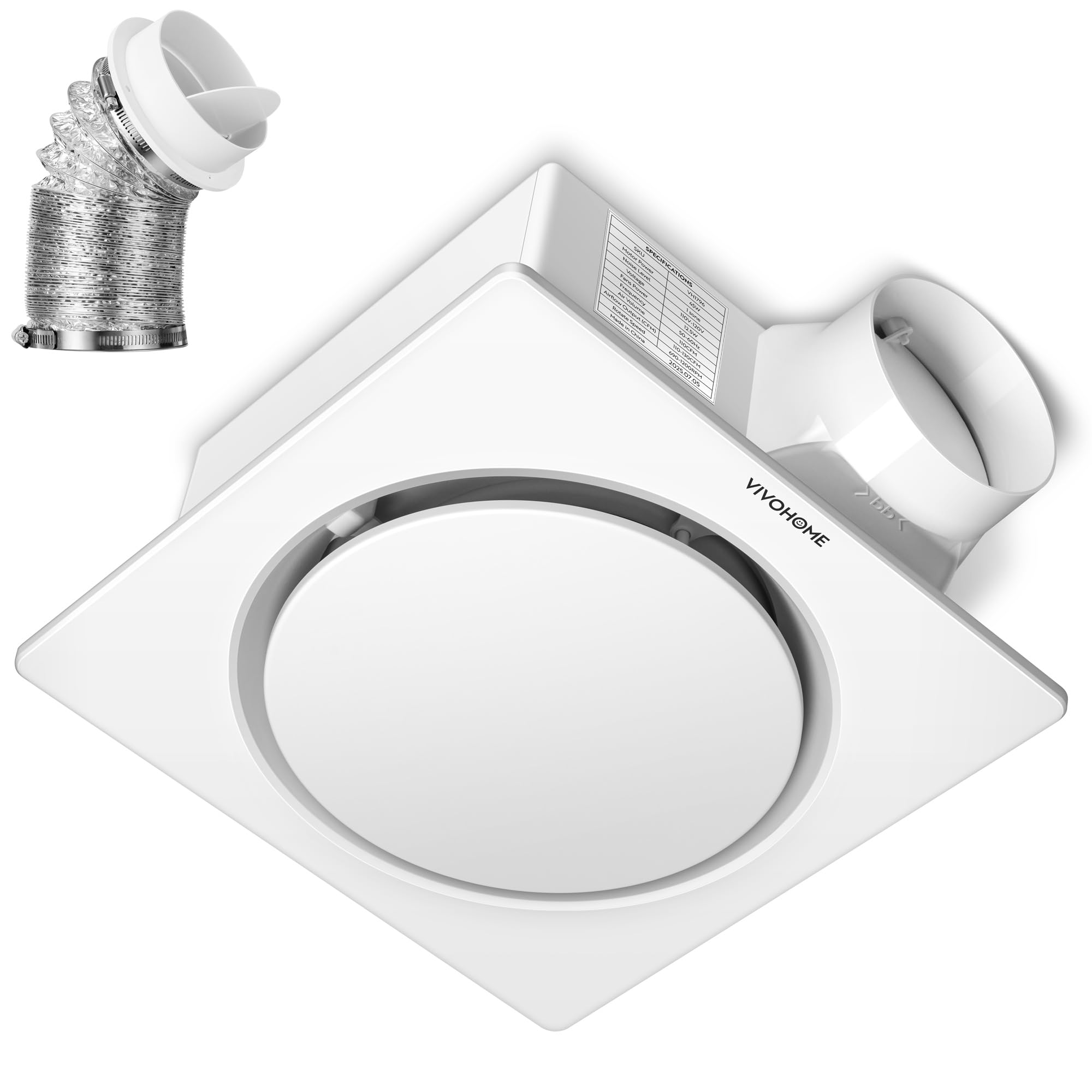
2. VIVOHOME Bathroom Exhaust Fan with Humidity Sensor 110CFM, Auto On/Off
110 CFM of airflow for under half the price of premium picks
Most people shopping for an automatic fan assume they have to spend a lot to get decent airflow. The VIVOHOME proves otherwise. It pushes 110 CFM — more than enough to clear steam from a room up to 129 square feet — while running at just 12.5 watts. That lower wattage draw means less electricity used per minute of operation compared to traditional AC motors, and the brushless EC motor is rated for a 30,000-hour lifespan.
The auto humidity mode turns the fan on at 55% and off at 50%. What sets this apart from cheaper alternatives is Constant Airflow Technology — the fan self-adjusts its speed to maintain consistent airflow even when duct bends, dust buildup, or static pressure would normally choke a fixed-speed unit. Constant Airflow Technology is rare at this price.
The honest trade-off: installation demands some skill. Owners mention: “install tricky. Template too large by 0.5″+; measure. No electrical box, just pigtail; add J-box per code. No bracket backing; add wood strips.” It also uses 4-inch ducting, while many homes have 3-inch runs, so you may need a reducer. A few owners also note the remote control is hit-or-miss. For a DIYer comfortable with basic wiring, the savings are worth the effort.
The value math: You get 110 CFM, a humidity sensor, and Constant Airflow Technology for less than half of what the premium Panasonic costs — that is a lot of fan for a budget-tier price.
The install reality: Plan for a J-box, wood backing strips, and a 4-to-3-inch duct reducer before you start. This is not a drop-in swap.
Reach for this if: You want automatic humidity control and strong airflow without paying premium prices, and you are comfortable with light electrical work.
Look elsewhere if: You need a truly drop-in replacement with no modification to your existing ductwork or joists.
3. Delta BreezSlim SLM70H 13.1W Exhaust Bath Fan with Humidity Sensor

A 3.9-inch-tall housing that fits openings larger fans cannot
Tight ceilings and older homes with cramped joist spacing are where most automatic fan projects die. The Delta BreezSlim exists for exactly that problem. Its housing measures just 7.2″D x 7.5″W x 3.9″H — a fraction of the Panasonic WhisperSense at 14.17″D x 16.73″W x 11.85″H. That smaller footprint means it fits openings and attic cavities that larger units simply cannot.
At 70 CFM, it is built for smaller bathrooms or powder rooms rather than a large master suite. The brushless DC motor keeps power draw at 13.1 watts and earned the Energy Star rating. In humidity sensing mode, the fan starts when humidity rises above 60% and stops automatically when it drops back below. Blue and amber LED indicators show you at a glance whether the sensor or full-speed mode is active.
The recurring gripe is the humidity sensor’s off-cycle behavior. Some units run longer than expected and will not shut off in humidity mode, while others shut off fine. One long-term owner had the optional humidity sensor part fail after four years — though Delta’s customer service replaced it promptly, and that buyer still recommends the fan without reservation. A fair caveat, not a pattern.
Buyers who need a fan into a small, difficult opening consistently report the Delta BreezSlim fits where nothing else does. The variable speed behavior — starting low, ramping up during a shower, then slowing as moisture drops — is a quiet, thoughtful touch that keeps noise to a minimum when the room is dry.
Built for: Small bathrooms and tight retrofits where physical size is the limiting factor.
Skip if: Your bathroom is larger than a standard full bath and needs more than 70 CFM of airflow.
4. Delta Breeze Bath Exhaust Fan – Humidity Sensor LED Quiet – 80 CFM

An adjustable humidity threshold you set to your home’s baseline
When your bathroom is directly attached to a tub or shower enclosure, the fan has to work harder and smarter than most. The Delta Breeze 80 CFM is rated for wet areas and runs at under 0.8 sone — quiet enough that you will forget it is on until you notice the mirror is still clear. The adjustable humidity sensor is the standout feature here. Instead of a fixed threshold, you can set the humidity level that triggers full-speed operation.
That adjustability matters because not every home sits at the same baseline humidity. In a humid climate, a fixed 60% threshold might trigger constantly. With this fan you tune it to your environment. It also offers an adjustable low-speed setting for continuous operation with options of 0 or 50 CFM, so you can run it as a background ventilator or shut it down completely between uses.
One installation note that surprises people: some setups require two switches, because this fan lacks a single-switch mode toggle. If your bathroom has one existing switch, you get auto low/high behavior — running at 50 CFM and ramping to 80 CFM when humidity rises, then returning to 50 until you cut power. That is the Signature series behavior some buyers expected instead, so read the listing carefully. The reliability record also shows mixed feedback, though satisfied owners like the one who installed the same model across three bathrooms after a year and a half of trouble-free service.
Pick this if: You want fine-tuned humidity control and a fan designed specifically for tub or shower enclosures.
Consider alternatives if: Your wiring only allows one switch and you need a simple toggle between auto and manual modes.
5. Homewerks 80 CFM Bathroom Exhaust Fan with Humidity Sensor, Motion LED

A 15W motion-sensing LED and 80 CFM fan in one ceiling cut
If your bathroom currently has a fan but no good overhead light, or you are replacing both in one shot, the Homewerks bundles them. The 15-watt LED light has motion sensing and switches automatically between standard brightness and a softer night light mode. The fan itself moves 80 CFM at 1.5 sones, and the humidity sensor shuts the fan off once relative humidity drops below 60%. A separate wall switch is included so you can control the light and fan independently.
The unit is built with galvanized steel to resist corrosion from bathroom moisture, and it installs with a no-cut design into a ceiling opening. One owner who has run it for well over a year described it as “likely to be a solid choice” and called it an excellent upgrade over the old noisy unit it replaced. The light output is genuinely bright — bright enough that several owners mention using the dimmer regularly rather than cranking it to full.
The main thing to know: this fan needs a full 80 CFM of airflow and its motion sensor is mounted on the light grille, not the wall switch. The ceiling opening is generous at 10.2″D x 10.2″W x 7″H, so check your cavity before committing. If you need straightforward, no-light ventilation, the Delta Breeze 80 CFM above does the same job without the integrated fixture.
Owners consistently point to the quietness and the bright, adjustable light as the two features that made the purchase worthwhile. The camera-free construction and steel housing also hold up well in steamy conditions.
The main friction point is installation: a few owners found the junction box too cramped for a standard drill, and some report the touch-panel sensor can feel finicky. Not a defect — more a matter of preference if you like tactile wall switches.
Best fit for: Bathrooms that need a combined fan-and-light upgrade in a single ceiling cut.
Consider another pick if: You prefer a physical wall switch over touch-panel controls, or you already have adequate overhead lighting.
6. OREiN 3-in-1 Bathroom Exhaust Fan with Light & Humidity Sensor, 160 CFM, 1.0 Sone

160 CFM — the most airflow here, rated for rooms up to 160 square feet
If your bathroom is big enough that a 70 or 80 CFM fan (CFM means cubic feet of air moved per minute) still leaves steam hanging in the air, the OREiN moves 160 CFM — the most in this guide. That clears rooms up to 160 square feet, so a large master bath dries out instead of fogging the mirror. It runs at just 1.0 sone (a sone measures how loud a fan sounds), which is barely above a whisper. The built-in humidity sensor (a sensor that reads the moisture in the air) switches the fan on when humidity rises above 60%, and a green LED confirms the sensing mode is on.
The light side is equally serious: 1500 lumens of output with three color temperature options — 3000K for warm white, 4000K for neutral, and 5000K for daylight — selected by a built-in switch. A separate 2200K night light provides soft illumination for middle-of-the-night trips. The unit carries ENERGY STAR, HVI, ETL, and FCC certifications and comes backed by a five-year limited warranty.
One installation caution worth repeating: this fan is heavier than a basic unit, and it must be anchored on both sides. An installer who skipped that step tore the grille loose through the drywall. Follow the manual and it works perfectly. Also note that dimmers and timer switches are not compatible with this unit — pair it with a standard wall switch only. For a bathroom where the fan and light run together as a single system, this is the most capable pick here.
Where It Wins
- 160 CFM clears large bathrooms fast — the highest airflow here
- 1500LM LED with three color temperatures covers the whole room
- 1.0 sone keeps it whisper-quiet during showers
- Five-year limited warranty and multiple industry certifications
Where It Needs Care
- Must be anchored on both sides — the weight demands it
- Not compatible with dimmer or timer switches
- Larger 13.1″D x 13.1″W x 8″H footprint needs a generous ceiling opening
Choose this for: A large master bath that needs maximum airflow and integrated LED lighting in one ceiling fixture.
Pass if: You want to keep your existing dimmer switch — this unit requires a standard on/off wall switch.
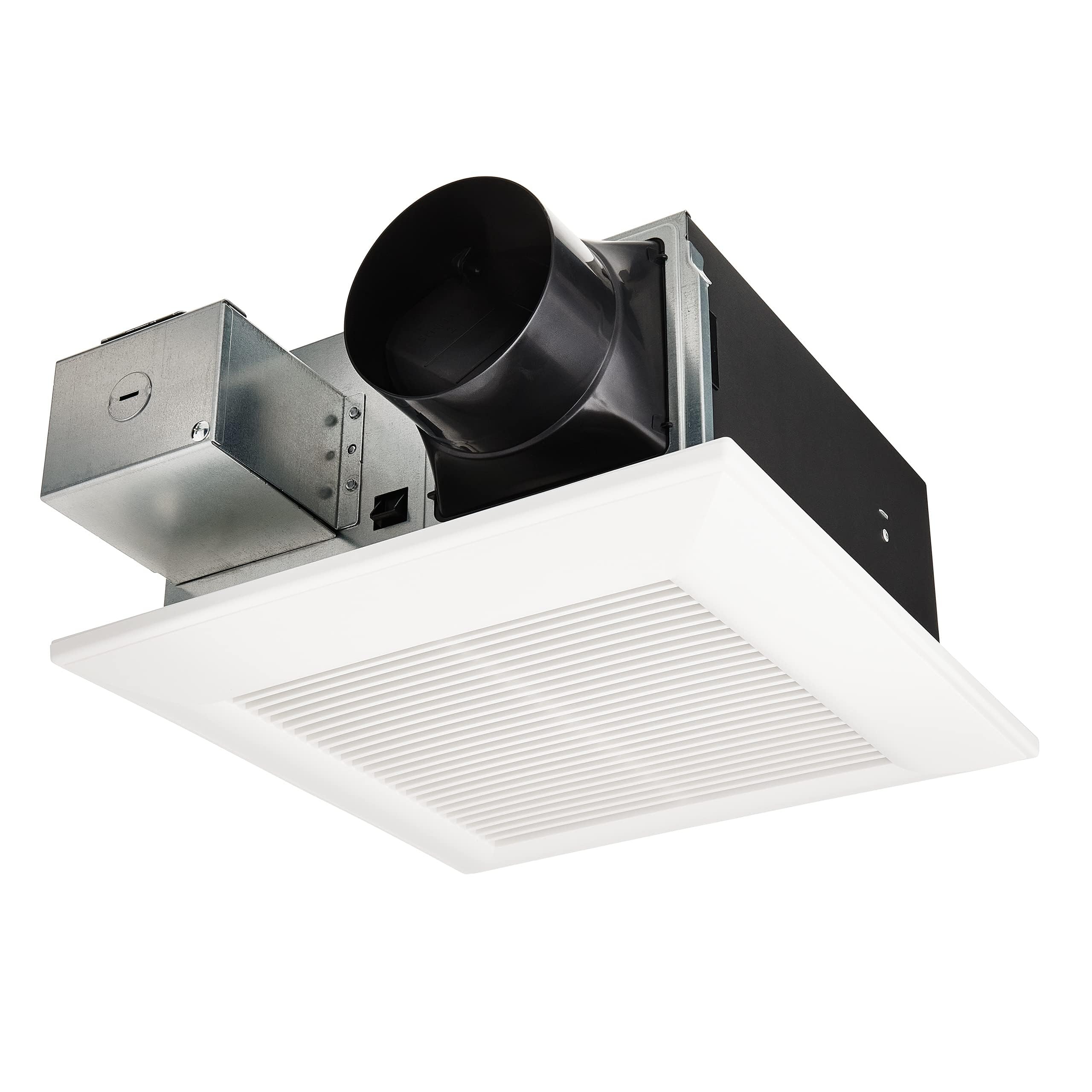
7. Panasonic FV-0511VFC1 WhisperFit Bath Fan + Humidity Sensor, 50-80-110 CFM
A 5-5/8-inch-deep housing that fits 2 x 6 joist spacing
When the space above your ceiling is shallow, the fan has to be thin. Panasonic’s WhisperFit housing is just 5-5/8 inches deep — thin enough to fit inside 2 x 6 joist spacing, where many competing units will not. The Fan is rated for 110 CFM with a DC/ECM motor and carries an Energy Star certification.
Pick-A-Flow technology lets you set airflow at 50, 80, or 110 CFM with a simple switch, so the same unit scales from a small powder room to a full bathroom. The condensation sensor monitors moisture and turns the fan on automatically, and the included 20-minute delay timer keeps it running after the sensor trips. The Flex-Z Fast bracket uses a single hinge for easier positioning during install.
Buyers generally praise the whisper-quiet operation and strong airflow. The one consistent complaint is the condensation sensor’s threshold behavior: some units turn on without clear reason or the sensor stops responding over time. Unlike a standard humidity sensor, this model uses a condensation sensor, which detects actual moisture on a surface rather than humidity in the air — that difference matters in how it behaves day to day. For a tight retrofit where no other unit will fit, this is still a strong option. If you have more ceiling room, the Panasonic WhisperSense above offers motion sensing on top of humidity control for a similar form factor.
what separates it: It fits where other fans will not, because the housing is only 5-5/8″ deep. Paired with the Flex-Z Fast bracket (a mounting bracket that lets you install from below), it is designed for the difficult installs where you cannot tear out a ceiling.
The honest note: The condensation sensor behaves differently from a humidity sensor — it responds to moisture on a surface rather than humidity in the air. That distinction explains the mixed owner feedback on sensor reliability.
The right call for: Retrofit projects with low ceiling clearance where standard-depth fans will not physically fit.
Think again if: You want dual-sensor coverage — the WhisperSense offers motion sensing this model does not include.
Understanding the Specs
CFM: How Much Air the Fan Moves
CFM stands for cubic feet per minute — it is the volume of air the fan pushes out of your bathroom every minute. A small half-bath may need as little as 50 CFM, while a large master bath with a shower and soaking tub may need 110 CFM or more. Choosing too low means steam lingers. Choosing too high for a small room just means the fan clears the air faster, which is never a bad thing — it simply runs for less time.
Sones: How Loud the Fan Sounds
A sone is a unit that measures how loud a fan sounds to the human ear. A rating under 1.0 sone is nearly inaudible in most bathrooms — you may have to put your hand near the grille to confirm it is running. A rating between 1.0 and 2.0 sones means you will hear a soft hum. Anything above 3.0 sones becomes noticeable background noise that can interfere with conversation or wake light sleepers in nearby rooms.
Humidity Sensor vs. Motion Sensor
A humidity sensor watches the moisture level in the air and turns the fan on when it crosses a set threshold, usually around 60%. It is ideal for showers. A motion sensor detects movement in the room and runs the fan for a set delay after you leave, which handles everyday bathroom visits as well as showers. Fans with both sensors cover all use cases without anyone touching a switch, while single-sensor units are simpler and typically more affordable.
Duct Size and Housing Fit
Most bathroom fans use either 3-inch or 4-inch ducting, and mismatches are the single most common installation headache. A fan with a 4-inch outlet connected to existing 3-inch duct needs a reducer, and constricting airflow makes the motor work harder and can increase noise. Before buying, measure your existing duct diameter and your ceiling opening dimensions. If your cavity is shallow, fans with housings as thin as 5-5/8 inches are available specifically for tight joist spaces.
FAQ
Can I replace my old bathroom fan with an automatic one if I only have one wall switch?
What size fan do I need for a bathroom with a shower and a tub?
How do I know if my ceiling has enough room for a new fan?
Will an automatic humidity sensor work in a humid climate?
What is the difference between a humidity sensor and a condensation sensor?
How much noise should I expect from an automatic bathroom fan?
Can I install these fans myself or do I need an electrician?
Do automatic bathroom fans work with existing 3-inch ductwork?
What does the LED indicator light mean on these fans?
Should I leave my automatic fan running all the time?
Final Thoughts: The Verdict
For most homes, the Panasonic FV-0511VQC1 WhisperSense is the one to buy. It combines motion and humidity sensing in a single unit running at under 0.3 sone, with a Pick-A-Flow selector that covers three room sizes. That mix of quiet operation and hands-free intelligence is hard to match. If you want maximum airflow and integrated LED lighting for a large bath, the OREiN 3-in-1 at 160 CFM is the most capable option here. And if your ceiling cavity is tight and shallow, the Panasonic WhisperFit with its 5-5/8 inch housing depth is the one to reach for.
How We Picked
We do not accept paid placement. Every pick is matched to a real buyer and a real use-case; we do not hands-on test units.
Sources & Methodology
Specifications: manufacturer listings and product documentation. Review insights: verified customer reviews, as of September 2026. Pricing: not shown on this page (it changes often); check the current price via the retailer link.
As an Amazon Associate, KitchPrep earns from qualifying purchases. This does not affect which products we feature.
Related Guides
