
Specs are compiled from manufacturer listings and verified buyer reviews and can change over time — please confirm the key details on the product page before buying.
If you want one bottle that settles the whole question, the P.J. KABOS Family Reserve Organic is the strongest pick here — it is the highest-rated of the nine, and the only one on this list that names a phenolic number (900+ mg/kg) on the label. That matters because polyphenols (the natural plant compounds that give good oil its throat-catching bite) are the clearest signal a bottle is genuinely fresh rather than quietly sitting on a shelf for two years. The rest of this list splits between Greek, Italian and California oils — one of them leads the others on phenolic content and taste, the others win on value and everyday cooking muscle.
I’m Mohammad Maruf — the founder and writer behind KitchPrep. This guide is built by comparing the manufacturers’ published specifications and the patterns across verified customer reviews, so you get each pick’s real strengths and trade-offs instead of marketing spin.
From peppery Greek pours to buttery California blends, the bottles here cover every kitchen job you actually have. This guide walks through the shelf so you can spot a fresh, genuinely authentic olive oil before you commit.
Our Picks at a Glance

How To Choose The Best Authentic Olive Oil
You want real olive oil, not a bottle that just says “authentic” on the label. Three things on the label prove it: where the olives grew, when they were picked, and how the oil was extracted. Check those three and you are almost always holding a genuine extra virgin bottle.
Read the harvest date, not the best-before date
Fresh olive oil is a perishable product, and its flavor fades faster than most people expect. A best-before date can stretch two years out from bottling, which tells you almost nothing about when the fruit actually left the tree. A harvest date is the honest number — oils picked within the last year taste brighter, greener and more peppery than older stock. This is exactly where the California Olive Ranch Reserve draws its mixed feedback: decoding the date on the bottle takes real effort, and one buyer who worked it out found the oil was nearly two years old.
Understand what polyphenols do for you
Polyphenols are the natural compounds in olive oil that create that peppery, slightly bitter tingle at the back of your throat. A higher phenolic content is the clearest sign the oil is fresh and was handled carefully from grove to bottle. You do not need a chemistry degree to taste the difference — a genuinely high-phenolic oil makes itself known on the first spoonful. Oils with less of it taste flatter and milder, which is not a flaw, just a different style.
Glass versus tin, and why extraction method matters
Light and heat are the two things that break down olive oil flavor, so dark glass and sealed tins both protect the contents far better than clear plastic. Cold extraction keeps the oil below the temperature that would strip its aroma and antioxidants, which is why it appears on nearly every bottle worth buying. Every pick below is cold extracted and sealed in glass or tin — none of them are lightweight, refined or pomace blends, which are processing shortcuts that strip the flavor out entirely.
Quick Comparison
| Model | Best For | Origin | Polyphenol / Phenolic Content | Size | Amazon |
|---|---|---|---|---|---|
| P.J. KABOS Family Reserve Organic★ Best Overall | Maximum polyphenols | Greece | 900+ mg/kg (HPLC), 1400+ mg/kg (NMR) | 16.9 fl oz | Amazon |
| García de la Cruz Organic Extra VirginBest for Cooking | Everyday Spanish cooking | Spain (La Mancha) | Polyphenol rich | 500 ml | Amazon |
| BONO Organic Sicilian PDO Val di MazaraProtected Origin | PDO-certified Sicilian character | Italy (Sicily, Val di Mazara PDO) | Not specified | 16.9 fl oz | Amazon |
| Iliada Kalamata PDO Extra Virgin | High-volume Greek value | Greece (Kalamata PDO) | 1000mg+ reported by buyers | 33.8 fl oz | Amazon |
| Kasandrinos Organic Greek Extra Virgin | Mild all-day sipping oil | Greece | 5.5 mg per tablespoon | 16.9 fl oz | Amazon |
| Nuñez de Prado Organic DOP Baena | Big-tin all-purpose cooking | Spain (DOP Baena) | Not specified | 33.8 fl oz | Amazon |
| Sanniti Laudemio Extra Virgin | Finishing a dish tableside | Italy (Fattoria di Maiano) | Not specified | 16.9 fl oz | Amazon |
| Cobram Estate Classic 100% California | Value bottle with a built-in spout | USA (Sacramento Valley) | Not specified | 25.36 fl oz | Amazon |
| California Olive Ranch Reserve Collection Arbequina | Buttery everyday blends | USA (California) | Not specified | 1 Count | Amazon |
In‑Depth Reviews
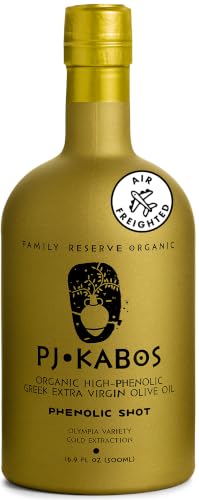
1. P.J. KABOS 2025/26 Fresh Harvest, Extremely High Phenolic (900+ mg/kg), USDA Organic Greek Extra Virgin Olive Oil
Our pick — over 4.5★ from 750+ verified ratings; the strongest balance of quality and price.
This bottle names its phenolic number on the label — 900+ mg/kg tested during production.
If you are buying olive oil specifically for the polyphenols, this is where this list starts and the others have to catch up. P.J. KABOS tests every batch two different ways — HPLC and NMR, two lab methods for counting those compounds — and reports 900+ mg/kg on the first and 1400+ mg/kg on the second. No other bottle here publishes that level of testing detail. The harvest date is September/October of 2025, and the best-before runs to 12/2027, which means you are buying oil roughly a year off the tree rather than a bottle that sat through two winters.
It is priced as a premium pantry item and it behaves like one. The taste is deliberately bitter and pungent — the manufacturer warns you upfront that this comes from the phenolic content, and it is not a flaw. The bottle itself holds 16.9 fluid ounces of oil and weighs 2.84 pounds shipped. Compared with the California Olive Ranch Reserve at 1.06 pounds, this is a substantially heavier, larger package — which tells you how much more oil you are getting per pour. Buyers report using it as a daily health supplement rather than a cooking oil, taking it by the spoonful with a chaser to handle that peppery finish.
The trade-off is real and worth saying plainly: this is not a neutral, all-purpose oil. The bitterness and pungency are the point, and if you want something to fry potatoes in without thinking, you are paying premium prices to season food you will barely taste it in. The label even suggests a chaser. Owners mention both ends of the spectrum here — some find the mild peppery finish pleasant and smooth, others report varying levels of throat irritation, which is expected at this phenolic level. It is best treated as a finishing and sipping oil, not a workhorse.
Where It Earns Its Spot
- 900+ mg/kg phenolic content (HPLC) — the highest published number on this list
- Air-shipped from Greece rather than container-shipped, to protect quality in transit
- 2025/26 harvest with a 12/2027 best-before, so it is genuinely fresh stock
- USDA Organic, Kosher, cold extracted, single-origin Greek olives, no additives
What To Expect Before You Buy
- Deliberately bitter and pungent — the label warns the phenolic level drives this
- 16.9 fl oz at 2.84 pounds is a heavier, premium-priced bottle with no bulk option
- Customers note the peppery finish is strong enough that a chaser is recommended
Buy it if: you want the highest phenolic content on this list and are treating the oil as a daily wellness pour.
skip it if: you need a neutral everyday frying oil you will barely notice in the pan.
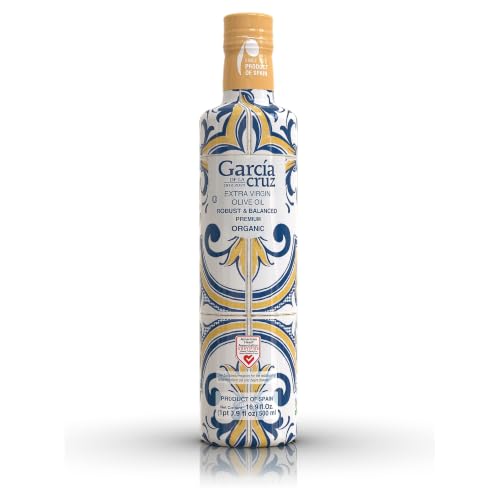
2. García de la Cruz Organic Extra Virgin Olive Oil, Master Miller Premium, Montes de Toledo, 500 ml
A single-origin Spanish bottle built for the pan as much as the plate.
This is the Spanish pick on the list, and it is a direct one. The olives come from a fifth-generation family farm in La Mancha, are cold pressed from single-origin fruit (meaning all the olives come from one place), and are certified organic. The oil is bottled in a dark 1872-replica bottle with an easy pour spout. That dark glass keeps light and heat out, so the flavor holds up between pours. The 500 ml bottle holds a smooth, full body with almond and tomato tones and a peppery bite the company calls deep flavor. It is smaller than the two 33.8 fl oz tins here, so it is an entry into real single-origin Spanish oil rather than a bulk buy.
Quality is what wins people over here — it is the aspect praised most across the review page, with flavor a close second. The award history backs that up: gold at the 2020 Los Angeles International Olive Oil Competition, gold and silver at Olive Japan that same year, gold and Best in Class at the 2019 New York International Olive Oil Contest, plus a 2018 New York gold. One buyer who usually reaches for Italian oil said they had always leaned Italian and found this one excellent enough to reorder. It is also versatile — reviewers point out it working across quinoa, sautéed vegetables and scrambled eggs without losing character.
One thing to size honestly: this is 16.89 fluid ounces at 1.06 pounds, so you are getting the standard premium small-bottle format rather than a year’s supply. The value question splits buyers — the recurring gripe is the price for the volume, and the review page mixes on whether it earns that. If you cook with a lot of oil, the two-liter tins further down will stretch further. If you want a single bottle that makes everything you cook taste distinctly Spanish, this is the pick.
The single-origin case: every bottle is pressed from olives grown on one fifth-generation La Mancha farm rather than blended from multiple sources, which is exactly the transparency “authentic” should mean.
What buyers notice: the peppery aftertaste and nutty, fresh smell land in reviews as a clear favorite over supermarket oils, with versatile use across dishes.
Choose this if: you want a genuinely traceable Spanish single-origin bottle that earns its price on flavor.
Look elsewhere if: you need volume for daily heavy cooking or want the lowest price per ounce.
3. BONO Organic Sicilian PDO Val di Mazara Extra Virgin Olive Oil
The only bottle here carrying a PDO seal that traces oil back to one Sicilian region.
PDO stands for Protected Designation of Origin, a European certification that ties the oil to a specific place with strict geographic and production rules — here, the Val di Mazara region of western Sicily. It is fully traceable from grove to bottle, USDA Organic, Non-GMO Project Verified, and cold extracted. And crucially, it is a blend of three native Sicilian varieties — Biancolilla, Cerasuola and Nocellara del Belice — each contributing distinct aroma and complexity.
The flavor is deliberately delicate rather than aggressive, with notes of artichoke, almond and tomato leaf, smooth sweetness, and a balanced bitter, spicy finish. That makes it a genuinely versatile bottle — the kind you use for dipping, dressings, marinades, topping vegetables and pasta, or finishing seafood. What earns the most praise on the review page is quality, tightly followed by flavor. A Middle Eastern buyer who uses a lot of oil daily called this the best one, citing the single-sourced olives, cold press and glass bottle. Another called it their favorite olive oil, full stop. It is also note the review page is tiny relative to how good the oil is — buyers keep reordering.
The useful caveat is the gap between price and expectation. One buyer saw the same bottle at a local Wegman’s for less, so it pays to glance around before committing. The scent also splits buyers — some find it unusual, most find it distinctive. Nothing here is a problem; it is just an older, more delicate style of Sicilian oil rather than a punchy high-phenolic one (high in the natural compounds that give a strong peppery kick), so it will not knock you back the way the Greek bottle at the top of this list will.
Why It Stands Out
- PDO Val di Mazara certification ties every bottle to one certified Sicilian region
- Three native Sicilian varieties — Biancolilla, Cerasuola, Nocellara del Belice
- USDA Organic, Non-GMO Project Verified and cold extracted
- Balanced, versatile profile that handles dipping through finishing
The Fine Print
- Small 16.9 fl oz bottle means limited volume for heavy cooking
- Some buyers find it available locally for less than the online listing
- Scent is distinctive enough that it splits opinions
Buy it if: you want certified PDO Sicilian character and a delicate, dip-and-drizzle oil.
pass on it if: you want the punchy peppery bite of a high-phenolic oil.
4. Iliada Kalamata PDO Extra Virgin Olive Oil, 1 Liter Tin
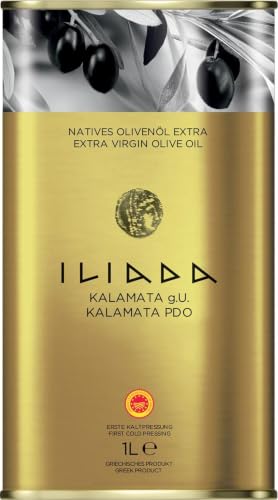
A 1-liter Greek tin that punches at high-phenolic levels without the small-bottle format.
Two things separate this tin from the rest of the Greek bottles here: it holds 33.8 fluid ounces — one of the largest formats on this list — and it carries Kalamata PDO certification. PDO guarantees the oil is produced, processed and packaged in the Kalamata region using traditional methods, with traceability back to the city. It is also monovarietal Koroneiki, meaning it is pressed from a single olive variety rather than a blend, milled within 24 hours of harvest. Free acidity comes in at ≤0.2% at bottling and ≤0.5% through shelf life — lower acidity reflects careful production and freshness.
Shoppers say polyphenols around 1000mg+, well above the 500mg ceiling of much of what is marketed as “high polyphenol.” The aroma leans into green fruit, green banana, artichoke, freshly cut grass, tomatoes and dried nuts, and the taste is rich and full-bodied with a medium fruitiness and a slight peppery after. It is also a genuine all-rounder: the tin is pitched for frying, cooking, grilled fish, meat, pasta, vegetables, sauce and salad dressing, and it is positioned as a chefs’ everyday oil.
Honestly, the tin is the one part of this pick that takes getting used to. It is 2.03 pounds and 33.8 fluid ounces, which makes it heavier and less elegant to pour than a glass bottle. Buyers who like to drizzle directly over a finished plate will want a pourer. That said, the 1-liter format is exactly what makes this the best per-ounce buy here, and the shelf life is generous enough that a heavy weekly user will finish it before the flavor fades.
The phenolic report: buyers report this one comes in at 1000mg+ polyphenols — well above the 500mg level that a lot of “high polyphenol” oils actually deliver.
Everyday fact: the 1-liter tin is the workhorse format for frying, cooking and dressings without rationing pours.
Best for: the cook who uses olive oil across everything and wants one large tin to cover it.
Think twice if: you want a decorative bottle for the table — this is heavy tin territory.
5. Kasandrinos Organic Olive Oil Extra Virgin, Polyphenol Rich Greek Olive Oil, 500 ml
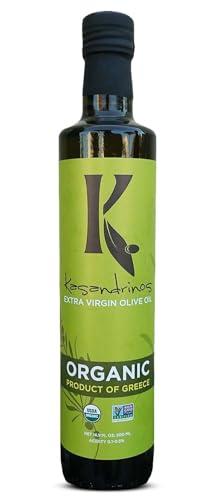
A mild, butter-smooth Greek oil that goes down easily straight from the bottle.
Where the P.J. KABOS at the top of this list is deliberately punchy, this one is deliberately gentle — and it tells you exactly how much polyphenol you get: 5.5mg per tablespoon, alongside Vitamin E. The olives are hand-picked from orchards more than 100 years old, and the oil is USDA Organic, Non-GMO, Paleo Certified, Keto Certified and Kosher. So the certifications cover almost every major food-framework — a useful detail if you are cooking for a household with mixed dietary rules.
Butter-like mouthfeel shows up in reviews repeatedly, which fits how it tastes — smooth rather than sharp. What earns it 202 praise mentions as the top aspect is quality, with taste a clear second. A daily user said the polyphenols come through clearly in the taste, and the company replaced a broken bottle immediately. Another noted the review page is rare in that many buyers gift this bottle at Christmas — the light, delicate profile makes it an easy present for someone who cooks. The flavor works straight from the bottle on salads, bread and meat.
Two things to know before you buy. First, this is 500 ml / 16.9 oz, the smaller premium format, so it disappears faster than a liter tin if you cook seriously. Second, several buyers specifically note the price is high for the format — the recurring gripe is value, and the review page splits on whether it is worth the cost for daily use. If you want it as a sipping oil and a finishing drizzle, the format and price line up. If you are pouring freely into a pan several times a week, the bulk Spanish or Italian tins here will serve you better per ounce.
What’s Working
- 5.5mg polyphenols per tablespoon plus Vitamin E, tested consistently across buyers
- Hand-picked olives from orchards more than 100 years old
- USDA Organic, Non-GMO, Paleo, Keto and Kosher certified
- Butter-smooth texture that drinkers like straight from the bottle
Before You Commit
- Only 500 ml / 16.9 oz — small format that empties quickly
- Buyers repeatedly flag the price versus volume as the weakest point
- Mild flavor lacks the peppery punch of higher-phenolic oils
Ideal for: someone building a daily sipping ritual who wants smooth rather than sharp.
Reconsider if: you go through oil fast — the 500 ml format will not stretch far.
6. Nuñez de Prado Extra Virgin Olive Oil, USDA Organic, DOP Baena, 33.8 fl oz
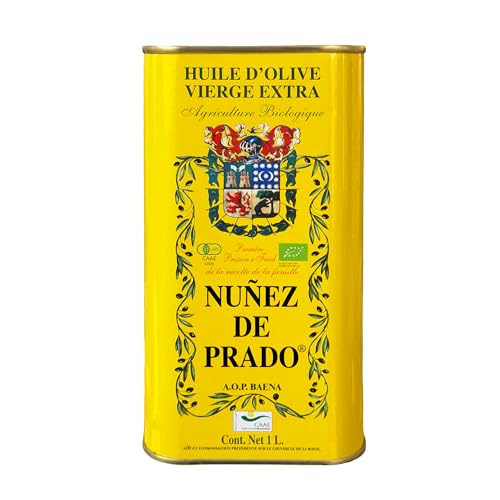
One liter of stone-crushed Andalusian oil that a lot of buyers treat as their permanent kitchen staple.
The most traditional method on this list is right here. Nuñez de Prado is a DOP Baena Spanish oil — Denominación de Origen Baena ties it to the Andalusian region and its production rules — and it is made from Prado estate-grown olives stone-crushed at the family mill. That is a genuinely old-school process: stone crushing preserves a gentler, fuller character than fast modern pressing. It arrives as a 33.8 fluid ounce (1 liter) tin, weighing 2.11 pounds. The aromatics are floral, with a full, fruity flavor and a fine, rich finish, and the oil itself is USDA Organic.
Buyers praise flavor and quality equally — both get 94 mentions. One buyer who tried about 20 olive oils over five years called this the best of the bunch — light and airy, good for dipping, frying and sautéing, and it never burns. Others confirm no bitterness builds across several tins, each lasting 4-6 months. One reviewer noted it transformed their homemade dressings, which fits the floral, fruity profile.
The main thing to be honest about is price. Several owners mention the value question splits — some find it earns its price over standard supermarket or warehouse-store brands, others find it expensive for a 1-liter tin. This is not a cheap oil, even at this volume. But it is a genuine DOP-certified, stone-crushed, single-estate oil at a liter volume most other picks here do not reach, and for a serious cook it hits the balance point better than anything else on this list.
What the price buys: DOP Baena certification, estate-grown olives, and stone-crushing at the family mill — the oldest production method on this list.
Why regulars keep it: flavor and quality share the top aspect here, tied — buyers describe it as light but versatile, good for frying without bitterness building across the tin.
Pick this if: you want a certified DOP Spanish oil at liter volume and you cook across every method.
it’s not for you if: value per bottle is your first filter — this is premium priced for the volume.
7. Sanniti Laudemio Extra Virgin Olive Oil Fattoria di Maiano, 16.9 Fl. oz
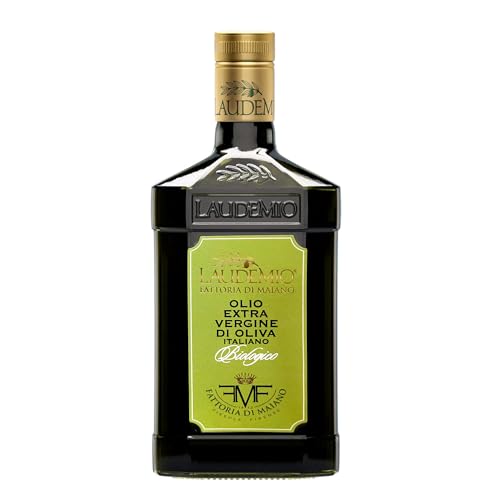
A Laudemio-sealed Tuscan oil from one organic estate — the most niche bottle here.
The Laudemio name on this bottle is not a brand — it is a certification. Only oils that survive two separate tasting committees and strict selection control earn the seal, which is why the producer description calls it a perfectly genuine, complete oil. This particular bottle comes from Fattoria di Maiano, an organic agricultural estate covering nearly 300 hectares in Tuscany. The olives are Frantoio and Moraiolo varieties, picked entirely by hand in November and December, then pressed in the estate mill. It also carries a gold award from the NYIOOC World Olive Oil Competition. That is the paper trail — and it is why this bottle commands a premium niche price.
Flavor-wise, this is a peppery Italian oil with a throat-catching bite — the classic Tuscan style that makes a plain plate of bread taste special. Buyers overwhelmingly praise the quality and taste here, and the oil clearly earns its place as a daily-use Italian choice. One review names it the family’s go-to and rates it clearly above mass-market Italian brands. Another calls it excellent enough to reorder without hesitation.
Two honest caveats. First, freshness splits the review page — several customers note it does not taste fresh-pressed as advertised, which is worth knowing if you are chasing a specific harvest window. Second, the bottle is unusual in shape: one buyer found it smaller than it looked in the listing and noted the container is neither square nor rectangular. It holds 16.9 fluid ounces at 1.06 pounds. That is a standard-sized bottle, but buyers who expect a broad-shouldered olive oil bottle should not be surprised by the slimmer profile.
Why It’s a Finishing Oil
- Laudemio seal means the oil survived two strict tasting committee selections
- Organic Fattoria di Maiano estate, hand-picked Frantoio and Moraiolo olives
- Gold Award winner at the NYIOOC World Olive Oil Competition
- Peppery Tuscan profile buyers describe as superior to mass-market Italian brands
What to Expect
- Some reviewers point out the oil does not taste as fresh-pressed as advertised
- Narrower bottle profile than the listing photos suggest
- 16.9 fl oz is a small format for the premium price niche
Reach for this if: you want a certified Laudemio Tuscan oil for bread, salads and finishing plates.
Look elsewhere if: a documented harvest date matters more to you than certification history.
8. Cobram Estate Classic 100% California Extra Virgin Olive Oil, 750ml
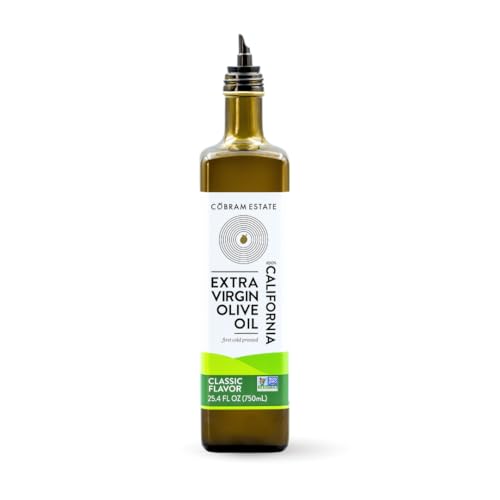
The value bottle on this list, and the only one with a pop-up pourer built into the cap.
If you want a bottle that just works — no pourer to buy, no rinsing the rim after every drizzle — this is the one. Cobram Estate builds a pop-up spout directly under the cap. It is a small thing that shows up in reviews over and over, and it is why buyers describe the spout as their favorite detail. The oil itself is 100% California olives from the Sacramento Valley, cold pressed, non-GMO, keto-friendly and packed with polyphenols. It holds 25.36 fluid ounces in a 2.98-pound bottle.
Most buyers grab this bottle first for cooking, not because it has the most delicate flavor here but because it takes heat better than some of the lighter finishing oils. The flavor is dominated by tomato leaves and unripe tropical fruits, with moderate bitterness and pungency (the peppery burn at the back of your throat) — fruity and fresh rather than deep. The award history is real too: golds at the 2019 Los Angeles and London International competitions and the California State Fair that year, plus silver at the 2020 New York competition and Best in Class at the 2019 Los Angeles International. Quality earns the most praise, followed by flavor.
One honest note on the size. At 25.36 fluid ounces, this bottle is about halfway between the premium 16.9 oz bottles and the 33.8 oz liter tins. It weighs 2.98 pounds, which makes it heavier than the California Olive Ranch Reserve (1.06 pounds) and essentially the heaviest California bottle here. The flavor is also decent but not remarkable — a buyer looking for the peppery character of the P.J. KABOS or Laudemio will not find it in this bottle. Buyers who want a quietly reliable everyday oil will.
The unsung feature: the pop-up pourer spout under the cap is what buyers single out most — no sprayer, no mister, no drip down the bottle side.
Where it lands: a fruity, moderate-bitterness California blend built more for cooking than for sipping, at the heaviest pour weight of the California picks here.
Go with this if: you want one honest California bottle with a clean-pour spout and a fair price for its size.
Look past it if: you want a bold, peppery style — this one is fruity and moderate.
9. California Olive Ranch, California Reserve Collection, Arbequina
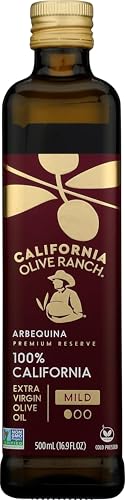
The lightest pour on this list, and the easiest entry into single-variety California oil.
At 1.06 pounds and 2.63 x 2.63 x 8.31 inches, this is the most compact bottle here by a clear margin. It is first cold pressed, certified extra virgin, and Non-GMO Project Verified. It is single-variety Arbequina — a Spanish olive variety that produces a mild, buttery character instead of a sharp one. And that buttery flavor with a hint of pepper is exactly what buyers describe when they open it. It is also not diluted with cheaper oils — that shows up in reviews again and again as the thing buyers want confirmed.
The compact size makes this the easiest pick to try without a big commitment. It works across salads, dipping and sautéing — buyers describe it as mild with a beautiful aroma, and versatile enough to back multiple styles of cooking. It also costs the least of any bottle here, which is why it sits at the bottom of this list rather than the top: it is the entry point into real California extra virgin, not the performance peak.
The honest caveat is freshness. This oil is sold through a large distribution network, and the harvest date on the bottle can be confusing to decode — shoppers say having to work through multiple decoding steps to figure it out, and one who persevered found it was nearly two years old. If documented freshness is your first filter, the harvest-dated bottles higher on this list will suit you better. If you want an easy, mild everyday oil at the lowest entry price, this is the pick.
Where it fits: a light 1.06 pound bottle that is easy to stash in a cabinet and easy to try.
One thing to plan for: the harvest date on the bottle can require decoding, and delayed stock means the oil may not be as fresh as the label implies.
Right for you if: you want the lowest-priced honest California extra virgin oil and a mild, buttery everyday pour.
Not your bottle if: a clearly marked, current harvest date is the reason you buy olive oil.
Understanding the Specs
Polyphenol Content (mg/kg)
Polyphenols are natural plant compounds in olive oil that give it the peppery bite and bitter finish at the back of your throat. They are the clearest sign the oil is fresh and carefully handled. A bottle that publishes a number — like the P.J. KABOS at 900+ mg/kg on the HPLC test — is telling you the phenolic content was measured, not guessed. Buyers who want the strongest throat-catch should watch this number first. Lighter, more delicate oils like the BONO Sicilian blend or the California Olive Ranch Reserve do not publish a phenolic number, and they tend to taste much softer.
Harvest Date vs Best-Before
These are two different numbers and it pays to know the difference. The harvest date tells you when the olives were picked — the closest thing to a freshness stamp. The best-before date tells you how long the bottle can sit on the shelf before quality drops, and it can stretch two years from bottling. Fresher oil is greener, brighter and more peppery. Older oil tastes flatter. That is why the balance is a bottle with a recent harvest date and a sealed glass or tin container that keeps light and heat out.
FAQ
What is the difference between extra virgin and plain olive oil?
How do I know if my olive oil is authentic?
Does a higher polyphenol number mean better tasting olive oil?
Should extra virgin olive oil be stored in glass or tin?
Is a PDO or DOP certification actually meaningful?
How long does an open bottle of extra virgin olive oil stay fresh?
Can I cook with extra virgin olive oil or is it only for salads?
Is Greek olive oil different from Italian or Spanish olive oil?
Why do some olive oils cost more than others?
Does dark or greenish olive oil mean it is fresher?
Final Thoughts: The Verdict
For most people shopping for genuine authentic olive oil, the winner is the P.J. KABOS Family Reserve Organic — it holds the highest rating here at 4.8 stars across 700+ owners, and it is the only bottle on this list that actually publishes its phenolic content (900+ mg/kg on the HPLC test, a lab measure of the natural compounds that give olive oil its peppery kick) on the label. If you want everyday cooking volume instead, the Nuñez de Prado DOP Baena is a liter tin of certified Spanish stone-crushed oil, and if you want a delicate PDO Sicilian bottle for dipping and finishing, the BONO Organic Sicilian Val di Mazara is the one to reach for. Whichever you pick, the harvest date and the cold-extraction statement on the label do more than any marketing claim to prove the oil is genuinely what it says it is — so start there and the rest of the shelf gets a lot easier to sort.
How We Picked
We do not accept paid placement. Every pick is matched to a real buyer and a real use-case; we do not hands-on test units.
Sources & Methodology
Specifications: manufacturer listings and product documentation. Review insights: verified customer reviews, as of September 2026. Pricing: not shown on this page (it changes often); check the current price via the retailer link.
As an Amazon Associate, KitchPrep earns from qualifying purchases. This does not affect which products we feature.
Related Guides
