
If you’ve ever bought a juicer with big promises and then quietly stopped using it after a week… you’re not alone. Juicing at home only “sticks” when the machine fits your real life: your mornings, your sink situation, your tolerance for prep, and your obsession level (daily ginger shots vs. weekend batch juicing are totally different worlds).
Here’s the truth most buying guides skip: the “best” juicer isn’t just the one with the biggest motor or the fanciest marketing. The win is a juicer that makes you want to press produce again tomorrow. That means three things: reliable extraction (dry-ish pulp and minimal clogging), cleanup that doesn’t feel like punishment, and a feed system that matches how you actually prep. Get those right and your best at home juicer becomes a habit—not a countertop decoration.
This guide pulls together 13 standout at-home juicers on Amazon—from premium self-feeding cold press machines to fast centrifugal workhorses and a cast-iron citrus press that can outlive your kitchen. I leaned heavily on real owner feedback (especially the “what annoys me at 6:45 AM” details), plus the reputation each model has built across the wider review ecosystem. The goal is simple: by the end, you’ll know exactly which juicer fits your routine—and why.
How to Choose the Best At Home Juicer for Your Kitchen
Before we talk specific models, let’s make sure you’re shopping with the right “filters” in your head. A juicer isn’t a toaster—you’re committing to a workflow: buying produce, washing it, feeding it, cleaning parts, and (ideally) repeating that often enough to justify the space it takes. The best way to pick a juicer is to match the machine to the workflow you’re most likely to maintain.
1. Start with your real juicing goal (not your aspirational one)
Different goals reward different designs:
- Daily ginger shots / wellness “boosts”: prioritize anti-clog performance, a good reverse function, and a setup you can rinse fast.
- Green juice (kale, celery, wheatgrass): cold press/masticating is usually the smoother, less foamy path—especially if you care about yield.
- Quick breakfast juice (apple, orange, cucumber): centrifugal machines can be incredibly fast and feel “effortless” if you drink immediately.
- Family batch juicing: look for a big hopper (or self-feeding design), larger pulp capacity, and a motor that doesn’t feel stressed.
- Citrus-only (lemons, limes, oranges): a manual press can be the most satisfying and least messy option—zero electronics, minimal parts.
The fastest way to regret a juicer is buying a “perfect” machine for a lifestyle you don’t live. If you know you’ll juice three mornings a week, choose for that reality and you’ll actually win.
2. Pick your juicer type: cold press, centrifugal, or manual press
Here’s the practical breakdown (no hype):
- Cold press / masticating (slow auger): best for consistent texture, usually less foam, and typically stronger performance on fibrous greens. Downside: slower feed rate and more parts to rinse.
- Centrifugal (spinning basket): best for speed. You can go from whole apples to a full glass in minutes. Downside: more foam, faster separation, and weaker yield on leafy greens.
- Manual citrus press: best for oranges/lemons/limes with almost no cleanup and no noise. Downside: not a “juice everything” tool—just citrus (and similar juicy fruits).
If you want a juicer that feels like a daily kitchen appliance (not a weekend project), cold press is usually the safest bet. If you want “done in 90 seconds,” centrifugal can be unbeatable.
3. Wide feed chute vs. self-feeding hopper (this matters more than wattage)
Two machines can both claim “whole fruit,” but feel totally different at home:
- Wide chutes (5.3–6.5″) reduce chopping, but you still need to think about seed pits, thick peels, and long fibers (celery strings).
- Self-feeding hoppers are the closest thing to hands-free juicing—load your recipe, close the lid, and the machine “paces” itself.
- Pre-cutter systems (where the machine slices before pressing) can improve consistency and reduce jams, especially when you mix hard + soft produce.
If you’re the kind of person who wants to do dishes while the juicer runs, hopper-style designs are life-changing. If you’re fine feeding produce in short bursts, a wide chute is plenty.
4. The hidden deal-breaker: cleanup “friction”
Most people don’t quit juicing because of taste—they quit because of cleaning. Look for:
- Fewer parts and parts that “click” together logically (so you’re not wrestling alignment tabs).
- Dishwasher-safe pieces if you know you won’t hand-wash screens regularly.
- Easy-to-clean pulp outlets (some designs trap fibers in a tight channel; you only notice this after week two).
- Anti-drip spouts so you’re not wiping juice trails down the base every time.
Pro tip that owners repeat constantly: whatever you buy, rinse it immediately after juicing. Dried pulp becomes glue. A 60-second rinse can save you 10 minutes of scrubbing later.
5. How to predict juice texture: foam, pulp, and separation
If you hate thick foam or gritty pulp, pay attention to filtration and speed:
- Dual strainers / fine mesh usually means cleaner juice and less pulp, but can slow the feed and require a bit more brushing.
- Pulp-control filters let you choose “less pulp” or “lots of pulp,” which is great if your household can’t agree on texture.
- Higher-speed centrifugal juice tends to separate faster—totally fine if you drink it right away, less ideal if you bottle it.
Texture preferences are personal. The trick is picking a machine that naturally produces the texture you like—so you’re not constantly re-straining juice through a sieve.
6. Don’t ignore your counter: height, footprint, and “living with it”
Juicers are awkward shapes. Before you buy, check:
- Height under cabinets (some hoppers/plungers make an otherwise compact juicer too tall to slide under).
- Where you’ll dry parts (screens and strainers need airflow; a small drying rack helps a lot).
- Noise tolerance (centrifugal is louder; some cold press designs are surprisingly quiet).
Shortcut decision: If you want smoother juice, better greens performance, and a calmer kitchen experience—start with cold press. If you want speed and don’t mind foam—centrifugal can be perfect.
Quick Comparison: 13 Best At Home Juicer Picks
Use this table to spot the “shape” of each option at a glance—juicer type, feed style, and who it fits best. Then jump into the full review for the details that actually make or break ownership.
On smaller screens, swipe or scroll sideways to see the full table.
| Model | Juicer style | Feed system | Best match | Amazon |
|---|---|---|---|---|
| Canoly C16 Cold Press Juicer | Cold press | 6″ wide chute + pre-cut | Best overall balance of quiet power + versatility | Amazon |
| Nama J2 Cold Press Juicer (Gray) | Cold press | Self-feeding hopper | Hands-free premium for serious daily juicing | Amazon |
| Nama J2 Cold Press Juicer (Black) | Cold press | Self-feeding hopper | Same J2 performance in a darker kitchen look | Amazon |
| Nama J2 Cold Press Juicer (White) | Cold press | Self-feeding hopper | Same J2 experience in a bright, clean aesthetic | Amazon |
| Ninja NeverClog JC151 (2nd Gen) | Cold press | Classic chute + pulp control | Low-fuss daily juicing with dishwasher-safe parts | Amazon |
| TUUMIIST Cold Press (6.5″ chute) | Cold press | Extra-wide chute + big hopper | Batch juicing and “load it all” convenience | Amazon |
| EanOruus Cold Press (5.8″ chute) | Cold press | Wide feed chute + reverse | Budget-friendly whole-produce juicing | Amazon |
| YPONE Cold Press (Dual strainers) | Cold press | 5.8″ chute + fine mesh | Cleaner juice texture, less pulp (when you care) | Amazon |
| ACOQOOS Auto-Feed Cold Press (1.8L) | Cold press | Auto-feed hopper | Time-saver for busy homes that want simple routines | Amazon |
| Hamilton Beach Big Mouth 67601A | Centrifugal | 3″ chute, fast spin | Fast juice now (best if you drink immediately) | Amazon |
| QCen 800W Centrifugal Juicer | Centrifugal | 3″ chute + 2 speeds | Budget centrifugal with simple soft/hard produce control | Amazon |
| Zulay Cast Iron Citrus Press | Manual | Lever press | Citrus-only powerhouse with minimal cleanup | Amazon |
| LQZ Cold Press (5.4″ chute) | Cold press | Wide chute, compact body | Small-space cold press for everyday single servings | Amazon |
In-Depth Reviews: 13 Standout At-Home Juicers
Now we’ll zoom in. I’ll call out what each machine does brilliantly, what can annoy you in real use, and who it’s actually best for. Pay attention to the “ownership” details—feed rhythm, pulp behavior, and cleaning—because those are the differences you feel every week.
1. Canoly C16 Cold Press Juicer – Quiet, Powerful, and Genuinely Versatile
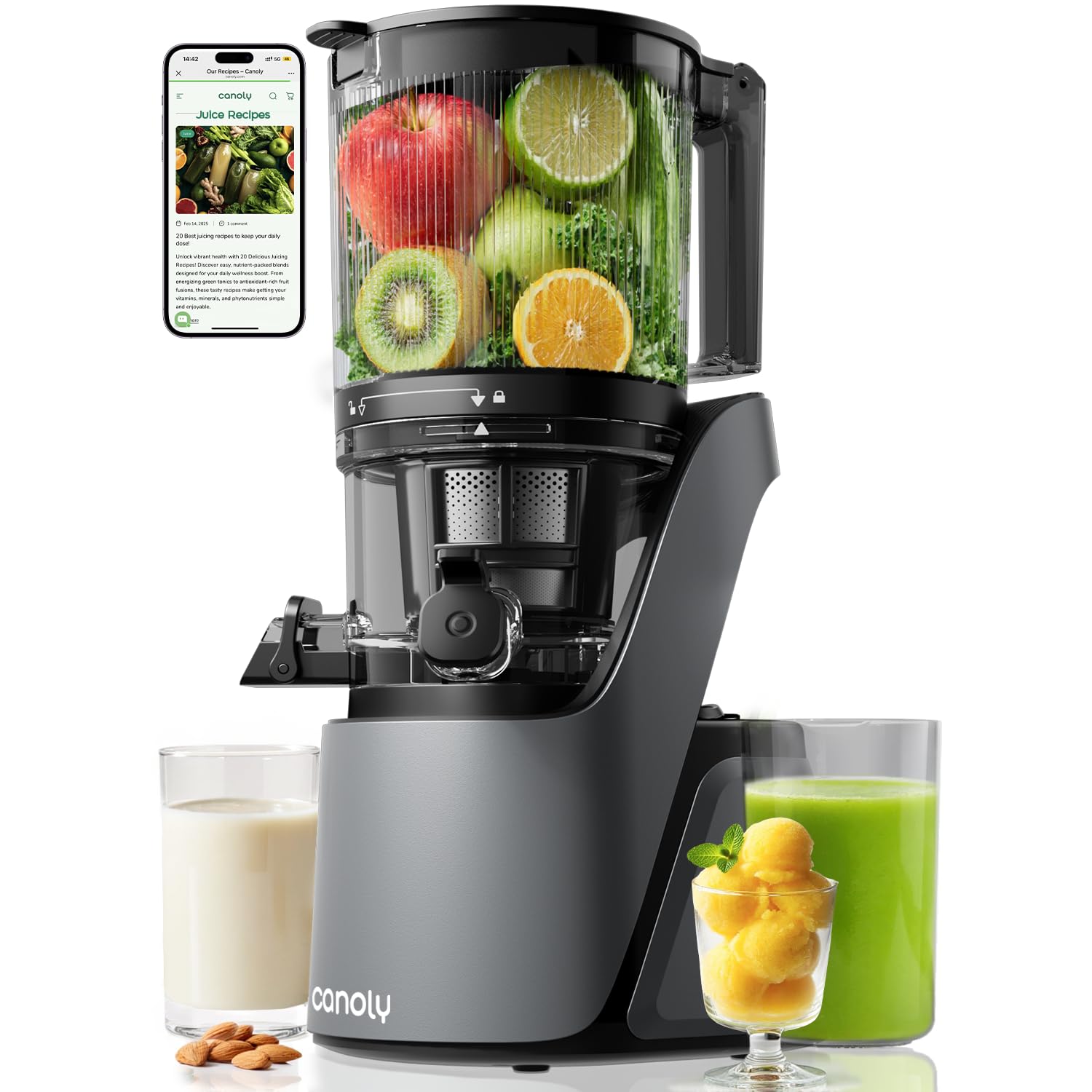
If you want one juicer that feels premium without jumping straight into the highest-end price tier, the Canoly C16 is a smart “center of the market” choice. It’s designed to solve the two problems that kill juicing habits: noise and clogging. Owners repeatedly highlight how calm it sounds in the kitchen and how confidently it handles mixed recipes—hard carrots, watery cucumbers, spicy ginger, leafy greens—without constant babysitting.
What makes it feel more upscale than the typical wide-chute cold press machine is the system design. Instead of relying on you to perfectly pace soft and hard produce, the C16 leans on a pre-cutting approach before pressing, plus an auto-reversing style anti-clog strategy. That combo matters most when your recipes include “troublemakers” like celery strings or pineapple core. And because it includes multiple strainers (juice, sorbet, and nut-milk style use cases), it’s one of the few picks here that can act like a mini beverage station instead of a single-purpose appliance.
Why you’ll like it
- Quiet power that feels “daily-use friendly” – It’s the kind of machine you can run early without waking the house.
- Versatility that’s actually useful – Juice + sorbet + nut-milk style straining means it earns more counter time.
- Strong pulp dryness feedback – Reviewers often describe the pulp as notably dry, a good sign you’re extracting efficiently.
- Workflow feels smoother – Wide chute plus smart anti-clog design reduces the stop/start frustration common in budget cold press units.
Good to know
- If you mainly want orange juice and nothing else, this is overkill—manual presses can be simpler.
- Like most cold press designs, cleaning is easiest if you rinse immediately; dried fiber on fine mesh takes effort.
- It’s a bigger-bodied unit than the tiniest cold press machines, so measure your cabinet clearance if you store it.
Ideal for: households that want a “one-and-done” cold press juicer that’s quiet, capable with tough produce, and flexible enough to justify keeping it out.
2. Nama J2 Cold Press Juicer (Gray) – The Hands-Free Habit Builder

The Nama J2 has a very specific superpower: it makes cold-press juicing feel less like “operating a machine” and more like loading a recipe. Instead of feeding carrots one by one and hovering with a pusher, you load the hopper, close the lid, and let it work. That hands-free rhythm is exactly why long-time owners describe it as a “game changer”—not because it invents juice, but because it removes the most annoying part of juicing: the constant micro-feeding.
Real-life feedback is remarkably consistent: it’s quiet, it’s easy to assemble once you learn the parts, and the pulp tends to come out impressively dry. Several owners describe it as a clear upgrade from more affordable cold press models, especially for batch juicing and leafy greens. The other big trust signal is how often people say they hesitated because it’s a premium buy—then wish they’d done it sooner because it actually gets used. That’s the point: a “perfect value” juicer that you never touch is the most expensive option of all.
Why people stick with it
- Self-feeding makes it feel effortless – Load a full recipe at once, then do something else while it runs.
- Excellent “dry pulp” satisfaction – Owners frequently point out how little moisture is left in the pulp.
- Quiet, calm kitchen experience – A big deal if you juice early or share space with kids.
- Strong confidence factor – It’s one of those appliances that quickly becomes a default, not an occasional tool.
Good to know
- Parts are typically hand-wash focused, so if you only want dishwasher cleanup, consider Ninja or centrifugal picks.
- Hopper-style juicers still benefit from smart loading: alternate soft and hard produce for smoother flow.
- It’s taller than many compact units—check cabinet clearance if you store it on the counter full-time.
Ideal for: serious home juicers who want premium hands-free convenience and a machine that nudges you into a real routine.
3. Nama J2 Cold Press Juicer (Black) – A Sleek, Low-Visual-Clutter Option

Functionally, this is the same Nama J2 experience: the same hands-free hopper workflow, the same “load your recipe and walk away” feel, and the same kind of owner praise around quiet operation and strong extraction. The reason this listing matters is surprisingly practical—color can decide whether a juicer becomes a permanent counter resident or gets banished to a cabinet.
If your kitchen leans darker (black appliances, charcoal counters, stainless accents), the black J2 tends to look more “built-in” and less like a standout gadget. And because the J2 is a juicer people actually keep out, the aesthetic fit isn’t trivial—less visual clutter often equals more consistent use. If you’re investing in the J2 approach, choosing a finish you love is one of the simplest ways to protect that habit.
Why you might choose it
- Same J2 workflow – True hands-free juicing that supports daily use.
- Black finish hides scuffs visually – Helpful if your appliance gets handled constantly.
- Looks “quiet” on the counter – Aesthetic fit can keep it out (and used).
- Great for batch recipes – The hopper-style approach stays the star.
Good to know
- No performance advantage over other J2 colorways—choose based on look and availability.
- As with any cold press, quick rinse right after use keeps the mesh and channels happy.
- If you only juice citrus, a manual press will be simpler and faster to clean.
Ideal for: anyone committed to the J2 workflow who wants a darker, more integrated countertop look.
4. Nama J2 Cold Press Juicer (White) – The “Clean Counter” Aesthetic Choice

Just like the gray and black versions, this is the Nama J2 you buy for the workflow: load the hopper, let the machine pace itself, and enjoy a calmer juicing experience. The white finish is for people whose kitchen style is bright and simple—light cabinets, pale counters, warm neutrals—where a white appliance looks intentional instead of “extra.”
A small but real ownership advantage: on a white finish you can visually spot residue faster, which nudges better cleaning habits. That matters on cold press machines because the secret to long-term “easy cleaning” is not magic coatings—it’s immediate rinsing before fibers dry. If you’re the kind of person who likes to see “clean,” this finish can actually support the habit.
Why you might pick this one
- Same hands-free J2 experience – Hopper convenience that encourages consistent use.
- Perfect for bright kitchens – Looks clean and intentional on lighter counters.
- Visual “cleanliness cue” – Makes it easier to see and rinse residue quickly.
- Strong owner satisfaction – People who buy the J2 tend to actually keep juicing.
Good to know
- Choose color based on your space—performance is essentially the same across listings.
- Cold press juicers reward quick rinsing and occasional deeper brush cleaning on the screen.
- It’s a taller appliance; double-check shelf and cabinet storage space.
Ideal for: J2 shoppers who want the same premium workflow in a bright, “clean counter” look.
5. Ninja NeverClog JC151 – The “I’ll Actually Clean This” Cold Press

Ninja’s NeverClog line hits a sweet spot for normal households: you want cold press benefits, but you don’t want a juicer that demands a spa-day cleaning ritual. Owners consistently describe the Ninja as easy to assemble, easy to rinse, and especially easy to keep using because the parts that touch juice are generally dishwasher-safe. That one detail can be the difference between “I juice weekly” and “I quit.”
The killer feature is Total Pulp Control. Instead of gambling on texture, you choose the filter: less pulp or lots of pulp. That’s more than preference—it’s strategy. If you’re making green juice and want it clean, go less-pulp. If you’re juicing apples/pears and don’t mind body, the “more pulp” filter can feel more satisfying and reduce strain on the mesh. Also worth noting from real use: some people report a squeal or louder moments with certain hard produce. That’s usually a “don’t force it” signal—feed slower, use reverse if needed, and alternate softer items to keep the auger moving smoothly.
Why it’s a daily driver
- Dishwasher-friendly ownership – The cleanup friction is lower than many cold press rivals.
- Pulp texture control – Two filters let you tune juice to your taste (and recipe type).
- Compact footprint – Easy to keep on the counter or store under cabinets.
- Anti-drip lever – A small feature that makes your counter cleaner and reduces waste.
Good to know
- Feed chute is more traditional than hopper-style machines—still some prep and pacing.
- Hard ingredients can spike noise briefly; slower feeding helps a lot.
- If you want nut milk or sorbet, look at multi-strainer machines like Canoly.
Ideal for: people who want cold press juice with a realistic, low-friction cleaning routine—and like the option to control pulp.
6. TUUMIIST Cold Press Juicer (6.5″ Chute) – “Load It All” Family Workflow
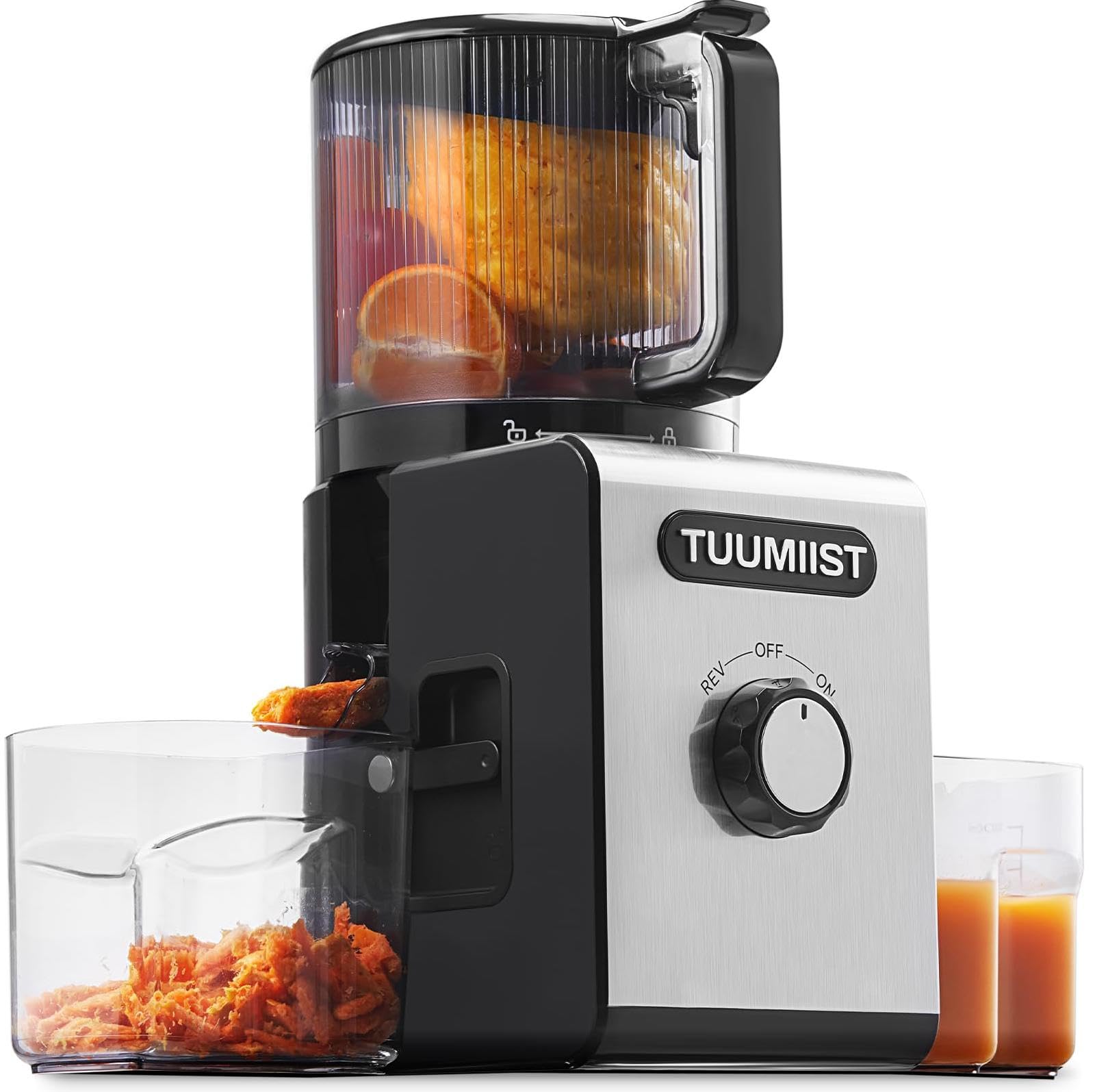
The TUUMIIST is built for people who don’t want to stand there feeding produce like a wood chipper. The oversized chute and big hopper are the point: you can load a full mix (apples, citrus, celery chunks, ginger) and let the machine process with far fewer interruptions. Owners who batch juice for the household love that rhythm because it’s mentally easier—prep once, load once, clean once.
Real-world feedback highlights two things: it’s notably quiet for a cold press machine in this category, and it’s a strong extractor on juicy produce and citrus-forward blends (including peels in some cases). The only consistent “buyer-be-aware” note is cleaning the exit/pulp channel thoroughly. Like many slow juicers, there’s an area where fibers can collect if you don’t rinse promptly. The good news is that once you learn that one spot, the rest of the cleanup is straightforward. Think of it like owning a coffee grinder: one “attention area,” then you’re done.
Why families like it
- Big feed chute saves real time – Less chopping, less “feeding,” more of a batch workflow.
- Quiet, steady operation – Owners often compare it favorably against louder machines they tried first.
- Handles varied produce – Especially strong on citrus, watery fruits, and mixed recipes.
- Good extraction satisfaction – Many users describe pulp that’s quite dry once you learn loading technique.
Good to know
- Deep-clean the outlet/pulp path after each use; don’t let fibers sit and dry.
- Very hard, dry produce (like carrots alone) can feel less “juicy” by nature—blend with apples/cucumber for better flow.
- If you only make one glass at a time, a smaller unit may feel simpler to rinse and store.
Ideal for: batch juicers and families who want wide-chute convenience and a calmer, quieter cold press routine.
7. EanOruus Cold Press (5.8″ Chute) – A Strong “Starter Cold Press” That Doesn’t Feel Cheap
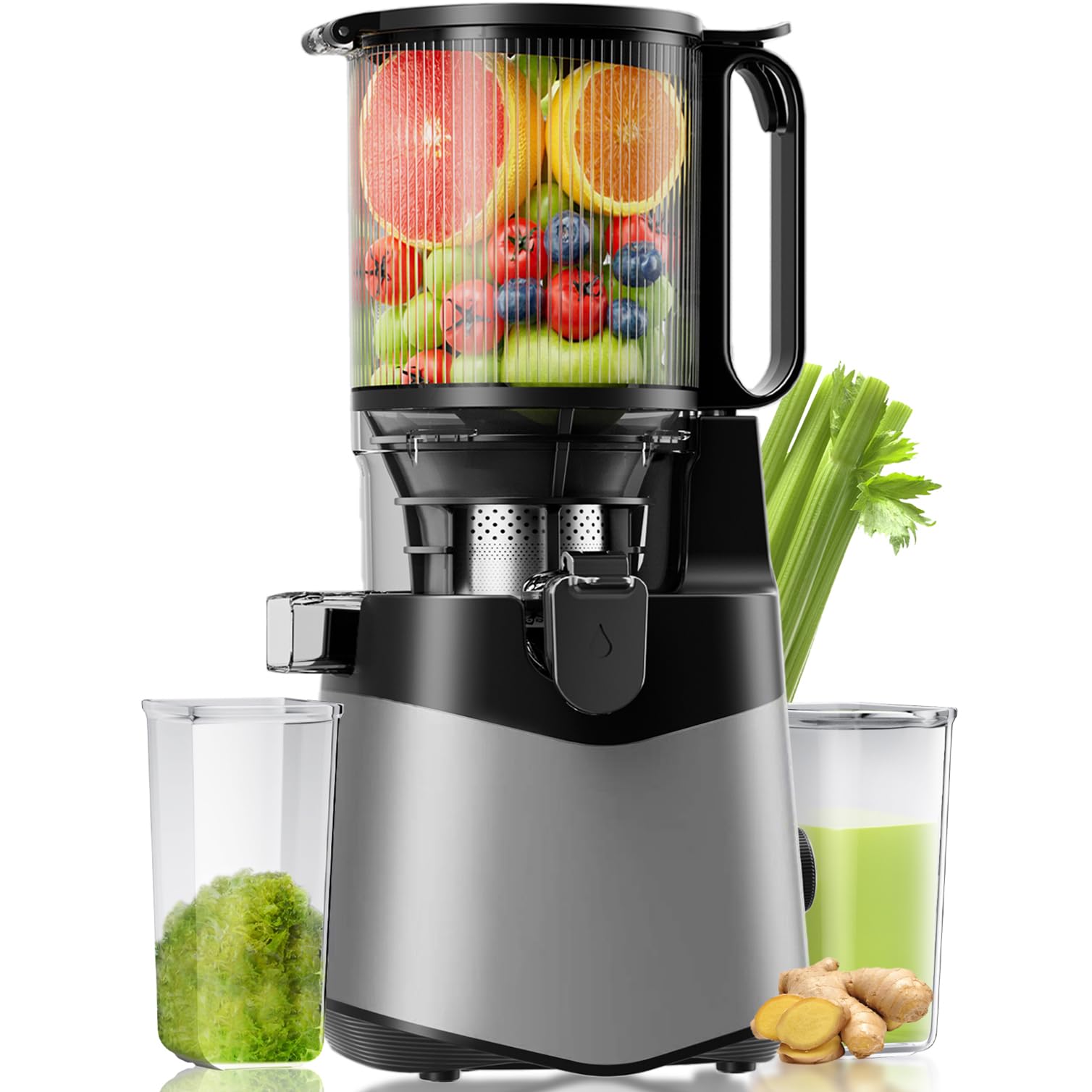
If you’re new to juicing and want cold press benefits without spending premium money, the EanOruus hits the “confidence builder” zone. Owners describe it as easy to assemble, surprisingly easy to clean, and capable enough that they use it weekly (or more). The wide chute makes it feel modern—less chopping, less hassle—and the blade-free design plus lid safety shutoff makes it a comfortable choice in family kitchens.
The sneaky value feature here is the reverse function. New juicers often blame themselves when a machine jams (“Did I cut it wrong?”). Reverse turns that moment into a 5-second fix instead of a teardown. Real owners mention using it for fibrous items like celery and greens, and they often highlight dry pulp and good extraction for ginger shots. The best way to get top results is to adopt a simple rhythm: alternate fibrous produce with juicier items (cucumber, apple, citrus) so the auger stays lubricated and moving cleanly.
Why it’s a strong first cold press
- Wide chute cuts prep time – More “whole produce” juicing without constant slicing.
- Reverse un-jams quickly – Great for beginners and fibrous ingredients.
- Easy cleaning reports – Owners consistently mention that cleanup is easier than expected.
- Family-friendly safety – Lid-open auto stop reduces worry in busy kitchens.
Good to know
- Like most cold press machines, it’s happiest when you don’t overload soft fruit all at once.
- Hand washing is the norm; if you want dishwasher parts, Ninja is the cleaner “default.”
- Very dry, dense produce alone can feel slower—pair with juicier items for a smoother flow.
Ideal for: new juicers who want wide-chute convenience, solid extraction, and a reverse button that saves your patience.
8. YPONE Cold Press (Dual Strainers) – When You Want “Less Pulp” Without Extra Straining

The YPONE stands out for one reason that matters if you’re picky about texture: filtration. Its dual-strainer setup is designed to reduce residue and keep juice cleaner in the glass, which is exactly what many people want when they’re making apple-ginger juice, citrus blends, or anything you plan to store for later. Owners often describe the juice as clean and the pulp as notably dry—two signs you’re getting solid separation and extraction.
The trade-off with finer filtration is always the same: you need to keep the screen clean while you juice. That doesn’t mean stopping every minute—it means learning a simple sequence. If you’re doing a big batch, start with juicy produce (cucumber, orange, pineapple) to “wet” the system, then add fibrous greens, then finish with watery produce again. That rinse-through approach keeps fine mesh from loading up too quickly and helps prevent the slower pace some owners mention compared to faster machines.
Why texture-lovers pick it
- Dual filtration for cleaner juice – Less gritty pulp and fewer floaty bits without re-straining.
- Quiet, manageable sound – Owners frequently describe it as surprisingly calm, even with carrots.
- Wide chute convenience – Whole-fruit capability reduces prep stress for daily use.
- Dry pulp satisfaction – A common “this works” signal in owner feedback.
Good to know
- Finer mesh can slow down if you overload it with soft fruit—pace matters.
- Some people still prefer to cut produce smaller for faster processing (especially dense items).
- Hand cleaning is easiest right away; dried fibers on fine mesh are the hardest to remove later.
Ideal for: anyone who wants clean, low-pulp juice texture without constantly straining through a separate sieve.
9. ACOQOOS Auto-Feed Cold Press – Fast Routine, Minimal Thinking

The ACOQOOS is aimed at busy households: wide chute, auto-feed style design, and a “toss it in and go” approach that’s less finicky than classic narrow-chute cold press machines. Owners regularly describe it as powerful enough for daily use, quiet, and easy to clean—exactly the three traits that keep a juicer from becoming a dusty impulse buy.
The most valuable real-life feedback isn’t about juice yield—it’s about friction points. One owner note that’s worth taking seriously: the unit can be taller than expected with the plunger/lid setup, so it may not fit under low cabinets unless you remove the top piece when storing. Another repeated theme: the pulp outlet area can trap old pulp if you don’t rinse it properly. That doesn’t mean it’s hard to clean; it means you should treat the pulp exit as a “mandatory rinse zone,” not an optional one. If you do that (and rinse immediately), ownership stays easy.
Why it works for busy people
- Auto-feed style convenience – Less babysitting and less “feeding one stick at a time.”
- Wide chute reduces prep – Whole apples and chunky produce are much easier here.
- Quiet, steady operation – Owners often praise the sound level in daily use.
- Simple assembly – Fewer confusing steps, which matters when you’re half-awake.
Good to know
- Check height under cabinets; some setups need lid/plunger removed to store easily.
- Pulp outlet needs a thorough rinse to avoid trapped fibers.
- If you want ultra-clear juice, a dual-strainer model may naturally filter a bit finer.
Ideal for: anyone who wants cold press benefits in a low-thinking, time-saving workflow—especially for busy mornings.
10. Hamilton Beach Big Mouth 67601A – The “Juice Right Now” Workhorse

Centrifugal juicers have one job: go fast. And the Hamilton Beach Big Mouth is the kind of machine people buy when they want fresh juice without changing their whole schedule. Drop in apples, carrots, cucumbers, oranges—get juice quickly. Owners talk about it as a great “beginner machine” because it’s easy to assemble, easy to rinse, and doesn’t require learning the slow-feeding technique that cold press machines prefer.
Here’s the expert truth: centrifugal juicers are not “worse,” they’re just different. They typically introduce more air, which means more foam and faster separation—so this is best if you drink immediately. Owners who love it often do two smart things: (1) they clean the filter basket right away (the included brush helps), and (2) they juice produce that behaves well in centrifugal systems—hard fruits/veg, watery items, citrus. If your goal is heavy green juicing, you’ll likely feel the limitations; if your goal is fast fresh juice before work, it can be perfect.
Why people love it
- Speed is the whole point – Fast juice output with minimal “technique.”
- Big chute reduces prep – Whole-ish produce goes in without fussy slicing.
- Easy rinse cleanup – Many owners say cleaning is simple if you do it immediately.
- Great “starter juicer” confidence – Does what it’s supposed to do without drama.
Good to know
- It’s louder than cold press machines—normal for centrifugal speed.
- Expect more foam and quicker separation; drink right away or stir before sipping.
- Leafy greens yield is typically lower than cold press; that’s the main trade-off.
Ideal for: anyone who wants fast juice with minimal learning curve—especially for apple/carrot/citrus/cucumber style recipes.
11. QCen 800W Centrifugal Juicer – Two Speeds, Simple Results

The QCen is a classic “get the job done” centrifugal: wide chute, strong spin, and a two-speed switch that actually makes sense. Low speed for soft fruits, high speed for hard veg. Owners who buy it for daily morning juice tend to report the same two wins: it works well for the basics, and it’s easy to clean because the parts detach quickly (and many people choose to use the dishwasher where applicable).
The thing to understand with budget centrifugal machines is that they’re designed for short, efficient runs—not for long continuous commercial-style sessions. That’s not a flaw; it’s a reality of the design. If you juice in “bursts” (two oranges, two apples, some carrots), it can feel incredibly satisfying. If you juice a full week of bottles in one go, you’ll fill the pulp bin fast and you’ll want to rinse the screen mid-session. That’s the centrifugal ownership model: quick output, quick cleanup, occasional screen brushing.
Why it’s a good buy
- Two speeds that matter – Softer fruit on low, harder produce on high for better control.
- Wide chute reduces chopping – Less prep time before you get juice.
- Easy to take apart – Owners consistently describe fast breakdown and cleanup.
- Strong “everyday basics” performance – Apples, carrots, cucumbers, citrus are its comfort zone.
Good to know
- It’s loud (centrifugal speed), but runs are short.
- Foam and separation are normal; drink immediately or strain if you prefer.
- Soft fruits can get frothy—pair them with harder produce for a cleaner result.
Ideal for: budget-focused shoppers who want fast juice and like the simple control of a two-speed centrifugal.
12. Zulay Cast Iron Citrus Press – Quiet, Satisfying, “Nothing to Break” Juicing
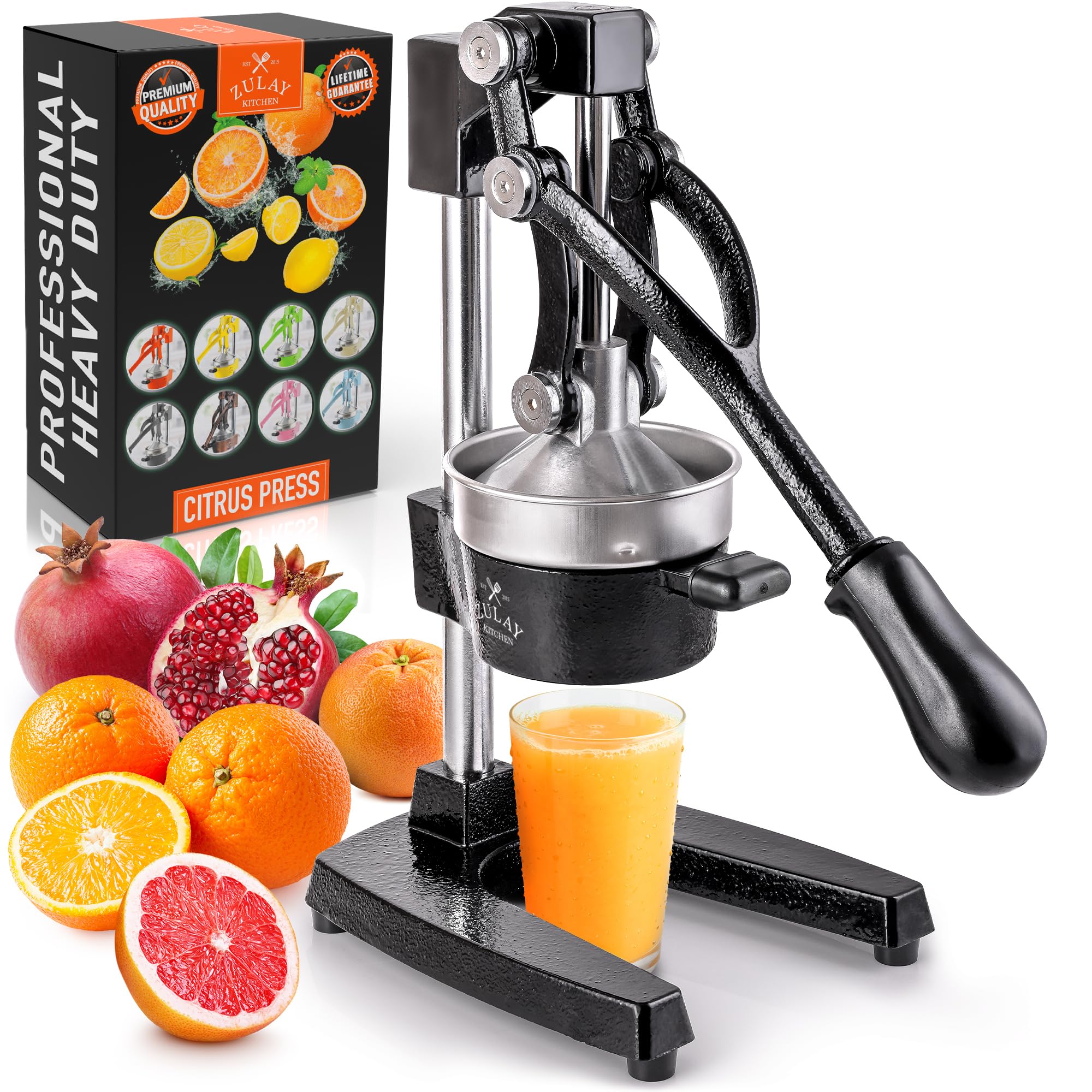
If your favorite “juice” is really citrus—fresh orange juice, lemonade, lime for cocktails—the Zulay manual press can be the most joyful choice in this entire list. Why? Because it has almost none of the juicer pain points. There’s no motor sound, no fine mesh screen to brush, no fear of clogging, and no complicated assembly. It’s a lever. You cut citrus, press, and rinse two stainless pieces. Done.
Owners love it for the same reasons: it feels sturdy, it extracts efficiently, and cleanup is fast. A couple of real-life tips show up repeatedly in feedback. First: the handle is heavy—lift and set it carefully so it doesn’t swing unexpectedly. Second: bigger citrus sometimes benefits from repositioning the fruit to squeeze edge juice after the first press. That’s not hard; it’s just how leverage presses work. If you juice a bag of oranges at a time, this press can genuinely replace the “electric juicer that never gets used” problem.
Why it’s a citrus cheat code
- No noise, no motor drama – Pressing is quiet and satisfying.
- Minimal cleanup – Rinse the bowl and cone; you’re basically done.
- Sturdy materials – Cast iron + stainless parts feel built for years of use.
- Great for everyday citrus – Lemon/lime/orange workflows are faster than electric alternatives.
Good to know
- This is not for greens, carrots, or “juice everything”—it’s a citrus specialist.
- Heavy handle requires mindful use (set it back between presses).
- It takes counter space vertically; measure if you store appliances under cabinets.
Ideal for: citrus lovers who want fast fresh juice with almost zero cleanup—and prefer a tool that can last for years.
13. LQZ Cold Press (5.4″ Chute) – Compact, Capable, and Counter-Friendly
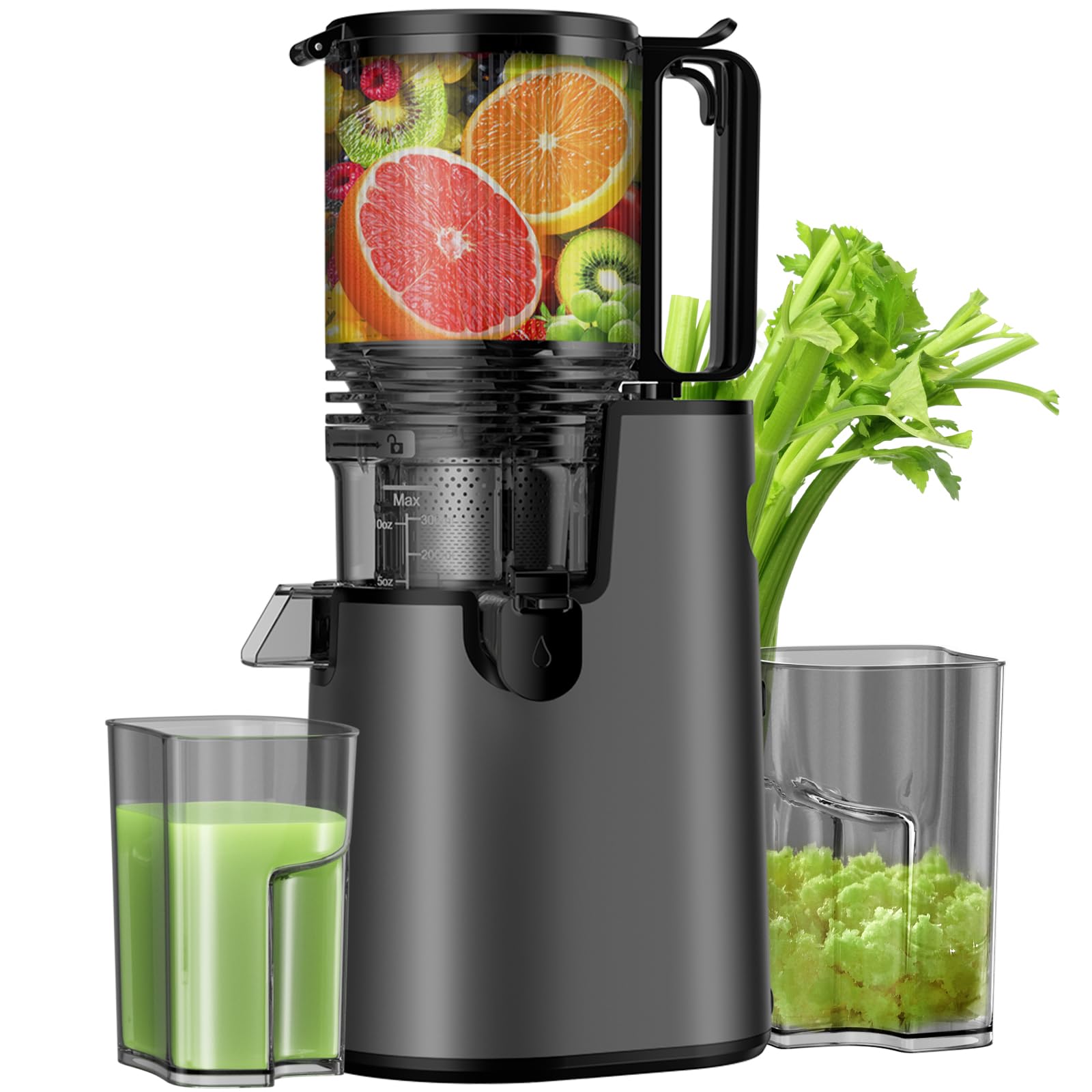
The LQZ is for the “I want cold press benefits, but my kitchen is small” crowd. Owners like that it doesn’t feel clunky on the counter, yet it still offers a wide chute to reduce prep. In practice, that makes it a strong everyday single-serving juicer: apple + ginger, cucumber + lemon, simple green blends—things you can knock out quickly without turning your kitchen into a produce factory.
Texture-wise, the dual-layer filtration approach aims for a cleaner, refreshing juice. Owners commonly mention good yield and fairly dry pulp for the category. The realistic trade-off is cleanup involvement: you’re still dealing with a filter and pressing components, so it’s not “rinse and done” like a manual citrus press. But if you rinse right after use, most of the mess comes off quickly. Also, if you juice multiple fruits back-to-back, some users prefer a quick rinse mid-session to keep the filter flowing smoothly—especially with softer fruit.
Why it fits small kitchens
- Compact footprint – Easier to keep out (or store) than bulky wide-hopper machines.
- Wide chute still saves prep – You get “whole produce” convenience without a massive body.
- Good everyday yield – Owners report strong extraction and satisfyingly dry pulp for many recipes.
- Beginner-friendly controls – Simple operation without menu overload.
Good to know
- Cleaning still requires attention to the filter; rinse immediately for easiest ownership.
- Some fruits may require a quick rinse between batches to maintain flow.
- If you want true hands-free loading, hopper-style machines will feel more automatic.
Ideal for: small kitchens and single-serve routines that want cold press juice without a big, permanent appliance footprint.
How Juicers Actually Work (and How to Get Better Juice at Home)
Most people shop juicers like they shop blenders: more watts = better. For juicers, that’s only half true. Extraction quality is about how the machine moves produce through the system: the feed rhythm, the pressure, the filtration, and how well it avoids jams and oxidation for the recipes you actually make.
Cold press vs centrifugal: what you feel in real life
- Cold press (masticating) uses a slow auger to crush and press. It typically produces less foam and a more consistent texture, and it’s often better with greens.
- Centrifugal shreds/spins produce fast. It’s great for speed, but the juice often foams more and separates quicker—best when you drink immediately.
- Manual citrus is the simplest: pure pressure on juicy fruit. It’s fast, quiet, and extremely easy to rinse, but limited to citrus-like produce.
If you hate foam and love the “juice bar” feel, cold press is usually your friend. If you want a glass in minutes and don’t mind stirring, centrifugal can feel like a cheat code.
Expert tips that instantly improve results
- Alternate produce types – Mix hard + soft: carrot with apple, greens with cucumber. It keeps the system flowing and reduces jams.
- Don’t overload soft fruit – Soft pears/peaches can turn to mush. Feed them slowly, and pair with firmer produce to keep the screen clear.
- Use reverse early – If you hear strain or see pulp backing up, reverse immediately. Waiting makes a clog harder to clear.
- Rinse immediately – The difference between “easy to clean” and “I hate this” is usually timing, not the juicer model.
- Choose the right expectation – Greens yield less in centrifugal machines; citrus-only is best with a press; dry produce yields less juice by nature.
If you want juice that stays nicer for longer, chill your produce, use a cleaner filter setting (if available), and store in a tightly sealed container. And remember: separation is normal—shake or stir and you’re good.
FAQ: At-Home Juicers, Answered
What’s the biggest mistake people make when buying a juicer?
Do cold press juicers really make better juice?
Does juicing remove fiber (and is that bad)?
How do I reduce foam and separation?
How do I keep a cold press juicer from clogging?
Final Thoughts: Picking the Best At Home Juicer for You
A good juicer doesn’t just make drinks—it changes your default choices. You stop buying bottled juice “sometimes” and start making something fresher more often, because it’s easy enough to repeat. And that’s the entire game: repeatability.
Here’s the quickest way to decide (with zero overthinking):
- Want the best all-around balance for most homes? Start with the Canoly C16. It’s quiet, capable, and versatile enough to feel worth keeping out.
- Want a premium, hands-free routine that truly sticks? Choose the Nama J2 (Gray) (or the Black / White finish if you prefer that look).
- Want cold press benefits with dishwasher-friendly reality? The Ninja NeverClog JC151 is a strong daily driver for normal kitchens.
- Want “load it up” batch juicing without premium pricing? Look at the wide-chute hopper approach of TUUMIIST or the efficient wide-chute value of EanOruus.
- Want juice fast and you’ll drink it immediately? Centrifugal speed wins with Hamilton Beach Big Mouth or the two-speed QCen.
- Want the easiest citrus-only solution with almost no cleanup? Grab the Zulay Cast Iron Press.
At the end of the day, the best at home juicer is the one that fits your routine so well you don’t need motivation. Pick your juicer type first, then choose the feed system and cleaning reality you’ll actually live with—and you’ll make a purchase you feel good about every time you pour a glass.
