
There’s a quiet kind of kitchen magic that happens when you own one pan you can trust. Not “marketing trust.” Real trust. The kind where you reach for it on autopilot because you already know it won’t warp, won’t fight you on cleanup, and won’t turn your weeknight into a smoke-alarm situation.
That pan exists… but it’s not the same for everyone. For some cooks, the perfect “do‑it‑all” pan is a deep sauté with straight walls and a lid. For others, it’s a chef’s pan with curved sides for tossing. And for serious searing and long-term durability, nothing beats properly cared-for cast iron or a well-built stainless pan with the right technique. If you’re hunting for the best all purpose pan, the winning move is matching the pan’s geometry and material to how you actually cook.
This guide pulls together 15 standout “all‑purpose” contenders on Amazon—hard-anodized nonstick workhorses, ceramic multitaskers, hybrid pans that behave like stainless but clean easier, plus cast iron pieces that can outlive your kitchen remodel. I leaned heavily on what real owners repeatedly praise (and complain about): how the handle behaves on gas, whether the lid knob gets hot, what happens after months of daily use, and which pans truly replace multiple pieces instead of just pretending.
How to Choose the Best All Purpose Pan for Your Kitchen
A true “all-purpose” pan isn’t a single product category—it’s a job description. Your goal is to pick a pan that can cover 80–90% of what you cook without annoying compromises. That means understanding three things up front: the shape, the material, and the way you cook on your specific stove.
1. Define your “one-pan” job description
Before you compare brands, answer this one honestly: What do you actually want to cook in this pan? Here are the common all-purpose “jobs,” and the pan features that support each one:
- Weeknight protein + sauce: You want a deeper pan (2.5–3″+ walls) with a lid and enough bottom area to brown first, then simmer.
- Stir-fry + tossing: Curved sides matter. A chef’s pan or wok-style pan helps you flip food without launching it across the kitchen.
- Breakfast + delicate foods: This is where slick nonstick shines—especially if eggs are a daily ritual.
- High-heat searing: Stainless or cast iron is the safe bet. Hybrid can work, but it still benefits from good technique.
- Batch cooking + crowd meals: Bigger diameter and/or higher walls. A helper handle becomes non-negotiable.
2. Pick your surface strategy: nonstick, ceramic, hybrid, stainless, or cast iron?
This is where most buyers get burned—because the word “nonstick” gets used like it means one thing. It doesn’t.
- Traditional nonstick (PTFE-style coatings): Typically the easiest release for eggs and sticky sauces. Best when used on low-to-medium heat. The common failure mode isn’t “bad quality”—it’s overheated coatings and abrasive cleaning.
- Ceramic nonstick: Usually marketed as PFAS-free, and it can feel incredibly slippery at first. The tradeoff: ceramic often demands more gentle heat and careful utensils to keep performance strong over time.
- Hybrid (stainless + ceramic/nonstick pattern, like HexClad): Think “stainless behavior with easier cleanup.” It’s not the slickest surface for zero-fat eggs, but it tolerates higher heat and metal utensils better than most coatings.
- Stainless steel (tri-ply clad): Not inherently nonstick—your technique creates the “release.” The upside is durability, safe high-heat searing, and effortless deglazing for pan sauces.
- Cast iron: A naturally seasoned surface that improves with use. It’s unbeatable for heat retention and deep browning, but it’s heavy and needs basic care.
3. Geometry matters more than you think (and most listings won’t explain it)
If you want one pan to replace several, you’re usually looking for one of these shapes:
- Sauté pan (straight sides): Maximum bottom area for browning + taller walls for simmering. This is the “one-pan dinner” champion.
- Chef’s pan / everyday pan (rounded sides): Easier tossing, stirring, and sauce work, often with slightly less flat browning space.
- Wok-style pan (high curve): Great for stir-fry and saucy cooking, but the flat base may be smaller than you expect—important for electric/induction.
- Wide skillet (low-ish walls): Great for searing and reducing, but not as clean for splatter-heavy simmering.
If you cook lots of sauces and braises, straight sides are your best friend. If you toss food constantly, a curved profile reduces the “spatula fight.” If you’re on induction, a generous flat base is not optional—your heat comes from contact.
4. Lids, handles, and “the heat hazard nobody warns you about”
Owner reviews repeatedly reveal that little design details are what make a pan lovable (or irritating):
- Glass lids: Great for monitoring without heat loss, but lid knobs and metal rims can get hot quickly.
- Steam vents: Helpful when you want to prevent boil-overs without cracking the lid and losing too much heat.
- Helper handles: A deep, full pan can get heavy fast—especially with liquids. A second handle turns “awkward” into “stable.”
- Stay-cool claims: Many handles stay cooler than the pan body, but most will still heat up during long cooking or oven finishing. Plan for a mitt.
- Soft-touch handles on gas: Several owners note that gas flames can singe or discolor coated handles if the flame climbs the sides. A pan can be “great” and still require smart burner sizing.
5. Cleaning and longevity: what actually keeps a pan performing
If you want your pan to stay great, treat it like a tool, not a disposable accessory:
- Avoid cooking spray residue: Aerosol sprays can polymerize into a sticky film on many surfaces—especially ceramic and some nonstick coatings.
- Cool before washing: Thermal shock is a classic warping trigger. Let the pan cool a bit before rinsing with cold water.
- Use the right “reset” cleaner: For stainless, a gentle powder cleaner can restore shine. For nonstick, warm soapy water and a soft sponge win.
- Learn your heat ceiling: The fastest way to ruin coatings is routinely blasting empty pans on high. If your cooking style is “rip it on high,” pick stainless, cast iron, or hybrid.
Quick Comparison: 15 Best All Purpose Pan Picks
Here’s a fast scan of the 15 pans we’ll review. Use this table to spot the shape and material that match your stove, your meals, and your tolerance for maintenance—then jump into the full review for the real-world details.
On smaller screens, swipe or scroll sideways to see the full table.
| Model | Pan style | Size / capacity | Best match | Amazon |
|---|---|---|---|---|
| Calphalon Hard-Anodized Nonstick 5-Qt Sauté Pan | Deep sauté + lid | 5 qt | Most versatile “one-pan dinner” pick | Amazon |
| HexClad Hybrid 4.5-Qt Deep Sauté Pan + Lid | Hybrid | 4.5 qt | High-heat flexibility with easier cleanup | Amazon |
| All-Clad HA1 Fry Pan Set (8″ + 10″) | Skillet set | 2 pans | Everyday foundation for eggs, fish, searing | Amazon |
| Anolon Advanced Home 12″ Ultimate Pan + Lid | Chef’s pan | 5 qt | Deep nonstick for big family meals | Amazon |
| Cooks Standard 12″ Hard-Anodized Everyday Pan + Lid | Wok-style chef pan | 5 qt | Induction-friendly stir-fry + simmering | Amazon |
| Cooks Standard Tri-Ply Stainless Wok/Chef Pan + Lid | Stainless | 4.5 qt | Deglazing, sauces, and long-term durability | Amazon |
| Lodge 5-Qt Cast Iron Deep Skillet + Lid | Cast iron | 5 qt | Deep frying, searing, and forever durability | Amazon |
| Our Place Large Always Pan 12.5″ (Ceramic) | Ceramic | 4 qt | Pretty, functional one-pan cooking for bigger batches | Amazon |
| Our Place Always Pan 2.0 10.5″ (Ceramic) | Ceramic + accessories | 2.6 qt | Small-kitchen multitasker with modular lid + steamer | Amazon |
| HexClad Hybrid 3.3-Qt Deep Sauté Pan + Lid | Hybrid | 3.3 qt | Premium “two-person” one-pan workhorse | Amazon |
| HexClad Hybrid 12″ Wok | Hybrid wok | 12″ | Stir-fry + tossing on induction without babying a coating | Amazon |
| HexClad Hybrid 8″ Frying Pan + Lid | Hybrid small | 8″ | Eggs, sides, and quick sears in a small footprint | Amazon |
| Granitestone 14″ Family Nonstick Skillet | Oversize nonstick | 14″ | Big batches when you hate cooking in rounds | Amazon |
| Goodful All-in-One Pan 11″ + Lid + Turner | Deep nonstick | 4.4 qt | Declutter pick that covers frying, boiling, braising | Amazon |
| Lodge 12″ Cast Iron Dual Handle Grill Pan | Grill pan | 12″ | Indoor grill marks + serious searing | Amazon |
In‑Depth Reviews: 15 Standout All‑Purpose Pans
Now let’s get into what actually matters: how these pans behave when you’re cooking real food, on real stoves, with real time pressure. For each pick, I’ll highlight the “hidden” ownership details that reviews reveal—heat quirks, handle reality, cleaning patterns, and the specific cooking jobs each pan crushes.
1. Calphalon® Hard-Anodized Nonstick 5‑Qt Sauté Pan with Lid — The Real One‑Pan Dinner Machine

If you want one pan that truly feels like it can run your kitchen, start here. A deep sauté pan is the most “honest” all-purpose shape because it gives you both bottom space for browning and side height for sauces, rice, shallow frying, and simmering—without the splatter you get from a low skillet.
This Calphalon model earns its keep because it leans into the everyday realities: fast and even heating from hard-anodized aluminum, easy food release, and a lid that’s genuinely useful (not flimsy). Owners repeatedly mention it’s “big enough to cook an entire meal” and that the straight sides help keep food in the heat zone instead of creeping up a slope and steaming.
Here’s the expert nuance: the straight-wall sauté design makes it easier to build flavor in stages. You can sear chicken thighs without crowding, deglaze with a splash of liquid, then simmer a sauce without transferring to a pot. That workflow is what makes a pan feel “effortless.” It’s not just size—it’s how the geometry supports the sequence of cooking.
Why it feels like a true kitchen upgrade
- Deep, straight walls – Better for sauces, rice, shallow frying, and one-pan meals without messy splatter.
- Even heating for batch cooking – Owners frequently highlight consistent cooking across the base when making big meals.
- Oven finishing is realistic – The pan transitions cleanly from stovetop browning to oven finishing for chops, thighs, and casseroles.
- Low-friction cleanup – The nonstick release is the kind that makes you actually cook more often.
Good to know (real-world ownership details)
- Heat travels to metal parts – Several owners note the lid handle and smaller metal handles can get very hot during long cooking; keep a mitt nearby.
- Big capacity means big surface area—use a burner that matches the base to avoid hot rings on smaller electric coils.
- If you plan to “rip it on high” often, remember that nonstick rewards medium heat more than brute force.
Ideal for: cooks who want one pan that can brown, simmer, braise, and batch-cook with minimal fuss—especially for family-style meals and leftovers.
2. HexClad Hybrid Nonstick 4.5‑Qt Deep Sauté Pan + Lid — Stainless Strength, Easier Cleanup

HexClad is the “I cook a lot and I’m tired of babying pans” option. The hybrid surface is designed to give you the high-heat confidence of stainless with a smoother cleanup experience than raw steel. In real kitchens, that means it’s excellent for messy, saucy cooking: sticky reductions, browned bits, shallow frying, and one-pot meals that normally leave a pan looking like a crime scene.
This 4.5‑quart deep sauté size hits a sweet spot. It’s large enough for batch cooking and sloppy noodle dishes, but not so huge that it becomes awkward to lift or impossible to store. Owners often describe it as a “permanent stovetop resident” because it can do the long list: sear → simmer → finish in the oven, without feeling fragile.
The expert truth about hybrid: you still want to cook like a skilled stainless cook. Preheat gently, add a fat, and don’t expect “dry egg in a cold pan” magic. When you treat it correctly, the payoff is huge: you can use higher heat without the same anxiety you’d feel with many conventional coatings, and you can clean it without drama.
Why serious cooks love it
- High-heat flexibility – Great for searing and oven finishing without feeling like you’re risking the surface every time.
- Deep, straight-ish walls – Handles braises, pan sauces, shallow frying, and saucy pasta with less splatter.
- Metal utensil tolerance – Owners appreciate not having to “tiptoe” around the surface like a delicate ceramic pan.
- Easy cleanup loop – Deglaze, rinse, wipe, done—especially after sticky or sugary sauces.
Good to know
- It’s not “Teflon-slick” – Expect best results with oil/fat and medium heat, especially for eggs.
- The pan has real heft—great for stability, less fun if you have wrist or grip issues.
- The tempered glass lid typically has a lower oven limit than the pan itself; use care when oven finishing with the lid on.
Ideal for: high-usage kitchens that want one pan to handle searing, sauces, and messy meals—without fragile “don’t touch it” vibes.
3. All‑Clad HA1 2‑Piece Fry Pan Set (8″ + 10″) — The Everyday Pair That Covers Most Cooking

If your idea of “all-purpose” is fast sautéing, eggs, browning, and pan-frying—this set is a powerhouse. Two pans can be more practical than one deep pan because you can run parallel cooking without juggling or waiting: eggs in the 8″, vegetables or protein in the 10″.
All‑Clad’s HA1 line is built for consistent heat and a stable base (including induction compatibility), which matters more than people expect. A wobbling or uneven pan ruins the “one-hand toss” and causes weird browning. Owners frequently mention the solid feel, the reliable release, and the sweet-spot weight: substantial without being exhausting.
Expert note: these are not “sauce” pans. This set wins when you want controlled browning and flipping, not long simmering. If you regularly build pan sauces, you may add a deep sauté later—but as a daily driver duo, it’s hard to beat the coverage.
Why this set earns loyalty
- Two-pan workflow – Makes real dinners easier: protein in one pan, side in the other, no timing chaos.
- Even heating + stable base – Helps prevent “hot ring” browning and makes induction cooking more predictable.
- Comfortable handles – The grip feels secure, and many owners appreciate the balance when tossing or flipping.
- Oven-ready versatility – Helpful for finishing frittatas, chicken cutlets, or quick bakes.
Good to know
- This is a shallow-pan set—if you want to braise or simmer with a lid, you’ll still want a deeper piece.
- Nonstick longevity improves when you treat “dishwasher safe” as “possible,” not “default.” Gentle washing keeps the surface happier.
- If you routinely cook for a crowd, you may want a larger pan size in your lineup.
Ideal for: cooks who want a premium daily foundation for eggs, fish, sautéed vegetables, and pan-fried staples—especially on induction.
4. Anolon Advanced Home 12″ Ultimate Pan + Lid — Deep, Tossable, Weeknight-Ready

This is the kind of pan that quietly replaces a skillet, a small pot, and a shallow braiser for a lot of households. The shape is “ultimate pan” / chef’s pan style—sloped sides with real depth—so it’s fantastic for meals where you want to stir, toss, and simmer without changing cookware.
Owners who keep coming back to Anolon usually praise two things: even heating and a durable-feeling nonstick that stays slick when treated correctly. The high walls make it great for saucy dishes, but the rounded base also helps when you’re flipping vegetables or sliding pasta through sauce. In other words, it’s designed for motion, not just static frying.
The expert detail most listings gloss over: curved-wall pans reduce splatter and improve stirring, but they can slightly reduce pure “browning acreage” compared with a straight-wall sauté. If your cooking style is “lots of searing in a single layer,” you may prefer the Calphalon sauté shape. If your style is “stir, toss, build sauce, serve,” this Anolon profile is a dream.
Why it’s so usable
- Deep, high-capacity profile – Great for big pasta finishes, stir-fry, curry, and one-pan meals without boil-overs.
- Comfort + control – The main handle is designed to feel secure; the helper handle reduces the “heavy pan wobble.”
- Even heating – Helps prevent the frustrating combo of burned edges + undercooked centers.
- Lid included – Makes it genuinely useful for simmering, steaming, and quick braises.
Good to know
- Many owners report best results at medium heat; high heat can shorten the “like-new” release window for any coated pan.
- Some users note hot spots on exposed metal sections of the handle—grab closer to the silicone grip area when moving it.
- Hand washing is the safe “keep it great longer” move, even when the pan feels easy to clean.
Ideal for: busy households that want one deep, toss-friendly nonstick pan for saucy cooking, pasta finishes, rice dishes, and big skillet meals.
5. Cooks Standard 12″ Hard‑Anodized Everyday Pan + Glass Lid — The Practical Stir‑Fry‑to‑Simmer Workhorse

Cooks Standard has a strong reputation for “surprisingly durable for the money,” and this everyday pan is built for the kind of cooking that fills real kitchens: noodles, curries, stews, shallow frying, stir-fry, and big sautéed vegetables. The high walls and 5‑quart capacity give you breathing room so you can stir without launching food or splashing sauce onto the stove.
Owners who stick with this pan tend to love how evenly it heats once it’s up to temperature and how quickly it rinses clean. Several reviews highlight multi-environment use—indoor electric ranges, outdoor burners, heavy daily cooking—which is a strong stress test for any coated pan.
The expert nuance: wok-style pans like this often have a smaller flat cooking “landing pad” at the bottom than their 12″ rim suggests. That’s not a flaw—it’s a design choice. It means the center gets the most intense heat (great for stir-fry technique), while the sides stay slightly cooler (ideal for keeping cooked food warm while you finish the next batch). If you want “everything browns evenly everywhere,” pick a straighter sauté design. If you want “stir-fry control + sauce space,” this shape excels.
Why it punches above its weight
- High-capacity everyday shape – Excellent for saucy meals, soups, curry, and stir-fry without overflow.
- Nonstick + hard-anodized build – Owners often praise easy cleanup and respectable durability when used regularly.
- Glass lid with vent – Lets you monitor simmering and reduce boil-over risk during pasta or sauces.
- Broad cooktop compatibility – Handy if your kitchen setup changes (or you move) and you don’t want cookware that becomes obsolete.
Good to know
- The smaller flat base can mean less “single-layer searing area” than a straight-wall sauté pan of similar rim size.
- It can take a bit longer to heat up than thinner pans—this is often a durability tradeoff, not a defect.
- As with most nonstick, silicone/wood tools and gentle cleaning keep performance strong longer.
Ideal for: stir-fry lovers and sauce-heavy cooks who want a roomy pan that can sauté, simmer, and serve—without a steep learning curve.
6. Cooks Standard Tri‑Ply Stainless 12″ Wok/Chef’s Pan + Lid — The “Learn Once, Use Forever” Pan

If you want maximum versatility without worrying about coatings, stainless is the grown-up answer—and this tri‑ply Cooks Standard pan is a strong entry point. The value of stainless isn’t “it never sticks.” It’s that it can handle high heat, acidic sauces, and aggressive deglazing without getting weird.
Real owners often describe a learning curve, followed by a “why did I wait so long?” phase. Once you understand heat control, stainless becomes predictable: preheat, add oil, let food release naturally. The payoff is massive: you can sear meat deeply, build a pan sauce from browned bits, and scrub it back to clean with the right tools.
Expert detail that matters: tri‑ply construction reduces hot spots and improves warp resistance, which is especially important on electric cooktops. Several long-term, heavy-use scenarios (including teaching kitchens) highlight that a pan’s survival often comes down to staying flat. If your pan stays flat, your cooking stays consistent—and your induction/electric performance doesn’t degrade over time.
Why stainless earns a permanent spot
- Deglazing + sauce power – Brown, deglaze, reduce, finish: stainless shines for “restaurant-style” flavor building.
- Coating-free durability – No nonstick layer to baby; great for high-heat and long simmering.
- Tri-ply heat control – More even heating helps reduce scorching and improves consistency across the base.
- Easy to “reset” – When it looks rough, stainless can often be restored with a proper cleaning approach.
Good to know
- Eggs can be frustrating until your heat and fat technique is dialed in—this is normal for stainless.
- Glass lids and handles can get hot; treat them like oven hardware during long cooking.
- It’s a large pan—amazing for families, but storage space matters (especially in smaller kitchens).
Ideal for: cooks who want to sear, deglaze, simmer tomato sauces, and keep one pan for years—especially on induction or electric ranges.
7. Lodge 5‑Qt Pre‑Seasoned Cast Iron Deep Skillet + Lid — The Heat-Retention Beast

This is not a “cute” pan. It’s a serious tool. The Lodge deep skillet (often called a chicken fryer style) is built for jobs that punish weaker cookware: deep frying, searing thick cuts, baking cornbread, oven braises, and any cooking where heat stability matters more than speed.
Owners repeatedly mention two truths: it’s incredibly versatile, and it’s very heavy. The weight is the price of admission for what cast iron does best: it holds heat like a battery. That matters when you drop cold chicken into hot oil or when you sear steaks and don’t want the pan temperature to crash.
The lid design is an underrated feature: condensation bumps help return moisture to the pan, which is a real advantage for braises and roasts. And because it’s cast iron, you can use it almost anywhere—stove, oven, grill, even open flame—with the same core performance. Once seasoned well, it can be surprisingly “easy release,” but the relationship is earned through care, not promised by a coating.
Why cast iron people swear by it
- Unmatched heat retention – Perfect for frying, searing, and maintaining steady heat through big temperature swings.
- Deep sides + lid – Keeps splatter down and expands the pan into braise, bake, and roast territory.
- Seasoning improves with use – Many owners find it gets better over time, not worse.
- Multi-environment ready – Stovetop, oven, grill, campfire: it’s built for decades.
Good to know
- It’s heavy – Two-handed lifting is the normal way to use it safely.
- Cast iron needs basic care: dry thoroughly and apply a light oil film to prevent rust.
- Long acidic simmering (like tomato sauce for hours) can weaken seasoning until the pan is well-established.
Ideal for: cooks who want one pan that can fry, sear, braise, and bake—and don’t mind a little maintenance for lifetime durability.
8. Our Place Large Always Pan 12.5″ — Big-Batch Ceramic for Modern One‑Pan Cooking

The Large Always Pan is built around a simple idea: one attractive pan that handles a surprising range of techniques—sauté, shallow fry, steam, simmer, and serve—without pulling out a full cookware set. The wider, deeper “large” format is the version that finally makes sense for batch cooking and hosting, not just quick meals.
Owners who love it tend to use it like a daily stage: eggs in the morning, sautéed veggies at lunch, then a one-pan dinner finish at night. The modular lid and steam-release design make it easier to control moisture (a big deal for keeping sauces silky instead of watery). The included spatula ecosystem also encourages a “gentle utensil” routine, which is exactly what ceramic surfaces want.
The expert truth: ceramic is at its best when you treat heat like a dial, not a hammer. Most long-term complaints across ceramic pans show the same pattern: too much heat, too often, and cleaning methods that are too aggressive. If you’re naturally a medium-heat cook, ceramic can feel luxurious. If you’re a “high heat always” cook, stainless, cast iron, or hybrid will be easier to live with.
Why it wins hearts (and counter space)
- Multitask-friendly design – High walls, pour spouts, and a modular lid support real one-pan workflows.
- Fast, even heating – Recycled aluminum construction helps it respond quickly (useful for sauces and delicate cooking).
- Steam control – The venting lid helps manage moisture without constantly lifting and losing heat.
- Kitchen-to-table appeal – Many owners love serving directly from it because it looks intentional, not purely utilitarian.
Good to know
- Ceramic surfaces demand gentler handling—no metal tools, no abrasive scrubbers, and avoid very high heat habits.
- Hand washing is the normal routine for keeping ceramic performing consistently.
- For ultra-sticky foods without oil, hybrid or traditional nonstick can feel easier day-to-day.
Ideal for: cooks who want a beautiful, large-format ceramic pan for one-pan meals, steaming, and serving—especially if you naturally cook on medium heat.
9. Our Place Always Pan 2.0 (10.5″) — Space-Saver with a Smart Accessory System

The Always Pan 2.0 is the compact, accessory-driven version of the “one pan replaces many” concept. This model is especially compelling for smaller kitchens because it’s not just a pan—it’s a system: modular lid, nesting spatula, and a steamer basket/colander design that expands what you can do without grabbing another pot.
Owners who are happy long-term tend to follow a consistent playbook: medium heat, gentle utensils, quick cleanup. Used that way, it’s a genuinely practical tool for small meals, quick stir-fry, steaming dumplings or vegetables, simmering sauces, and reheating leftovers. It also has the “serve it in the pan” aesthetic that many people actually use, not just admire.
Here’s the expert warning you should treat as a feature, not a flaw: ceramic rewards consistency. If you want a pan that forgives forgetfulness (like leaving it empty on high heat), this isn’t it. But if you’re the kind of cook who likes repeatable routines, the Always Pan 2.0 can genuinely reduce clutter and decision fatigue.
Why it’s a legit space-saver
- Accessory ecosystem – Steamer/colander + lid + spatula expands what one pan can replace.
- Compact but deep – Better for sauces and stir than a typical low-wall skillet of similar diameter.
- Induction-ready – Useful for modern cooktops and predictable heating when the base is well-matched.
- Great “small batch” rhythm – Perfect for couples, small households, and meal components.
Good to know
- Ceramic requires care: avoid high heat habits and skip metal utensils to protect performance.
- Some owners report ceramic “break-in” behavior—best results come from consistent medium heat and proper cleaning.
- If eggs are your #1 daily task, a dedicated traditional nonstick skillet can still be the easiest companion pan.
Ideal for: small kitchens that want a single, good-looking pan-and-accessories setup for everyday cooking, steaming, and light simmering.
10. HexClad Hybrid 3.3‑Qt Deep Sauté Pan + Lid — The “Weeknight Workhorse” Size

This is the “I want the HexClad experience, but I don’t need a giant vessel” pick. The 3.3‑quart size is extremely practical for 1–3 people: it’s big enough to cook sloppy noodle dishes, shallow fry, and build sauces, but small enough to maneuver easily and store without rethinking your cabinet layout.
Owners love this size for one-pan meals: browning a roast or chicken, building a sauce, then finishing in the oven (pan and lid versatility is a recurring highlight). It’s also a popular “daily driver” because it heats evenly and cleans up quickly—especially if you deglaze while warm.
Expert technique tip: hybrid pans behave best when you treat them like stainless with training wheels. Seasoning (as recommended by many hybrid manufacturers), using moderate heat, and adding fat before protein goes in tends to deliver the most consistent results. If you do that, this size can feel like the sweet spot between “too small to matter” and “too big to handle.”
Why this size is so livable
- Right-sized for weeknights – Handles real meals without feeling like a stockpot on the stove.
- Hybrid durability vibe – More tolerant of heat and utensil variety than many delicate coatings.
- Excellent for saucy cooking – Straight walls help keep liquids controlled and reduce splatter.
- Fast cleanup routine – Deglaze, wipe, rinse, done—especially helpful for sticky sauces.
Good to know
- Heavier than typical nonstick; stability is great, but it’s not featherlight.
- Expect best “nonstick-like” performance with oil and sensible heat management.
- Glass lids usually have lower oven limits than the pan body; verify before long, high-heat bakes.
Ideal for: couples and small families who want a premium, durable-feeling pan for sear-and-sauce cooking without the bulk of a huge sauté pan.
11. HexClad Hybrid 12″ Wok — Toss-Friendly Cooking That Plays Nice with Induction

A home wok is not a restaurant wok—and that’s okay. What most home cooks really need is a wide, curved pan that lets you toss food, move ingredients up the sides, and keep sauces contained. This HexClad wok leans into that reality with a flat-bottom design and hybrid surface that works smoothly on induction.
Owners frequently praise even heating from the flat base to the sides, plus the “toughness” factor: easier cleaning and less fear of scratching compared to many coatings. It’s also a great compromise for people who want to stir-fry often but don’t want to maintain carbon steel seasoning or deal with delicate ceramic rules.
Expert insight: pay attention to bottom diameter, not rim diameter. A 12″ wok can have a much smaller contact patch. That means your heat intensity is concentrated in the center (good for stir-fry), while the upper sides act as a warm zone (good for holding cooked ingredients). If you cook with that in mind—batching, moving food, controlling moisture—this style becomes incredibly efficient.
Why it’s a smart stir-fry companion
- Induction-friendly flat base – Helps deliver predictable heat where many round-bottom woks struggle.
- Curved sides for tossing – Makes stir-fry feel easier and keeps sauces contained.
- Durable hybrid surface – Tolerates tools and cleanup methods better than many delicate nonstick styles.
- Heats quickly and evenly – Great for searing meat strips, frying aromatics, and reducing sauces.
Good to know
- No lid included—plan your steaming/braising workflow accordingly.
- It’s sturdy and has weight; excellent for stability, less ideal for one-handed flipping if you prefer lightweight pans.
- If you want true “wok hei” style high-heat blast cooking, you’ll still be limited by typical home burners.
Ideal for: cooks who stir-fry often and want a tough, induction-friendly wok-style pan that cleans up without a long ritual.
12. HexClad Hybrid 8″ Frying Pan + Lid — The “Eggs & Sides” Specialist That Doesn’t Feel Disposable

Every kitchen benefits from one small pan that’s always ready: eggs, quick sautéed greens, toasting spices, reheating leftovers, browning a single chicken breast. This HexClad 8″ is built for that role, and it’s especially appealing if you’re tired of small “egg pans” that feel like they degrade quickly.
Owners who love it tend to emphasize technique: low-to-medium heat, use a fat buffer, and let food release naturally. When used that way, people report it handles a wide variety of foods cleanly and remains easy to wash. The included lid is also a practical advantage for quick steaming or melting (think: lidded eggs, dumplings, or finishing a small sauce).
Expert nuance: a small hybrid pan is often more useful than a large one because heat control is easier. You can keep the entire base evenly heated on most burners, which reduces the “why did this stick on one side?” frustration. If you want a small pan that feels like a long-term tool—not a temporary accessory—this one is built for the job.
Why it’s an excellent “daily helper”
- Perfect size for quick cooking – Eggs, sides, and single portions without wasting space or heat.
- Hybrid durability vibe – More tolerant of everyday use than many ultra-delicate small nonstick pans.
- Lid included – Makes it more versatile than most 8″ skillets for steaming and gentle finishing.
- Easy to clean – Many owners highlight wipe-and-rinse simplicity after normal use.
Good to know
- Expect best results on medium heat with some fat—hybrid isn’t “dry-pan egg magic.”
- Some owners report sticking when used improperly; technique matters more than with classic nonstick.
- As with any pan, avoid harsh scraping with sharp utensils if you want the surface to look new longer.
Ideal for: anyone who wants a small pan that cooks eggs and quick sides reliably, with a more robust feel than typical disposable “egg skillets.”
13. Granitestone 14″ Family Nonstick Skillet — The “Stop Cooking in Batches” Pan

There’s a specific kind of kitchen frustration this pan solves: when you’re cooking enough food, but your pan’s footprint forces you into two or three rounds. That’s not just annoying—it changes food quality. Crowding causes steaming. Steaming kills browning. And suddenly your “seared” chicken is pale and wet. A huge, wide skillet helps you keep food in a single layer, which is the real secret to better texture.
Owners often describe this pan as surprisingly light for its size and impressively slick for everyday foods like eggs, pancakes, quesadillas, and quick sauté. Some even mention the “infomercial moment” where cheese slides right off. That kind of effortless release is what makes oversized pans usable— because a giant pan that’s hard to clean becomes a cabinet ornament.
Expert nuance: oversize pans demand burner honesty. On electric and induction, the center will get most of the heat. That means you’ll want to rotate food or use “zone cooking” intentionally—sear in the middle, move finished pieces outward. Used that way, a big pan like this becomes a powerful workflow tool rather than a weirdly heated novelty.
Why big-pan households love it
- Massive cooking surface – Helps you brown, not steam, when cooking for families or guests.
- Slick release for easy foods – Owners repeatedly highlight eggs, cheese, and pancakes releasing cleanly.
- Fast cleanup – Large size doesn’t automatically mean hard cleaning when the coating performs well.
- Helper handle – A must-have on a pan this wide for safe lifting and control.
Good to know
- Not typically ideal for induction if the base isn’t designed for it; check your cooktop needs before committing.
- Oversize pans can heat unevenly on small burners—learn to use the center as your “sear zone.”
- Even when marketed as utensil-tough, gentle tools and cleaning habits help coatings last longer.
Ideal for: families and entertainers who want maximum browning space, fast weeknight volume cooking, and fewer “batch cooking” headaches.
14. Goodful All‑in‑One Pan (11″, 4.4‑Qt) — The “Replace a Whole Set” Shortcut

Goodful’s All‑in‑One Pan is designed for the person who’s over kitchen clutter. It’s deep enough to act like a small pot, wide enough to sauté like a skillet, and shaped to handle everything from pasta boiling to braising and serving. That “single piece replaces many” goal is real here—especially if you’re building a starter kitchen, downsizing, or just tired of rummaging.
Owners repeatedly describe it as a go-to pan because it hits the practical sweet spot: not painfully heavy, but sturdy enough to feel stable, with a nonstick interior that makes everyday cooking faster and cleanup less annoying. The included lid and wooden turner reinforce the “this is your main pan” concept.
Expert ownership tip: pay attention to handles and heat zones. Many deep all-in-one pans have a helper handle that warms during longer cooking, and some lids have knobs that are more heat-sensitive than you expect. The smart habit is simple: keep a mitt nearby and treat it like cookware, not a toy. Do that, and this pan can genuinely simplify your routine.
Why it’s a strong “one pan” concept
- Versatile deep shape – Boil, simmer, sauté, shallow fry, braise, and serve from one vessel.
- Light enough to use daily – Many owners mention it feels easier to maneuver than cast iron or heavy Dutch ovens.
- Nonstick cooking with less oil – Excellent for quick meals and sticky foods that normally fight you.
- Lid included – Makes it far more useful for sauces, pasta, and moisture-control cooking.
Good to know
- Deep pans can encourage overcrowding—spread food out when browning, or brown in batches for best texture.
- On gas stoves, keep flames under the base to avoid heating handles unintentionally.
- Gentle utensils and medium heat habits do the most to preserve nonstick performance long-term.
Ideal for: cooks who want one deep nonstick pan that can replace multiple pots and pans—especially in smaller kitchens or simplified setups.
15. Lodge 12″ Cast Iron Dual Handle Grill Pan — Real Sear, Real Grill Marks, Real Commitment
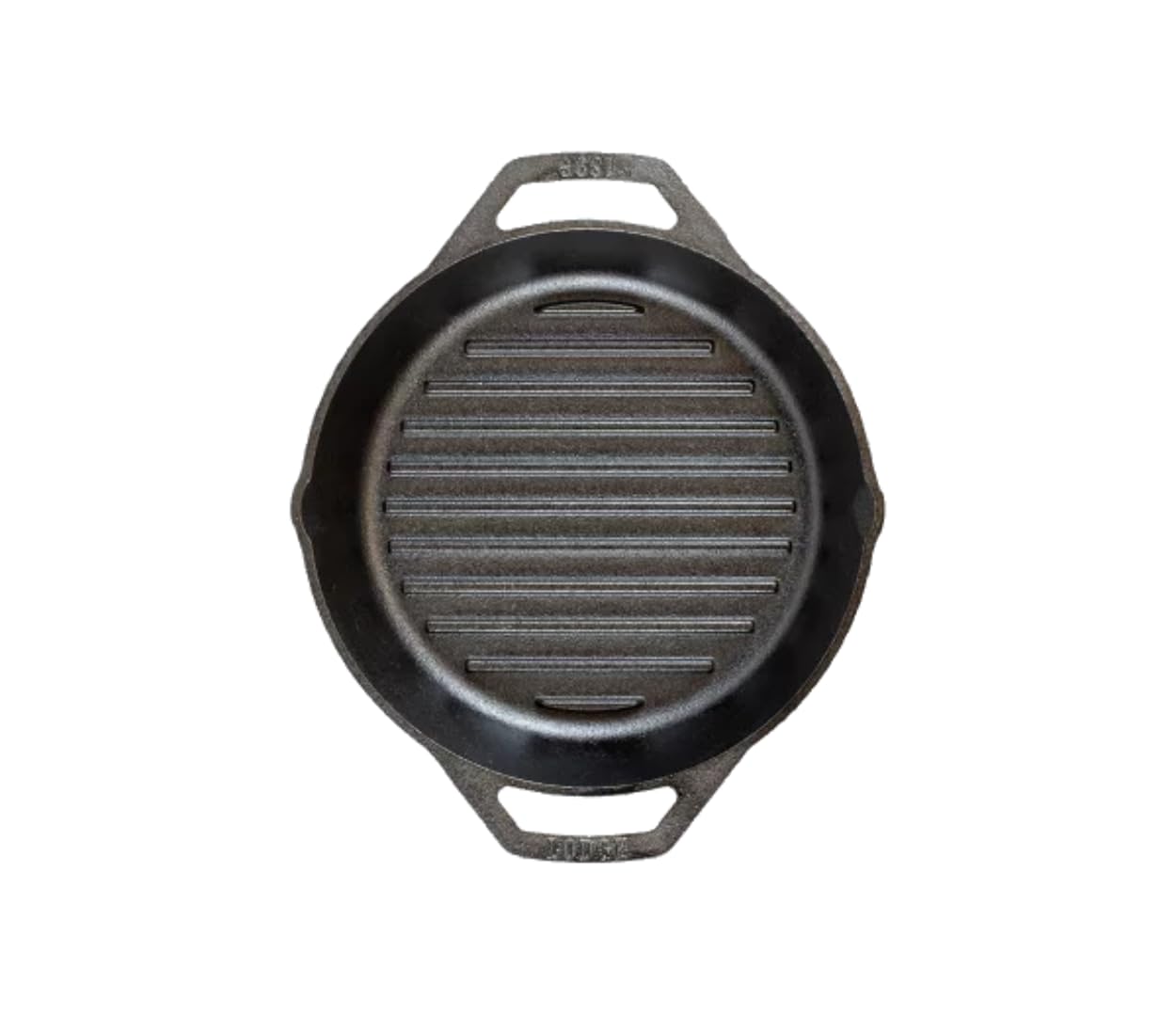
A grill pan is a very specific kind of all-purpose: it’s not your “make pasta sauce” pan. It’s your “I want steakhouse vibes indoors” pan. The ridges lift food above rendered fat, which changes the texture and helps you get those dramatic grill marks—especially on steak, burgers, chicken, and vegetables.
Owners regularly praise the even heat (especially when the pan fits the induction “circle” properly) and the fact that it behaves like a real grill tool: it holds heat, it sears hard, and it turns simple food into “this feels like grilling” results. People also repeatedly mention the obvious truth: it’s heavy, and it needs a real cleaning strategy because food and oil collect between ridges.
Expert reality: grill pans reward discipline. Preheat properly, oil the food (not the pan), and accept that cleanup is part of the deal. A chainmail scrubber or a rigid scraper makes the process dramatically easier. If you like the results enough to commit to the maintenance, this is a satisfying piece. If you want convenience, a flat pan will be easier.
Why it’s worth having
- Serious searing power – Cast iron heat retention is perfect for steaks, burgers, and charred vegetables.
- Ridges help manage grease – Keeps food elevated and can reduce the “fried in fat” feel for some items.
- Great on induction – The round shape can fit induction zones better than many square grill pans.
- Built for decades – Like most Lodge cast iron, it’s a long-term tool if cared for.
Good to know
- Cleaning takes more effort than a flat pan—plan for a scrubber strategy.
- It can smoke more than you expect; good ventilation helps, especially with fatty meats.
- Not the best choice for delicate foods (like flaky fish) unless you oil carefully and use the right technique.
Ideal for: cooks who want real grill-style searing indoors and don’t mind the extra cleanup that comes with ridged cast iron.
How All‑Purpose Pans Actually Cook (and Why Material + Shape Change Everything)
Most buying guides talk about “features.” Real cooking is about heat flow, moisture control, and surface behavior. Once you understand those three, you can look at a pan and instantly predict how it will behave with steak, eggs, sauces, stir-fry, and cleanup.
What really drives performance
- Thermal mass – Heavy pans (cast iron, thick stainless) resist temperature swings, which improves searing and frying stability.
- Thermal responsiveness – Aluminum-based pans (hard-anodized, many ceramic pans) react faster to heat changes, which is great for delicate sauces.
- Surface behavior – Nonstick releases food; stainless “releases when ready”; hybrid sits in the middle and rewards technique.
- Bottom contact – On electric/induction, a flat, stable base is everything. If it warps or rocks, cooking becomes inconsistent.
- Wall shape – Straight walls maximize searing area and sauce control. Curved walls improve tossing and stirring while changing heat zoning.
The trick is matching the pan to your most frequent cooking pattern. If you mostly do “sear then simmer,” pick deep straight walls. If you do “toss and build,” pick curved. If you do “high heat and sauce,” stainless or hybrid will feel more forgiving than delicate ceramic.
5 expert habits that instantly improve results
- Preheat with intention – Stainless and hybrid love a gentle preheat; nonstick and ceramic prefer moderate heat without long empty heating.
- Control moisture – Browning requires evaporation. Pat meat dry, don’t crowd the pan, and let steam escape.
- Use “zone cooking” – In curved pans and woks, use the center for searing and the sides for holding cooked food.
- Deglaze early – A splash of liquid while the pan is warm lifts stuck flavor and makes cleanup dramatically easier.
- Clean smart, not hard – Let warm soapy water do the work. Abrasive scrubbing is the fast track to coating damage.
Once you cook with the pan’s physics instead of fighting it, you’ll notice the same recipes taste better, look better, and take less effort. That’s the real definition of a great all-purpose pan.
FAQ: All‑Purpose Pans, Answered
What pan shape is the most “all‑purpose” for most kitchens?
Is ceramic nonstick automatically better than traditional nonstick?
How do I stop stainless steel from sticking?
Do hybrid pans replace nonstick?
What’s the easiest way to keep cast iron in great shape?
Which pan is best if I cook on induction?
Final Thoughts: Choosing the Best All Purpose Pan for You
The right pan doesn’t just cook food—it removes friction. Less sticking, less splatter, less second-guessing, less “why did this turn out weird.” And once you have a pan that matches your stove and your habits, you’ll cook more often because cooking feels simpler.
Here’s the shortcut decision path I’d use if I were buying today. Pick the category that sounds like your kitchen:
- Want the most universally useful “one-pan dinner” shape? Start with the straight-wall sauté style: Calphalon 5‑Qt Sauté Pan. It’s built for browning, simmering, and finishing without switching cookware.
- Cook hard, use higher heat, and want easy cleanup without delicate rules? Go hybrid: HexClad 4.5‑Qt Deep Sauté or the smaller HexClad 3.3‑Qt Deep Sauté.
- Want a premium daily foundation but prefer shallow pans? The two-pan workflow is underrated: All‑Clad HA1 8″ + 10″ set.
- Need a deep nonstick pan for big, saucy meals and easy tossing? Choose a chef’s/ultimate pan profile: Anolon Ultimate Pan or the value-focused Cooks Standard Everyday Pan.
- Want a coating-free option that can last decades? Go stainless or cast iron: Cooks Standard Tri‑Ply Stainless Pan or Lodge 5‑Qt Deep Skillet.
- Cook for a crowd and hate batch cooking? A huge surface changes everything: Granitestone 14″ Family Skillet.
- Want indoor grilling vibes? Add a specialist pan: Lodge 12″ Grill Pan.
Pick the pan that matches your heat habits, your cooktop, and the meals you actually make, and you’ll end up with your best all purpose pan for the long haul—one that makes cooking feel faster, cleaner, and way more satisfying.
