
If your frying pan is the first thing you reach for when you’re hungry and tired, you’re in good company. From lazy Sunday eggs to fast weeknight stir‑fries, a single great pan can quietly do more work than half your kitchen gadgets combined.
This guide is here to help you find the Best Affordable Cooking Pans for real‑world home use: pans that heat evenly, release food cleanly, survive daily abuse, and still slide neatly into your budget. All of them are easy to order on Amazon in the U.S., and they’re focused on normal household cooking—not restaurant equipment that weighs as much as your dog.
We’ll walk through how to choose the right size and material, break down the trade‑offs between nonstick, stainless steel, and cast iron, and then go deep on eight excellent frying pans and skillets—from hard‑anodized nonstick workhorses to classic cast iron. By the end, you should feel confident picking one or two pans that can handle almost everything you cook.
In this article
How to Choose the Best Affordable Cooking Pans for Your Kitchen
Before you fall in love with any single skillet, it helps to zoom out and think about how you really cook. That way, when you do pick from the Best Affordable Cooking Pans shortlist below, you’re choosing a pan that fits your home, not someone else’s.
1. Start with what you actually cook
Run through a few quick scenarios:
-
Breakfast on repeat?
If your pan’s main job is eggs, pancakes, grilled cheese, and reheating leftovers, a good nonstick surface and comfortable handle will matter more than fancy extras. -
Serious searing and Sunday sauces?
If you love steak with a deep crust, crispy chicken thighs, or pan sauces, you’ll appreciate stainless steel or cast iron that can take high heat and go straight into the oven. -
Cooking for one…or a small army?
Solo cooks can get away with a compact 8–10‑inch pan. Families of four or more will be much happier with a roomy 12‑inch pan (or a set of two sizes).
2. Choose your pan material wisely
Most affordable home frying pans fall into one of three big material buckets:
-
Hard‑anodized aluminum nonstick
These pans (like the Calphalon, T‑fal, OXO, Meyer, and Tramontina picks below) start with an aluminum body that heats quickly and evenly, then add a nonstick coating on top. They’re ideal for eggs, delicate fish, sticky sauces, and low‑stress clean‑up. The trade‑off: all nonstick coatings wear eventually and don’t love high heat or metal utensils. -
Stainless steel (often tri‑ply)
Stainless pans, like the Cuisinart MultiClad Pro and the Amazon Basics set, are much tougher long‑term. A good tri‑ply design sandwiches an aluminum core between layers of stainless to spread heat evenly. They shine at browning, searing, and making pan sauces. The trade‑off: you need to preheat properly and use enough fat, or food can stick until you get the hang of it. -
Cast iron
Good cast iron, like the 12‑inch Lodge skillet, behaves like a tiny, indestructible grill pan. It’s heavy, holds heat ferociously, and gets better the more you cook on it. It’s unbeatable for steaks, cornbread, deep‑dish pizza, and anything you want blistered and browned. The trade‑off: extra weight, slower heat‑up, and a little seasoning and drying after each use.
There’s no one “best” material. Many home cooks find that a mix—a reliable nonstick plus one stainless or cast iron “forever pan”—covers 95% of what they do.
3. Match pan size and quantity to your household
Pan size is more important than it looks on paper:
- 8‑inch pans – Perfect for one or two eggs, toasting nuts, or reheating a single portion. Great as a second pan, too small as your only one for most people.
- 10‑inch pans – The everyday sweet spot for many couples and small families. Big enough for three to four chicken thighs or a couple of grilled cheese sandwiches.
- 12‑inch pans – Ideal if you cook for three or more, love one‑pan meals, or want real room for stir‑fries. They can feel a little large on tiny burners but pay off in versatility.
If you’re starting from scratch, a very workable setup is a 10‑inch nonstick for everyday cooking plus a 12‑inch stainless or cast iron pan for searing, roasting, and big‑batch meals.
4. Features that make daily cooking easier
Not every bell and whistle matters. These really do:
- Oven safety – Being able to start on the stovetop and finish in the oven makes weeknight cooking much more flexible. Check the temperature limit (common ranges: 400–450°F for most nonstick; higher for stainless and cast iron).
- Induction compatibility – If you have an induction cooktop (or plan to), make sure the pan specifies induction‑ready. Several picks here, like the Amazon Basics stainless set and Meyer Accent skillet, are designed to work on induction.
- Comfortable, secure handles – Look for handles that feel solid but not sharp in your hand, ideally riveted or strongly attached, and long enough that you can tip the pan with confidence.
- Helper handles – On larger (especially 12‑inch) pans, a little second handle opposite the main one makes it much easier to move a full, heavy pan in and out of the oven.
- Dishwasher‑safe (if you’ll use it) – Many nonstick and stainless pans advertise dishwasher safety, but handwashing will always be gentler on coatings. See it as a “nice option,” not a license to abuse.
- Lids – Most frying pans are sold without lids, but having one is handy for simmering, steaming, or melting cheese. The T‑fal pan below includes a lid; others can share a universal lid.
5. Build quality, thickness & feel
Even at affordable prices, build quality varies a lot. A flimsy pan will warp, create hot spots, and feel frustrating within a year. A better‑made pan may cost a little more but can give you years of smoother cooking.
- Look at the thickness – Hard‑anodized and stainless pans with a bit of heft are less likely to warp under high heat or when you deglaze with cold wine.
- Check the base – Some stainless pans add a thick, bonded base or full tri‑ply construction to spread heat. That’s a big plus for even browning.
- Inspect the handle attachment – Riveted or well‑welded handles inspire confidence. Bonus points if the interior is smooth and rivet‑free, like the Tramontina Professional Fusion pan.
- Trust but verify reviews – Look for patterns rather than one‑off complaints: repeated mentions of warping, coating wear, or loose handles are red flags; consistent praise for heat distribution and durability is a good sign.
Once you’ve thought through material, size, and build, you’re ready to look at specific pans—and see which ones actually deserve a spot on your stove.
Quick Comparison: Our Best Affordable Cooking Pans
Here’s a bird’s‑eye view of the eight pans we’ll be reviewing. Skim this table to find the styles and materials that match how you like to cook, then jump down to the full reviews to see which pan feels right for your kitchen.
On smaller screens, swipe or scroll sideways to see the full table.
| Pan | Material | Size / Set | Best for | Amazon |
|---|---|---|---|---|
| Calphalon Hard‑Anodized Nonstick Frying Pan | Hard‑anodized nonstick | 12‑inch | One‑pan everyday cooking | Amazon |
| T‑fal Ultimate Hard Anodized Fry Pan with Lid | Hard‑anodized nonstick | 12‑inch + lid | Nonstick convenience with a lid | Amazon |
| Amazon Basics Non‑Stick Stainless Steel Fry Pan Set | Stainless w/ nonstick | 8" & 10" set | Starter set & spare pan | Amazon |
| Lodge 12" Cast Iron Skillet w/ Silicone Handle | Cast iron | 12‑inch | Searing, baking & lifetime use | Amazon |
| Meyer Accent Series Nonstick Skillet | Hard‑anodized nonstick | 10" skillet | Everyday pan for 1–3 people | Amazon |
| Tramontina Professional Fusion Frying Pan | Aluminum nonstick | 8‑inch | Eggs & small portions | Amazon |
| Cuisinart MultiClad Pro 12" Skillet | Tri‑ply stainless | 12" w/ helper handle | High‑heat searing & sauces | Amazon |
| OXO Good Grips Hard Anodized Frying Pan | Hard‑anodized nonstick | 12‑inch | Roomy nonstick for families | Amazon |
In‑Depth Reviews of the Best Affordable Cooking Pans for Home Cooks
Now let’s zoom in on each pan. Use these reviews to line up specific strengths—like nonstick performance, oven safety, or long‑term durability—with what actually happens in your kitchen on a busy Tuesday night.
1. Calphalon Hard‑Anodized Nonstick 12" Frying Pan – One‑Pan Everyday Hero

If you want one pan that can do pretty much everything, this Calphalon 12‑inch hard‑anodized skillet is a very easy recommendation. It’s big enough for family‑size meals, light enough that most people can handle it with one hand, and built around a durable nonstick that makes sticky eggs, gooey cheese, and weeknight stir‑fries feel practically frictionless.
The hard‑anodized aluminum body heats quickly and evenly, while the long stainless‑steel handle is designed to stay cool on the stovetop. It’s oven safe up to 450°F, so you can sear on the stove and finish chicken thighs or frittatas in the oven. Calphalon also highlights that this line has been kitchen‑tested tens of thousands of times for durability, which is reassuring if you’re hoping to get years rather than months out of a nonstick pan.
Why you’ll like it
- Do‑it‑all size – The 12" diameter gives you space for family dinners without feeling oversized on most burners.
- Even heating – The hard‑anodized base spreads heat nicely, so you’re not chasing hot spots around the pan.
- Easy to live with – Nonstick interior, dishwasher‑safe construction, and oven safety to 450°F cover most everyday cooking tasks.
- Comfortable handle – The long, stainless handle gives good leverage when flipping or pouring.
Good to know
- Like most aluminum nonstick, it isn’t compatible with induction cooktops.
- A few long‑time Calphalon fans note that this newer line is lighter than older, heavier pans—great for wrists, less “heirloom” in feel.
- To keep the coating happy, stick to medium or medium‑high heat and use silicone, wood, or nylon utensils.
Ideal for: anyone who wants one main skillet that can handle almost all daily cooking without needing lots of technique or cleanup time.
2. T‑fal Ultimate Hard Anodized 12" Fry Pan with Lid – Great Nonstick for the Price

T‑fal’s Ultimate Hard Anodized line has been a go‑to recommendation for budget‑friendly nonstick for years. This 12‑inch fry pan hits a nice sweet spot: it’s large, comes with a glass lid, and includes T‑fal’s trademark Thermo‑Spot heat indicator that turns solid when the pan is preheated and ready to cook.
The body is hard‑anodized aluminum with a titanium‑reinforced nonstick coating, built to slide food off easily and handle frequent use. It’s oven safe to 400°F (350°F for the lid), and the silicone‑wrapped handle feels secure in the hand. If you love the idea of a big, non‑fussy nonstick that doesn’t cost a fortune, this is an excellent option.
What stands out
- Lid included – Great for simmering sauces, steaming veg, or finishing dishes gently.
- Thermo‑Spot indicator – Simple visual cue that helps newer cooks avoid adding food to a cold pan.
- Good value – Often priced lower than many big‑name nonstick pans of similar size.
- Comfortable grip – Riveted, silicone‑wrapped handle feels secure, even when the pan is full.
Good to know
- Not induction compatible—best on gas, electric coil, or standard glass cooktops.
- The nonstick coating still has a finite lifespan; expect a few good years with proper care, not a lifetime pan.
- Like most nonstick, it’s happier at medium heat than at a roaring burner setting.
Ideal for: home cooks who want a roomy, nonstick workhorse with a lid and don’t mind replacing it every few years once the coating eventually wears.
3. Amazon Basics 2‑Piece Non‑Stick Stainless Steel Fry Pan Set – Simple & Surprisingly Capable

If you’re building a kitchen on a budget, renting, or just need a couple of extra pans without overthinking it, this Amazon Basics set delivers a lot for the money. You get two pans—8‑inch and 10‑inch—made from stainless steel with an aluminum‑core base and a PTFE nonstick coating for easy release.
They’re induction compatible, work on all standard stovetops, and are marketed as dishwasher safe, though hand washing will always be kinder to the coating. The stainless exterior gives them a more “grown‑up” look than many entry‑level nonstick pans, and the two sizes cover quick solo cooking and smaller family meals nicely.
Why it’s a smart starter
- Two useful sizes – The 8" is perfect for eggs or a single burger; the 10" handles most everyday tasks.
- Induction‑ready base – Works on induction, gas, and electric cooktops.
- Good bang for the buck – Often cheaper than a single premium pan, making this set a low‑risk upgrade.
- Stainless exterior – Looks more like “real” cookware than ultra‑light bargain pans.
Good to know
- The nonstick is decent but not magical; like all budget coatings, it can fade with harsh detergents or high heat.
- No lids included, and the handles can get warm on long, high‑heat cooks.
- Some users report occasional warping if the pans are overheated or shocked with cold water.
Ideal for: new cooks, students, renters, or anyone who wants a low‑cost way to upgrade from super‑thin mystery pans.
4. Lodge 12" Cast Iron Skillet with Silicone Handle – The Pan That Outlives You

Lodge cast iron skillets have a bit of a cult following, and once you cook with one, it’s easy to see why. This 12‑inch version arrives pre‑seasoned and ready to go, with a red silicone handle sleeve included to make the heavy pan more comfortable to move. Unlike coated nonstick, cast iron is just iron and oil—no synthetic coating to scratch off—and it can last for generations if you treat it reasonably well.
Cast iron takes a little longer to heat up, but once it does, it holds heat like a champ. That makes it unbeatable for steak with a deep crust, cornbread, baked pasta, skillet pizzas, and anything you want browned and bubbling all the way to the edges. It’s happy on gas, electric, glass‑top, induction, the oven, and even a campfire.
Why people love it
- Incredible heat retention – Fantastic for searing, baking, and pan‑roasting.
- Truly long‑term investment – With basic care, this is a “buy once, use forever” pan.
- Naturally nonstick over time – The seasoning improves with use, especially if you cook with a bit of fat.
- PFAS‑free – No synthetic nonstick coating; just iron and oil.
Good to know
- It’s heavy—two hands plus the helper handle are your friends when the pan is full.
- You’ll need to handwash, dry thoroughly, and lightly oil after use to prevent rust.
- It’s not the best choice for super‑delicate dishes like paper‑thin crepes or very tangy tomato sauces you want spotless.
Ideal for: home cooks who want restaurant‑level searing and baking power, don’t mind a bit of care, and like the idea of owning one pan for decades.
5. Meyer Accent Series Nonstick 10" Skillet – Small but Seriously Capable

The Meyer Accent 10" skillet is one of those pans you can leave on the stove and use for almost everything if you’re cooking for one to three people. It’s built from hard‑anodized aluminum with a triple‑layer nonstick coating and an induction‑ready base, so it plays nicely with any stovetop.
The silicone‑wrapped handle is shaped to feel cushy and secure, and the pan is oven safe up to around 445°F, which covers most baked pastas, frittatas, and finishing steps. Meyer touts impressive lab testing on this coating (think tens of thousands of scrubs), and real‑world users often praise how slick it feels even after plenty of use when treated with reasonable care.
Why it deserves a spot
- Induction‑compatible nonstick – Handy if your current or future stove is induction.
- Great everyday size – Perfect for two chicken breasts, a pan of veggies, or a couple of grilled cheese sandwiches.
- Comfortable silicone handle – Easy to maneuver, with a shape that feels secure even when the pan is full.
- Oven & dishwasher safe – Flexible for oven finishes and low‑effort cleanup when you need it.
Good to know
- The coating is PTFE‑based; if you’re trying to avoid PFAS entirely, go for cast iron or stainless instead.
- At 10", it may feel a bit small if you regularly cook for four or more.
- As with any nonstick, metal utensils and high heat will shorten its lifespan.
Ideal for: small households, induction users, and anyone who wants a modern, comfortable nonstick pan that feels a little nicer than entry‑level options.
6. Tramontina Professional Fusion 8" Frying Pan – Tiny Pan, Big Upgrades

If you already have a main skillet but want a genuinely good small pan for eggs, grilled sandwiches, or reheating a single portion of leftovers, the Tramontina Professional Fusion 8" is a big step up from the average tiny nonstick. It’s made from heavy‑gauge aluminum for even heating and features a rivet‑less interior—meaning the handle attaches from the outside, leaving the cooking surface smooth and easy to wipe clean.
The pan is oven safe up to about 400°F and includes a removable silicone handle cover so you can go from stove to oven without sacrificing grip. It’s NSF certified, so it’s robust enough for light professional use, and home cooks often comment on how solid it feels compared with bargain‑bin small skillets.
Why you’ll appreciate it
- Rivet‑less interior – Nothing for food to collect around, which makes cleaning much easier.
- Heavy‑gauge body – Feels sturdy and resists hot spots better than ultra‑thin pans.
- Great egg pan – Size and coating are ideal for omelets, scrambled eggs, or a quick quesadilla.
- Oven‑ready – Works well for single‑serve baked dishes or finishing frittatas.
Good to know
- At 8", it’s a specialist; you probably want a bigger main skillet as well.
- Some users report discoloration or coating wear when it’s run through rough dishwasher cycles.
- The long handle on a small pan can feel a bit unbalanced until you get used to it.
Ideal for: anyone who cooks a lot of eggs or single portions and wants a truly good small nonstick instead of a flimsy afterthought.
7. Cuisinart MultiClad Pro 12" Skillet – Stainless Steel for Serious Browning
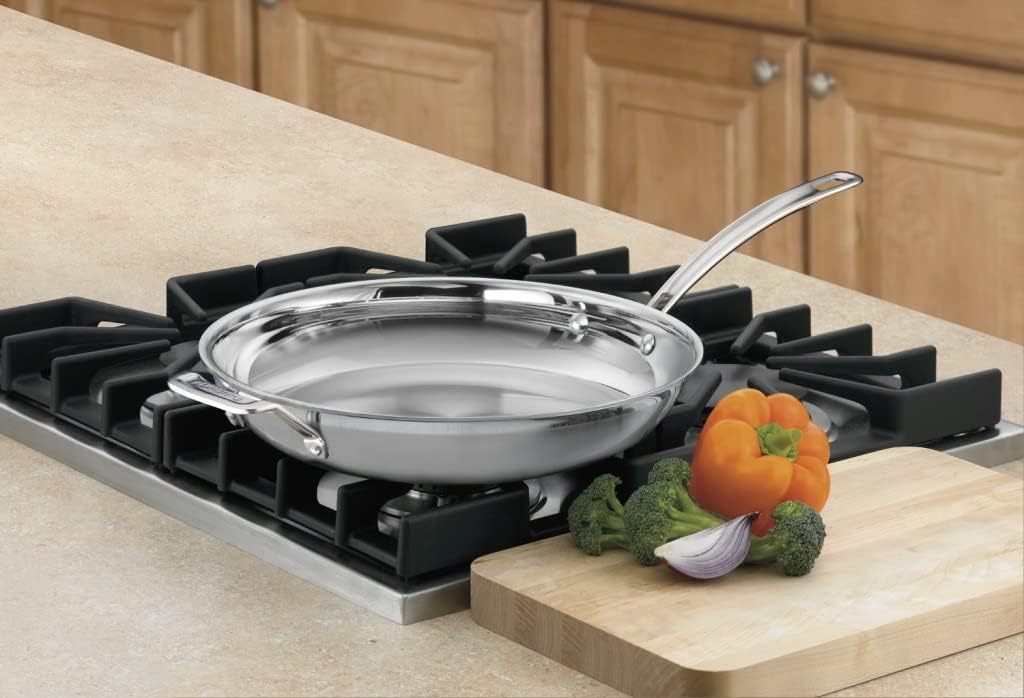
If you’re ready to graduate from pure nonstick and want a pan that can properly brown, sear, and build sauces, Cuisinart’s MultiClad Pro 12" skillet is a proven favourite. It uses tri‑ply construction: a responsive aluminum core sandwiched between stainless steel layers, with Cuisinart’s Heat Surround technology to spread warmth evenly up the sides as well as across the base.
You get a roomy cooking surface, flared sides for easy tossing and pouring, and a helper handle that makes the pan much easier to move when it’s full. It’s compatible with all stovetops, including induction, and oven safe at high temperatures, which is perfect for finishing steaks, chops, or casseroles in the oven after a good sear.
Why it stands out
- Excellent searing power – Great for steaks, pork chops, chicken thighs, and vegetables that need real browning.
- Even heating – The tri‑ply build helps reduce hot spots and supports more precise cooking.
- Oven & induction friendly – Happy on almost any heat source you have now or in the future.
- Long‑term durability – No coating to wear off; with basic care, this is a pan you can keep for decades.
Good to know
- Stainless has a learning curve: you’ll need to preheat properly and use enough oil to reduce sticking.
- Heavier than a typical nonstick; the helper handle helps, but it’s still substantial.
- It’s often sold without a lid, so budget for a universal lid if you like to cover your pan.
Ideal for: home cooks who want to practice “real” pan searing and sauce‑making and don’t mind a bit of extra technique and cleanup.
8. OXO Good Grips Hard Anodized 12" Frying Pan – Roomy, User‑Friendly Nonstick

OXO is known for making kitchen tools that just feel good to use, and this 12" Good Grips nonstick skillet follows that playbook. It’s built from hard‑anodized aluminum with a PFOA‑free nonstick surface and a comfortable stainless handle, giving you a big cooking area that still feels manageable to move around.
In actual use, this pan tends to heat quickly and distribute heat fairly evenly, especially compared with very cheap nonstick. It’s oven safe to around 390°F, making it flexible for finishing dishes in the oven, and the nonstick surface makes everyday cleanup easy—often just a quick wipe with a soft sponge.
Why you’ll like it
- Generous cooking surface – Big enough to brown multiple chicken breasts or sauté a whole pan of veggies.
- Comfort‑focused design – The handle is shaped to be easy to grip, even when your hands are a bit slippery.
- Reliable nonstick – The multi‑layer coating releases food smoothly when used with moderate heat and a little fat.
- Oven‑safe flexibility – Handy for dishes that start on the stove and finish under gentle heat.
Good to know
- Not compatible with induction cooktops.
- Some long‑term users note that the coating, like most nonstick, gradually loses slickness after several years.
- The pan has a bit of heft; great for stability, but something to keep in mind if you prefer ultra‑light cookware.
Ideal for: families who want a large, easy‑to‑use nonstick skillet that feels a little more premium than entry‑level options.
Pan Materials & Heat Performance: Getting the Most from Your Pans
The best pan in the world will feel frustrating if you use it the wrong way. Understanding how different materials behave with heat helps you get better results right away—no recipe change required.
Why it’s smart to mix pan materials
- Nonstick for delicate jobs – Eggs, flaky fish, cheesy quesadillas, and sticky sauces are simply easier in a good nonstick. You can use less oil and clean up faster.
- Stainless steel for browning & sauces – Stainless shines when you want fond—the browned bits at the bottom of the pan that turn into delicious pan sauces. It’s also great for high‑heat searing.
- Cast iron for searing & baking – Think sizzling steaks, skillet pizzas, cornbread, and cobblers. Cast iron holds heat and moves seamlessly from stove to oven to table.
- Budget vs. “forever” pieces – Nonstick has a natural lifespan; stainless and cast iron can be long‑term investments. Combining them lets you splurge strategically where it counts.
Instead of hunting for one mythical perfect pan, aim for a small team: one dependable nonstick, plus one tougher pan (stainless or cast iron) that can take high heat and live on your stove for years.
Quick guide to common pan materials
- Hard‑anodized aluminum nonstick – Fast, even heating and simple cleanup. Best at low to medium‑high heat. Avoid metal utensils and very high temperatures to protect the coating.
- Stainless steel (often tri‑ply) – Durable, non‑reactive, and great at browning. Preheat the pan, add oil, then food; give proteins time to release naturally before flipping and sticking drops dramatically.
- Cast iron – Heavy but extremely versatile. Works on every heat source, can go under the broiler, and becomes almost naturally nonstick as seasoning builds. Needs handwashing, thorough drying, and a thin coat of oil after use.
- Ceramic‑coated nonstick – Uses a different type of coating that’s typically PFAS‑free. Great when new, but it can lose slickness faster than PTFE‑based coatings if overheated or scrubbed harshly.
- Carbon steel (honorable mention) – Sits between cast iron and stainless: lighter than cast iron, great for searing and high heat, needs seasoning and a little care like cast iron.
Whatever material you use, a few habits help: avoid slamming cold water into a blazing‑hot pan, don’t leave empty pans screaming on high heat, and match the pan size to the burner so the whole base heats evenly.
FAQ: Affordable Frying Pans & Skillets, Answered
How many frying pans does a typical home really need?
Are nonstick coatings safe for daily cooking?
What size pan is best if I only buy one?
Can I use metal utensils or put these pans in the dishwasher?
How do I keep my pans from warping or wearing out quickly?
Final Thoughts: Building Your Everyday Pan Lineup
A good pan doesn’t just cook your food—it changes how easy everyday life feels in the kitchen. When eggs slide out without scraping, chicken browns instead of steaming, and clean‑up takes two minutes instead of ten, you cook more often and with far less stress.
Here’s a quick way to turn this guide into a decision:
-
Want one main nonstick workhorse?
Go for the Calphalon 12" hard‑anodized skillet as your daily driver, or the T‑fal Ultimate 12" with lid if you love having a top for steaming and simmering. -
On a tighter budget or building a starter kitchen?
The Amazon Basics 8" & 10" set gives you two genuinely useful pans for the price of many single skillets. Add the Tramontina 8" Fusion pan later if you want a dedicated egg pan. -
Want a “forever” pan for searing and oven cooking?
Pick up the Lodge 12" cast iron skillet for unbeatable heat retention, or the Cuisinart MultiClad Pro 12" stainless skillet if you want crisp sears and silky pan sauces. -
Need a big nonstick for a hungry household?
The OXO Good Grips 12" skillet offers loads of surface area and user‑friendly design, while the Meyer Accent 10" pan is perfect if you mostly cook for one to three people.
Any of the pans above can become your personal Best Affordable Cooking Pans once you match their strengths to your stove, your cooking style, and your budget. Measure your burners, decide whether nonstick or stainless (or cast iron) should be your main player, and choose the pan that makes you excited—not intimidated—to start cooking.
After that, it’s just you, a good pan, and the quiet satisfaction of food that cooks the way you wanted it to.
