
Specs are compiled from manufacturer listings and verified buyer reviews and can change over time — please confirm the key details on the product page before buying.
You do not have to drain your pool to put a fallen tile back on the wall. The right pool tile adhesive is built to grab wet ceramic and hold it while the pool stays full — and the picks below cover the whole spread, from a three-pound pail of thinset that handles a big repair job to a small squeeze tube that fixes two tiles before lunch. The short answer: most people should start with the E-Z Patch 3 lb thinset, because it works on both ceramic and porcelain and it cures solid in a filled pool. If you only have a couple of loose tiles and want zero mixing, a rubberized cartridge glue is the easier call.
I’m Mohammad Maruf — the founder and writer behind KitchPrep. This guide is built by comparing the manufacturers’ published specifications and the patterns across verified customer reviews, so you get each pick’s real strengths and trade-offs instead of marketing spin.
Some picks here cure in hours and some need days, and that gap matters far more than brand name. Below you’ll find an honest breakdown of adhesive for pool tile so you can match the product to your repair instead of guessing.
Our Picks at a Glance

How To Choose The Best Adhesive for Pool Tile
The single decision that sorts every product on this page is simple: does the adhesive cure while it is underwater, or does it just tolerate a damp surface? A tile that pops off a waterline can be pressed back on with the pool full, but only if the product is engineered to harden while submerged. Read the label wording closely — “waterproof” and “submersible” are not the same promise.
Match the formula to the tile and the surface
Ceramic and porcelain are the two surfaces most of these products list as compatible. If your pool is fiberglass, gunite, marcite or plaster, check that the adhesive names your surface directly, because not every formula bonds to all of them. The E-Z Patch cement lists ceramic and porcelain, while the Pool Patch kits are built around waterproof Portland cement for waterline and cap tiles.
Decide how much mixing you want to do
Powder thinsets are mixed with water on site — cheap per pound, but you have to get the ratio right and work fast before the batch sets. Cartridge glues and putty sticks need no mixing at all, which is the difference between a five-minute fix and a half-hour project. If you have never patched a tile before, a no-mix format removes the main thing that goes wrong.
Quick Comparison
| Model | Best For | Format | Container Size | Full Cure Time | Amazon |
|---|---|---|---|---|---|
| E-Z Patch 3 lb Thinset Pool Tile Setting Cement (EZP-132)★ Best Overall | All-around pool tile repair | Powder (mix with water) | 3 pounds | — | Amazon |
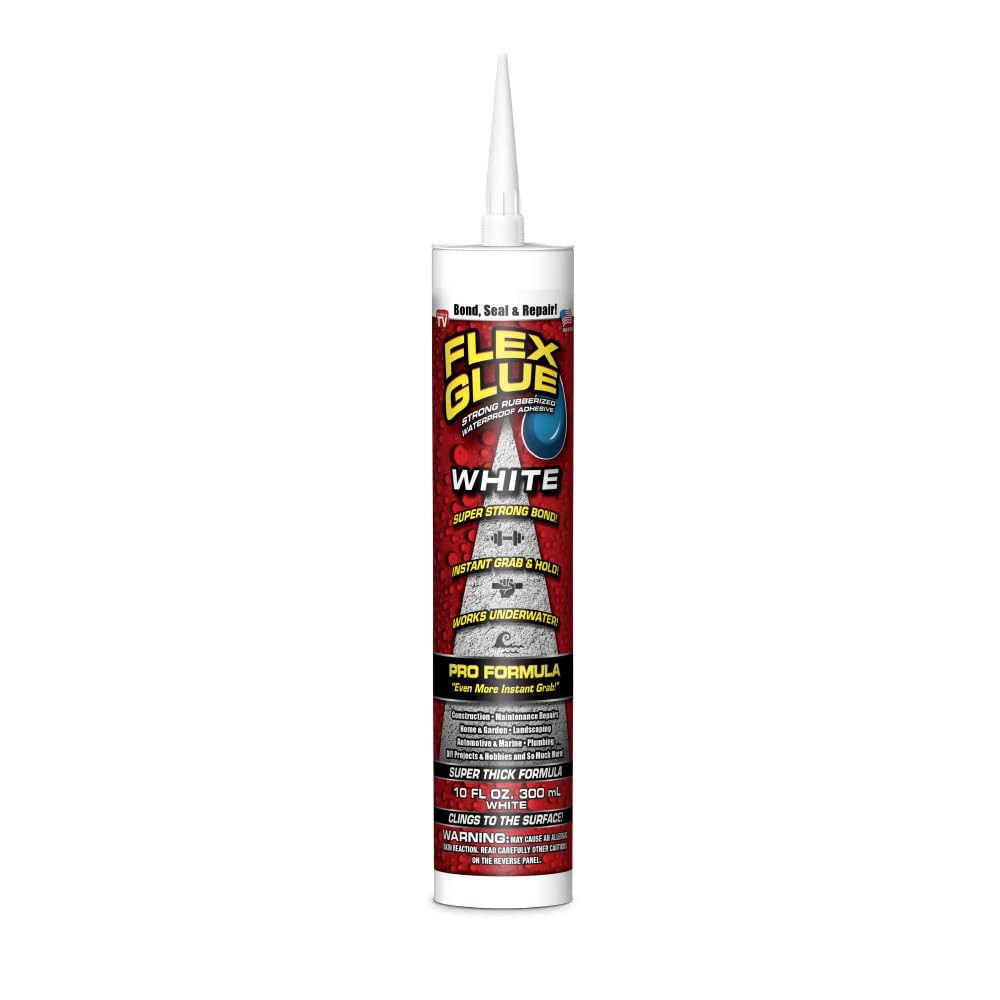
| Flex Glue Rubberized Waterproof Adhesive, White, 10 oz CartridgeMost Popular | Quick no-mix tile grabs | Liquid cartridge | 10 ounces | 24 hours | Amazon |
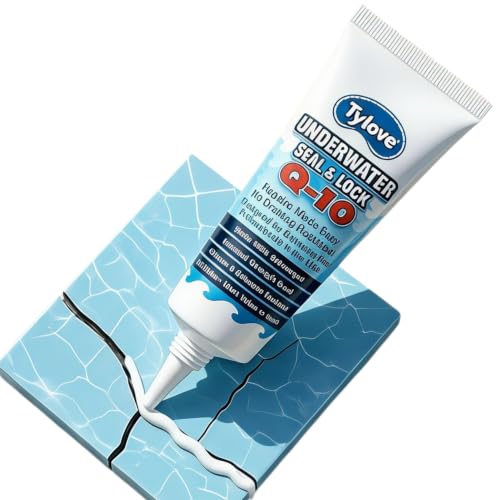
| Tylove Underwater Pool Tile Adhesive, 4 ozBest for Small Fixes | Small submerged touch-ups | Paste | 4 ounces | — | Amazon |
| Novagard 700-163 Pool Tile Silicone Adhesive | Flexible wet-surface repairs | Liquid cartridge | 16 ounces | 24 hours | Amazon |
| E-Z Patch 1 lb Thinset Pool Tile Setting Cement | One or two tile fixes | Powder (mix with water) | 16 ounces | 3 days | Amazon |
| Pool Patch Tile Adhesive Setting Repair Kit, 3 lb | Waterline tile setting | Powder (mix with water) | 3 pounds | — | Amazon |
| Pool Patch Tile Thinset Adhesive Repair Kit, 10 lb | Larger pools and full renovations | Powder (mix with water) | 10 pounds | — | Amazon |
| PC Products PC-Pool Epoxy Putty, 4 oz Stick (Pack of 12) | Plumbing leaks and crack filling | Hand-moldable putty | 4 ounces per stick | 60 minutes | Amazon |
In‑Depth Reviews
1. E-Z Patch 3 lb Thinset Pool Tile Setting Cement – White (EZP-132)
Our pick — over 4.5★ from 300+ verified ratings; the strongest balance of quality and price.
Three pounds of white thinset powder that mixes with water and covers a multi-tile waterline repair.
For most pool owners, this is the one to buy. It is white cement powder that you mix with water, and it is listed as compatible with both ceramic and porcelain. That matters because those are the two tile types almost every pool owner is dealing with.
What wins people over is effectiveness — that is the quality owners bring up more than any other, ahead of how easy it is to mix and how well it grabs. The reviews back it with real jobs: a self-described non-DIYer replaced 72 popped-off pool tiles after getting a quote for just 10 tiles, and the results were called “fantastic.” Another owner had never replaced a tile before and used it on tiles that fell off in an indoor resistance pool — the directions were clear enough and “the tiles are still there.”
Two things to know before you buy. First, it sets quickly, so mix in small batches and only as much as you can place in a few minutes — that is the advice that shows up repeatedly from people who used it well. Second, some buyers find it expensive for a three-pound pail, and the value-for-money feedback is genuinely split. Set against a contractor quote, though, it rarely feels like money wasted. Weigh it against the Tylove paste on this list: the Tylove tube is lighter and easier to squeeze, but this pail covers a far bigger area and costs less per tile fixed.
What earns the top spot
- White cement mix that suits ceramic and porcelain pool tile
- Moisture-resistant, so it tolerates a wet waterline surface
- Proven on large repairs — one owner did 72 tiles in a single session
- Simple two-part process: water plus powder, no special tools
What to plan around
- Sets fast, so small batches are mandatory, not optional
- Value-for-money comments lean mixed at this container size
- Mixing ratio takes practice; getting it wrong wastes material
Buy this if: you have several tiles down and want enough material to fix them all in one go without hiring anyone.
Think twice if: you are fixing exactly one loose tile — the smaller E-Z Patch pail on this list covers that job with less left over.
2. Flex Glue Rubberized Waterproof Adhesive, White, 10 oz Cartridge, 1-Pack
A 10-ounce rubberized cartridge glue that clings to wet tile and grabs instantly, with no mixing required.
If mixing cement sounds like the part of the job you would rather skip, this is the pick. It is a rubber-based liquid in a 10-ounce cartridge, white, and it cures in 24 hours. The rubberized body is what lets it cling to a vertical surface instead of sagging off, and it is designed to bond dry or wet surfaces — the listing states it can be used even underwater. You do need a caulking gun to push it out, which is the one extra tool the cement picks do not ask for.
Owners put it to real work underwater: it bonded 1-inch ceramic pool tiles submerged, with no failures reported over five months, and it survived being vacuumed. It also holds up to more than tile — one buyer sealed a leaking hose with no leaks. Just wear gloves, because the formula is not water-soluble and sets fast once it is under pressure.
The recurring gripe is the tube, not the glue. It hardens in the cartridge, and more than one owner has had to saw the tip open and squeeze hard to get the last of it out. The practical fix is to buy multiple tubes and use them in one sitting rather than stashing a half-used cartridge for months. Rubberized glue like this stays slightly flexible once cured, which is the opposite of the Pool Patch thinsets further down — those dry super hard. Which one you want depends on whether you would rather have flex or a rock-solid cement grip.
The wet-grab advantage: the rubberized formula is why this clings to a soaked tile face and holds position without supports while it cures.
The honest catch: that same fast-setting rubber is why the cartridge clogs between jobs — treat it as a one-session product and it behaves.
The tool-free route: ideal if you want one tube, one gun, and no measuring cup involved.
Where it falls short: it is a grab-and-seal adhesive for isolated tiles, not a material for laying a full waterline run.
3. Tylove Underwater Pool Tile Adhesive, 4 oz
A 3.2-ounce tube of paste that cures while submerged, so you never have to drain the pool.
Here is the honest case for it: it is formulated to cure while submerged, it is UV-stable, and it is resistant to pool chemicals, so it suits both chlorinated and saltwater pools. It is designed to go on without draining anything, which is the whole appeal for someone with two or three tiles loose at the waterline. Ceramic, mosaic and stone are all listed, and the kit comes with gloves, a nozzle and a spreader so you can work as soon as it arrives. For scale, it weighs 3.2 ounces — the E-Z Patch 3 lb pail weighs 16 ounces, which is a real difference in your hand and in how much surface you can cover.
Where buyers land split is on the paste itself. The apply-underwater job is doable but fiddly; the paste is stiff to squeeze and to work into small cracks, and one owner found tiles floating off before they set, with the top of the wall easier to reach than the bottom. Cure time is the bigger watch-out — one reviewer noted the paste was still soft after three days, and a small tile that came off five days later was traced back to the adhesion. Others had a clean run: a pair of tiles reattached underwater with no failure, and one owner sealed a cracking joint at the tile-to-paver edge with good results.
The takeaway is that this is a small-quantity, near-surface repair product. It gives you chlorine and saltwater resistance in a package the size of a toothpaste tube, and that is exactly what a two-tile job needs. It is not the tool for a wall full of missing tiles — the four-pound difference against the E-Z Patch pail tells you that before you even open it. If your repair is bigger than a handful of tiles, go up to a thinset instead.
The reasons to reach for it
- Sold as compatible with ceramic, mosaic and stone
- Chlorine and saltwater resistant, and UV-stable
- No draining required — apply right in the filled pool
- Kit arrives with gloves, nozzle and spreader
What limits it
- Stiff paste is hard to squeeze and spread underwater
- Cure can run slow — one report of softness after three days
- Small tube caps the job size at a few tiles
Right for you if: two or three waterline tiles are loose and you want to fix them without touching the water level.
Look elsewhere if: you want a fast, firm set — this paste rewards patience, not speed.
4. Novagard 700-163 Pool Tile Silicone Adhesive
A 16-ounce clear silicone cartridge that cures flexible instead of rock-hard, so the bond bends with the pool wall.
Silicone is the quiet answer to a problem cement cannot solve: movement. Pool walls expand and contract with temperature, and a rigid bond can crack where a flexible one bends. This is a clear silicone in a 16-ounce cartridge with a medium-to-high viscosity — meaning it is thick enough to stay where you put it on a vertical wall — and it cures in 24 hours. It lists ceramic, porcelain and glass as compatible surfaces.
The practical details matter here. It sticks even if one of the two surfaces is wet, which is the difference between a repair you can start now and one you have to schedule around a dry day. Press the tile firmly and it sets in about an hour, going permanent in a day. Apply it sparingly — this is not a product you slather on — and wear gloves and keep rags handy, because the silicone is not water-cleanable. Once it has dried, a plastic scrubber takes the excess off the tile face.
The trade-offs are worth knowing up front. There are no instructions in the box, and cleanup is fussier than with a water-based adhesive, so the first-timer should watch a video before starting. There is also a fiberglass caveat — one owner trying to glue tiles to a fiberglass pool found the tiles would not readily adhere. On plaster pools it performed fine for coping repairs. Compared with the Pool Patch 3 lb kit, this is the better choice for a handful of tiles where flexibility matters; the Pool Patch is the better choice when you are covering real square footage.
Why flexibility wins: the cured silicone bends with the pool wall rather than fighting it, which is what keeps a repaired tile from loosening again.
Best suited to: a few loose tiles on a plaster or concrete pool where you want the bond to move with the wall.
Not the one for: a fiberglass shell, or a large area where you need coverage by the square foot.
5. E-Z Patch 3 Thinset Pool Tile Setting Cement, 1 lb., White

A one-pound pail of the same E-Z Patch white thinset powder, sized for one to three missing tiles.
This is the smaller sibling of the top pick, and it exists for one reason: you do not always need three pounds. It is a one-pound white powder with a three-day full cure time, made in the USA, and it comes with special modified materials — pozzolans and polymers — that the listing highlights as the reason for its bond. It lists ceramic and concrete as compatible. The color-adjustable angle is a genuine plus for anyone trying to match existing grout: add a concrete pigment to the mix and it blends instead of sitting there bright white.
Owners describe it as easy to use and strong. It sets fast enough to be a real advantage on vertical surfaces — one buyer reinstalled several ceramic waterline tiles in an HOA pool and found the quick set helped them stay put. Another had enough in the container to attach three tiles, and the one complaint there was nailing the water-to-powder ratio. The most common note is about mixing small batches, since the material starts hardening quickly once water hits it.
The genuine gap is documentation. There are no clear cure times, temperature limits or usage guidelines in the box, and one experienced buyer specifically missed having them — including not knowing whether high heat would affect the set. If you have mixed thinset before, that will not slow you down. If this is your first time, plan to read the listing carefully and prep your tools before you start the clock.
Why it works
- One-pound size suits a two- or three-tile repair
- Pozzolan and polymer blend for a stronger bond
- Color-adjustable with concrete pigment to match grout
- Fast set keeps vertical tiles in place
Keep in mind
- Three-day cure, longer than the cartridge glues
- No instructions in the box for cure time or temperature limits
- Water-to-powder ratio takes practice
Pick it when: you are reattaching one to three tiles and want pigmentable white cement to match the surrounding grout.
Better bet elsewhere if: you want a same-day, no-mix fix — a rubberized cartridge glue finishes faster.
6. Pool Patch Pool Tile Adhesive Setting Repair Kit, 3 lb

Three pounds of waterproof Portland cement powder that covers about 6 square feet of ceramic or porcelain waterline tile.
The number to hold onto here is coverage: about 6 square feet at a quarter-inch thickness from a three-pound tub. That is a real measurement you can plan a job around, and it is the detail that separates this from the smaller E-Z Patch pail — the Pool Patch tells you how far the material goes before you buy it. The formula is waterproof Portland cement, made in the USA, and it is designed for ceramic or porcelain waterline and cap tiles in repair, renovation or new construction.
What wins people over is how well it handles a filled pool. It works underwater, so there is no need to lower the water, and it grabs immediately — which stops tiles sliding down the wall and removes the need for temporary supports. It also doubles as grout, so you are not buying a second product to finish the joint. One buyer at 81 years old replaced seven or nine pool tiles after watching DIY videos and called the job much easier with this kit. The cure is measured in hours after application, not days, so you refill and swim sooner than with a three-day cement.
Two honest notes. The mixing step is the common friction point — even owners who found it easy described wanting clearer quantities, and there are no installation temperature figures in the instructions. Second, this is formulated for ceramic and porcelain tile, so check it against your own tile material before committing. Cure speed is where this beats the E-Z Patch 1 lb, which needs three days; if getting back in the water quickly matters, the hours-not-days cure here is the argument for it.
The field-tested case: it bonds under water, acts as its own grout, and holds without supports — three of the fiddly parts of a waterline repair solved by one tub.
A strong match for: a waterline repair or small renovation where you want the coverage spelled out and a fast return to swimming.
Consider the larger tub instead if: your job runs past the 6 square feet this one covers.
7. Pool Patch Pool Tile Thinset Adhesive Repair Kit, 10 lb

The same waterproof Portland cement powder in a 10-pound tub that covers roughly 20 square feet at a quarter-inch thickness.
This is the biggest tin of thinset on the page, and it is aimed at jobs the smaller tubs cannot finish. Ten pounds of waterproof Portland cement covers approximately 20 square feet at a quarter-inch thickness — more than three times the reach of the 3 lb kit, which is the number that decides between them. You get the same instant-grab, minimal-shrinkage bond and the same few-hours cure. For ceramic or porcelain waterline and cap tiles, it is the same proven material, just in a quantity that suits a larger pool or a full renovation.
Owners who use it tend to be people who have stopped outsourcing. One buyer in their 80s replaced seven or nine pool tiles alone after watching videos and said the thinset made the job much easier. Others describe it simply as “easy to use, bonds well” — the material dries hard and attaches cleanly, and it mixes without fuss. The formula is forgiving enough that first-timers finish their repair, which is why it comes recommended for all experience levels.
Two things to weigh before choosing this size. First, the same tub has only a fraction of the review history of the 3 lb version, so there is less feedback to lean on — the smaller kit is the better-known quantity if you want reassurance. Second, ten pounds mixed at once will set before you can place it all, so the working habit with any thinset is small batches throughout. If your repair is a handful of tiles rather than a wall, this is more material than the job needs, and the 3 lb kit is the smarter buy.
Where it earns its place: 20 square feet of coverage from one tub means no mid-job restock on a full waterline run.
Where it asks something of you: that same volume only works if you mix ahead in small batches — dump it all at once and it hardens before you use it.
Built for: whole-waterline jobs and renovations where one tub should see you through to the end.
Overkill when: your job is a few loose tiles — grab the 3 lb kit and keep the leftover cash.
8. PC Products PC-Pool Epoxy Putty, 4 oz Stick, Off White (Pack of 12)
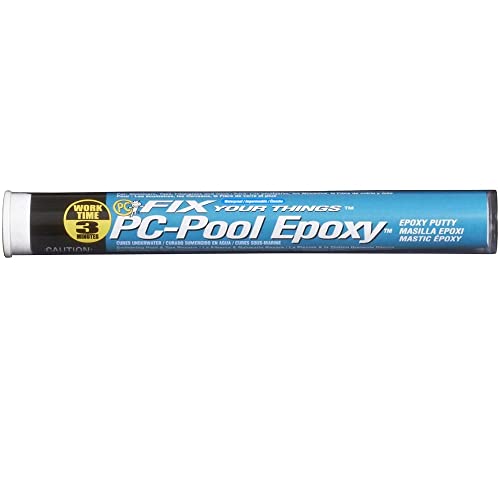
A hand-moldable epoxy putty stick that cures for service in 60 minutes — for leaks and cracks, not loose tiles.
This is the one entry that is not a tile adhesive in the usual sense, and that is exactly why it belongs here. It is epoxy putty in a stick you knead by hand — no tools, no mixing bowl — and it cures for service in 60 minutes with a 3-minute work time. It handles continuous temperatures from -20 to +200 degrees F, which covers any pool environment you will realistically be repairing in. The listed compatible surfaces are cement, fiberglass, gunite, marcite and plaster, and it cures on wet, dry or underwater surfaces. It also holds on overhead and vertical applications, which matters for pipes and walls.
Where it shines is stopping water, not holding tile. Owners used it to fix an underwater return jet leak — the stick was cut, kneaded to a uniform color, molded around the leak and hardened in about 10 minutes underwater, with no pool draining needed. Another fixed an exterior leak at a 1.5-inch Schedule 40 PVC pipe and wall junction, forcing the mixed epoxy into the gap and confirming the repair with a food-coloring syringe test.
The honest catch is durability under wear. The same owner who fixed the concrete pool cracks found that vacuuming pulls the putty out, requiring reapplication about once a month — so treat this as a durable patch, not a permanent one. The listing itself calls the repair temporary. Adhesive performance is genuinely mixed in the feedback, with results that vary by surface. On the upside, that 60-minute cure is dramatically faster than the three-day cement on this list, and no mixing means you can start the second you open the stick.
Why owners keep it on the shelf
- Hand-moldable — no mixing and no tools required
- Cures for service in 60 minutes instead of days
- Works on wet, dry and underwater surfaces
- Handles overhead and vertical applications
Set your expectations
- Sold as a temporary repair, not a permanent one
- Vacuuming can pull the cured putty out of cracks
- Underwater adhesion results vary by surface
Reach for this when: you have a leak in a jet, pipe junction or concrete crack and you want it stopped today.
Do not expect it to: hold a wall of waterline tiles — for that, go back to a thinset like the E-Z Patch pail.
Understanding the Specs
Container Size and Coverage
Container size tells you how big a repair the product can finish, and it is the spec that most often gets misjudged. Four ounces is a two- or three-tile job; ten pounds is a whole waterline. Where the listing gives coverage in square feet — the Pool Patch kits state about 6 square feet and about 20 square feet at a quarter-inch thickness — trust that number over the container weight, because the thickness you spread determines how far the material actually stretches.
Full Cure Time
Cure time is how long the adhesive needs before it reaches full strength, and it decides when you can swim again. The range here is wide: some products list 24 hours, one lists 60 minutes, one lists 3 days. A shorter cure usually comes with a shorter working time, which means you have fewer minutes to position the tile before the bond sets. Read both numbers together — a fast cure and a fast set are two sides of the same formula.
Item Form
The form factor is the biggest practical difference between these picks. Powder has to be mixed with water, which is the cheapest route per pound but demands the right ratio and small batches. Liquid cartridges push out through a caulking gun with no mixing at all. Putty is kneaded by hand and needs no tools whatsoever. Pick the form that matches the effort you are willing to put in, not just the surface it bonds to.
Compatible Materials
Every adhesive here lists which surfaces it will bond, and that list is not universal. Ceramic, porcelain, concrete, fiberglass, gunite, marcite, plaster and glass all appear across these products, but rarely all on the same one. Check your pool’s shell material and your tile type against the product’s own listing before you buy, because a bond that works beautifully on plaster may not hold on a fiberglass shell.
FAQ
Can I apply pool tile adhesive without draining the pool?
How long before I can swim after gluing a tile back on?
Is thinset better than silicone for pool tiles?
Does pool tile adhesive work in saltwater pools?
Will epoxy putty hold a tile in place like a tile adhesive?
Why does my adhesive turn soft or fail after a few days?
How do I get adhesive off the face of the tile after the repair?
How much adhesive do I need for a typical repair?
Do I need to mix adhesive in small batches?
What surfaces will these pool adhesives actually bond to?
Final Thoughts: The Verdict
For most pool owners, the winner is the E-Z Patch 3 lb Thinset Pool Tile Setting Cement — it covers ceramic and porcelain, holds up in a filled pool, and has enough material for a repair that runs well past a single tile. If you want coverage spelled out before you buy, reach for the Pool Patch 3 lb kit, which states about 6 square feet at a quarter-inch thickness and doubles as grout. And for a leaking jet or a cracked pipe junction, the PC-Pool epoxy putty is the one to keep on the shelf — it hardens in about 10 minutes underwater and needs no mixing at all.
How We Picked
We do not accept paid placement. Every pick is matched to a real buyer and a real use-case; we do not hands-on test units.
Sources & Methodology
Specifications: manufacturer listings and product documentation. Review insights: verified customer reviews, as of September 2026. Pricing: not shown on this page (it changes often); check the current price via the retailer link.
As an Amazon Associate, KitchPrep earns from qualifying purchases. This does not affect which products we feature.
Related Guides
