
Specs are compiled from manufacturer listings and verified buyer reviews and can change over time — please confirm the key details on the product page before buying.
Choosing an acrylic concrete sealer is really a choice between two jobs: do you want a rich, glossy “wet look” that makes colors pop, or a low-sheen shield that just stops water and stains quietly? Choosing the right finish and formula now prevents a costly redo on your patio, driveway, or pool deck for years.
I’m Mohammad Maruf — the founder and writer behind KitchPrep. This guide is built by comparing the manufacturers’ published specifications and the patterns across verified customer reviews, so you get each pick’s real strengths and trade-offs instead of marketing spin.
Whether you’re refreshing a stamped patio or protecting a new walkway, the right acrylic concrete sealer locks in color, beads away rain, and saves you from a costly redo next season.
Our Picks at a Glance
How To Choose The Best Acrylic Concrete Sealer
The biggest mistake is choosing a sealer for its shine without checking its base type and coverage rate. Acrylic sealers form a protective film on the surface, which is great for locking in color and blocking water, but they differ hugely in how that film looks and how long it lasts.
Decide on the finish you want
Gloss level is the first fork in the road. A high gloss wet look acts like a coat of clear lacquer — it makes stamped concrete or pavers look freshly rained on and dramatically deepens every color. A low gloss or satin finish still enhances the surface but leaves a more natural, subtle sheen that hides footprints and wear better. Both are acrylics; they just use different resin blends.
Solvent-based vs water-based
This is the durability-versus-convenience trade-off: solvent-based formulas last longer but smell stronger. Solvent-based formulas generally cure into a tougher, longer-lasting film and are the go-to for driveways and pool decks that take heavy traffic, but they come with strong fumes during application. Water-based versions have far less odor and clean up with soap and water, making them friendlier for enclosed spaces, though they often need a few more coats to match the same durability.
Read the coverage before you buy
Coverage rates vary from 175 to 400 square feet per gallon, so miscalculating can blow your budget. Cheaper jugs might only cover around 175-225 square feet per gallon, while a premium water-based formula can stretch to 250-400 square feet per coat. Porous surfaces like old brick or rough pavers will drink up more product than the label suggests, so always buy a little extra for touch-ups and second coats.
Quick Comparison
| Model | Best For | Finish | Coverage | Base Type | Amazon |
|---|---|---|---|---|---|
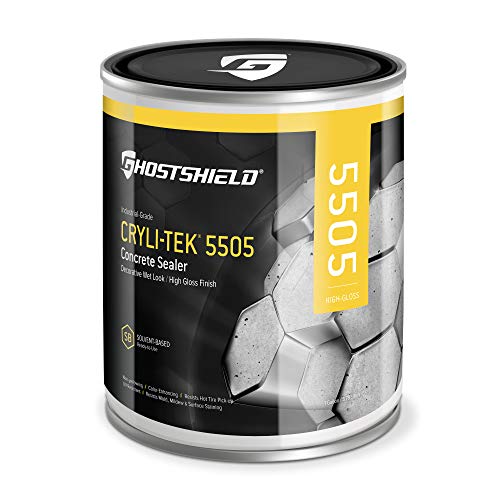
| Cryli-Tek 5505★ Best Overall | Maximum gloss & durability | High Gloss | — | Solvent | Amazon |
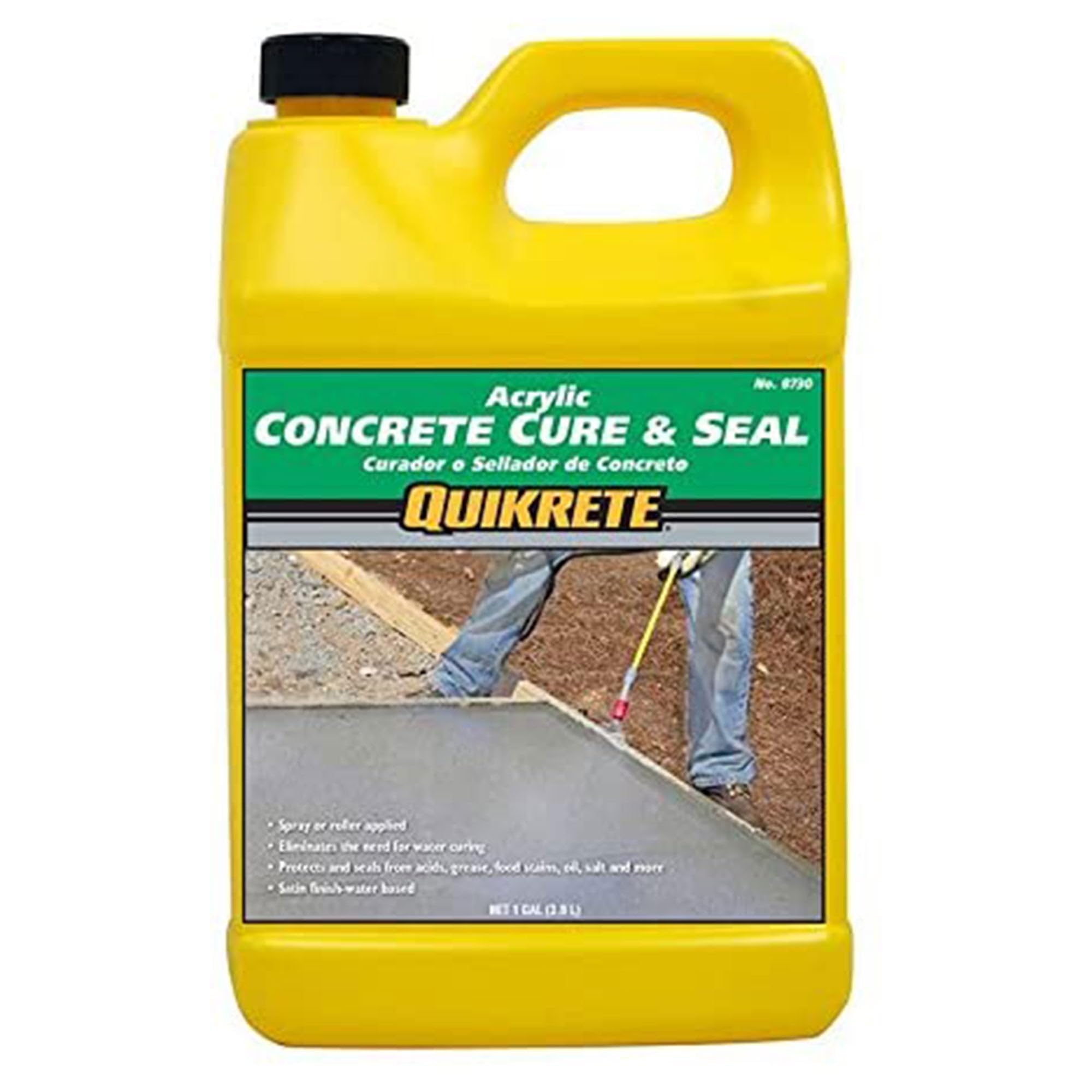
| Quikrete Cure & SealBest Value | Budget-friendly satin finish | Satin | — | Acrylic | Amazon |
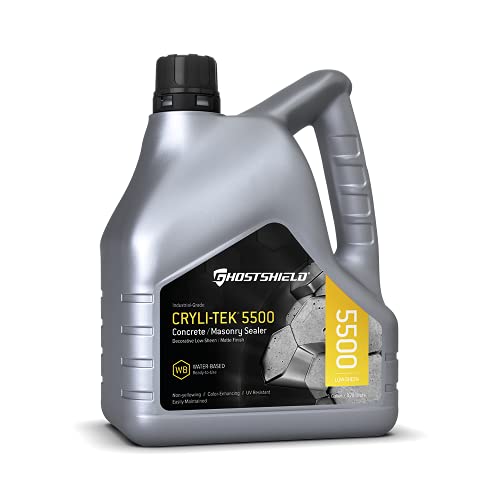
| Cryli-Tek 5500Low-Odor Pro | Low-odor low-gloss | Low Gloss / Matte | — | Water | Amazon |
| Armor AR350 | Low-gloss all-rounder | Low Gloss | 175-225 ft² | Solvent | Amazon |
| DOMINATOR LG+ | Fast, low-odor large areas | Low Gloss | 250-400 ft² | Water | Amazon |
| Armor AR500 5 Gal | Big high-gloss projects | High Gloss | 175-225 ft² | Solvent | Amazon |
In-Depth Reviews
1. Cryli-Tek 5505 Solvent Based High Gloss
Our pick — over 4.5★ from 350+ verified ratings; the strongest balance of quality and price.
This solvent-based formula delivers a professional-grade wet look that revives a 20-year-old patio.
This is the pick when you want the deepest, shiniest, “just rained on” appearance possible. The Cryli-Tek 5505 is a solvent-based, high-solids acrylic that darkens concrete, brick, and natural stone while laying down an extremely resilient high-gloss film that resists cracking, spalling, and staining. Water beads up and rolls off, which is exactly the protection you want on a driveway or pool surround.
Its UV-stable, self cross-linking resins last up to 3x longer than standard formulas. The maker claims the advanced UV-stable, self cross-linking resins last up to 3x longer than standard formulas, and owners back that up — one reapplied after two years and the original coat was still shedding water and holding its gloss. It needs no primer and bonds to surfaces previously sealed with either water-based or solvent-based acrylic, so you can refresh an older coat without stripping everything first.
The trade-offs are strong solvent fumes and lower-than-expected coverage per gallon. It’s solvent-based, so you need a mask, ventilation, and fast work — one owner sprayed it on with a 2-gallon sprayer and noted the strong fumes. Coverage also runs lighter than you might hope; as one buyer put it, “Yes, very shiny and easy to apply but, didn’t cover as much as I thought so, I’m buying two more.” Buy extra for your first coat.
What wins people over
- Dramatic, durable high-gloss wet look that survives full sun without yellowing
- No primer needed — bonds to old acrylic coats for easy refreshes
- One coat revived a 20-year-old brick patio to look brand new
The trade-offs
- Strong solvent odor demands a respirator and open-air work
- Coverage runs lower than expected — plan to buy a second gallon
- Brush application on uneven pavers is tedious; spray for large areas
Reach for this if: you want the single most impressive, longest-lasting gloss and you’re willing to gear up with a mask.
Look elsewhere if: you’re sealing a large area on a budget and can’t handle strong fumes.
2. Quikrete Acrylic Cure & Seal, Satin
The budget satin shield that also cures fresh concrete, saving you days of misting.
The Quikrete Cure & Seal does double duty, which is rare at this price. It’s an acrylic sealer that also works as a curing compound on fresh cement, so a new driveway needs no repeated misting for several days — just roll this on and let it work. The finish is a clean, non-shiny satin, which owners praise for keeping outside countertops and patios looking natural rather than lacquered.
It’s a great fixer for tired surfaces. One owner applied it to peeling, dusty concrete and found it stopped the dust and small rock shedding, darkened the surface, and made broom cleaning far easier. On concrete countertops over an Ardex feather finish, four thin sponge-applied layers produced a semi-gloss, stain-resistant top that the owner was thrilled with.
The downsides are a tacky surface for days and slipperiness when wet, making it poor for pool decks. The surface can stay tacky for days after application, and it gets slippery when wet, so it’s a poor match for pool decks where bare feet are everywhere. The recurring advice from owners is loud and clear: wear gloves. The product is hard to wash off skin and lingers for days if you miss a spot.
Smart double-duty: cures fresh concrete and seals old surfaces in one pass — a genuine money-saver.
Fit check: skip it for pool decks and wet barefoot zones; the slippery, sticky phase is real.
Who it suits: budget-focused homeowners sealing a new or peeling slab who don’t need gloss.
Who it doesn’t: anyone with a high-traffic wet surface or a taste for strong shine.
3. Cryli-Tek 5500 Water Based Low Gloss
An industrial-grade water-based formula that keeps the wet look but drops the fumes.
If solvent fumes are a dealbreaker, this is the professional answer. The Cryli-Tek 5500 is a water-based, breathable acrylic that delivers a clear low-sheen finish while preventing dirt pickup and resisting UV degradation and yellowing. Owners describe it as a 60-minute, two-coat job on a stamped concrete walkway that left a nice sheen and, importantly, a non-slip surface when wet.
The low-VOC formula (Volatile Organic Compounds — the chemicals that create strong smell) makes it far more pleasant for enclosed spaces or jobs where you don’t want the neighborhood smelling your project. It’s also one of the few water-based options that owners trust around a pool edge, where a roller and brush application enhanced the cement’s color without the worry of a harsh chemical odor lingering.
There’s a documented catch in hot climates. A couple of owners found the surface became sticky in extreme heat — one noted it in the 90s after 60 days — and attracted debris. The finish is definitely low gloss, so if you want a mirror shine, you’ll be disappointed. The biggest single praise point owners mention is the application itself, which comes up as the top positive aspect in the review data.
Why it wins
- Breathable, water-based, and far lower odor than solvent options
- Achieves a non-slip, satin sheen on stamped and pool-edge concrete
- Dries fast — a two-coat driveway job can finish in about an hour
Watch out for
- Can turn sticky in very hot weather and collect leaves or dust
- Low sheen only — no dramatic gloss effect here
Pick this for: pool edges, walkways, and any job where low fumes and easy clean-up matter most.
Think twice if: you live in a region with regular 90-degree days or you’re chasing a high-shine finish.
4. Armor AR350 Low Gloss Wet Look

The crowd-pleasing low gloss that restores luster to walkways and patios for years.
This is the sealer people reach for when they want the color-enhancing wet look without the high-gloss glare. The Armor AR350 is a solvent-based acrylic that darkens and enriches concrete and pavers, making dark tans and browns look like they’ve just been rained on — which is exactly the dramatic color enhancement the manufacturer promises. The most common praise from owners is the appearance, with reviews singling out how it restores luster to tired walkways and patios.
It’s built for longevity and easy upkeep. The formula is self-priming, so you don’t need a separate primer coat, and it’s designed to protect against abrasion, road salts, UV rays, and ice damage. Buyers report reapplying every couple of years and having it keep the surface looking fresh. One long-term owner found it still performing after five years on a garage floor, needing only a recoating to bring back the finish.
The trade-off is the odor and the prep. It’s a 700 VOC (Volatile Organic Compounds) solvent formula, so the smell during application is strong for about an hour, and it’s not something you want to use indoors without a respirator. Coverage is rated at 175-225 square feet per gallon, and you’ll almost certainly want two coats applied 24 hours apart for the best color depth.
The thing everyone raves about: appearance — it’s the top-cited positive in the review data by a wide margin.
The honest caveat: the odor is real for the first hour, so plan your ventilation before you start.
Reach for this if: you want a proven, low-gloss wet look on driveways, patios, and stamped concrete that lasts for years.
Look elsewhere if: you need zero odor or you’re sealing a large space and can’t handle the strong initial fumes.
5. Armor AR500 High Gloss Wet Look
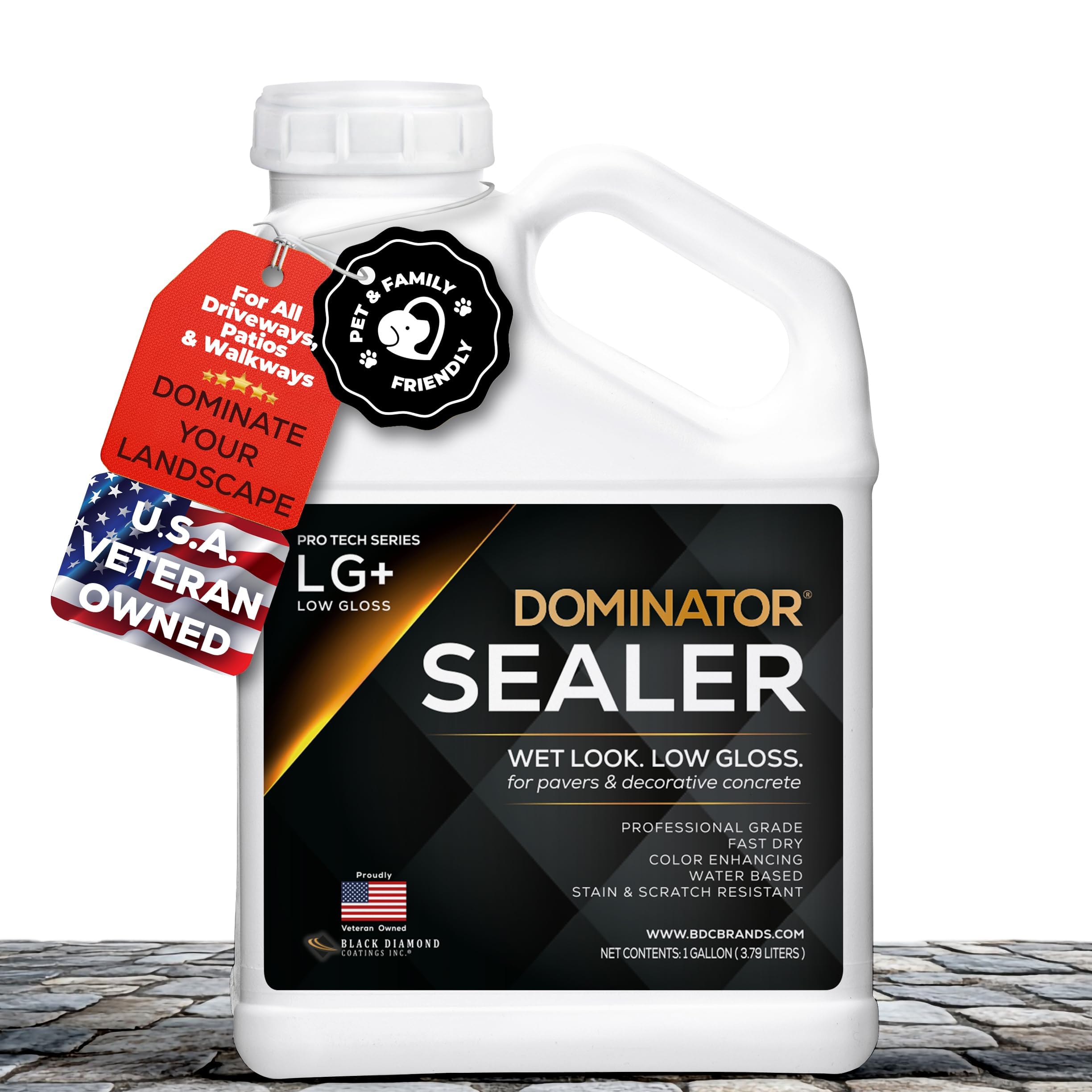
The water-based workhorse that covers 250-400 square feet per gallon in a single-day project.
If you’re sealing a large paver patio or walkway and want it done in an afternoon, the DOMINATOR LG+ is engineered for speed. It’s a water-based acrylic with an incredibly fast dry time between coats, making it a one-day project that competitors often can’t match. The coverage is also a standout: 250-400 square feet per gallon per coat, which is roughly double what most solvent-based options offer.
The low-odor formula is a huge practical win. Being water-based, it has no harsh odors and low VOCs, so you don’t need a respirator or a week to air out the yard. Owners mention spraying it on with a simple hand pump garden sprayer — one covered 1,500 square feet of brick pavers in under an hour. The finish is a low gloss that one owner described as “just a slight sheen which I really like,” while another found it made paver colors pop and bead water after a single thick coat.
The consensus is mixed on two fronts, though. The shine gets divided reviews — some find it a beautiful low gloss, others note it doesn’t look like the wet finish the marketing suggests. Coverage also varies by surface, with one owner reporting it barely covered 210 square feet versus the advertised rate. It’s also very sticky on hands, so gloves are non-negotiable.
Why it’s a favorite
- Massive 250-400 ft² per gallon coverage stretches your budget further
- Fast-drying, low-odor water-based formula is pleasant to apply
- Easily sprayed on with a cheap garden sprayer in under an hour
The mixed reviews
- Shine is divisive — it’s a subtle sheen, not a true wet look
- Coverage claims vary widely depending on surface porosity
- Very sticky on skin — gloves are essential
Best for: big paver driveways and walkways where low odor, fast dry time, and high coverage matter more than gloss.
Not for: anyone who demands a deep, lacquered wet-look finish.
6. Armor AR500 High Gloss, 5 Gallon

The jumbo high-gloss gallon that turns an entire stamped patio into a showpiece.
For sweeping surfaces like a full driveway, large stamped patio, or pool surround, this is the most efficient way to buy the high-gloss look. It’s the exact same Armor AR500 formula as the single gallon, just in a 5-gallon pail that lets you cover serious square footage without running back to the store. The finish is the same dramatic, color-enhancing wet look that owners describe as making their stamped concrete look brand new.
The reviews paint a picture of a product that delivers professional results when you invest in the prep. One owner sealed a 20×25 stamped patio with two coats plus touch-ups and achieved the advertised wet look, noting it dried quickly even in humid, 87-degree weather and repelled rain afterward. The biggest win in the review data is quality, which is the top-cited positive aspect, followed closely by appearance.
The jumbo size amplifies the trade-offs. The odor is strong — one pool-paver owner warned about fumes so potent they needed heavy ventilation and a careful approach to keep drips out of the water. Coverage also draws criticism, with some owners finding they needed a second coat to avoid dry spots on large porous areas. Plan for two coats and buy a little extra to be safe.
The headline stat: one 5-gallon pail saves you the hassle and per-unit cost of buying multiple single gallons.
The catch at scale: strong fumes and the need for two coats make prep and ventilation critical on big jobs.
Ideal for: homeowners with a large stamped patio or driveway who want maximum gloss and don’t want to re-buy every gallon.
Skip if: you’re only sealing a small walkway — the 5-gallon size will go to waste.
Understanding the Specs
Gloss Level
This is the single most visible decision you’ll make. A high gloss sealer acts like clear lacquer — it deepens colors dramatically and looks wet, but it also shows footprints and wear more readily. A low gloss or satin finish still enhances color but leaves a natural, subtle sheen that hides daily traffic better. Look at the label for “high gloss,” “low gloss,” “satin,” or “matte” and match it to your surface’s purpose.
Coverage Per Gallon
Coverage determines how many gallons you’ll need and is often the difference between a quick job and an expensive surprise. Rates range from about 175-225 square feet per gallon for solvent-based options up to 250-400 square feet for some water-based formulas. Porous surfaces like old brick or rough pavers absorb more, so always plan for a second coat and buy a touch-up gallon. Never assume the label’s rate applies to your specific surface.
Solvent vs Water Base
This choice shapes the entire application experience. Solvent-based sealers cure into a tougher, longer-lasting film and are preferred for driveways and pool decks, but they emit strong fumes that demand a respirator and open-air conditions. Water-based formulas have low VOCs (Volatile Organic Compounds — the chemicals that cause odor), clean up with soap and water, and are far more pleasant to apply, though they may need an extra coat to match solvent durability. Match the base to your tolerance for fumes and your surface’s traffic level.
Durability & Reseal Cycle
A sealer’s lifespan dictates your long-term maintenance. Some penetrating formulas claim barriers lasting 5-7 years, while film-forming acrylics often need a refresh every 2-4 years depending on sun and traffic exposure. The key to longevity is surface prep — a clean, dry, properly etched surface lets the acrylic bond fully. Watch for signs of wear like water no longer beading up or a dull, chalky appearance; that’s your signal to reseal.
FAQ
What’s the difference between high gloss and low gloss acrylic sealer?
Can I apply acrylic sealer over an old coat of sealer?
How many square feet does a gallon of acrylic concrete sealer cover?
Is a water-based or solvent-based acrylic sealer better?
How long does an acrylic concrete sealer last before I need to reseal?
Will an acrylic sealer make my concrete slippery when wet?
What’s the difference between a film-forming and a penetrating acrylic sealer?
What does VOC mean on a concrete sealer label?
Can I use an acrylic concrete sealer on natural stone like flagstone or bluestone?
Should I use a primer before applying an acrylic concrete sealer?
Final Thoughts: The Verdict
Across the board, the acrylic concrete sealer winner is the Cryli-Tek 5505 because it delivers the most dramatic, longest-lasting high-gloss wet look that owners consistently rave about, even if you’ll need a mask and an extra gallon. If you want a lower-odor project with a subtle sheen, grab the Cryli-Tek 5500. And for large paver patios where fast drying and massive coverage beat gloss, the DOMINATOR LG+ is the one to reach for.
How We Picked
We do not accept paid placement. Every pick is matched to a real buyer and a real use-case; we do not hands-on test units.
Sources & Methodology
Specifications: manufacturer listings and product documentation. Review insights: verified customer reviews, as of August 2026. Pricing: not shown on this page (it changes often); check the current price via the retailer link.
As an Amazon Associate, KitchPrep earns from qualifying purchases. This does not affect which products we feature.
Related Guides
