
If you’ve ever wanted fall‑apart beef in under an hour, dry beans without an overnight soak, or a week’s worth of soup without babysitting the stove, a roomy pressure cooker is one of those “why didn’t I buy this sooner?” upgrades.
An 8 Quart Pressure Cooker is the sweet spot for most real homes: big enough for meal prep, family dinners, and batch cooking… but still manageable to lift, wash, and store. The catch? Not all “8‑qt” models behave the same. Some sear like a champ. Some are whisper‑quiet at release. Some have stainless inner pots built for a lifetime. Others rely on nonstick inserts that feel effortless today but might be a replacement headache later.
In this guide, we’re hunting for the Best 8 Qt Pressure Cooker for your kitchen—not just the one with the flashiest presets. I pulled together 15 popular 8‑qt (and one close‑enough wide‑base) picks on Amazon, then looked at what actually matters day to day: pressure performance, sauté behavior, steam‑release safety, cleaning friction, part availability, and what long‑term owners consistently praise (or complain about).
You’ll get a quick comparison table first, then detailed reviews—written from the perspective of someone who wants your next dinner to be easier, not just your next gadget to be shinier.
In this article
How to Choose the Best 8 Qt Pressure Cooker for Your Kitchen
A pressure cooker should feel like a kitchen shortcut you trust—not a science experiment you dread. The best way to buy confidently is to match the cooker’s “personality” to how you actually cook: fast weeknights, batch soups, rice and beans, big cuts of meat, or a little bit of everything.
1. First decision: electric multi‑cooker or stovetop speed machine?
This choice changes everything—from flavor to learning curve to how much attention you need to pay.
- Electric multi‑cookers are “set it and walk away” friendly. They self‑regulate heat, offer safety locks, and often do more than pressure cook (slow cook, yogurt, rice, steam, sometimes even sous vide). The tradeoff: they typically run at slightly lower pressure than many stovetop models, so some recipes take a few extra minutes.
- Stovetop pressure cookers heat up fast, hit higher pressure in many cases, and give you chef‑level control. The tradeoff: you are the thermostat. You need to stay nearby to drop the heat once pressure is reached, and you’ll feel more “hands‑on” throughout.
If you’re new to pressure cooking, or you want reliable weeknight “button cooking,” go electric. If you’re already comfortable on the stove and want maximum speed (especially for classic 15‑psi recipe books), stovetop can be deeply satisfying.
2. Capacity reality check: “8‑qt” does NOT mean “fill it to the brim”
Here’s the quiet truth that saves people from sputtering valves, messy foam, and dreaded burn warnings: you almost never use the full stated capacity. Most recipes work best when you follow the max fill rules:
- Most foods: keep contents below about 2/3 of the pot.
- Foamy or expanding foods: (beans, rice, pasta, oats, split peas) keep contents closer to 1/2 of the pot.
That’s why a truly roomy 8 Quart Pressure Cooker feels so freeing: you can batch cook without flirting with those fill lines, and you get better steam circulation and more consistent pressure behavior.
3. The inner pot matters more than you think
“Stainless vs nonstick” isn’t just a preference—it changes your workflow.
- Stainless inner pot: Best long‑term durability, best for deglazing after searing, and less “I scratched it once and now I’m sad.” It can stick if you don’t preheat or you rush the sear—so you’ll want the quick trick: preheat, add oil, let it shimmer, then sear.
- Nonstick inner pot: Super easy cleanup and great for delicate foods. But it’s a consumable part. If the brand doesn’t sell replacements, that “easy cleanup” can become a long‑term headache.
- Ceramic-coated inner pot: A middle ground: easier release than stainless, often marketed as “cleaner” than PTFE-style nonstick, but still something you should protect from metal utensils and sudden temperature shocks.
4. Release style: the feature that decides whether you’ll actually use it weekly
In real kitchens, the steam release is where confidence is won (or lost). Look for:
- Front-facing or shielded release that keeps your hand away from the steam path.
- Quiet or diffused release if you cook at night, have sleeping kids, or just don’t want the “jet engine” moment.
- Easy natural release for soups, beans, and braises—less splatter, better texture.
A lot of negative reviews for pressure cookers aren’t about cooking performance at all—they’re about people disliking the release experience. Pick one you won’t fear.
5. Presets vs manual control: don’t get trapped by “only presets”
Smart programs can be fantastic… as long as you can still take the wheel. The best cookers let you:
- Adjust time (especially crucial for vegetables and seafood).
- Adjust pressure level (low vs high) to prevent turning broccoli into green mush.
- Save favorites if you repeat the same meals weekly.
If a budget model forces you into rigid preset times, you may end up “babysitting” it anyway—canceling early, restarting, or manually timing. That defeats the whole point of convenience.
6. The long-term factor most shoppers forget: parts and support
Pressure cookers are simple machines with a few parts that matter a lot: sealing rings, valves, and inner pots. Big established brands usually win here because replacement rings and accessories are easy to find. With newer generic brands, you’re betting that replacement parts will exist later.
7. Don’t confuse “pressure cooking” with “pressure canning”
This one matters. Some listings casually use the word “canner,” but pressure canning low-acid foods (like vegetables, meats, and many soups) requires strict temperatures, verified equipment, and tested processes. Many electric multi‑cookers are not recommended for pressure canning. If you plan to preserve food, follow official canning guidance and choose an approved pressure canner with proper capacity and controls.
Quick Comparison: 15 Best 8 Qt Pressure Cooker Picks
Use this table to spot the “shape” of the right match—premium electric, classic Instant Pot, quiet-release models, stovetop speedsters, and budget picks. Then jump to the full review for the real-world advice and watch-outs.
On smaller screens, swipe or scroll sideways to see the full table.
| Model | Cooker style | Capacity | Best match | Amazon |
|---|---|---|---|---|
| Instant Pot Pro 10‑in‑1 (8 Qt) | Electric multicooker | 8 qt | Premium performance + real control (meal prep, families) | Amazon |
| Instant Pot Duo Crisp 11‑in‑1 + Air Fryer (8 Qt) | Electric + air fryer lid | 8 qt | One-pot pressure cooking + crispy finishes without a second appliance | Amazon |
| Instant Pot Duo Plus Whisper Quiet 9‑in‑1 (8 Qt) | Electric multicooker | 8 qt | Quiet release + guided cooking (great for nervous beginners) | Amazon |
| Instant Pot Duo 7‑in‑1 (8 Qt) | Electric classic | 8 qt | The “everyone has one” baseline that still delivers | Amazon |
| T‑fal Clipso Stainless Steel (8 Qt) | Stovetop | 8 qt | Fast, controlled, one‑hand opening on any cooktop (incl. induction) | Amazon |
| KOBACH Stainless Steel Pressure Cooker (8 Qt) | Stovetop | 8 qt | One‑hand locking + high listed pressure for fast braises | Amazon |
| Presto Stainless Steel Pressure Cooker 01370 (8 Qt) | Stovetop | 8 qt | Legacy brand reliability + parts support mindset | Amazon |
| Instant Pot RIO Wide 7‑in‑1 (7.5 Qt) | Electric wide-base | 7.5 qt | More sauté area for big cuts (close to 8‑qt capacity feel) | Amazon |
| Midea 12‑in‑1 Electric Pressure Cooker (8 Qt) | Electric multicooker | 8 qt | Stainless pot value pick with straightforward programs | Amazon |
| COMFEE’ 16‑function Pressure Cooker (8 Qt) | Electric multicooker | 8 qt | Ceramic inner pot fans + lots of included accessories | Amazon |
| OLIXIS 16‑in‑1 Electric Pressure Cooker (8 Qt) | Electric multicooker | 8 qt | Budget-friendly “do a lot” option for simple meals | Amazon |
| Presto 01282 Aluminum Pressure Cooker (8 Qt) | Stovetop | 8 qt | Old-school speed + lightweight pot for classic pressure cooking | Amazon |
| Simple Deluxe 16‑in‑1 Electric Pressure Cooker (8 Qt) | Electric multicooker | 8 qt | Low-cost electric for soups, stews, and basic rice | Amazon |
| DUMOS 16‑in‑1 Electric Pressure Cooker (8 Qt) | Electric multicooker | 8 qt | Budget pick for preset-based cooking (best if you keep it simple) | Amazon |
| WantJoin Aluminum Pressure Cooker / “Canner” (8 Qt) | Stovetop | 8 qt | Big, basic aluminum pot with multiple safety devices (read canning notes) | Amazon |
In‑Depth Reviews: 15 Standout 8 Quart Pressure Cooker Picks
Below are the detailed reviews in an order that mirrors real buying behavior: premium “buy once” upgrades first, then classics, then specialized stovetop picks, then budget models. If you want one confident recommendation quickly, look for the “Best overall” label.
1. Instant Pot Pro (8 Qt) – The Premium “Do-It-Right” Multicooker

If you’re buying one main cooker to live on your counter for years, the Instant Pot Pro is the most “adult” choice in this list. It’s not just more functions—it’s the way it handles the basics that feels upgraded: steadier sautéing, faster heat-up, and a workflow that reduces the two most common frustrations with electric pressure cooking: scorched bottoms and chaotic release.
The inner pot is stainless with easy-grip handles, which is a bigger deal than it sounds. Handles make it safer to lift a heavy pot of hot soup, and they also stop the insert from spinning while you stir. In practice, that means you can brown meat confidently, scrape up fond, and then deglaze properly—exactly the sequence that creates deep flavor and prevents “burn” errors later.
My expert take: this is the model I recommend when someone wants pressure cooking to feel like cooking—not like tapping random presets and hoping. If you’re the kind of person who tweaks recipes, batch-cooks weekly, or wants to make yogurt or sous vide without a second appliance, the Pro earns its higher price.
Why it earns “best overall”
- Stainless pot + handles – Better for searing, deglazing, and long-term durability; handles make lifting safer and stirring steadier.
- Premium control – More presets and the ability to truly customize (so you can dial in your own “perfect chili” or “perfect rice”).
- Faster, calmer workflow – Strong preheat and a more controlled release style reduces the “pressure cooker drama” that scares beginners.
- Made for meal prep – 8‑qt capacity feels roomy for broth, pulled pork, large batches of beans, and freezer-friendly soups.
Good to know
- It’s a premium-priced model; if you only use pressure cook twice a month, the Duo may be the smarter spend.
- Stainless can stick if you rush the sear—preheat first and don’t force-flip protein before it releases naturally.
- Like all electric models, thick sauces need liquid + deglazing to avoid burn warnings.
Ideal for: home cooks who want one “main” machine for batch cooking, better searing, and repeatable results—without feeling limited by presets.
2. Instant Pot Duo Crisp (8 Qt) – Pressure Cook Fast, Then Air-Fry Crispy

The Duo Crisp is for the person who wants the best part of an oven roast—golden, browned, slightly crispy edges—without turning on the whole oven. It pressure cooks first (fast, moist, tender), then you swap to the air fryer lid for a finishing blast that transforms texture.
Where it shines: foods that you want tender inside but not “wet” outside. Think chicken thighs (juicy pressure cook, then crisp skin), carnitas-style pork, or even mac and cheese that you want lightly browned on top. Owners who actually use the air fryer lid tend to love it for the “one pot, two textures” routine—especially in hot weather when you’re avoiding the oven.
My expert caveat: this is a brilliant consolidator only if you’re okay storing the second lid. If your cabinets are already packed, the air fryer lid can feel like a bonus feature that slowly becomes clutter. But if you’ll use it weekly, it’s a real upgrade in the quality of your finished meals.
Why it’s a standout
- Two-phase cooking – Pressure cook tenderness + air-fry crispness is a combo you can taste immediately.
- Excellent for “finishers” – Great for browning shredded meats, crisping potato wedges, or drying off soggy leftovers.
- Big-batch friendly – The 8‑qt size supports meal prep and family cooking without constant batching.
- Space-saver (for the right home) – Can replace a standalone air fryer for many households.
Good to know
- You do need storage space for the extra lid—plan that before you buy.
- Air frying in a deep pot is not identical to a wide basket air fryer; shake/turn for the best browning.
- As with any multi-lid system, it’s slightly more “setup” than a single-purpose device.
Ideal for: cooks who want tender + crispy results in one system and will actually use the air fryer lid (not just admire it).
3. Instant Pot Duo Plus Whisper Quiet (8 Qt) – Calmer Steam, Clearer Guidance

If you’re slightly nervous about pressure cooking (totally normal), the Duo Plus Whisper Quiet is the model that turns pressure cooking into a calmer experience. It’s not just the quieter steam release—it’s the way the interface “walks you through” the process with progress indicators and guided cues so you know what stage you’re in.
This matters because most first-time frustration comes from timing confusion: “Is it cooking yet?” “Why is the timer not counting down?” “Is it supposed to hiss?” A more guided display helps you understand the phases: preheat, pressurize, cook, release, keep warm.
My expert take: for families, the quieter release is also a quality-of-life feature. If you batch cook after bedtime, or you’re cooking in a small apartment where loud releases feel aggressive, the Whisper Quiet approach makes you more likely to use it often—which is the whole point.
Why it’s worth it
- Quieter steam release – Less startling, more kitchen-friendly, especially in small spaces or late evenings.
- Guided cooking interface – Helps new users understand what’s happening and avoid “I thought it was broken” moments.
- Versatile modes – Pressure, slow cook, rice, sauté, yogurt, and more in one appliance.
- Family-size capacity – Big enough for gatherings, meal prep, and bulk soups without constant refills.
Good to know
- Like all electric models, it’s not a magic wand for thick sauces—deglaze after sauté and keep enough thin liquid.
- If you prefer minimal interfaces, the “guided” display can feel like extra information.
- The 8‑qt footprint is real; measure your storage space if it won’t live on the counter.
Ideal for: beginners, families, and anyone who wants a calmer, more guided pressure-cooking experience (especially at night).
4. Instant Pot Duo 7‑in‑1 (8 Qt) – The Trusted Baseline That Still Wins

The Duo is the reason electric pressure cooking became mainstream. It’s the model that has the most “shared knowledge” online—recipes, timing charts, and troubleshooting tips are everywhere because so many people own one. That ecosystem matters when you’re learning.
From an expert perspective, the Duo’s biggest strength is that it does the core jobs reliably without overcomplicating your life: beans, rice, stews, soups, braised meats, and a very useful sauté mode for aromatics and browning. It’s not trying to be everything. It’s trying to be dependable—and it succeeds.
If you’re buying your first 8‑qt cooker and want the safest “I won’t regret this” option without paying premium prices, this is it. You can always add a separate air fryer later. You can’t easily add trust, parts, and recipe support to a no-name brand.
Why people keep buying it
- Proven recipe ecosystem – You’ll find timings, guides, and fixes fast because it’s so widely used.
- Stainless inner pot – Durable, oven-friendly in many cases, and great for deglazing after sauté.
- Solid for batch cooking – 8‑qt size is excellent for family meals, meal prep, and big soup pots.
- Simple, familiar interface – Less menu-hunting, more cooking.
Good to know
- Steam release is effective but not as “soft” as newer quiet-release designs.
- Sauté is good, but premium models sear more evenly and recover heat faster.
- The included ring absorbs odors over time—consider a spare ring if you cook strong flavors often.
Ideal for: first-time buyers and practical cooks who want the most supported, most predictable 8‑qt electric pressure cooker experience.
5. T‑fal Clipso Stainless Steel (8 Qt) – Fast, Confident, One‑Hand Stovetop
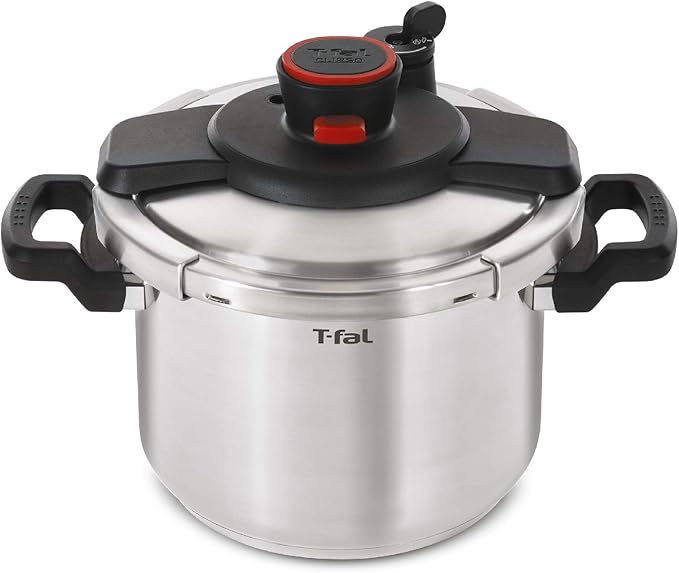
If electric pressure cookers feel a little too “computer says no,” a quality stovetop cooker like the T‑fal Clipso brings pressure cooking back to its roots: speed, simplicity, and control. This is the stovetop option for people who like to cook—and want pressure cooking to feel like an extension of that skill.
The Clipso’s signature is the one-hand opening/closing system. That sounds like a small convenience until you’re holding a heavy pot or you’re trying to manage dinner in a tight space. Add induction compatibility, a solid stainless build, and a reputation for strong safety engineering, and it’s easy to see why so many experienced cooks reach for it.
Expert tip: stovetop pressure cookers reward attention. You heat to pressure, then reduce heat to maintain it. Once you learn your stove’s “sweet spot,” it becomes almost meditative—and often faster than electric models, especially for recipes written with high-pressure stovetop timings in mind.
Why it stands out
- Stovetop speed – Fast heat-up and responsive control once you learn the rhythm.
- One-hand system – Opening/closing feels unusually easy for a stovetop pressure cooker.
- Induction-friendly stainless build – Works across cooktops without adapter hacks.
- Great for serious braises – Ideal for beans, stews, stock, and tough cuts that you want tender fast.
Good to know
- It’s not “set and forget.” You’ll stay closer to the stove than with an electric multicooker.
- Release can be loud depending on technique; quick releases require careful steam direction and spacing.
- There’s a learning curve if you’ve only used electric pressure cookers.
Ideal for: confident cooks who want true stovetop speed, induction compatibility, and a one-hand opening system that feels genuinely convenient.
6. KOBACH Stainless Steel (8 Qt) – One-Hand Locking + High-Pressure Potential

KOBACH is the stovetop pick that surprised me in a good way: it’s designed around daily usability. The one-hand opening design (with 360-degree locking) reduces the fiddly “align-and-pray” experience that turns some people off stovetop models. Owners often describe it as “easy to work with,” and in the stovetop category, that’s a high compliment.
This model is marketed for faster cooking via a tight seal and high pressure handling, plus multiple safety release paths. The real-world advantage is confidence: if you’re returning to pressure cooking after years away, it feels more modern and less finicky than older designs.
Expert note: stovetop models can be incredibly fast for potatoes, beans, roasts, and broths—but your results depend heavily on your heat management. The best practice is simple: bring it to pressure, reduce heat until it just maintains pressure, and use natural release for foamy foods.
Why it’s compelling
- One-hand locking – Easy lid alignment and locking is a huge win for daily cooking.
- Built for modern cooktops – Compatible with induction and gas (great if you switch kitchens or cooktops).
- Fast tenderness – Owners consistently praise how quickly it tenderizes tougher cuts and reduces total cook time.
- Thoughtful markings – Clear interior lines help avoid the overfill/underfill mistakes that cause messy releases or scorching.
Good to know
- As a newer name, long-term parts availability is less proven than legacy stovetop brands.
- High-pressure cooking is powerful—follow the manual closely and keep vents clean.
- Stainless cleanup is easy, but you’ll want to learn deglazing for browned bits and fond.
Ideal for: cooks who want stovetop speed with an easier, more modern lid-locking experience and induction compatibility.
7. Presto 01370 Stainless Steel (8 Qt) – Simple Design, Long-Term Mindset

Presto is the brand people mention when they talk about pressure cookers lasting a decade… then getting passed down. The 01370 stainless model isn’t flashy. That’s the point. It’s a pressure cooker that focuses on the fundamentals: solid stainless build, a tri-clad base for better heat distribution, and a classic pressure regulator system that’s easy to understand and maintain.
This is the pick for practical buyers who value “simple things don’t break.” If you grew up watching a parent or grandparent use a stovetop pressure cooker, this will feel familiar, but with modern safety features like lock indicators and straightforward release controls.
Expert tip: with stovetop cookers, your results improve dramatically when you treat pressure like a maintenance mode, not a full blast. Once pressure is reached, lower the heat. If you keep the heat too high, you can boil liquids aggressively, concentrate flavors too hard, and risk sputtering through vents.
What it does well
- Simple, proven design – Easier to learn, easier to maintain, fewer gimmicks.
- Stainless durability – Built to handle heavy use, including browning and long simmers (with the lid off).
- Good heat distribution – Tri-clad base helps reduce hot spots versus thinner pots.
- Great “first stovetop” choice – If you want stovetop speed but prefer a straightforward system.
Good to know
- Stovetop requires attention; you can’t truly walk away the way you can with electric models.
- Pressure release is more manual than whisper-quiet electric systems.
- Stainless cleaning is easy, but the mirror finish can show marks if you’re picky (functionally, it’s fine).
Ideal for: buyers who want a classic stovetop pressure cooker from a legacy brand and plan to use it for years (beans, broths, roasts, and stews).
8. Instant Pot RIO Wide (7.5 Qt) – The “Fits Big Cuts Better” Shape
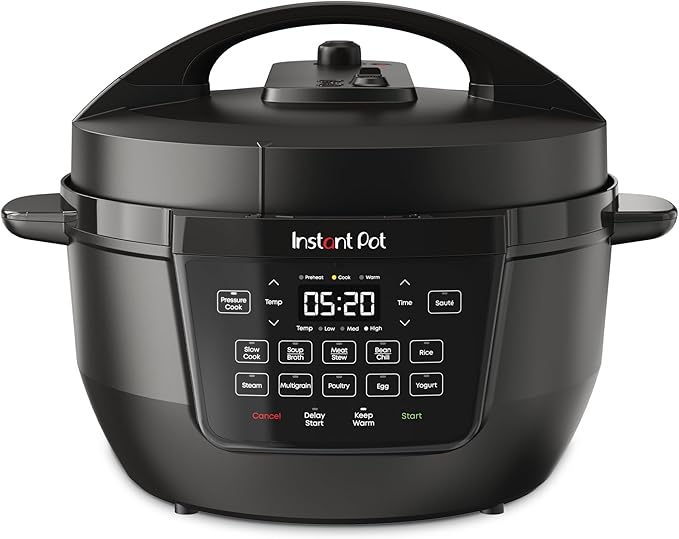
Yes, it’s 7.5 quarts—not a full 8. I’m including it anyway because the RIO Wide solves a real problem: many electric pressure cookers are tall and narrow, which limits your searing surface and makes large cuts awkward. A wider base means better browning and easier stirring, especially for thick stews or one‑pot meals that start with sauté.
Owners rave about how full-size meals fit better: whole chicken, ribs, broad layers of aromatics, and larger roasts that sit flat instead of folding. And that shape improves flavor because you can develop a deeper sear before pressure cooking. In other words: the pot shape actually improves the food.
Expert caveat: wide and shallow also means liquid evaporates faster during sauté. That’s not bad—just be ready to deglaze with broth or water before pressure cooking, especially with sugary sauces (BBQ-style) that love to scorch.
Why it’s uniquely useful
- More sauté space – Better browning, easier stirring, less “boiling meat” and more real sear flavor.
- Fits big cuts – Whole poultry and roasts fit more naturally in the wide shape.
- Quieter release – Easier on ears and nerves than older-style loud releases.
- Great for 2–5 people – The 7.5‑qt capacity still feels generous for most households.
Good to know
- Not a true 8‑qt; if you’re regularly feeding 6–8 adults, you may want full 8‑qt capacity.
- Wide base can evaporate liquid faster during sauté—deglaze thoroughly before pressure cooking.
- If you rely on buying extra inner pots, availability varies by model and region.
Ideal for: cooks who prioritize searing and want big cuts to fit naturally—without giving up electric convenience.
9. Midea 12‑in‑1 (8 Qt) – Quietly Impressive for Daily Rice, Stews & Soups

Midea is one of those brands that’s bigger than most people realize, and their 8‑qt multicooker is a strong “value with substance” option: stainless inner pot, 12 presets, and a safety system designed to regulate temperature and pressure automatically.
The practical appeal is simple: you get the durability and deglazing benefits of stainless without paying premium-brand pricing. Owners often use it as a daily driver for rice, oatmeal, chili, and soups, and it shines when you’re cooking larger family portions thanks to the 8‑qt volume.
Expert tip for getting the best from stainless: after sautéing onions or browning meat, add a splash of broth and scrape the bottom clean before you lock the lid. That one habit prevents most “burn” warnings and gives you richer flavor at the same time.
Why it’s worth considering
- Stainless inner pot – Better longevity and better searing + deglazing than many budget nonstick options.
- Big capacity – Excellent for soups, roasts, and multi-meal batch cooking.
- Beginner-friendly presets – Enough programs to cover daily cooking without cluttering the interface.
- Good value reputation – Many buyers see it as a strong alternative when they want to avoid premium pricing.
Good to know
- Some users report a small learning curve with lid alignment—take a moment to learn the lock marks.
- As with many multicookers, the “keep warm” function can over-thicken foods over time; stir or turn it off if needed.
- If you want ultra-quiet release, higher-tier Instant Pot models feel more refined.
Ideal for: shoppers who want stainless durability and family-size capacity at a more budget-friendly price point.
10. COMFEE’ (8 Qt) – Ceramic-Coated Inner Pot for Easy Release

If you want the “easy cleanup” feeling of nonstick, but you’re aiming for a ceramic-coated insert, COMFEE’ is the obvious pick in this lineup. The ceramic pot is designed for easier release, and the cooker leans into convenience: lots of presets, a big family capacity, and a bundle of accessories so you don’t have to buy the basics separately.
Owners commonly use it for rice, roasts, soups, yogurt, and steaming. And because it’s 8 quarts, it’s a strong choice for cooking in bulk without hitting the fill line too quickly—especially helpful for beans and pasta dishes where foam can cause mess in smaller pots.
Expert reality check: with ceramic or nonstick inserts, treat the pot like a “no metal tools” zone. Use silicone or wooden utensils, avoid sudden cold-water rinses while the pot is still screaming hot, and you’ll preserve the coating much longer.
What people love
- Ceramic-coated inner pot – Easy release, easier cleanup, and a feel many users prefer to traditional nonstick.
- Accessory bundle – Handy extras like ladle, spoon, measuring cup, and steam rack reduce add-on shopping.
- Family-size cooking – 8‑qt capacity is great for gatherings, meal prep, and big soups.
- Simple “do it all” vibe – Presets cover most everyday needs without needing niche gadgets.
Good to know
- Coated pots eventually wear; check that replacement inserts are available if you plan to use it heavily.
- As with many value brands, instructions may be lighter than premium brands—expect a small learning curve.
- Ceramic still benefits from deglazing after sauté to avoid stuck-on sugars and thick sauces.
Ideal for: shoppers who want a ceramic-coated insert for easy release and plan to cook big batches with a simple preset-driven workflow.
11. OLIXIS (8 Qt) – Lots of Functions for Simple Family Meals
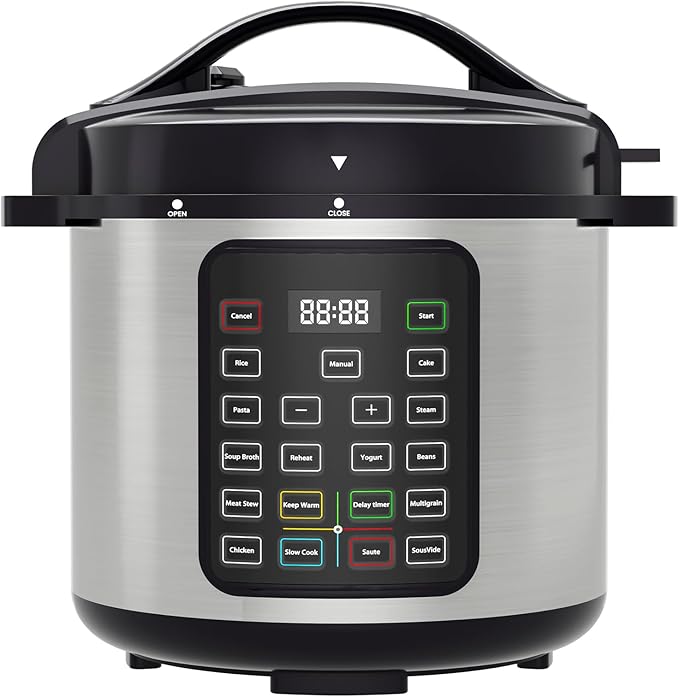
OLIXIS is aimed at the “I want Instant Pot-style convenience without Instant Pot pricing” shopper. You get a big 8‑qt capacity with a broad set of cooking modes (rice, stews, yogurt, slow cook, sauté, and more) in a single unit. For basic daily cooking, that’s often enough to make it feel like you upgraded your entire kitchen.
Where budget multicookers tend to win is speed-to-satisfaction: you can make rice, beans, and simple stews quickly with minimal knowledge. Where they can struggle is consistency of user experience—manual clarity, customer support, and replacement parts.
Expert advice if you choose this route: keep it “liquid-friendly.” Soups, broths, beans, rice, and braises are the sweet spot. Save very thick sauces for after pressure cooking (stir in at the end), and you’ll avoid most frustration.
Why it’s appealing
- Big capacity for the price – 8‑qt volume is excellent for batch meals and family portions.
- Preset variety – Enough modes for everyday cooking without needing multiple countertop appliances.
- Beginner-friendly vibe – Many owners describe it as easy to use for stews, rice, and quick meals.
- Stainless build feel – Durable exterior and practical design for daily use.
Good to know
- Budget brands can have inconsistent documentation; follow the liquid minimums carefully.
- Part availability (rings, valves, inserts) may be harder to confirm long-term than with big brands.
- If you do a lot of searing, higher-tier models tend to brown more evenly and recover heat faster.
Ideal for: budget shoppers who want an 8‑qt multicooker primarily for soups, beans, rice, and simple stews—without paying premium brand prices.
12. Presto 01282 Aluminum (8 Qt) – Lightweight, Fast Heating, Old-School Reliable
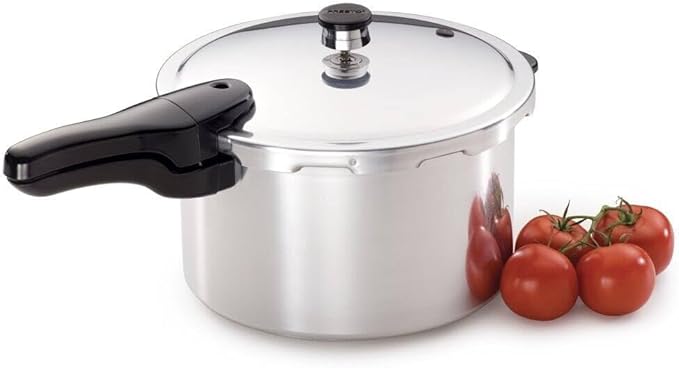
The Presto 01282 is the “grandma’s pressure cooker energy” option—simple, effective, and fast to heat because aluminum responds quickly. If your priority is classic pressure cooking for potatoes, beans, stews, corned beef, and stock, this kind of pot can feel almost unbeatable for the money.
Long-time owners often emphasize durability when cared for properly: keeping the vent clean, replacing the ring when needed, and using nonabrasive cleaners. It’s the type of cooker that doesn’t need software updates or a control panel to deliver.
Expert note: aluminum is fantastic for heat response, but it’s not everyone’s preference for acidic sauces (tomatoes, vinegar-heavy dishes) because some cooks are sensitive to metallic tastes. If that’s you, stainless is the safer pick.
Why it’s a classic
- Fast heating – Aluminum gets to pressure quickly and responds quickly to heat adjustments.
- Simple mechanics – Easy to understand and maintain with basic care.
- Great for staples – Potatoes, beans, roasts, stocks, and stews are where it shines.
- Budget-friendly – One of the most affordable ways to get real stovetop pressure cooking in 8 quarts.
Good to know
- Not ideal for highly acidic dishes if you’re sensitive to aluminum taste.
- Stovetop attention required—reduce heat after pressure is reached.
- Exterior polishing and sticker removal can take patience; avoid scraping that scratches the pot.
Ideal for: budget-minded cooks who want fast stovetop pressure cooking for classic comfort foods and don’t mind a more hands-on process.
13. Simple Deluxe 16‑in‑1 (8 Qt) – Entry-Level Electric for Big Batches

If your main goal is to get an 8‑qt electric pressure cooker into your kitchen at the lowest possible cost, Simple Deluxe is aimed directly at you. It offers a long list of functions and a big pot for stews, rice, porridge, and one-pot meals.
In real kitchens, this kind of cooker succeeds when you keep expectations grounded: it’s for straightforward, liquid-rich cooking, not precision culinary gymnastics. Use it for soup, beans, chili, rice, shredded meats, and gentle slow cooking, and it can absolutely earn its spot.
Expert advice: if you buy an ultra-budget electric model, your best “insurance policy” is technique. Measure liquid carefully, avoid thick sugary sauces under pressure, and let it natural-release for foamy foods. Those habits create stability across nearly any brand.
Why it can be a smart buy
- Big capacity, low cost – 8 quarts is a lot of volume at an entry-level price.
- Plenty of presets – Covers everyday meals like rice, stew, soup, porridge, and slow cook.
- Useful for special diets – Softening foods, making tender stews, and gentle cooking can be easier here than on a stove.
- Convenient for hot weather – Less heat in the kitchen than running a big oven for hours.
Good to know
- Budget models can vary in long-term support and replacement parts availability.
- If you sauté heavily, premium models tend to be more even and less prone to hot spots.
- Presets are helpful, but you may still need to learn timing basics for your own foods.
Ideal for: shoppers who want the cheapest path to 8‑qt electric batch cooking and will mostly cook soups, beans, rice, and stews.
14. DUMOS 16‑in‑1 (8 Qt) – Practical Pick if You Like Preset Cooking
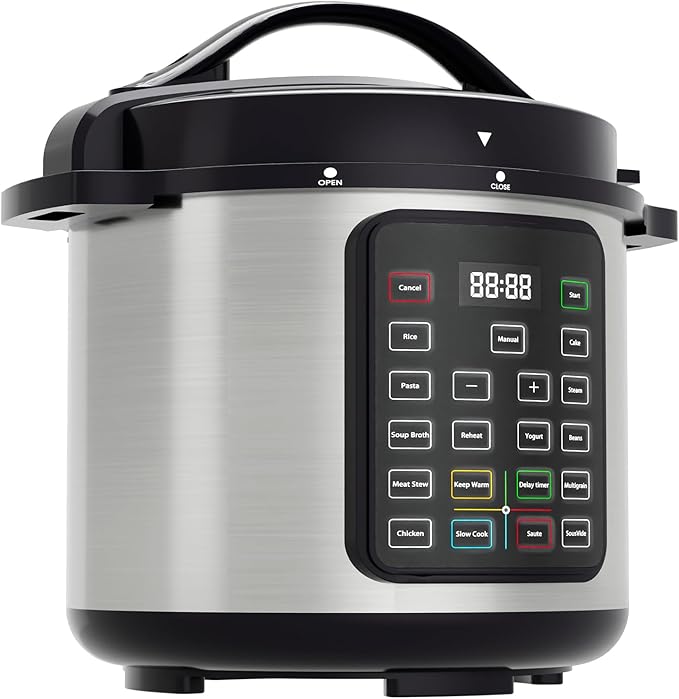
DUMOS is another budget multicooker built around convenience and speed for everyday meals. Owners often describe it as quick to heat, easy to clean, and useful for beans, broths, and rice—exactly the foods that make pressure cookers feel like cheating (in the best way).
The most important expert note here is about control: some value models lean heavily on preset programs, and user feedback sometimes points to limited manual time customization. If you’re the kind of cook who wants to set “7 minutes” for potatoes or “180 minutes” for bone broth without hacks, read the interface details carefully.
That said, if your cooking is consistent—chili, stews, rice, shredded chicken, soups—preset-style cookers can feel pleasantly effortless. And at a low price, they can be a good gateway before you invest in a premium model later.
Where it works well
- Strong everyday utility – Great for rice, beans, broths, and stews with minimal effort.
- Big capacity – 8 quarts supports batch cooking and family meals.
- Simple to clean – Many users praise easy cleanup and low friction day-to-day.
- Good “backup cooker” – Useful as a second pot during holidays or meal-prep weekends.
Good to know
- Manual time flexibility may be limited depending on mode; advanced cooks may feel constrained.
- Replacement parts and long-term support can be harder to confirm than major brands.
- If you do complex recipes, the Instant Pot ecosystem is still the easiest path for troubleshooting.
Ideal for: budget shoppers who mostly cook common staples and are comfortable using preset programs (or don’t mind learning workarounds).
15. WantJoin Aluminum (8 Qt) – A Simple Stovetop Workhorse with Safety Layers

WantJoin’s 8‑qt aluminum cooker is aimed at the “give me a big, basic pressure pot that works” crowd. Aluminum heats fast, the pot is relatively lightweight for its size, and the design emphasizes multiple safety mechanisms to reduce overpressure risk.
Owners often talk about it as a practical, good-value cooker for beans, tubers, soups, and meats—exactly the classic pressure cooking repertoire. Some also mention small usability items like sticker removal and lid familiarity (common across many aluminum stovetop units).
Expert caution: some listings use “canner” language. If your goal is true pressure canning of low-acid foods, don’t assume any pressure cooker is a canner. Follow official home-canning guidance and choose the right equipment for that job. For everyday pressure cooking meals, though, this can be a solid basic tool.
Why some buyers like it
- Fast heating aluminum – Reaches pressure quickly and responds well to heat adjustments.
- Big family capacity – 8 quarts is great for soups, beans, stews, and bulk cooking.
- Multiple safety devices – Designed to vent safely through several protective paths.
- Simple value – A straightforward stovetop pressure pot without electric complexity.
Good to know
- Like other aluminum pots, it may not be ideal for frequent acidic cooking if you’re taste-sensitive.
- Lid learning curve is normal; practice with water first until locking and releasing feel natural.
- For true pressure canning, confirm equipment and capacity requirements before using any “canner” claims.
Ideal for: cooks who want a basic stovetop 8‑qt pressure pot for everyday meals and don’t need a premium brand ecosystem.
How an 8 Quart Pressure Cooker Actually Cooks (and Why Release Style Matters)
Pressure cookers don’t “cook with pressure” the way people imagine—they cook with steam temperature. When a sealed pot builds pressure, the boiling point of water rises, and steam gets hotter. That hotter steam cooks food faster and penetrates tough fibers more efficiently.
Where things get interesting is that not all cookers hit the same pressure, and not all recipes behave the same. That’s why two people can cook “the same” chili in two different machines and get different results.
The 3 pressure-cooking phases you must understand
- Come to pressure: The pot heats and builds steam. No countdown yet. This is why “10 minutes cook time” may take 20–30 minutes total.
- Cook at pressure: The timer counts down. This is the true “recipe time.”
- Release: Either natural (slow) or quick (valve). Release method can change texture dramatically.
If you want fall-apart roasts, soft beans, and silky broths, natural release is your friend. If you’re cooking vegetables or seafood, a controlled quick release prevents overcooking. The “right” release is a cooking technique, not just a safety step.
How to get better results immediately
- Deglaze after sauté – Add broth/water and scrape the bottom clean before pressure cooking. This prevents burn warnings and boosts flavor.
- Respect the fill lines – Especially for pasta, oats, rice, and beans. Overfilling creates foam and messy valves.
- Thicken after cooking – For chili and thick sauces, pressure cook with thinner liquid, then reduce or stir in thickeners at the end.
- Use “pot‑in‑pot” – Cheesecake, rice, and delicate foods do beautifully in a smaller bowl on a rack, reducing sticking and scorching.
- Learn your timing once – When you find your perfect bean time or your perfect pot roast timing, save it and repeat it.
Once you understand the phases and pick a cooker with a release style you like, pressure cooking becomes one of the most consistent “make it on a Tuesday” skills in your kitchen.
FAQ: 8 Quart Pressure Cooker Questions, Answered
Do I really need an 8‑quart size, or is 6‑quart enough?
What’s the difference between quick release and natural release?
Why do people get “burn” warnings on electric pressure cookers?
Is stainless or nonstick better for the inner pot?
Can I use an electric multicooker for pressure canning?
Final Thoughts: Picking the Best 8 Qt Pressure Cooker for You
The right pressure cooker doesn’t just make dinner faster—it makes dinner happen. It turns “I don’t have time” into “I can do this in one pot,” whether that’s pulled chicken for tacos, a week’s worth of beans, or a full pot roast dinner with real flavor.
Here’s the simplest way to choose confidently:
- Want the most “buy once, love it for years” option? Start with the Instant Pot Pro 8 Qt. It’s the most complete balance of control, durability, and daily usability—and it’s my top pick for most households looking for the Best 8 Qt Pressure Cooker.
- Want pressure cooking plus crisp finishes without a second appliance? Choose the Instant Pot Duo Crisp 8 Qt. It’s for cooks who want tender and crispy in one system.
- Want a calmer, less intimidating release and a more guided screen? Look at the Instant Pot Duo Plus Whisper Quiet 8 Qt. It’s the confidence booster for beginners and night cooking.
- Want the classic, widely supported option with endless recipes? The Instant Pot Duo 8 Qt is still the “safe bet” baseline.
- Prefer stovetop speed and chef-level control? Go with the T‑fal Clipso 8 Qt or the one-hand locking KOBACH 8 Qt. They reward attention with fast, powerful results.
Any of the 15 picks above can become your Best 8 Qt Pressure Cooker when the match is right. Choose your style (electric or stovetop), prioritize the pot material you’ll enjoy using, and pick a steam-release design that feels safe and comfortable. Do that—and you’ll stop “planning” to cook and start actually cooking on busy days.
