
An 8‑inch frying pan is the quiet MVP of a well‑run kitchen. It’s the pan you grab for a two‑egg breakfast, a single chicken cutlet, a quick sauté of mushrooms, or a “just reheat this without making it sad” moment.
But here’s the frustrating part: not all 8‑inch pans cook like they’re the same size. Some “8‑inch” pans have a tiny flat cooking surface (great for one egg, annoying for an omelet). Some heat beautifully but demand stainless‑steel technique. Others feel like magic for eggs… until the coating gives up early because it was overheated or scrubbed like a cast‑iron skillet.
This guide to the Best 8 Inch Frying Pan picks on Amazon is built to end that guesswork. I’ve organized the list as a practical budget ladder—starting with under‑$20 steals, moving through the “daily driver” sweet spot, and finishing with premium heirloom‑grade options. Along the way, you’ll see what matters in real life: how each pan behaves at the burner, how it cleans, what owners consistently praise (or complain about), and who it’s actually for.
How to Choose the Best 8 Inch Frying Pan for Your Kitchen
If you’ve ever owned an 8‑inch pan that should have been perfect but somehow wasn’t, you already know the truth: the “right” pan isn’t about brand hype—it’s about matching surface, shape, and stove compatibility to what you actually cook. Here’s a simple way to pick confidently.
1. Choose your surface first (this is the biggest decision)
Most 8‑inch pans fall into one of four buckets. Each one has a different “personality,” and knowing that upfront saves you from buyer’s remorse.
- Classic nonstick (PTFE-style): The easiest eggs of your life when used at low to medium heat. It’s the “no drama” choice—but it’s also the most sensitive to overheating and rough cleaning.
- Ceramic nonstick (often marketed PFAS‑free): Usually very slick out of the box and popular with people trying to avoid certain chemicals. The trade‑off is that ceramic can lose slickness faster if you cook too hot, use aerosols heavily, or run it through harsh cycles.
- Stainless steel: The “buy it for a decade” option. Incredible for browning and pan sauces. Eggs are totally doable—but only if you preheat properly and use a little fat. No shortcuts.
- Hybrid (stainless peaks + nonstick valleys): Tries to split the difference: better searing than pure nonstick, easier release than full stainless. It’s rarely “dry‑egg nonstick,” but it can be a great one‑pan compromise if you cook a mix of foods.
2. Don’t trust the number—check the cooking surface
Here’s a sneaky detail Amazon listings rarely make obvious: the flat cooking surface matters more than the rim-to-rim diameter. An 8‑inch pan can be:
- Wide and shallow (better for omelets, quick evaporation, flipping).
- Deep with tall sides (better for sauces, less splatter, but slightly harder to slide a spatula under eggs).
- Small flat base (great for one egg, not great for “two eggs + toast‑side bacon” dreams).
If you mainly cook eggs, look for a pan described as an egg pan/omelet pan with a roomy flat base and gently sloped sides. If you often simmer, melt, or reheat, a slightly deeper wall is your friend.
3. Match the pan to your stove (especially induction)
Induction is picky: your pan must have a magnetic base. That usually means stainless steel, cast iron, carbon steel, or a nonstick pan with an induction‑ready steel plate.
- Induction cooktop? Confirm the listing explicitly says induction compatible.
- Gas? Most pans work, but handle comfort matters because you’ll lift and shake more.
- Electric glass top? Flatness and warp resistance matter—thin pans can wobble or develop a “spinner” warp over time.
4. Pay attention to the handle (8-inch pans are used one-handed)
A great 8‑inch pan feels like an extension of your wrist. A bad handle makes you hate cooking eggs, which is tragic.
- Stay‑cool design: Useful if you cook on small burners where heat can creep up the handle.
- Angle & balance: The best handles let you tilt and pour without fighting the pan.
- Rivets vs no-rivet interiors: Rivets aren’t “bad,” but smooth interiors are easier to wipe clean when you cook sticky things like cheese or eggs.
5. Decide what “easy cleaning” means in your house
Some people love the dishwasher. Some people hand wash like it’s a sacred ritual. Be honest, then buy accordingly:
- If you dishwash everything: Look for a pan that’s explicitly dishwasher safe and built to handle it. Even then, hand washing usually preserves performance longer.
- If you hand wash: You can choose almost anything—just avoid abrasive pads on coatings and avoid thermal shock (don’t rinse a screaming‑hot pan under cold water).
- If you cook messy sauces: Stainless shines here because you can deglaze and scrub without fear of wearing out a coating.
Quick Comparison: 14 Best 8 Inch Frying Pan Picks
Use this table to spot the price tier and “best fit” fast. Then jump into the full reviews for the practical details that actually change day‑to‑day cooking.
On smaller screens, swipe or scroll sideways to see the full table.
| Model | Type | Price | Best match | Amazon |
|---|---|---|---|---|
| CAROTE Classic Granite 8″ | Nonstick “granite” | $14.99 | Ultra-budget egg pan with surprisingly slick release | Amazon |
| Cuisinart 722-20 8″ Chef’s Classic | Stainless (disc base) | $15.99 | Budget stainless for sauté + pan sauces (with a learning curve) | Amazon |
| SENSARTE Ceramic 8″ (White) | Ceramic nonstick | $20.89 | Low‑oil eggs + quick cleanup, PFAS‑free‑style ceramic | Amazon |
| Cuisinart 622-20 8″ Hard-Anodized | Hard-anodized nonstick | $23.99 | Everyday nonstick that feels sturdier than “cheap pans” | Amazon |
| Tramontina Professional 8″ Nonstick | Commercial nonstick | $24.95 | Workhorse egg/omelet pan (but not for induction) | Amazon |
| PRICUSIS 8″ Nonstick + Lid | Coated + lid | $26.74 | Small-pan simmering + covered reheats without splatter | Amazon |
| SENSARTE Ceramic 8/9.5″ + Lid | Ceramic + lid | $26.99 | Covered eggs, gentle sauté, and “no-mess” reheats | Amazon |
| T-fal Experience 8″ Nonstick | Induction nonstick | $29.42 | Induction-friendly daily eggs with easy heat cues | Amazon |
| Tramontina Signature Tri-Ply 8″ | Fully clad stainless | $34.95 | “Grow into it” stainless that can last for years | Amazon |
| Cuisinart FusionPlus 8″ (PURELYSEAR) | Ceramic‑stainless hybrid | $39.95 | More durable “ceramic feel” with better scratch resistance | Amazon |
| HexClad Hybrid 8″ (No Lid) | Hybrid sear + easy clean | $103.00 | For cooks who want browning + easier cleanup in one pan | Amazon |
| HexClad Hybrid 8″ + Glass Lid | Hybrid + lid | $119.00 | Same hybrid perks, plus covered finishing/simmering | Amazon |
| Made In 8″ Stainless (5‑Ply) | Pro stainless clad | $119.00 | Serious cooks who want high responsiveness in a small pan | Amazon |
| Le Creuset Tri‑Ply Stainless 8″ | Luxury stainless | $124.95 | Heirloom feel, refined finishing, and premium build | Amazon |
In‑Depth Reviews: 14 Standout 8‑Inch Frying Pans
These reviews are written to help you decide quickly and confidently. I’ll tell you what each pan is best at, what people consistently love (or regret), and the tiny details that rarely show up on product pages—like whether the handle makes flipping eggs feel effortless or awkward.
1. CAROTE Classic Granite 8″ – The “Why Is This So Good?” Budget Egg Pan

If you want an inexpensive 8‑inch pan that makes eggs slide like you actually know what you’re doing, CAROTE’s Classic Granite is one of the easiest “yes” decisions on this list. It’s light in the hand, heats quickly, and the slick surface is exactly what people rave about—especially for omelets and fried eggs with just a little butter.
The detail that surprises first‑time buyers: the handle often ships unattached. In real life, that turns out to be a non‑issue for most owners because installation takes seconds and the brand typically includes a screwdriver. The upside is simpler, more compact packaging. The other real‑world note: light interiors can show discoloration if you cook too hot or let sauces sit and bake on. The fix is boring but effective—keep heat at low to medium, wipe promptly, and you’ll keep that “new pan” look longer.
Why you’ll like it
- Ridiculously easy eggs – Ideal for omelets, fried eggs, and breakfast sandwiches without sticky drama.
- Quick heat-up – Great when you’re cooking in short bursts (weekday mornings, small apartments).
- Comfortable for one-handed cooking – Light enough to tilt and pour without wrist fatigue.
- Great “starter” pan – A low-cost way to add a dedicated egg pan to your kitchen.
Good to know
- Handle may require quick assembly—easy, but not everyone loves it.
- Like most nonstick, it’s happiest at low/medium heat; blasting it on high shortens its best years.
- Light-colored surfaces can stain visually even when performance is still fine.
Ideal for: budget shoppers who want a dedicated egg/omelet pan and don’t mind treating nonstick gently.
2. Cuisinart 722-20 8″ Chef’s Classic Stainless – The “Learn Stainless Once” Choice

This is the pan for people who want to stop replacing coatings and are willing to learn one simple skill: proper preheating. The Cuisinart 722-20 is a classic stainless skillet with an aluminum encapsulated base, which means you get fast heat at the bottom where you cook, plus stainless durability everywhere else.
Here’s the expert reality: stainless is not “stick-proof,” it’s “technique‑proof.” If you drop eggs into a cold, dry pan, they’ll glue themselves down. But if you preheat until a water droplet skitters and dances, then add a little fat, the pan becomes shockingly cooperative. Owners who “figure it out” tend to keep this pan forever—especially because it tolerates scrubbing, deglazing, acidic sauces, and metal utensils far better than any nonstick surface.
One more nuance Amazon listings don’t explain: disc‑base pans can have a slightly sharper heat transition at the edges of the base compared to fully‑clad pans. In an 8‑inch size, that’s rarely a dealbreaker, but it’s why you’ll sometimes notice liquids pooling differently as the pan heats. For most home cooks, the value is hard to beat.
What it’s great at
- Long-term durability – No coating to wear out, and you can scrub without fear.
- Pan sauces & deglazing – Stainless fond = flavor; this is where stainless beats nonstick.
- High versatility – Works for sautéing, browning, reheats, and quick sauces.
- Affordable entry to stainless – A “try stainless” pan without a premium price.
Good to know
- Eggs require preheat + fat. If you want “dry eggs slide,” choose nonstick instead.
- No lid included (most 8-inch skillets don’t include one in this style).
- Stainless will discolor if overheated—but it usually cleans up with the right cleaner.
Ideal for: anyone upgrading away from disposable nonstick and willing to use the simple preheat method.
3. SENSARTE Ceramic 8″ (White) – Minimal Oil, Maximum Convenience

SENSARTE has become a go-to “budget ceramic that actually works” option for many shoppers, and the 8‑inch version is perfectly sized for eggs, grilled cheese, and quick sautéed sides. The ceramic surface is extremely slick when new, and owners love how fast cleanup is—often a wipe and rinse situation.
The pro tip that keeps ceramic pans performing longer: treat them like a nonstick sports car, not an off‑road truck. That means medium or lower heat most of the time, no aggressive metal tools, and skipping harsh cleaning. Ceramic is popular because many people are trying to avoid certain nonstick chemistries, but ceramic performance is also more sensitive to overheating and cooking spray buildup. If you can commit to gentle use, you’re rewarded with very low‑oil cooking.
One small thing that matters in an 8‑inch “egg pan”: the side walls. Many SENSARTE designs have slightly higher sides than ultra‑flat egg pans, which is great for reducing splatter and making small sauces, but it can make “flip and slide” omelets feel a little more controlled than theatrical. That’s a win in most kitchens.
Why it’s a crowd-pleaser
- Very slick surface – Eggs and pancakes release easily with minimal oil.
- Fast cleanup – Often just a quick wipe and rinse.
- Induction-friendly – Useful if you’re cooking on induction or an induction hot plate.
- Great “small meals” pan – Perfect portion sizing for one or two people.
Good to know
- Ceramic pans generally prefer low/medium heat for best longevity.
- Use silicone/wood tools to reduce scratches and keep the surface happy.
- Light interiors show stains more easily (performance can still be fine).
Ideal for: low-oil cooking and quick cleanup—especially for eggs, sandwiches, and single‑serving meals.
4. Cuisinart 622-20 8″ Hard-Anodized – A Sturdier “Daily Driver” Feel
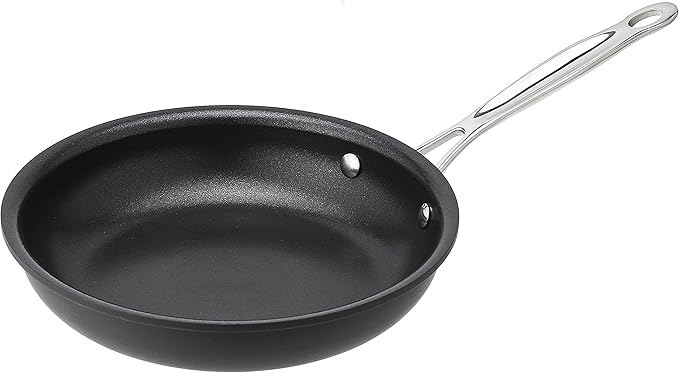
If you want a nonstick pan that feels less “throwaway,” hard‑anodized aluminum is a smart step up. The Cuisinart Chef’s Classic hard‑anodized line is popular for a reason: it heats evenly, holds temperature well for its size, and has the kind of weight that helps food cook consistently instead of bouncing between too-hot and too-cool.
This pan shines for one‑to‑two‑person meals: eggs, sautéed onions, a small chicken breast, a quick sear on shrimp, or reheating leftovers without turning them rubbery. Owners often note that it cooks faster than lighter pans—great once you know it, but it means you’ll want to dial heat down a notch from what you’re used to. That “lower heat, better results” behavior is exactly what you want in a small pan: control, not chaos.
The most useful expert advice here is about longevity: hard‑anodized nonstick can last impressively well when it’s treated gently. That means no overheating empty, no cutting food in the pan, and no abrasive cleaning. Do that, and this becomes a very dependable daily egg pan.
Why it earns repeat buyers
- Even heating – Great for eggs and delicate foods that punish hot spots.
- Nice weight for stability – Feels more “serious” than thin budget nonstick.
- Easy cleanup – Wipes clean quickly with minimal effort.
- Great control – Responds well at medium and below for consistent results.
Good to know
- Hand washing usually keeps the coating nicer longer than dishwasher cycles.
- Like all nonstick, very high heat shortens the surface’s best years.
- If you want induction, confirm your stove needs (some hard‑anodized pans are not induction-ready).
Ideal for: home cooks who use an 8‑inch pan constantly and want a sturdier, more even-heating nonstick feel.
5. Tramontina Professional 8″ Nonstick – Restaurant-Style Simplicity at Home

This is one of those pans that feels like it belongs in a diner kitchen—simple, sturdy, and built for repetition. The Tramontina Professional series is known for heavy‑gauge aluminum (good heat distribution) plus a reinforced nonstick surface that releases food easily without needing a ton of oil.
In 8 inches, that translates to a near-perfect egg and omelet pan: it preheats quickly, holds steady heat for browning butter without scorching (if you keep heat reasonable), and cleans up with almost no effort. Owners also love the handle design: it’s comfortable, feels secure, and the removable silicone sleeve adds grip and gives you oven flexibility within the pan’s rated limits.
The big “read this before you buy” detail: it’s not induction compatible. If you cook on induction, skip it and pick an induction-ready nonstick option like the T‑fal Experience or a ceramic pan with an induction base.
Why it’s a kitchen staple
- Excellent food release – Ideal for eggs, pancakes, and delicate fish portions.
- Commercial feel – Built to be used often; not a dainty “special occasion” pan.
- Even heating – Heavy-gauge aluminum helps reduce hot spots for better browning.
- Easy maintenance – Quick wash, quick dry, back on the hook.
Good to know
- Not induction compatible—double-check your cooktop.
- Some owners note the silicone sleeve can loosen over time; it’s removable either way.
- Like all nonstick, avoid high heat and metal utensils to extend lifespan.
Ideal for: gas/electric cooks who want a tough, no‑nonsense nonstick egg pan that gets used constantly.
6. PRICUSIS 8″ Nonstick + Lid – The Small Pan That Actually “Does More”

A lid changes how useful an 8‑inch pan feels. Suddenly it’s not just for eggs—it’s for quick covered reheats, gentle simmering, melting cheese without splatter, and keeping food warm while you finish the rest of breakfast. That’s why PRICUSIS stands out: it’s a small nonstick skillet that shows up ready for real life.
Owners repeatedly mention two “small but smart” touches: the packaging often includes a screwdriver (and sometimes even an extra screw) because the handle may ship detached, and the lid fit is snug enough to feel like a deliberate design choice—not a random add-on. The silicone seal on the lid is especially handy for trapping steam when you’re reheating rice or warming leftovers without drying them out.
My expert take: this is a great “microwave replacement” pan for one‑to‑two‑person households. If you regularly reheat food and hate rubbery results, a small covered pan like this can quietly become your most used tool.
Why it’s worth it
- Lid included – Makes this pan far more versatile for reheats and gentle simmering.
- Easy release – Great for eggs, grilled cheese, and sticky foods like cheese.
- Even heating base – Helps avoid that “one corner burns” problem in small pans.
- Convenient daily tool – Especially good for small households and quick meals.
Good to know
- High heat is not the move—this pan is happiest at low/medium.
- If you hate any assembly at all, the handle‑attach step may annoy you.
- Like most coated pans, gentle tools and gentle cleaning extend its prime.
Ideal for: people who want one small pan that can fry, reheat, and cover‑cook without mess.
7. SENSARTE Ceramic Pan + Lid – Covered Cooking Without the Coating Anxiety

If you like ceramic nonstick but want an 8‑inch pan that also handles covered cooking (and keeps your stovetop cleaner), this SENSARTE set is a strong pick. The tempered glass lid helps with oil‑splash control and makes it easier to cook gently—think covered eggs, quick braises for small portions, or reheating leftovers without drying them out.
The “why it feels better than many budget ceramics” detail is in the build: heavy-duty cast aluminum tends to resist warping and wobbling better than thin stamped pans. Many owners describe it as sturdy rather than flimsy, and they love that the inside has no rivets to trap food. That smooth interior is a big deal when you’re wiping out sticky egg residue or melted cheese.
One caution that shows up consistently with ceramic: it rewards low‑to‑medium heat and gentle tools. If you cook everything at high heat (or you’re a “metal tongs on everything” person), you’ll likely be happier with stainless or a hybrid pan designed for utensils.
Why it’s useful
- Lid makes it versatile – Great for covered eggs, reheats, and small simmer jobs.
- Smooth interior – No rivets means faster cleanup and fewer grime traps.
- Sturdy base – Cast aluminum helps maintain flatness on many cooktops.
- Low-oil results – Ceramic release is very satisfying for breakfast foods.
Good to know
- Ceramic + high heat = shorter lifespan. Keep it moderate.
- Be careful with metal tools—scratches are more likely on hot ceramic surfaces.
- Hand washing usually preserves ceramic performance longer than frequent dishwasher cycles.
Ideal for: ceramic fans who want a covered, low‑mess small pan for everyday cooking and reheating.
8. T‑fal Experience 8″ – The “Weekday Eggs” Pan with Heat Feedback

T‑fal has been making “normal people cookware” for a long time, and the Experience line is a practical upgrade over the super‑thin nonstick pans that warp or cook unevenly. The standout feature is the Thermo‑Spot heat indicator: it gives you a visual cue for when the pan is preheated, which is especially helpful if you’re the type of cook who starts eggs too early and then wonders why they stick or cook unevenly.
The induction‑compatible base is another win. A lot of budget nonstick pans simply don’t work on induction, but this one is built for it. Owners also tend to like the overall feel: it’s not featherlight, but it’s still easy to maneuver one‑handed—exactly what you want in an 8‑inch pan you’ll use daily.
My expert take: ignore the temptation to crank heat for speed. These pans typically perform best at medium or lower, where they deliver the “silky eggs” vibe without damaging the surface. Use a little fat for flavor, and you’ll be very happy.
Why it’s a smart buy
- Induction compatible – A big deal at this price point.
- Thermo‑Spot cue – Helpful visual guidance for consistent preheating.
- Easy food release – Great for eggs, pancakes, and small sauté jobs.
- Convenient cleanup – Quick wash, quick rinse, done.
Good to know
- The heat indicator isn’t magic—use it as a guide, not a strict rule.
- Dishwasher safe doesn’t always mean “best for longevity.”
- Like all coated pans, it prefers gentle tools and moderate heat.
Ideal for: induction households and anyone who wants a straightforward, reliable everyday nonstick egg pan.
9. Tramontina Signature Tri‑Ply 8″ – The Best “First Real Stainless” Pan

If you want one 8‑inch pan you can keep for years without worrying about coating wear, this is a fantastic place to land. Tramontina’s tri‑ply clad stainless design gives you that “real cookware” experience: fast response, even heating, and the ability to go from sauté to deglaze without babying your pan.
Here’s the important nuance that separates fully clad from cheaper stainless: fully clad pans carry the heat up the side walls more smoothly. That makes small pan sauces easier and reduces the “hot center, cool edges” feel you sometimes get with disc‑base pans. In an 8‑inch pan, that translates into more consistent browning and fewer surprises when you tilt the pan to baste with butter.
The only reason stainless intimidates people is eggs—and that’s not a product issue, it’s a technique issue. Once you learn the preheat + fat routine, stainless becomes a joy. And unlike nonstick, you can crank up for a hard sear or scrub out sticky residue without worrying you just shortened the pan’s life.
Why it stands out
- Long lifespan – No coating to fail; you can truly keep it for the long haul.
- Even, responsive heating – Great control for sautéing and quick browning.
- Induction ready – Works across common cooktops, including induction.
- Deglazing friendly – Builds fond, then turns it into sauce like a pro.
Good to know
- Eggs are doable, but you must preheat properly and use a little fat.
- Stainless can discolor if overheated—usually cosmetic and cleanable.
- If you only ever cook eggs, a dedicated nonstick might feel easier.
Ideal for: anyone upgrading from disposable nonstick to stainless and wanting a fully‑clad pan at a reasonable price.
10. Cuisinart FusionPlus 8″ – Ceramic Release with a More Durable Interior Design

FusionPlus is Cuisinart’s attempt to solve a real frustration: people want easy release, but they also want a surface that doesn’t feel delicate. The idea here is a ceramic nonstick cooking surface paired with a protective interior structure (you’ll see it described as stainless “peaks” shielding the surface). In everyday cooking, that can mean better resistance to scratches and a more confident feel than ultra‑soft ceramic coatings.
In owner feedback, you’ll see both camps: many people love the even heating and easy cleanup, while others say eggs can stick if they treat it like a pure PTFE nonstick pan. That’s the key mindset shift: this pan rewards low‑to‑medium preheat, then oil/butter, then food. It’s closer to “cooperative stainless” than “magic nonstick,” and that’s exactly why some cooks fall in love with it.
If you’re aiming for a PFAS‑free‑style cooking surface but want something that feels sturdier than a basic ceramic egg pan, this is one of the more interesting mid‑price options in this list.
Why it’s different
- Hybrid durability concept – Designed to protect the cooking surface better than many ceramics.
- Nice browning potential – Tends to feel more “sear capable” than soft ceramic pans.
- Easy cleanup (with technique) – Great results when preheated and lightly oiled.
- Induction & oven friendly – Built for modern cooktops and flexible cooking.
Good to know
- Not a “dry egg” pan—use a small amount of fat and proper preheat.
- Some buyers expect pure nonstick behavior and are disappointed; it’s more of a middle path.
- As with any coated surface, gentle cleaning improves long‑term performance.
Ideal for: cooks who want a PFAS‑free‑style ceramic surface but prefer a sturdier, more “all‑purpose” pan feel.
11. HexClad Hybrid 8″ (No Lid) – For People Who Want Browning Without the Mess

HexClad is polarizing because expectations vary. If you buy it expecting “Teflon‑level egg slide with no oil,” you may be disappointed. If you buy it expecting a pan that can brown more like stainless but clean easier than stainless, it can feel like a revelation.
The hybrid concept (raised stainless structure over a nonstick-style surface) is designed to give you better searing and better durability than ultra‑soft coatings. Owners who love HexClad tend to repeat the same playbook: preheat, cook on low/medium, use a little fat, and don’t treat it like a dry griddle. When used that way, it can handle a wide range of foods—from fish to steak to sautéed vegetables—while still cleaning up with less scrubbing than full stainless.
My expert take: the 8‑inch size makes the most sense as a specialist pan—eggs for two, one protein portion, quick browning, or building a small pan sauce. If you mostly cook large meals, you’ll still want a larger pan. But as a premium small pan, it’s a useful tool when you want browning without a sink full of cleanup.
Why people pay for it
- Better browning than soft nonstick – Great for meats and sautéing with more color.
- Easier cleanup than stainless – Especially after sticky proteins or sweet glazes.
- Metal utensil tolerant by design – Useful for cooks who hate babying pans.
- High heat capability – Can handle oven finishing and aggressive searing workflows.
Good to know
- It’s not a “no‑oil egg pan.” Use a little fat and moderate heat for best results.
- Some buyers report sticking when used like traditional nonstick (too hot, too dry, or wrong preheat).
- Premium price—only worth it if you’ll use its strengths often.
Ideal for: cooks who want a single pan that can sear like stainless but clean easier—without babying the surface.
12. HexClad Hybrid 8″ + Lid – Same Hybrid, More Control

If you’re already tempted by HexClad, the version with the tempered glass lid is the more “complete” small‑pan setup. A lid sounds boring until you use it: it helps you finish thicker foods gently, reduces splatter, and traps steam for quick melts (think: cheeseburgers, covered eggs, reheated leftovers that don’t dry out).
In an 8‑inch size, a lid also changes your options for small sauces and glazes—especially if you want to simmer briefly without reducing too fast. For busy weeknights, that can mean fewer pans and less mess.
If you’re on the fence, here’s the simplest decision rule: if you frequently wish your small pan had a lid (or you end up using a splatter screen constantly), the lid version earns its price faster. If you never cover‑cook in a small pan, the no‑lid version is usually enough.
Why the lid matters
- Better heat control – Helps finish thicker foods gently without over-browning the exterior.
- Less mess – Reduces splatter for bacon pieces, sautéed veg, and saucy reheats.
- More versatile – Small simmering, quick steam, and “keep warm” convenience.
- Same hybrid strengths – Browning potential + easier cleanup compared to full stainless.
Good to know
- Tempered glass lids have lower oven limits than metal lids—use appropriately.
- Still not a true “dry egg” pan; technique matters.
- At this price, it should fill a real role in your kitchen to be worth it.
Ideal for: hybrid‑pan fans who want covered cooking options in a compact, premium skillet.
13. Made In 8″ Stainless (5‑Ply) – Tiny Pan, Big Performance

Made In’s 8‑inch stainless pan is a “serious cook” tool. It’s fully clad and designed for responsiveness—meaning when you turn the heat down, the pan listens. That’s the difference between cooking that feels controlled and cooking that feels like chasing a runaway train.
The most important real‑world detail for this exact size: the cooking surface is intentionally compact. That’s great if you want a dedicated egg pan that also sears beautifully, or if you often cook for one or plate in smaller portions. It’s less great if you imagine cooking two chicken thighs at once. This is a precision skillet, not a family skillet.
Owners who love it tend to mention the same two things: even heating and the “once you learn stainless, it’s easy” effect. Owners who dislike it typically dislike stainless in general (sticking from under‑preheating or overcrowding) or notice cosmetic wear on the exterior. In my view, this pan is worth it for cooks who value performance and are comfortable with stainless technique.
Why it’s special
- Excellent responsiveness – Great for delicate sautéing and controlled browning.
- Built for searing – Stainless is where you get restaurant-style fond and pan sauces.
- Heirloom potential – The kind of pan you keep and build a set around.
- Compact precision – Ideal for eggs, small proteins, and single‑portion cooking.
Good to know
- Small cooking surface by design—amazing for one, limited for two big portions.
- Stainless needs technique: preheat, oil, don’t overcrowd.
- Premium price—make sure you want performance, not just a brand.
Ideal for: confident cooks who want a small stainless pan that behaves like professional cookware.
14. Le Creuset Tri‑Ply Stainless 8″ – The “Treat Yourself” Heirloom Feel

Le Creuset’s tri‑ply stainless line is for people who care about the feel of cookware—not just whether it “works.” This pan tends to impress in the small details: the finish, the rim, the balance, and the general sense that it was designed by someone who has actually cooked dinner at home a thousand times.
In performance terms, it behaves like high‑quality tri‑ply stainless should: even heat distribution, strong browning potential, and a smooth transition from sauté to sauce. The refined rim is genuinely useful when you’re pouring off butter or sliding out a pan sauce without dribbling down the side. That’s not glamorous, but it’s the kind of detail you appreciate every week.
The key “expert expectation” adjustment is the same as all stainless: eggs require preheat and fat. If you want your 8‑inch pan to be a forever piece—and you like the idea of premium finishing and brand legacy—this is one of the most satisfying choices on the list.
Why people love it
- Heirloom feel – Premium finishing, solid construction, and a refined cooking experience.
- Even heating – Tri‑ply design supports consistent browning and sautéing.
- Great for sauces – Stainless fond + easy deglazing = flavor.
- Thoughtful details – The rim and overall ergonomics feel polished and intentional.
Good to know
- Luxury pricing—this is a “want” as much as a “need.”
- Stainless requires basic technique for eggs and delicate foods.
- Cosmetic discoloration is possible with overheating (cleanable, but it happens).
Ideal for: cooks who want a premium stainless pan that feels like a lifelong kitchen companion.
How Frying Pans Actually Cook (and Why Thickness & Material Matter)
A frying pan isn’t “just a pan.” The metal stack, thickness, and surface chemistry change how heat travels, how food releases, and whether your eggs are silky—or welded to the bottom. Here’s the practical version of the science.
What materials change in real life
- Aluminum (often under nonstick): Heats fast and evenly, but thinner aluminum can warp or create hot spots. Heavier-gauge aluminum feels steadier and more forgiving.
- Hard-anodized aluminum: Still fast and even, but usually sturdier and more resistant to everyday wear than thin nonstick bodies.
- Stainless steel (disc base): Great durability; base heats well, but side walls can be cooler than fully clad designs.
- Fully clad stainless (tri‑ply/5‑ply): More uniform heating up the sides—better for sauces, sautéing, and consistent browning.
- Ceramic nonstick: Extremely slick when new; longevity depends heavily on gentle heat and gentle cleaning.
- Hybrid surfaces: Designed to brown better than pure nonstick while staying easier to clean than pure stainless.
If your cooking style is mostly eggs, you’re paying for release. If your cooking style is mostly browning and sauces, you’re paying for heat control and fond.
How to get better results (no matter which pan you buy)
- Use the right heat range – Most coatings prefer low to medium. Stainless can go higher, but only when you actually need it.
- Preheat with intention – Stainless especially needs a proper preheat before oil and food. It’s the difference between “sticks” and “slides.”
- Avoid thermal shock – Don’t take a hot pan and run cold water into it. That’s how warping starts.
- Pick the right tool – Silicone/wood for coated pans, anything you want for stainless (within reason).
- Deglaze instead of scrubbing – For stainless, a splash of water or stock after cooking loosens stuck bits and builds sauce at the same time.
- Skip harsh aerosols – Cooking sprays can leave a stubborn residue on some nonstick/ceramic surfaces over time.
Once you match pan type to your habits, cooking becomes easier—not because the pan is “magic,” but because it’s the right tool for what you actually do.
FAQ: 8‑Inch Frying Pans, Answered
Is an 8‑inch pan really big enough for everyday cooking?
What’s the best surface for eggs: nonstick, ceramic, stainless, or hybrid?
How long should a nonstick or ceramic 8‑inch pan last?
Do I need induction compatibility?
Why do some people say a pan “isn’t nonstick” even when it’s new?
If I only buy one from this list, what’s the smartest choice?
Final Thoughts: Your Best 8 Inch Frying Pan, Picked With Confidence
The “perfect” 8‑inch pan isn’t the most expensive one—it’s the one that fits your habits. If you mostly cook eggs and quick breakfasts, prioritize easy release and low‑effort cleaning. If you love browning, sauces, and cookware that lasts, prioritize stainless performance and technique.
Here’s a simple way to choose without overthinking:
- Want the cheapest pan that still makes breakfast feel easy? Start with CAROTE Classic Granite 8″.
- Want a small pan that replaces microwave reheats? Grab a lid-friendly pick like PRICUSIS 8″ + Lid or SENSARTE Ceramic + Lid.
- Need induction-friendly daily nonstick? The T‑fal Experience 8″ is a strong everyday choice.
- Want to “graduate” to stainless without paying premium prices? Pick the Tramontina Signature Tri‑Ply 8″ and learn the preheat method once.
- Want premium performance and you’ll actually use it? Hybrid lovers should look at HexClad 8″, while stainless purists should consider Made In 5‑ply 8″ or Le Creuset Tri‑Ply 8″.
If you want a Best 8 Inch Frying Pan that feels right every time you reach for it, choose based on your real routine: your stove, your heat habits, and what you cook most often. Do that, and this small pan will earn its spot on the front burner.
