
Specs are compiled from manufacturer listings and verified buyer reviews and can change over time — please confirm the key details on the product page before buying.
When your cabin has dead zones, your video calls drop on the road, and the family bogs down the data the moment everyone logs on, a weak cellular signal turns every device into a paperweight. A real 5G modem captures the tower signal and rebroadcasts it as Wi-Fi throughout your home. This guide covers nine models, from rugged business routers to pocket-sized travel hotspots, so you can see which specs matter for your situation — like removable antennas for a metal RV or a battery for an outage — and which trade-offs each pick quietly carries.
I’m Mohammad Maruf — the founder and writer behind KitchPrep. This guide is built by comparing the manufacturers’ published specifications and the patterns across verified customer reviews, so you get each pick’s real strengths and trade-offs instead of marketing spin.
The right 5g modem turns weak cellular signals into reliable home internet for rural cabins, RVs, and backup office connections.
Our Picks at a Glance

How To Choose The Best 5G Modem
Before you pick, know that a 5G modem is only as good as the cellular signal it can lock onto. It doesn’t create internet; it converts the nearby mobile network into Wi-Fi for your devices. So your first question is not “which router is fastest” but “which one is certified for my carrier and built for my signal strength.”
Check Carrier Certification First
A modem can claim support for a band, but carriers like AT&T, T-Mobile, and Verizon maintain lists of approved devices. Some models here are certified for AT&T and T-Mobile only, while others are open up and work with Verizon prepaid plans if you adjust a few settings. If a modem isn’t on your carrier’s approved list, you may see throttled speeds or no connection at all.
Match the Form Factor to Your Life
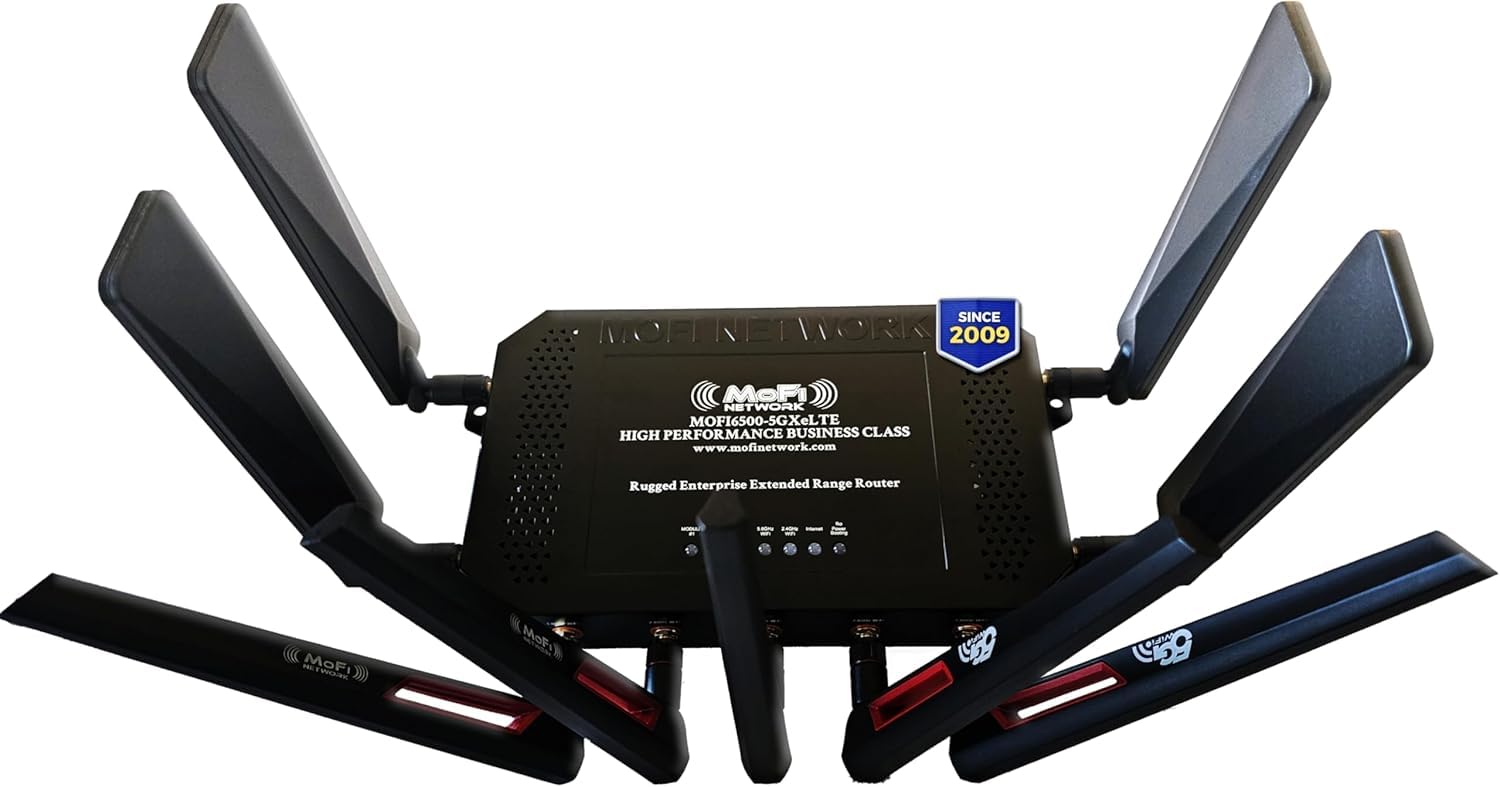
Portable hotspots with built-in batteries, like the Franklin A50, slide into a backpack and run for hours untethered. Stationary routers, like the MOFINETWORK, are meant to sit on a shelf, stay plugged in, and serve an entire home or office with wired Ethernet and stronger antennas. RVs often benefit most from a router with detachable antennas you can mount outside for a clearer tower view.
Look at the Antenna Setup for Weak Areas
If you are in a rural or wooded spot, the antenna configuration matters more than the router’s speed rating. Detachable high-gain antennas let you position for the best signal, and some models even support connecting an external Yagi antenna that can pull a usable signal from a distant tower. An internal-antenna hotspot is simpler but often struggles where the signal is already faint.
Quick Comparison
| Model | Best For | Form Factor | Wi-Fi Standard | Peak Speed | Amazon |
|---|---|---|---|---|---|
| MOFINETWORK MOFI6500★ Best Overall | Business & Rural Homes | Stationary Router | Wi-Fi 6 | 3.4 Gbps | Amazon |
| Franklin A50Budget Champion | AT&T Travel Hotspot | Portable Hotspot | Wi-Fi 6 | 960 Mbps | Amazon |
| Hitron D60Mesh Ready | Mesh Wi-Fi Homes | Stationary Router | AX3000 Wi-Fi 6 | 3.4 Gbps | Amazon |
| NETGEAR Nighthawk M6 Pro | Travel & First Responders | Portable Hotspot | AXE3600 Wi-Fi 6E | 3.6 Gbps | Amazon |
| RM520N AX3000 | Rural & Gamers | Stationary Router | AX3000 Wi-Fi 6 | 3.4 Gbps | Amazon |
| UOTEK 5G CPE | T-Mobile Home Internet | Stationary Router | Wi-Fi 6 | 1800 Mbps | Amazon |
| GlocalMe Numen Air | Global Travelers | Portable Hotspot | Wi-Fi 6 | 2.5 Gbps | Amazon |
| GL.iNet Spitz AX | RV & Advanced Users | Stationary Router | Wi-Fi 6 | 3000 Mbps | Amazon |
| GL.iNet Puli AX | Field Work & Outages | Portable Router | Wi-Fi 6 | 3000 Mbps | Amazon |
In‑Depth Reviews
1. MOFINETWORK MOFI6500-5GXeLTE-RM520-HP
Our pick — over 4★ from 850+ verified ratings; the strongest balance of quality and price.
The business-class workhorse that turns a faint rural tower into a dependable whole-home connection.
This is the router for when the internet must simply work — rain, trees, or an RV bouncing down a gravel road. It pulls both 4G LTE and 5G, and its dual SIM slots switch between carriers automatically to keep you online if one network drops, which is a lifesaver for full-time RVers and rural homeowners who can’t afford downtime. Buyers report linking two buildings on one property with stable Wi-Fi for weeks at a time.
Built inside a rugged full metal case, the MOFI6500 handles heat far better than plastic hotspots, and its four detachable 5G antennas plus five Wi-Fi antennas give you room to aim for the best signal. The advanced interface is feature-packed — with IP pass-through, band lock, VPN compatibility, and support for Zerotier — yet owners say it works from the start for beginners. When one RV owner needed help, tech support picked up in about 20 minutes and fixed the issue with a hard reboot. As owners mention, adding an external Yagi antenna improved their signal from one bar to four.
The honest catch is the dual SIM wording. This model uses dual SIM for automatic failover only — it does not combine two carriers at once for faster speeds. If you want simultaneous dual SIM usage, you need the separate DUAL model, an easy detail to miss before purchase. The crowd favorite here, rated 4.4 stars by owners, also gets praised for its connectivity stats and programmable periodic reboots that keep weak-signal areas stable.
Built for Reliability
- Rugged metal case dissipates heat for long-term durability
- Dual SIM slots with auto-failover keep connections alive
- Detachable high-gain antennas improve weak rural signals
Before You Buy
- Dual SIM means failover, not combined speeds — check the DUAL model for that
- Setup can be tricky initially, though support is responsive
- Requires a nearby cell tower to function at all
Reach for this if: you need always-on internet for a rural home, business, or RV and want antennas you can upgrade later.
Think twice if: you expect two active SIMs working together for more speed — this model only fails over between them.
2. Franklin A50 5G Hotspot
The pocket-sized AT&T companion that doubles as a power bank for your phone.
If you are already on AT&T, this is the cheapest way to get true 5G speeds in your pocket. The removable 5,000 mAh battery powers the hotspot for extended use and doubles as a built-in power bank to charge your phone on the go. A 2.4-inch display lets you check status without opening an app. Buyers who swapped their SIM from an old AT&T hotspot report it worked perfectly, capturing 5G+ signal from the mountains of North Carolina down to Myrtle Beach while streaming satellite radio the whole way.
Effectiveness is what wins owners over most, followed closely by ease of use — the setup is a cinch if you already have an active AT&T SIM. The unit supports dual-band Wi-Fi 6 and connects up to 20 devices, so a family can share it in an RV or use it as a home-network backup. It is noticeably more compact than the MOFINETWORK router above, which is exactly the point: this is for travel, not for replacing your whole home router.
The trade-offs are real. Battery life gets the most negative feedback, and signal strength splits owners down the middle — great in open areas, weaker where towers are far. Activation is also on you: one frustrated buyer never got AT&T to set it up correctly, so plan to visit an AT&T store or swap an existing SIM rather than wrestling with phone support. At this price, it is a smart entry-level pick if you match it to a carrier you already use.
Best value move: Grab this if you have an existing AT&T SIM or hotspot line and want a cheap, travel-ready 5G upgrade with a handy power-bank feature.
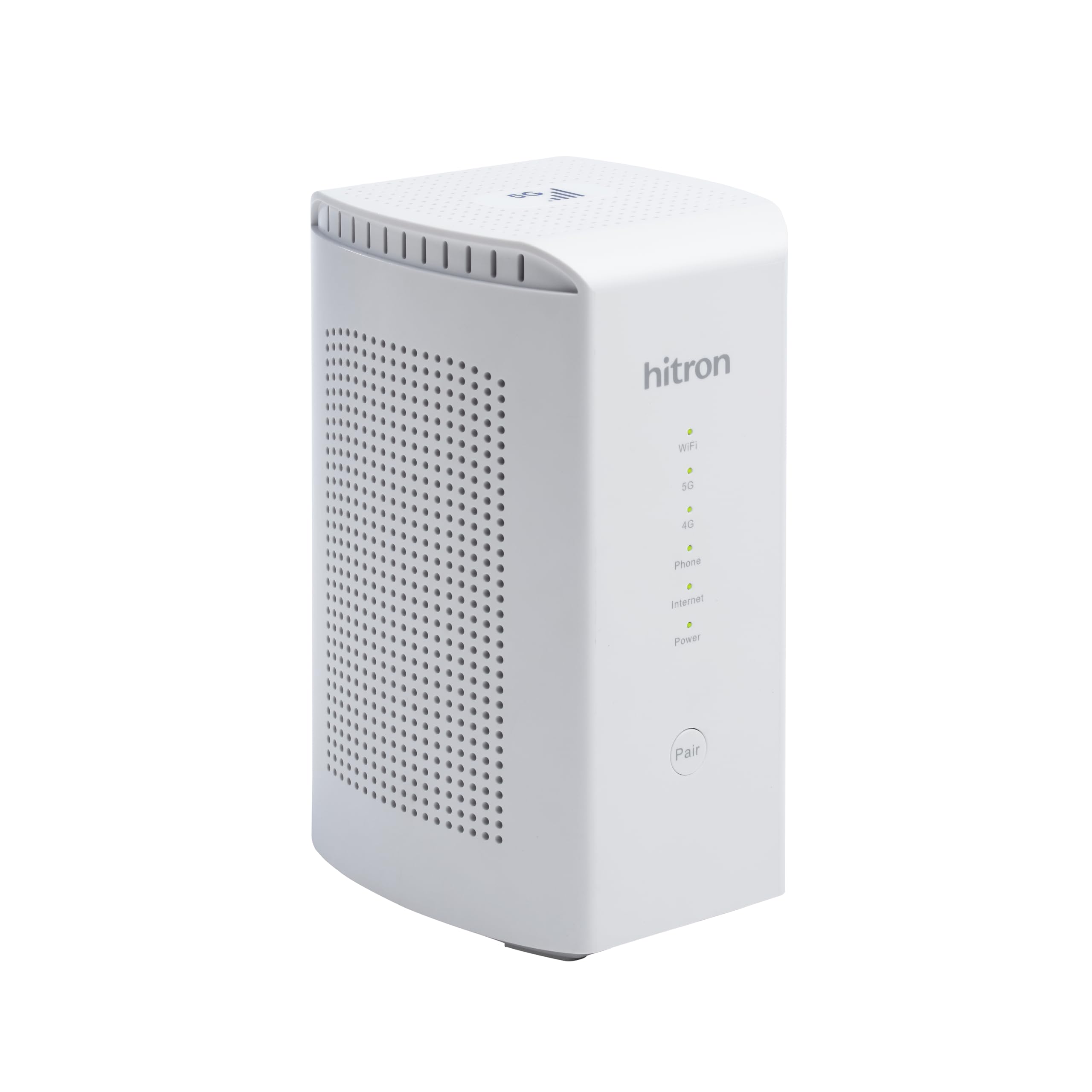
3. Hitron D60 5G Router
A certified home router with 4×4 antennas built for whole-house mesh coverage.
This one works with T-Mobile, AT&T, and US Cellular, and it brings serious Wi-Fi muscle. The 4×4 MIMO radios (four transmitters and four receivers that boost speed and range) on the 5GHz band deliver up to 5.4 Gigabits of Wi-Fi capacity — four times the capacity of typical routers — so a smart home with many devices streaming at once stays smooth. It also supports both standalone (SA) and non-standalone (NSA) 5G, meaning it is future-proofed as carriers upgrade their networks.
Owners praise it as a plug-and-play open up of fast, low-latency cellular internet — one got 300 Mbps in a basement on T-Mobile, and a buyer in Chile found it stable and fast on the local 5G network. It is backward compatible with 4G LTE, meaning it still works as a regular 4G router where 5G hasn’t arrived. That flexibility, combined with dual failover via Nano SIM and eSIM, makes it a solid mid-range value for home or small-office use.
The main concern is stability over time. Several customers note the unit crashes after running 6 to 48 hours, needing a power cycle to come back — a frustrating quirk for something meant to run 24/7. There are also no firmware updates available, and the manual is thin. If you need set-and-forget reliability, budget for the possibility of periodic reboots, or look at the GL.iNet options below for more sturdy long-term behavior.
Strong Coverage
- 4×4 MIMO delivers high-capacity Wi-Fi for many devices
- Certified for T-Mobile, AT&T, and US Cellular
- Works as 5G or backward-compatible 4G LTE router
Watch Out For
- Occasional crashes after 6-48 hours of run time
- No firmware updates or quality manual included
- Runs warm during operation
Pick this for: a certified home router with excellent Wi-Fi capacity at a mid-range price.
Know this: long-run stability is a gamble; be ready to power-cycle it occasionally.
4. NETGEAR Nighthawk M6 Pro (Renewed)

The travel powerhouse with a touchscreen, Wi-Fi 6E, and blazing 5G mmWave support.
For the traveler who wants the fastest possible connection, the M6 Pro is the peak of the portable category. It is one of the few hotspots supporting 5G mmWave (the ultra-fast, short-range flavor of 5G) alongside the more common Sub-6 bands, and it can reach a theoretical 3.6 Gbps with Wi-Fi 6E — the newest Wi-Fi standard that opens up the 6GHz band for less congestion. A 2.8-inch color touch LCD makes it easy to manage settings and monitor data, and it can host up to 32 devices, which is double what most pocket hotspots handle.
Owners consistently report setup in under five minutes and speeds that beat their phone’s hotspot by a wide margin — one buyer saw a consistent 100 Mbps near a window, plenty for gaming and large downloads. The device is truly open up, with a T-Mobile SIM auto-recognized despite the AT&T branding on the box. It also includes a 2.5G Ethernet port, letting you plug in a laptop or a travel router directly for the most stable wired connection.
Keep in mind this is a renewed unit, so quality varies — one buyer received a defective device and faced a restocking fee on return. The Wi-Fi range is modest, adequate for an office or hotel room but not a whole house, and battery life goes untested by many since they keep it plugged in. It carries the famous Nighthawk name and the performance to match, but treat the renewed status as the main variable.
The standout spec: Tri-band Wi-Fi 6E with a 2.5G Ethernet port makes this the most future-proof portable hotspot here — if you are comfortable with a renewed unit’s variability.
5. RM520N AX3000 5G Router
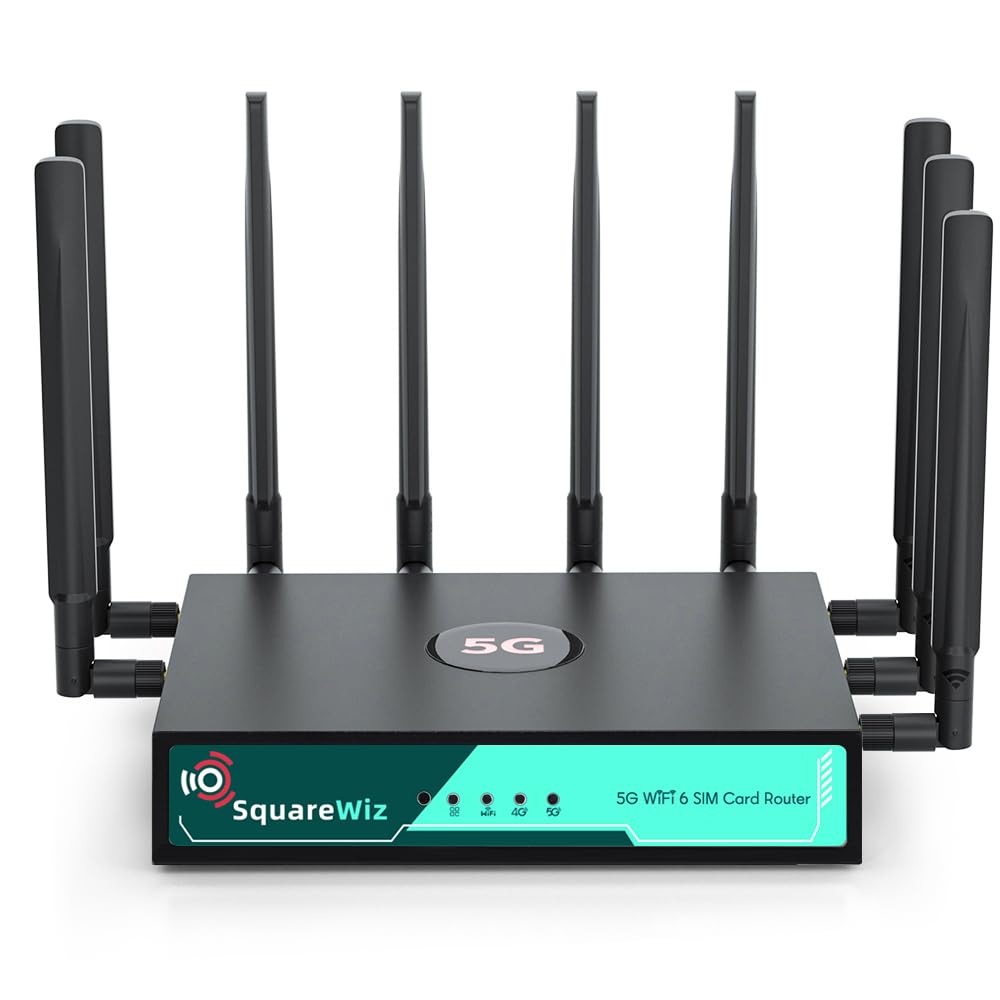
Nine high-gain antennas and a Qualcomm SDX62 core built to rescue remote locations.
This router is engineered for the hardest signal environments. Inside sits the same Qualcomm SDX62 modem found in premium phones, capable of 5G speeds up to 3.4 Gbps, and outside sprout nine detachable high-gain antennas — four for cellular and five for Wi-Fi — that dramatically improve pickup. The SMA connectors even allow you to attach an external outdoor cellular antenna for truly difficult spots. It handles up to 128 Wi-Fi users simultaneously, which is overkill for a home but perfect for a busy office or event space.
The real-world results are dramatic. One owner in a metal storage unit went from zero signal to 80-100 Mbps with the door closed — a space where nothing else worked. Another saw their speeds jump from 10 Mbps down and 1 Mbps up to 150 Mbps down and 50 Mbps up, calling it a problem solver. The router supports multiple connection methods — Ethernet, repeater, cellular, and tethering — with load balancing and failover priorities, so you can mix a weak cable line with cellular for redundancy.
The catch is software stability. Reviewers point out the unit disconnects from the cellular network every 24 hours to weekly, requiring a restart, and scheduled reboots at 4 AM sometimes fail. One reviewer noted the band lock setting disappeared until a factory reset, and there’s no company tech support or forums to turn to. If you are comfortable tinkering and scheduling your own reboots, this is a powerful tool; if you want hands-off reliability, look toward the GL.iNet routers below.
Signal Rescue
- 9 detachable high-gain antennas for maximum pickup
- SMA connectors allow external outdoor antenna upgrades
- Supports 128 simultaneous Wi-Fi users
Patience Required
- Drops cellular connection every 24h to weekly, needing restarts
- No company tech support or community forums
- Software settings can be buggy until reset
Choose this when: you face an extreme signal environment and want maximum antenna flexibility for the money.
Be aware: plan for weekly restarts and DIY troubleshooting, as support is non-existent.
6. UOTEK 5G CPE Router

A reliable T-Mobile-friendly router that outperforms the stock carrier hardware it replaces.
If you are on T-Mobile Home Internet, this router is a popular upgrade over the standard-issue hardware. Reliability is what owners praise most, with the unit connecting immediately to a T-Mobile SIM and providing stronger Wi-Fi and better speeds than the Arcadyan gateway many subscribers receive. It uses a dual-band setup with up to 1,800 Mbps of combined bandwidth, and one owner noted it cleverly uses 5G for downloads while LTE handles uploads for a more stable connection.
The design is understated — a classic 8-antenna router look that blends into a home office, with four antennas for 4G and four for 5G. Owners say the setup is easy, the interface is intuitive, and it works well throughout a single-story house, though the second floor may lose some bars. Those in weak-signal areas report about 200 Mbps, which beats both the stock unit and the GL.iNet gear it replaced, with better signal quality readings (RSRP of -84 versus -97 dBm, where closer to zero is stronger).
Here is the nuance: this unit ships with the older x55 chipset, not the newer x62, so you get less carrier aggregation unless you update the firmware. The manual is poorly written, and the default IP address and login aren’t documented well. Buyer caution: it claims mesh capability, but there are no mesh settings or node compatibility details actually visible in the software, so treat that as unproven. If you need straightforward, reliable 5G for a home, this delivers — just don’t expect the advanced features to all work as advertised.
Straightforward choice: Owners find this a more stable, faster alternative to carrier-supplied 5G home internet gateways — verify the chipset and mesh claims before relying on them.
7. GlocalMe Numen Air 5G Hotspot
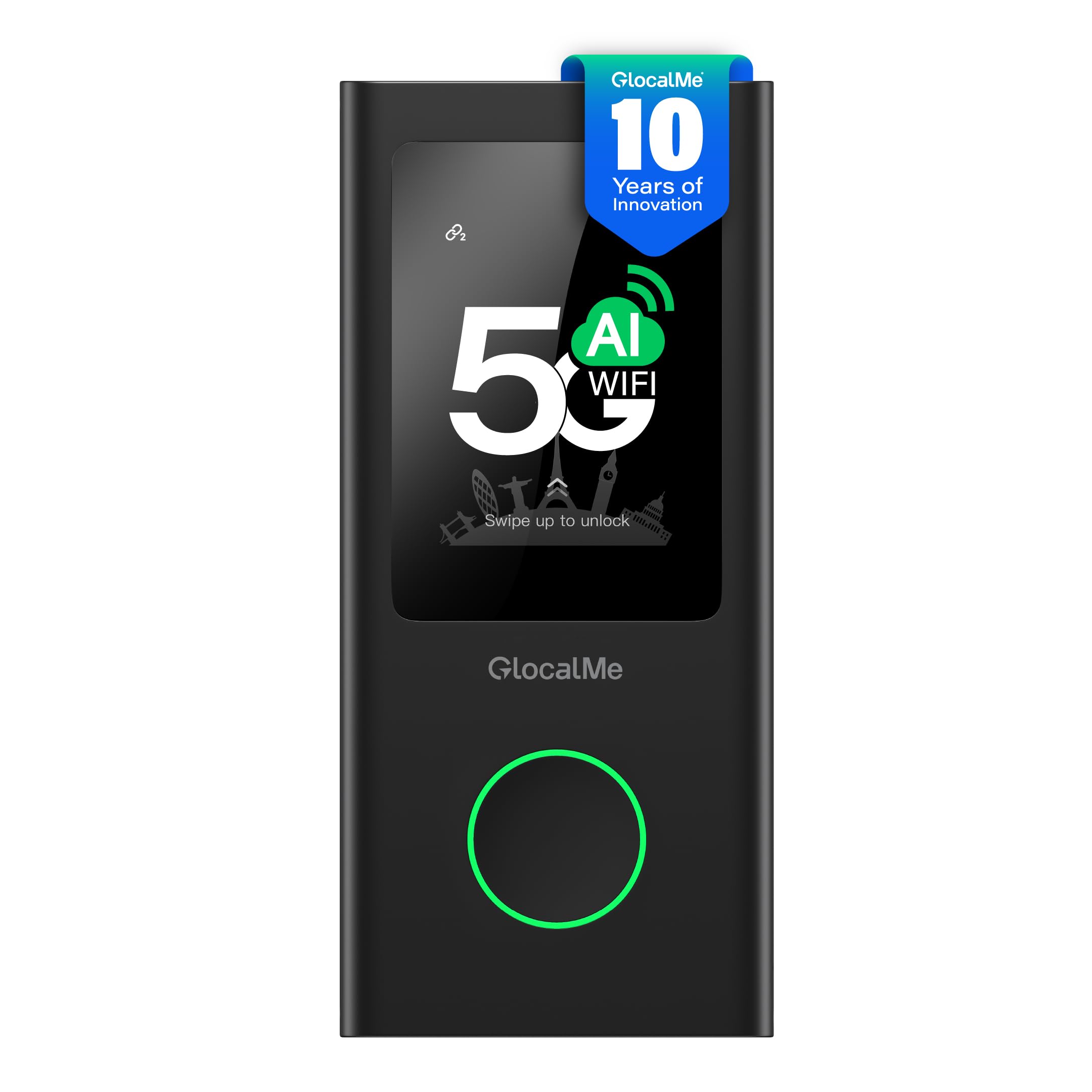
International roaming without the SIM hassle — a global hotspot backed by CloudSIM technology.
For the frequent international traveler, this hotspot removes the biggest headache: finding a local SIM in every country. Its patented CloudSIM technology lets it connect without a physical SIM, intelligently selecting the best available network and letting you buy data by the day, month, or gigabyte across more than 200 countries. Reliability is the top praise from owners, with speeds reaching the mid-200 Mbps range on T-Mobile and solid performance even in mountain and valley areas.
It is genuinely portable — a 2.4-inch LCD touchscreen shows data usage, signal strength, and connected devices, and the built-in battery doubles as a power bank to charge your phone. It supports both 2.4GHz and 5GHz bands, connects up to 16 devices, and has a physical SIM slot as a backup option if you prefer your own carrier’s data. Shoppers say it works well with a Google-Fi data-only SIM, with outdoor speeds of 80-110 Mbps matching what their phone pulls on 5G.
There are two honest caveats. First, it is not for heavy multi-device use — one owner found it better suited to a work laptop and VPN than a family of streamers. Second, the value question splits owners: some find the pay-as-you-go data plans worth it, while others consider the whole package overpriced. There is also a durability concern, with one unit failing to charge after a firmware update (recoverable with a QC 3.x charger), and support email that bounced back. For global flexibility and instant connectivity, it is a strong pick if the data-package model fits your trip style.
Worldwide Freedom
- CloudSIM works across 200+ countries without a physical SIM
- Large 2.4″ LCD touchscreen for easy management
- Doubles as a power bank for your phone
Consider First
- Best for light use like a laptop, not heavy family streaming
- Data plan costs are a point of debate among owners
- Support access has been inconsistent
Best for: globetrotters who value instant connectivity in any country without hunting for local SIMs.
Not ideal for: households needing to stream on many devices at once, or those wanting traditional long-term plans.
8. GL.iNet GL-X3000 (Spitz AX)

The customizable OpenWrt gateway that RVers and power users swear by for multi-WAN setups.
The Spitz AX is the favorite among people who want total control over their network. It runs on GL.iNet’s proprietary firmware based on OpenWrt v21.02, opening access to more than 5,000 ready-made plug-ins. That means you can configure VPNs (with pre-installed OpenVPN and WireGuard), set up load balancing between cellular and a wired connection, and fine-tune failover priorities — the kind of flexibility no consumer hotspot offers. Quality is the highest-praised aspect among owners, who call it a genuine alternative to dedicated hotspots from Inseego and Netgear.
It is certified for AT&T and T-Mobile, and owners have gotten it working on Verizon Visible with some configuration. The six detachable antennas make it a natural fit for an RV, where you can mount them for better signal — one RV owner reports steady speeds of 90-300+ Mbps, replacing a -per-month MiFi device. In a car, it delivers about 150 Mbps on average, and it can even be wired to auto-power with the vehicle ignition. It supports dual SIMs, though with single standby, meaning it switches between two carriers for failover rather than bonding them.
Reliability is the recurring concern — several owners note the unit slows down or stops working after 4-6 months of use, requiring a reboot. It has a slow 2-minute startup, and as a smart home router it struggles, with separate 2.4/5GHz networks and occasional packet loss. The rich OpenWrt software also has a learning curve. If you want deep control and don’t mind periodic maintenance, this is arguably the most capable router on this list; if you want true plug-and-play, look at the MOFINETWORK at the top.
Power User’s Dream
- OpenWrt with 5,000+ plug-ins for deep customization
- Pre-installed OpenVPN and WireGuard for secure tunnels
- Dual-SIM with automatic failover for carrier redundancy
Maintenance Needed
- Can slow down or stop after months of use, needing a reboot
- Slow 2-minute startup time
- OpenWrt interface has a learning curve
Ideal for: tech-savvy RVers and remote workers who want carrier flexibility and VPN-level control.
skip it if: you want a set-and-forget appliance — the software rewards attention and tinkering.
9. GL.iNet GL-XE3000 (Puli AX)
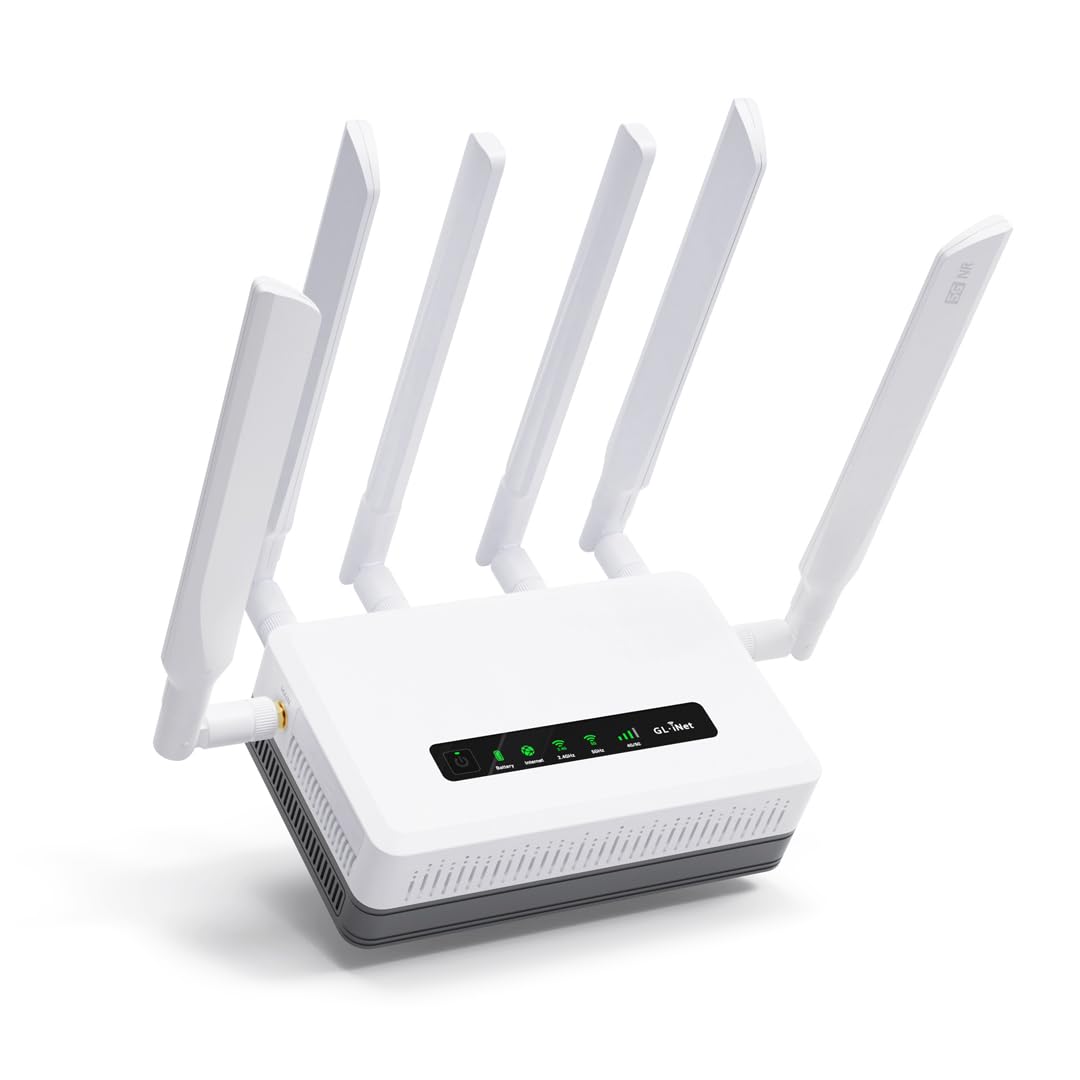
A full-featured 5G router with a built-in battery that keeps field operations online through outages.
This is the GL.iNet router for people who need connectivity where the power isn’t guaranteed. The built-in 6,400 mAh battery delivers up to 8 hours of uninterrupted use, which owners have leaned on during outages — one reported the battery backup lasted for hours, keeping their network alive when the lights went out. It is designed for construction sites, outdoor events, and temporary offices, with dual SIM slots and detachable antennas for long-range coverage. Performance is the most-praised aspect, with one owner achieving 120 Mbps even inside a faraday cage of a rural building.
Like its bigger sibling, the Puli AX runs on customizable OpenWrt firmware with 5,000+ plug-ins, pre-installed OpenVPN and WireGuard, and multi-WAN support that lets you blend cellular with a camp’s Wi-Fi or Starlink for failover. It is certified for AT&T and T-Mobile, and owners find setup easy — one connected a T-Mobile SIM and was online immediately. It is also portable enough to toss in a backpack (with antennas removed), making it a favorite for remote work on the move. A solid 300 Mbps download speed has been reported, and the external 4×4 omnidirectional antenna earns high marks for quality.
The quirks: dual SIM comes with a single IMEI, which caused setup headaches for one owner whose SIM wasn’t recognized initially. It is also hefty — larger and heavier than expected, not pocketable, and it lacks enough native Ethernet ports for some users. GL.iNet’s tech support is responsive, but fixes can be slow. If you need a workhorse router that survives power cuts and travels in a bag, this is a standout; if you only need a home router that never moves, you can save money with a stationary model.
Built for Mobility
- 6,400 mAh battery runs up to 8 hours off-grid
- Detachable antennas + external antenna support for range
- OpenWrt firmware with multi-WAN failover flexibility
Size Matters
- Hefty build — not pocketable, needs a backpack
- Dual SIM shares a single IMEI, complicating setup
- Limited native Ethernet ports for wired devices
Reach for it: when your work takes you to job sites, events, or anywhere the power grid is unreliable.
Consider the alternative: if you never move your router and don’t need battery backup, a cheaper stationary model makes more sense.
Understanding the Specs
5G Bands and Carrier Certification
Your modem needs to match the specific frequencies, or bands, your carrier broadcasts. The Nighthawk M6 Pro lists bands like n2, n5, n12, and n77, while the Franklin A50 supports n2, n5, n12, n14, n30, n66, and n77. More importantly, look for carriers the device is certified for — the Hitron D60 lists T-Mobile, AT&T, and US Cellular, and the GL.iNet units are certified for AT&T and T-Mobile. An uncertified modem may connect but could get throttled or blocked.
Standalone (SA) vs Non-Standalone (NSA)
Non-standalone 5G uses the existing 4G core network as an anchor, while standalone 5G runs on a dedicated 5G core for lower latency and better efficiency. The Hitron D60 and the GL.iNet routers support both SA and NSA, making them more future-proof as carriers finish their standalone networks. This matters if you want the snappiest response for gaming or video calls as networks evolve.
Wi-Fi Standard and Speed Rating
The Wi-Fi standard determines how fast data travels from the modem to your devices. Wi-Fi 6 (802.11ax) is the current baseline, and Wi-Fi 6E adds the 6GHz band for less congestion — the Nighthawk M6 Pro is the standout here with AXE3600 speeds. The modem’s data transfer rate (like 3.4 Gbps on the MOFINETWORK) is the ceiling for the cellular connection, but your real-world speed depends on your carrier’s signal and plan.
Antennas and Signal Strength
Internal antennas keep a device compact, like the pocketable Franklin A50. Detachable and high-gain antennas, as found on the MOFINETWORK and RM520N, let you reposition or upgrade for better signal in weak areas. The RM520N’s SMA connectors allow connecting an external outdoor antenna, which one owner used to boost their signal from one bar to four. For RVs and rural homes, prioritize antenna flexibility over raw speed.
FAQ
Will a 5G modem work with my current carrier SIM card?
What is the difference between a 5G modem and a 5G hotspot?
Can I use a 5G modem for home internet instead of cable or fiber?
What does dual SIM support actually do in a 5G router?
How important are detachable antennas for a 5G modem?
Can a 5G modem work while I’m driving or traveling in an RV?
How long does the battery last in a portable 5G hotspot?
Do I need a special data plan for a 5G modem or router?
What is VPN support for and do I need it in a 5G router?
Why does my 5G router need occasional restarts?
Final Thoughts: The Verdict
For most people, the 5g modem winner is the MOFINETWORK MOFI6500 because it combines the rugged build, dual-SIM failover, and antenna flexibility that rural homes and RVers need for dependable, always-on internet. If you want deep customization and VPN control for remote work, grab the GL.iNet Spitz AX. And for the frequent traveler who wants instant connectivity in any country without SIM hunting, the GlocalMe Numen Air is the one to reach for. Whichever you choose, match the modem to your carrier’s certification and your signal reality — those two factors decide more about your experience than any spec sheet will.
How We Picked
We do not accept paid placement. Every pick is matched to a real buyer and a real use-case; we do not hands-on test units.
Sources & Methodology
Specifications: manufacturer listings and product documentation. Review insights: verified customer reviews, as of September 2026. Pricing: not shown on this page (it changes often); check the current price via the retailer link.
As an Amazon Associate, KitchPrep earns from qualifying purchases. This does not affect which products we feature.
Related Guides
