
Specs are compiled from manufacturer listings and verified buyer reviews and can change over time — please confirm the key details on the product page before buying.
If you’re shopping for a 5 Ton AC unit, the thing you actually want to know is simple: which of these systems will cool a large home without constant breakdowns or repair bills. A 5-ton unit is a serious piece of equipment built for big houses, and the picks below are all real Goodman systems with real specs, so you can compare them side by side instead of guessing.
I’m Mohammad Maruf — the founder and writer behind KitchPrep. This guide is built by comparing the manufacturers’ published specifications and the patterns across verified customer reviews, so you get each pick’s real strengths and trade-offs instead of marketing spin.
A 5-ton air conditioner needs to match your home’s size, ductwork, and climate, and getting that match right matters more than any single spec on the box. This breakdown of the 5 ton ac units walks through efficiency ratings, matched components, and what owners actually experience after install.
Our Picks at a Glance

How To Choose The Best 5 Ton AC Units
Buying a 5-ton system is not like buying a window unit you carry home and plug in. These are split or packaged systems that cool roughly 60,000 BTU of space, and they need a licensed HVAC contractor to install, charge, and commission them properly. The specs below are the ones that actually change what you pay to run the system and how long it lasts.
Efficiency rating (SEER2) is the number that hits your power bill
SEER2 is the updated efficiency score for air conditioners, and it stands for Seasonal Energy Efficiency Ratio. A higher SEER2 means the unit uses less electricity to deliver the same cooling. In this lineup you’ll see ratings from 14 SEER2 up to 15.2 SEER2. That gap sounds small, but over a full cooling season in a hot climate it shows up on every bill, and a 15.2 SEER2 unit is the more efficient of the two.
Condenser only, or a full matched system
This is where most first-time buyers get tripped up. Several listings here are the outdoor condenser by itself, which means you still need a compatible indoor coil or air handler, a lineset, a thermostat, and refrigerant work to make the system run. Other listings bundle the condenser with a matched air handler or furnace, so you get the core components in one purchase. Read each listing carefully so you know exactly what arrives on the truck.
Refrigerant type: R-32 is the current standard
All six picks here use R-32 refrigerant, which is the newer lower-global-warming blend that replaced the older R-410A in new equipment. When your contractor services the system years from now, R-32 is the refrigerant the industry is moving toward, so you are not buying into a dead-end gas.
Heating: heat pump, gas furnace, or cooling only
Before you buy, pick the type that matches your winters. A straight air conditioner cools only. A heat pump also heats by reversing, but in cold climates it needs a heat kit (a backup electric heater) to keep up. A gas furnace setup burns natural gas or propane for heat and needs its own venting and fuel supply. Your climate and your existing ductwork usually decide this for you.
Quick Comparison
In‑Depth Reviews
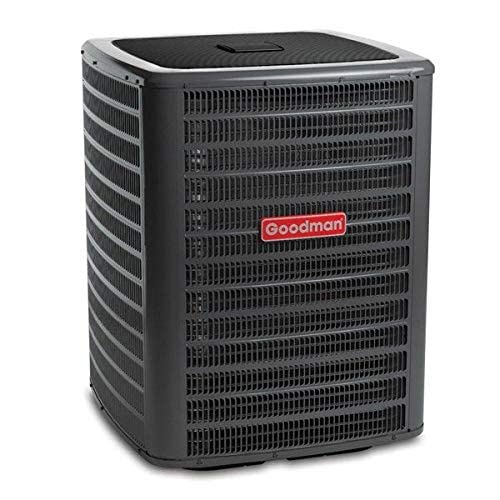
1. Goodman 5 TON 14.3 SEER2 R-32 AC Condenser (GLXS4BA6010)
Our pick — over 4★ from 20+ verified ratings; the strongest balance of quality and price.
The 14.3 SEER2 condenser owners run at an 80-degree setpoint in 110-degree Las Vegas heat
For anyone replacing an old cooling-only condenser and keeping the existing indoor setup, this Goodman is the pick to beat. It’s a 5-ton split-system condenser rated at 14 SEER2, which is the efficiency score that decides how much electricity the unit pulls to hit your set temperature. It replaces the legacy GSXN406010 and GSX140601 models, so if your old unit carries either of those part numbers, this drops into the same slot in your system.
What owners talk about most is raw cooling muscle in brutal heat. One Las Vegas owner runs it at an 80-degree setpoint while it’s 110 outside and reports the house feels freezing — that’s the kind of headroom a properly sized 5-ton unit buys you in a desert climate. The build is meant to survive outdoors too: a heavy-gauge galvanized-steel cabinet, a copper tube and aluminum fin coil, and a factory-installed filter drier that keeps moisture and debris out of the refrigeration circuit. The compressor is a scroll type, which is the sturdier design for continuous seasonal duty, and it’s rated 4 Star on the BEE efficiency scale with a remote control in the box.
Here’s the honest side. The asking price on the 20-rating listing sits in the mid-range zone, and this is a condenser only — no air handler, no coil, no lineset, no thermostat. You’re buying the outdoor half of a system, and a contractor has to supply the rest and charge the refrigerant on site. A couple of owners have also flagged that units shipped with thin packaging arrived with cosmetic dents in the exterior louvers, and one older-stock unit ran louder than the 10-year-old Goodman it replaced. Neither affects cooling performance, but factor in freight protection and ask your installer to inspect on delivery.
What earns the top spot
- Proven cooling in extreme heat — handles a 110-degree day with room to spare
- 14 SEER2 efficiency and a scroll compressor built for long cooling seasons
- Direct replacement for GSXN406010 and GSX140601, so existing setups swap cleanly
- Galvanized-steel cabinet, copper tube coil, and factory-installed filter drier for outdoor durability
What to weigh before buying
- Condenser only — you still need an indoor coil, lineset, thermostat, and install labor
- Occasional units show up with dented louvers from light shipping packaging
- Some older-stock examples hum louder than expected
Reach for this if: you’re replacing a worn cooling-only condenser in a hot climate and want maximum cooling with a mid-range price and simple drop-in fitment.
Look elsewhere if: you need heating, a complete matched package, or the highest efficiency score available here — the 15.2 SEER2 condenser and the bundled systems below cover those cases.
2. Goodman 5 TON 15.2 SEER2 R-32 AC Condenser (GLXS5BA6010)
A single outdoor cabinet with the blower and refrigeration circuit inside — for homes with no room for an indoor air handler
A packaged heat pump is the smart move when you don’t have room for a traditional split setup, and this Goodman fits that exact situation. Instead of an outdoor condenser plus a separate indoor coil, the refrigeration circuit and the indoor blower all live inside one outdoor cabinet. It’s rated 13.4 SEER2 for cooling and 6.7 HSPF2 for heating — HSPF2 being the heating-efficiency score that tells you how much heat you get per unit of electricity. Cooling power lands at 58,300 BTU, the highest BTU figure in this lineup, so it has a slight raw-capacity edge over the 57,000 BTU AC-only package above.
Because it’s a heat pump, it both cools and heats, which is why it’s the flexible option for mild-to-moderate climates. It replaces the legacy GPHH36041, runs R-32 refrigerant, and is rated 4 Star on the BEE scale with app-based control. A heat-pump setup is also a different installation animal from a split AC, so have your contractor confirm it’s the right configuration for your home before ordering.
Owners are candid about the downsides. The most-discussed issue is refrigerant — a handful of buyers report units arriving without the promised charge and having to pay to fill the system, so verify the charge with your installer the day it shows up rather than weeks later. There’s also a note that the cabinet should not trip its breaker under heavy load. A couple of owners who skipped the optional heat strips for winter found they needed them once the temperature dropped. Plan on adding the heat kit up front if you get real winters.
Where it stands: as a cooling-plus-heating unit in one box, it’s the most adaptable pick here, and its 58,300 BTU tops the 57,000 BTU of the AC-only package above.
What to plan for: refrigerant verification on delivery, and for a cold climate, the optional heat strips — without them this unit won’t heat hard on the coldest nights.
Pick this if: you want heating and cooling from one packaged cabinet, especially where an indoor air handler doesn’t fit.
Think twice if: you expect a full charge and heat included — you’ll want to confirm refrigerant on arrival and budget the optional heat strips for winter.
3. Goodman 5 TON 14 SEER2 R-32 AC Unit with 24.5″ Coil and 120k BTU 80% AFUE Upflow Furnace

The GLXS4BA6010 condenser, CAPTA6030D3 coil, and 120k BTU 80% AFUE upflow furnace in one order
This is the most complete package on the list if you’re replacing a whole heating-and-cooling setup in one go. It bundles the 5-ton 14 SEER2 GLXS4BA6010 condenser, a matching 24.5-inch wide CAPTA6030D3 coil, and a 120k BTU 80% AFUE upflow furnace — AFUE being the annual fuel-utilization score that tells you how much of the gas your furnace turns into heat. The furnace runs on gas and can be converted to liquid propane with a conversion kit sold separately. It ships by default as a vertical upflow configuration, so if your ductwork needs horizontal or downflow, you must specify that at purchase time.
The setup detail that matters: many furnaces are designed for multi-position installs, but coils often are not, so confirm your configuration matches before ordering or you’ll be stuck with parts that don’t fit your ducting. Because this mixes a gas furnace with an AC condenser, installation is squarely a licensed-contractor job, and the listing is for the product only — install is not included. Owners have had good experiences with delivery on this one, including last-minute shipping-location changes handled smoothly, and one buyer’s furnace has kept the house warm since day one.
When the bundle pays off: buying the condenser, coil, and furnace together means fewer chances of a mismatched fit between the outdoor and indoor halves, which is the setup headache that dogs people who buy those parts separately.
The config trap to avoid: it’s built for upflow unless you specify otherwise, and the gas furnace fuel type is something your contractor has to match to your home’s supply.
Choose this when: you’re swapping out a full gas-heat-and-cooling system and want the condenser, coil, and furnace together.
Confirm first: your ductwork orientation must be upflow unless you request otherwise, so settle that with your installer before you order.
Understanding the Specs
SEER2 and HSPF2 ratings
SEER2 is the efficiency score for cooling, and HSPF2 is the equivalent score for heating on a heat pump. Higher numbers mean the system uses less electricity for the same output, so a 15.2 SEER2 unit runs cheaper than a 14 SEER2 one over a season. If you run cooling for months at a time, that efficiency gap is where your money goes, which is why the higher-rated condenser earns its place higher on this list.
R-32 refrigerant
R-32 is the modern refrigerant used across all these systems, and it replaces the older R-410A in new equipment. For a buyer, the value is future-proofing: when the system eventually needs servicing, R-32 is the refrigerant the industry has standardized on, so you’re not hunting down a phased-out gas years from now.
Condenser-only vs complete systems
A condenser-only listing gives you just the outdoor unit, so you still need an indoor coil or air handler, a lineset, a thermostat, and refrigerant charging. A complete system bundles the condenser with its matched indoor components. Buying them separately saves upfront cost only if you know what pairs with what; the bundled systems remove that guesswork entirely.
Heat strips and heat kits
Heat pumps cool and heat, but in genuinely cold weather they lean on optional heat strips to keep up. Both the packaged heat pump and the heat-pump system here note that heat kits are sold separately, and owners in colder states have found they need them once temperatures drop. If you get real winters, plan the heat kit into the original purchase rather than adding it later.
FAQ
What size home does a 5 ton AC unit cool?
Does a 5 ton AC condenser come with the indoor unit?
What SEER2 rating should I look for in a 5 ton unit?
Is R-32 refrigerant better than the older R-410A?
Can I install a 5 ton AC system myself?
Do I need a heat kit with a 5 ton heat pump?
Should I buy a condenser alone or a matched system?
What does 60,000 BTU capacity mean for cooling?
How long does a Goodman 5 ton system last?
Can I add a gas furnace to a 5 ton AC system later?
Final Thoughts: The Verdict
For most homes needing a straight cooling upgrade, the Goodman 14.3 SEER2 R-32 AC Condenser is the pick to beat — it delivers proven cooling in extreme heat and drops in as a direct replacement. If running cost is your top concern, the 15.2 SEER2 condenser buys you the highest efficiency here, and if you’d rather have the indoor half matched for you, the condenser-and-air-handler package removes the guesswork.
For heating and cooling in one, reach for the 14.5 SEER2 heat pump system with its 9-speed ECM blower and documented long-term reliability. And if you’re replacing a full gas system, the condenser, coil, and furnace bundle gets the whole job done in one order. Whichever way you go, have a licensed contractor confirm sizing and configuration before it ships — that single step decides whether you get the best cooling for your home.
How We Picked
We do not accept paid placement. Every pick is matched to a real buyer and a real use-case; we do not hands-on test units.
Sources & Methodology
Specifications: manufacturer listings and product documentation. Review insights: verified customer reviews, as of September 2026. Pricing: not shown on this page (it changes often); check the current price via the retailer link.
As an Amazon Associate, KitchPrep earns from qualifying purchases. This does not affect which products we feature.
Related Guides
