
A 4-cup food processor is the kitchen equivalent of a best friend who shows up on time. Not flashy. Not huge. Just reliably there when you need to get dinner moving in the next ten minutes. It’s the tool that keeps “I should cook” from turning into “let’s just order something.”
If you’re hunting for the best 4 cup food processor, you’re not really shopping for a motor and a bowl. You’re shopping for fewer tears while chopping onions, faster prep for weeknight salads, smoother dressings without whisking forever, and that satisfying moment when pesto or salsa looks exactly how you pictured it.
Here’s what most buying guides get wrong: they treat these mini processors like tiny versions of big machines. But the real difference isn’t just size—it’s behavior. A mini chopper can either feel like a joyful shortcut… or like an appliance that turns everything into mush unless you babysit it. And the gap between those experiences comes down to details you only notice after real use: blade sweep, bowl shape, how “pulse” actually behaves, whether the lid seals without a wrestling match, and whether the machine runs cool enough to finish dense jobs like hummus without stopping mid-way.
This guide is built around the friction points real people complain about (and the “why didn’t I buy this sooner” moments they celebrate). We’ll cover 15 standout options in the 4-cup neighborhood—some exactly 4 cups, some slightly smaller or larger but still compact—so you can choose based on how you actually cook: sauces and dressings, onion and garlic prep, nuts and herbs, baby food, quick meat chopping, and the occasional “I need shredded cheese now.”
You’ll also see me call out something important up front: “4-cup capacity” is rarely the same as “4 cups of perfect results.” The best models make the usable capacity feel bigger because they circulate ingredients efficiently. The frustrating ones make you stop, scrape, shake, and restart. By the end of this article, you’ll know which is which before you buy.
In this article
How to Choose the Best 4 Cup Food Processor for Real Weeknight Cooking
A compact processor isn’t “great” because the listing says it’s powerful. It’s great because it saves you time without making you work harder in other ways (scraping constantly, redoing your chop, or fighting a lid that refuses to unlock). Here’s the framework I use to separate “mini appliance I adore” from “mini appliance I regret.”
1. First, decide what you’re really buying it for
The fastest way to buy the wrong mini processor is to be vague about your use. Most home cooks fall into one (or two) of these patterns:
- The Aromatics Hero: you want onions, garlic, ginger, and herbs done fast, with control (not mush).
- The Sauce + Dressing Person: you live for pesto, chimichurri, vinaigrette, mayo, aioli, tahini sauce, salsa, guacamole.
- The “I Hate Cleanup” Shopper: you’ll use it daily if it’s genuinely easy to rinse and reassemble.
- The Small Household Prepper: you cook for 1–2 people and want the “right-size” tool (no massive bowl, no huge storage footprint).
- The Occasional Dense Job: you want hummus, nut butters, thicker dips, or quick meat chopping once in a while.
- The Shred-and-Slice Sneaker: you mainly want a small machine that can shred cheese or slice cucumbers without dragging out a full processor.
2. Understand the “real” capacity (this is where most people get surprised)
Mini processors are marketed by bowl volume, but your usable batch size is determined by circulation. If ingredients don’t tumble back into the blade zone, you’ll get:
- Over-processed paste at the bottom, untouched chunks at the top.
- “Dead zones” where food sticks to the side and never moves.
- Constant scraping… which defeats the point of owning the tool.
What helps circulation:
- More blade coverage (multi-layer or wider-sweep blades).
- Bowl geometry that encourages a vortex (not a tall chimney that traps food above the blade).
- A pulse that’s truly responsive (so you can micro-control texture).
3. Blade design matters more than watts for mini chopping
Wattage is a piece of the story, but in small bowls, blade design often decides the outcome. Here’s what to look for:
- Wide-sweep chopping blades: These catch more ingredients per pulse and reduce the “one onion chunk that survives” problem.
- Multi-layer blades: Designs like 4-blade stacks often pull more food into action, which means fewer stops to scrape.
- Reversing / dual-edge blades: These can give you two behaviors: a “chop” motion that’s cleaner for herbs and onions, and a “grind” motion that’s better for nuts and harder foods.
- Blade lock systems: This is a quality-of-life feature. It keeps the blade in place while you pour, so you’re not doing the “hold the blade with one finger while dumping salsa” dance.
4. Controls: one speed can be fine… if the pulse is good
A lot of excellent mini choppers only have one or two speeds. That’s not a problem. The real question is whether the machine lets you control texture without stress. A good pulse should feel like this:
- Instant start, instant stop (no lag).
- Short bursts that don’t keep spinning after you release.
- Predictable results (3 pulses looks like 3 pulses, not “oops, purée”).
If you chop a lot of onion and celery, you want a model that makes “coarse chop” easy to repeat. If you make sauces, you want a model that can run smoothly without shaking. If you want both, choose a machine with either two speeds or a very tight pulse response.
5. If you make dressings or mayo, prioritize the drizzle basin + seal
Emulsions are the place where cheap designs show their weaknesses fast. You want:
- A drizzle opening that lets you add oil slowly while blending.
- A lid seal that doesn’t leak when liquids swirl up the sides.
- A stable bowl so the machine doesn’t wobble while it’s running continuously.
In practice, KitchenAid’s drizzle-basin style lids are beloved by sauce people. And many small Cuisinart choppers do a surprisingly good job too—especially when you learn the right pulse rhythm.
6. Durability tells: what breaks on mini processors (and how to avoid it)
Mini processors usually fail in one of three ways:
- Heat shutdown: Dense foods + long run times can trigger automatic protection. This isn’t always “bad quality”—sometimes it’s you using a mini machine like a full-size processor.
- Fragile plastic tabs/clips: If the lid uses a thin safety tab to activate the motor, that tab becomes the whole machine’s “on switch.” Handle gently.
- Internal gears/couplers: Some models use plastic gearing internally. Under repeated heavy loads (think thick hummus, nut-heavy mixes), that can wear faster.
The cure is mostly technique: smaller batches, colder ingredients, short pulses, and brief rest breaks on dense work. If you do that, a well-designed mini chopper can last a long time—and feel like the most-used tool in your kitchen.
Quick Comparison: 15 Best 4 Cup Food Processor Picks
Use this table to find the model that matches your cooking style, then jump to the full reviews for the “real life” details— like which ones chop evenly without constant scraping, which lids feel annoying, and which bowls behave best for dressings and dips.
On smaller screens, swipe or scroll sideways to see the full table.
| Model | Category | Real-world strength | Best match | Amazon |
|---|---|---|---|---|
| Cuisinart Core Custom 4‑Cup Mini Chopper (MCH‑4) | Best overall | Clean chop + grind control with BladeLock “pour without panic” design | Most home cooks who want dependable everyday prep | Amazon |
| KitchenAid 5 Cup Food Chopper (KFC0516BM) | Premium | Whisk + drizzle basin makes dressings, mayo, and whipped mixes feel easy | “Sauce people” who want a step-up compact workhorse | Amazon |
| Braun EasyPrep 4‑Cup (CH3012BK) | Even chop | QuadBlade design helps reduce “dead zones” and speeds up prep | People tired of uneven mini choppers | Amazon |
| Hamilton Beach Cordless 4‑Cup (72880) | Cordless | Prep anywhere + sealed bowl for liquids + surprisingly long-lasting charge | Small kitchens, limited outlets, or “prep at the table” households | Amazon |
| KitchenAid 3.5 Cup Food Chopper (KFC3516IC) | Sauces | Drizzle basin + two speeds gives excellent control for dressings and small dips | Small-batch dressings, aioli, and “just enough” prep | Amazon |
| Cuisinart CH‑4DC Elite Collection 4‑Cup (Die Cast) | Stability | Heavier base tends to stay put; classic chop/grind workflow | People who hate counter “walking” and want a sturdy feel | Amazon |
| Hamilton Beach Stack & Snap 4‑Cup (70510) | Slice/Shred | Rare mini option with slicing/shredding disc + leak-resistant bowl design | People who want a small shredder/slicer without a full processor | Amazon |
| Cuisinart 5‑Cup Chop & Shred (FP‑5) | Compact+ | Compact footprint with shredding disc and in-bowl storage approach | Small households that want “mini, but a bit more” | Amazon |
| Hamilton Beach Stack & Snap 14‑Cup + 4‑Cup (70585) | Two bowls | One base that handles big prep and mini prep with a wide feed chute | Families who want one machine for “weeknight + batch prep” | Amazon |
| Starfrit Electric Oscillating Food Processor 4‑Cup | Even texture | Oscillating blade aims for more uniform chop with simple modes | Budget-friendly “fast salsa, fast guac” shoppers | Amazon |
| TWOMEOW 4‑Cup Food Processor (2 Bowls) | Meal prep | Two bowls helps separate savory/sweet or meat/veg without washing mid-session | People who prep multiple ingredients in one go | Amazon |
| SHARDOR 4‑Cup 4‑Blade Food Chopper + Whisk | Feature value | 4 blades + whisk disk + drizzle basin gives lots of “mini tasks” in one | Shoppers who want maximum features in a compact tool | Amazon |
| Cuisinart Elemental 4‑Cup Chopper/Grinder (ECH‑4SV) | Beginner | Simple touchpad chop/grind with BladeLock; easy daily use | People who want straightforward “press and go” behavior | Amazon |
| Cuisinart Mini‑Prep Plus 4‑Cup (DLC‑4CHB) | Classic | Chop/grind reversing blade in a compact “always ready” format | Pesto, salsa, onions, and quick dressings in small batches | Amazon |
| Cuisinart Mini‑Prep Plus 24‑Ounce (DLC‑2ABC) | Smallest | Compact 3‑cup class chopper for tiny tasks and minimal storage | Single cooks or “I just need garlic minced” users | Amazon |
In‑Depth Reviews: 15 Best 4 Cup Food Processor Options (Real‑Kitchen Perspective)
Now we’ll go model by model. I’m going to talk like a real home cook who cares about outcomes: what chops evenly, what needs scraping, what feels stable, what makes sauces easier, and what you should know before you commit your counter space to it.
1. Cuisinart Core Custom 4‑Cup Mini Chopper (MCH‑4) – The “Daily Driver” That Feels Thoughtful

If you want one compact machine that quietly earns a permanent spot on your counter, the MCH‑4 is the kind of pick that makes sense. It hits a sweet spot: big enough to be useful for real cooking, small enough to feel “grab-and-go,” and designed in a way that reduces the annoying little moments that make people stop using mini processors.
The standout detail is the way Cuisinart treats the blade and pour-out experience. With many mini choppers, you finish your salsa… and then you have to “disarm” the bowl like you’re diffusing a bomb: hold the blade, pour carefully, hope it doesn’t slide. BladeLock designs are about removing that stress. It’s small, but it changes how often you’ll use the machine.
In everyday use, this model shines on the “aromatics routine”: onions, garlic, celery, herbs. If you pulse in short bursts, it gives you clean, repeatable texture instead of mystery mush. And if you do sauces and dips, the chop/grind behavior is helpful when you’re moving between soft and harder ingredients.
Why it feels like a smart buy
- Pour-out is calmer – BladeLock helps you transfer ingredients without fighting the blade.
- Great “two-button” logic – Chop vs grind is simple, but genuinely useful when textures matter.
- Right-size for daily cooking – Big enough to matter, small enough to store easily.
- Easy cleanup rhythm – Rinse immediately, and it becomes a 60-second clean for most tasks.
Good to know
- Dense jobs still need mini-processor technique: smaller batches, pulses, and occasional scraping.
- If you want slicing/shredding discs, this is a chopper/grinder style (not a full mini processor kit).
- Like most compact units, it works best when you don’t pack ingredients to the brim.
Ideal for: people who want one compact chopper that feels dependable for everyday prep—especially aromatics, quick sauces, and weeknight cooking momentum.
2. KitchenAid 5 Cup Food Chopper (KFC0516BM) – The “Sauce Person’s” Compact Power Move

This one is technically a bit bigger than 4 cups, but it belongs in this guide because it behaves like a compact daily tool—just with more “chef-y” range. If you make dressings, sauces, dips, and emulsions often, the included whisk accessory and drizzle basin can feel like you upgraded your whole prep routine.
Let’s talk about what that actually means in real life. A drizzle basin lets you add oil slowly while the blade (or whisk) is moving, which is exactly how you get silky mayo, stable aioli, and glossy dressings. Without it, you tend to stop-start, pour too fast, break the emulsion, and then blame yourself. This lid design helps you do it the easy way, consistently.
For chopping, it’s strong and even—especially on the medium-volume tasks that feel awkward in tiny 3-cup bowls. It also has the kind of counter-friendly footprint that doesn’t demand a whole cabinet shelf for “the accessory situation.” If you want one compact machine that feels like it can do a little bit of everything, this is a strong upgrade lane.
Why it earns “upgrade” status
- Whisk accessory is genuinely useful – Great for whipping, blending, and smoothing mixtures quickly.
- Drizzle basin = better emulsions – Dressings and mayo become more repeatable and less stressful.
- Comfortable bowl handling – The handle + pour spout feel designed for actual kitchen flow.
- Two speeds + pulse control – Makes “chunky salsa” and “smooth sauce” both achievable.
Good to know
- It’s compact, but still larger than strict 4-cup minis—measure your storage spot if you live tight.
- If your main goal is onion/garlic only, you may not need the extra versatility.
- Like any emulsifying tool, best results come from steady drizzle + patience, not dumping liquid all at once.
Ideal for: cooks who make sauces and dressings constantly and want a compact machine that feels more “capable” than the average mini chopper.
3. Braun EasyPrep 4‑Cup (CH3012BK) – QuadBlade Control for People Who Hate Uneven Results

Braun’s EasyPrep tends to win over people who’ve been disappointed by “mini choppers” that only cut what they directly touch. The QuadBlade concept—four layered blades—helps pull more ingredients into action, which can reduce the need for constant scraping and shaking. If your current chopper leaves onion chunks at the top and paste at the bottom, this design direction is exactly what you want.
In real kitchen flow, this model is strong for: onion/celery chop for tuna or chicken salad, nuts for baking, herbs for sauces, and quick purees. It’s also one of the easier styles to use with one hand because the control approach is simple and the unit grips well. And because it’s compact, you’re more likely to actually take it out on weeknights—where the “prep tax” usually kills motivation.
One expert-level tip: if you want clean chopped herbs (not a green paste), add the herbs dry, pulse in very short bursts, and stop early. Herbs go from “beautiful” to “bruised and wet” fast in any processor—this is about timing more than power.
Why people love it
- Multi-blade circulation – Helps reduce dead zones and improves evenness.
- Two speeds – Useful for dialing in texture without panic.
- Solid everyday performance – Great for onions, celery, nuts, herbs, and dips.
- Compact but capable – Fits small kitchens while still feeling powerful.
Good to know
- Some people find there’s a “knack” to lid alignment—practice once and it becomes normal.
- Like many minis, it’s happiest with smaller chunks (halve big onions, cut dense foods down a bit).
- If you routinely do very thick hummus, use pulses and rest breaks to avoid heat shutdown.
Ideal for: anyone who wants more consistent chopping and less scraping—especially for onion/veg prep, nuts, and quick sauces.
4. Hamilton Beach Cordless 4‑Cup (72880) – Freedom That Actually Changes How Often You Prep

Cordless sounds like a gimmick until you live with it. Then it becomes the reason you actually use the tool. This Hamilton Beach model is designed for the “prep where you want” lifestyle: at the kitchen island without cord clutter, at the dining table while chatting, or in a small kitchen where outlets are inconvenient.
From a practical standpoint, the sealed bowl + spout/handle design is a real win for liquids. It’s far less stressful to make dressings, marinades, or small purees when you’re not worried about drips. And the simple “press to chop” operation is intuitive enough that you don’t have to re-learn it every time you pull it out.
Where cordless models shine most is short, frequent jobs: chop an onion, mince garlic, blitz nuts, quick salsa. It’s also surprisingly useful for quick meal prep when your counter space is tight—because you can keep the base out of the way and bring the bowl where you’re working.
Why it’s worth considering
- Cordless convenience – Makes the tool feel “available,” so you use it more.
- Sealed bowl for liquids – Less mess anxiety for dressings and marinades.
- Fast, intuitive operation – Great for quick, repeated tasks.
- Good everyday versatility – Nuts, herbs, soft meats, veggies, and dips (with good technique).
Good to know
- With fruit or slippery ingredients, you may need to pause and redistribute so everything meets the blade.
- Cordless doesn’t mean “infinite torque” — use pulses and smaller batches for dense jobs.
- Charge indicators are helpful; build the habit of topping up so it’s always ready.
Ideal for: small kitchens, limited outlets, or anyone who wants prep to feel less like “setup” and more like “just do it.”
5. KitchenAid 3.5 Cup Food Chopper (KFC3516IC) – Tiny Batch, Big Control

This is one of the smartest picks for people who mostly make small quantities and want precision. A 3.5-cup bowl sounds modest, but it’s often exactly right for a fresh vinaigrette, a small bowl of salsa, a quick pesto, or a single batch of aioli that tastes better than anything store-bought.
The reason it works well for sauces is the drizzle basin. Slow liquid addition is the “secret” to stable emulsions, and having that built in means you’re not constantly stopping and starting. The two-speed setup also makes it easier to stay in the “chunky” zone when you want texture. Low speed + short pulses is a reliable way to chop without turning everything into soup.
A small but important detail: the blade sits close enough to the bottom that it tends to pick up smaller amounts better than some taller-bowl designs. That means you can mince a small handful of herbs or a few cloves of garlic more effectively—without needing to load the bowl.
Why it’s loved in real kitchens
- Excellent for emulsions – Drizzle basin makes mayo/dressings smoother and easier.
- Good small-batch performance – Works well even when you’re not filling the bowl.
- Two speeds help texture control – Low for chop, high for smoother blends.
- Compact footprint – Easy to store, easy to keep out on the counter.
Good to know
- Lid pieces can be a bit fiddly to separate for deep cleaning on some units—rinse immediately to make life easier.
- It’s not a “shred cheese” tool; it’s a chopper/puree tool with sauce strengths.
- For larger households or batch prep, a true 4–5 cup bowl may feel more flexible.
Ideal for: small households, sauce lovers, and anyone who wants fresh dressings and dips without pulling out a big processor.
6. Cuisinart CH‑4DC Elite Collection 4‑Cup – The “Doesn’t Walk Across the Counter” Pick

Some mini processors feel like toys. This one doesn’t. The CH‑4DC’s “die-cast” positioning is basically about one thing: stability. A heavier base changes the whole experience—less vibration, less sliding, less “hold it with one hand” behavior. If you’ve ever had a chopper scoot toward the edge of the counter while you pulse, you’ll immediately appreciate a steadier feel.
Function-wise, it’s classic Cuisinart mini-chopper logic: simple controls, an auto-reversing blade for chop vs grind behavior, and a compact bowl that suits everyday tasks. It’s particularly satisfying on nuts, onion, and herbs because the machine feels planted while it works. That “planted” feeling matters more than you think, because you can pulse more confidently and stop at the right texture.
Where it fits best is the everyday aromatics + quick sauce zone. If you treat it like a mini chopper (pulses, small batches, scrape once when needed), it does exactly what a 4-cup tool should do: take prep friction away without becoming its own problem.
Why it stands out
- Stable base feel – Less “walking,” less wobble, more confidence.
- Chop + grind versatility – Helpful for switching between soft herbs and harder nuts/cheese.
- Simple controls – No learning curve, easy to use repeatedly.
- Good everyday sizing – Practical for onions, garlic, dips, and small dressings.
Good to know
- As with many Cuisinart minis, performance is best when you pulse and stop early to avoid over-processing.
- For very wet mixtures, add liquids gradually so everything circulates instead of splashing up the sides.
- If you want slicing/shredding attachments, look at mini processor kits (like certain Hamilton Beach models).
Ideal for: anyone who prioritizes stability and a sturdy feel—especially if you do frequent onion/nut/herb prep and hate counter wobble.
7. Hamilton Beach Stack & Snap 4‑Cup (70510) – Mini Processor That Can Actually Shred
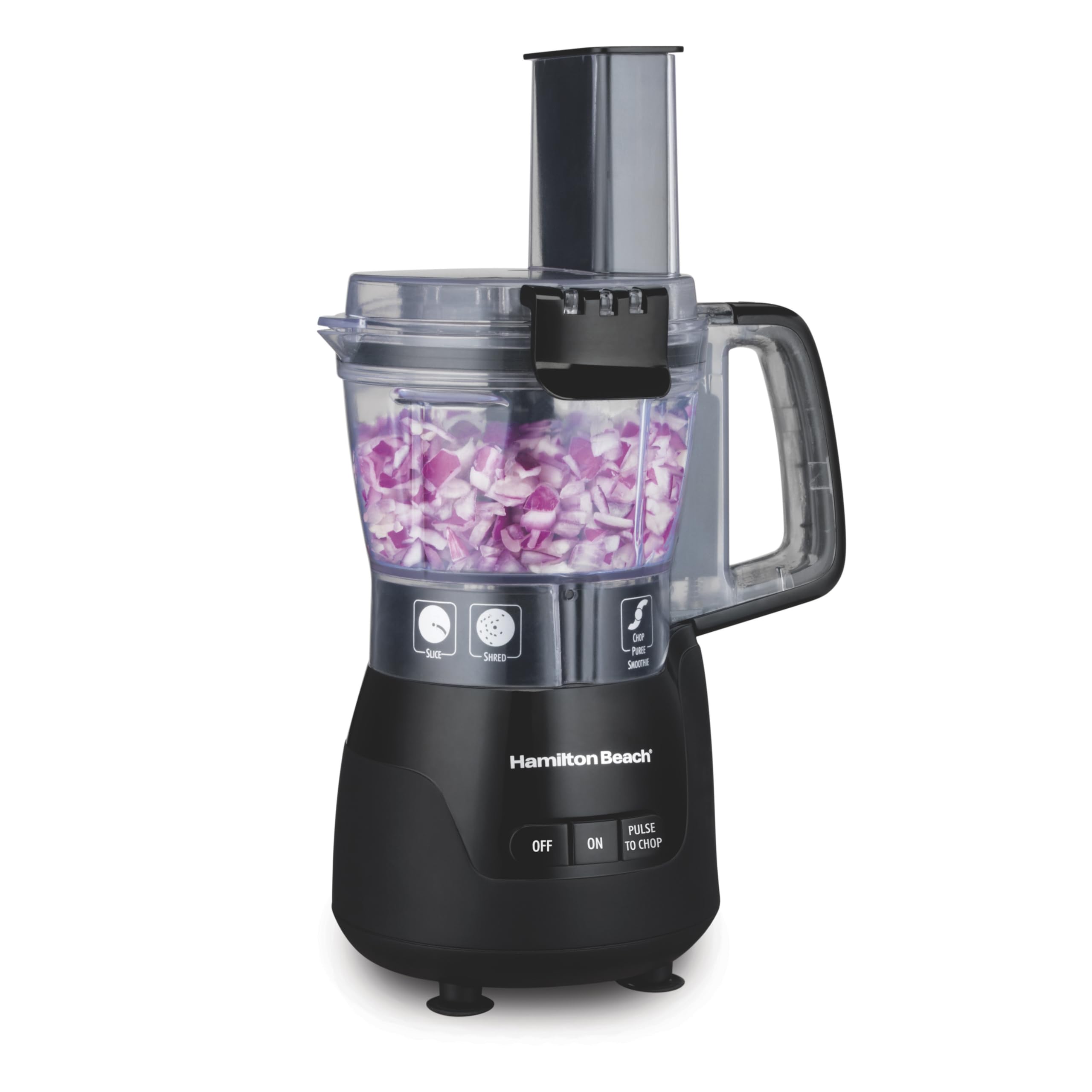
If your main dream is “I want a small machine that can shred cheese and slice veggies without a full-size processor,” this is one of the rare minis that belongs on your shortlist. The reversible disc + feed chute design means you can handle quick shred-and-slice tasks alongside chopping and pureeing. That versatility is the real value here.
In real use, this is the kind of tool that makes taco night faster: shred cheese, pulse onions, blitz a quick salsa, rinse, done. It’s also handy for small batch prep when you don’t want to commit to the big processor bowl + multiple attachments. The “stack and snap” design helps reduce the annoying twist-lock struggle that makes some people avoid using their machine.
Expert tip: cheese shreds best when it’s cold. If you want cleaner shreds and less smearing, pop the cheese in the freezer briefly before shredding. Also, accept the “end nub” reality: most disc-style shredders leave a small end piece unshredded. That’s normal, not a defect.
Why it’s worth it
- Slicing/shredding in a mini size – A big capability win for small kitchens.
- Stack & snap assembly – Less fiddly than twist-lock designs.
- Leak-resistant bowl concept – Helpful for smoothies, purees, and dressings.
- Great for “multi-task nights” – Chop + shred + slice in one compact tool.
Good to know
- Some users report fragile lid tabs/clips on certain units—handle the lid gently and align it carefully.
- A tight gasket seal can make lids harder to remove; a small wiggle (not brute force) works better.
- It’s a mini: try to shred in smaller chunks rather than stuffing the chute aggressively.
Ideal for: people who want a compact processor that can shred/slice sometimes—without buying a full-size food processor setup.
8. Cuisinart 5‑Cup Chop & Shred (FP‑5) – When You Want Compact, Not Tiny
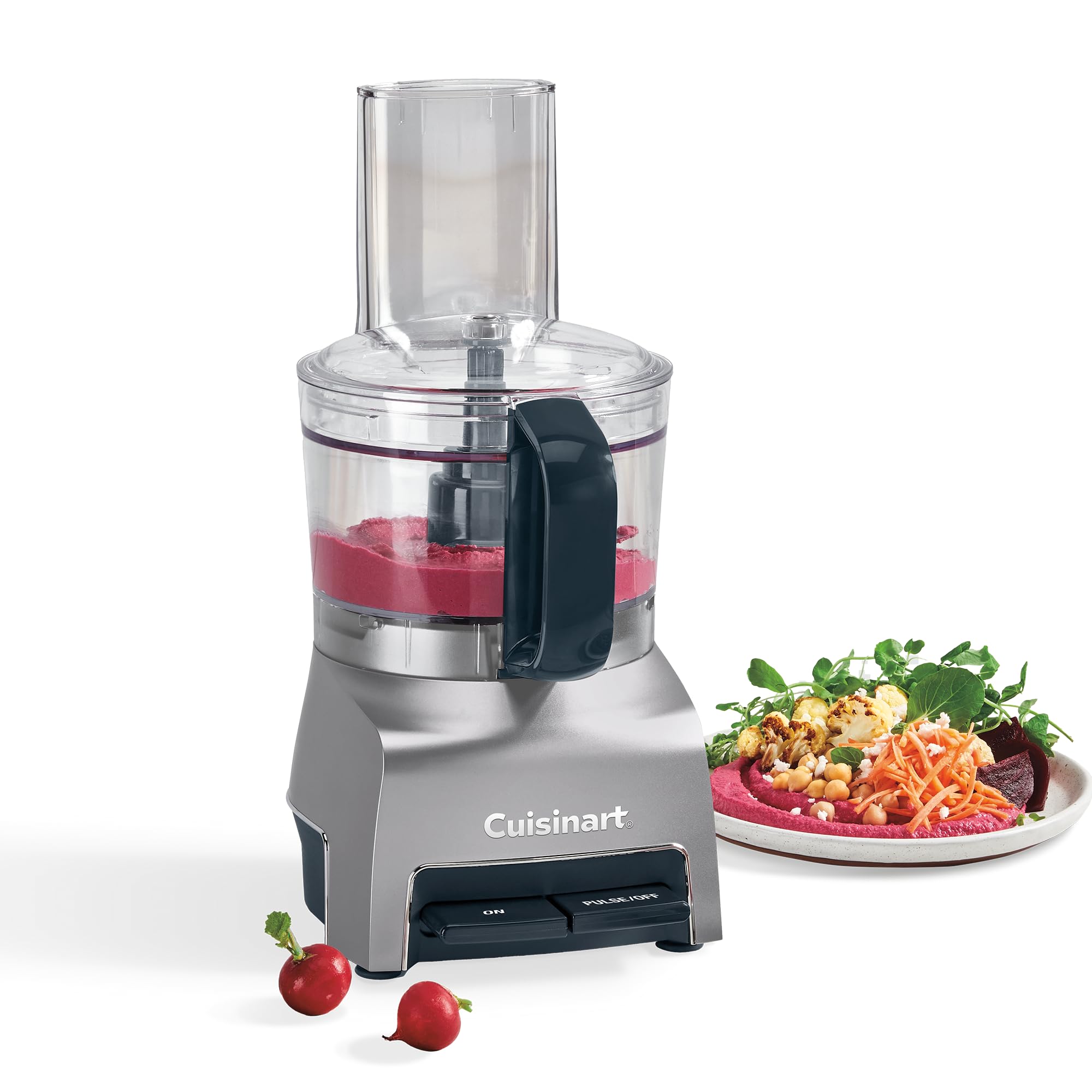
This is the “I want compact, but I don’t want to feel limited” choice. A 5-cup bowl still fits the small-kitchen mindset, but it gives you a little more breathing room for family-sized prep: bigger batches of guacamole, more shredded cheese at once, or a full bowl of chopped veggies for soup without needing two rounds.
The value here is not just capacity—it’s workflow. Models that nest attachments inside the bowl reduce the “where did I put the disc?” problem. And that matters because the #1 reason people stop using processors isn’t performance—it’s the feeling that the accessories are annoying. If everything stores neatly, you’ll actually use it.
From an expert perspective, the shred disc is a practical bonus for weeknight cooking. It turns “I should shred carrots / cheese” into a 30-second action instead of a grater situation. If you’re cooking for two but like leftovers, the slightly bigger bowl can also be the difference between “one batch” and “two batches.”
Why it fits real life
- Compact but more forgiving – Easier to do “real cooking” batches without refilling.
- Shredding capability – Great for cheese, carrots, cabbage, and quick prep tasks.
- Storage-friendly design – Nesting parts reduce clutter and lost attachments.
- Simple paddle controls – Easy to use without re-learning each time.
Good to know
- It’s taller than ultra-mini choppers; check cabinet clearance if you store it on the counter.
- Disc shredders still leave a small “end nub” unshredded—normal for this category.
- If you truly only do tiny jobs (garlic, herbs), a smaller 3–4 cup chopper may feel quicker to rinse.
Ideal for: small households that want compact convenience but don’t want to feel constrained by a very small bowl.
9. Hamilton Beach Stack & Snap 14‑Cup + 4‑Cup (70585) – The One That Replaces Two Appliances
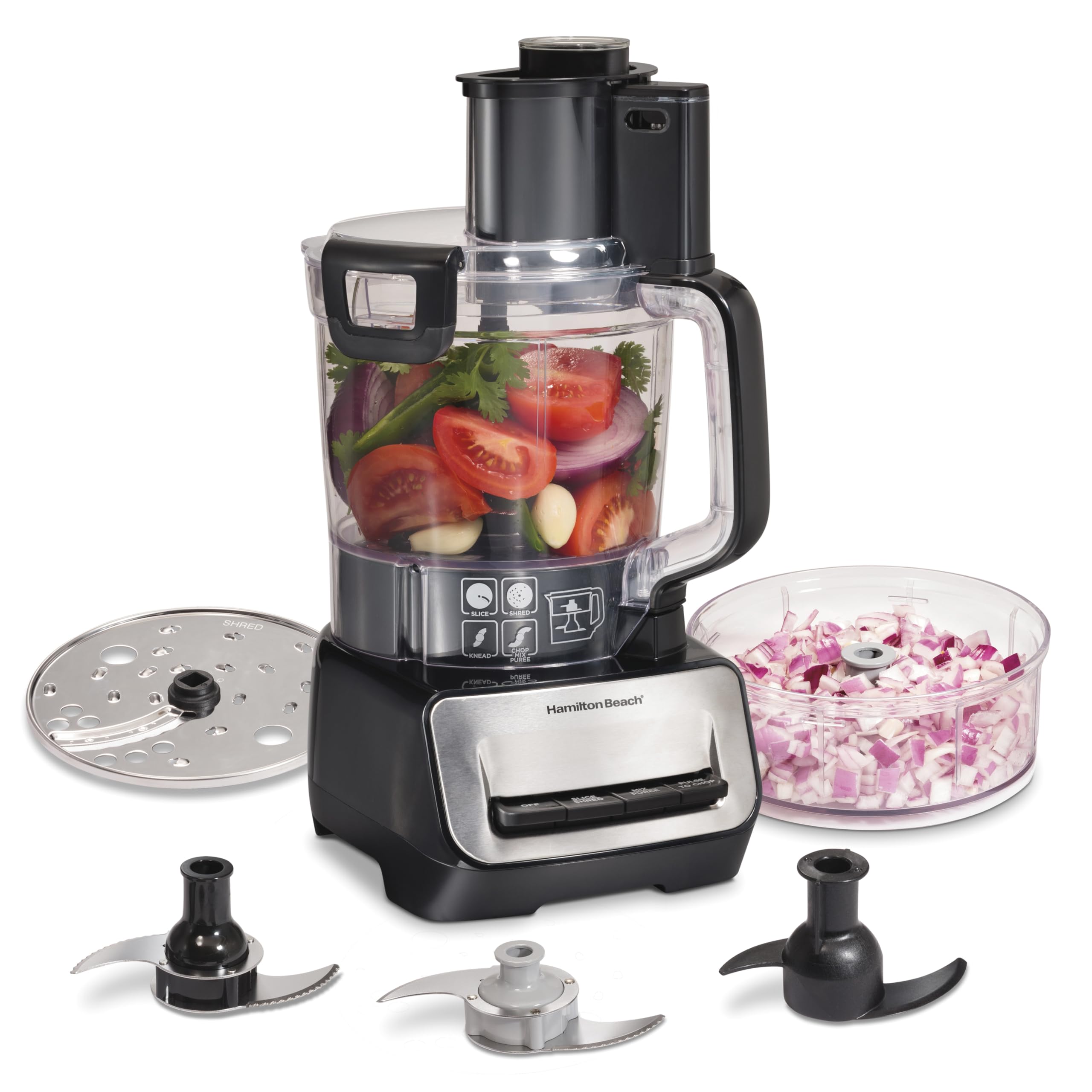
This is not a pure “mini chopper.” It’s a system: a full-size processor bowl plus a 4-cup mini bowl that nests. And that combination is powerful for households that swing between two realities:
- Weeknights: quick onion, garlic, herb, and dip tasks (mini bowl).
- Prep days: big batches for soups, salads, shredding, slicing, dough (large bowl).
The strongest real-world advantage is the wide feed chute. It reduces pre-cutting, which is one of the hidden time killers in food prep. If you’ve ever had to quarter everything just to fit it into a narrow chute, you understand why a “big mouth” design feels luxurious.
Now the honest expert take: any multi-bowl system has more parts, and more parts means you want a machine that feels solid. Some users report durability concerns under repeated heavy loads (especially thick, dense mixes). So if your life is “daily thick hummus, daily heavy dough,” consider a more heavy-duty dedicated processor. But if your reality is “normal home cooking + occasional batch prep,” this can feel like a very efficient single purchase that covers many jobs.
Why people choose it
- Two bowls, one base – Mini convenience plus full-size power in one footprint.
- Wide feed chute saves time – Less pre-cutting for everyday vegetables.
- Versatile attachments – Slice, shred, chop, puree, and knead (depending on setup).
- Dishwasher-friendly parts – Makes big prep feel less punishing afterward.
Good to know
- More parts = more storage and cleaning considerations than a simple mini chopper.
- If you mostly want a tiny tool, this may feel like “too much machine.”
- For dense tasks, use rest breaks and don’t run continuously for long stretches.
Ideal for: families who want one appliance that covers both mini prep and bigger batch days without buying (and storing) two separate machines.
10. Starfrit Electric Oscillating 4‑Cup – The “Why Is This Chop So Even?” Surprise

Starfrit’s “oscillating blade” concept is interesting because it targets the core mini-processor complaint: uneven results. Instead of only spinning in one plane, the blade motion aims to reach ingredients more evenly. In practice, users often describe it as fast and surprisingly uniform—especially for salsa, guacamole, olive spreads, and everyday veg chopping.
What I like about this model is the simplicity. You get clear modes (high, low, pulse), a lid opening for adding liquids, and suction feet to keep it stable. For a budget-friendly pick, those are the exact features that make the tool feel like a real appliance instead of a compromise.
If you’re new to mini processors, this is a great “confidence builder.” You’ll learn how to pulse, how to stop early, and how to control texture without needing a complicated interface. And if you’re experienced, you’ll appreciate how quickly it gets you to “good enough” results for most home cooking.
Why it’s a sleeper hit
- Oscillating motion targets evenness – Helps reduce big chunks and dead zones.
- Simple controls – High/low/pulse makes it easy to learn and repeat.
- Stable base grip – Suction feet help it stay put while running.
- Great for dips and spreads – Salsa, guac, olive spread, herb blends.
Good to know
- Like all minis, it performs best when ingredients are cut to reasonable size first.
- For ultra-smooth emulsions, models with more dedicated drizzle systems can feel easier.
- Rinse immediately after use so food doesn’t dry into crevices around the lid.
Ideal for: budget-focused cooks who still care about texture and want a straightforward, fast tool for dips, spreads, and everyday chopping.
11. TWOMEOW 4‑Cup (2 Bowls) – The “Prep Two Things Without Washing” Advantage

Two bowls sounds simple, but it’s one of those features that changes your routine if you meal prep. You can chop onions in one bowl, then immediately chop herbs or nuts in the other without stopping to wash and dry. Or you can keep a “savory” bowl and a “sweet” bowl if you hate flavor transfer.
Performance-wise, the two-speed + 4-blade approach is aimed at quick, even chopping. For most home cooks, the real win is speed: onions and veggies can go from whole to “ready” in seconds. And because it’s compact, you’re more likely to keep it accessible and use it often—exactly the habit you want if you’re trying to cook more at home.
One pro-level tip for meat chopping (if you use it for that): chill the meat and cut it into small cubes first. Then use short pulses. This prevents smearing and keeps texture more “ground” rather than pâté-like. It’s not about brute force; it’s about controlling friction and heat.
Why it’s genuinely convenient
- Two bowls = faster workflow – Prep multiple ingredients without washing mid-session.
- 2 speeds for control – Helps you choose chop vs finer blend behavior.
- Compact but capable – Good for onions, nuts, veggies, sauces, and baby food tasks.
- Easy day-to-day use – Simple operation encourages frequent use.
Good to know
- As with many compact units, best results come from not overfilling and using pulses.
- For emulsions, you may still need to stop and scrape depending on volume and ingredients.
- Always keep the motor unit dry; bowls and blades are the washable parts.
Ideal for: meal preppers, busy households, and anyone who wants to chop multiple ingredients quickly without turning cleanup into a project.
12. SHARDOR 4‑Cup 4‑Blade + Whisk – Maximum “Mini Tasks” in One Compact Tool
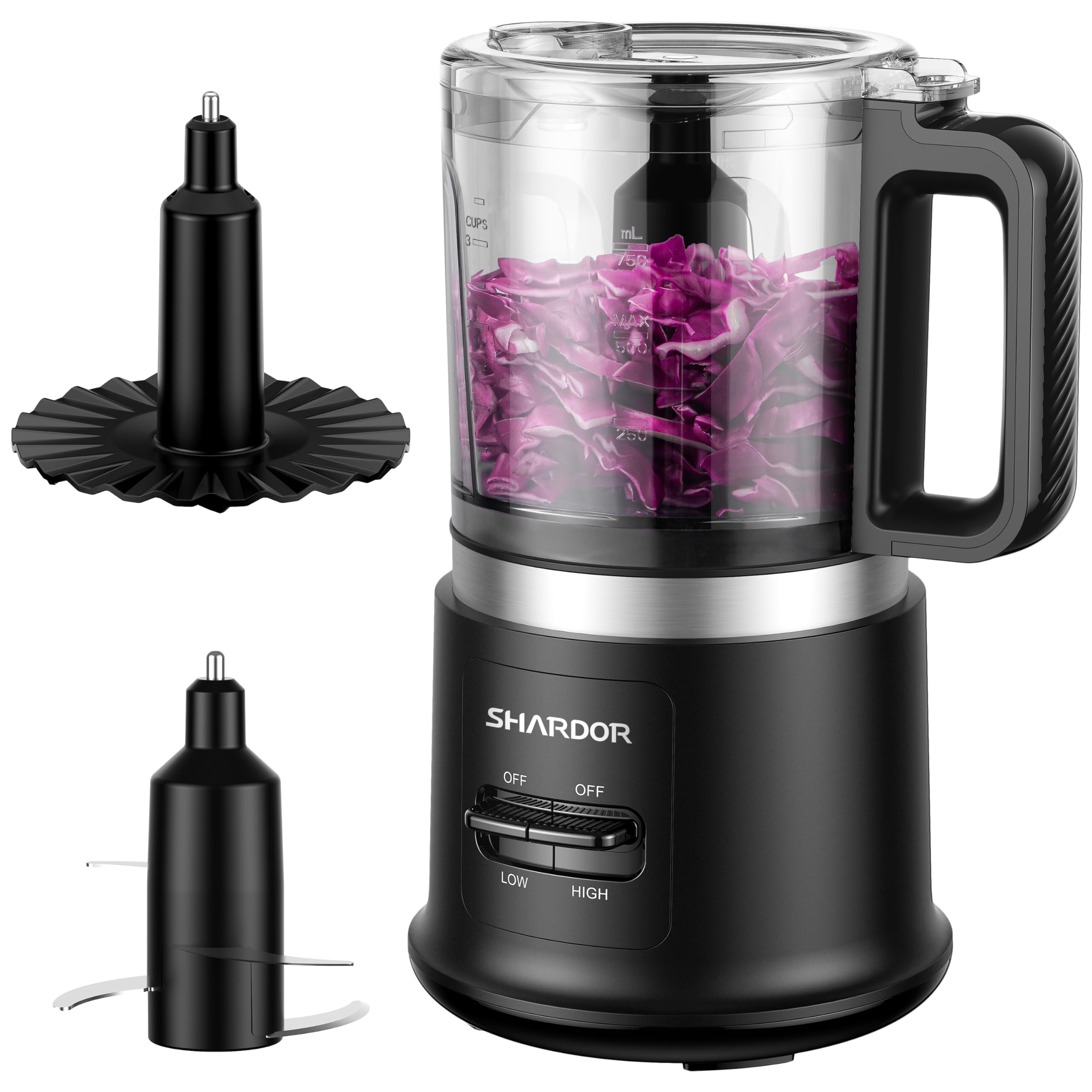
If you want a compact machine that tries to cover a lot of jobs—chop, grind, puree, mix, and whisk—this one is designed to do exactly that. The multi-blade setup aims for faster, more uniform chopping, and the included whisk disk and drizzle basin are there for people who make dressings, sauces, and quick batters.
What makes this style of mini processor appealing is the “feature density.” Instead of buying a basic chopper and then still whisking dressings by hand, you can build one small workflow: chop aromatics, blend a sauce, then whisk a quick mix—without switching tools. For small kitchens, that consolidation is huge.
The key to loving a powerful mini chopper is using it like a mini: cut ingredients into manageable pieces, don’t overfill, and pulse for control. If you do that, a 4-blade design can feel faster and less fussy than older two-blade minis.
Why it’s compelling
- 4-blade chopping geometry – Targets faster and more even results.
- Whisk disk included – Useful for eggs, cream, and lighter mixtures.
- Drizzle basin for liquids – Helps with dressings and sauce building.
- Compact with a handle – Easier to hold, pour, and manage during use.
Good to know
- Multi-accessory models can mean more pieces to store; keep them nested or in a dedicated bin.
- As with all minis, dense tasks are better in pulses with rest breaks.
- For very small amounts (like 2 cloves of garlic), you may still need to scrape to gather everything.
Ideal for: shoppers who want a compact machine with lots of capability—especially chop + dressing + whisk tasks—without stepping up to a full processor.
13. Cuisinart Elemental 4‑Cup (ECH‑4SV) – The Simple “Press, Hold, Done” Workhorse

The Elemental line is built for people who want a mini chopper that feels straightforward and forgiving. It’s essentially: add ingredients, lock the lid, press chop or grind, watch through the clear bowl, stop when it looks right. That simplicity is a feature—because complicated appliances don’t get used.
This model is especially good for beginners because it teaches you the right rhythm quickly: short pulses for chunky texture, longer holds for smoother blends. It’s also a strong choice for everyday nuts, onions, and herbs. And because it’s compact, you can keep it in a cabinet and still pull it out without a “whole ordeal.”
One important real-life note: some units will pause/stop during long, dense processing sessions because of protection features. That’s not unusual in compact processors. If you’re making something thick (like chickpea-heavy dips), treat it like intervals: pulse, scrape, rest briefly, then continue. You’ll get a better texture and a happier motor.
Why it’s an easy buy
- Simple controls – Beginner-friendly, no confusion.
- Good everyday power – Handles nuts, onions, herbs, and veggies efficiently.
- Clear bowl visibility – Easy to stop at exactly the texture you want.
- Easy cleanup – Removable parts are straightforward to wash.
Good to know
- Dense jobs are better in short bursts; long continuous runs can trigger shutoff.
- If you want slicing/shredding discs, this isn’t that style of machine.
- Best results come from cutting ingredients to a reasonable size before processing.
Ideal for: beginners and everyday cooks who want a simple, compact chopper/grinder with a clean learning curve and reliable weeknight performance.
14. Cuisinart Mini‑Prep Plus 4‑Cup (DLC‑4CHB) – The Familiar Classic (Best When You Know Its Rhythm)

The Mini‑Prep Plus is one of those long-running models that many people buy, keep, and replace with the same thing when it finally retires. It’s a classic for a reason: compact size, simple controls, and that chop/grind reversing blade concept that actually helps move ingredients around.
Here’s the expert truth that makes or breaks your experience: this style of mini chopper rewards short, smart pulses. If you hold the button down too long, onions can become watery paste and nuts can become powder. But if you pulse in quick bursts and stop early, you can get beautifully even “hand-chopped” texture in seconds.
It’s also a strong pick for sauces like pesto, salad dressing, and marinades—especially if you add liquids gradually and pause once to scrape. Many owners love it specifically because it feels like the “small appliance that finally makes sense” for everyday prep. Just keep expectations realistic: thick, dense foods can strain a small motor if you try to do a big batch at once.
Why it stays popular
- Compact and convenient – Easy to store, easy to grab for quick jobs.
- Chop/grind logic – Reversing blade helps with versatility and circulation.
- Great for sauces and aromatics – Pesto, dressings, onions, herbs.
- Simple interface – No complexity, just results.
Good to know
- Usable batch size often feels smaller than the bowl’s max volume—don’t overload for best results.
- Can be loud compared to heavier, larger processors (common in compact appliances).
- Dense foods are doable, but use short pulses and breaks to avoid motor strain.
Ideal for: cooks who want a proven compact chopper for onions, herbs, dressings, and small sauces—and who are happy to use a pulse-and-stop rhythm for perfect texture.
15. Cuisinart Mini‑Prep Plus 24‑Ounce (DLC‑2ABC) – The “Tiny Kitchen, Tiny Jobs” Specialist
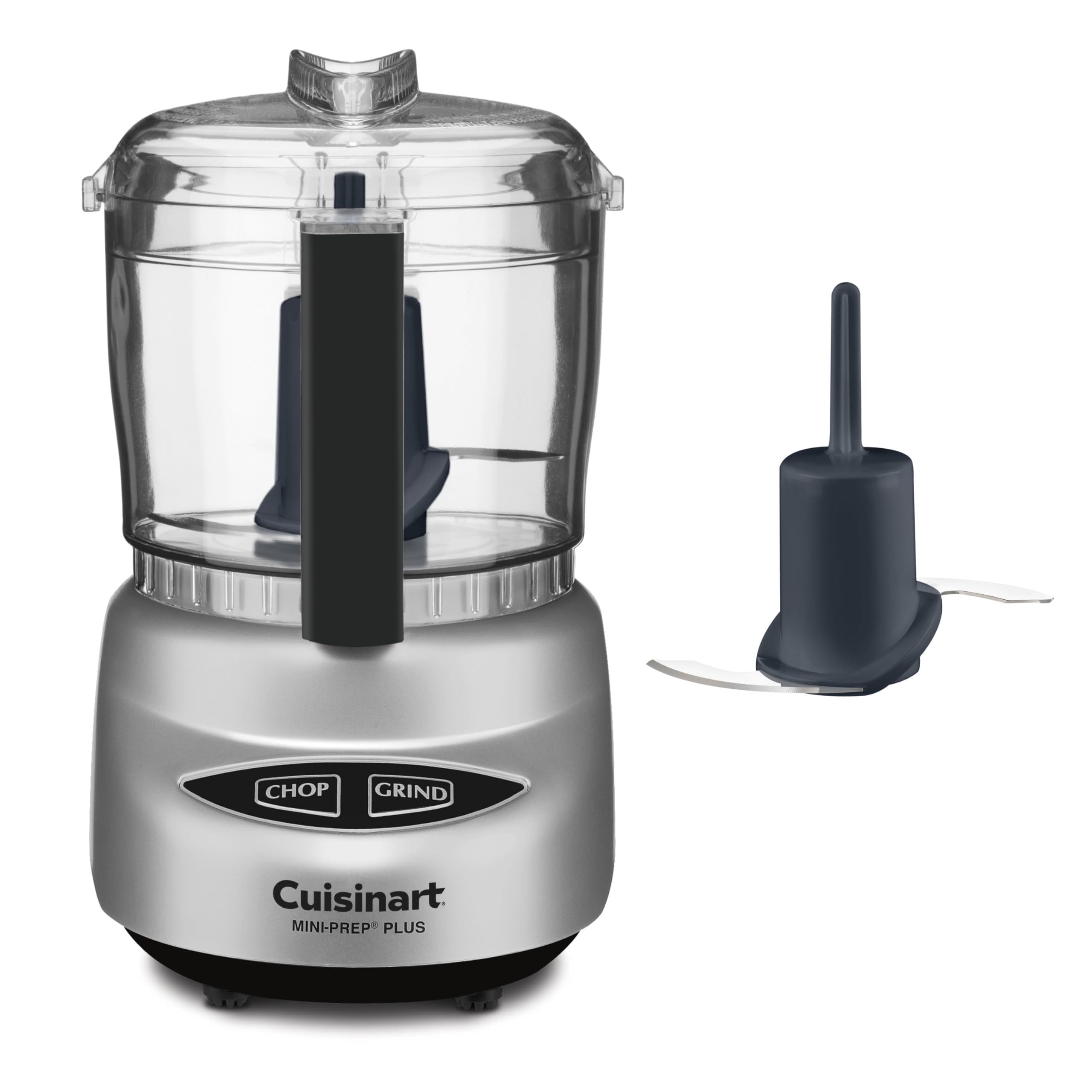
This is the compact classic for truly small jobs: garlic, herbs, a quick pesto for one meal, a small bowl of chopped onion, or grinding a handful of nuts for baking. If you live in a tiny kitchen, cook for one, or just want the smallest tool that still feels “real,” this size can be perfect.
The key is understanding what this category does best. Small bowls excel at small amounts—especially when the blade sits close enough to grab ingredients. Where people get disappointed is trying to process big, dense loads or expecting “full-size processor” performance. If you treat it as a small-batch specialist, it can be incredibly satisfying.
This model also benefits from a smart user habit: alternate short pulses instead of long continuous runs. That keeps texture cleaner, reduces heat, and helps ingredients circulate so you don’t end up with dust at the bottom and chunks on top.
Why it’s a good tiny pick
- Minimal storage footprint – Great for small kitchens and small households.
- Quick everyday tasks – Garlic, herbs, nuts, onion, small sauces.
- Simple chop/grind approach – Easy to use repeatedly without fuss.
- Fast cleanup – Small parts, quick rinse, quick reset.
Good to know
- It’s best for small batches; bigger jobs may require multiple rounds or a larger bowl.
- Dense foods can strain small motors—pulse and keep batches modest.
- If you regularly cook for 3–4 people, you may prefer a 4–5 cup bowl for fewer refills.
Ideal for: tiny kitchens, single cooks, and anyone who wants a compact “micro-prep” tool that’s always easy to grab, use, and clean.
How Mini Food Processors Actually Work (and Why Technique Beats Spec Sheets)
Mini processors look simple, but the way you use them makes a bigger difference than most people expect. If you’ve ever wondered why your onions turn into soup, why nuts become dust, or why hummus sometimes stalls the motor, this section will give you the “real kitchen” explanation—and the fixes that instantly improve results.
What makes a mini processor feel “effortless”
- Circulation – Ingredients need to tumble back into the blade zone. Multi-blade designs and good bowl geometry help.
- Pulse response – The best machines start/stop instantly, so you can control texture like a chef.
- Stability – A steady base changes everything: less wobble, more confidence, better stopping at the right moment.
- Pour-out experience – Blade lock systems and good bowl handles reduce messy, awkward transfers.
- Seals for liquids – If you make dressings, a leak-resistant lid/bowl design matters more than extra watts.
This is why two choppers with similar “power” can feel wildly different. One gives you clean salsa in ten seconds. The other gives you a paste + chunks + frustration. Design and control win.
The pulse patterns that fix 80% of complaints
- For onions/celery: 1-second pulses, 5–10 times, then stop. Open and check. It’s almost always “done” earlier than you think.
- For herbs: short pulses only. If you run continuously, you bruise herbs and they turn wet.
- For nuts: pulse, shake the bowl once, pulse again. Stop when it’s “almost” right—carryover chopping finishes the job.
- For hummus/dense dips: run in intervals. Pulse, scrape, rest briefly, repeat. Add liquid gradually for smoother circulation.
Why “4 cups” doesn’t always mean “4 cups of perfect results”
- Bowl height vs blade reach: tall bowls can trap food above the blade, forcing you to scrape.
- Liquid behavior: liquids can splatter upward; good lids keep them contained and circulating.
- Ingredient density: chickpeas, nuts, thick meats create more resistance than soft veggies.
- Heat buildup: small motors warm up faster; rest breaks prevent shutdown and improve texture.
The best mini processors don’t necessarily “do more” than others. They simply make the correct technique feel natural—so you get the result you want without thinking hard. That’s what you’re really paying for: fewer annoying moments.
Cleaning hacks that keep you using it (instead of avoiding it)
- Rinse immediately – dried-on garlic is the enemy. A 10-second rinse now saves a 10-minute scrub later.
- Use a quick “soap pulse” – a little warm water + a drop of soap, 1–2 pulses, then rinse (only if your model’s manual allows it).
- Blade-first discipline – wash the blade right away so you don’t bump it later while reaching into cloudy water.
- Dry the lid crevices – prevents odor buildup, especially on gasketed lids.
The goal is not “perfectly clean, instantly.” The goal is “so easy you keep using it.” Because the more you use it, the more you cook—and the more value you get from this entire purchase.
FAQ: Buying and Using a Compact Food Processor (Without Regrets)
Is a 4-cup food processor actually enough for real cooking?
Why does my mini chopper turn onions into purée?
Can these models handle hummus?
What’s the easiest style to clean?
Cordless vs corded: which should I choose?
Which model should I buy if I want one “forever” pick?
Final Thoughts: The Right Mini Processor Makes Cooking Feel Easy Again
The best compact processors don’t just “save time.” They remove the tiny frustrations that quietly kill your motivation to cook: the onion tears, the endless chopping, the messy dressing, the clutter of accessories, the cleanup dread.
Here’s the fastest way to translate this guide into a confident purchase:
- Want the best all-around everyday choice? Start with the Cuisinart Core Custom 4‑Cup Mini Chopper (MCH‑4). It’s the kind of “daily driver” that makes weeknight prep smoother and less annoying.
- Make sauces, dressings, mayo, and emulsions constantly? Choose the KitchenAid 5 Cup Food Chopper (KFC0516BM) or the KitchenAid 3.5 Cup Food Chopper (KFC3516IC) for drizzle-basin control that makes emulsions feel easy.
- Hate uneven chopping and constant scraping? The Braun EasyPrep 4‑Cup (CH3012BK) is built for better circulation and more consistent results.
- Need cordless freedom? Go with the Hamilton Beach Cordless 4‑Cup (72880) if outlets and counter space are your daily enemy.
- Want a small machine that can shred/slice sometimes? Pick the Hamilton Beach Stack & Snap 4‑Cup (70510) or step up to the more “mini-plus” feel of the Cuisinart 5‑Cup Chop & Shred (FP‑5).
- Want one base that covers both mini prep and batch prep? The Hamilton Beach 14‑Cup + 4‑Cup (70585) is the “one appliance replaces two” strategy.
- Want smart convenience for meal prep sessions? The TWOMEOW 4‑Cup with 2 Bowls keeps your prep moving without washing in the middle.
- Want feature density on a compact budget? The SHARDOR 4‑Cup 4‑Blade + Whisk packs a lot of capability into one small tool.
- Prefer a simple, classic Cuisinart mini chopper workflow? The Cuisinart Elemental 4‑Cup (ECH‑4SV), Mini‑Prep Plus 4‑Cup (DLC‑4CHB), and Mini‑Prep Plus 24‑Ounce (DLC‑2ABC) all deliver that familiar “chop and grind” experience—just choose the size that fits your kitchen and batch habits.
The best purchase is the one that makes you think, mid-week, “This is actually easy.” Pick the best 4 cup food processor for how you prep—tiny daily jobs, sauce-heavy cooking, occasional shredding, or cordless convenience— and you’ll get more than a gadget. You’ll get a kitchen rhythm that sticks.
