
If you’ve ever opened a cooler at lunchtime only to find sad, lukewarm drinks and floating sandwich bags, you know how frustrating a cheap ice chest can be. A well-built 20‑quart cooler feels like cheating: cold drinks all day, food that actually stays safe, and a box tough enough to live in your truck, boat, or campsite season after season.
Twenty‑quart (ish) coolers hit a sweet spot. They’re small enough to carry solo, big enough to hold a full day or weekend’s worth of food and drinks for one or two people, and compact enough to slide behind a car seat or on a kayak deck. Step up from a bargain big‑box cooler to a serious 20‑quart rig and you’ll notice the difference in ice retention, build quality, and little details like latches, drains, and non‑slip feet immediately.
This guide pulls together 10 carefully vetted 20‑quart‑class coolers on Amazon—from bombproof rotomolded tanks to lighter hard‑sided boxes and a dialed‑in soft cooler. I combed through manufacturer specs, independent ice‑retention tests, and hundreds of long‑term owner reviews to separate marketing claims from real‑world performance. The goal: help you confidently pick one cooler that fits how you actually live, instead of staring at a wall of look‑alike boxes and guessing.
In this article
How to Choose the Best 20 Qt Cooler for Your Adventures
Before you fall in love with any one cooler, zoom out and picture how this thing will actually live with you. Will it ride in the back of a truck 24/7? Get dragged down dock ramps and sandy paths? Or mostly handle picnic duty a few times a month? A little honest planning here makes sure the cooler you buy becomes the one you actually use.
1. Get honest about how you’ll really use it
Instead of thinking in strict quarts, think in days and people:
- Daily lunchbox or jobsite use: You want something compact, tough, and dust‑proof that fits a couple of meals and drinks—Engel’s Drybox style is perfect here.
- Day trips for 2–3 people: A 20–22 qt hard cooler is ideal for beach days, fishing, tailgates, and park cookouts.
- Weekend camping for 1–2 people: A 20‑quart can handle food and drinks if you pack smart, pre‑chill, and restock ice once.
- Boating or overlanding: Look for marine‑ready rotomolded coolers like Dometic or RTIC with great gaskets and tie‑down points.
- Ultra‑portable “everywhere” cooler: Consider lighter hard‑sided designs or a soft cooler if you’re walking long distances from the car.
If your cooler will be loaded and unloaded several times a week, durability and latch design matter more than squeezing out an extra half‑day of ice retention. If you’re chasing three‑day weekends off‑grid, insulation climbs the priority list fast.
2. Pick your build: rotomolded, lightweight hard, or soft
Most of the coolers in this guide fall into three broad camps:
- Rotomolded hard coolers: These are the heavy hitters—YETI, Pelican, RTIC Ultra‑Tough, Frosted Frog, Yukon, Dometic, Fatboy. Thick walls, dense foam, and freezer‑style gaskets give them excellent durability and multi‑day ice potential when packed correctly.
- Lightweight hard coolers: RTIC’s Ultra‑Light series and some “lunchbox” coolers use clever molding and slightly different materials to drop several pounds while still giving you good insulation for weekend trips. You trade a tiny bit of ice life for a cooler that’s far easier to carry.
- Soft coolers: High‑end soft bags like RTIC’s Soft Pack are fantastic when portability and storage matter. They’re lighter, squish into tight spaces, and still get you roughly 1–2 days of cold when packed well—but they won’t match the best hard coolers during a heat wave.
If you mostly drive to your destination and leave the cooler in the shade, a heavier rotomolded box is worth it. If you’re walking from street parking to a third‑floor Airbnb or dragging a cooler across sand, weight suddenly matters a lot more than theoretical maximum ice life.
3. Think about weight, handles & footprint
Small premium coolers are deceivingly heavy. A 20‑quart rotomolded box typically weighs 14–20 lb empty. Add ice, drinks, and food, and you’re easily carrying 30–40 lb by the handle. That’s fine for short walks, but miserable if you’re hauling it up and down a steep dock all day.
- Single metal swing handles (RTIC Ultra‑Tough, Frosted Frog, Yukon, Fatboy) are secure and easy to grab with one hand.
- Two small side handles (YETI Roadie 24, Dometic) are better for team carries or loading into boats and trucks.
- Strap‑style handles (RTIC Ultra‑Light) are comfy for short shoulder carries but can feel awkward if overloaded.
Also check where the cooler will live most of the time. Many 20–22 qt coolers are designed to fit behind a car or truck seat, which is perfect for road‑trip duty, but you’ll want to double‑check the height under tonneau covers and in RV compartments before you buy.
4. Ice retention reality check
Marketing headlines love to promise “up to 5–10 days of ice.” In practice, small coolers in the 20‑quart class rarely deliver that unless you’re in cool weather, using block ice, barely opening the lid, and starting with a pre‑chilled cooler and contents. Independent tests on 20–24 qt premium coolers usually show roughly 2–3 days of food‑safe temps and a bit longer for drinks in summer conditions, while larger 45–65 qt boxes can stretch into the 4–6 day range.
Pre‑chilling makes a surprisingly big difference. Cooling the empty cooler with a sacrificial bag of ice for 12–24 hours can extend ice life by many hours—sometimes a full day—because the insulation isn’t starting at room or garage temperature. Both YETI and Igloo specifically recommend this step, and real‑world tests back it up.
5. Features that actually help (and what to ignore)
When you compare coolers, focus on things you’ll appreciate every single trip:
- Freezer‑style gasket & strong latches: These are what really let the cooler seal tightly and keep warm air out.
- Good drain design: Oversized, leak‑proof drains that don’t protrude too far are easier to use and less likely to break.
- Non‑skid feet & tie‑down slots: Essential if the cooler will live in a truck bed, boat, or on a UTV.
- Integrated bottle openers & cup holders: Not essential, but undeniably nice on tailgate days.
- Dry baskets or trays: Great for sandwiches, veggies, or electronics you don’t want sitting in icy water.
What you can usually skip: gimmicky built‑in Bluetooth speakers, complex dividers you’ll never actually use, or “bear‑proof” certifications for a cooler that’s only ever going to sit at kids’ soccer games. Solid construction, a reliable seal, and smart ergonomics matter much more in day‑to‑day use.
Quick Comparison: 10 Best 20 Qt Cooler Picks
Here’s a bird’s‑eye view of the 10 coolers we’ll be reviewing. Use this table to spot which models match your budget, ice‑life expectations, and how you’ll actually use your cooler, then jump to the full review for the details.
On smaller screens, swipe or scroll sideways to see the full table.
| Model | Cooler type | Capacity | Best match | Amazon |
|---|---|---|---|---|
| RTIC Ultra‑Tough 20 QT Hard Cooler | Roto‑molded hard | 20 qt / up to 30 cans | Best overall balance of price, build & ice life | Amazon |
| YETI Roadie 24 Hard Cooler | Premium roto‑molded | 24 qt / 18 cans | Top‑tier performance & durability for road trips | Amazon |
| Pelican 20 Quart Elite Cooler | Roto‑molded hard | True 20 qt / 15 cans | USA‑made tank with lifetime “you break it, we replace it” warranty | Amazon |
| RTIC Ultra‑Light 22 Quart Hard Cooler | Lightweight hard | 22 qt / ~30 cans | Solo & couple trips where weight really matters | Amazon |
| Dometic Patrol 20 Quart Cooler | Roto‑molded hard | ~19 L / 15 cans | Boat, beach & overlanding trips in serious heat | Amazon |
| Frosted Frog 20 Quart Camo Cooler | Roto‑molded hard | 20 qt | Colorful, rugged cooler for hunting, sports & tailgates | Amazon |
| Engel 19qt Drybox / Cooler | Drybox / lunchbox | 19 qt / ~30 cans | Jobsite, fishing & dusty environments where gear must stay dry | Amazon |
| RTIC Ultra‑Tough Soft Cooler 20‑Can | Soft cooler | 20 cans + ice | Portable, leak‑proof choice for car, beach & everyday use | Amazon |
| Yukon Outfitters YKO 20qt Hard Cooler | Roto‑molded hard | 20 qt | Feature‑rich budget alternative with basket & Cryo‑Foam | Amazon |
| Fatboy 20 Quart Roto Molded Cooler | Roto‑molded hard | 20 qt / 24 cans | Feature‑packed tank with clever drain & fish ruler | Amazon |
In‑Depth Reviews: 10 Standout 20‑Quart Coolers
Now let’s dig into each model. Use these reviews to match specific strengths—like weight, ice retention, handle style, or jobsite toughness—to what actually matters most for you.
1. RTIC Ultra‑Tough 20 QT Hard Cooler – Best 20 Qt Cooler Overall
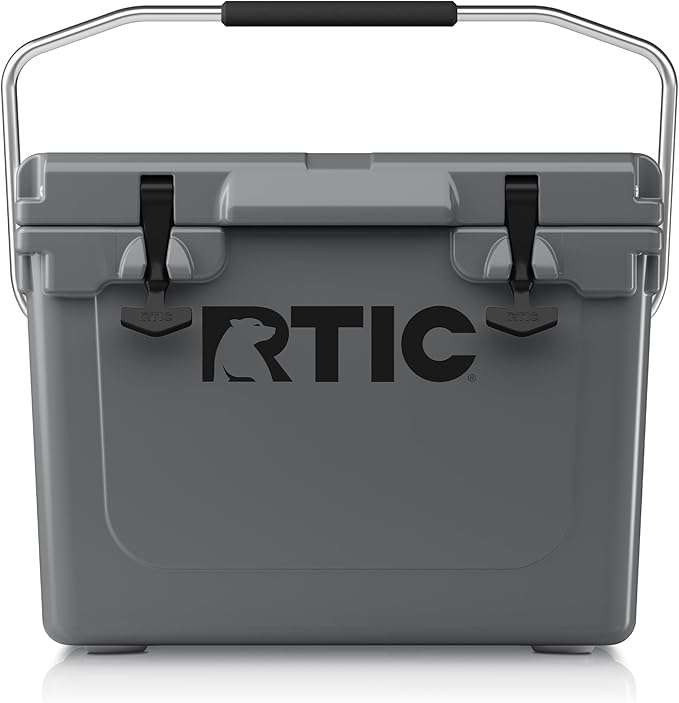
If you want one cooler that works almost everywhere—from truck bed to kayak to deer camp—the RTIC Ultra‑Tough 20QT is where I’d start. It’s a classic rotomolded chest with thick insulation, a stout stainless swing handle that locks upright, non‑skid feet, and full‑width tie‑down slots so it can live in a boat or on an ATV without roaming around. RTIC markets it for long‑lasting ice, and independent reviewers plus owners generally back that up: expect roughly 2–3 days of good ice in hot weather when packed and pre‑chilled properly, which is excellent for a cooler this size.
What makes it such a strong “best for most people” choice is how practical it feels. The 20‑quart capacity fits around 24–30 cans plus ice, or a day or two of food for two people. The swing handle is easier to carry one‑handed than side straps, especially when you’re sliding it out from behind a truck seat. A recessed front drain makes it painless to dump meltwater without picking the whole cooler up, and rubber T‑latches pull the lid down onto a freezer‑style gasket for a solid seal.
Why you’ll like it
- Serious performance for the money – You’re getting “premium brand” insulation and build at a noticeably lower price.
- Great everyday size – Big enough for weekend trips for 1–2 people, small enough to stay portable and stashable.
- Hardware feels overbuilt – Thick handle, solid latches, and non‑skid feet all feel ready for rough use.
- Multi‑use friendly – Works as a camp seat or small workbench thanks to the flat, grippy lid and strong shell.
Good to know
- The handle can slip out of its detents if you yank it sideways while sliding the cooler—easy to fix, but a quirk worth knowing.
- Like all rotomolded 20‑quart coolers, interior volume is smaller than the outside suggests due to thick insulation.
- It’s heavy compared to a basic plastic cooler; not a dealbreaker, but you’ll feel it at the end of a long walk from the truck.
Ideal for: anyone who wants the single best 20 qt cooler for overall value—strong ice retention, rugged build, and a fair price for what you get.
2. YETI Roadie 24 – Premium Road‑Trip & Overbuilt Everyday Cooler

The Roadie 24 is YETI’s take on a “personal” hard cooler, and it’s an absolute brick—in a good way. You’re paying for the same thick rotomolded shell and pressure‑injected foam used in their larger Tundra coolers, just in a 24‑quart package that’s tall enough to hold wine bottles upright and slim enough to slide behind a car seat. Third‑party testing routinely finds its ice retention at or above YETI’s own claims, with users reporting 3+ days of solid ice during normal use when pre‑chilled.
The updated version swapped the old metal handle for a more comfortable DoubleDuty shoulder strap and added the BestDam drain plug, so you can empty meltwater without wrestling the whole cooler. The latches are easy to open one‑handed yet clamp down firmly on a freezer‑gasketed lid, and the Roadie is sized so you can actually move it when it’s full—unlike some massive 65‑quart beasts. If you want a cooler that just quietly works for years, holds ice like crazy, and shrugs off abuse, this is it.
Why it stands out
- Class‑leading insulation – Excellent real‑world ice retention for a small cooler, especially when pre‑chilled.
- Smart footprint – Fits behind car seats, in boats, and on paddlecraft more easily than boxier designs.
- Refined hardware – New strap and drain plug make daily use noticeably nicer than older Roadies.
- Huge accessory ecosystem – Easy to find baskets, dividers, and mounts built specifically for YETI sizing.
Good to know
- It’s significantly more expensive than most competitors in this size class.
- Some owners feel the ice life still doesn’t match the hype in very hot, high‑use scenarios—expect 2–4 days, not a week.
- At 24 qt it’s technically larger than a “true” 20 qt; if space is tight, double‑check dimensions before ordering.
Ideal for: people who want the “buy once, cry once” premium option for road trips, tailgates, small boats, and everyday duty—and don’t mind paying for it.
3. Pelican 20 Quart Elite Cooler – USA‑Made Tank with Lifetime Coverage

Pelican has been building rugged cases for the military, divers, and photographers for decades, and the 20QT Elite carries that DNA into cooler form. It packs thick polyurethane insulation, a full‑circumference freezer‑grade gasket, beefy press‑and‑pull latches, four self‑draining cup holders on the lid, and a built‑in stainless bottle opener. The company’s promise is simple: “You break it, we replace it. Forever.” That lifetime guarantee is legit and a huge part of the appeal.
What about ice? Pelican advertises multi‑day retention, and owner reports typically land around the 2–3 day mark for food‑safe temps in warm conditions, longer if you’re mostly chilling drinks. Some lab tests have found the 20QT Elite slightly behind top competitors on pure insulation, which isn’t surprising—small coolers are at a natural disadvantage on surface‑area‑to‑volume ratio. Real‑world users, including folks who’ve left them in 80–90°F garages, have reported 3+ days of usable ice when packed full and pre‑chilled.
Why it’s compelling
- Lifetime guarantee – Very few coolers come with “forever” coverage; Pelican does.
- Feature‑rich lid – Integrated cup holders and a bottle opener are genuinely useful at camp or the tailgate.
- True 20‑quart interior – The internal volume is slightly more generous than some competitors with similar outer size.
- Made in USA – A nice plus if you prefer to support US manufacturing.
Good to know
- It’s chunky and a bit heavier than some 20‑quart competitors.
- Insulation performance is very good, but not the absolute best in its class in lab testing.
- The molded handle is fine for short carries, but tall users sometimes prefer a swing‑handle design like RTIC’s.
Ideal for: buyers who want a tough, feature‑packed cooler with a lifetime warranty and solid ice retention, and who like the idea of buying an American‑made product.
4. RTIC Ultra‑Light 22 Quart – Easier to Carry, Still Stays Cold
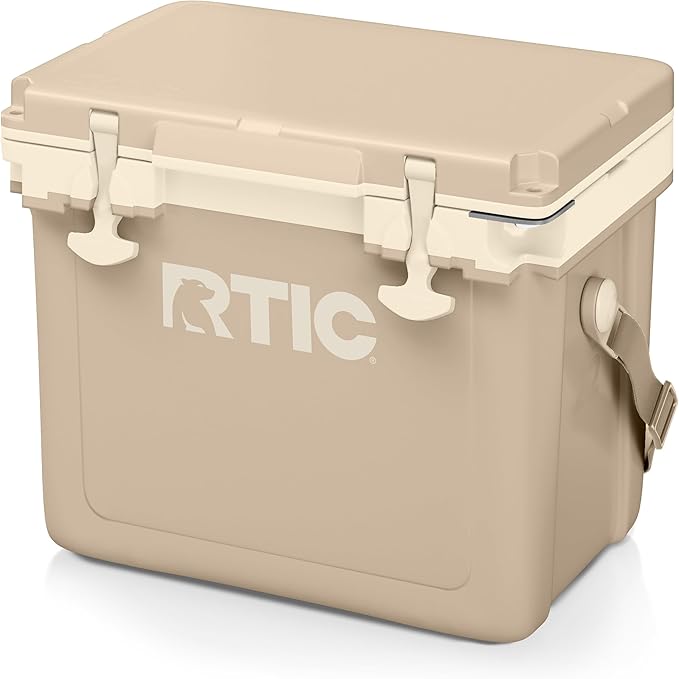
Rotomolded coolers are fantastic at holding cold—but they’re heavy. RTIC’s Ultra‑Light series aims to fix that by blending thick closed‑cell foam (up to 2.4″) with a lighter shell, dropping weight by about 30% compared to standard rotomolded coolers of similar size, while still promising up to six days of cooling under ideal conditions. In realistic camping and tailgating use, testers and owners report insulation that’s “average to good”: think 2–3 days of solid performance, which is plenty for most weekenders.
The 22‑quart model is sized just right for 1–2 people. It fits about 30 cans or a day and a half of food if you pack smart, and the strap‑style handle can be used either short (carry by hand) or long (over the shoulder). Silicone T‑latches give a secure seal, the recessed rapid‑drain plug makes it easy to dump meltwater, and a built‑in bottle opener plus cargo net add a nice touch of convenience for beach days or park picnics.
Why it’s great
- Noticeably lighter – Easier to lift in and out of cars or up steps than fully rotomolded competitors.
- Smart everyday size – Big enough for a small family’s day trip, but still compact in a back seat.
- Thoughtful drainage & feet – The recessed drain and non‑skid feet make it practical for indoor and deck use.
- Fun color options – Things like the lavender color are surprisingly popular with campers who want something less “military.”
Good to know
- The strap is handy but not everyone loves using it as the only handle when the cooler is fully loaded.
- Insulation performance is solid but not class‑leading; if maximum ice life is your #1 priority, RTIC’s Ultra‑Tough or YETI may be better.
- Because it’s a bit taller, it can feel slightly tippy compared with very low, wide coolers if you stand on it.
Ideal for: people who want hard‑cooler durability without dragging a boat anchor around—perfect for car camping, beach days, and quick weekends away.
5. Dometic Patrol 20 Quart Cooler – Built for Boats, Trucks & Heat

Dometic is better known for 12V fridges in vans and campers, but their Patrol line of passive coolers is no joke. The Patrol 20 uses thick PU insulation, a deep‑freeze lid seal with no gaps, and a one‑piece rotomolded shell. In real‑world sea trials, testers have found that three medium ice packs kept contents just above freezing after a full day in direct summer sun with frequent openings—strong performance for a small cooler. Owners regularly report “ice for days” when using traditional ice and packing it full.
The design feels more “expedition gear” than “tailgate toy.” Rugged molded‑in handles and corner protectors, a large leak‑proof drain, and rubber pull‑down latches make it ideal for boats, rooftops, and truck beds. The downside is weight: for the ice life and toughness you get, the Patrol 20 is on the hefty side for its capacity. That’s fine if it mostly moves between dock and deck, but something to keep in mind if you’re carrying it solo over long distances.
Why it shines
- Excellent sealing – The deep‑freeze gasket and sturdy latches do a great job of keeping warm air out.
- Serious insulation – Designed to cope with long days in sun‑baked cockpits and truck beds.
- Easy cleaning – The big drain and smooth interior make rinsing out fish slime or sand straightforward.
- Looks and feels premium – The aesthetic matches up well with high‑end overland and marine builds.
Good to know
- It’s heavy for its interior volume; consider a wheeled cart if you’re carrying more than a few minutes on foot.
- The 20 is fairly compact inside—great for drinks and a bit of food, but not a huge multi‑day family cooler.
- Pricing is premium, overlapping in cost with some slightly larger coolers from other brands.
Ideal for: boaters, paddlers, and overlanders who want a compact but highly insulated cooler that’s happy living in sun and salt.
6. Frosted Frog 20 Quart Camo Cooler – Rugged, Fun, and Ready to Tailgate

Frosted Frog has quietly built a cult following by offering tough, colorful rotomolded coolers at friendlier prices than the big two. Their 20 qt model uses extra‑thick walls, high‑density multi‑compound PU foam, a freezer‑style lid gasket, and chunky rubber latches. On paper and in most owner reports, you’re looking at multi‑day ice— often 2–3 days in real‑world Southern heat when you pack it full and keep it shaded.
The design ticks a lot of boxes: heavy‑duty steel handle with comfort grip, non‑slip rubber feet, molded tie‑down slots with lock plates, two built‑in bottle openers, and a recessed drain plug with a pressure‑release valve so it doesn’t “glug” slowly. Many owners praise how cold it stays over long weekends and love the wild color options that stand out in a sea of beige coolers. A few note that the gasket isn’t quite as beefy as YETI’s, so if you’re chasing maximum possible ice life, adjust your expectations a bit.
Why it’s fun to own
- Great feature set – Lock plates, bottle openers, non‑slip feet, and a pressure‑release drain at a mid‑tier price.
- Solid ice retention – Plenty for long weekends, games, and camping trips when packed correctly.
- Colors for days – Swirled camo and bright shades make it easy to spot and a little more “you.”
- Backed by a 5‑year warranty – Nice peace of mind from a smaller brand.
Good to know
- As with most 20 qt rotomolds, interior space is tighter than the outer shell suggests.
- Some reviewers feel the seal is good but not quite top‑tier compared with the most expensive brands.
- It’s heavier than lightweight options; not the best choice if you’re hiking far from the car.
Ideal for: hunters, anglers, sports parents, and tailgaters who want a tough cooler with personality and strong, if not absolute top‑of‑class, ice performance.
7. Engel 19qt Drybox / Cooler – The Industrial‑Strength Lunchbox
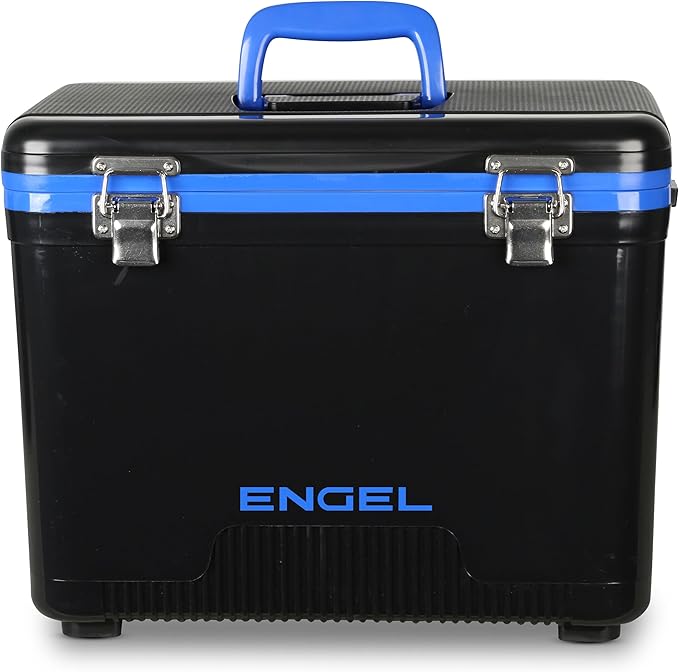
If you hang around construction sites, mines, or commercial docks, you’ll see a lot of Engel dryboxes. The 19qt model is essentially an industrial‑strength lunchbox that also happens to be a capable cooler. Instead of full rotomolded construction, Engel uses a hard plastic outer shell with molded polystyrene foam insulation and a recessed EVA gasket, giving it an air‑tight, leak‑proof seal that keeps dust, water, and insects out. It won’t match a giant rotomold on ice life, but for an 8–12 hour shift in brutal heat, it’s excellent—and much lighter than a true roto tank.
The details are clever: stainless‑steel latches, a removable internal tray to keep sandwiches and softer items away from melting ice, and a heavy‑duty shoulder strap for hands‑free carry. Its air‑tight nature also makes it popular as a drybox for cameras, electronics, and emergency gear on boats. Long‑term owners report years of hard daily use, with common “upgrades” being swapping to aftermarket metal hinges once the original plastic ones eventually wear out.
Why it’s beloved
- Outstanding for day use – Keeps food and drinks cold for a full hot workday with ice packs or a bit of cube ice.
- Truly dust‑ and splash‑proof – Great for mines, factories, and boats where grit and spray are everywhere.
- Versatile – Doubles as a drybox for electronics and safety gear.
- Lighter than full rotomolds – Easier to toss in and out of vehicles hundreds of times a year.
Good to know
- Not designed for multi‑day off‑grid trips where you’re chasing 3–5 days of ice.
- Plastic hinges are a known weak spot; expect to replace them with metal eventually if you use it hard.
- The boxy shape is fantastic for storage but not as comfy against your hip as a soft cooler when carried long distances.
Ideal for: tradespeople, boaters, and anyone who needs a rugged lunchbox‑style cooler that keeps things cold and dry in genuinely harsh environments.
8. RTIC Ultra‑Tough Soft Cooler 20‑Can – Portable, Leak‑Proof & Surprisingly Capable

Sometimes a hard cooler is overkill. If you’re mostly doing quick beach trips, park picnics, or grocery runs, a soft cooler can be a lot more pleasant to live with. RTIC’s 20‑can Ultra‑Tough soft cooler is a nice sweet spot: big enough for a day’s worth of drinks and snacks, but light enough that a full load doesn’t feel like a gym workout. The heavy‑duty nylon exterior, closed‑cell foam, and RF‑welded liner make it leak‑proof, and real‑world testers have found its advertised 48‑hour cooling window realistic when you pack it correctly and keep it out of direct sun.
The trade‑off is the zipper. Like many waterproof soft coolers, the RTIC uses a stiff, toothy zipper that takes a little effort to open and close, especially when new. You do get a small bottle of lubricant, and the stiffness is the price of keeping water in (or out). Shoulder and top handles make it easy to carry, and when you’re done with your trip, the whole bag squishes down to store in a closet—something no rotomold can do.
Why it’s worth a look
- Way easier to carry – Lighter and more comfortable to tote than any hard cooler in this guide.
- Genuinely leak‑proof – Great for tossing in the back of a car without worrying about puddles.
- Solid ice life for a soft cooler – Around two days of useful cooling when packed well.
- Good value vs premium soft coolers – Similar performance to more expensive bags from bigger names.
Good to know
- The zipper is stiff and takes a bit of effort; expect a short break‑in period.
- You won’t get the same multi‑day performance as a heavy rotomolded chest in extreme heat.
- The front pocket is fairly small—good for keys and a phone, not a ton of extra gear.
Ideal for: day trips, beach days, road‑trip snack duty, and anyone who wants cold drinks without hauling a hard cooler around everywhere.
9. Yukon Outfitters YKO 20qt Hard Cooler – Feature‑Rich Budget Alternative
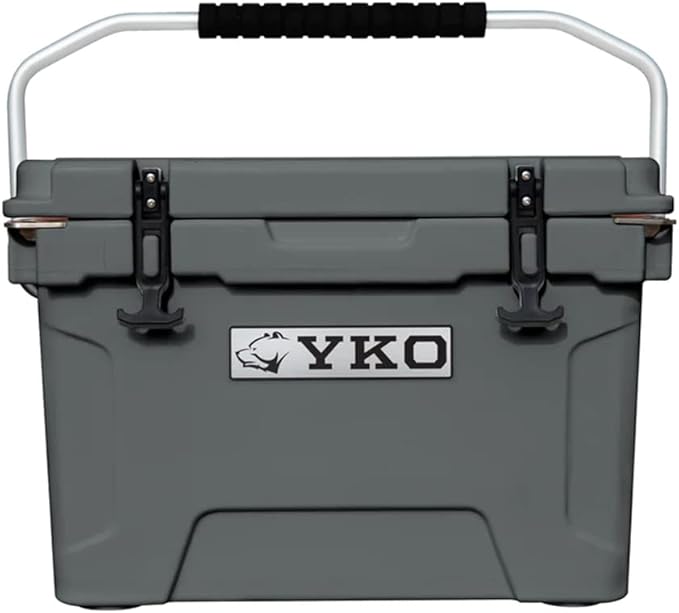
Yukon’s Wind River / Legacy 20qt coolers target buyers who want a full‑featured rotomolded chest without paying YETI money. On paper, they look strong: seamless rotomolded shell, “Cryo‑Foam” insulation around all sides, integrated bottle openers and tie‑down points, a dry‑goods basket, and an aluminum carry handle. Yukon claims “up to seven days of ice retention” across the series; in reality, most users see performance more in line with other mid‑tier rotomolds—good for weekends, not week‑long remote trips.
The YKO 20 slots nicely into truck beds and small boats, and safety‑orange and cactus‑green colors are easy to spot. Feedback from owners is generally positive on build quality and toughness, though some gear nerds note that wall thickness and gasket heft don’t feel quite as overbuilt as the top brands. It occupies an interesting middle ground: better built and more insulated than bargain store coolers, but not necessarily a massive ice‑life leap over similar‑priced competitors like RTIC.
Where it delivers
- Good feature set – Basket, integrated bottle openers, and tie‑downs usually cost extra elsewhere.
- Respectable ice performance – Easily covers normal weekend trips when used correctly.
- Nice color options – Easy to match to a boat, truck, or camp setup.
- Plenty of accessories – Replacement latches, baskets, and handles are readily available.
Good to know
- “Up to seven days of ice” is optimistic for a 20 qt cooler unless conditions are almost perfect.
- Some side‑by‑side comparisons suggest slightly thinner insulation than the very top‑tier brands.
- It’s relatively heavy for a small cooler, so not the best pick if you’re weight‑sensitive.
Ideal for: buyers who want a capable, full‑featured rotomold with good weekend ice life and aren’t chasing absolute top‑tier performance specs.
10. Fatboy 20 Quart Roto Molded Cooler – Clever Drain, Great Hardware, Mixed Ice Reviews

Fatboy’s 20qt cooler is a bit of a sleeper brand that gear nerds have been quietly experimenting with. On paper, it’s impressive: seamless rotomolded construction, approximately 2″ of polyurethane “Cryo‑Foam” insulation in the walls and lid, dual stainless‑steel bottle‑opener/locks in the front corners, dual cam latches, non‑slip feet, molded‑in tie‑downs, a textured lid with a 14″ ruler, and a very clever two‑stage drain plug with a vacuum‑release button so water rushes out instead of glugging.
Where things get complicated is ice retention. Some owners and independent testers report genuinely excellent performance—up to five days of useful ice in hot conditions when pre‑chilled and packed full—while others struggle to get more than a day or two, even when following similar prep steps. That kind of spread usually points to differences in usage (shade, lid opening frequency, starting temps) and perhaps some variability in production over the years. The 5‑year warranty is reassuring, but if you absolutely must have the most consistent high‑end ice performance, RTIC or YETI are safer bets.
Why it’s interesting
- Thoughtful feature set – The dual‑stage drain with vacuum relief is one of the nicest on any cooler in this size.
- Good build and hardware – Solid cam latches, metal‑reinforced corners, and non‑slip feet feel ready for years of use.
- Plenty of capacity – Holds about 24 cans or 20 lb of ice, which is generous for a 20‑quart class.
- Multiple colors – Easy to match to your boat or truck aesthetic.
Good to know
- Owner experiences with ice life are very mixed—some rave, some are disappointed.
- As with any premium cooler, you’ll want to pre‑chill and pack it full to see the best results.
- A few buyers have reported frustrating warranty or return interactions when they weren’t happy.
Ideal for: tinkerers and value‑seekers who love clever hardware and are willing to fine‑tune their packing and pre‑chill routine to squeeze out performance.
How 20‑Quart Coolers Actually Keep Ice (and Why Technique Matters)
On spec sheets, many of these coolers look similar: thick foam, sturdy shells, freezer‑style gaskets, and bold claims about multi‑day ice retention. In practice, how cold your food stays depends on a mix of design and what you do with the cooler.
What the design really controls
- Insulation thickness & type – More foam (and higher‑quality foam) means slower heat transfer. That’s why premium rotomolds tend to outperform cheap “picnic” coolers of the same size.
- Surface‑area‑to‑volume ratio – Small coolers lose heat faster than big ones because they have more surface per quart of storage. A 20 qt will never match a 65 qt on ice life, all else equal.
- Gasket & latch quality – Freezer‑style gaskets plus firm latches reduce air leaks, which is crucial when you’re opening and closing the lid all day.
- Color & exterior finish – Dark colors soak up more solar heat; lighter shades and textured lids reflect more sunlight.
Design sets the ceiling for what a cooler could do—but real‑world performance is almost always lower than that ceiling because of how we actually use them: half‑full, opened constantly, and stored in hot cars.
How to get dramatically better results
- Pre‑chill the cooler – Load it with a sacrificial bag of ice for 12–24 hours before your trip, then dump and repack. Tests on Igloo and YETI coolers show this alone can extend ice life by 8–20+ hours.
- Chill your contents first – Putting room‑temperature drinks in a cooler burns through a shocking amount of ice; pre‑refrigerated food and cans make a big difference.
- Use more ice than you think – A 2:1 ice‑to‑contents ratio by volume is a good rule of thumb for hot‑weather trips.
- Limit air space – Dead air warms up. If the cooler isn’t full, top it with extra ice, a towel, or foam board to reduce open volume.
- Keep it shaded & closed – Every minute in direct sun matters. A small 20 qt cooler sitting in 90°F sun will always melt ice faster than one kept under a table or in the shade of a tree.
Once you dial in your packing routine, you’ll find that nearly all of these coolers can deliver their best‑case performance: keeping food safe and drinks frosty for long weekends instead of just limping through a single hot afternoon.
FAQ: 20‑Quart Coolers, Answered
How long will a 20‑quart cooler keep ice?
Is a 20‑quart cooler big enough for camping?
Hard vs soft: which 20‑quart cooler style should I pick?
Are premium brands like YETI and Pelican really worth the price?
What’s the single best way to make my cooler stay cold longer?
Final Thoughts: Picking the Best 20 Qt Cooler for You
A good cooler does more than keep drinks cold—it changes how relaxed your trips feel. Suddenly you’re not rationing ice, worrying about food safety, or digging through a slushy mess to find the last unbroken sandwich. You toss your gear in, shut the lid, and know it’ll just quietly do its job.
Here’s a quick way to turn everything in this guide into a decision you can feel confident about:
- Want the easiest all‑round hard‑cooler choice? Start with the RTIC Ultra‑Tough 20 QT. It hits the best balance of price, build quality, and real‑world performance for most people.
- Want premium gear that feels overbuilt in the best way? Look at the YETI Roadie 24 for top‑tier insulation and road‑trip friendliness, or the Pelican 20QT Elite if you like the idea of a USA‑made tank with a lifetime guarantee.
- Care a lot about weight and carrying comfort? The RTIC Ultra‑Light 22QT gives you hard‑cooler durability without so much heft, while the RTIC 20‑Can Soft Cooler is fantastic for casual trips and grocery runs.
- Spending lots of time on the water or in brutal sun? The Dometic Patrol 20 and Frosted Frog 20 qt are excellent choices for boats, hot bleachers, and dusty campsites.
- Need a bombproof lunchbox or drybox? The Engel 19qt Drybox is hard to beat for jobsite and everyday use.
Any of the 10 models above can easily become your best 20 qt cooler once you match their strengths to your space, your vehicle, and the kinds of trips you actually take. Measure where it needs to fit, be honest about how often you’ll carry it vs. slide it, decide whether hard or soft suits you best—and then enjoy the simple luxury of ice that’s still solid when everyone else’s cooler has turned into a lukewarm soup.
