
Specs are compiled from manufacturer listings and verified buyer reviews and can change over time — please confirm the key details on the product page before buying.
Climbing 20 feet on a ladder that sways or flexes is the fastest way to ruin a weekend project. The ladders here all reach that height safely, but they differ enormously in weight, stability, and how easily one person can raise them alone. This guide breaks down the real choices so you can pick the one that fits your body, your storage space, and the work you actually do.
I’m Mohammad Maruf — the founder and writer behind KitchPrep. This guide is built by comparing the manufacturers’ published specifications and the patterns across verified customer reviews, so you get each pick’s real strengths and trade-offs instead of marketing spin.
Whether you are painting gutters, cleaning a dryer vent, or reaching a cathedral ceiling, the right 20-foot extension ladder makes the job safer and far less exhausting.
Our Picks at a Glance


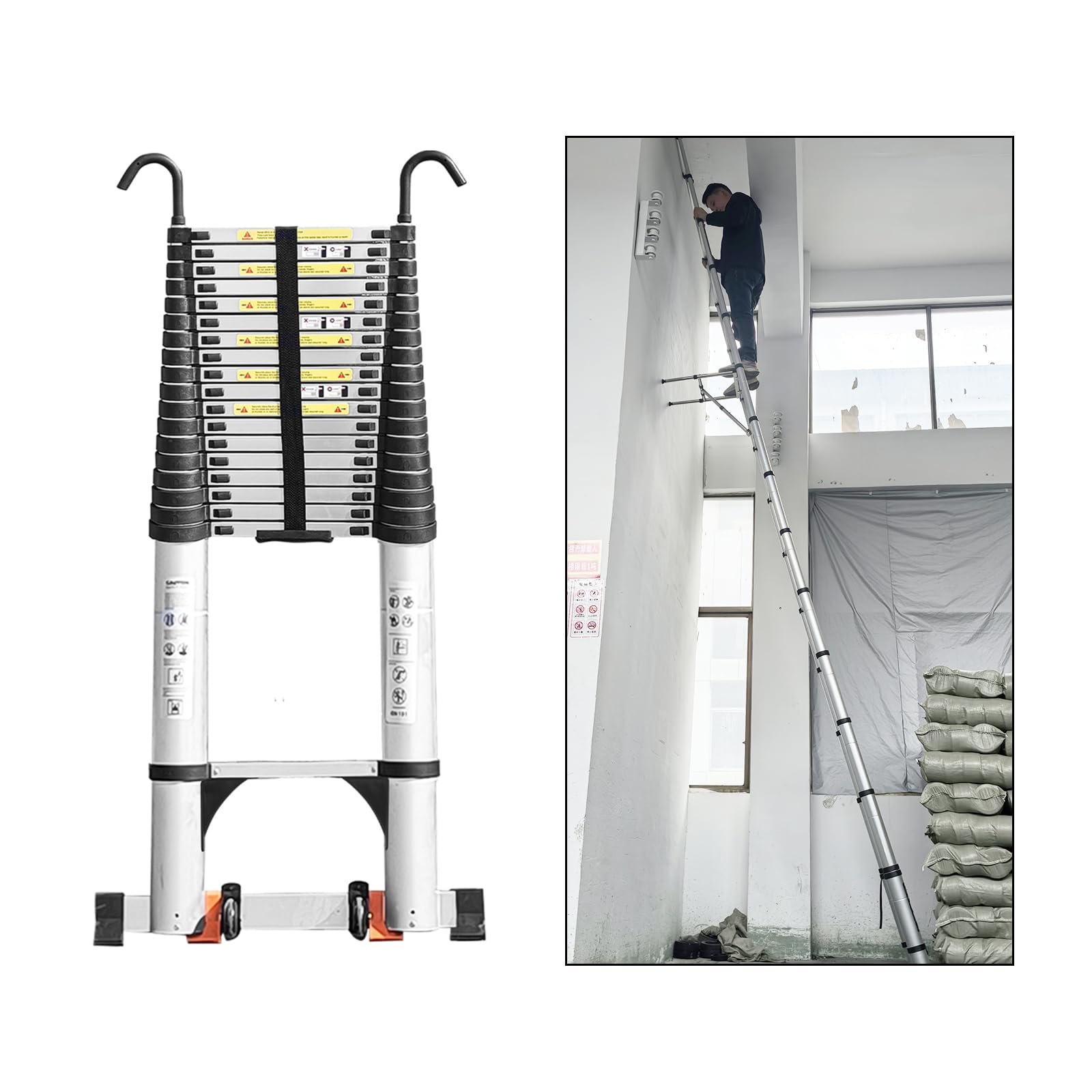
How To Choose The Best 20-Foot Extension Ladder
Your first decision is structural: a classic two-section extension ladder with a rope and pulley, or a telescoping ladder that collapses into a compact bundle. Both reach 20 feet, but they are built for different lifestyles and different kinds of work.
Classic Extension vs Telescoping
You get two main types of extension ladders. Classic ones have two rigid sections that slide together, usually with a rope-and-pulley system to raise the top half — they feel stiffer and more predictable when you climb for long stretches. Telescoping ladders collapse into a short package that fits in a car trunk or closet, ideal for vanlife, RVs, and homes with zero garage space, but their overlapping sections can flex more in the middle at full extension.
Weight Capacity and Duty Rating
The duty rating sets the maximum safe load for the ladder. A Type I ladder holds 250 pounds, Type IA holds 300 pounds, and Type IAA holds 375 pounds. If you carry tools up with you, or you are a larger person, the higher rating gives you more margin. Exceeding the rating can cause structural failure and a dangerous fall.
Material: Aluminum or Fiberglass
Aluminum is lighter and cheaper, but it conducts electricity — a dealbreaker near live wires. Fiberglass is non-conductive, making it the choice for electricians and anyone working near power lines, but it weighs more and costs more. If you only do painting and gutter cleaning, aluminum is fine. If you touch anything electrical, go fiberglass.
Quick Comparison
| Model | Best For | Max Height | Weight | Load Capacity | Amazon |
|---|---|---|---|---|---|
| Little Giant HyperLite 20′★ Best Overall | Electricians & pros | 20 ft (240 in) | 36 lbs | 300 lbs | Amazon |
| Bowoshen Telescoping 20ftCompact Pick | Compact storage | 20.3 ft | 36 lbs (16.3 kg) | 330 lbs | Amazon |
| JADDUO Telescoping 21.3 ftMost Portable | Homeowners & vanlife | 21.3 ft | 20 lbs | 330 lbs | Amazon |
| ARCHOM Telescoping 20 FT | Attic access | 20 ft | 36.4 lbs | 330 lbs | Amazon |
| UC UP CLIMBER 20.5FT | RVers | 20.5 ft | 39.4 lbs (17.89 kg) | 330 lbs | Amazon |
| SINMEIRUN 20.3 FT Pro | Roof access | 20.3 ft | 32 lbs | 330 lbs | Amazon |
| LANBITOU Multi-Position | Versatility | 17 ft | 35.1 lbs | 330 lbs | Amazon |
| Wolec 20 FT 5-in-1 | Home projects | 20 ft | 35.9 lbs | 330 lbs | Amazon |
| VEVOR A-Frame Telescoping | Budget-conscious | 19.65 ft (236 in) | 28.2 lbs | 330 lbs | Amazon |
| Louisville AE3220 Aluminum | Lightweight classic | 25 ft (300 in) | 32 lbs | 250 lbs | Amazon |
| Louisville L-3022-28PT Fiberglass | Electrical work | 28 ft (336 in) | — | 300 lbs | Amazon |
In‑Depth Reviews
1. Little Giant HyperLite 20′ Extension Ladder
Our pick — over 4.5★ from 100+ verified ratings; the strongest balance of quality and price.
The professional’s fiberglass ladder that fights fatigue with flat, foot-friendly rungs.
If you work near electricity, the material choice is non-negotiable: fiberglass doesn’t conduct, and this Little Giant is built around that safety need. The trade-off is weight — at 36 pounds it is hefty — but it weighs about 20% less than others in its class, which is why buyers call it light for what it is. One owner compared it directly to a Werner fiberglass unit and found it over 10 pounds lighter with the same stability.
The engineering details justify the higher price. The Double-Pulley System cuts the pull force in half when you raise the fly section and keeps the rope out of the climb zone, so you don’t trip on it going up. A built-in bubble level lets you check your angle before you commit to the climb — the maker notes that one inch off at the base creates a nine-inch lean at the top of a 19-foot ladder. The wide, flat rungs are shaped for the human foot rather than round tubing, which reduces pressure points on long jobs.
Riveted rungs mean you can replace a damaged one instead of retiring the whole ladder, which extends its working life. The one caveat to know: the adjustability mechanism gets mixed reactions — most call it ingenious, but a few report the lowering mechanism has hiccups. The crowd favorite here is a 4.6-star rating across a few hundred owners who overwhelmingly praise the weight (21 mentions) and build quality (15 mentions).
What wins people over
- Non-conductive fiberglass for electrical safety
- Double-pulley system halves raising effort
- Built-in bubble level for safer setup
What to know before buying
- Adjustability mechanism has occasional reported issues
- Heavier than aluminum models at 36 lbs
The pro pick: This is the one for electricians, contractors, and anyone who wants a safe, repairable fiberglass ladder built for daily use.
Think twice if: You mainly do light household tasks and want something dramatically lighter to haul — aluminum will serve you better.
2. Bowoshen Aluminum Telescoping Ladder 20ft
A telescoping ladder that shrinks to 3.58 feet for sliding under beds or into trunks.
The whole appeal of this Bowoshen is the collapse: it compacts to just 109 cm (3.58 feet), which means it disappears into a car trunk, under a bed, or in a storage closet. That compactness makes it a favorite for RV owners and apartment dwellers who don’t have wall space for a full extension ladder. It extends rung by rung at 30 cm increments, so you set exactly the height you need for a ceiling light or a picture frame.
This ladder supports up to 330 pounds across 15 steps, so it handles heavy work, but buyers report a wobbly feel at full extension. Retraction demands patience — you must collapse it rung by rung from the bottom in the exact order, and the inward slide latches can pinch fingers if you rush. It weighs 36 lbs (16.3 kg), so it is not light despite the foldable design.
Telescoping ladders flex more in the middle than rigid extension ladders. Reviews note users need a spotter for high work and that the top step presents a big first step down. It’s approved under the EN131 safety standard, and the anti-slip rubber-tipped feet help on hard surfaces.
Best for tight spaces: This is the pick if storage is your biggest problem and you occasionally need 20 feet of reach — the foldable design is the whole point.
The catch: Multiple owners describe the retraction as fiddly and warn about finger-pinch risk, so it demands careful handling each and every time.
3. JADDUO Telescoping Ladder 21.3 FT
A 21.3-foot reach that collapses to 44.4 inches and rolls on built-in wheels.
This JADDUO is the answer for homeowners who need serious reach but have no place to store a traditional ladder. It telescopes to a maximum height of 21.3 feet across 25 steps, then collapses down to a compact 44.4 inches high by 26.76 inches wide. The built-in transport wheels take the strain out of moving it around your work area, and the wide stabilizer bar at the base adds a solid footing once you’re up.
The real-world stories here are persuasive. One owner solved a dead smoke alarm battery without a pricey service call, saving a fee that would have dwarfed the ladder’s cost. Others use it for vanlife, attic access, and exterior maintenance. At just 20 pounds, it is far lighter than the Little Giant above — the weight is a full 80% lower by comparison — which is why portability is the selling point owners rave about. Quality earns the top mention count, with 42 owners singling it out, and ease of use follows at 30.
Detachable top hooks let you position it at a support point for roof access and tree work. Owners mention the top steps are thinner than the bottom ones, which can feel unsettling if you struggle with heights. A 70-year-old, 195-pound owner also flagged the lack of a retract-from-second-step safety feature — worth considering if you have kids at home.
Why it wins
- Ultra-light 20 lbs with wheels and side handle
- 21.3 ft reach collapses to 44.4 inches for storage
- Wide stabilizer bar plus removable hooks
Fair caveats
- Top steps thinner than bottom, unnerving for some
- Some customers note less sturdiness fully extended
Reach for it if: You want maximum height in the lightest possible package that tucks into a closet when the job is done.
Look elsewhere if: You’ll be climbing daily for hours — a rigid extension ladder will feel sturdier underfoot.
4. ARCHOM Telescoping Ladder 20 FT with Hooks
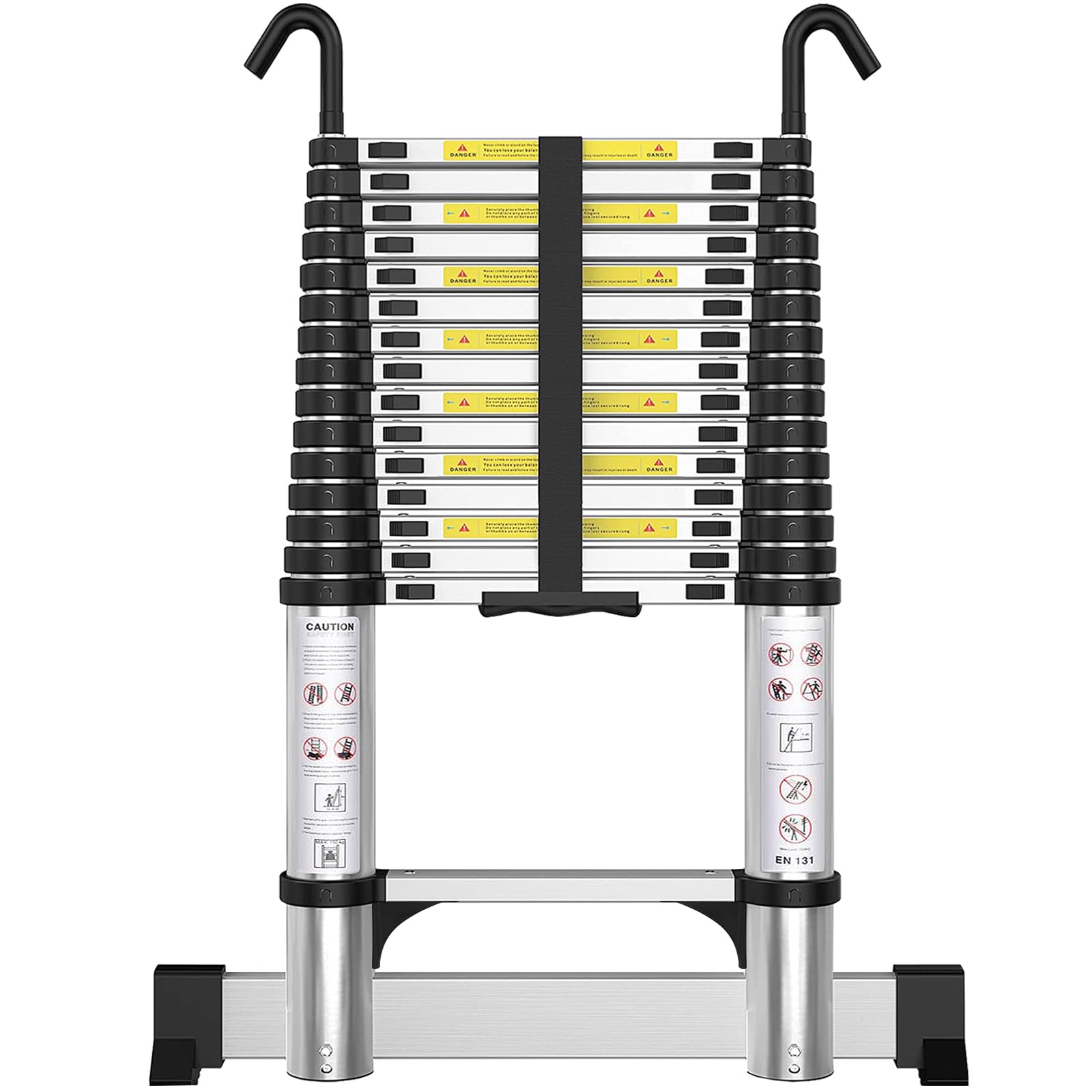
The telescoping ladder that converts tiny attic hatches into a usable workspace.
If you have a small attic entrance, this ARCHOM is a lifesaver. Its hooks grab onto the hatch opening, and the stabilizer bar keeps it planted — buyers call it a sturdy upgrade over a fixed attic ladder. One owner hooks it over a door sill for extra support on a high sloping ceiling, and the 20-foot maximum height handles roofs and exterior work too.
The fold-away design is the star for storage: it collapses compactly enough to slide behind a door or under a bed, which is the reason owners with no garage choose it. At 36.4 pounds, it’s on the heavier side for a telescoping ladder, and the collapsing process carries a warning — it comes down quickly and can smash fingers if you’re careless. The release buttons are stiff under load, so follow the sequence: open up from the top down, never from the bottom.
Owners consistently rate the ease of extending and retracting highly, and one 5’10”, 186-pound user found it light and easy. The occasional critique is that it feels wobbly compared to a solid one-piece ladder — but as the review pages put it, “they all are” at this height. It’s EN131 certified and built from a premium aluminum alloy that resists rust.
The space-saving choice: This is for attic owners and small-home dwellers who need real 20-foot reach but have nowhere to store a rigid ladder.
Mind the mechanism: Retraction needs care — release from the top only, and keep fingers clear of the collapsing sections.
5. UC UP CLIMBER Telescoping Ladder 20.5FT
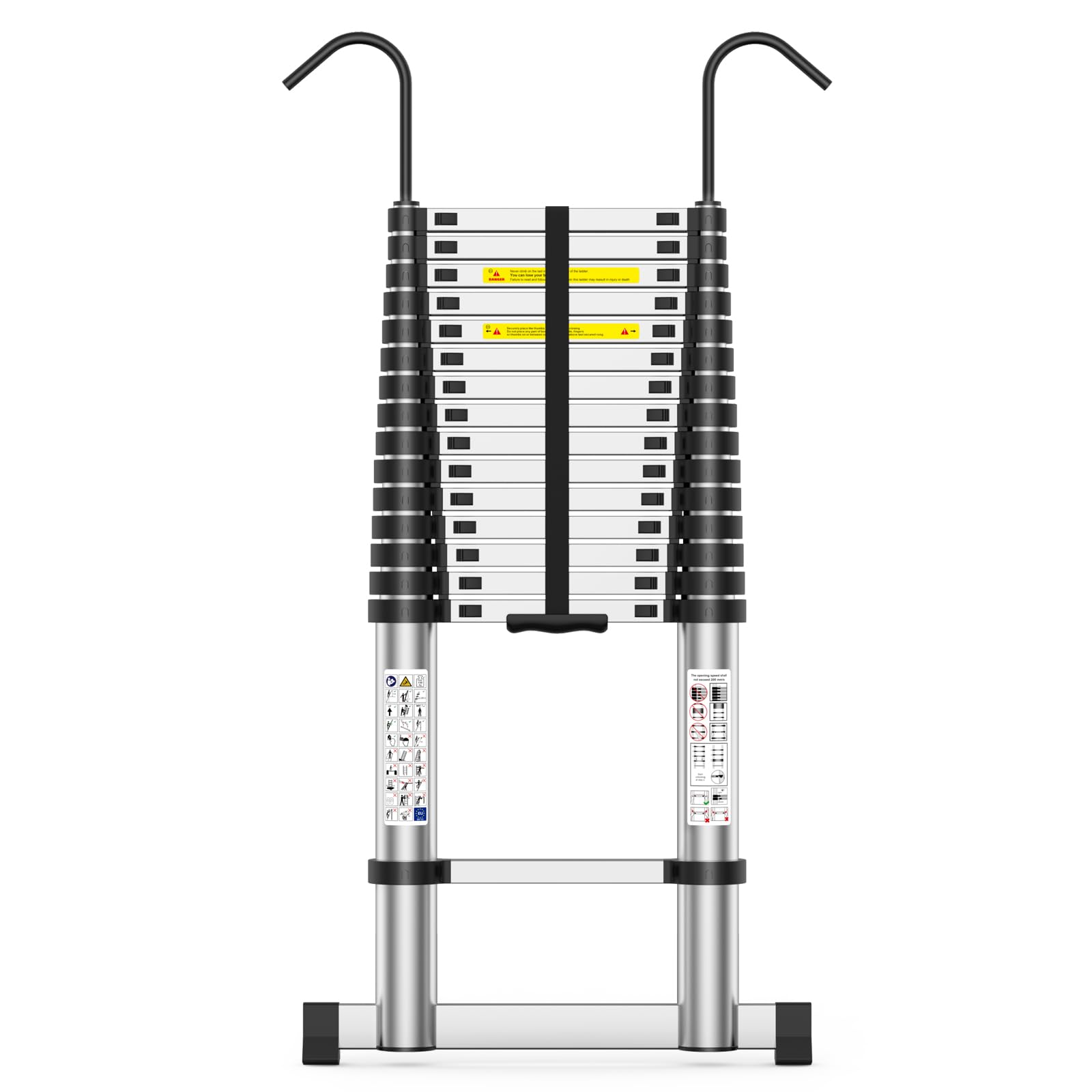
A 20.5-foot telescoping ladder with four hooks total for RV roofs and outdoor work.
Its defining feature is the double hook design — two extra detachable hooks on top compared to standard telescopic ladders, so you can secure it over a roof edge or an RV gutter line with more contact points. Turn the hooks toward you indoors and they still grip a door frame or wall corner. The reinforced overlapping leg sections are thicker than typical telescoping models, which reviewers point out translates into better stability at full reach.
At 15 pounds claimed in the marketing (the spec sheet lists the item weight as 17.89 kg, which is heavier), opinions vary on the actual heft, but the reviews agree it’s manageable. One owner specifically noted his wife can set it up and use it without help, which he valued after replacing a heavy sliding-stop ladder. The 20.5-foot height and 330-pound capacity make it a fit for home repairs, roof maintenance, and RV inspections.
Sturdiness feedback is mixed. The quality tops out with 99 owners praising it, but 72 call out sturdiness as a concern — the middle bends slightly no matter the length you’ve selected. The anti-crush safety feature on collapse is appreciated, though the double-latch closing mechanism takes getting used to. Rung spacing is wider than standard, which some find annoying on long climbs.
The plus side
- Double hook design for more secure anchoring
- Reinforced overlapping sections reduce flex
- Anti-crush safety on collapse
What owners note
- Bends slightly in the middle at full extension
- Wider-than-standard rung spacing
Strong pick for: RV owners and outdoor workers who want extra hooking points and a ladder that packs flat for travel.
Not ideal for: Anyone who needs a rock-solid feel at full extension for hours of continuous work.
6. SINMEIRUN Telescoping Ladder 20.3 FT Pro
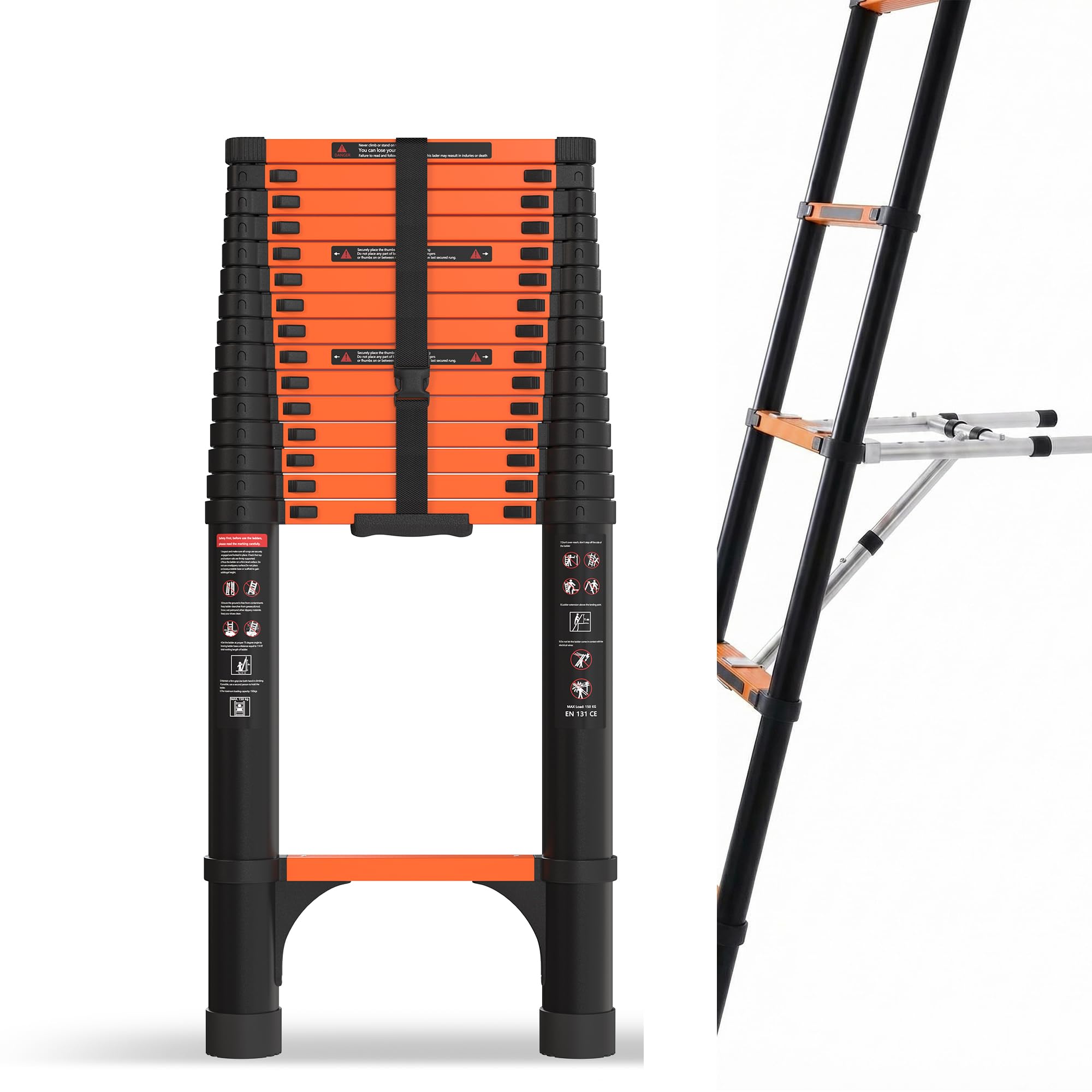
The orange telescoping ladder that packs to 42 inches and holds 330 pounds.
This SINMEIRUN stands out for its wall standoff stabilizer — a bracket that holds the top of the ladder away from the wall, so you’re climbing parallel to the surface rather than leaning into it. That makes a real difference for window cleaning and painting where you need clearance. It’s EN131 and CE certified, with anti-slip foot pads and a double height-locking latch on each step to prevent accidental collapse.
Storage is the second headline: it compacts to just 42 inches and includes storage straps and a carrying handle. Owners say it fits perfectly in sheds and truck beds, and they praise it as a best choice for home use. The quality is the most-mentioned positive at 190 mentions, with sturdiness close behind at 181 — a 220- to 305-pound crowd reports minimal flex and a stable feel at full extension.
The climb itself is the main downside. Several owners find it hard to get up and down, calling the ease of use mixed — the rungs are functional but the spacing and foot room aren’t as comfortable as a rigid ladder. The aluminum alloy has an oxidized surface with reinforced nylon fiber in the plastic parts for extra strength, and it’s built for roof, gutter, and RV work alike.
The wall-work winner: This is for anyone who paints, cleans windows, or works on gutters where keeping the ladder off the surface is a real advantage.
Know before you buy: It’s sturdy at height, but the rung feel gets mixed reviews — some owners find the climb awkward.
7. LANBITOU A-Frame 5 Step Extension Ladder

A 4-in-1 ladder that morphs from stepladder to staircase to a 17-foot extension.
This is the chameleon of the list — a single ladder that replaces a step stool, an A-frame, a staircase ladder, and an extension ladder. The hinge design lets you toggle between configurations with a simple lock, which is the reason owners call it the most versatile tool in their garage. It holds a 330-pound capacity and extends to 17 feet as a straight ladder, covering most household work.
The stability engineering is thorough: extra-long bottom cross beams distribute weight evenly, double-slope mesh structure on the rungs adds grip, and the 50°-hardness soft rubber feet protect wood floors indoors while staying planted on concrete outdoors. Sturdiness is the top-rated aspect at 225 mentions, with quality at 215 — and one owner says it’s more stable than any regular ladder on uneven surfaces like rocks and tree roots.
The recurring concern is the locking mechanism. While most find the u-shaped lock and auto limit spring lock secure, some report the safety mechanism getting stuck. Note the honest warning from one owner who fell 10 feet when a top step gave way — they stress user caution, especially on uneven ground. It folds compactly for pickup truck compartments, and the anti-slip balance bars genuinely help on stairs.
The versatility win
- Converts between A-frame, staircase, and extension
- Anti-slip balance bars stable on uneven ground
- Soft rubber feet protect indoor floors
Heads up
- Locking safety mechanism can stick occasionally
- At 17 ft, shorter than true 20-foot picks
Pick this if: You want one ladder that handles everything — a stepladder today, an extension ladder on the weekend.
skip it if: You specifically need a full 20-foot reach; this tops out at 17 feet before the catch.
8. Wolec 20 FT Multi-Position Telescoping Ladder
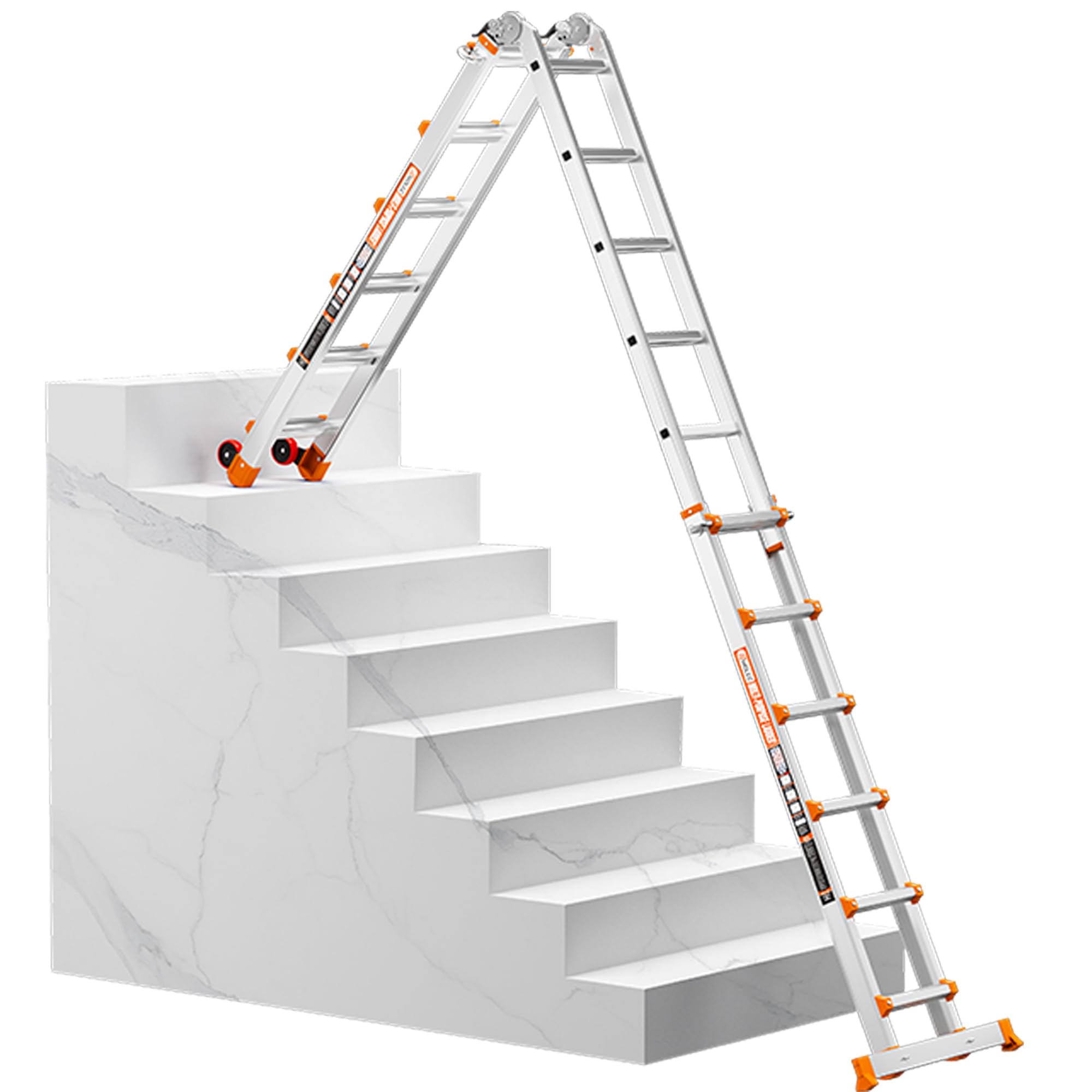
A 5-in-1 ladder with caster wheels that rolls across the driveway — no lifting.
The mobility story is what sets this Wolec apart. It has built-in bottom casters, so you roll it across a driveway, lawn, or living room instead of carrying 35.9 pounds of ladder. For anyone with back trouble or a long house to work around, that’s a genuine daily convenience. The oversized safety locking hinges let it transform into five modes: A-frame, straight extension, staircase, or 90-degree wall ladder.
Construction quality is the top-rated aspect at 18 mentions, and the aircraft-grade aluminum alloy with reinforced overlapping tubes gives it confidence at the 330-pound capacity. Owners describe it as sturdy and versatile, with one using it to finish extensive home restoration work in a week. The stability feedback is where opinions split — some find it rock solid, others note the flex typical of telescoping designs, especially if you’re a heavier person. The advice from reviewers is to avoid fully extending all sections if you’re near the weight limit.
The 5-in-1 versatility genuinely reduces clutter — it replaces multiple single-use ladders. It retracts in seconds to fit under a bed, in a utility closet, or inside an SUV trunk. The trade-off is that the multi-hinge system adds complexity, and the weight sits at 35.9 pounds, so it’s not the lightest option.
The mover’s choice: If you dread hauling a ladder from the garage to the backyard, the casters here are a quality-of-life win.
Watch the flex: It’s sturdy, but telescoping sections bend a little at full stretch — don’t push past your comfort zone at the top.
9. VEVOR 20FT A-Frame Telescoping Ladder
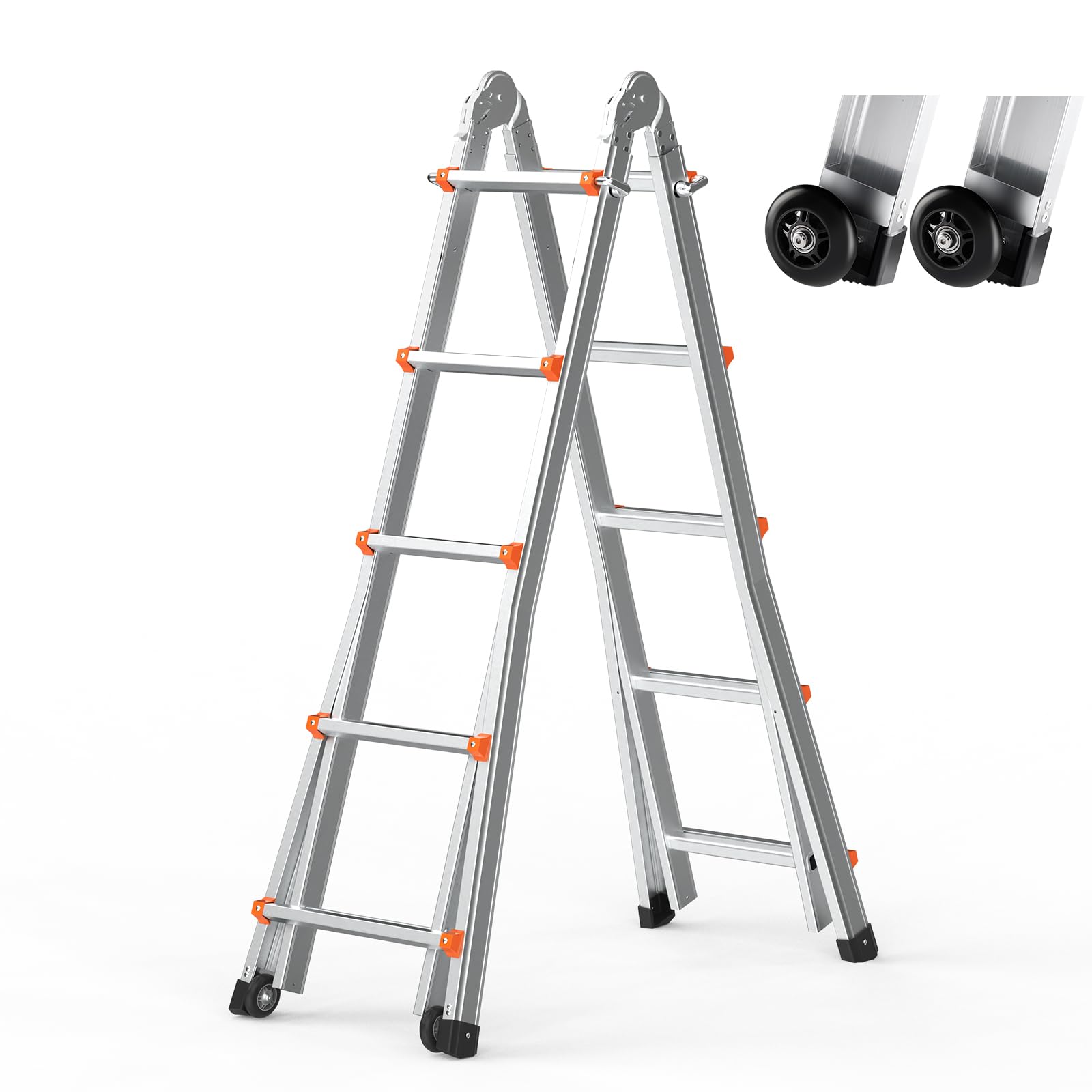
A budget A-frame telescoping ladder with wheels that reaches 19.65 feet.
VEVOR brings the value equation: a ladder with A-frame stability, dual base wheels for one-hand transport, and an 18-step design that extends to 19.65 feet (5990 mm). The A-frame structure is inherently more stable than a straight telescoping ladder because it has two legs spreading at the base, and the 330-pound capacity means it holds most adults plus a tool belt. No assembly is required from the start.
The quality rating tops the aspect list at 25 mentions, and the weight earns 15 — owners describe it as light and well-made. It transitions between configurations with extendable legs reaching up to 180°, making it a step ladder and a straight extension in one. The locking mechanism on each step prevents sliding or folding, and open up is a simple pull, which keeps operation straightforward.
Stability reviews are mixed. Some shoppers say the ladder moved on them during first use, and the rungs run narrow — workable in a pinch but not the most comfortable climb. One 220-pound owner used it at max height for painting and said it flexes but stays stable. The wheels are the weak point: they struggle on grass and crusher run, so plan to carry it on soft terrain. It dents easily, so treat the aluminum gently.
Why it’s the value pick
- A-frame base for added stability
- Dual wheels for one-hand transport
- 180° extendable legs for multiple modes
The compromises
- Wheels poor on grass or uneven ground
- Some buyers report the ladder moving during use
Best for: Light to medium home duty where budget matters and you want a stable A-frame base for occasional 20-foot work.
Reconsider if: You’re over 210 pounds or plan daily professional use — the reviewers themselves suggest a heavier-duty ladder.
10. Louisville Ladder AE3220 20-foot Aluminum
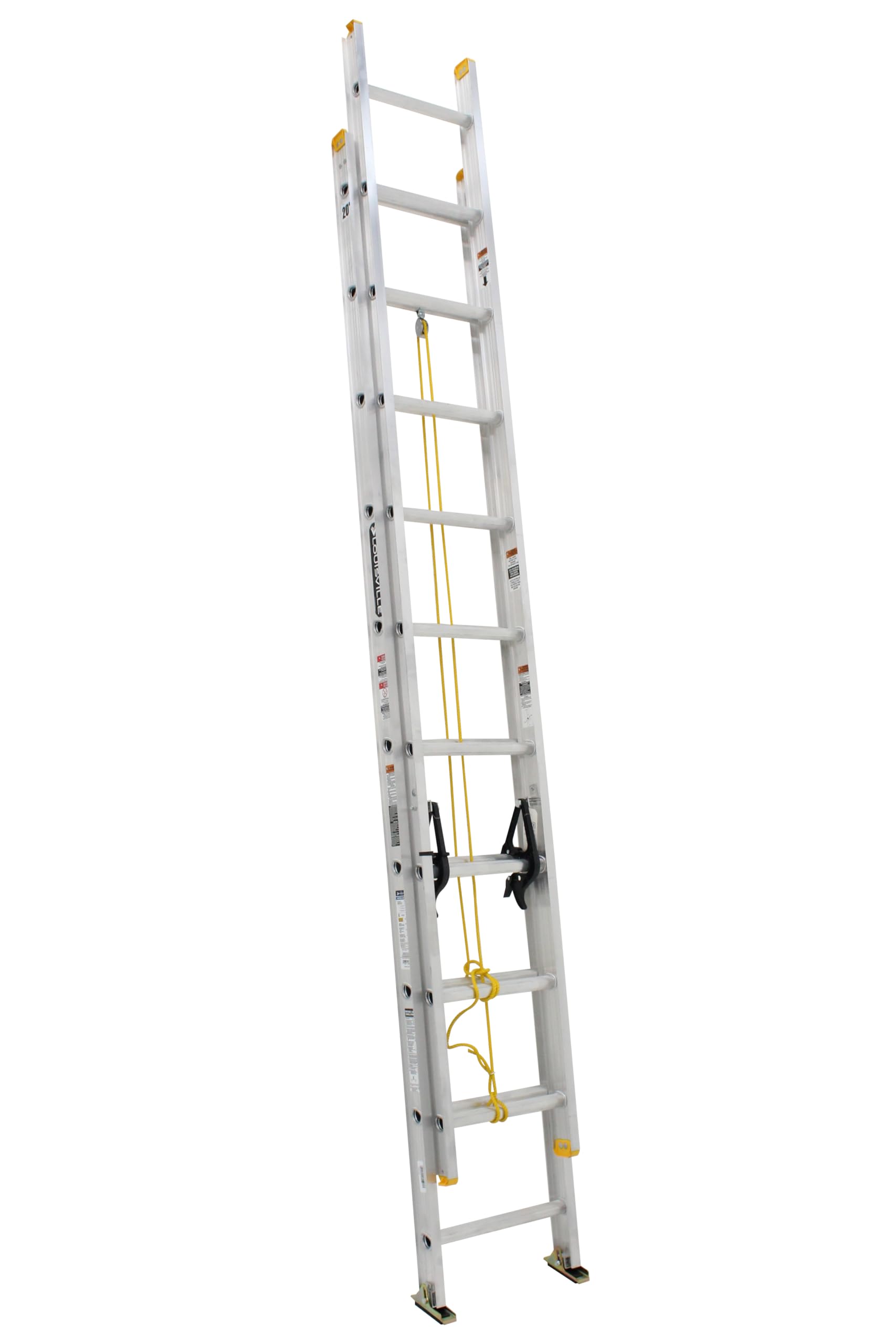
The classic aluminum extension ladder that doesn’t “dance” when you climb.
This is the traditional two-section aluminum ladder, and the review pages are clear about its defining quality: as one owner put it, “it doesn’t dance” — ladder users know that swaying, bouncing feeling, and this one avoids it. The steel swivel safety shoe with metal shield is a standout feature, giving better security and durability than the plastic feet on some rivals, without a significant weight penalty. At 32 pounds with a 250-pound capacity, it’s a fair deal lighter than the fiberglass Little Giant above.
The QuickLatch system secures both the fly and base sections during extension, making the raise-and-lock process intuitive. The modified I-beam side rails use full 3-inch extrusions — that thickness is what delivers the sturdiness buyers feel as stability rather than wobble. Owners with physical limitations appreciate it too; one who had three shoulder surgeries says they can carry it with no problem.
There’s one design quirk to know: the QuickLatch sits on the inner rung and can eat into foot space, occasionally activating accidentally and forcing you to climb back down to fix it. Some owners mention a bit of bounce and sway without additional stabilizers. It meets or exceeds ANSI and OSHA standards, and the aluminum keeps it manageable for one person to maneuver.
The strengths
- Steel swivel shoes for stable footing
- Sturdy at 32 lbs with no dancing
- Meets ANSI and OSHA standards
Watch for
- QuickLatch on inner rung reduces foot space
- May sway without added stabilizers
Grab it for: Classic two-section ladder users who want a lighter, sturdy aluminum option that one person can handle easily.
The honest note: The QuickLatch placement is the one recurring frustration — it can activate mid-climb and send you back down.
11. Louisville Ladder L-3022-28PT Fiberglass

A 300-pound fiberglass ladder with a V-shape top that grips poles and corners.
This is the ladder professionals reach for when they need non-conductive safety plus contact points that grip odd surfaces. The Pro-Top system is a V-shape top section that leans securely against walls, buildings, and poles — the V-notch straddles round surfaces while the soft non-marring rubber tread prevents sliding on siding. A 30-year pro calls the wide rubber top “ingenious,” saying it prevents the sideways slide that plagues standard ladders. The rubber also protects your siding from scratches, and the tool slots on top double as a caddy.
The 300-pound capacity and Type IA rating give real margin for working with tools at height. The MaxLock rung lock uses a patented molecular polymer for secure locking, and the QuickLatch system secures the fly and base sections together. It’s heavy — owners call it “a beast” — but they also say it’s stable as can be, and that lowering it before moving makes it manageable.
The durability conversation is mixed. Several customers note cracking over time, which is the key caution for this pick, and the plastic retainers may not hold up in intense sun — one Arizona owner wished for metal retainers. The weight gets mixed feedback, too: some expected heavier and found it fine, others find it very heavy. For large two-story houses, the size is appreciated, but it demands respect when handling.
What earns the pro label
- V-shape Pro-Top grips poles and corners
- Non-conductive fiberglass for electrical safety
- 300-lb capacity Type IA rating
The trade-offs
- Reports of cracking over time
- Heavy and hard to maneuver alone
Choose this if: You work near electricity or need a top section that won’t slide on siding — the Pro-Top is a genuine safety upgrade.
Pass if: You need a lighter ladder for frequent solo moving; this one’s heft is the price of its durability.
Understanding the Specs
Duty Rating & Weight Capacity
This is your safety ceiling. Type I holds 250 pounds, Type IA holds 300 pounds, and Type IAA holds 375 pounds. The rating assumes you plus your tools and materials. A 300-pound-rated ladder gives you comfortable margin; a 250-pound-rated one gets tight if you’re a larger person carrying gear. Match the rating to your body weight plus everything you’ll haul up with you.
Telescoping vs Two-Section
Telescoping ladders collapse into a bundle that fits in a trunk and store in a closet — unbeatable for space. But their overlapping rungs flex more at full extension, and the collapse sequence demands fingerprint-safe technique. Two-section extension ladders are stiffer and more predictable but need wall space to store and a rope-and-pulley system to raise. Your storage reality should drive this decision, not your reach requirement.
FAQ
What is the difference between a 20-foot extension ladder and a 20-foot stepladder?
How much weight can a 20-foot extension ladder actually hold?
Will a telescoping ladder fit in my car trunk?
Is aluminum or fiberglass better for a 20-foot extension ladder?
How do I store a 20-foot extension ladder when I’m not using it?
Why does my telescoping ladder feel wobbly at full extension?
How do I safely collapse a telescoping ladder without pinching my fingers?
Can a 20-foot extension ladder reach my second-story roof gutters?
Final Thoughts: The Verdict
For most buyers, the 20-foot extension ladder winner is the Little Giant HyperLite because it combines non-conductive fiberglass safety with a 20% weight saving and a pulley system that halves your raising effort. If you want maximum portability and a 21.3-foot reach that folds to 44 inches, grab the JADDUO Telescoping Ladder at just 20 pounds. And for budget-conscious homeowners who need a stable A-frame base, the
How We Picked
We do not accept paid placement. Every pick is matched to a real buyer and a real use-case; we do not hands-on test units.
Sources & Methodology
Specifications: manufacturer listings and product documentation. Review insights: verified customer reviews, as of August 2026. Pricing: not shown on this page (it changes often); check the current price via the retailer link.
As an Amazon Associate, KitchPrep earns from qualifying purchases. This does not affect which products we feature.
Related Guides
