
Specs are compiled from manufacturer listings and verified buyer reviews and can change over time — please confirm the key details on the product page before buying.
If you want a door that looks like it cost a fortune but installs like a weekend project, a two-panel slab is the smartest buy in interior doors right now. The catch most buyers hit is simple: a slab means only the door panel arrives, not a frame, not hinges, and usually not even a hole for the handle. Get that one thing straight before you order and the rest is easy. Below you get the full breakdown on the eight picks worth your money, who each one actually suits, and the honest trade-offs nobody mentions in the listing.
I’m Mohammad Maruf — the founder and writer behind KitchPrep. This guide is built by comparing the manufacturers’ published specifications and the patterns across verified customer reviews, so you get each pick’s real strengths and trade-offs instead of marketing spin.
From solid pine barn slabs to full bypass closet kits, this guide walks you through the specs that actually matter so you can pick the best 2-panel door for your opening the first time.
Our Picks at a Glance
How To Choose The Best 2-Panel Door
Before you pick a finish or a color, settle three things: your exact opening size, if you want solid core or hollow core, and whether the door will swing, slide, or fold. Those three answers narrow the field fast.
Measure the rough opening first
Your rough opening is the bare gap in the wall where the door goes, before any frame is installed. It needs to be slightly wider and taller than the door itself. A door listed at 30 in. wide by 80 in. high, for example, pairs with a 30-1/4 in. by 80-1/2 in. opening in most standard builds. Measure the height at the left, center, and right of the gap, because older homes rarely sit perfectly square.
Get this wrong and no amount of trimming saves you. Trimming only removes material from the edges, and most slabs here allow just 1/4 in. per side unless the maker says otherwise. If your gap is more than half an inch off a standard size, order a wider slab rather than cutting one down.
Solid core versus hollow core
A hollow core door is built like a honeycomb with a light frame around a mostly empty center. It weighs less, so one person can carry and lift it, and it costs less too. A solid core door is filled through the middle with dense material, so it feels heavier, blocks more everyday noise, and holds screws better when you mount a handle or hinges.
Which one fits depends on where the door lives. A bedroom or home office benefits from solid core’s quieter, sturdier feel. A closet or laundry space is often fine with hollow core, since you are mostly hiding a shelf, not blocking sound.
Swing, slide, or fold
A swinging door needs floor clearance to open. A bypass sliding door runs along the wall instead, so it saves the swing space a tight closet or hallway cannot spare. Bifold doors fold back in pairs. Decide this before you buy, because the hardware differs for each setup and most slabs ship without any hardware at all.
Also confirm whether you are getting a slab or a prehung unit. A prehung door arrives already set into its frame with hinges attached, ready to lift into the opening. A slab is just the panel, so you supply the frame, hinges, and handle yourself.
Quick Comparison
| Model | Best For | Size | Core Type | Weight | Amazon |
|---|---|---|---|---|---|
| Kimberly Bay 2-Panel White Solid Core Pine Barn Door Slab★ Best Overall | Barn-door builds with real wood heft | 83.5 in. x 30 in. x 1.375 in. | Solid pine | 47 lb | Amazon |
| JUBEST 24″x80″ 2-Panel Shaker Style SlabBudget Champion | Small pantry and closet openings | 24 in. x 80 in. x 1-3/8 in. | Hollow core | — | Amazon |
| BARNSMITH 30×80 Raised 2-Panel Square TopClassic Profile Pick | Bedroom and hallway swaps | 30 in. x 80 in. x 1-3/8 in. | Hollow core | — | Amazon |
| BARNSMITH 30×80 2-Panel White Primed Slab | Pocket-door replacement | 30 in. x 80 in. x 1-3/8 in. | Hollow core | — | Amazon |
| JUJUBON 18×80 Interior Door Slab | Narrow pantry and linen closets | 18 in. x 80 in. x 1.38 in. | Solid core MDF | 42 lb | Amazon |
| OHTOMO 24″x80″ Solid Core Door Slab | Quiet home offices and dens | 24 in. x 80 in. x 1.38 in. | Solid core MDF | 57 lb | Amazon |
| JUBEST 48×80 Sliding Closet Door Set | Compact closets needing zero swing space | Each door 24 31/64 in. x 78 3/16 in. x 1 3/8 in. | Hollow core | 45 lb | Amazon |
In‑Depth Reviews
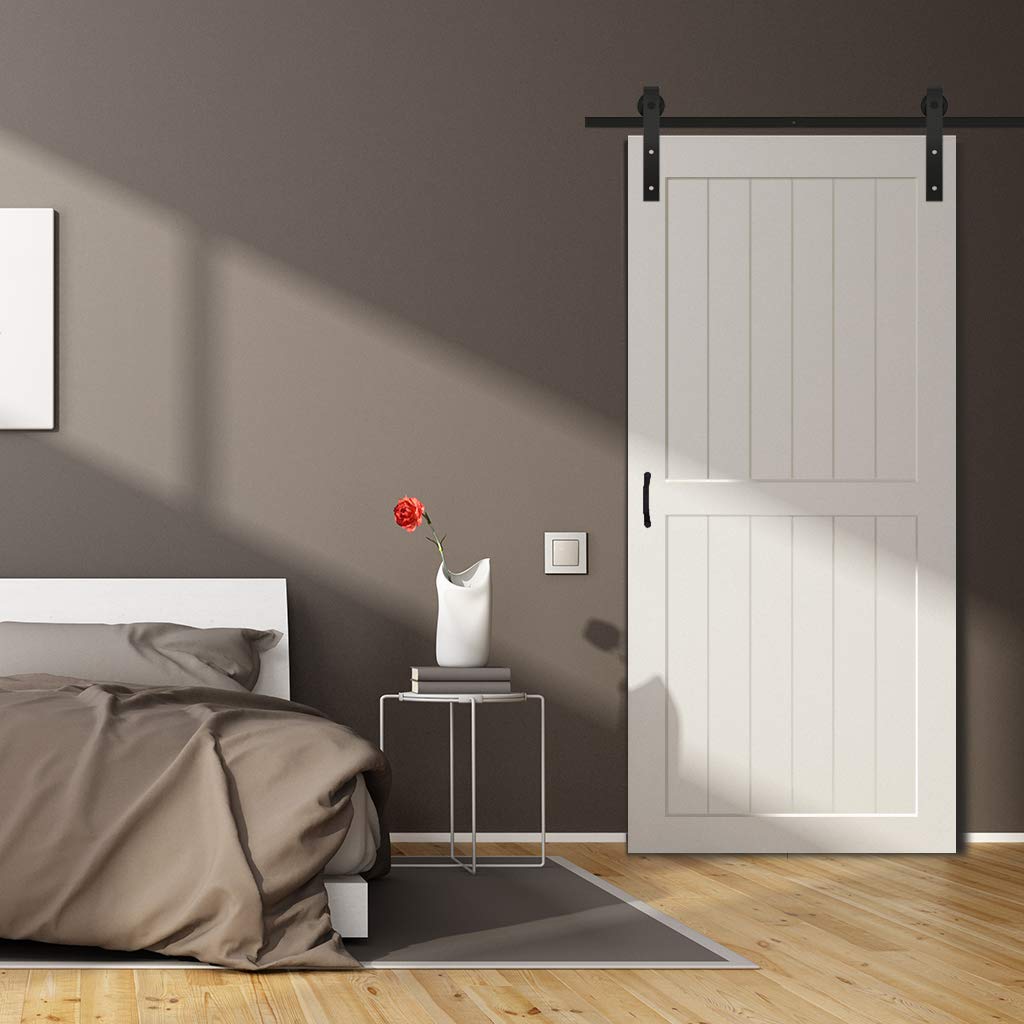
1. Kimberly Bay 2-Panel White Solid Core Pine Barn Door Slab
The solid pine slab that arrives already drilled and ready to hang.
This is the pick for anyone building a barn door setup who wants real wood, not a hollow shell. It measures 83.5 in. tall by 30 in. wide at 1.375 in. thick, so it is taller than the standard 80 in. slab and covers more of the frame above and below. It is made of solid pine, which is why it tips the scale at 47 pounds and feels substantial the moment you lift it.
Barn doors always need hardware separately, and that is true here too — but this slab comes pre-drilled for it, which removes the single most nerve-racking step for a first-timer. Both faces carry the two-panel design, so the look holds up whether the door slides open or closed. Buyers report pairing it with a sliding rail kit they sourced themselves and having it hang cleanly on the first try. The finish comes primed white, so a light sand and a coat of paint finishes it off. The pine grain under the primer is what gives this one its depth — in a side-by-side look it reads far warmer than a molded composite slab of the same size.
Crowd feedback lands in one place: the door itself, again and again, described as heavy, solid, and better than expected. Quick delivery and careful wrapping show up in a lot of those notes, which matters because a 47-pound panel that ships badly is a nightmare to return. As owners sum it up: “I ordered two doors. They were delivered quickly, and were well wrapped – no damage. They were easy to install and look very good. I’d order again.”
What buyers keep coming back to
- Pre-drilled for hardware, so no guesswork on the rail mount
- Solid pine construction — 47 lb of real wood, not a hollow shell
- 2-panel styling on both faces for a consistent look
- 83.5 in. height covers more of the doorway than a standard 80 in. slab
Where it asks more of you
- Hardware sold separately — you still supply the rail and hangers
- The 47 lb weight is a genuine two-person job on a ladder
- It is a slab, so there is no frame or hinge prep included
Grab it if: you are hanging a barn door over a wide opening and want the warmth and heft of solid pine with the drilling already done.
Plan around this: the rail, hangers, and handle are all on you, and at 47 pounds you will want a second set of hands at the top of the ladder.
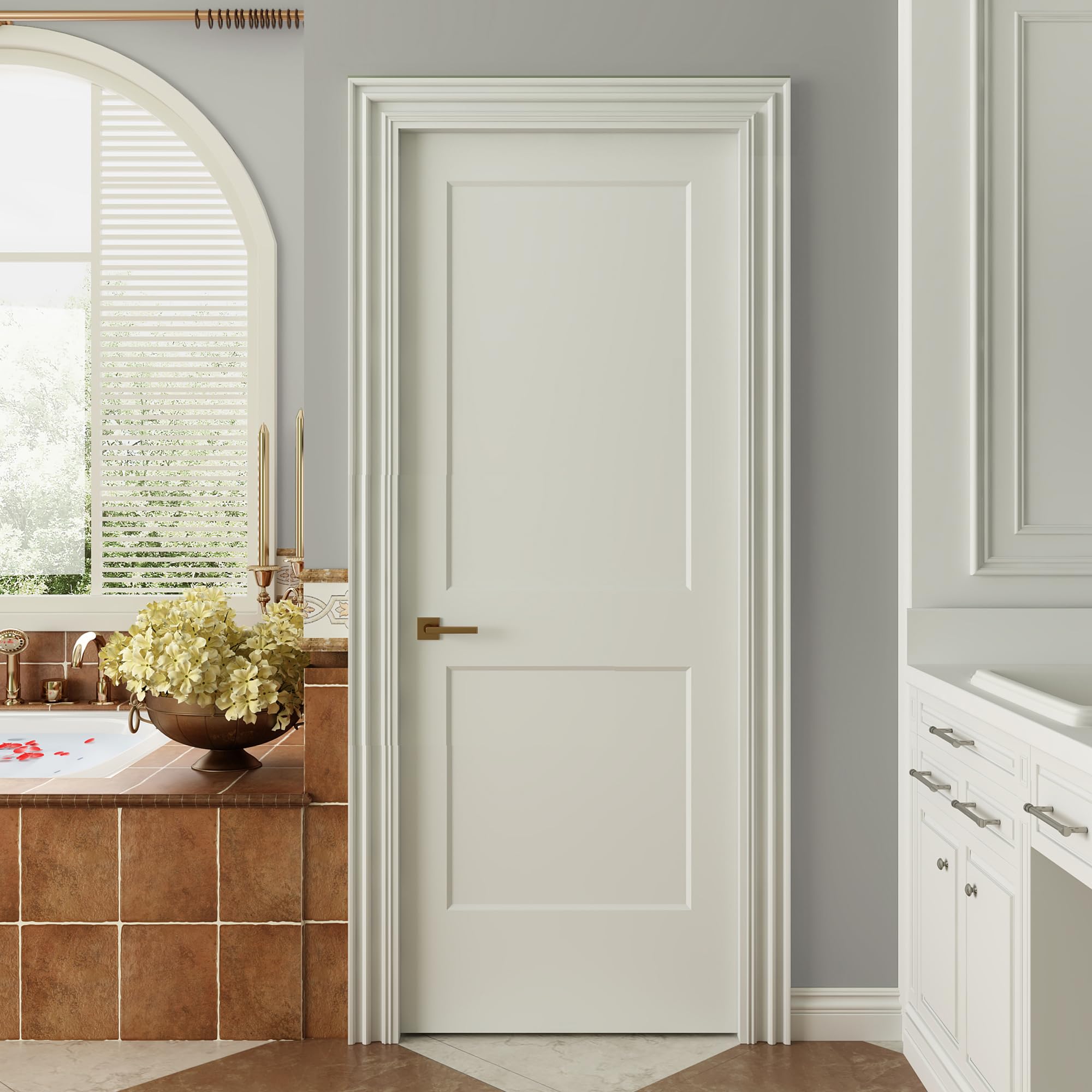
2. JUBEST 24″x80″ 2-Panel Shaker Style White Primed Hollow Core Interior Slab
The narrow, budget-friendly slab for small openings you would rather not overpay for.
At 24 in. wide and 80 in. tall with a 1-3/8 in. thickness, this slab is built for a pantry, laundry, or kids’ closet door — the kind of opening where a full 30 in. door simply will not fit. It is hollow core hardboard, which keeps the weight down for one-person handling and lets the door swing without stressing light framing. The shaker profile has an angled panel edge that keeps dust from pooling in the panel corners and keeps paint from building up there too.
Where this pick shines is flexibility. The slab is reversible, so you can hang it either way, and it comes undrilled, which means you decide where the handle bore and hinge routes go instead of working around a factory position. There is a 1/4 in. trimming allowance on each side for fine-tuning fit. Read what you are buying, though: this is a slab only, with no hinges, no frame, and no pre-cut handle hole. The honest caveat here is packaging. Damage that only becomes visible after full unwrapping is the recurring theme in the lower-rated feedback, and a couple of owners found the corners dinged beneath the wrap. Check every edge before you commit to the install, and keep the box until you have.
For a small opening where you are painting the door to match your trim anyway, this is the sensible spend. It paints up clean, and the shaker lines give it a far more current look than the old six-panel it usually replaces.
Reach for this if: you have a narrow pantry or closet opening and want a modern shaker slab without paying for premium materials you will barely see.
Look elsewhere if: you need a door with hinges and a pre-cut handle hole, or you want the extra quiet of a solid core.
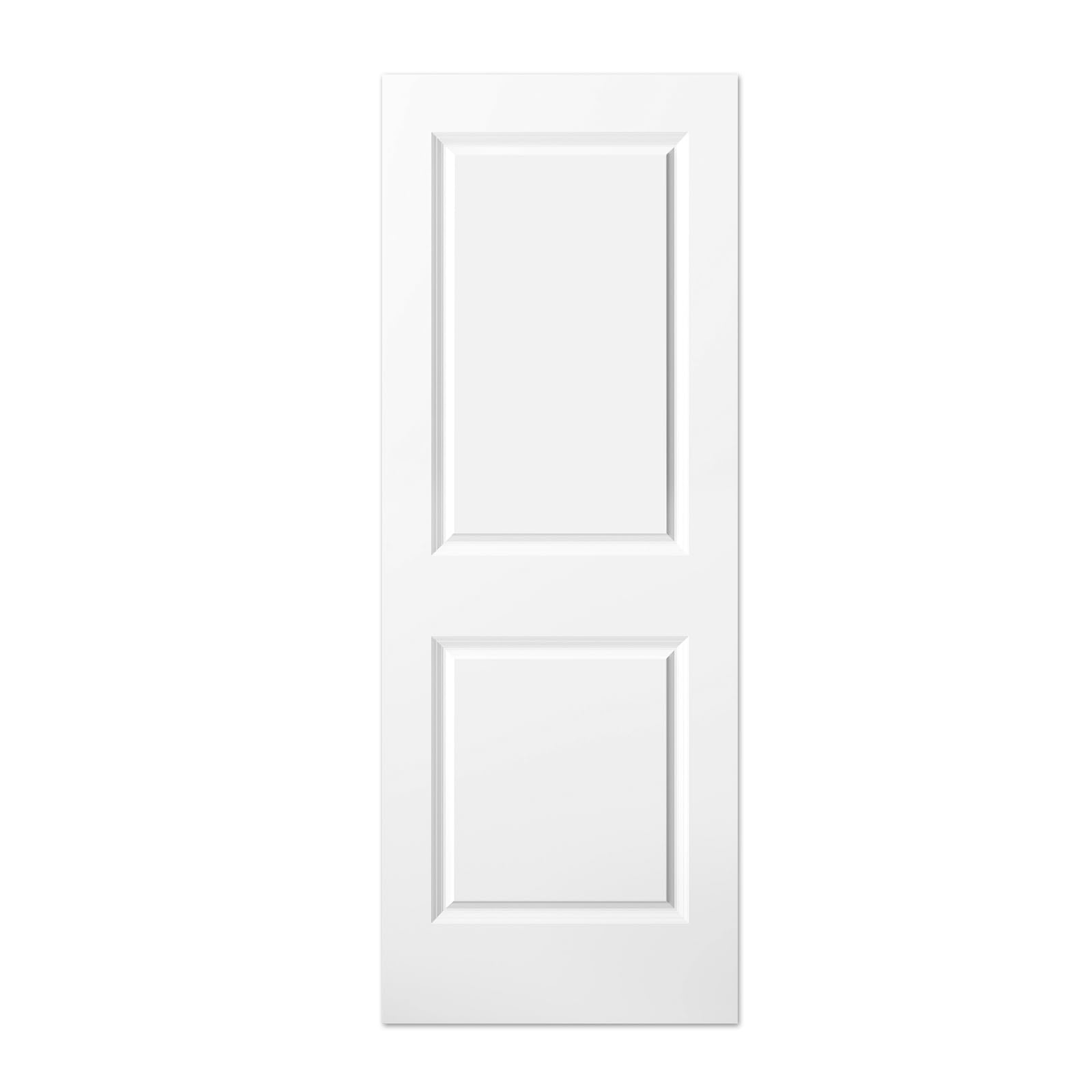
3. BARNSMITH 30×80 in Raised 2-Panel Square Top Primed Interior Door Panel
Raised panels give this 30 in. slab a depth that flat doors just cannot match.
If you want a door that looks built-in rather than builder-basic, the raised square-top panels here do the heavy lifting. The composite wood construction is engineered to resist warping, shrinking, and cracking, and the raised profile casts a real shadow line across the door face — something a flat slab can never fake. It measures 30 in. by 80 in. at 1-3/8 in. thick, matching the standard opening most bedrooms and hallways use.
It arrives as one full panel with no assembly, primed and ready for your paint color. The trade-off you should plan for is drilling: there are no holes for the handle, knob, lock, or hinges, so every cutout is yours to make. Each side trims up to 1/4 in. if your opening runs a little tight. It is hollow core composite, so it stays light enough for a solo install up a stepladder. Mounting it on a pocket, swinging, or sliding system all work, and the reversible handing gives you latitude on which direction it opens.
Shipping is the weak link, and you should know that before you buy. Complaints about packaging run through the lower ratings, and most describe damage that stayed hidden until the door was fully unwrapped. As one buyer put it, “The door was good, although UPS put a hole in it and we didn’t see it until after my husband cut it to size” — so inspect the panel completely before trimming anything. The 5-year limited warranty is a real comfort here, but the smart move is still to catch a problem before you cut.
The case for the raised look: this is the most decorative of the 30 in. slabs, and the square-top panel gives a bedroom or hallway a settled, traditional feel that flat shaker profiles leave on the table.
Handle it with care: unwrap and inspect the full panel before you trim, because composite edges can take a knock in transit and fine surface marks sometimes show once the wrapping comes off.
Best for: a traditional or transitional interior where you want a raised two-panel door with real visual depth.
Think twice if: you have no drill experience for the hinge and handle cutouts, or you want a door that arrives ready to hang with hardware attached.
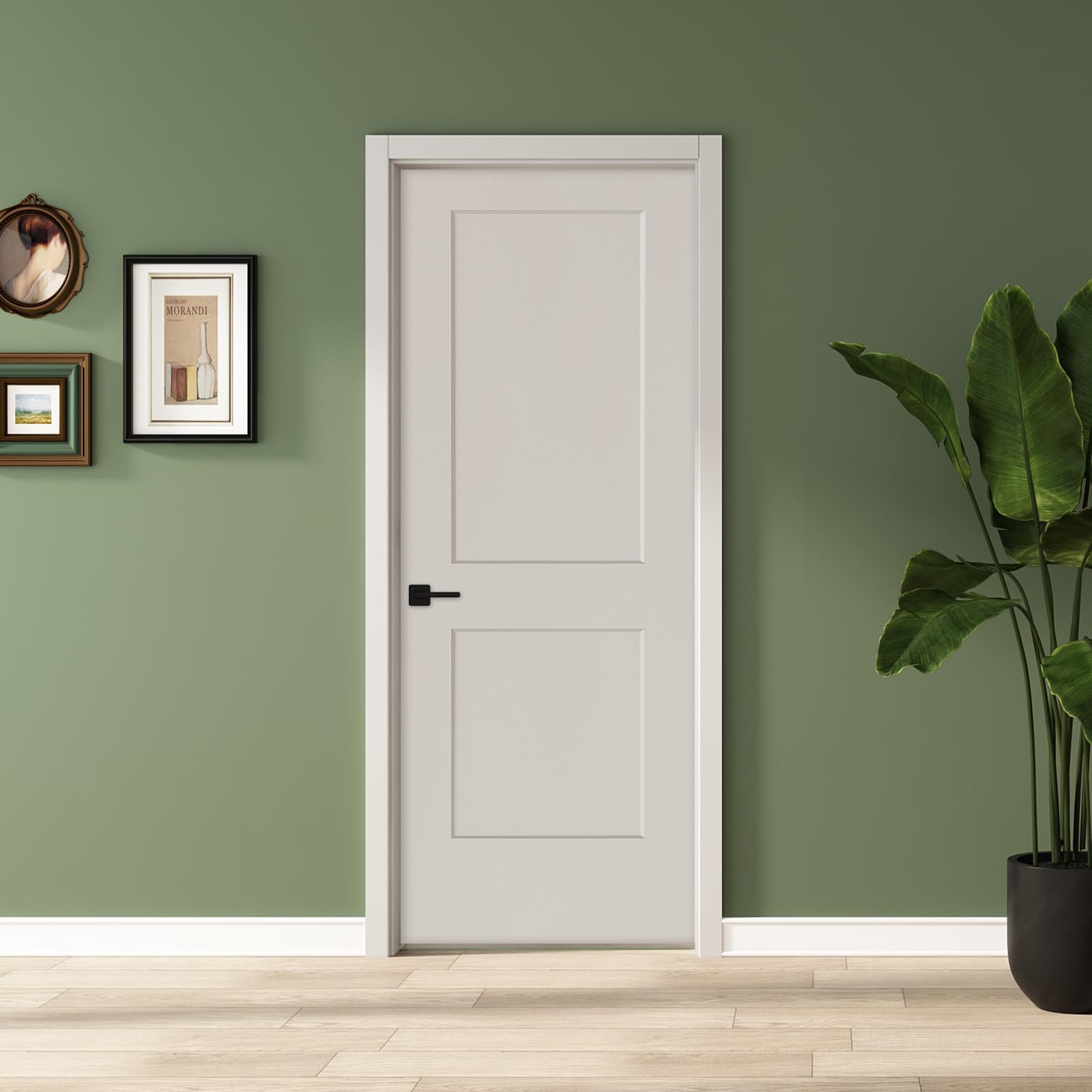
4. BARNSMITH 30×80 in 2-Panel White Primed Interior Door Panel
A flat shaker slab that slides into a pocket opening without fuss.
This is the pair to the raised-panel BARNSMITH above, but where that one leans traditional, this one is strictly modern. Same 30 in. by 80 in. by 1-3/8 in. footprint, but a flat two-panel shaker face instead of raised squares. The panel edge runs at an angle that cuts down dust collection in the recessed corners, which matters more than you think on a door you paint and then never want to touch again. It is molded hollow core composite, so it stays light and forgiving to hang.
The reason this one suits pocket doors is the weight. A pocket door slides in and out of a wall cavity on a track, and every extra pound of panel is weight that track has to carry over and over. This slab is hollow, so it eases the load compared with a solid core door of the same size. It arrives as one piece, no frame, no hinges, and no pre-drilled handle hole — you bore everything yourself. Reversible handing lets you orient it either direction in the pocket, and it finishes on all six sides, which is the rule for a painted door whether or not the face is visible.
Owners replacing old pocket doors call it out as exactly the size and look they needed, and the paint-up is straightforward. The honesty note here is the same as its sibling: transit damage shows up in a few reports, so inspect before you cut. One buyer described receiving several that arrived with hidden damage only revealed on full unwrapping. Weigh that against the fast majority who paint and hang without issue, and the practical takeaway is simple — unwrap, check, then commit.
Why it suits a cavity: the molded hollow core keeps the panel light, so a pocket track carries less weight every time the door slides out and back.
Before you bore: there are no factory hinge or handle holes, so measure and mark your own cutouts carefully, and only after a full damage check.
Pick this one if: you are swapping the panel in a pocket door and want modern shaker lines with a lighter panel on the track.
Steer clear if: you want the sound-damping heft of solid core, or you would rather not drill your own handle and hinge cutouts.
5. JUJUBON 18×80 Interior Door Slab, 2-Panel Solid Core
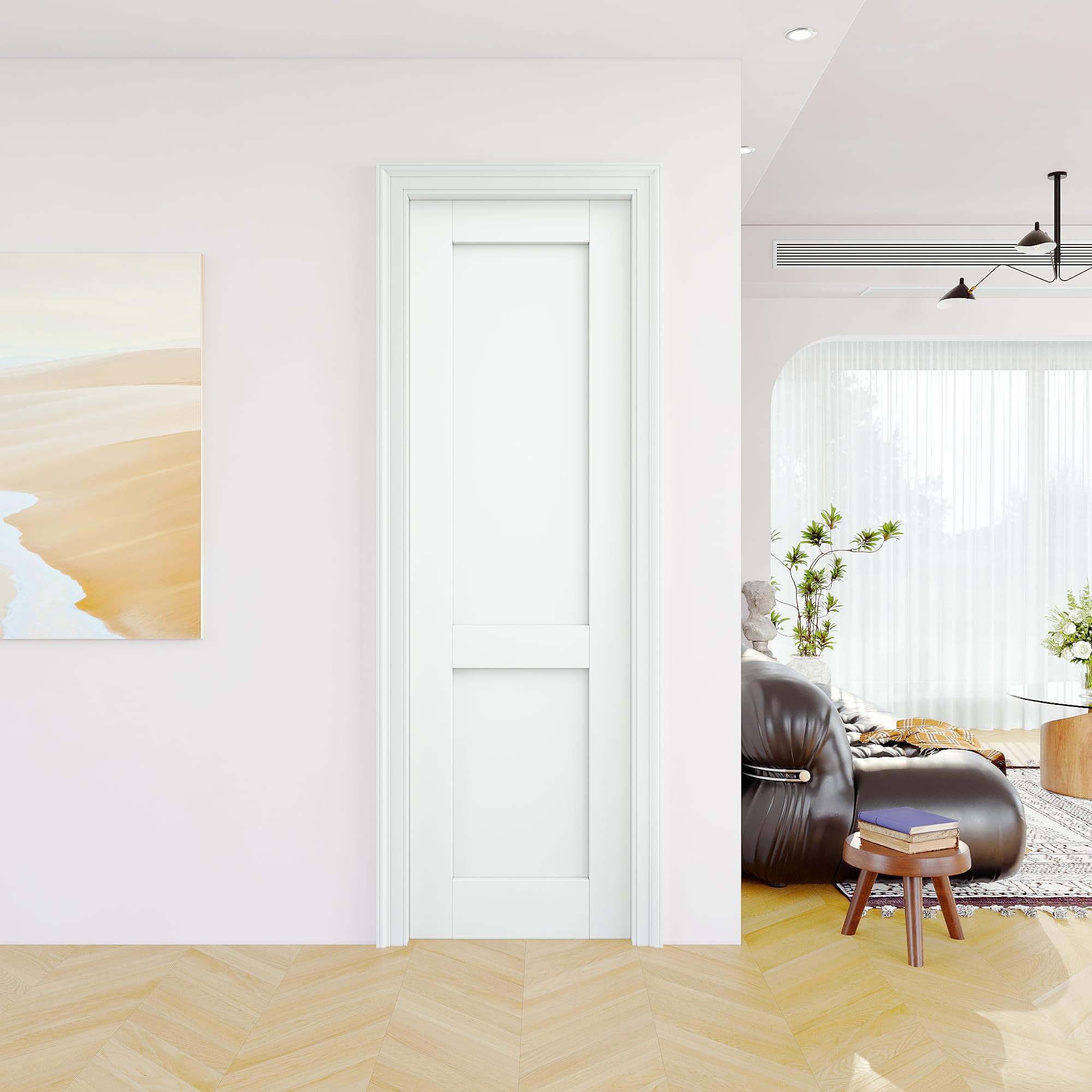
An 18 in. solid core slab for the narrow openings most doors cannot fill.
Eighteen inches wide is a niche size, and that is exactly the point. This is for a pantry sliver, a linen closet, or a laundry nook where a standard 24 in. or 30 in. door will not squeeze in. It measures 18 in. wide, 80 in. tall, and 1.38 in. thick, and the maker notes it fits a rough opening about 18-1/4 in. by 80-1/2 in. It is built from CARB P2 Certified MDF (a low-emission composite standard, not a marketing word), and it is solid core so it weighs 42 pounds — noticeably heavier than a hollow panel of the same size.
The solid core is why this 18 in. slab mutes everyday sound far better than a hollow panel. Owners describe the paint finish as even and the door itself as elegant, and several hang it as a barn slab or a pocket panel rather than a swing door. It trims up to 0.5 inches per side, which is more latitude than the thinner-allowance slabs in this roundup, and it ships fully assembled with no bore holes, so the handle and hinge cutouts are yours to make.
Here is the mismatch worth knowing up front: some buyers expected a “pre-built” door and were surprised to find no frame, no hardware, and no holes, even though the listing says slab-only. That is a naming gap, not a defect. A few also reported panels arriving incomplete. Measure carefully before ordering — the maker warns plainly that the opening must be slightly larger than the door, and this narrow solid core is the pick that makes an awkward little gap feel like a real door.
The reasons it earns its slot
- Solid core MDF damps room-to-room noise better than hollow panels
- CARB P2 Certified material, so it meets a recognized composite standard
- 0.5 in. trim allowance per side handles out-of-square openings
- 18 in. width fills narrow pantry and closet gaps
What to weigh first
- At 42 lb it is heavier than hollow slabs the same size
- No bore holes or hardware, so every cutout is yours
- Slab only — the “pre-built” wording catches some buyers off guard
Suits you if: you have a narrow, non-standard opening and want the quiet, solid feel of a real wood door there.
skip it if: you want hinges, a frame, and a pre-cut handle hole in the box.
6. OHTOMO 24″x80″ Solid Core Door Slab, 2-Panel White Primed
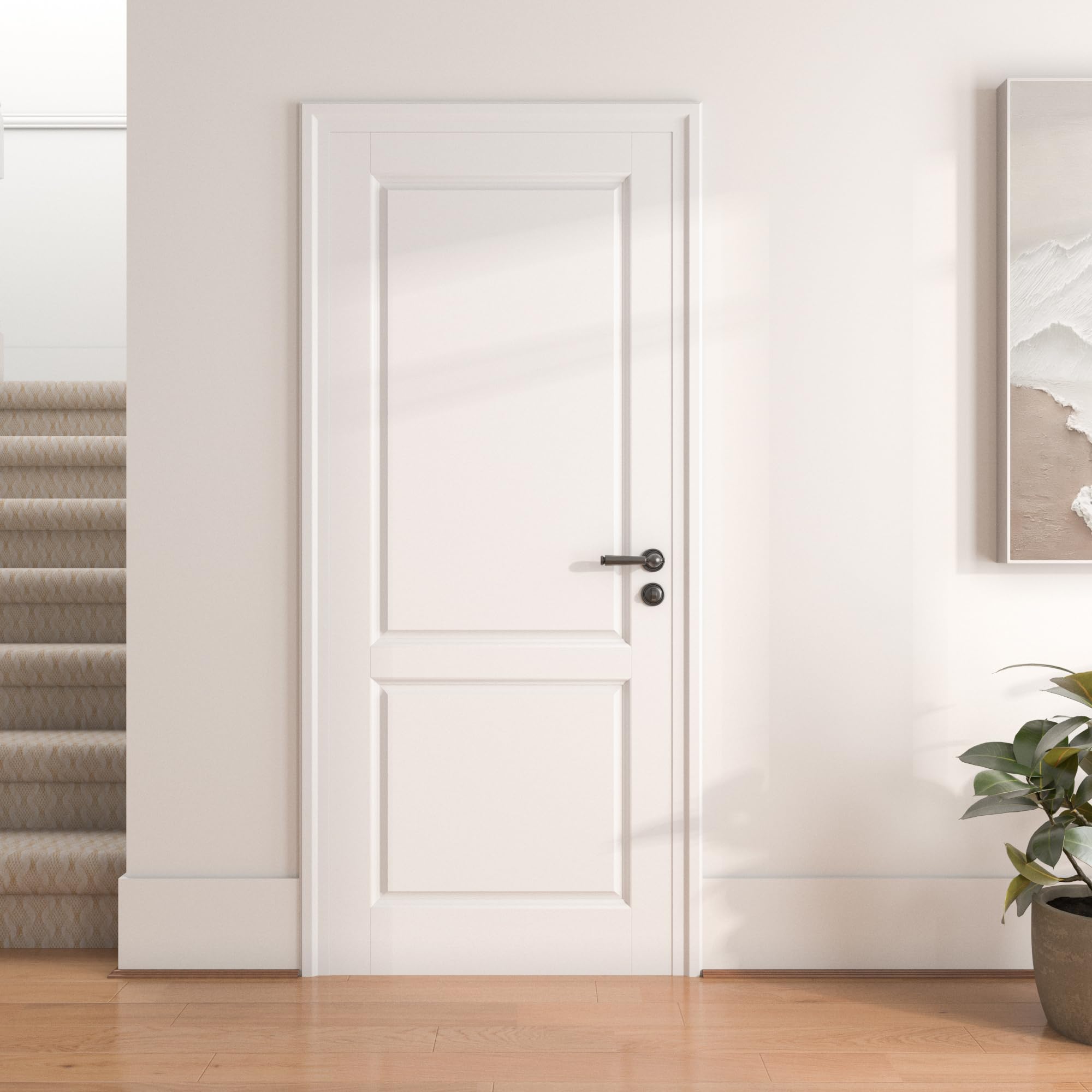
A 57-pound solid core slab built to hush a home office or den.
At 57 pounds, this is the heaviest door in the roundup, and its heft is all about cutting noise. It is solid core MDF with FSC-certified wood, which the maker says resists warping and cracking better than hollow core and holds hardware screws longer. It measures 24 in. wide by 80 in. tall at 1.38 in. thick, so it fills a standard narrow opening. The extra heft means hinge cuts and screws get more support from the dense core, so a heavy door tends to hang straighter for longer.
It arrives fully assembled as one panel with no additional assembly, primed white and ready for whatever color you choose. Both faces show the two-panel design, and the reversible build lets you hang it either direction. It is a slab, so the handle bore and hinge routes are not cut — you make those. There is a note in the maker’s description about “glass doors” with no holes, which is clearly a leftover phrase, because the product itself is a wood composite panel; ignore the wording and plan for a standard drill-out. Trimming is allowed if you need to shave the height, and one owner took a little off the top and bottom to fit an unusual opening.
The recurring gripe is with the edge, not the door: cutting the outer layer can chip it, so score the line first before you run the saw. That is a technique note, not a flaw. Treat the panel carefully when trimming and it paints up to a clean, even finish. For a den, study, or master bedroom where you want separation without feeling walled off, the solid core here is what earns this its slot.
Where the weight pays off: solid core MDF holds screws better and stays sturdier than hollow shells, so a heavy hinge-mount door of this size hangs with less sag over time.
Trim it right: the outer skin can chip on a saw cut, so score your trim line before cutting and keep the offcut clean.
The one to reach for: a home office, den, or bedroom where you want a genuinely solid, quiet door and you are happy to drill your own hardware holes.
Not the pick if: you want a door that arrives with hinges on and a handle hole cut, or you need it on a tight timeframe without planning a careful install.
7. JUBEST 48×80 in Sliding Closet Door, Raised 2-Panel White Primed with Hardware Kit
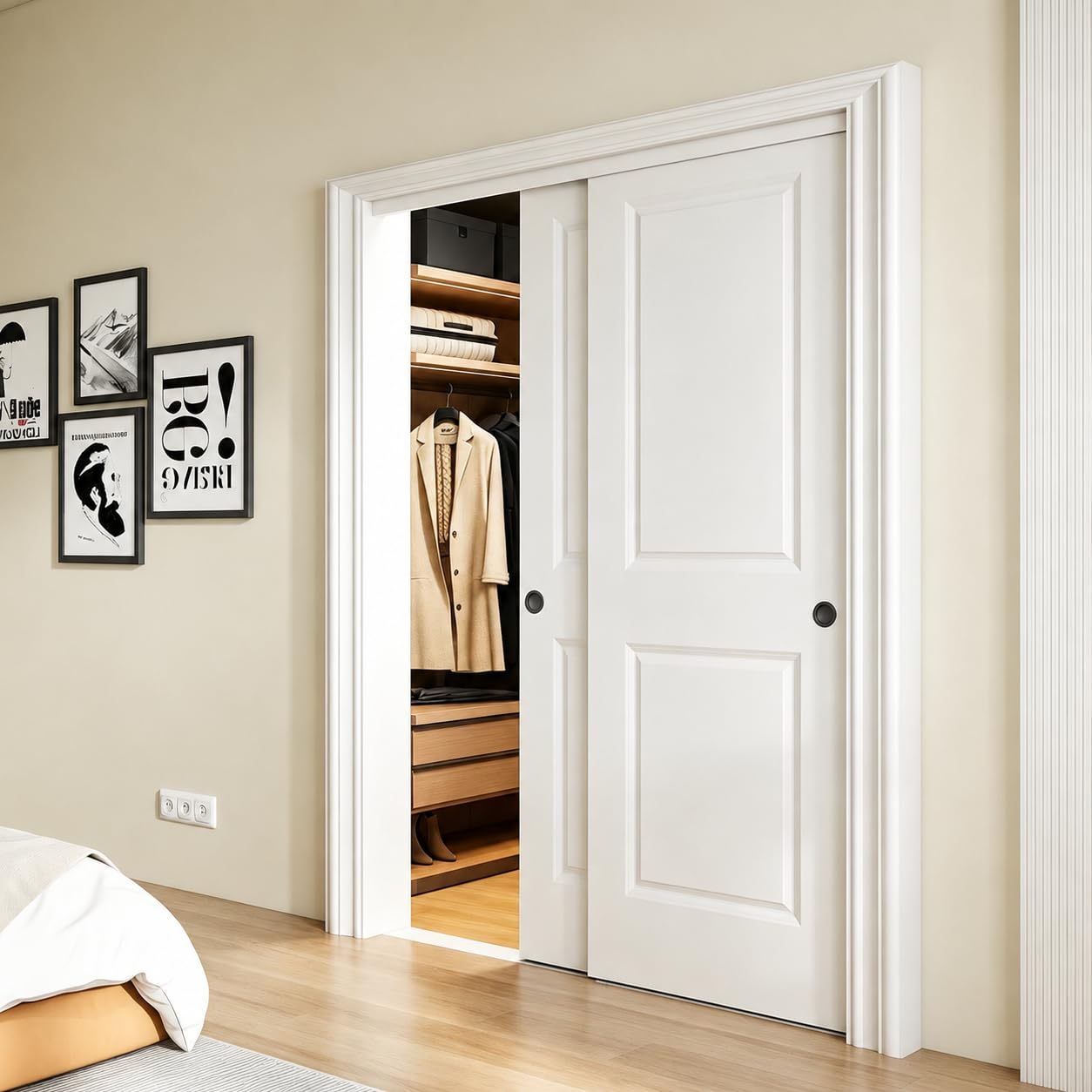
The one kit here that arrives with its own track, fascia, and floor guide.
Every other pick on this list hands you a bare slab and leaves the hardware to you. This one does not. The JUBEST sliding set includes two preassembled panels plus the matching fascia, top track, floor guide, finger pulls, and mounting screws, and it is pre-drilled for the finger pulls. Each door measures 24 31/64 in. wide by 78 3/16 in. tall at 1 3/8 in. thick, and the maker recommends a rough opening 72 in. wide by 80 in. high. It weighs 45 pounds as a set, which the maker notes is noticeably less than solid wood or MDF doors — light enough for one person to lift and a good fit for renters and DIYers who cannot modify walls heavily.
The raised 2-panel square-top face blends traditional paneling with modern lines, and both sides are pre-primed white and paintable. Because it is a bypass system, the panels slide along the wall, so it needs no swing space — the answer when a tight closet or hallway cannot spare floor clearance. Owners praise the packaging, the included instructions, and the solid feel, and one went back to order two more sets. The main caution comes from the setup itself: getting the right wheels on the correct door matters, and one owner found the pair to be average on both quality and value rather than exceptional.
Before you commit, check that your opening matches the recommended 72 in. by 80 in. rough dimension, and confirm you have the wall space for the track to sit above and beside the opening. You do not need special tools for the included finger pulls, but you do need to get the track level — that single step decides whether a bypass door glides or drags.
what separates it: the track, fascia, floor guide, and finger pulls all ship in the box, so there is no separate hardware run before you can hang anything.
Measure before you order: the recommended 72 in. by 80 in. rough opening and the wall space above the track both need to be there, or the bypass slide will not clear right.
It’s the move if: you have a tight closet and need a complete sliding setup that arrives with track and pulls so one person can install it.
Look elsewhere if: you want a full-width solid core panel, or your opening does not match the 72 in. by 80 in. rough dimensions.
Understanding the Specs
Solid Core vs Hollow Core
Hollow core doors are built with a light frame around a mostly empty center, so a 24 in. by 80 in. door weighs far less and costs less. Solid core doors are filled through the middle with dense material, so a comparable door can weigh 57 pounds against a hollow panel’s lighter frame. A heavier core quiets a room more and holds handle and hinge screws better. Choose solid core for bedrooms, offices, and dens where you want sound separation. Choose hollow core for closets, pantries, and laundry rooms where the job is hiding a shelf, not blocking noise.
Trimming and Rough Opening
Trimming is cutting material off the edge or bottom of a slab so it fits an opening that is not perfectly standard. The allowance varies by model — some permit about 1/4 in. per side, while the JUJUBON slabs allow up to 0.5 inches per side. Always cut from the hinge side first if the panel has a lock bore, and never trim more than the maker allows unless the door has solid wood support where you are cutting. For the rough opening, the maker usually lists a height and width slightly larger than the door itself, such as a 30 in. by 80 in. door fitting a 30-1/4 in. by 80-1/2 in. gap. A rough opening that is not square is fixable by trimming; one that is badly undersized is not.
FAQ
Will an 80 in. slab door fit my standard doorway?
What does slab only mean and do I need to buy hardware separately?
Can I trim a 2-panel door to fit a smaller opening?
Is solid core worth the extra weight over hollow core?
What rough opening size do I need for a 24 in. or 30 in. door?
Can I use a 2-panel slab as a pocket door or barn door?
Why do some doors arrive damaged and how do I avoid it?
Do I need to paint or finish the door after buying it?
How much does a 2-panel door weigh and how many people does it take to hang?
What is the difference between a raised panel and a flat shaker 2-panel door?
Final Thoughts: The Verdict
For anyone building a barn-door setup who wants real wood, the Kimberly Bay solid pine slab is the one to start with — it arrives pre-drilled, carries two-panel styling on both faces, and its 83.5 in. height covers more of the frame. If a quiet room matters more than a barn aesthetic, the OHTOMO solid core slab at 57 pounds is the one to reach for. And for a closet with no floor space to spare, the JUBEST sliding set earns its place because the track, guide, and pulls all come in the box. Whichever way you go, unwrap and inspect the full panel before you cut — that one habit saves more headaches than any spec sheet can.
How We Picked
We do not accept paid placement. Every pick is matched to a real buyer and a real use-case; we do not hands-on test units.
Sources & Methodology
Specifications: manufacturer listings and product documentation. Review insights: verified customer reviews, as of September 2026. Pricing: not shown on this page (it changes often); check the current price via the retailer link.
As an Amazon Associate, KitchPrep earns from qualifying purchases. This does not affect which products we feature.
Related Guides
