
Specs are compiled from manufacturer listings and verified buyer reviews and can change over time — please confirm the key details on the product page before buying.
If your pool pump loses its prime overnight, your spa drains backward into the pool, or your basement ejector pump slams like a hammer every time it shuts off, the culprit is almost always one small part: the check valve. A 2-inch PVC check valve is a one-way gate for water — it lets flow travel forward and snaps shut the moment water tries to reverse. This guide covers the nine valves actually worth gluing into a 2-inch line, sorted by the jobs they do best.
I’m Mohammad Maruf — the founder and writer behind KitchPrep. This guide is built by comparing the manufacturers’ published specifications and the patterns across verified customer reviews, so you get each pick’s real strengths and trade-offs instead of marketing spin.
One honest note before the picks: plumbing sizing is forgiving in real life, so this list accepts any valve built for 2-inch nominal PVC pipe — a 2-inch or 2.5-inch slip fit still serves the same job. Read on for the most reliable 2-inch pvc check valve picks for pools, sumps, and irrigation lines.
Our Picks at a Glance

How To Choose The Best 2-Inch PVC Check Valve
Three things decide whether a check valve disappears into your system for years or becomes a weekly headache: how it closes, how it connects, and what it is rated to hold. Get those three right and the rest is detail.
Swing Flapper vs Spring Loaded
A swing flapper hangs on a hinge and falls shut by gravity. It adds almost no resistance to flow, which is why it suits low-pressure jobs like drainage and gravity return lines. A spring-loaded valve pushes a disc shut with a spring, so it seals even when the valve sits upside down or the line runs dry. The trade-off is real: a stiffer spring holds back flow. One 2-inch Valterra owner measured a 40% flow drop from the 1/2 lb spring on a 2500 gph pump, then regained that flow after cutting the spring out. If your pump is already working hard, a light spring or a flapper is the safer pick.
Connection Type Decides Your Next Repair
Slip and socket ends glue straight onto PVC pipe with solvent cement — cheap, permanent, and impossible to remove without cutting. A union end threads on and off, so you can unscrew the valve body, clean a stuck flapper, and screw it back without touching the pipe. If the valve sits anywhere you might need to inspect it later, a union pays for itself the first time something jams.
Pressure Rating and Clear Bodies
Every valve here carries a maximum pressure rating — the highest PSI it is built to hold. Pool and spa return lines run at low pressure, so even a 5 PSI valve works there; commercial and irrigation lines want far more headroom. A clear or transparent body is the other quiet win: you can see whether the flapper is sealing, seating, or snagged on debris without draining a thing.
Quick Comparison
| Model | Best For | Connection | Max Pressure | Body Style | Amazon |
|---|---|---|---|---|---|
| FibroPool ValvesPOSI2InchCheck★ Best Overall | Pool and spa protection | 2 in Slip | 5 psi | CPVC, non-lube PTFE seat | Amazon |
| 7305 Check Valve ReplacementBest Value | Budget 2 or 2.5 in swap | 2 in Slip | — | Clear cover PVC | Amazon |
| Valterra 200-C20Top Performer | Max flow, low pressure | 2 in Slip | 150 psi | Clear Schedule 40 PVC | Amazon |
| Spears S1520-20 | Thick-wall durability | 2 in Socket | — | White PVC swing | Amazon |
| Valterra 200-CU20 | Serviceable pool unions | 2 in Union | 150 psi | Clear Schedule 40 PVC | Amazon |
| 2-inch PVC Transparent Silent Check Valve | Quiet spa and swim spa repair | 2 in Adapter | — | Clear PVC, spring-loaded | Amazon |
| Zoeller 30-0243 | Whole-house noise relief | 2 in Solvent | — | PVC swing union | Amazon |
| Zoeller 30-0043 | Water hammer elimination | 2 in Compression | 50 psi | PVC, 1/2 lb spring | Amazon |
| HYDROSEAL Sharkfellow True Union | High-pressure commercial lines | 2 in Socket, full port | 200 psi | Gray PVC, EPDM seals | Amazon |
In‑Depth Reviews
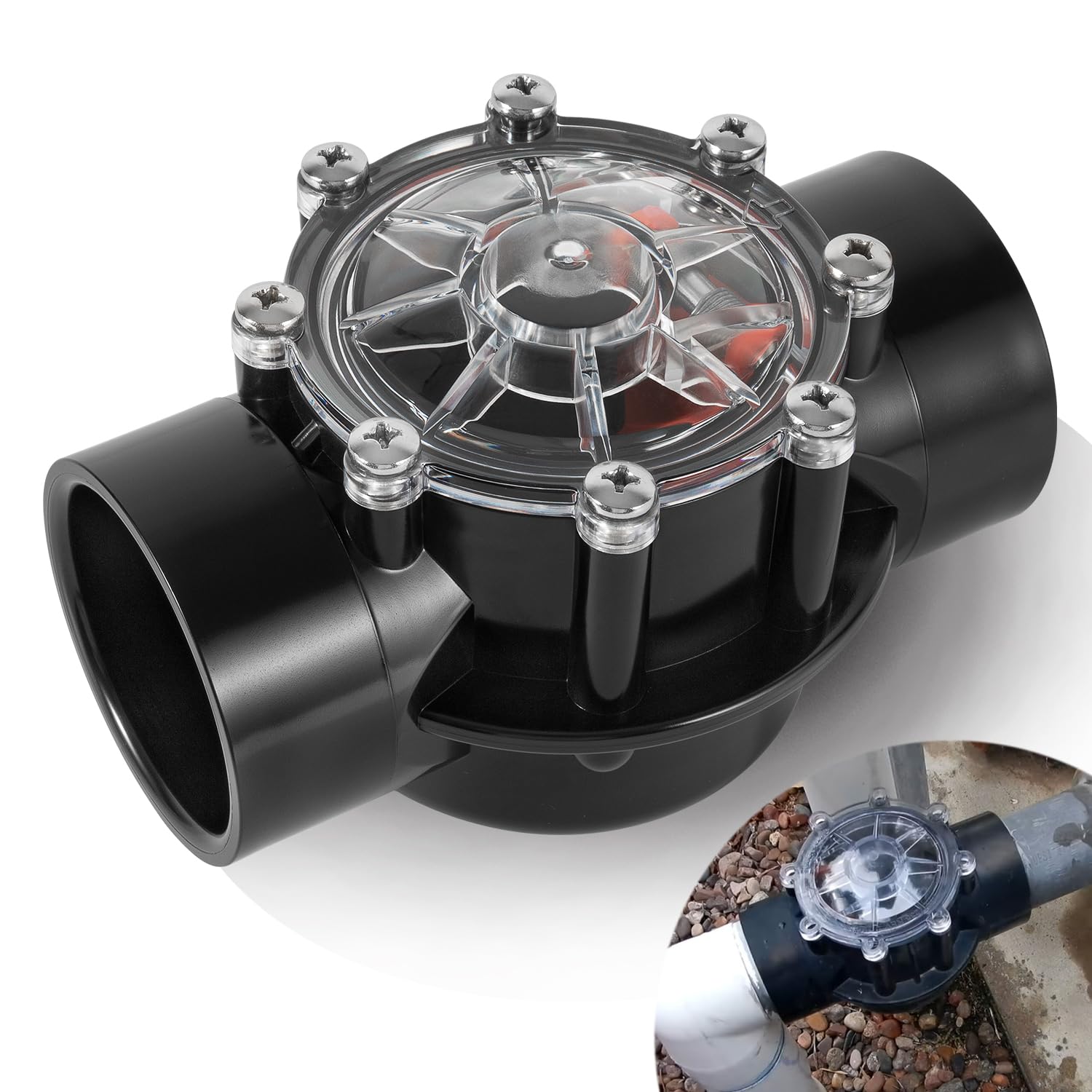
1. FibroPool ValvesPOSI2InchCheck 2 in Check Valve – 5 PSI Spring Loaded
Our pick — 4.5★ from 200+ verified ratings; the strongest balance of quality and price.
The pool-duty valve that seals without a drop of lubrication and settles into saltwater plumbing without complaint.
If your pool heater or salt system is the thing you are protecting, this is the pick to beat. The body is built from CPVC, not plain PVC — CPVC tolerates hotter water and pool chemicals better, which is exactly what runs through a heater return line. The seat is PTFE, a slick material that needs no grease ever, so the valve opens and shuts cleanly with virtually no upkeep. Two 2-inch slip ports glue straight onto standard PVC pipe, and the whole thing is rated to open at 5 PSI and hold up to 5 PSI of working pressure.
The number that makes this the value play is the gap against the higher-pressure competition. There is a 30.0x difference between this valve’s 5 psi rating and the Valterra 200-C20’s 150 psi, but for a low-pressure pool loop the FibroPool’s lighter opening pressure is a feature, not a shortfall — it lets a modest pump push water through without fighting a stiff spring. Owners call the operation “extremely smooth,” and buyers reported restarting a pool pump before connecting a solar heater with no leakage.
The honest catch is fitment, not function. One buyer found the slip joints needed a little sanding to dry-fit the way they wanted, and a few owners miscalculated their opening size on the first order. Double-check your pipe diameter before you cut, and give the slip joints a light sand — that is the entire fuss. The durability picture is genuinely mixed in the feedback, with some valves running for years and a few reporting leaks, so treat it as a solid mid-range choice rather than an indestructible one.
Where it earns its keep
- CPVC body stands up to heat, salt systems, and chemical feeders.
- Light 5 psi opening pressure suits low-pressure pool and spa loops.
- Lubrication-free PTFE seat means no greasing, no routine service.
- Two 2-inch slip ports glue into standard PVC plumbing with no adapters.
What to plan around
- Slip joints may want a light sanding for a snug dry fit.
- Not built for high-pressure lines — pool and spa duty only.
- Sizing mistakes are common, so measure your pipe twice.
Made for this: Pool and spa owners protecting a pump, heater, or filter who want a low-maintenance valve that lives happily with saltwater and heat.
Think twice if: You are running a high-pressure or commercial line — this valve is rated for the gentler world of pool loops.
2. 7305 Check Valve Replacement, 2 Inch or 2.5 Inch PVC One-Way Valve
A budget-friendly drop-in that covers both 2-inch and 2.5-inch pipe and lets you watch the flapper move through clear plastic.
This is the valve you reach for when budget matters and you are not certain whether your line is 2-inch or 2.5-inch, because it fits either. The clear cover is a genuinely useful touch — you can see debris collecting on the seat before it ever causes a backflow problem, and you can check it without cutting anything apart. The PVC body is described as UV-resistant and heavy-duty, which matters for outdoor pool and water-feature plumbing that bakes in the sun all summer. It carries two ports and a slip connection rated for the 2-inch size.
Where it separates itself from the FibroPool above is the fitting range. The FibroPool locks you into a single 2-inch slip port, while this one covers 2-inch or 2.5-inch pipe, so it is the safer buy if you are replacing a jandy 7305 style valve and are not sure of the exact coupler. It is also the lighter of the two, at 8.64 ounces versus the Valterra 200-C20’s 16 ounces — handy when you are supporting a joint by hand during glue-up. It is a compact 6.46 x 4.72 x 4.09 inches, so it tucks into tight equipment pads.
Here is the fair warning, and it is worth taking seriously for a budget valve. The sizing tolerance is the recurring complaint — buyers report a 2.5-inch coupler sitting loose on the valve, and one said plainly, “buy OEM and not a knockoff.” A few units leaked or failed within the first month. If you have some slack in your plumbing to sand and fit carefully, it works fine; if you need a drop-in that matches a factory coupler exactly, pay up for the name brand. The star rating reflects that split.
Fits two pipe sizes: Covers 2-inch or 2.5-inch PVC, with a clear cover for inspection and UV-resistant PVC for outdoor duty.
Size it carefully first: The loose-coupler fit is the most common gripe, so measure your pipe and test-fit before committing to glue.
Your pick if: You are on a tight budget, replacing a jandy 7305, and your pipe size is not 100% certain.
Pay more instead if: You need an exact-match coupler you can trust straight from the start without fitting work.
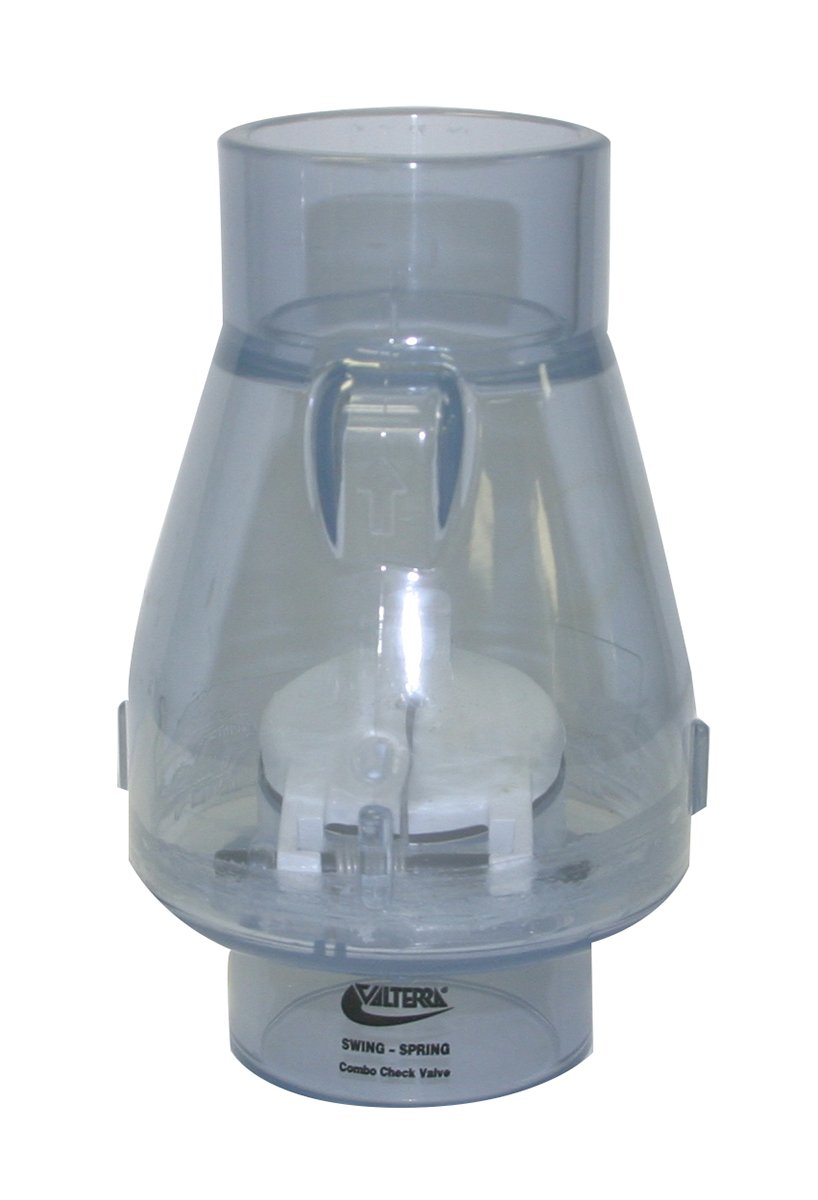
3. Valterra 200-C20 Check Valve, 2in, Slip x Slip, Clear
The heavyweight build with the lightest touch — a clear Schedule 40 body that lets you watch flow moving in the right direction.
Built from Schedule 40 PVC with an EPDM seal, this is the valve for buyers who want a clear window into their line and a proper pressure ceiling. The 150 psi maximum pressure rating gives you far more headroom than the pool-only FibroPool’s 5 psi, which is the difference between a one-job valve and one that travels between systems. The transparent body shows you the flapper at a glance. The only moving parts are the 1/2 lb spring and the flapper itself, so there is little to go wrong.
The 1/2 lb spring is where the plot thickens, and owners are split on it. Pool and sprinkler users who want a reliable seal love the secure closure. High-flow users run into it: on a 2500 gph pump, owners reported the spring holding the flapper partly open and cutting flow, and the standard fix was to cut the spring out with a Dremel tool and let gravity close the flapper instead. That honesty matters — this is a valve you can tinker with, and plenty of buyers do exactly that. It also sealed a well-pump irrigation line without losing prime, which is the kind of endorsement a check valve lives and dies on.
Choose it for its clarity and its pressure headroom, not for its spring. If you want a transparent valve you can watch and a body rated for real pressure, this is the one; if you are pushing a high-flow pump, plan on springless operation from the start rather than fighting a flow reduction.
Matches this: Sprinkler systems, drainage lines, and pool returns where you want a 150 psi-rated clear body and a secure seal.
Set your expectations: The 1/2 lb spring can fight high-flow pumps, and many owners run it springless instead.
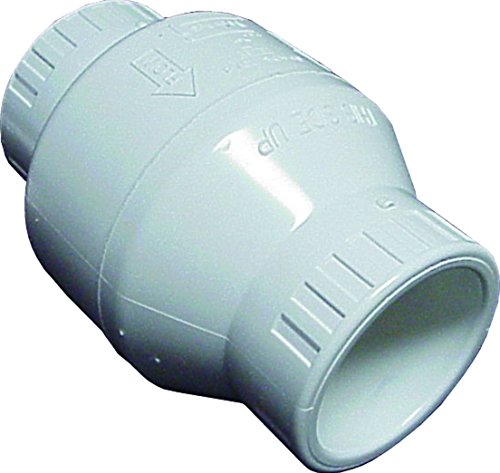
4. Spears S1520-20 PVC Utility Swing Check Valve, 2-Inch, White
A heavy-wall swing valve with an angled seat and weighted flapper for the lowest-pressure drainage jobs.
Spears builds this one for maximum flow and quick response, which is exactly what a drainage or irrigation line needs. The angled seat and weighted flapper let it seal even at very low pressure — that is the point. Owners describe the design as simple and quality-built, the sort of valve you install once and stop thinking about. The extra-thick plastic walls are a recurring note of approval; this is a valve that feels like it will outlast the pipe around it.
It is a swing valve, so there is no spring to fight your pump. It works in horizontal or vertical up-flow installations and accepts 2-inch socket end connections. The full-flow path means it barely restricts water moving the right way, while the flapper drops shut the instant flow reverses. If you are running a low-pressure line where you want no restriction at all in the forward direction, this is the behavior you are shopping for.
The trade-off is price and one honest caveat. Owners consistently call it expensive compared to the pool-store options, and it is not the valve to grab if your priority is squeezing cost down. There is also the occasional report of an internal flapper not sealing fully, which forced one owner to cut the fittings out and remove it — a quality-control blip, not the norm, but worth knowing if you cannot easily rework a joint. For low-pressure systems where a swing design is the better fit, the thick walls more than justify the choice.
Built for low pressure
- Angled seat and weighted flapper seal at very low pressure.
- Extra-thick PVC walls resist corrosion and chemicals.
- Works in horizontal or vertical up-flow installations.
- No spring, so full flow moves without restriction forward.
Costs to weigh
- Priced high compared with pool-store alternatives.
- Occasional reports of the flapper not seating fully.
Ride with this: Low-pressure landscape, irrigation, and drainage lines where a jump on cost buys confidence.
Look elsewhere if: You want the cheapest 2-inch valve, or a spring-loaded seal for a line that drains dry.
5. Valterra 200-CU20 PVC Swing/Spring Combination Check Valve, Clear, 2″ Union

The one you can unscrew and clean without cutting pipe — union ends and a clear body made for the pool pad.
Ask a pool owner what they hate about check valves and the answer is almost always cutting the old one out. This Valterra solves it with 2-inch union connections: the valve body threads on and off, so when the flapper snags on debris you unscrew it, rinse it, and thread it back — no saw, no new fittings. The clear PVC body lets you spot the problem in the first place. It is built from Schedule 40 PVC with an EPDM seal and the same 150 psi maximum pressure rating as the 200-C20 above, so the pressure headroom is identical.
The combination design gives you a swing flapper and a 1/2 lb spring in one body, so it seals whether the line runs wet or dry. In real use it has rescued pool systems that were draining overnight: owners described replacing a valve that was leaking backward and emptying a spa every night, then seeing the clear body show them exactly when debris was preventing a proper seat. That visual feedback is what makes the union design pay off — you can actually see why a valve is failing instead of guessing.
The trade-off is durability in this price band. The feedback on longevity is genuinely mixed, with a batch of owners reporting it does not last as long as the price suggests, and leakage split between near-zero and major. It is a maintenance-friendly valve that rewards you for checking it; if you want a fit-and-forget part for a buried line, a solvent-weld valve is a better bet. On an accessible pool pad where you can pop it open, it earns its place.
The union is the whole point: Unscrew the body to clean or swap it, no cutting required, and watch flow through the clear PVC shell.
Keep it reachable: Longevity reports are mixed, so this valve wants to sit somewhere you can service it easily.
Right call for: Pool and spa owners who want a serviceable union valve they can open, inspect, and reuse on an accessible pad.
Not the one if: You are burying the valve or want the longest-lived part you can glue in and forget.
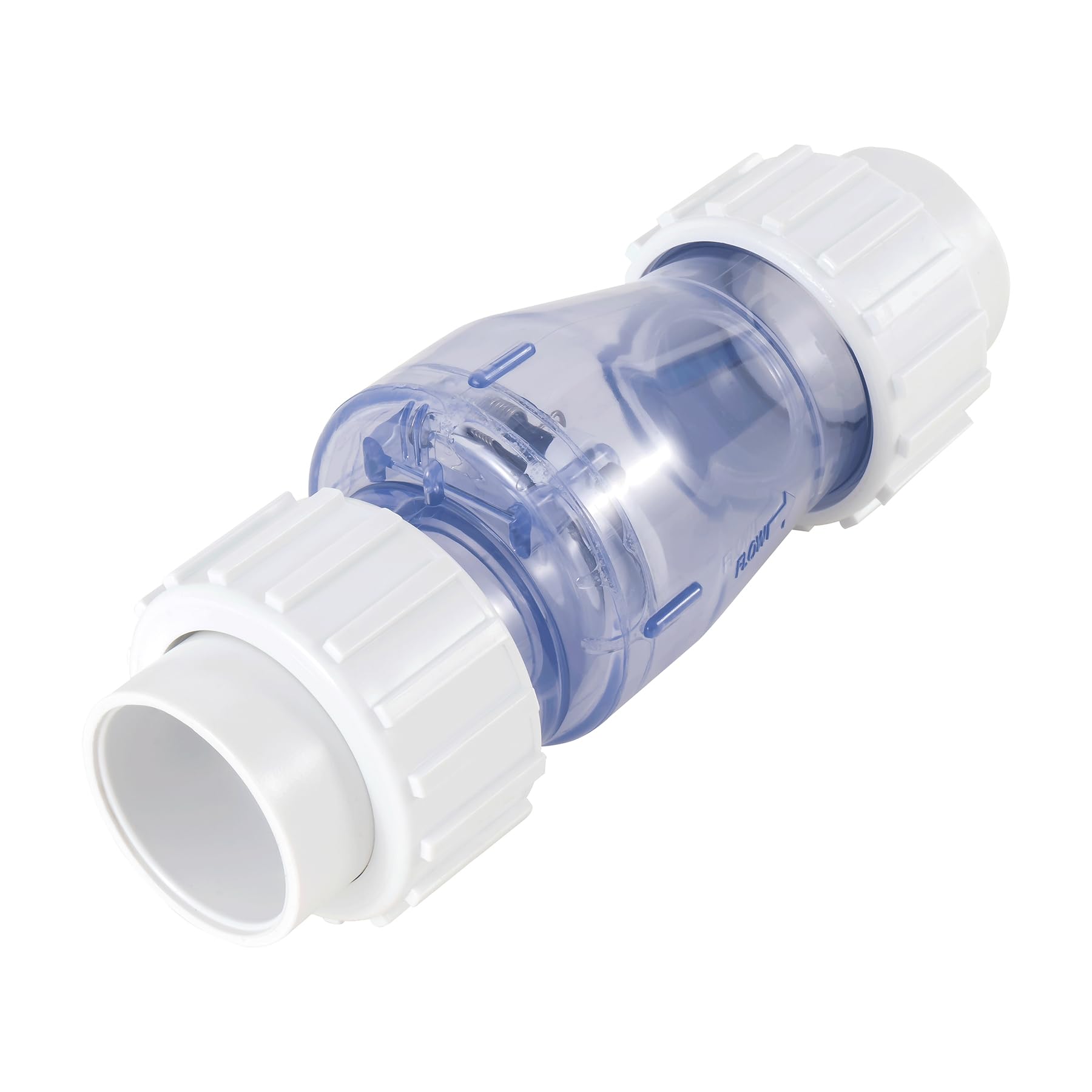
6. 2-inch PVC Transparent Silent Check Valve – Spring-loaded – 2″ Union
A spring-loaded valve built to kill the bang — the water-hammer knock that rattles pipes when a pump shuts off.
Water hammer is the loud thud a pipe makes when flow reverses suddenly, and this valve is engineered specifically to stop it. The spring-loaded mechanism closes the disc before the water column can slam back, which quiets the motor and pump noise running through the line. The clear PVC body does double duty: you can watch the valve operate and check flow status without taking anything apart. Around the body you get compression end fittings and a full-flow, non-clogging passage that keeps pressure drop low.
The install flexibility is a genuine plus. It fits horizontal or vertical mounting, so you are not locked into one pipe orientation — useful when you are squeezing a repair into a tight equipment closet. Owners have used it to fix specific backflow headaches: buyers reported replacing one to repair a swim spa and stopping chlorine from backing up into a filter tank. The verdict across the feedback is consistent appreciation for the clear body and the simple install. At 1.05 kg it is a substantial, solid-feeling valve.
The obvious question is whether the spring costs you flow. Any spring-loaded valve adds some resistance, and this one is aimed at systems where quiet and backflow control matter more than squeezing out every gallon — a spa or swim spa, not a high-head pool circulation loop. There is also a quality ceiling to note: the star rating reflects a solid but small base of feedback, so buy it for the quiet operation and the inspection window rather than as a proven long-haul workhorse.
Good match: Swim spas and filter lines where stopping backflow quietly beats chasing maximum flow.
Reconsider if: Your pump is already stressing a long run and you cannot afford any spring resistance.
7. Zoeller 30-0243 2 in. PVC Swing Union Check Valve White

The valve that turns a basement banging like a hammer into nothing you can hear from the next room.
If you have ever lived above a sump or ejector pump, you know the sound: a hollow slam every time the pump shuts off. This Zoeller swing union valve is the fix. It threads in with solvent connections, runs a full-flow non-clog passage, and installs in horizontal or vertical orientation. The quiet operation is the entire story here — the design closes without the violent clack of a metal check valve, which is why it belongs on sump, ejector, and grinder pump lines rather than in a pool loop.
Owners describe the change as dramatic. Buyers reported installing it in under ten minutes, hearing only water leaving the pipe during a test run, then complete silence when the pump finished — no thud. One owner, after decades of a loud cast-iron valve in the basement, said the noise vanished entirely from the room. For a part this small, that is a large quality-of-life change in a house.
The catch is that you pay a premium over the pool-store valves for that quiet, and you do need to install it correctly — follow the instructions and get your connections right, because a swing valve depends on clean seating to stay silent. It is also a solvent-end body, so it is permanent once glued; if future service access matters, plan the layout before you commit. Buy it for the quiet on a grinder or ejector line, and it delivers.
Why it goes quiet
- Swing design closes without the slam of a metal check valve.
- Full-flow, non-clog passage suits sump and ejector duty.
- Works in both horizontal and vertical installations.
- Durable PVC body with solvent connections.
What to know first
- Costs more than basic pool-store check valves.
- Solvent ends are permanent, so plan access before gluing.
Built for: Sump, ejector, and grinder pump lines where the shut-off bang carries through the whole house.
Skip the premium if: You are buying for a pool return where noise was never the problem.
8. Zoeller 30-0043 50 psi PVC 2-Port Check Valve, 2″

Compression-end Zoeller built around a light 1/2 lb spring to swallow the knock when the pump stops.
This 2-inch Zoeller takes a different route to quiet than its union sibling above: it uses a 1/2 lb spring to snap the valve shut before the water column can slam, matched by compression end connections for a 2-inch line. The maximum pressure is 50 psi, rated for sump and drainage duty rather than high-head pool work. A clear body lets you confirm the flapper is operating, and the full-flow design keeps solids moving through instead of clogging the seat.
Owners bought this specifically to fight water hammer, and the feedback says it works. Buyers reported the loud knocking stopped when a sewage ejector pump shut off, and one said the old “THUNK” heard throughout the house vanished — standing beside the pump, there was nothing to hear. Another said it fixed their water hammer and runs “quiet as a mouse.” The 1/2 lb spring is the mechanism doing that work; a lighter spring closes faster and stays out of the way of flow.
The one housekeeping note is the compression end fittings. They are convenient because they thread together rather than gluing, but the valve’s real-world quiet depends on the joint being snug, so follow the install instructions rather than improvising. And because it is rated to 50 psi, keep it to sump, drainage, and low-pressure lines where that ceiling is comfortable. For a mission built around killing the bang, it does the job it was designed to do.
Chosen for its spring: The 1/2 lb spring closes the valve fast enough to snuff out water hammer on ejector and sump lines.
Snug up those ends: Compression fittings thread together, so get them tight — the quiet depends on a solid joint.
Choose this when: You want the water hammer gone on a low-pressure sump or drainage line and prefer compression ends over solvent weld.
Keep it in scope: Rated for 50 psi, so it is not the pick for high-head or commercial pressure lines.
9. HYDROSEAL Sharkfellow 2″ PVC True Union Ball Check Valve, Full Port, 200 PSI
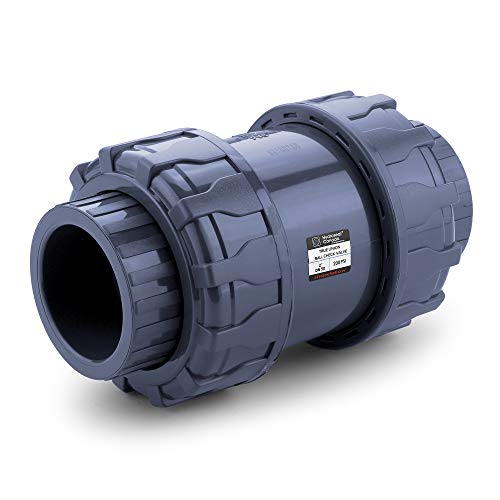
The high-pressure true-union pick with a 200 psi rating and a full-port ball that opens wide for serious flow.
When the line runs at real pressure and you cannot afford a weak valve, this is the one in the group built for it. The maximum pressure is 200 psi at 72F, higher than the 150 psi the two Valterra valves above carry and far beyond the pool-loop picks. It uses a full-port socket connection and EPDM seals, and it is corrosion-free by design — the maker states it will never jam or stick from rust or corrosion, which matters in commercial plumbing, water parks, and irrigation where the valve sees constant duty. A true union threading means you can remove it without breaking down the piping.
Owners run this in demanding spots — aquariums, shallow wells, even reef-tank sump returns — and the quality shows. Buyers reported it is better built than the hardware-store valves they used before, and one unit shipped with replacement O-rings. In the right orientation it runs silent. One summed it up simply: “seemed solid,” installed in a shallow well with no problems yet. It holds pressure and seals well in the applications it is designed for.
The honest catch is mounting orientation and serviceability. Buyers found this ball-check wants to run horizontal — mounted vertically, some reported noise from the internal ball bouncing, and a few saw leaks that only settled once it was repositioned. The bigger structural point: no spare parts are sold, and the union threads are non-standard, so any error or repair means replacing the whole valve. Plan the layout so you can mount it correctly the first time.
Built for pressure
- 200 psi rated at 72F, the highest pressure ceiling here.
- Full-port ball design opens wide for unrestricted flow.
- True union lets you remove it without cutting the piping.
- EPDM seals and a corrosion-free body for commercial and irrigation duty.
Plan around this
- Prefers horizontal mounting — vertical can run noisy or leak.
- No spare parts sold and non-standard union threads, so a fix means full replacement.
Pick it for: Commercial lines, aquariums, irrigation, and water features that run at real pressure and need a full-port seal.
Be ready to buy your last one: No spare parts and non-standard threads mean sizing and orientation mistakes are expensive to undo.
Understanding the Specs
Maximum Pressure vs Cracking Pressure
These are the two pressure numbers on a check valve, and they do opposite jobs. Maximum pressure is the ceiling the valve body is built to hold — a 200 psi HYDROSEAL can sit in a high-pressure commercial line, while a 5 psi FibroPool is meant only for a low-pressure pool loop. Cracking pressure is the opposite: the amount of push needed to open the valve. A light spring opens on a gentle push and lets a modest pump move water easily; a stiff spring seals harder but holds flow back. Light cracking pressure for low-pressure pool and spa loops, high maximum pressure for commercial lines — match both numbers to your system and the valve behaves.
Connection Ends and Service Access
How a valve connects decides how painful your next repair is. Slip and socket ends glue onto PVC pipe with solvent cement — a permanent, low-cost joint that you have to cut out later. Union ends thread on and off, so the valve can be unscrewed to clean or replace without touching the pipe. Compression ends thread together too, letting you tighten or reset the joint with a wrench. If the valve sits somewhere you can reach it, a union or compression end saves you a saw and new fittings; if it is buried, a solvent-weld end is the simpler, cheaper route.
FAQ
What size 2-inch PVC check valve actually fits my pipe?
Should I choose a swing check valve or a spring-loaded one?
Which valve stops water hammer and loud pipe banging?
Do I need a clear body check valve for a pool?
Will a check valve reduce my pool pump’s flow?
Can a 2-inch check valve be used with a sump pump or ejector pump?
How long does a 2-inch PVC check valve last?
Is a true union check valve worth it over a glue-in model?
What does the pressure rating on a PVC check valve mean?
Can I install a swing check valve vertically?
Final Thoughts: The Verdict
For most pool and spa owners, the 2-inch pvc check valve to reach for is the FibroPool ValvesPOSI2InchCheck, because its CPVC body and lubrication-free PTFE seat are built for hot, salty pool water and need no routine greasing. If quiet is your mission and the noise runs through the whole house, the Zoeller 30-0243 is the one to grab — its swing union design trades the shut-off bang for near-total silence. And if your line runs at real pressure, the HYDROSEAL Sharkfellow with its 200 psi ceiling is the heavy-duty answer. Buy by connection type and pressure rating first, and the right valve for your line becomes obvious.
How We Picked
We do not accept paid placement. Every pick is matched to a real buyer and a real use-case; we do not hands-on test units.
Sources & Methodology
Specifications: manufacturer listings and product documentation. Review insights: verified customer reviews, as of September 2026. Pricing: not shown on this page (it changes often); check the current price via the retailer link.
As an Amazon Associate, KitchPrep earns from qualifying purchases. This does not affect which products we feature.
Related Guides
