
Specs are compiled from manufacturer listings and verified buyer reviews and can change over time — please confirm the key details on the product page before buying.
You found the air leak in your motorhome furnace or you need to route a cold-air intake under the hood of a project car. Then the duct itself collapses, kinks, or melts — the wrong material (cheap PVC, undersized wire helix) turns a weekend job into a do-over. A 2-inch flexible duct that lasts under heat, vacuum, and tight bends is what you actually need. This guide picks the best one for each job based on manufacturers’ published specs and what verified buyers report, not marketing claims.
I’m Mohammad Maruf — the founder and writer behind KitchPrep. This guide is built by comparing the manufacturers’ published specifications and the patterns across verified customer reviews, so you get each pick’s real strengths and trade-offs instead of marketing spin.
if you need a replacement for your motorhome heater, a high-temp hose for a diesel heater installation, or a heavy-duty suction line for a pump, these are the strongest contenders for the best 2-inch flexible duct on the market right now.
Our Picks at a Glance


How To Choose The Best 2-Inch Flexible Duct
The right 2-inch duct depends entirely on where you are routing air — under a hot hood, inside an RV wall cavity, or submerged in a water pump line. Here are the three variables that matter most.
Match the material to the temperature
Standard PVC plastic duct handles temperatures up to about 150°F, which makes it fine for defroster vents and general shop use. Silicone-impregnated fiberglass, on the other hand, can withstand 575°F — a big difference if you are routing near an exhaust manifold or a diesel heater. For pellet stoves and furnace applications, aluminum-based duct resists both heat and corrosion.
Check the wire reinforcement
A steel wire helix (a spiral of spring steel embedded in the wall) keeps the duct from collapsing when you bend it around a corner or when the system pulls a vacuum. Without that reinforcement, a plastic hose can pinch shut, killing airflow completely. If your installation has a 90-degree turn or a side with suction (like a pump intake), wire reinforcement is non-negotiable.
Get the right length for your job
Duct comes in short 3-foot sections, 6-foot lengths, and bulk 25-foot rolls. A short piece works for a brake-cooling duct or a defroster hose under the dashboard. A 25-foot roll makes sense if you are redoing all the furnace runs in a motorhome — you cut exactly what you need and avoid having to splice pieces together.
Quick Comparison
| Model | Best For | Material | Length | Key Feature | Amazon |
|---|---|---|---|---|---|
| AP Products 013-665★ Best Overall | RV Furnace / Pellet Stove | Aluminum | 25 feet | Double-wall quality | Amazon |
| Autobahn88 SCAT DuctTop Performer | Brake / Engine Cooling | Silicone Fiberglass | 3.28 ft | High-temp routing | Amazon |
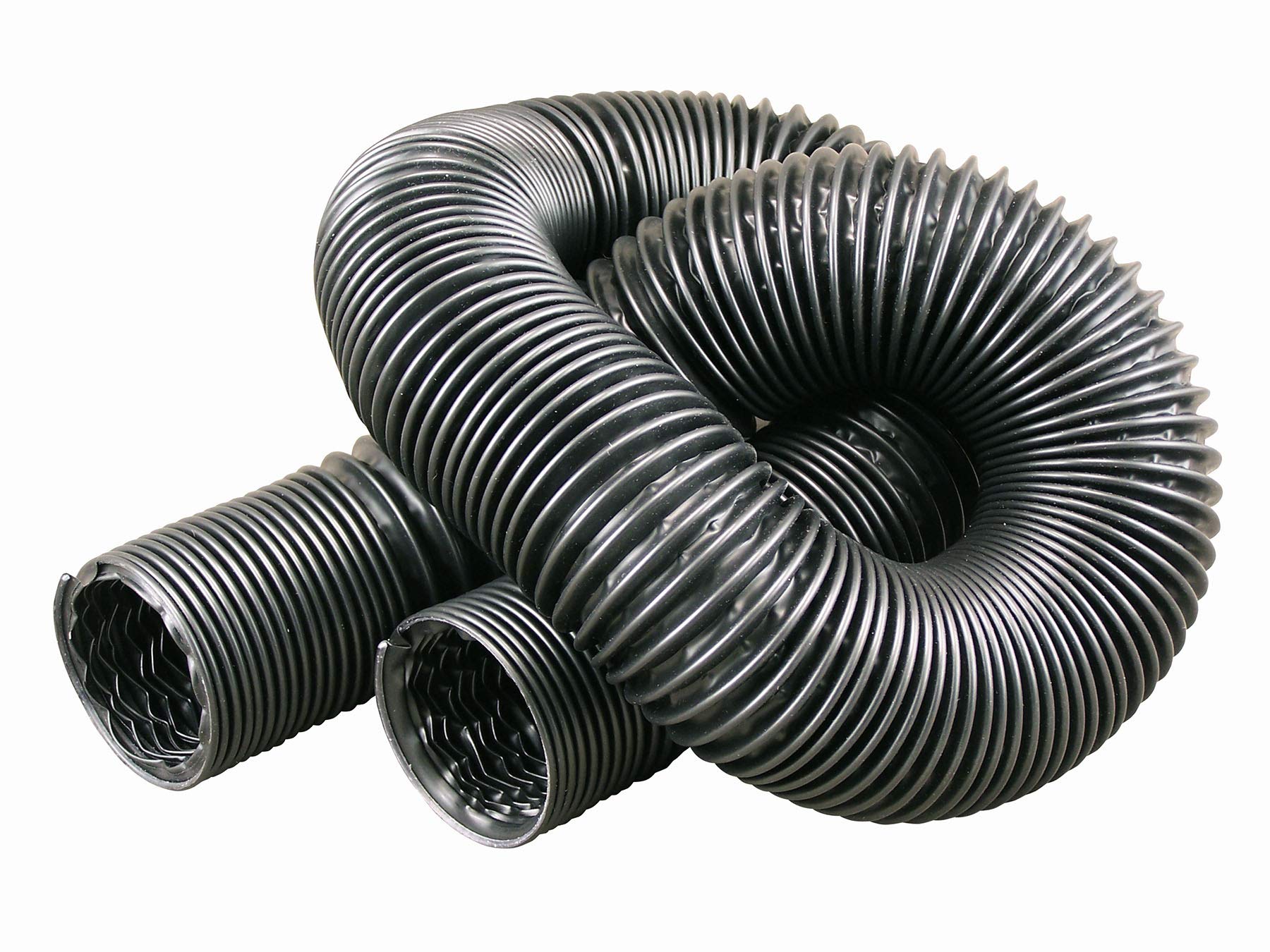
| Old Air Products 2″ DuctGreat Value | Classic Car Defroster | Plastic | 6 feet | Very flexible coil | Amazon |
| 2 Inch Cold Air Intake Pipe | Custom Air Intake | PVC + Steel Wire | 10″ to 40″ | Adjustable length | Amazon |
| Dorman 96002 | Universal HVAC / Defroster | Nitrile Rubber | 6 feet | Lifetime warranty | Amazon |
| QuQuyi Suction PVC | Water Pump / Vacuum | PVC + Steel Wire | 3.3 ft | 60 PSI working pressure | Amazon |
| NOWBALL Silicone Duct | Diesel Heater / Brake Cooling | Silicone Fiberglass | 3.3 ft | 575°F temp range | Amazon |
| Vintage Air Duct | Under-Dash Heater Routing | Plastic | 10 feet | Stretches for fit | Amazon |
| ZY-hosetube Clear Suction | Heavy-Duty Pump / Pool | PVC + Steel Wire | 10 feet | 180 PSI burst pressure | Amazon |
In‑Depth Reviews
1. AP Products 013-665 2″ x 25′ Flex Air Duct
Our pick — over 4.5★ from 300+ verified ratings; the strongest balance of quality and price.
The 25-foot aluminum roll that RV owners and pellet-stove installers consistently call “better quality than the original stuff.”
The reason RV owners replace “failed 2-inch flex-duct in RV furnace” with this roll is the double-wall build: it is noticeably tougher than the thin factory runs that rot out in a motorhome’s underbelly. At a nominal wall thickness of 0.08 inches, it resists crushing far better than brittle OEM pipe, and the aluminum material handles the heat of a pellet stove intake without issue.
The length (25 feet) is the main reason owners wish it came in shorter spools — many only need 6 feet for a single repair and end up with leftover material. That is a minor gripe given the value per foot, and functionally, the duct holds up perfectly when secured with sheet-metal screws and hose clamps.
What wins people over
- Aluminum construction resists heat and corrosion better than PVC
- 25-ft roll covers whole RV furnace runs in one piece
- Double-wall feel outlasts original equipment duct
The honest trade-off
- No smaller-length option — you buy 25 feet or nothing
- Thicker wall means slightly less flexibility than a plastic spiral duct
Reach for this if: you are re-doing furnace lines in an RV, replacing a pellet-stove intake, or want one roll to cover several repairs without splicing.
Look elsewhere if: you need only a 3-foot section for a tight engine-bay routing job — you will pay for material you cannot use.
2. Autobahn88 SCAT Flex Duct (Silicone-Impregnated Fiberglass)
The silicone fiberglass duct that holds up under boost pressure and routes easily around tight engine-bay corners.
Brake cooling ducts on a C5 Corvette, turbo intercooler pipes, and VW heater boxes — this duct handles all of them because the silicone-impregnated fiberglass (fabric coated with heat-resistant silicone and reinforced with an internal steel wire helix) does not collapse under vacuum or soften at high temps. “The wire reinforcement prevents collapse under pressure,” owners mention, and the flexibility means you can bend it 90 degrees without kinking shut.
The measured length is 39.6 inches (1 meter), which is notably shorter than the 72-inch options from Dorman or Old Air Products. For a focused job like directing cold air to brake calipers or connecting a heater box, that is enough. For a full dash-to-heater-core run, you may need two pieces and a coupler.
Why it stands out
- Handles tailpipe-level heat without melting or off-gassing
- Steel wire helix keeps the duct round under suction or pressure
- Easy to cut and route in confined engine bays
What to note
- 3.28-foot length is short compared to 6-foot plastic ducts
- No clamps included — you need to supply your own
Ideal for: brake ducting, diesel heater hookups, and any high-temp routing where PVC would fail.
Consider something else if: you need 6+ feet of continuous duct for a long dash run.
3. Old Air Products 2″ Inner Diameter Duct Hose (6 ft)
The plastic coil duct that classic-car restorers reach for when replacing rotten cloth defroster lines.
One buyer used it to “replace the old rotten cloth defroster ducts in my ’53 Ford” and reported it worked great — that is the whole point of this hose. The plastic coils are easier to work with than old-style wire-coil duct because they bend without fighting you, and they grip 2-inch fittings snugly without needing a clamp in every spot. Owners of Kawasaki Mules, Honda Talons, and Superformance Cobras all confirm the same: it cuts cleanly and holds its shape in a tight dash cavity.
At 72 inches (6 feet), it is a practical length for a single defroster or heater-core run. The minor complaint is that the price feels a little high for 6 feet compared to bulk rolls, but the ease-of-install feedback is strong enough that most builders do not mind.
What makes it easy
- Very flexible plastic coils — no wire-core fight during install
- Snugs onto 2-inch fittings, often without clamps
- 6-foot length matches one full defroster run on most vehicles
The fair warning
- Not rated for high-heat applications near exhaust or engines
- Price per foot is higher than bulk aluminum options
Best suited for: replacing cloth or cracked defroster ducts on classic cars, UTVs, and custom heater setups.
skip it if: the duct will run near a heat source or you need more than 6 feet for a single line.
4. NOWBALL 2in Automotive Air Duct Hose (3.3 ft)
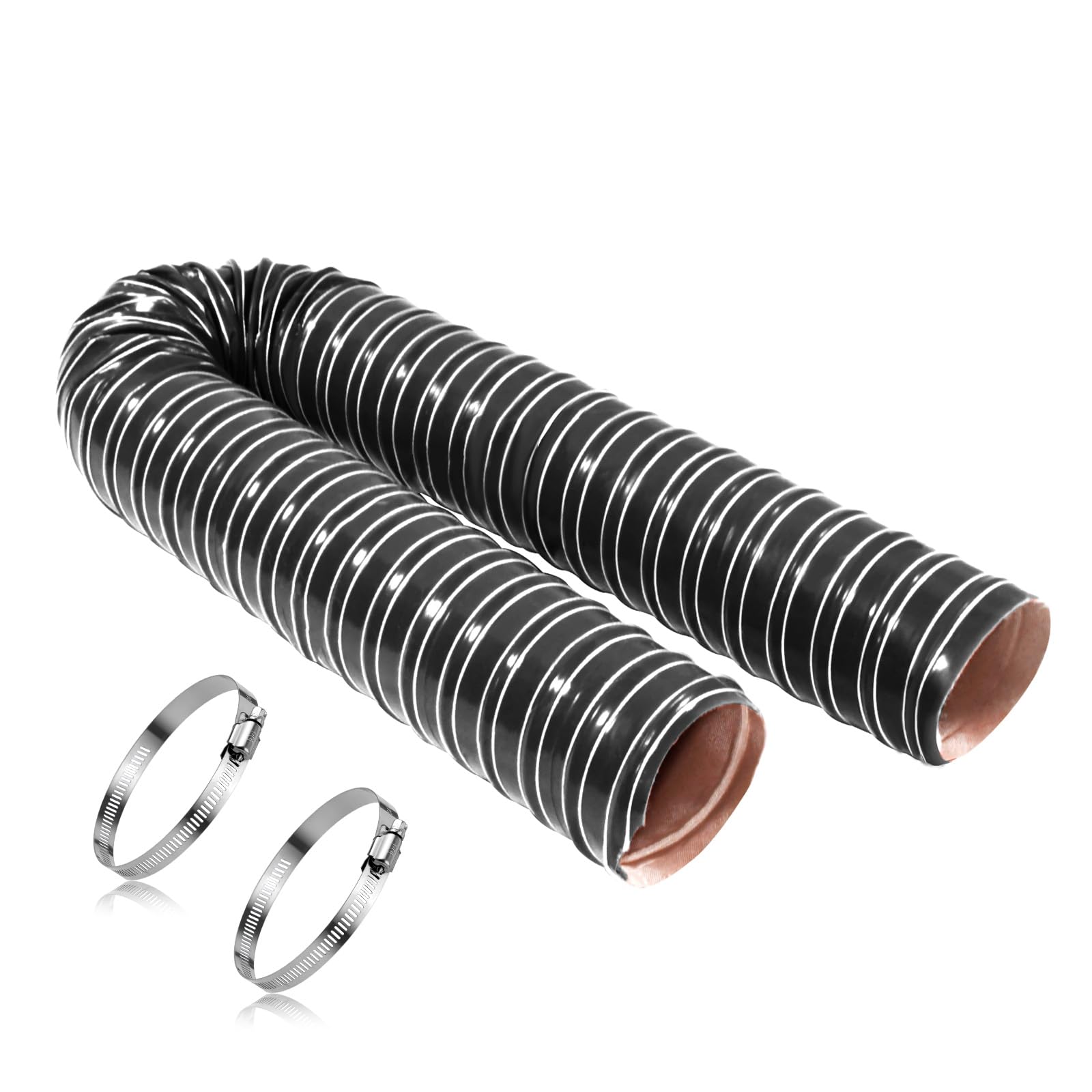
The silicone fiberglass duct that brings gloves and clamps in the box — and handles 575°F without flinching.
When owners say this duct is “way better than the crappy duct that comes with little diesel heaters,” they are zeroing in on the core difference: the silicone-coated fiberglass wall is 0.125 inches thick and reinforced with a sprung steel wire, so it holds a 90-degree bend without sagging or collapsing. The temperature range (-95°F to 575°F) makes it safe for exhaust gas routing (non-direct), diesel heater hookups, and high-temp HVAC applications where standard plastic would soften.
The kit includes a pair of gloves (the fiberglass material demands them during installation), a screwdriver, two air-duct clips, and auxiliary cable ties — genuinely useful extras that save a trip to the hardware store. The 3.3-foot length is a specialty size; it is perfect for bridging a heater to an intake port but short for full-dash routing.
The big advantages
- 575°F max temps — far beyond what PVC can handle
- Includes gloves, clamps, and tools for installation
- Rigid enough to hold shape but flexible for tight bends
One thing to know
- The fiberglass material is irritating — wear the included gloves
- Only 3.3 feet long; not a bulk option
Grab this for: diesel heater exhaust, brake ducting, or any high-temp routing where a short, tough hose is needed.
Pass if: you need a long run or your application never exceeds 150°F — plastic is cheaper and easier to cut.
5. Dorman 96002 HVAC Vent Hose (6 ft)

The nitrile-rubber hose that slips onto 1957 Corvette defroster vents without a single clamp.
Dorman uses a high-strength nitrile rubber (a synthetic rubber that resists cracking better than basic plastic) with a 2.16-inch outside diameter—it fits snugly over standard 2-inch HVAC stubs. Customers note it seals up without clamps. It is expandable too, so you can stretch it slightly to get a tight fit on irregular ports. The 6-foot length works for one defroster leg or a short HVAC bypass.
The Limited Lifetime Warranty is unusual for a duct hose and reflects Dorman’s confidence. If you need a no-fuss replacement for a worn-out defroster line in an old pickup or muscle car, this is the easiest install of the bunch — cut, push on, done.
Why it is easy
- Nitrile rubber resists cracking better than plain plastic
- Expandable fit — often needs no clamp for a seal
- Backed by a Limited Lifetime Warranty
The limit
- Rated for standard HVAC temps only — not for engine-bay heat
- Wall is 0.08 inches, thinner than some reinforced options
Reach for: replacing defroster ducts on classic cars, trucks, and universal HVAC jobs where a clamp-free fit is convenient.
Think twice if: the hose runs near a hot engine or exhaust component.
6. QuQuyi 2″ Heavy-Duty Steel Wire Suction PVC Tubing (3.3 ft)

The clear PVC hose built for pump suction — it has the firmness to avoid collapse and the steel wire to stay round.
With a firmness rating of 73a (Shore A, a measure of material hardness) and a maximum working pressure of 60 PSI (bursting at 120 PSI), this hose is designed for the suction side of a water pump, not just a gravity-fed vent. The steel wire reinforcement inside the clear PVC wall prevents the tube from crushing shut when the pump pulls, and the transparency lets you see flow and spot blockages — priming visibility is a real plus for pump setups. Owners confirm it works for Ryobi vacuum replacements and portable washing machine hookups.
The 3.3-foot length is best suited for short jumpers between a pump and a hard pipe. The temperature range (25°F to 150°F) is standard PVC territory, so it does not belong near heat. A few reviewers point out a strong chemical smell initially that fades over time.
Where it excels
- 60 PSI working pressure is well above standard duct hose
- Clear wall lets you spot clogs and air bubbles
- Steel wire prevents collapse under vacuum
Good to know
- Temperature max of 150°F — no heat applications
- Initial PVC odor is strong for the first few uses
Best for: pump suction lines, bilge pump hoses, and any application where you need to see the flow and resist vacuum collapse.
Skip if: you need a high-temp duct for engine bays or heater hookups.
7. Tongze 2 Inch Cold Air Intake Pipe (Universal Fit)
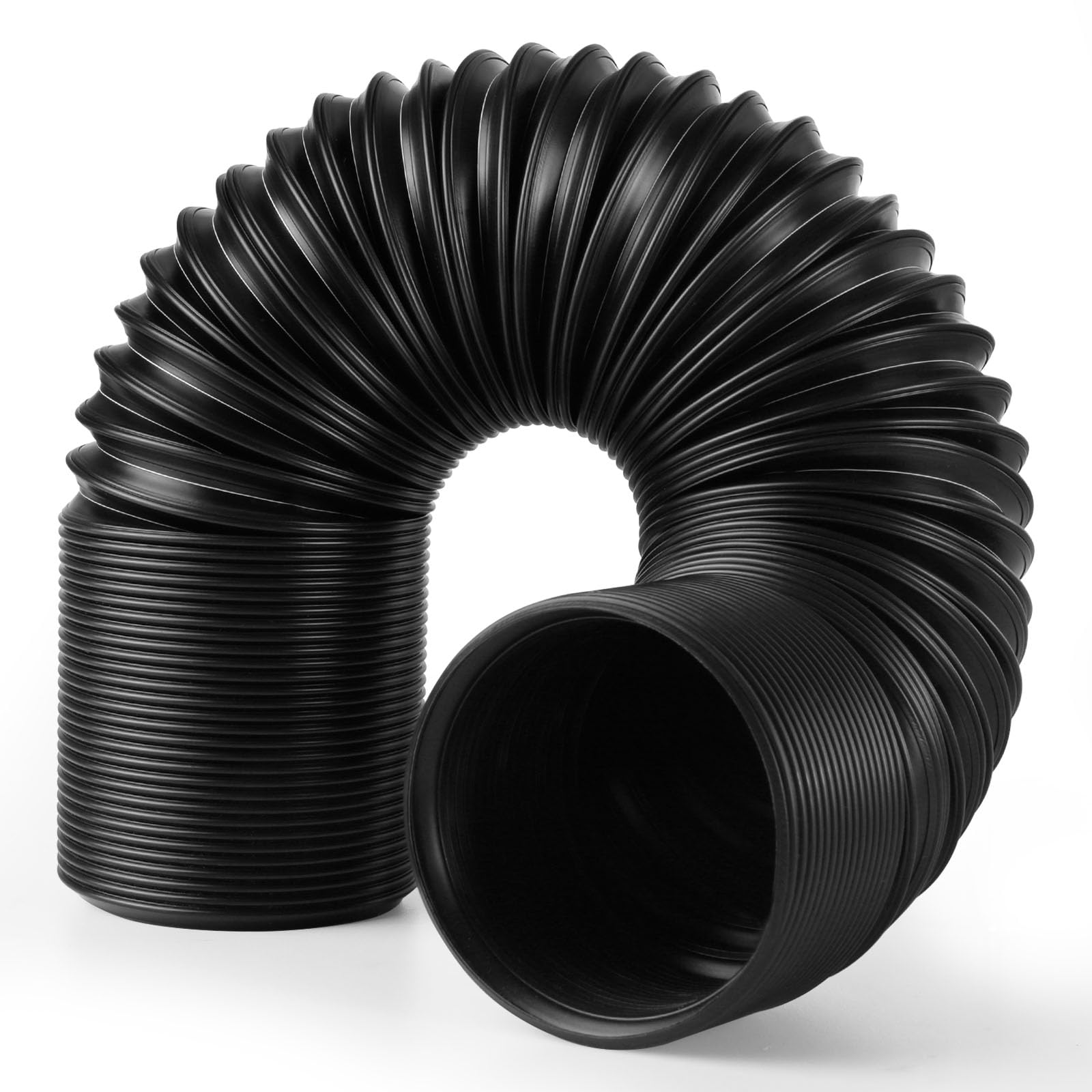
The adjustable PVC intake pipe that extends from 10 to 40 inches — perfect for custom cold-air builds on a budget.
This duct is a “very stiff, plastic duct,” as one buyer bluntly puts it — and that stiffness is intentional. It is made from durable PVC with a metal wire core to hold its shape, so when you route a cold-air intake around an engine bay corner, it does not sag or droop into the fan belt. The adjustable length (it telescopes from 10 inches to 40 inches) gives you flexibility to cut exactly what you need, though that stiffness makes it annoying to compress or extend inside a tight dash.
Functionality and durability are the two most-praised aspects, and it fits universal 2-inch intakes on most vehicles. Shoppers say it may need extra support at the outer end to prevent engine vibration from loosening the connection, and no clamps come in the box.
What works well
- Telescoping design adjusts from 10″ to 40″ for custom routing
- Steel wire core resists collapse and holds position
- Good value for a universal intake project
What to expect
- Very stiff — tough to install in blind or cramped locations
- No clamps or hardware included in the package
Go for it if: you are building a custom cold-air intake on a budget and need an adjustable-length duct that holds its shape.
Consider another option if: you need a flexible duct that bends easily around tight dash corners — this one fights you.
8. Vintage Air Air or Brake Duct Hose (10 ft)

The 10-foot plastic hose that stretches to fit — built for long under-dash heater runs in custom builds.
Vintage Air is a well-known name in aftermarket HVAC (Heating, Ventilation, Air Conditioning) for classic cars, and this duct follows that reputation: it is tough, stretchy, and resists puncturing during installation. At 10 feet, it is the second-longest single-piece option in this roundup (only the AP Products 25-foot roll beats it), making it ideal for routing heat from a firewall-mounted unit to far-side dash vents in a truck or muscle car. Owners describe it as high-quality and easy to work with, noting it provides noticeably more heat output than the restrictive original hoses it replaces.
The plastic material is not designed for high-heat areas near the engine block — it is strictly for cabin-side HVAC routing. You will need zip ties or clamps to secure it after stretching it over the vent stubs.
Why the length matters
- 10 continuous feet covers long dash runs without splicing
- Stretches over fittings for a tight, rattle-free connection
- Tough construction resists tearing during install
One limitation
- Plastic material — not for engine-bay or brake-cooling heat
- Clamps not included; you need to supply your own
Meant for: long heater-core or defroster runs under the dash of a classic car or custom build.
Not the pick if: you are routing near the engine or need a rigid, non-collapsible hose for a vacuum application.
9. ZY-hosetube Clear Wire Reinforced Suction Hose (10 ft)

The clear 10-foot suction hose with 180 PSI burst pressure — built to handle pool pumps, paint sprayers, and serious water transfer.
This hose operates at a maximum working pressure of 60 PSI but bursts at 180 PSI, with a minimum bend radius of 8 inches, meaning it handles real pump abuse without failing. The spiral steel wire reinforcement keeps the 2-inch inner diameter from collapsing on the suction side of a trash pump or pool filter — “huge upgrade from the standard pool hoses,” one buyer reports. Another used it to replace the flimsy discharge hose on a water treatment setup and found it still looks new after 6 months outdoors. The clear PVC wall lets you check for air locks or debris without disconnecting the line.
The material is firm (73a Shore A hardness), so it does not kink easily, but the packaging coil memory can leave the hose trying to hold its shipping curl — cutting it with a PEX cutter between the wires and finishing with side cutters solves that. The temperature ceiling (150°F) is standard for PVC, so keep it away from hot exhaust.
Where it dominates
- 180 PSI burst pressure — the strongest in this roundup
- 10-foot length with thick 5/32-inch wall for durability
- Clear wall for flow visibility; UV-resistant for outdoor use
The catch
- Coil memory from packaging can fight your intended routing
- Temperature limited to 150°F — not for engine-bay heat
Get this for: pool filter hookups, trash pump intakes, boat live-well drains, and any heavy-duty suction or discharge job.
Choose a different hose if: you need high-temperature resistance or a flexible duct for tight dash cavities.
Understanding the Specs
Material Type
The material determines where the duct can safely go. PVC plastic is fine for standard HVAC and defroster vents up to about 150°F, but it will soften or warp near a heater core. Aluminum duct handles higher heat and resists corrosion — common for RV furnaces and pellet stoves. Silicone-impregnated fiberglass is the premium option; it survives extreme temps (up to 575°F on some models) and stays flexible, making it the right call for diesel heater hookups and brake-cooling lines.
Wire Reinforcement
A steel wire helix (a spiral of spring steel) embedded in the duct wall does two things: it prevents the hose from collapsing when you bend it around a corner, and it keeps the tube round under vacuum pressure from a pump or intake. If your installation involves a 90-degree bend or a side that pulls air (suction), wire reinforcement is essential. Without it, the duct can pinch flat and kill all airflow.
Working Pressure vs. Burst Pressure
For suction or discharge applications (water pumps, paint sprayers, pool filters), working pressure is the safe continuous pressure the hose can handle day in and day out. Burst pressure is the absolute limit before the hose fails — usually 2 to 3 times the working pressure. A standard HVAC duct has zero pressure rating; it only moves air at atmospheric pressure. A reinforced suction hose rated at 60 PSI working pressure is a completely different product for a completely different job.
Length and Cutability
Duct comes in set lengths from 3 feet to 25 feet. A short 3-foot section is perfect for a specific bridge (brake cooling, heater-to-intake). A 6-foot piece typically covers one defroster run under a dash. A 25-foot roll gives you bulk material for a full RV furnace redo, cutting only what you need. Aluminum and plastic ducts cut cleanly with tin snips or a utility knife; wire-reinforced hose needs a PEX cutter between the wire coils.
FAQ
Can I use a standard plastic duct for a diesel heater installation?
What is the difference between a duct hose and a suction hose?
Will a 2-inch duct fit my RV furnace or pellet stove?
How do I cut a wire-reinforced duct to the right length?
Can I use automotive duct for household HVAC or dryer venting?
Does a 2-inch duct fit 2-inch PVC pipe?
How do I keep a flexible duct from vibrating loose in an engine bay?
Is silicone fiberglass duct safe to touch during installation?
What does “SCAT” mean in automotive duct names?
Can I stretch a duct hose to fit over a larger fitting?
Final Thoughts: The Verdict
For the majority of shoppers, the 2-inch flexible duct winner is the AP Products 013-665 because its 25-foot aluminum construction covers everything from RV furnace repairs to pellet-stove intakes with a single roll. If you need high-temperature performance for a diesel heater or brake duct, grab the NOWBALL Silicone Duct — it handles 575°F and comes with all the hardware. And for heavy-duty pump work, the ZY-hosetube Clear Suction Hose is the one to reach for, with its 180 PSI burst pressure and 10-foot length.
How We Picked
We do not accept paid placement. Every pick is matched to a real buyer and a real use-case; we do not hands-on test units.
Sources & Methodology
Specifications: manufacturer listings and product documentation. Review insights: verified customer reviews, as of July 2026. Pricing: not shown on this page (it changes often); check the current price via the retailer link.
As an Amazon Associate, KitchPrep earns from qualifying purchases. This does not affect which products we feature.
Related Guides
