
Specs are compiled from manufacturer listings and verified buyer reviews and can change over time — please confirm the key details on the product page before buying.
If you are tired of a fridge where the “freezer” is just a tiny ice-cube shelf, you need a 2-door compact refrigerator with freezer — one that actually has a separate door for frozen food. Decide between a 2.5 cu ft model for snacks or a 4.5 cu ft version for a week of meal prep. This guide compares nine 2-door compact fridges to find the best fit for your space.
I’m Mohammad Maruf — the founder and writer behind KitchPrep. This guide is built by comparing the manufacturers’ published specifications and the patterns across verified customer reviews, so you get each pick’s real strengths and trade-offs instead of marketing spin.
You will find the right 2-door compact refrigerator with freezer by matching its capacity, noise level, and energy use to your space — whether that is a dorm room needing a small 2.5 cubic foot unit or an office wanting a taller tower with more room.
In this article
Note: The models below are matched by size — some are closer to 5 cubic feet, others closer to 2.5 cubic feet. Every pick has a separate freezer door, which is the feature that actually matters.
Our Picks at a Glance

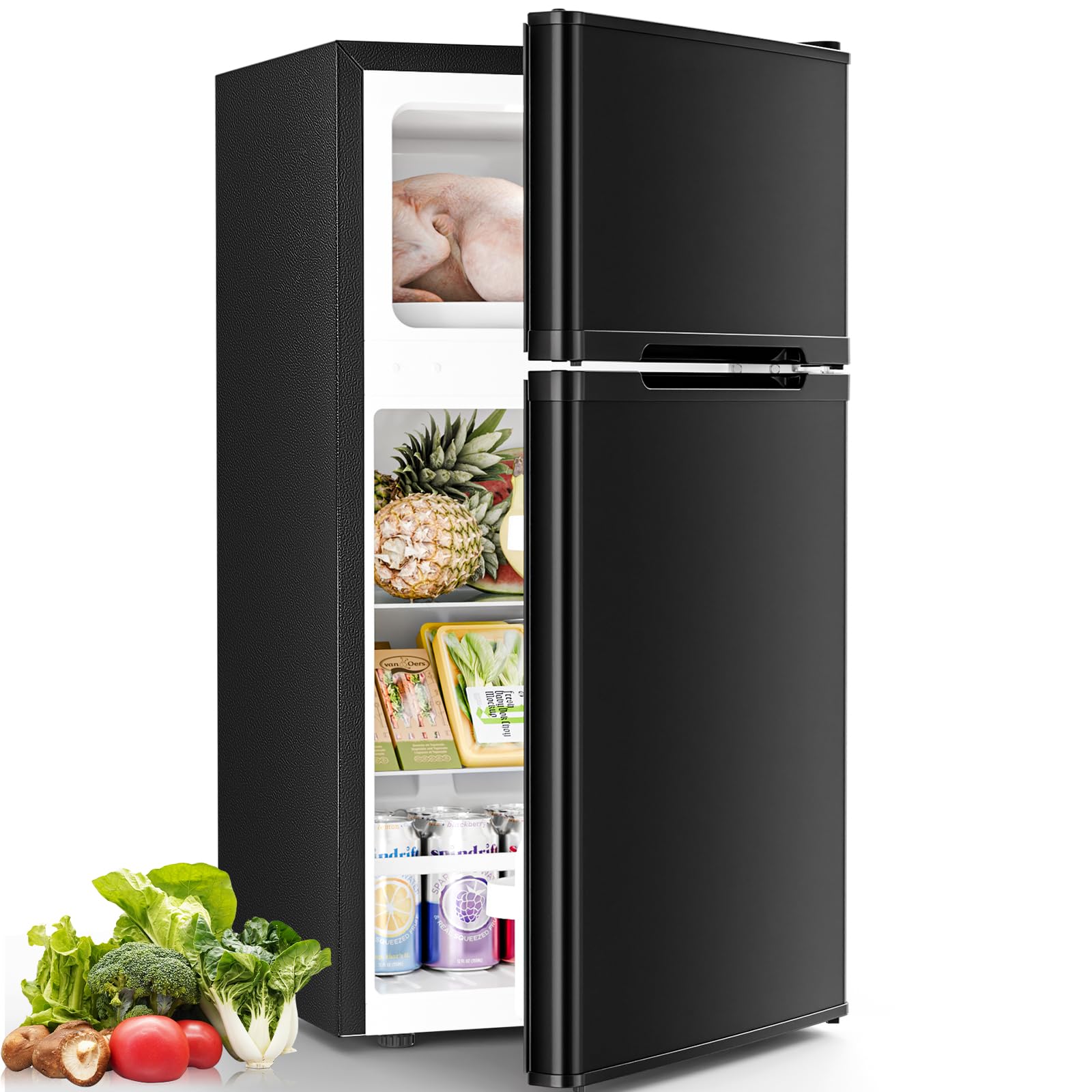
How To Choose The Best 2-Door Compact Refrigerator with Freezer
Start with size: check total cubic feet and the fridge-to-freezer split. A 3.1 cubic foot model gives you 2.16 cubic feet of fridge space. A 4.5 cubic foot unit almost doubles that chilled area. Match capacity to your storage: weekly drinks and snacks or full meal-prep containers.
Real freezer space vs. a tiny compartment
Many “mini fridges with freezers” actually just have a small ice tray shelf inside the main compartment. A true 2-door model has separate doors, so opening the fridge doesn’t let cold air escape from the freezer. Look for freezer capacity listed separately — like 1 cubic foot or 1.2 cubic feet — so you know you can freeze a pizza box or a few pints of ice cream.
Temperature control ranges
Every model has a thermostat dial, but the ranges differ. Some hold fridge temps between 32°F and 50°F. Others go as low as 28.4°F. If you want genuinely cold drinks (near 33°F) without freezing your vegetables, a wider dial range gives you more control. The same goes for freezers — a range down to -11.2°F freezes ice cream rock solid.
Noise and energy use
In a bedroom or office, prioritize a quiet model around 37-38 dB. Look for a decibel rating around 37-38 dB — that’s about the level of a quiet library. Annual energy consumption is worth checking too; some units use as little as 181 kilowatt hours per year while others go past 350. Lower kWh per year cuts your electric bill.
Quick Comparison
| Model | Best For | Total Capacity | Freezer Space | Energy Use | Amazon |
|---|---|---|---|---|---|
| Midea WHD-113FB1★ Best Overall | Reliable dorm standard | 3.1 cu ft | 0.92 cu ft | 270 kWh/yr | Amazon |
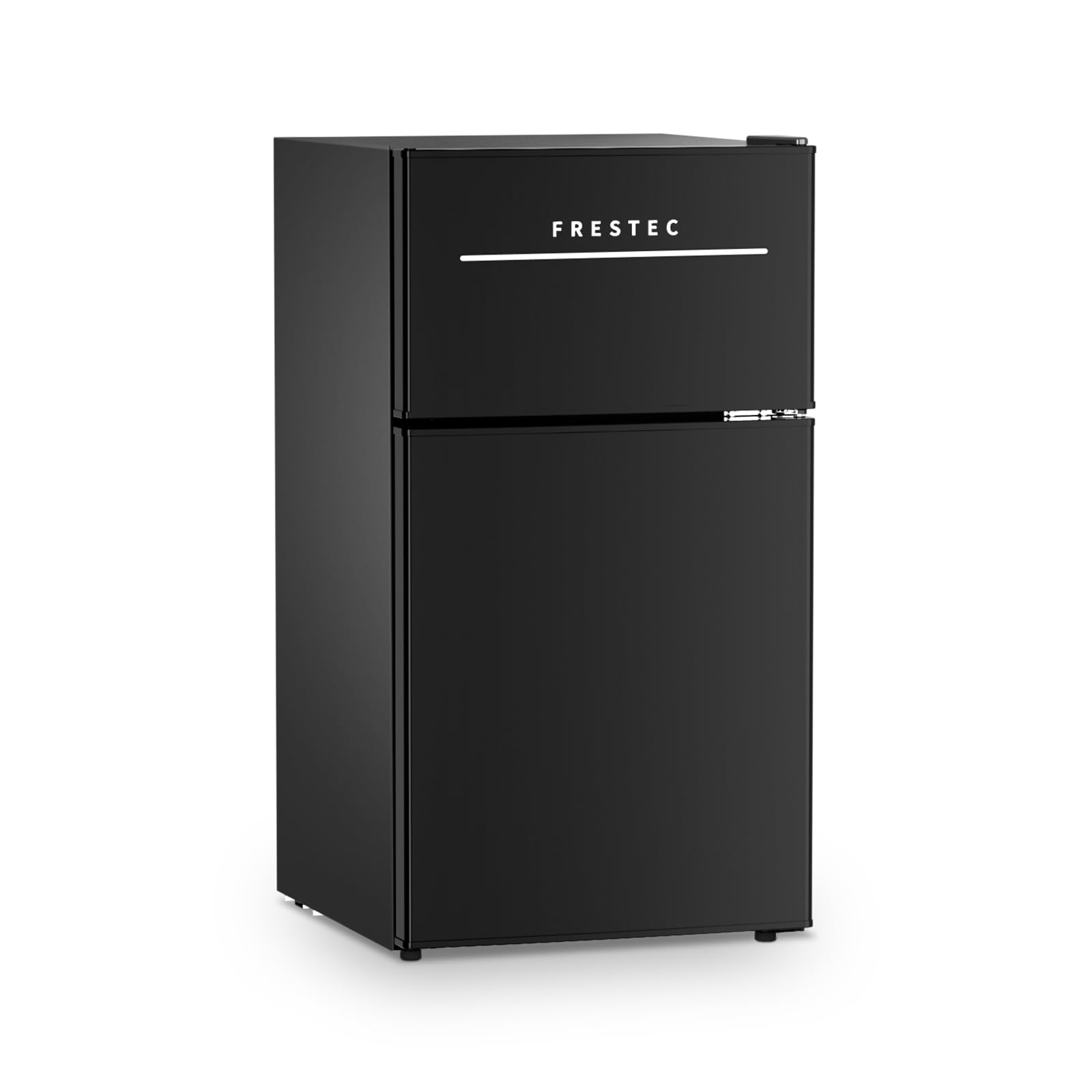
| Frestec 3.2 Cu.Ft.Top Performer | Office quiet operation | 3.2 cu ft | 1.0 cu ft | 320 kWh/yr | Amazon |
| Antarctic Star 2.45Compact Pick | Tight dorm spaces | 2.45 cu ft | 0.64 cu ft | 340 kWh/yr | Amazon |
| HAILANG 3.2 Cu.Ft. | Classroom or hobby room | 3.2 cu ft | 1.0 cu ft | 328 kWh/yr | Amazon |
| Frigidaire EFR451 | Stainless style seekers | 4.5 cu ft | 0.8 cu ft | 250 kWh/yr | Amazon |
| Manastin 4.5 Cu.Ft. | Big freezer on a budget | 4.5 cu ft | 1.0 cu ft | 181 kWh/yr | Amazon |
| Electactic 4.5 Cu.Ft. | Tall narrow corners | 4.5 cu ft | 0.85 cu ft | 356 kWh/yr | Amazon |
| Upstreman BR401 | Coldest fridge temps | 4.0 cu ft | 0.96 cu ft | 291 kWh/yr | Amazon |
| Tehanld 4.5 Cu.Ft. | Auto-defrost preference | 4.5 cu ft | 1.2 cu ft | — | Amazon |
In-Depth Reviews
1. Midea 3.1 Cu.ft Mini Fridge with Freezer
Our pick — 4.5★ from 5,500+ verified ratings; the strongest balance of quality and price.
The dorm-room staple with over 5,900 ratings, trusted for its reliable cooling and quiet operation.
What wins people over here is the size — it’s the most-praised feature by a landslide. The 3.1 cubic foot capacity splits into 2.16 cubic feet of fridge and 0.92 cubic feet of freezer, which owners say fits nine meal-prep trays without dominating a small room. It measures 18.5 by 19.37 by 32.95 inches, so it slips under a standard counter height.
The quiet operation is the second thing everyone mentions. Owners describe it as “pretty much silent,” which is why it keeps showing up in bedrooms and offices. The fridge part holds 32°F to 50°F, while the freezer reaches down to -11.2°F — cold enough for solid ice cream.
The trade-off is temperature control, which gets mixed feedback: most owners say it keeps things cold, but a few wish it could go colder. The door shelves also get criticism for being awkward for cans. Buyers report “I’m happy with this mini fridge,” noting the separate freezer door beats the tiny compartment most mini fridges have.
What Owners Rave About
- Quiet enough for a bedroom — owners call it “pretty much silent”
- Energy Star certified at 270 kWh per year — cheaper to run
- Freezer holds more than the typical mini fridge ice compartment
The Honest Trade-offs
- Some owners wish it could get colder than its lowest setting allows
- Door storage is awkward for standard cans
- Sharp bottom edges can scratch floors — lift, don’t drag
Your best bet if: you want the safest, most-proven pick with thousands of happy owners and genuinely quiet running.
Look elsewhere if: you need fridge temps colder than the 50°F ceiling on the main dial.
2. Frestec 3.2 Cu.Ft. 2 Door Refrigerator and Freezer
Seven temperature settings give you dial-in control this size rarely offers anywhere else.
You get precise temperature control here: 7 adjustable thermostat settings spanning 33.8°F to 46.4°F, which is far more granular than the 3-position knobs on most rivals. Owners who tested the dial report setting 4 is the balance for no ice, 5 adds slight frost, and 7 freezes ice cream rock hard. It also runs quietly at 37 dB (a decibel level about as loud as a whisper), so it suits a bedroom or office.
The 3.2 cubic foot total holds a 1.0 cubic foot freezer on top and 2.2 cubic feet of cold storage below. At 17.8 inches wide, it’s the narrowest of the 3-cubic-foot class — about 4% more compact than the Midea above, though it runs deeper at 20.5 inches. Owners mention “I’ve had it for almost a year now and it works excellent!” with temperature retention holding steady.
At 320 kWh per year, it uses more energy than the Midea’s 270 kWh — a 19% gap you’ll notice on the electric bill. The freezer earns praise for being a real box, not a shelf, and the whole unit stays quiet enough for an office desk. The recurring caution is reliability: while most units run for years, a handful of customers note failures.
Why the dial wins: no other 3-cubic-foot fridge lets you fine-tune between “barely cold” and “freeze solid” with 7 stops.
The catch: that precision costs energy — it’s the thirstiest 3-cubic-foot model here at 320 kWh/yr.
Reach for this if: you keep different items at different temps and want a dial that actually responds.
Think twice if: energy bills are your top concern — the Midea above sips less power.
3. Antarctic Star Mini Fridge with Freezer
The smallest footprint here, still packing a real freezer door above the chilled section.
At 2.45 cubic feet total — 1.81 cubic feet of fridge and 0.64 cubic feet of freezer — this is the pick for genuinely tight corners where even the 3.1 cubic foot Midea won’t fit. It’s shorter and slimmer than every other model in this list, yet owners say it holds a surprising amount: snacks, drinks, and a couple of pints of ice cream in the freezer.
The design keeps things simple with a 3-position rotary thermostat (1° for cold, 2° for normal, 3° for coldest). Owners find setting 2 is right for daily use, while 3° gets the freezer cold enough for ice. They describe it as running “super quiet — you barely even notice it’s on.”
One of the biggest advantages is the lower interior cold: owners note magnets stick well to the front, and it gets cold enough that items near the back can nearly freeze. At 340 kWh per year it uses more energy than the larger Midea above. Owners recommend letting it stand upright for 4 hours after delivery before plugging in.
Perfect square-footage fit: owners say it’s ideal for dorms, garages, and man caves where floor space is measured in inches.
Know before you buy: the thermostat is just 3 positions — less fine control than the 7-setting Frestec.
Grab this if: you need the most space-efficient 2-door fridge that still has a true freezer door.
Pass it up if: you meal-prep weekly — the 1.81 cubic foot fridge fills fast.
4. HAILANG 3.2 Cu.Ft Compact Refrigerator
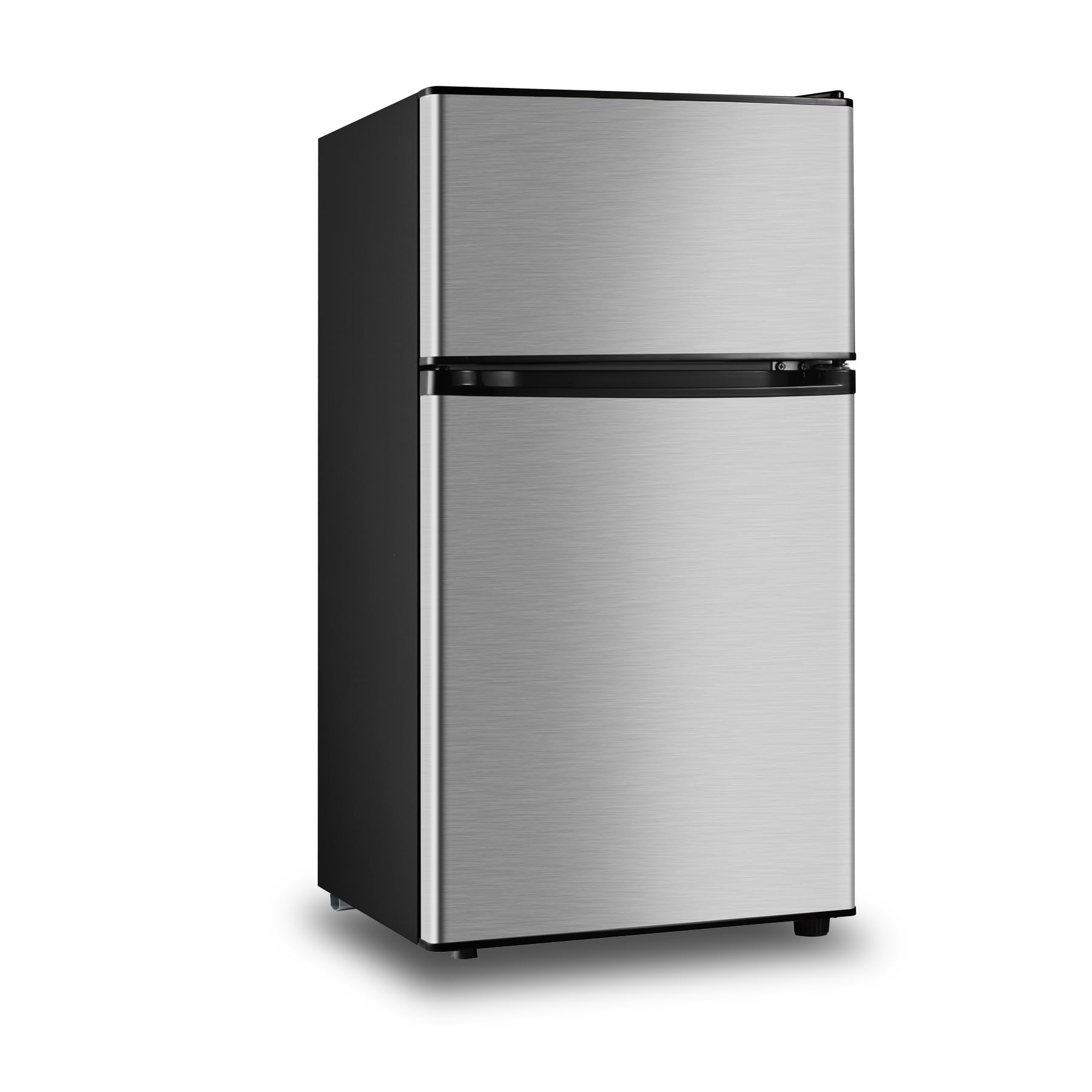
A matte-silver 3.2 cubic footer whose real freezer handles classroom snack duty.
Owners keep calling this one of the best dorm-size refrigerators, and the reason shows up fast: it performs. The cooling earns the most praise — things get “really cold,” and the 1.0 cubic foot freezer is deep enough to hold a box of peanut butter and jelly sandwiches plus ice cream. The fridge reaches 32°F to 50°F while the freezer drops to -11.2°F.
The dimensions are 17.68 by 18.31 by 33.9 inches, and it cools down in about 3-4 hours at setting 4. Owners love the matte door finish and the removable glass shelves that make cleaning simple. It arrives with a bonus ice tray, egg holder, and scraper.
That silver finish hides scuffs better than glossy black, though some units do arrive with minor back dents from shipping. The noise and cooling performance get mixed votes — most owners find it quiet and cold, but a smaller share report the opposite. At 328 kWh per year, it’s mid-pack on energy.
Classroom-tested: owners use it as a primary fridge where a real freezer door matters for frozen lunches.
Worth noting: a deep freezer means no pizza box fits — measure your frozen items first.
Best for: anyone who wants a genuine separate freezer and a fridge big enough for daily snacks and drinks.
skip it if: you need guaranteed whisper-quiet — noise gets mixed votes from owners.
5. Frigidaire EFR451 Refrigerator
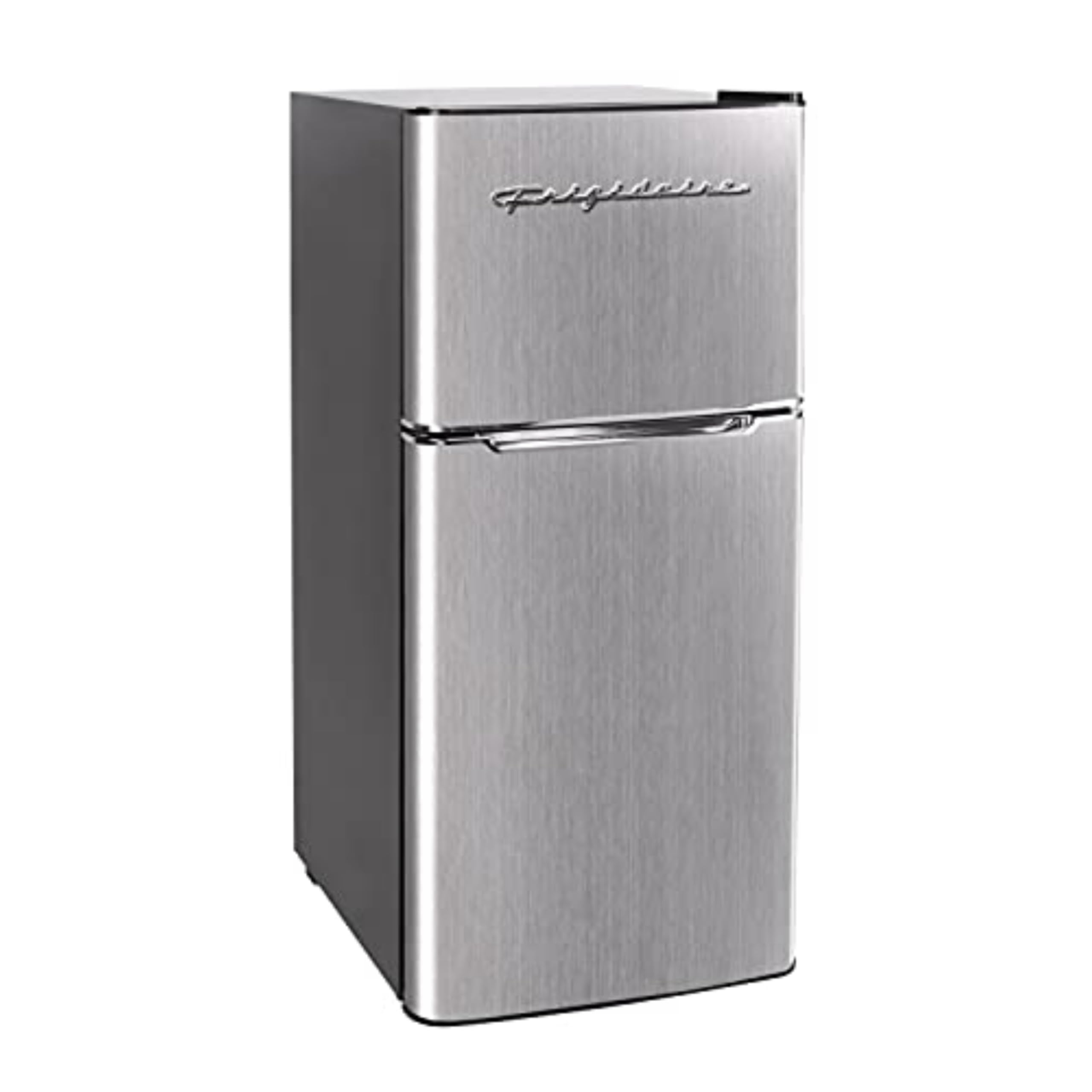
The stainless-steel option that looks like a real kitchen appliance, not a dorm box.
The appearance is the headline here — owners consistently call it cute and sleek, with the stainless exterior standing out from the sea of glossy black boxes. Beyond looks, the 4.5 cubic foot capacity (4.3 cubic feet fresh food, 0.8 cubic feet freezer) gives you the most fridge space in this list for frozen dinners and weekly groceries.
It runs at 250 kWh per year, which beats both the Midea’s 270 kWh and the Frestec’s 320 kWh despite the larger size. Owners who dial it to setting 4 report freezer temps around -2°F and fridge temps near 32°F — genuinely cold. The three adjustable glass shelves make the interior feel roomier than its footprint suggests.
The honest downsides: temperature control gets mixed feedback, with some owners saying it won’t cool enough, and durability concerns appear in a minority of reviews. Some units arrive with shipping damage to the plastic parts, so inspect carefully on delivery. It’s also among the taller options here.
Why it stands apart: the stainless look plus the lowest energy draw of any 4.5-cubic-footer in this list.
Check on arrival: a few reviewers point out cracked bins or broken piping from shipping — unpack carefully.
Choose this if: you want kitchen-appliance looks and the biggest fridge compartment in the lineup.
Reconsider if: you need a deeper freezer — the 0.8 cubic foot box is shallower than rivals.
6. Manastin 4.5 Cu.Ft Mini Fridge Freezer
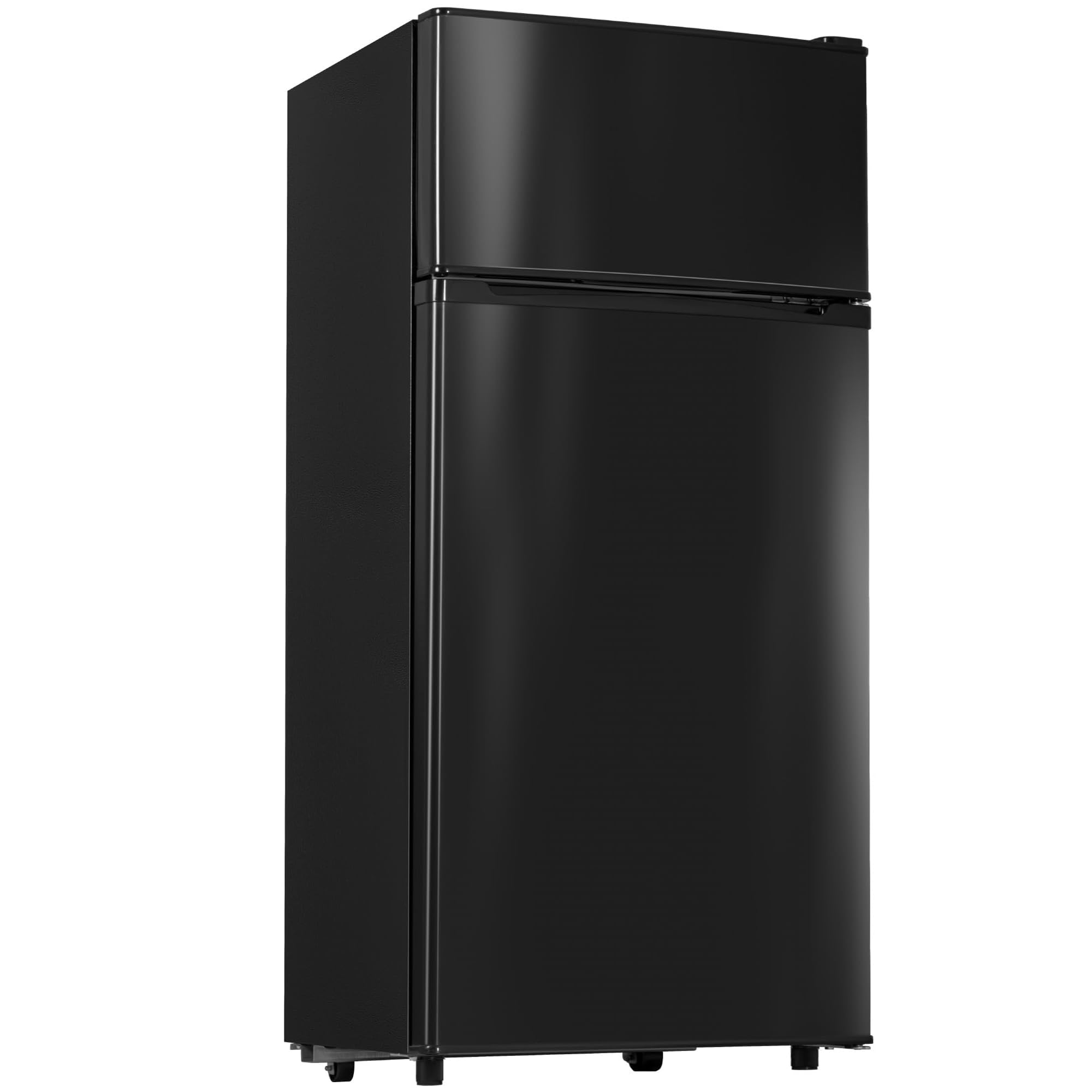
The most energy-sipping fridge in this entire lineup, using just 181 kWh a year.
That 181 kWh annual figure is the lowest of all nine picks — noticeably more efficient than the Midea’s 270 kWh and the Frestec’s 320 kWh. Owners who ran the numbers describe it around a year to operate. It pairs that efficiency with 4.5 cubic feet of storage: 3.5 cubic feet of fridge and a full 1.0 cubic foot freezer.
Freezer performance is the standout in practice — shoppers say meat and ice cream freeze solid, which makes this a strong pick for seed storage or anyone who needs a dependable sub-zero zone. The 7-level thermostat gives you the same fine control as the Frestec, and the under-38 dB compressor keeps it quiet.
There’s no auto-defrost, so plan to manually scrape frost every few months — a scraper is included. The door bins are shallow, which frustrates some owners who want to stand up tall bottles. Temperature retention gets mixed votes: some owners find it holds cold well, while others note the fridge warms noticeably if opened frequently.
The efficiency win: lowest annual energy use in the list at 181 kWh, so it pays back on your bill over time.
Workaround needed: no auto-defrost means scheduled manual scraping to keep frost in check.
Pick this if: you want the largest capacity at the lowest running cost — the efficiency math is unbeatable here.
Think twice if: you can’t be bothered with manual defrosting every couple of months.
7. Electactic 4.5 Cu.Ft Mini Fridge with Freezer
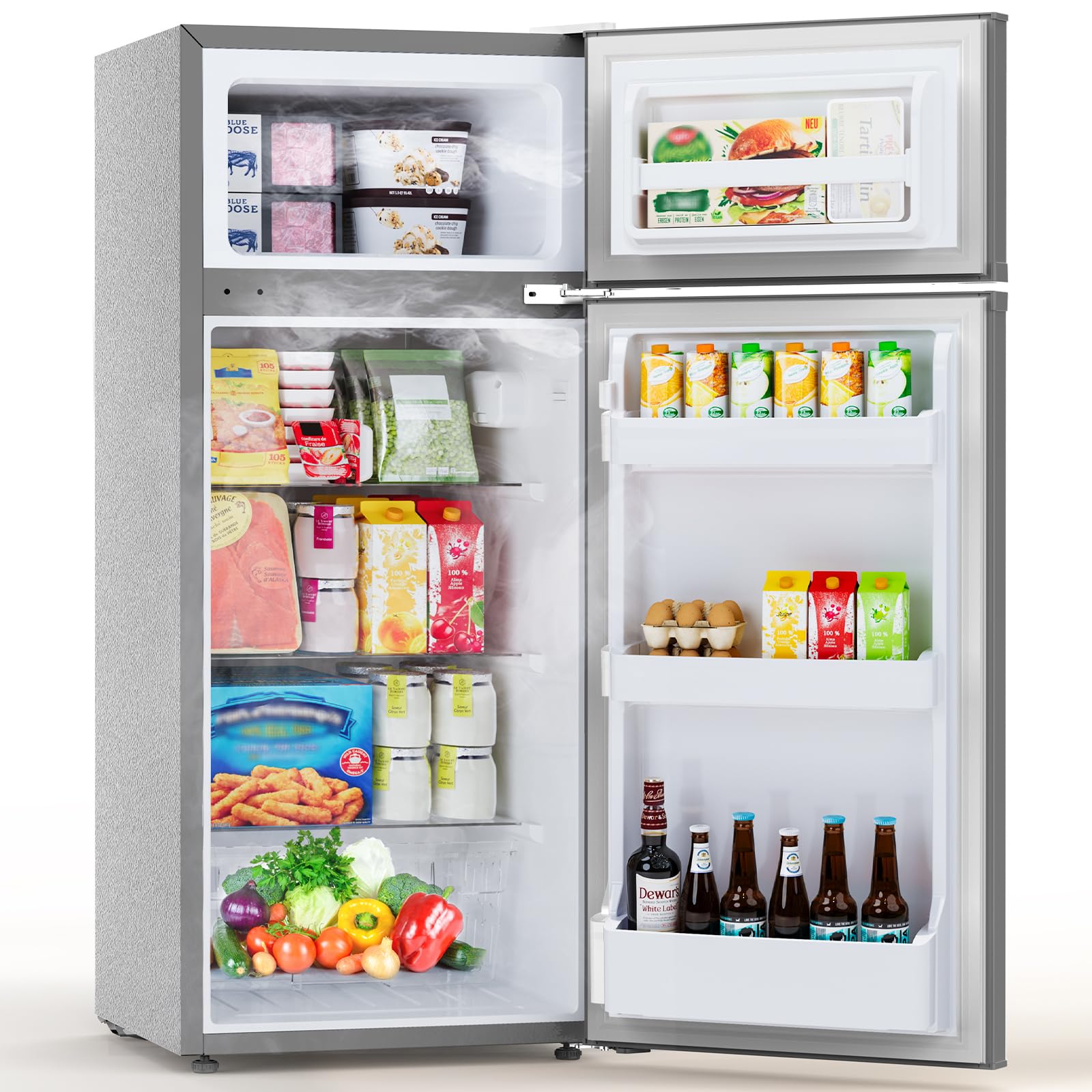
A tall 42.91-inch tower that fits vertical dead space other fridges can’t use.
The defining trait here is height. At 42.91 inches tall with a compact 18.31 by 19.37 inch footprint, this fridge uses vertical space that shorter models leave empty — ideal for narrow kitchen corners or beside a desk. The 4.5 cubic foot capacity splits into 3.65 cubic feet of fridge and 0.85 cubic feet of freezer.
Build quality is the thing owners praise most, calling it “so much better than expected” for the money. It cools down within hours, keeps drinks icy, and the freezer holds more than its number suggests — though full-size ice trays only fit sideways. The thick foam insulation doubles as a cooler, holding contents cold for hours after a power outage.
It’s ETL certified for safe operation, and the reversible door swings either way. The crisper drawer is deep enough for produce. At 356 kWh per year, it’s the thirstiest model in this list, so the energy bill runs higher than the Manastin’s 181 kWh. Noise gets mixed feedback — most find it quiet, but a few note it gets louder with age.
The tall advantage: same capacity as the Manastin but in a slimmer, taller profile for tight floor plans.
The trade-off: highest energy draw here at 356 kWh/yr — the least efficient of the 4.5-cubic-foot group.
Reach for this if: floor space is scarce but you have vertical room to spare, and you value ETL certification.
Look elsewhere if: keeping the electric bill minimal matters more than the tall form factor.
8. Upstreman 4.0 Cu.Ft. Mini Fridge with Freezer

The coldest fridge dial in the lineup, dipping to 28.4°F for truly icy drinks.
No other pick here matches the Upstreman’s low end. The 5-adjustable-temperature dial reaches 28.4°F on the fridge side — cold enough to keep drinks near freezing — while the freezer spans -4°F to 10.4°F. It’s a 4.0 cubic foot total split into 3.04 cubic feet of fridge and 0.96 cubic feet of freezer.
Owners use it as a bar fridge and game-room staple, reporting it “gets cold quick and barely makes any noise if any.” The 38 dB rating (quieter than a normal conversation) keeps it office-friendly, and the reversible door plus adjustable legs handle uneven floors. Its dimensions measure 17.71 by 17.71 by 45.27 inches — a tall, narrow profile that fits tight corners, though you will need 45.27 inches of vertical clearance.
An LED light turns on automatically when you open the door, which owners appreciate in dark garages. At 291 kWh per year it sits mid-pack on energy. The recurring caution is the crisper: it’s tiny, fitting only about three romaine hearts. Cooling gets mixed votes — most are happy, but some report temps creeping above 40°F.
The cold dial matters: 28.4°F minimum means genuinely icy drinks, not just “cool” — a real edge over rivals.
Measure your produce: the crisper is shallow, so big vegetables won’t fit whole.
Best for: anyone who wants the coldest fridge temps and bar-area storage in a tall, narrow unit.
pass on it if: you store lots of whole vegetables — the tiny crisper will frustrate you.
9. Tehanld 4.5 Cu.Ft Mini Fridge Freezer
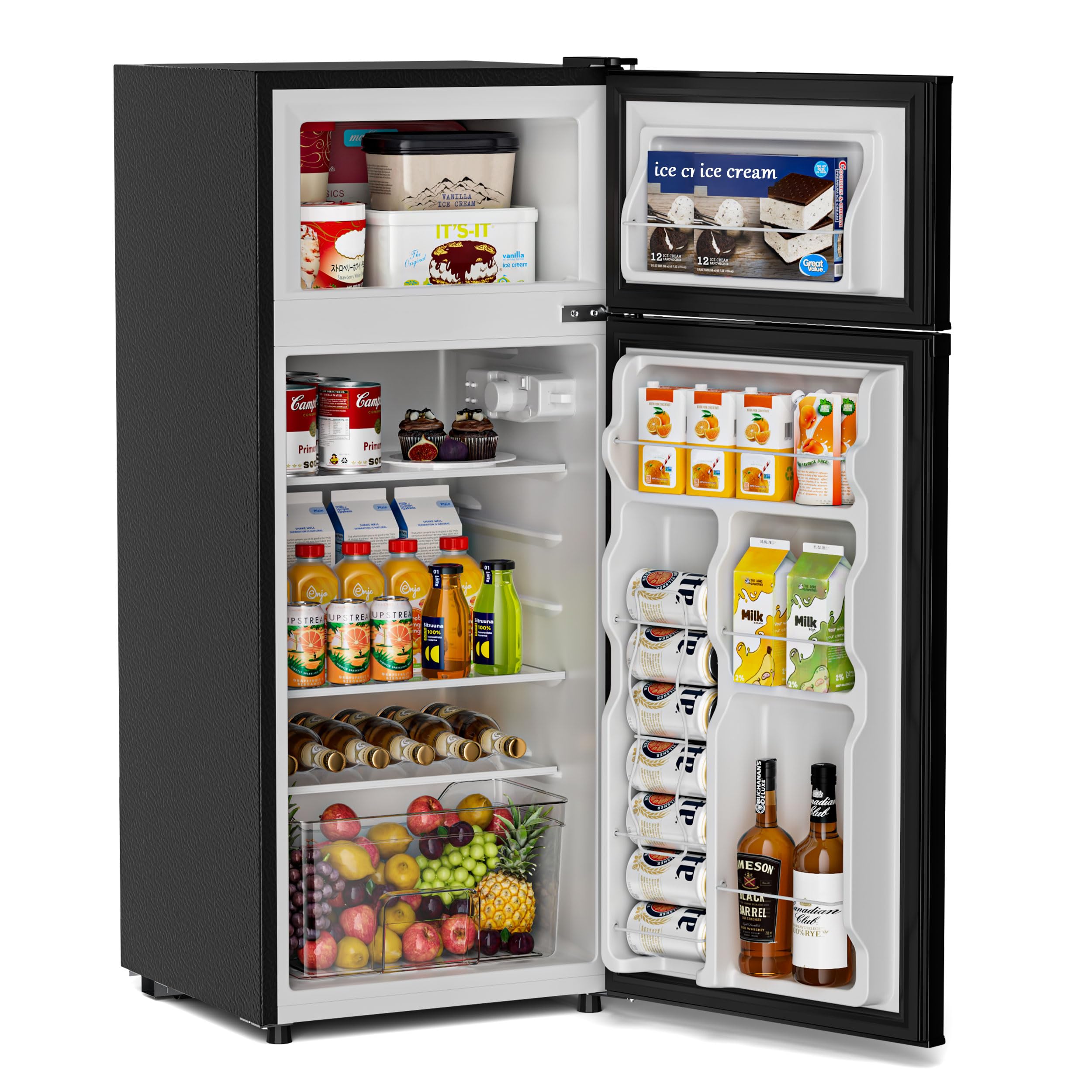
The only auto-defrost model here — no manual ice scraping, ever.
Every other fridge in this list needs manual defrosting. The Tehanld doesn’t — it’s the single automatic-defrost pick, which means no scheduled scraping sessions. It also carries the biggest freezer of the group at 1.2 cubic feet, paired with 3.3 cubic feet of fresh food space for a 4.5 cubic foot total.
Quality is what owners praise most, calling it “well-built” and reliable, and the 7-level thermostat matches the Frestec’s fine control. The freezer keeps everything solidly frozen, and the fridge holds a week of snacks for one or two people. Owners say the auto-defrost convenience and 1.2 cu ft freezer make it a standout for small apartments and offices.
The wrinkle: frost still builds up in both compartments despite the auto-defrost label, and owners note a plastic scraper is included for that purpose. The compressor runs noisier than some rivals — one owner calls it “not ideal for sensitive ears.” Some units arrive with dents, though the seller handles those promptly with partial refunds.
The no-scrape promise: auto-defrost plus the largest 1.2 cubic foot freezer in this entire lineup.
Set expectations: frost does still form and the hum is more noticeable than the quietest picks here.
Choose this if: you refuse to manually defrost and want the biggest freezer capacity available in a compact fridge.
Pass if: you need near-silent operation for a bedroom — the compressor is audible.
Understanding the Specs
Total Capacity vs. Freezer Split
Total cubic feet tells you the combined space, but the real question is how it splits. A 3.1 cubic foot fridge with a 0.92 cubic foot freezer leaves 2.16 cubic feet for chilled food. A 4.5 cubic foot model might give you 3.65 cubic feet of fridge. Look for the freezer number listed separately so you know whether a frozen pizza or a few pints of ice cream will actually fit.
Annual Energy Consumption
This number, measured in kilowatt hours per year, is your electric bill in advance. The most efficient pick here uses 181 kWh annually while the thirstiest uses 356 kWh — a meaningful gap over a year of running. Lower numbers also mean less heat dumped into a small room, which matters in a dorm or bedroom.
Thermostat Settings and Temperature Range
A 3-position knob gives you cold, colder, and coldest. A 7-position dial lets you fine-tune between 33.8°F and 46.4°F. The fridge range tells you how cold drinks get, while the freezer range (down to -11.2°F on some models) tells you whether ice cream stays rock solid. More settings mean more control, but they also mean more to learn.
Defrost Type
Manual defrost means you periodically scrape ice off the freezer walls — most compact fridges work this way and include a plastic scraper. Auto-defrost handles it for you but is rarer at this size. If you hate maintenance, auto-defrost is worth hunting for even if it costs more.
FAQ
What is the difference between a 2-door compact refrigerator and a regular mini fridge?
How many cubic feet do I need for a dorm room?
Will a frost-free compact refrigerator still build up ice?
How noisy is a 37 dB or 38 dB mini fridge?
What is the coldest temperature a compact fridge freezer can reach?
How much electricity does a 2-door compact refrigerator use?
Can I lay a mini fridge on its side to move it?
What is a reversible door on a compact refrigerator?
How do I keep food near the back of a mini fridge from freezing?
Final Thoughts: The Verdict
For most buyers, the best 2-door compact refrigerator with freezer is the Midea 3.1 Cu.Ft — it’s the safest, most-proven pick with thousands of satisfied owners praising its quiet operation and real freezer door. If you want the largest freezer and zero defrosting chores, the Tehanld 4.5 Cu.Ft is the one to reach for with its 1.2 cubic foot automatic-defrost freezer. And if keeping the electric bill minimal is your priority, the Manastin 4.5 Cu.Ft wins at just 181 kWh per year while still freezing meat solid.
How We Picked
We do not accept paid placement. Every pick is matched to a real buyer and a real use-case; we do not hands-on test units.
Sources & Methodology
Specifications: manufacturer listings and product documentation. Review insights: verified customer reviews, as of September 2026. Pricing: not shown on this page (it changes often); check the current price via the retailer link.
As an Amazon Associate, KitchPrep earns from qualifying purchases. This does not affect which products we feature.
Related Guides
