
Specs are compiled from manufacturer listings and verified buyer reviews and can change over time — please confirm the key details on the product page before buying.
A 2 1/4-inch hole saw is the tool you reach for when you need a clean, round hole in wood, metal, or steel — whether you’re running cable, installing a deadbolt, or notching tubing for a weld. The real challenge isn’t finding one; it’s choosing between bi-metal, carbide-tipped, and tungsten-carbide designs that all claim to be the best. This guide breaks down the top options by what actually matters: how fast they cut, how long the teeth stay sharp, and whether you’ll be fighting to eject a stuck plug.
I’m Mohammad Maruf — the founder and writer behind KitchPrep. This guide is built by comparing the manufacturers’ published specifications and the patterns across verified customer reviews, so you get each pick’s real strengths and trade-offs instead of marketing spin.
If you need a dependable cutter for tough materials, the top-rated 2 1/4-inch hole saw choices here blend sharp teeth, smart ejection designs, and durable builds that hold up on the job.
Our Picks at a Glance

How To Choose The Best 2 1/4-Inch Hole Saw
The best 2 1/4-inch hole saw for your project depends on the material you’re cutting, the drill you’re using, and how often you’ll need it. Here’s what separates a frustrating, dull, teeth-snapping experience from a clean, fast cut.
Tooth Material: Bi-Metal vs. Carbide
Bi-metal saws blend a high-speed steel cutting edge with a tough alloy body, making them flexible and forgiving — ideal for wood, plastic, and general metal work with standard drills. Tungsten-carbide-tipped (TCT) saws bolt carbide teeth onto the body for extreme hardness, which lets them chew through stainless steel and thick alloy, but they’re more brittle and demand lower RPMs and steady pressure.
Cutting Depth and Material Thickness
Standard 2 1/4-inch saws typically cut to a depth of around 1 inch (25mm), which suits most sheet metal, doors, and plywood. Deep-cut models reach 2 inches, letting you notch thicker tubing or pipe in a single pass instead of repositioning the saw. Check the wall thickness of what you’re cutting before you pick a depth rating.
Plug Ejection and Arbor Compatibility
After the cut, the disc of waste material often gets stuck inside the saw. A speed-slot staircase design or an ejection spring pushes the plug out quickly, saving you from prying it loose with a screwdriver. The saw must also fit a standard arbor (the shank that connects to your drill) — most use a universal 5/8-inch x 18 thread, but always confirm the pilot bit fits your drill’s chuck.
Quick Comparison
| Model | Best For | Cutting Depth | Tooth Type | Included Bits | Amazon |
|---|---|---|---|---|---|
| LENOX Bi-Metal Speed Slot★ Best Overall | All-around wood & metal | Standard | Bi-Metal | Clamshell only | Amazon |
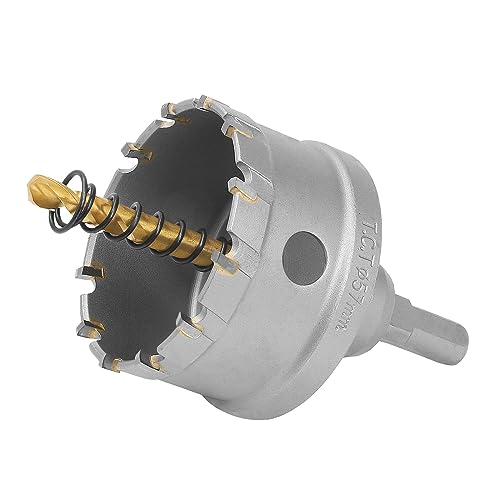
| AOKAIMIAR Carbide TCTMetal Master | Thick stainless & alloy steel | Standard | Tungsten Carbide | Titanium pilot bit | Amazon |
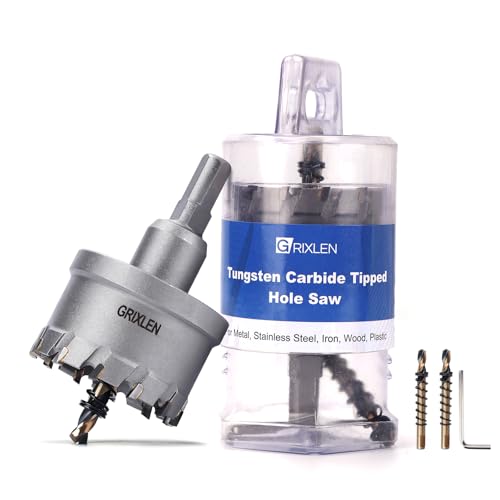
| GRIXLEN Tungsten Carbide TipBest Value | Stainless headers & pipes | 1 inch (25mm) | Tungsten Carbide | M2 pilot bit | Amazon |
| Morse MHS36 Bi-Metal | Clean, precise holes | Standard | Bi-Metal | Arbor compatible | Amazon |
| METALLIXITY TCT | Machining & thick aluminum | 1 inch (25mm) | Tungsten Carbide | 6mm pilot, hex key | Amazon |
| Disston Blu-MOL Xtreme | Wood, OSB & siding | Standard | Bi-Metal | Backing plate cutouts | Amazon |
| DKIBBITH TCT | Steel doors & containers | 1 inch (25mm) | Tungsten Carbide | Titanium pilot, wrench | Amazon |
| Starrett Deep Cut | Notching thick tubing | 2 inches | High-Speed Steel | Deep-cut body | Amazon |
In-Depth Reviews
1. LENOX Tools Bi-Metal Speed Slot Hole Saw with T3 Technology, 2-1/4″
Our pick — over 4.5★ from 450+ verified ratings; the strongest balance of quality and price.
The crowd favorite is 2x more durable with 50% longer life than prior LENOX saws, built for everyday wood and metal.
The sharpness here is what wins people over — over two dozen owners single out how eagerly the teeth bite. That’s because LENOX made the teeth larger and sharper, and the design cuts through metal with ease, so you spend less time pushing and more time done. Weighing just 4.8 ounces, it’s light enough to feel balanced on a cordless drill without tiring your wrist.
The speed slot staircase on the back is the standout feature — when you finish a hole, the plug ejects cleanly instead of jamming inside the cup. A 40-year electrician called it faster, more precise, and battery-tool friendly versus prior LENOX saws. An experienced user saw a 1″ version cut through 3/8″ angle iron and stay sharp, crediting the thicker wall that minimizes tooth loss.
For wood, it’s extremely fast — you’ll drill through a 1.25″ red oak board without a problem. On metal, a few owners note the teeth can walk slightly, leaving a hole 1/16″ to 1/10″ oversized unless you use a drill press, though it still cuts 1/16″ sheet steel repeatedly without dulling. Buyers report: “For the price and durability this is a really good hole saw.”
What you’ll love
- Speed slot staircase ejects plugs fast and clean
- Sharp, larger teeth cut wood and metal quickly
- Lightweight 4.8 oz build balances well on a cordless drill
Keep in mind
- Teeth may walk slightly on metal without a drill press
- Holes can run a touch oversized on softer metal
Grab it: the all-rounder for DIYers and electricians who want one dependable saw for wood, sheet steel, and angle iron.
Think twice if: your work is exclusively thick stainless — a carbide-tipped saw handles that better.
2. AOKAIMIAR Carbide Hole Saw with Titanium Plated Center Drill Bit
A budget-tier carbide cutter that plows through thick stainless and alloy steel while the titanium pilot bit keeps it walking straight.
This one is the specialist for hard metal. Owners cut two 2″ holes in 1/4″ steel with WD-40 at slow RPM, finding the teeth razor-sharp and the finish excellent. The tungsten-carbide tips handle stainless steel, iron, copper, brass, and aluminum alloy, and the 3-tooth design delivers fast cutting speeds for a tool in this tier.
It’s also remarkably easy to set up — the saw integrates with handheld or power drills for a secure fit, and the titanium-plated center drill bit starts the hole cleanly to avoid walking. On 14-gauge aluminum, it zips through instantly with no oil needed. The main catch is assembly hardware: a few owners note the small drill bit can snap, the set screw loosens (remedied with threadlocker), and the rounded shank edges may need grinding to fit an extender.
At 0.33 kg, it feels substantial in hand, and the machining quality impressed owners who said it feels like a premium tool for the money. Weighing this against the LENOX above, the AOKAIMIAR is the better pick specifically when your material is thick stainless or alloy — the LENOX is more forgiving on wood and general metal.
Why it stands out
- Carbide teeth stay razor-sharp through thick steel
- Clean cuts with minimal tear-out on hard metals
- Faster cutting speeds for a budget-friendly price
Watch for
- Small pilot bit can snap under heavy load
- Set screw may need threadlocker to stay tight
Reach for this if: your projects center on stainless steel, iron, or alloy plate and you want carbide performance without a premium price.
Look elsewhere if: you mostly drill wood — carbide teeth are overkill and the hardware quirks aren’t worth it there.
3. GRIXLEN Tungsten Carbide Tip Hole Saw with M2 Pilot Bits
The 1-inch-deep carbide cutter with an M2 pilot bit that owners call a lifesaver for stainless exhaust headers and o2 sensor bungs.
Quality is the thread that runs through most owner feedback here — it’s the most-cited positive, ahead of cutting performance. That’s the real story: this saw performs surprisingly well at moderate speed with steady pressure, even on stainless steel that defeats lesser cutters. One owner drilled through stainless headers for o2 sensors and a wide band sensor, reporting a very fast, easy, clean cut.
The design is straightforward — a 2-1/4″ (57mm) tungsten-carbide-tipped body with a cutting depth of 1 inch (25mm) and an M2 pilot bit that ensures stability as the hole starts. It suits drills, bench drills, handheld power tools, CNC machines, and impact drills. On sheet metal, it’s effective; one owner cut through a metal plate to fit locks onto a gate with little issue.
Durability is the honest trade-off here. One owner drilled 12 holes through 1/4″ carbon steel with cutting oil and needed no resharpening, but another broke two bits hand-drilling thick steel and found the saw worked better in a drill press. For hard metal, use a drill press and let the tool do the work. Owners mention it “cuts through metal like butter” when conditions are right.
Why it earns its keep
- High owner confidence in quality across many reviews
- M2 pilot bit keeps holes stable and prevents walking
- Worked flawlessly on stainless steel headers
Heads up
- Carbide teeth are delicate for hand-drilling thick steel
- Better suited to a drill press for hard materials
Worth the pick for: DIY mechanics and metalworkers needing clean stainless cuts at a value price.
skip it if: you only have a handheld drill and routinely tackle thick steel — the teeth need press stability.
4. Morse MHS36 Bi-Metal Hole Saw, 2-1/4″ Diameter
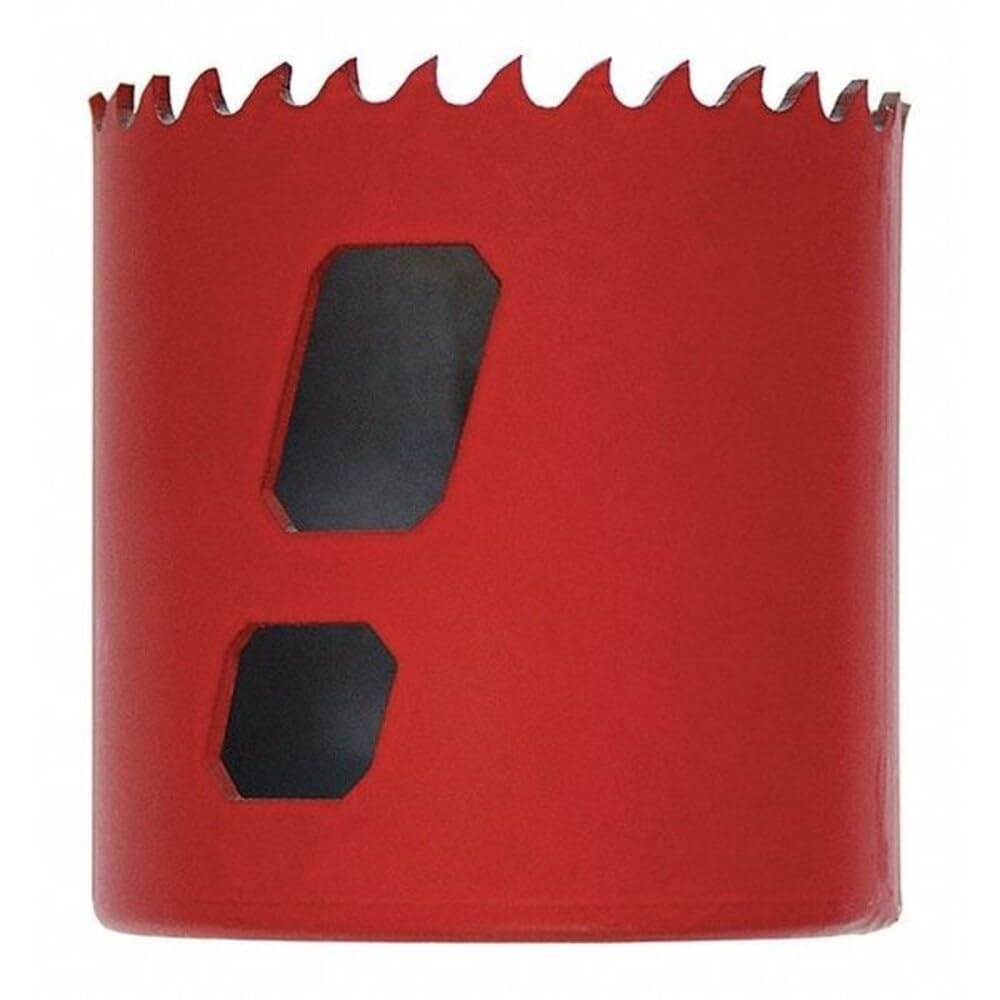
The American-made bi-metal saw that owners say delivers a perfect circle — even out-cutting a named competitor’s set.
Precision is this saw’s signature, and quality is the most-cited positive in owner feedback. A patent-pending tooth set design removes material faster, while a heavy-duty.050 side wall adds stability for cleaner, wobble-free cuts. Owners consistently report clean, consistent holes, with one noting the saw produced a perfect circle and accurate 2″ diameter — superior to a rival set that arrived with oval, crooked welds.
The engineering carries into daily use: a new cap reduces runout and vibration, and a new side slot increases leverage so the slug comes out faster and easier. An exterior red coating reduces side-wall friction so the cut feels smoother. It fits a standard arbor — including the universal 5/8″ x 18 thread used by many brand mandrels — which removes a common compatibility headache.
This saw is no stranger to abuse, either. One owner cut schedule 40, 2-3/8″ oil field pipe with a solid drill, producing clean saddle cuts for precise welding — roughly six cuts before dulling. The recurring gripe is sharpness consistency, with some teeth breaking on first use in a few cases, so treat it with care on hard steel. Owners call it made in the USA, with great weld lines and threads.
What owners rave about
- Perfect circles with minimal vibration or binding
- Heavy.050 side wall for stability
- Fits standard 5/8″ x 18 arbors from major brands
Where to be careful
- A few owners saw teeth break on first use
- Needs an adapter for some drill chucks
Pick this for: welders and pros who need accurate, clean holes in metal and want a rugged US-built tool.
Not the one if: you’re on a strict budget or only cut wood — bi-metal is capable but carbide suits hard steel better.
5. METALLIXITY TCT Hole Saw 57mm 2-1/4″ Tungsten Carbide
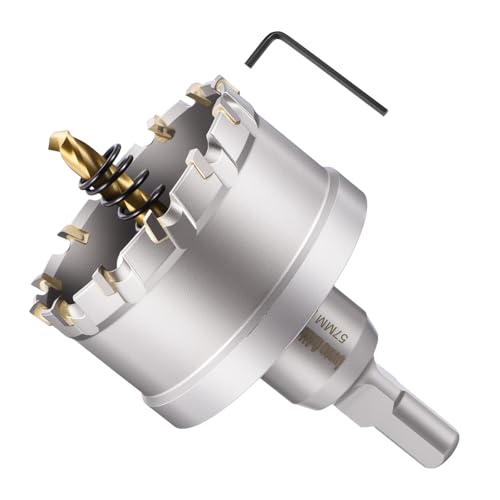
The machine-shop workhorse with a triangular shank and spring-loaded guide bit that clears its own chips on thick aluminum.
Cutting performance is the top praise for this saw, and it earned its reputation in demanding settings. One owner used it to enlarge an 88mm hole in 70mm thick aluminum with a 7/8″ collet on a mill, reporting no wobble. Another cut through a steel I-beam with a 5/16″ starter hole and cutting oil, calling it perfect for 1″ conduit. The tungsten-carbide teeth handle stainless steel up to 15mm and alloy steel up to 10mm.
The design shows real shop-floor thinking. A triangular shank (7.5mm diameter) enhances grip stability in the chuck, and the spring-loaded center guide bit ejects the disc and clears sawdust easily. Sandblasting promotes coating adhesion, and PVD coatings plus heat treatment give it high cutting strength and long life. The kit includes a 6mm center drill bit and a hex key for assembly.
This saw insists on metal — the maker explicitly recommends against thin metal sheet, wood, and plastic. On hard 3/16″ plastic, a 4-star owner found it grips hard and wants to twist in your hand. Treat it as a dedicated metal cutter, apply coolant for extended drilling, and keep the cut perpendicular. Owners are clear: do not use this on wood, as kickback could hurt you.
What makes it special
- Spring-loaded bit ejects the disc after each cut
- Triangular shank locks in the chuck for stability
- Cuts thick aluminum and steel I-beams with ease
Important limits
- Not designed for wood — kickback risk noted
- Struggles and grips on hard plastics
Best suited to: machinists and fabricators cutting thick aluminum, alloy steel, or stainless in a mill or press setup.
Overkill for: a weekend woodworker — this tool wants metal and nothing else.
6. Disston E0210523 2-1/4-Inch Blu-MOL Xtreme Bi-Metal Hole Saw

The efficient cutter with large backing-plate openings that makes quick work of OSB, hardiplank, and stainless alike.
Efficiency is the Disston’s game. The large openings in the backing plate let cut material eject quickly, so you’re not losing time prying out plugs between holes. Customers note it cuts through OSB and hardiplank siding with ease, and it slices stainless steel smoothly and accurately with no wobble or binding. The bi-metal construction sits between entry-level and pro, and the blade stays sharp — one owner used a 2-1/4″ version about four times and found it still going strong.
You get broad compatibility here. It fits standard mandrels from Lenox, Ridgid, Milwaukee, and Diablo, and it fits a 3/8″ drill chuck. One owner used it to cut a hole in a generator shed for a 50A cord and plug, noting the correct size and clean result. The saw arrives sharp and sturdy, cutting through wood in seconds.
The shift to China manufacturing is note — a long-time Blu-MOL user expressed a slight concern about durability versus the original US-made set, but admitted the quality seems fine so far. Like any hole saw, expect some skipping on curved surfaces before the blade bites in. It’s a reliable mid-tier pick, though the LENOX above edges it out on raw metal-cutting aggression.
Why it’s a handy pick
- Large backing openings eject plugs quickly
- Fits standard mandrels from Lenox, Ridgid, Milwaukee
- Cuts OSB, siding, and stainless smoothly
Little caveats
- Manufacturing now in China, long-term durability unproven
- Can skip briefly before the blade bites on curved surfaces
Reach for it when: you need one versatile saw that handles wood, siding, and the occasional stainless job without fuss.
Pass on it if: you’re a heavy metal fabricator — the carbide picks above will outlast it on thick steel.
7. DKIBBITH TCT Hole Saw 2-1/4″ Tungsten Carbide Tipped
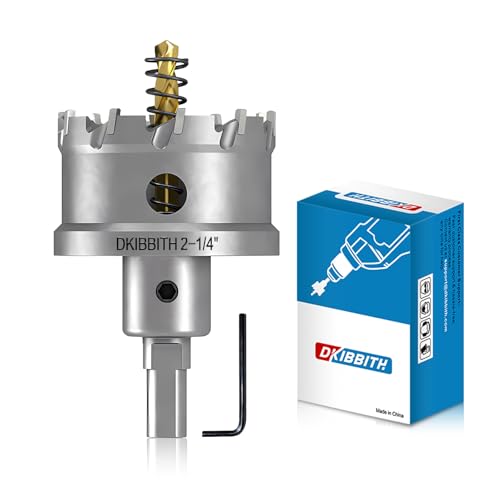
The carbide cutter that sliced through a steel door in seconds for a deadbolt upgrade — and chewed through a shipping container.
This is a steel-breaking specialist with real owner war stories. One upgraded a deadbolt and expanded the hole in a steel door after a hardware-store saw refused to cut — the DKIBBITH cut through in seconds. Another cut a 4.5″ hole in the side of a shipping container, noting the blade did a pretty solid job even cutting at a nasty angle through corrugations. The carbide teeth handle stainless steel, mild steel, iron, copper, aluminum, FRP, plastic, and brass sheet up to 1 inch (25mm) thick.
The kit is thoughtfully packed. The split-point pilot drill bit prevents walk, the ejection spring facilitates easy slug removal, and everything arrives in a semi-transparent rust-proof plastic carrying case with an Allen wrench. Owners describe it as heavy-duty, durable, and likely to outlast the drill driving it. The maker advises going slow and letting the tool work, adding oil to the bit after each project.
The pilot bit is the honest trade-off — it is less sturdy than the carbide body itself. Some owners found the second bit unable to make holes, and the high-hardness carbide teeth can chip if dropped or hit with sudden impact. One owner cut through 1/2″ steel and 3/8″ hard steel successfully, so the saw delivers when technique is right.
The standout strengths
- Ejection spring clears slugs with ease
- Split-point pilot bit prevents walking
- Proof: cut a steel door in seconds
Where it stumbles
- Pilot bit is the weak link — treat it gently
- Carbide teeth chip if dropped or hit hard
Go with this for: steel doors, shipping containers, and 1/2″ plate where you need tungsten-carbide teeth and a full kit.
Not for you if: you only cut wood — the carbide edge is wasted and the delicate pilot bit is a liability.
8. Starrett Deep Cut Hole Saw, 2-1/4″ Diameter, 2″ Depth
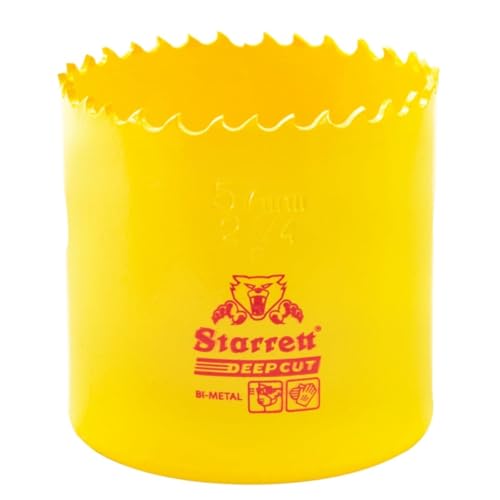
The 2-inch-deep tube notcher that made 30 clean notches in 1.75″ tubing and still cuts like new.
Depth is this Starrett’s superpower. With a 2″ cutting depth — double the standard 1-inch — it lets you notch thick tubing or pipe in a single pass where shallower saws force you to reposition. One owner made at least 30 notches in 1.75″ tubing and reported it still cutting like new, while another said it held up well under pressure without dulling or chattering on 2″ schedule 40 steel pipe.
The engineering comes from the teeth. NVP progressive pitch technology provides fast cutting rates, and the hardened, heat-resistant high-speed steel teeth ensure long life. The design also reduces vibrations for smoother, less tiring cutting — a real ergonomic win on long jobs. It’s built for metalworking and woodworking, and works on alloy steel, metal, and wood.
The catch is the depth is still not infinite. For angled cuts on large tubes, the reach can come up short — one owner found 2 7/8″ drill pipe needed two passes, and another said complex angles require a second reposition. At 0.06 kg it’s light, and owners emphasize it cuts accurately on 4130 tube with better fit-up than others. This is the specialist pick when depth is the deciding factor.
Why depth matters here
- 2″ depth notches thick tubing in one pass
- NVP pitch technology cuts fast and smooth
- Reduced vibration for less user fatigue
Reality check
- Not deep enough for very large pipe in one shot
- Complex angled notches may need two passes
The right call for: tubing notchers, fabricators, and anyone cutting 2″ deep holes in alloy steel or metal.
pass on it if: you’re only cutting sheet metal — the extra depth adds cost without benefit.
Understanding the Specs
Cutting Depth
Cutting depth is how deep the saw can bore in one pass — standard saws reach around 1 inch (25mm), while deep-cut models hit 2 inches. For sheet metal, doors, and plywood, 1 inch is plenty. For notching thick pipe or tubing, a 2-inch deep cut keeps you from repositioning the blade mid-job.
Tooth Material
Bi-metal saws weld high-speed steel teeth to a tough alloy body for flexibility and durability on wood, plastic, and general metal. Tungsten-carbide-tipped (TCT) saws use carbide teeth for extreme hardness on stainless and alloy steel — but they’re more brittle, so they demand lower RPM and steady pressure to avoid chipping.
Plug Ejection
After the cut, the waste disc often jams in the saw. A speed-slot staircase on the back lets you pop it out easily, while an ejection spring pushes it out automatically. Faster ejection means less downtime between holes and fewer smashed fingers with a screwdriver.
Arbor Compatibility
The arbor is the shank that connects the saw to your drill. Most 2 1/4-inch saws fit a universal 5/8″ x 18 thread, but not all drills accept every pilot bit. Check your drill’s chuck size and whether the included arbor or pilot bit matches before you buy.
FAQ
Will a 2 1/4-inch hole saw work with my cordless drill?
What is the difference between bi-metal and tungsten-carbide hole saws?
How deep can a standard 2 1/4-inch hole saw cut?
Why does the material plug get stuck inside the hole saw?
Which speed should I use when cutting metal with a hole saw?
Can I use a tungsten-carbide hole saw on wood?
Will a 2 1/4-inch hole saw fit a standard arbor?
How long does a 2 1/4-inch hole saw stay sharp?
Final Thoughts: The Verdict
For the majority of shoppers, the 2 1/4-inch hole saw winner is the LENOX Bi-Metal Speed Slot because it pairs sharp, fast-cutting teeth with a plug-ejecting speed slot at a crowd-pleasing price — backed by thousands of happy owners. If you cut thick stainless and alloy steel, grab the AOKAIMIAR Carbide for its razor-sharp tungsten teeth. And for notching deep tubing or pipe in one pass, the Starrett Deep Cut is the one to reach for.
How We Picked
We do not accept paid placement. Every pick is matched to a real buyer and a real use-case; we do not hands-on test units.
Sources & Methodology
Specifications: manufacturer listings and product documentation. Review insights: verified customer reviews, as of August 2026. Pricing: not shown on this page (it changes often); check the current price via the retailer link.
As an Amazon Associate, KitchPrep earns from qualifying purchases. This does not affect which products we feature.
Related Guides
