
Specs are compiled from manufacturer listings and verified buyer reviews and can change over time — please confirm the key details on the product page before buying.
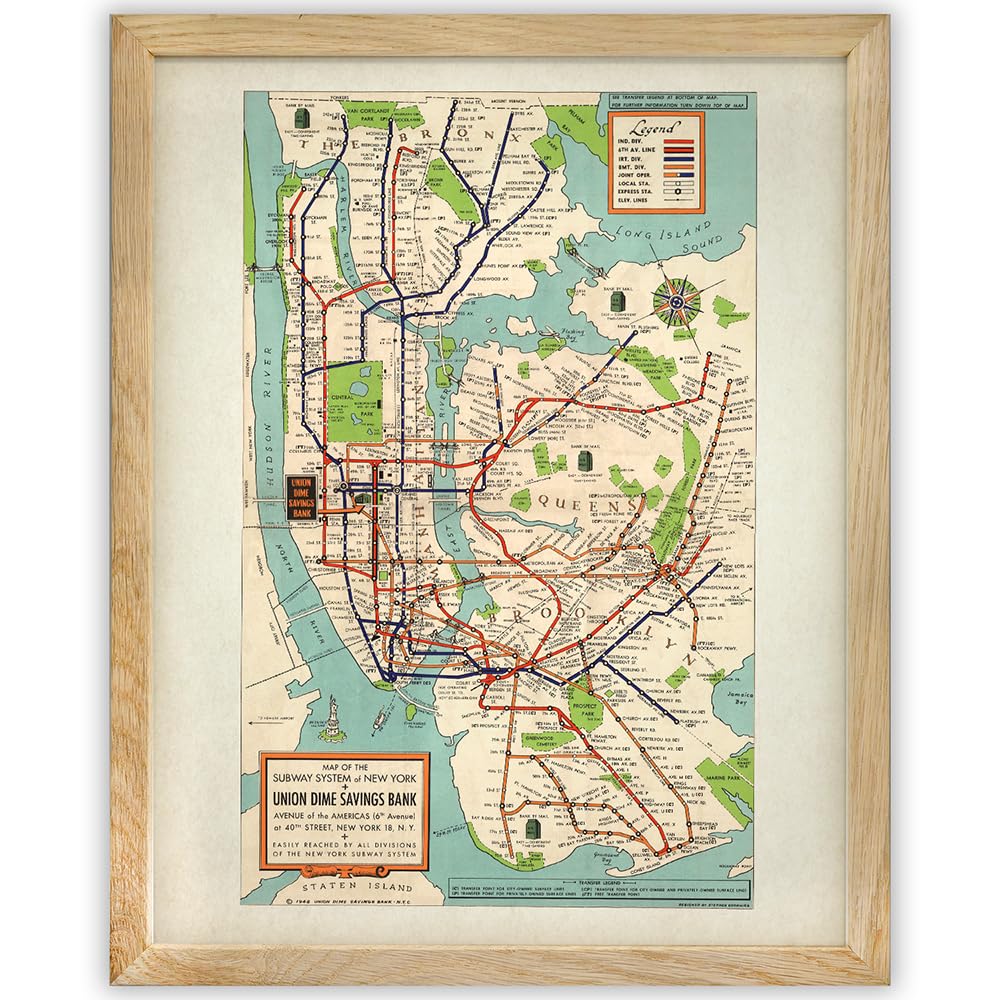
If you want your room to feel like it stepped out of a 1940s apartment, the fastest way is one strong piece of period wall art or a single working vintage object — not a house full of reproductions. The pick that tops this list is the Vintage 1948 New York Subway Map, because it pairs a real solid oak frame with fade-resistant inks and hangs ready from the start. Below you will find five pieces that genuinely earn a spot in a mid-century room, plus the honest catch on each one.
I’m Mohammad Maruf — the founder and writer behind KitchPrep. This guide is built by comparing the manufacturers’ published specifications and the patterns across verified customer reviews, so you get each pick’s real strengths and trade-offs instead of marketing spin.
Every pick here is either a genuine era piece or a faithful reproduction you can hang the same day. If you are decorating on a budget or filling a first apartment, this breakdown of the 1940s home decor market shows which pieces deliver the real period look and which ones cut corners.
Our Picks at a Glance

How To Choose The Best 1940s Home Decor
The 1940s look splits into three distinct styles. It splits into wartime utility, WPA-era graphic posters, and the warm wood-and-metal domestic pieces that filled post-war living rooms. Decide which of those three you are actually chasing before you spend anything, because mixing them carelessly reads as a random flea-market haul rather than a curated room.
Frame material and paper quality decide how long the piece lasts
A poster is only as good as what holds it and what it is printed on. Look for a solid wood frame with a protective glazing layer over the print, and fade-resistant inks if the piece will catch direct sun. An unframed paper print is cheaper and lighter to hang, but it will curl and fade faster unless you frame it yourself.
Decorative prop or working object — know which you are buying
Plenty of 1940s-style decor is a sculpture, not a functioning device. A metal telephone statue with a molded dial looks the part on a shelf but will never place a call. If you actually want to dial out, you need a real corded phone that runs off the phone line. Neither is better — they solve different problems, and the listing photos rarely make the difference obvious.
Wall mounting and weight
Anything that hangs needs the right hardware. A lightweight laminated print can go up with a single nail, while a framed wood-backed piece or an animated wall clock wants a screw driven flush so it cannot wobble. Check the listed weight before you decide where it goes, and hang the heavier pieces into a stud whenever you can.
Quick Comparison
| Model | Best For | Size | Weight | Material | Amazon |
|---|---|---|---|---|---|
| Vintage 1948 New York Subway Map★ Best Overall | Instant framed wall centerpiece | 14″L x 11″W | 1.2 pounds | Solid oak, plexiglass, MDF | Amazon |
| Kit Cat Klock GentlemenMost Eye-Catching | Animated conversation piece | 3.25″W x 15.5″H | 9.44 ounces | Glass frame | Amazon |
| Retro Landline Telephone | A phone you actually answer | 5.91 x 5.91 x 6.69 inches | 960 g | Metal body, ABS buttons | Amazon |
| Gee I Wish I Were A Man Poster | Large statement wall art | 36″L x 24″W | 8.5 ounces | Laminated gloss film | Amazon |
| Deco 79 Metal Telephone Sculpture | Shelf and desk styling | 5 x 5 x 13 inches | 16 ounces | Iron | Amazon |
In‑Depth Reviews
1. Vintage 1948 New York Subway Map 11×14 Framed Poster
Our pick — over 4.5★ from 250+ verified ratings; the strongest balance of quality and price.
A real oak frame around a 1948 transit map you can hang the day it lands
This is the piece to buy if you want one object on the wall that does all the period work for you. The print measures 14″L x 11″W and sits portrait in a frame made from natural solid oak wood sourced from U.S. forests — a genuinely wood frame, not a plastic look-alike. Behind the print are a plexiglass layer and an MDF backing board, which together keep the surface from bowing and protect the artwork from everyday knocks.
What wins people over is the frame and print quality, since that is the part you see and touch every single day. The map itself covers the entire island of Manhattan, so Manhattan-centric New Yorkers get the full picture rather than a cropped downtown slice. The colors are strong, the ink is fade resistant, and the layout compares nicely against a modern subway map if you like that game. Hanging hardware is included and works in any orientation, though the piece ships oriented as a portrait.
The catch is scale. At 11 inches wide this is a small-to-mid statement, not a wall-filling mural — if you are decorating a wide empty wall, you may want to pair it with a second print rather than expect one piece to carry the room. It weighs 1.2 pounds, which is light enough to hang with basic wall hardware, and the plexiglass covering means you clean it with a soft cloth rather than glass spray. Buyers report the low-end of the size range is the trade-off they notice, not the build. It is made and packed in Tomball, TX, and the seller’s own line is simple — love it or send it back.
What earns its place
- Solid oak frame with plexiglass and MDF backing — a proper framed print, not a floppy sheet
- Fade resistant inks hold their color on a sun-facing wall
- Covers the entire island of Manhattan, from the Battery to the top
- Arrives framed with hanging hardware, so it goes up the same afternoon
Where it asks you to compromise
- At 11 inches wide it is a modest print — a large wall will swallow it
- Plexiglass glazing scratches if you wipe it with a rough cloth
- Portrait orientation only as shipped, so plan your layout around that
Reach for this if: you want a single framed piece that reads unmistakably 1940s New York without any assembly or framing errand.
Look elsewhere if: you need one oversized print to fill a long, bare stretch of wall — the 14″L x 11″W footprint will not do it.
2. Kit Cat Klock Gentlemen The Original (Classic Black)
A wagging tail and rolling eyes that have kept time since 1932
The wagging tail and rolling eyes stop people mid-step. It is the Classic Black Kit Cat Klock, made since 1932 by the original manufacturer and still assembled in America, and it runs on 2 C batteries that are not included. The animated eyes and tail are the whole point — this is a mantel clock that happens to tell time, and every child and grandchild in the room notices it within about ten seconds.
A crimson dial, glass frame, black body, and 15.5-inch span from ears to tail do the period work. It weighs 9.44 ounces, which is light enough that a single screw into the wall holds it fine — and a screw is genuinely the right call here, because a nail lets the clock sit proud of the wall and the tail can start banging as it swings.
The marketing shots leave out how the battery version behaves. Battery-powered versions behave differently from the old electric models — they are lighter, and a few get noisy or stop animating within days. Owners have found that keeping the clock flush with a screw, leveling it, and adding a tiny drop of light silicone lubricant to the eye stems clears the noise and keeps the movement smooth. The two batteries do different jobs, so fit them in the right positions or half the animation goes dead. The plastic body is also the recurring gripe — it feels light for what you pay, even to people who love the clock.
My read on it: buy this as a personality piece, not as a precision timekeeper. The clock function holds up, the eye and tail animation is the fragile part, and going in knowing that saves you the disappointment.
Made for: mid-century rooms that need one piece everyone photographs, and gift-givers shopping for a child or grandchild.
Not for: anyone who wants a silent clock — the animation makes noise by design, and users of the original electric models will notice it is louder than they remember.
3. Retro Landline Telephone Classic Rotary Design Corded Desk Phone

The period piece that actually rings — and that is the rare part
Most 1940s-styled phones on the market are statues with a molded dial. This Sangyn unit is the real thing: it plugs into your telephone line and runs entirely off that line, so it needs no batteries and no charging, ever. The body and handset wear a black metallic paint with a glossy finish, and the cord is wrapped in durable black woven fabric — the detail that sells the era more than anything else on the desk. Buttons are ABS plastic rather than a rotary wheel, which keeps dialing fast while the housing keeps the old-fashioned silhouette.
Owners consistently rate the styling and the call quality as the two things they like most, and the phone earns its keep in living rooms, studies, offices, and coffee shops. If you want a phone that matches a 1940s room and still does the job, this is the pick on this list that actually makes calls. The ringer volume control sits on the back of the phone, which keeps the front face clean and lets you turn down the ring for a quiet room.
Two things to weigh before you buy. First, the ring is an electronic sound rather than a mechanical bell, so the moment it goes off it stops pretending to be 1947 — the rest of the package is convincing enough that most people shrug it off. Second, this phone lives and dies by your phone line. Reports of setup trouble cluster around lines and VoIP setups, and a wired internet phone that already misbehaves with other handsets tends to misbehave here too. The body is metal and comes in at 960 g, so it stays put on a desk or shelf.
Style that dials out: a working corded phone in a 1940s shell is the hardest thing to find in this category, and this one needs zero setup beyond plugging the cord into the wall jack.
Buy it for: a room where form and function both matter, and where the phone has to genuinely work.
Hold off if: you are on a VoIP or internet phone service that has been finicky with other handsets — sort the line out first, then buy.
4. Laminated Gee I Wish I Were A Man Poster

The room-dominating wartime recruitment print — and you can write on it
If your 1940s room needs one big, loud graphic to anchor it, this is where the scale goes. At 36″L x 24″W it is the largest piece on this list, and the head-to-head is stark: it covers more than twice the surface area of the 14″L x 11″W subway map. That is a 2.6x difference in footprint, which is exactly why one is a shelf-piece hero and the other is a wall of its own.
What you get for that size is a professionally double-sided laminated poster sealed on all four sides, encapsulated at 24.25×36.25 inches with 4.5 mm edge thickness to keep out dirt, dust, moisture, and humidity. The gloss lamination gives crisp color and a clean finish, and the plastic coating doubles as a dry erase surface — so it works as a decorative print in a home office and as a writable board in a kitchen or classroom. It is hand laminated in the USA and arrives unframed.
The compromise is weight and paper feel. It tips the scales at 8.5 ounces, lighter than the 16-ounce Deco 79 sculpture on this list — the laminate is a protective film over a thin paper core, so it feels flexible rather than stiff like a gallery poster, and the edge can crease if you hang it without support. One practical note from the review pages: owners mention the colors come out right and the image is not pixelated, and the poster reads best behind a simple frame if you want it to look properly finished. Expect to add a frame for the polished look.
Worth knowing before you buy
- 36″L x 24″W — the biggest footprint in this lineup by a wide margin
- Double-sided laminated and sealed at 4.5 mm edges against moisture and dust
- Gloss laminate doubles as a dry erase surface for a kitchen or classroom wall
- Image clarity holds up sharp rather than pixelated at full size
What you give up
- Arrives unframed, so a frame is an added step for a finished look
- At 8.5 ounces the paper core is thin and can crease if unsupported
- Ships as a single unframed sheet, so handle it carefully out of the tube
Perfect when: you have one large blank wall that needs a single, unforgettable wartime-era graphic — frame it and it holds the room.
Wrong call if: you want something ready to hang straight from the box; this one needs a frame to look its best.
5. Deco 79 Metal Telephone Decorative Sculpture

A solid iron phone sculpture that holds a shelf without pretending to dial
This is the smallest-footprint pick and the most honest about what it is: an ornament. The Deco 79 sculpture stands 5 x 5 x 13 inches and weighs 16 ounces — noticeably heavier than the 8.5-ounce laminated poster here, because it is solid iron rather than paper or resin. At 16 ounces of solid iron, it reads as genuine antique on a shelf. A real cast metal body with a matte black finish and a brass holder reads as genuine antique on a shelf or desk, where a hollow plastic look-alike reads as a toy up close.
Tiered bases, coil wire detailing, and a rotary dial profile carry the period look. It is built for decorative use — the finish and silhouette are what buyers are drawn to, and it earns its spot as a styling object in a study, office, entry console, or bar corner. It is small enough to fit beside books or a lamp without crowding either one.
Be clear on what you are buying, though. This is a sculpture, not a phone — it will never ring, and the dial is molded rather than functional. The reviews are candid that the metal is rigid and the piece does not move, which is why it lands at the budget end of this list. So long as you are buying it for the look, that is not a problem; it is the trade-off you are accepting for a solid cast metal object. If you actually want a phone you can answer, the Retro Landline above solves a completely different problem.
The honest verdict: treat this as a decorative object and it delivers — solid iron construction, real weight, and period styling for a small accent. Treat it as a telephone and it will disappoint on contact.
Best value for: shelf and desk styling in a study or office, where you want the weight and finish of a real metal object rather than a plastic prop.
Skip if: you want something that functions — the dial is decorative and nothing on this piece moves.
Understanding the Specs
Frame material and glazing
Frames come in three practical grades for 1940s decor: solid wood, plastic or resin, and unframed laminated prints. Solid oak supports the weight of a print without bowing and takes a stain finish, while plexiglass glazing shields the surface from dust and light scratches — it is lighter and safer than real glass but softer, so clean it with a soft cloth. Unframed laminated posters skip the frame entirely and rely on the laminate itself for protection, which makes them tough against moisture but flexible in the hand.
Weight and mounting
The listed weight of each piece tells you how to hang it. A laminated poster that weighs under a pound can go up with adhesive or a single nail, while a framed oak print or a metal sculpture needs proper wall anchors so it holds securely and stays flat against the wall. Weight also tells you something about construction quality — a solid cast metal object at 16 ounces belongs on a shelf or desk, while a 9.44-ounce animated clock can hang on the wall.
FAQ
Will a framed 11×14 subway map fit a standard frame if I want to swap it out?
Is the Kit Cat Klock battery or plug-in?
Does the Deco 79 telephone sculpture actually work as a phone?
Does the retro landline phone need batteries or a power adapter?
Can I write on the Gee I Wish I Were A Man poster with dry erase markers?
How do I keep the Kit Cat Klock tail from banging on the wall?
Is a laminated poster better than an unlaminated one for a 1940s room?
What size should I choose for a 1940s room with a large blank wall?
Will the retro landline phone work with a VoIP service?
Can I hang the metal telephone sculpture on a wall?
Final Thoughts: The Verdict
For most rooms, the strongest anchor for 1940s home decor is the Vintage 1948 New York Subway Map, because a solid oak frame, fade-resistant inks, and same-day hanging hardware mean the piece delivers the period look with zero setup. If you want one large statement that fills a blank wall, reach for the Laminated Gee I Wish I Were A Man Poster — its 36″L x 24″W footprint covers more than twice the surface of the subway map, and the gloss laminate doubles as a dry erase board. And if you want a working piece rather than a wall piece, the Retro Landline Telephone is the pick that actually rings and needs no batteries. The Kit Cat Klock earns its following the same way — its rolling eyes and wagging tail have been drawing stares since 1932, and if you want the single most-photographed piece in the room, that is the one that gets noticed.
How We Picked
We do not accept paid placement. Every pick is matched to a real buyer and a real use-case; we do not hands-on test units.
Sources & Methodology
Specifications: manufacturer listings and product documentation. Review insights: verified customer reviews, as of September 2026. Pricing: not shown on this page (it changes often); check the current price via the retailer link.
As an Amazon Associate, KitchPrep earns from qualifying purchases. This does not affect which products we feature.
Related Guides
