
Specs are compiled from manufacturer listings and verified buyer reviews and can change over time — please confirm the key details on the product page before buying.
Trying to start a nut on a cut bolt or a damaged thread is a small frustration that can turn a five-minute job into a whole afternoon. You have ground the bolt shorter, but the end is a ragged mess. A 19 mm chamfer tool solves that exact problem — it shaves the outer edge of the bolt, rod, or threaded stud into a smooth taper so the nut guides on easily every time. This guide covers five solid picks, each one sized to handle diameters from roughly 3 mm right up to the 19 mm mark you are searching for.
I’m Mohammad Maruf — the founder and writer behind KitchPrep. This guide is built by comparing the manufacturers’ published specifications and the patterns across verified customer reviews, so you get each pick’s real strengths and trade-offs instead of marketing spin.
Whether you are restoring an axle bolt on a mobility scooter or cleaning up rebar on a jobsite, these tools all let you dial in a clean chamfer (a sloped edge that guides a nut on) fast. Here is how to find the best 19 mm chamfer tool for your next metalworking task.
Our Picks at a Glance

How To Choose The Best 19 Mm Chamfer Tool
A 19 mm chamfer tool is a small, simple accessory for your drill. But pick the wrong one and you will get wobble, poor cuts, or blades that dull before you finish the job. Here are the three factors that separate a one-time buy from a tool you will replace in a week.
Blade Material: Tungsten Carbide vs High-Speed Steel
Every tool on this list uses tungsten carbide, which is a very hard, wear-resistant material that stays sharp far longer than standard high-speed steel (HSS, a less durable steel alloy). If you work with stainless steel, alloy steel, or hardened bolts, carbide is non-negotiable — it shears the metal rather than rubbing against it. The trade-off is that carbide is brittle; dropping the tool or running it at excessive RPM can chip the edge. Manufacturers typically recommend 400–500 RPM maximum for best results.
Number of Flutes and Cut Quality
A flute is the groove or cutting edge on the bit. More flutes generally mean a smoother finish because each flute takes a smaller bite. A 2-flute tool removes material faster but may leave a slightly rougher edge, while a 3-flute or 5-flute tool produces a finer chamfer at a slower feed rate. For rebar or heavy-duty thread repair, 3 flutes offer a good balance of speed and finish; for precision work on aluminum or brass, 5 flutes give you that polished look.
Shank Type and Drill Compatibility
All the picks here use a 1/4-inch hex shank with a quick-release design, which fits most standard power drills and impact drivers. The key difference is fit quality. Some hex shanks have extra play in the chuck (the clamp that holds the bit), causing the tool to wobble and produce an uneven chamfer. A tight-fitting shank is critical for concentric cuts (cuts that stay centered and round), especially on smaller diameter rods below 6 mm. For the best stability, use a clamping chuck rather than a quick-connect chuck if you notice wobble.
Quick Comparison
| Model | Best For | Blade Material | Flutes | Size Range | Amazon |
|---|---|---|---|---|---|
| XPECIAL Deburring Tool★ Best Overall | Best Overall | Tungsten Carbide | 2 | 3–19 mm | Amazon |
| ORXPLUS Internal Chamfer ToolInternal Specialist | Internal Hole Deburring | Alloy Steel | 5 | 3–19 mm | Amazon |
| CZS Deburring Tool | Value 3-Blade | Tungsten Carbide (3) | 3 | 3–19 mm | Amazon |
| Vearter External Chamfer Bit | Heavy-Duty Durability | YG8 Carbide | 3 | 3–19 mm | Amazon |
| THORVALD Deburring Tool | Guided First-Time Use | Tungsten Carbide | 2 | 3–19 mm | Amazon |
In‑Depth Reviews
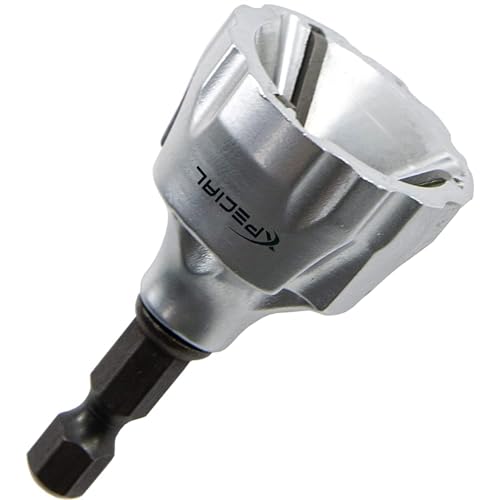
1. XPECIAL Deburring External Chamfer Tool
Our pick — 4.5★ from 500+ verified ratings; the strongest balance of quality and price.
The crowd favorite that turns a mangled bolt end into a nut-friendly taper in seconds.
The thing that wins people over here is how reliably this tool delivers on the one job you bought it for. It uses a tungsten carbide blade set at 45 degrees to shave down the outer edge of bolts from 3 mm up to the full 19 mm. With over 500 owners backing it, the consensus is that it cleans threads on freshly cut bolts and makes installing nuts noticeably easier — even on stainless all-thread (a long threaded rod), which typically chews up lesser blades. Functionality and cutting performance are the two most-praised aspects, and the blade holds its edge well over a year of rounding bolts and studs when you keep the drill under 500 RPM with lubrication.
This tool has a 2-flute cutting head, which makes it a fast material remover. The trade-off is that a 2-flute design can feel a bit aggressive on smaller diameters. Buyers report that you need steady pressure and a vise to hold the workpiece — it is not a one-handed tool. But for anyone who regularly cuts wheel studs, threaded rod, or U-bolts, the durability is proven: one owner reported no wear after a year of use, and the carbide cuts through stainless and grade 8 hardware (a very high-strength steel bolt) with surprising ease.
What Owners Love
- Carbide blade stays sharp through heavy use on stainless and alloy steel
- Quick-release hex shank fits any drill snugly with no wobble
- Creates a clean chamfer that lets nuts thread on smoothly
The Fine Print
- Needs a vise and firm pressure — not a freehand tool
- 2-flute design removes material fast but can catch on very small bolts
Reach for it: You need a proven, durable external chamfer tool for threaded rods, bolts, and studs up to 19 mm, especially in stainless or hardened steel.
Think twice if: You want a tool for internal deburring or prefer a slower, finer 3-flute finish on smaller fasteners.
2. ORXPLUS Tools 5-Flute Internal Deburring Chamfer Tool
The only pick that tackles the inside of a pipe hole with a 5-flute, 87-degree cutting edge.
Every other tool in this list handles the outside of a bolt or rod. This one is different: it is designed specifically for internal deburring — cleaning up the burr (a rough metal edge) left inside a drilled hole or the inner edge of a pipe. The cutting angle is 87 degrees, a steeper angle than the 45-degree external tools, which gives you a clean chamfer on internal edges without gouging. It handles holes from 3 mm to 19 mm and features a 1/4-inch quick-change hex shank that fits any handheld or stationary drill.
The 5-flute design is what separates it from the 2 and 3-flute tools above. More flutes mean a smoother finish because each cutting edge takes a smaller bite. Owners using it on 6061 aluminum (a common, soft aerospace-grade alloy) report beautiful results at 1500 RPM, even after 100 holes with no visible wear. Alloy steel construction keeps it affordable, but that material trade-off shows up in mixed feedback on durability and sharpness — some owners found the flutes not sharp enough from the start for a crisp countersink (a recess for a screw head). As owners mention, wobble in a quick-connect chuck can be an issue; a clamping chuck gives better concentricity (centered, round cuts).
what separates it
- 5-flute blade delivers a smooth, polished internal chamfer on aluminum and mild steel
- 87-degree angle is purpose-built for pipe and drilled-hole cleaning
- Fits a wide range of drills and remains stable at higher RPM
Know Before You Buy
- Sharpness is inconsistent — some units need a touch-up before first use
- Not designed for external thread chamfering, only internal holes
Pick this for: Clean, fast deburring of drilled holes and pipe ends in aluminum or mild steel, where finish quality matters more than removal speed.
skip it if: You need an external tool for bolts and threaded rod, or you work with extremely hard steel that demands a carbide internal bit.
3. Vearter External Chamfer Drill Bit Deburring Tool
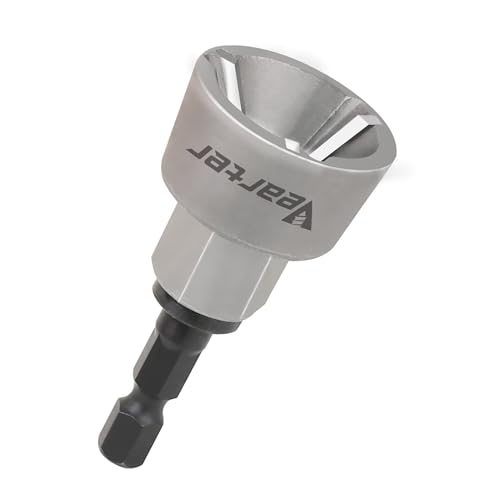
The carbide-blade tool that survived a whole pile of rebar without quitting.
This is the one to reach for when you need a 3-flute design that balances fast material removal with a noticeably smoother finish than a 2-flute tool. The blades are YG8 carbide, a specific grade of tungsten carbide known for rust and corrosion resistance, set in a zinc alloy body. The real story is the durability: as owners put it, this tool “survives heavy rebar deburring abuse” — proof of how well the carbide holds up when you run it at medium speed with low pressure. It fits the same 3 mm to 19 mm size range as the others and works on stainless steel, alloy steel, iron, copper, brass, and aluminum.
Compared to the XPECIAL above, the Vearter has 3 flutes versus 2 — a 50% increase in cutting edges. That means it takes a slightly slower feed rate but produces a more even chamfer, especially on larger 19 mm rods. The recommended speed is 0–400 RPM, slightly more conservative than the 500 RPM cap on the XPECIAL. A few owners mention the tool can skip or run off-center if the hex shank doesn’t seat tightly in the chuck, so using a quality drill vise and a clamping chuck makes a difference.
What Earns Its Reputation
- YG8 carbide blades resist rust and hold up to abusive rebar work
- 3 flutes give a finer finish than 2-flute alternatives on 19 mm rod
- Works on an unusually wide range of materials, including wood and hard plastic
A Realistic Caveat
- Hex shank fit varies — some customers note off-center spinning in quick-change chucks
- 400 RPM max is slower than some competitors, requiring patience
Best suited for: High-volume work on rebar, hardened steel, and mixed materials where you want a 3-flute finish without spending premium money.
Not ideal for: Precision work on small diameter bolts under 6 mm, where concentricity is critical.
4. THORVALD Deburring External Chamfer Tool
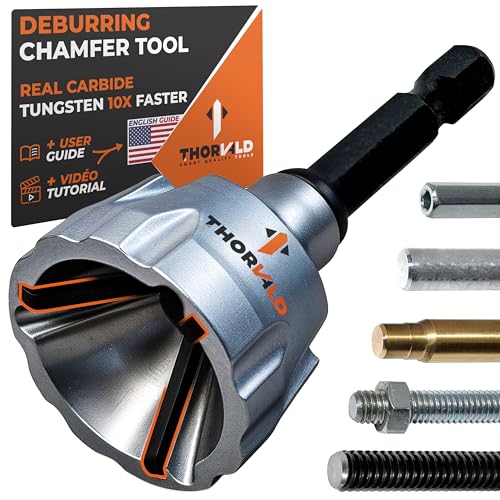
The one that comes with a tutorial and a storage box so you use it right from day one.
THORVALD takes a different approach: instead of just shipping the tool, they include a user guide and a video tutorial, which is genuinely helpful if you have never chamfered a bolt before. The tool itself uses the same tungsten carbide blade design for external work from 3 mm to 19 mm, with a 2-flute cutting geometry. The body is zinc alloy for corrosion resistance, and it comes in a storage box to protect the carbide edge when you toss it in a drawer. Functionality is the most-praised aspect, with owners noting it works well on bolt ends and performs better than cheaper brands.
Where the THORVALD shines is on damaged threads that need restoration. Reviewers point out fixing mushroomed axle ends on lawn tractors and deburring 1/2-inch grade 8 U-bolts after cutting with a grinder — the nuts threaded on easily with no damage to the carbide teeth. The trade-off is that the 2-flute design is best for larger fasteners; it struggles on bolts under 1/4-inch or under 1 inch in length, where the tool can wobble in a quick-connect chuck. For those small jobs, a clamping chuck makes a big difference. Durability reviews are mixed — most owners find the blade lasts well, but a few report the shaft stripping from the body on the first use.
Why It Stands Out
- Includes a user guide and video tutorial — rare for a hand tool in this price range
- Genuine carbide blades handle stainless and grade 8 hardware easily
- Storage box protects the bit between jobs
Heads Up
- Wobble in quick-connect chucks on bolts under 6 mm diameter
- Shaft stability is inconsistent — a small number of units arrive with the spindle stripped
Grab it if: You are new to chamfering and want the extra guidance, or you need a reliable external tool for medium-to-large bolts and threaded rod.
Look elsewhere if: You only work on very small fasteners and cannot use a clamping chuck.
5. CZS Deburring Tool with 3 Tungsten Carbide Blades
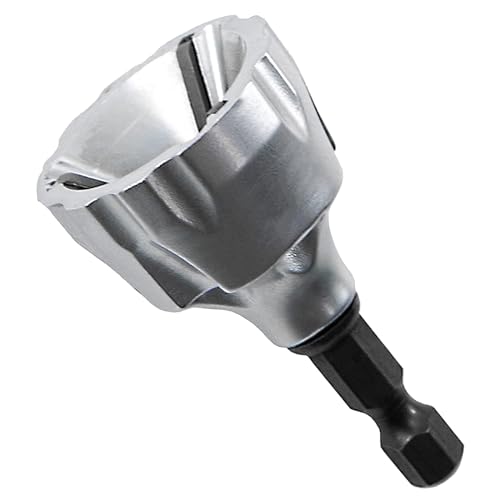
The budget pick that squeezes three replaceable carbide blades into a detachable body.
What makes this tool interesting is its detachable design and three tungsten carbide blades. Most tools in this price range give you a permanent 2-flute head; the CZS uses a removable head with three separate blades, which means you can potentially replace the cutting edges without discarding the whole shank. It covers the same 3 mm to 19 mm working range with a 1/4-inch hex shank. The reviews tell a simple story: it works great when it works. The most consistent feedback is how easy it makes the job — one owner fixed a messed-up axle bolt on a mobility scooter in about 5 minutes and had the nut threading on smoothly.
The catch here is quality control. While most owners call it a job-site must-have that is easy to use and durable, a small but notable number report that the spindle strips out of the body (the metal shaft separates from the main tool). That is the risk you take at this price point. Compared to the XPECIAL above, the CZS matches the 19 mm capacity but introduces the advantage of 3 blades versus 2. However, the XPECIAL has over double the total reviews with a higher average rating, suggesting more consistent manufacturing. If you are on a tight budget and need a 3-blade tool for occasional use, it is worth a shot; if you need one that absolutely will not fail mid-job, the extra few dollars for the XPECIAL or Vearter make more sense.
Why It Gets Attention
- Three tungsten carbide blades offer more cutting edges than 2-flute tools
- Detachable head design — you can swap blades without a new tool
- Very affordable entry point for the 3–19 mm size range
The Trade-Off
- Spindle stripping is a known risk — not for daily professional abuse
- Fewer total reviews means less data on long-term durability
Good for: The occasional DIY repair where you want 3-blade efficiency without spending premium money.
Skip for: Heavy daily use on hardened steel or jobs where a tool failure would stop your workflow.
Understanding the Specs
Flutes (Cutting Edges)
A flute is literally the groove or raised edge on the tool that does the cutting. A 2-flute tool removes material fast and is best for rough work or large diameter rods. A 3-flute tool offers a middle ground — faster than 5-flute but smoother than 2-flute. A 5-flute tool takes smaller bites per revolution, producing a more polished finish but at a slower feed rate. For 19 mm chamfering on stainless or hardened steel, 3 flutes tend to be the balance: fast enough for the jobsite, smooth enough for clean threads.
Tungsten Carbide Blade Grade
Not all tungsten carbide is the same. The XPECIAL and THORVALD use standard tungsten carbide. The Vearter specifies YG8 carbide, a grade with higher toughness and better corrosion resistance, which is why it holds up on rebar. Carbide blades are brittle, so you should never run them above 500 RPM (some tools cap at 400 RPM) and always use lubrication. A chipped carbide blade cannot be resharpened easily — you replace the tool or the blade. The trade-off is that a single carbide edge can outlast a dozen high-speed steel bits on threaded rod.
FAQ
Can I use a 19 mm chamfer tool on 1/4-inch bolts?
What is the difference between internal and external chamfer tools?
How fast should I run my drill with these tools?
Can a chamfer tool fix a completely stripped bolt head?
Will these tools work on stainless steel threaded rod?
What lubricant should I use when chamfering metal?
What do I do if the tool wobbles in my drill chuck?
How long does a tungsten carbide blade last on a 19 mm chamfer tool?
Can I use these tools on wood or PVC?
Final Thoughts: The Verdict
Across the board, the best 19 mm chamfer tool winner is the XPECIAL Deburring External Chamfer Tool because it perfectly balances proven carbide durability, a 45-degree cutting angle, and strong owner consensus across hundreds of ratings — it handles everything from stainless all-thread to grade 8 U-bolts without complaint. If you need an internal tool for cleaning drilled holes and pipe ends, the ORXPLUS 5-Flute Internal Tool is the only pick built for that job. And for heavy rebar work or mixed-material jobs where a 3-flute finish matters, the Vearter 3-Flute Chamfer Bit delivers impressive toughness for the price.
How We Picked
We do not accept paid placement. Every pick is matched to a real buyer and a real use-case; we do not hands-on test units.
Sources & Methodology
Specifications: manufacturer listings and product documentation. Review insights: verified customer reviews, as of July 2026. Pricing: not shown on this page (it changes often); check the current price via the retailer link.
As an Amazon Associate, KitchPrep earns from qualifying purchases. This does not affect which products we feature.
Related Guides
