
Specs are compiled from manufacturer listings and verified buyer reviews and can change over time — please confirm the key details on the product page before buying.
If you want one cordless drill that starts every hole cleanly, drives screws flush, and still has battery left when the project ends, the short answer is this: a brushless 18V drill with a mechanical clutch, two speeds, and a battery platform you already trust beats any single spec on a box. The picks below split into two honest camps — compact drills that live on your belt, and heavier kits built for all-day framing and deck work.
I’m Mohammad Maruf — the founder and writer behind KitchPrep. This guide is built by comparing the manufacturers’ published specifications and the patterns across verified customer reviews, so you get each pick’s real strengths and trade-offs instead of marketing spin.
Every drill here runs on the 18-volt battery class, so the real question is which one matches your grip, your job, and your existing batteries. Below you will find the top performers, the budget standouts, and the one honest head-to-head that matters when you finally pick your best 18v cordless drill.
Our Picks at a Glance


How To Choose The Best 18V Cordless Drill
Three things separate a drill that stays in your hand all day from one that sits in the garage: torque, chuck quality, and whether you already own a battery platform.
Torque and speed ranges
Torque is the twisting force the drill can apply to a bit — measured in inch-pounds (in-lb) or inch-pounds of max torque. Higher numbers mean it can drive longer, thicker screws before the motor stalls. Most compact 18V drills in this list sit around 400 to 620 in-lb, which covers furniture assembly, deck boards, and lag screws up to a reasonable size. Two-speed gearboxes (for example 0-450 and 0-1,700 RPM) let you run slow and controlled for driving screws, then shift to high speed for boring holes fast.
Chuck size and grip
A 1/2 in. chuck accepts the widest range of bits and hole saws, while a 3/8 in. chuck is lighter and suits smaller bits. All-metal chucks hold bits more securely than plastic ones and shrug off heat. If you have big hands or wear gloves, pick up the drill before buying — balance in the hand matters more than any spec sheet number, and several compact models here are noticeably shorter in the grip than their older brushed siblings.
Battery platform matters most
If you already own batteries from Milwaukee, Makita, Bosch, or Ryobi, buying a bare tool into that same system saves money long-term. If you are starting fresh, a kit with two batteries and a charger gets you running that day. Two numbers to check on the battery: amp-hour capacity (Ah, the fuel tank size) and whether the charger is included. 2.0Ah is standard for light work; 4.0Ah and up give more runtime but add weight.
Quick Comparison
| Model | Best For | Max Torque | Chuck Size | Weight | Amazon |
|---|---|---|---|---|---|
| Milwaukee 2801-21P M18 Compact Brushless★ Best Overall | All-around kit with battery | — | 1/2 in. | 6.2 pounds | Amazon |
| Milwaukee 2903-20 M18 FUEL Drill/DriverHeaviest Hitter | Heavy drilling and big bits | — | 1/2 in. | — | Amazon |
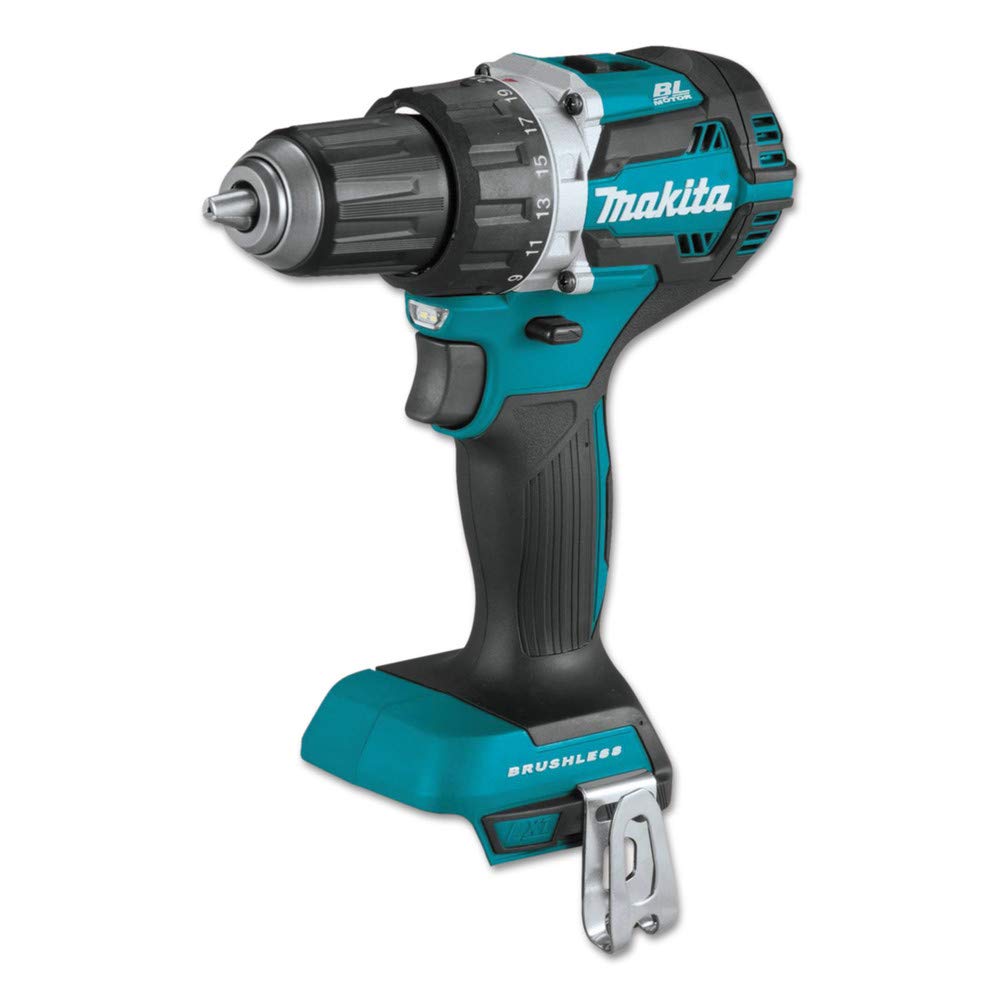
| Makita XFD12Z 18V LXT BrushlessRuntime Leader | Long-runtime brushless drilling | 530 in-lbs | 1/2 in. | 2.9 pounds | Amazon |
| Bosch GSR18V-400B22 Compact Kit | Two-battery compact kit | 400 In.-Lbs. | 1/2 in. | 907 g | Amazon |
| Metabo HPT 18V MultiVolt DS18DEX Kit | Two-battery safety-focused kit | 620 in-lbs | 1/2 in. | 2.6 pounds | Amazon |
| Ryobi ONE+ HP 18V Brushless PSBDD01 | Ryobi ecosystem compact | 400 in-lb | 1/2 in. | — | Amazon |
| Makita XFD10Z 18V LXT Variable Speed | Lightweight go-to for tight work | 480 in. lbs. | 1/2 in. | 2.9 pounds | Amazon |
| ONEAND 18V 3/8 in. Drill/Driver Kit | First drill, light household jobs | — | 3/8 in. | — | Amazon |
In‑Depth Reviews
1. Milwaukee 2801-21P M18 18-Volt Lithium-Ion Compact Brushless 1/2 in. Drill/Driver Kit
Our pick — over 4.5★ from 950+ verified ratings; the strongest balance of quality and price.
The do-everything kit that lands on the belt and stays there all day
This is the drill for someone who wants one purchase that covers framing, deck repair, and the odd cabinet door without a second trip. It runs on the M18 battery system — Milwaukee’s 18-volt lineup of tools and chargers — and ships as a full kit with a 2 amp-hour lithium-ion battery, so you can drill the day you open the box. Weight lands at 6.2 pounds, which is heavier than every other pick here. That heft is the trade-off you accept for the durability reputation Milwaukee has earned.
What wins people over is the quality of the build. The drill rattles nothing, the chuck grips tight, and it has handled everything from planting bulbs to full deck work without complaint. Buyers report the battery running roughly 45 minutes or more between charges under load, and one long-term owner sums up the platform plainly: “I’m going to purchase the blower and weed whacker in the M18 series because the battery lasts that long; about 45 minutes or more.” Owners call the torque unreal for the size. A 65-year-old user who switched over from the yellow brand called it the best hand tool he has ever handled in his life and picked up two of the M18 units instead.
The honest catch is battery life on the included 2.0Ah pack. Some units ship with a defective battery that dies early, and a handful of owners buy a second, larger pack for longer sessions. If you plan on running it hard, budget for a 4.0Ah or 5.0Ah pack down the line. For everyone else, the drill itself is the reason to buy into the M18 system.
Where it wins
- Full kit with battery and charger — no hidden purchases
- 1 in. drilling capacity in wood covers framing and deck work
- High durability reputation — owners mention surviving drops and misuse
- Compatible with the entire M18 system (over a dozen tools share the battery)
Where it gives ground
- 6.2 pounds makes it the heaviest option in this lineup
- Included 2.0Ah battery gives short runtime under continuous load
- Occasional reports of a defective battery box arriving with the kit
Reach for this if: you want one kit that handles serious projects and you already buy into or plan to buy into the M18 battery platform.
Hold off if: you drill overhead for hours at a time and want a lighter tool in the hand — the Bosch kit or Makita XFD13 sits far easier on the shoulder.
2. Milwaukee 2903-20 M18 FUEL 18V Lithium-Ion Brushless Cordless 1/2 in. Drill/Driver (Tool-Only)
Built for thick stock, big hole saws, and jobs that stall weaker drills
Half-inch chucks are common. Seven-inch wood-drilling capacity is not, and that number puts the 2903-20 in a different league from the compact drills above. Milwaukee’s POWERSTATE brushless motor drives the extra work, and an Auto-Stop Control mode senses a bind-up and shuts the motor down so the drill does not twist your wrist — a real safety feature if you have ever had a 4-inch hole saw grab a knot.
Owners describe it as a beast, and a concrete scene backs that up: an owner dragged it around on steel grating for half an hour behind a 16 mph machine, and apart from some ripped-up plastic, the drill still works as it should. Another owner says they have drilled thousands of holes with it, gotten it extremely hot, and it still gets the job done. The mechanical clutch keeps driving consistent across a wide range of fasteners, which matters more than raw power when you are sinking hundreds of screws. The trade-off is weight. As one owner puts it plainly: “It’s powerful, but that comes with the price of heavy weight.” It ships as a bare tool — no battery or charger in the box.
Plan on about 10 minutes of runtime per charge with a small battery if you keep the trigger squeezed. For continuous work, pair it with a 5 amp-hour pack and a spare. High-output motors draw more current, so runtime depends on the amp-hour rating of the pack you attach.
Who it is for: the pro or serious DIYer who drills thick lumber, bores large holes, and already has M18 batteries on the shelf.
The real cost: bare-tool means a battery and charger on top of the drill price — worth it only if you are already in the M18 ecosystem.
Best fit: heavy-duty work where nothing else will cut it — deck framing, drilling out existing lumber, driving big lag screws.
Not your pick if: you want a light drill for furniture assembly and cabinet work.
3. Makita XFD12Z 18V LXT Lithium-Ion Brushless Cordless 1/2″ Driver-Drill, Tool Only
Brushless efficiency that turns a single charge into a full weekend of work
The 530 in-lbs of torque here sits above both the Ryobi and the Bosch drill and just shy of the Metabo HPT, which is a lot of twisting force for a tool that weighs 2.9 pounds with a slim grip. Makita’s brushless motor is electronically controlled to match torque and RPM to the load, and it eliminates carbon brushes entirely — meaning the motor runs cooler, which is exactly what makes a drill survive years of weekend work instead of a season.
What owners keep coming back to is the smooth, fast drilling feel. The two-speed transmission runs 0-500 and 0-2,000 RPM, so screws go in slowly with control, then you shift up and holes punch through quickly. The torque lock auto-adjusts force at constant speed, which owners say prevents stripping screw heads. Several mention it works with their existing 18V batteries, so no new charger or battery purchase was needed. On the trade-off side, the chuck can occasionally feel finicky engaging a bit — it grips fine once set, but you may need a second try on the first placement. A few heavier-use owners also report the spindle lock loosening over a year of use.
One difference to know versus the XFD10Z on this list: this drill uses a brushless motor with a higher 2,000 RPM top speed, while the XFD10Z uses a brushed 4-pole motor topping out at 1,900 RPM. Both run the same LXT 18V batteries, so if you are already in the Makita system, the choice is really brushless efficiency vs. price.
Why it earns a spot: the brushless motor’s cool-running efficiency is the difference between a drill that lasts a season and one that lasts years.
Where it falls short: the chuck action and spindle lock have thinner durability reports than the motor itself.
Pick this one: if you already own Makita LXT 18V batteries and want a light, fast drill with real runtime.
Look elsewhere: if you want a kit with a battery and charger included — this is bare tool only.
4. Bosch GSR18V-400B22 18V Compact Brushless 1/2 In. Drill/Driver Kit with (2) 2 Ah Batteries

Two batteries in the box, one of the shortest heads on the shelf
For anyone who has ever run a drill battery dead mid-project at the worst possible time, two batteries in the case is the feature that actually matters. Bosch delivers that here alongside a 6.3 in. head length, which lets the drill slip into cabinet interiors, between floor joists, and under sinks where most 18V tools cannot reach. The 400 In.-Lbs. of torque from under 2 lbs of tool (907 g) is the same figure the Ryobi carries, so if you are comparing those two, this one wins on the second battery and the tool’s shorter head.
Owners appreciate the build — what one reviewer captures as typical Bosch quality. The 20 clutch settings give you the control to sink a small screw into pine without crushing it, and the all-metal chuck holds bits cleanly. A few owners note a quirk: the locking chuck needs to be turned by hand until it clicks rather than by spinning the drill, which is opposite to how some older drills behave. Once you know that, it works fine. Real-world battery performance holds up too — one owner reports drilling and driving 25 screws on a single third of a battery charge, and the pack goes from empty to full in roughly 50 minutes on the included charger.
For a professional using the drill continuously, the 2.0Ah packs run out faster than a bigger 4.0Ah or 5.0Ah would. The two-battery setup cushions that, but for all-day production work, plan on a larger pack or two. For everyone else, this is one of the best-balanced compact kits in the lineup.
The part owners love
- Two 2.0Ah batteries and a charger in the box — no downtime between charges
- 6.3 in. head length handles tight spaces where bulkier 18V drills will not fit
- All-metal chuck for longer life and clean bit retention
- 20 clutch settings give precise control for light fasteners
The honest limits
- 2.0Ah packs run out faster than 4.0Ah or 5.0Ah under continuous use
- The locking chuck works backwards from some older drill designs — turn by hand to click
- Torque sits below the Metabo HPT and both Makita brushless picks
For cabinet and trim work: the short head plus two batteries make this the cleanest handheld kit here.
Not for high-volume production: if you are drilling hundreds of holes a day, look at a bigger battery platform or the Metabo HPT kit above.
5. Metabo HPT 18V MultiVolt Cordless Brushless Driver Drill Kit, DS18DEX

The highest torque rating here, plus a safety system that stops the motor cold
620 in-lbs is the biggest torque number in the whole lineup. That means this drill can drive thicker, longer screws into hardwood without stalling where a 400 in-lb compact would start to struggle. On paper it beats the Ryobi and Bosch by a clear margin — 620 versus 400 — and tops the two Makita brushless picks at 530 and 440 in-lbs. Reactive Force Control (RFC) acts as a safety net: if the bit binds in the wood, the drill senses the spike and cuts the motor, so the handle does not spin out of your hand. The kit includes two 18V 2.0Ah lithium-ion batteries with a fuel gauge, plus a charger, a carrying bag, and a belt hook.
The thing owners respond to is reliability over time. One owner after a year of heavy use that included resurfacing a whole deck called it strong, tightly gripping on the chuck, light, and balanced, with impressive battery life. Another owner is a long-time Hitachi/Metabo loyalist who likes it better than the old units. Compared to older drills, this one runs a bit louder, and the same owner notes he will test further. Weight lands at only 2.6 pounds, and at 6.1 in. long the body is the shortest of any 18V pick here — small enough to reach into tighter spots than a full-size 18V drill allows.
The honest catch is the chuck. Owners describe it as the weak point, with bits sometimes working loose during use. Expect to re-check bit tightness more often than you would on a metal-jaw chuck. Metabo HPT also covers the tool body with a lifetime warranty.
Standout strength: 620 in-lbs — the top torque figure in this lineup — plus RFC safety and a lifetime tool body warranty.
The chuck is the trade-off: expect to re-tighten bits more often than with a metal-jaw chuck; treat the drill accordingly on high-torque work.
Best for: high-torque jobs where driving power and safety matter most — big lag screws, decking, thick lumber.
Skip this if: you need a chuck that holds bits flawlessly through every heavy-duty task.
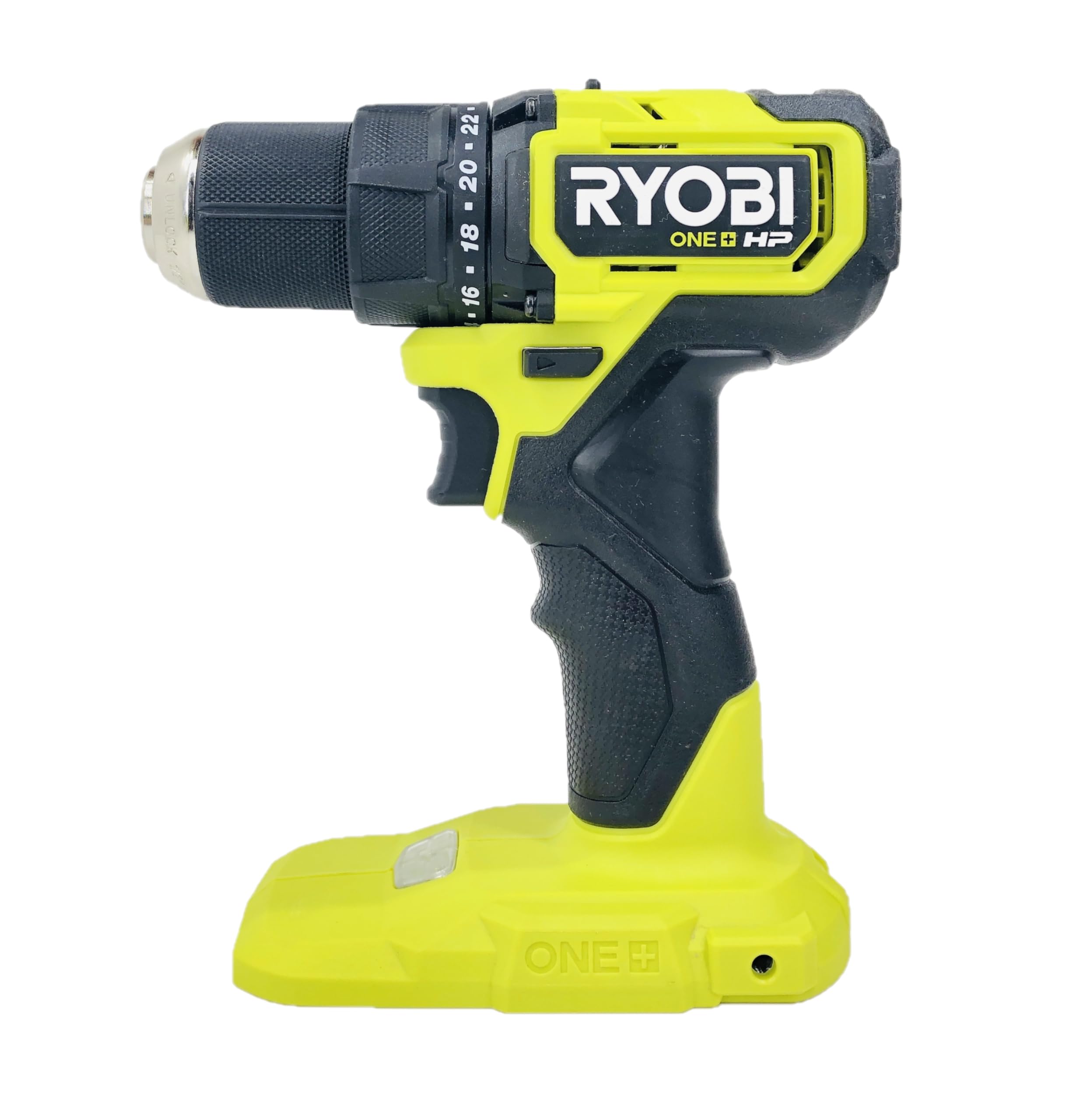
6. Ryobi ONE+ HP 18V Cordless Compact Brushless 1/2″ Drill/Driver PSBDD01 (Tool Only)
The Ryobi upgrade that clips into a system you probably already own
If you have 18V Ryobi batteries sitting in the garage, this brushless model is the smart upgrade. It delivers 400 in-lb of torque — the same figure Bosch prints — with a 6.4 in. compact body that is shorter and lighter than Ryobi’s brushed version. The two-speed gearbox runs 0-450 and 0-1,700 RPM, and a 24-position clutch gives you 24 separate torque steps to dial in the exact amount of force for a small screw or a chunkier fastener. That is more clutch positions than the Bosch offers.
Owners who made the switch from older Ryobi brushed drills say the brushless version is smoother, more compact, and more powerful. One comparison they often make: this drill beats comparable DeWalts and Milwaukees on price for the same real-world workshop performance. Battery compatibility is smooth across the Ryobi ONE+ line — it uses the same battery as all your other Ryobi tools, so no new charger purchase. For someone upgrading from a 10-year-old Ryobi, the difference is obvious the first time you drive a screw.
What you give up is durability headroom. This is still a value-tier tool and a handful of reviewers point out the drill breaking after a lighter workload than expected. Treat it as a home and garage drill rather than a jobsite daily beater — the compact size and smooth two-speed control make it a natural fit for furniture, fence repairs, and shelf building, where it earns its place comfortably.
What buyers get
- Fits the existing Ryobi ONE+ 18V battery system with no new charger needed
- 6.4 in. compact head reaches tighter spaces than most full-size 18V drills
- 24-position clutch gives precise control for light fasteners
- Brushless motor is smoother and more efficient than the older brushed Ryobi version
Where it comes up short
- 400 in-lb torque sits below the Metabo HPT and Makita brushless picks
- Durability under heavy professional use is the mixed area in the reviews
- Bare tool only — no battery or charger in the box
Ideal for: Ryobi owners who want to trade up from a brushed model and keep the batteries they already have.
Look past this if: you need max torque and jobsite-grade durability — the Metabo HPT kit or Milwaukee 2801-21P cover that better.
7. Makita XFD10Z 18V LXT Lithium-Ion Cordless Driver-Drill, Tool Only, 1/2″, Variable Speed

Weathered two Florida summers and kept drilling
Of all the drills here, this is the one with the longest real-world track record in the hands of people who have used it daily for years. What makes it stand out for field work is Extreme Protection Technology (XPT), an engineering feature that gives the drill increased resistance to dust and water. One long-term user reports it survived two years of heavy abuse in the Florida sun and rain.
Owners keep coming back to the mechanical clutch. Unlike electronic clutches on some competitors, the mechanical design prevents stripping screw heads because the clutch physically slips rather than modulates motor current. A paint-mixer user who owns roughly 15 drills says this one is his go-to because the ergonomics are balanced and it does not pinch the trigger finger. Weight sits at only 2.9 pounds. Two real caution points: dropped from height the drill can break, and running a large mixer for too long can overheat the motor — the same drill you want for heavy mixing is the one you have to give a break. One long-haul owner also had the keyless chuck bind up after hundreds of hours of use.
Comparisons matter here. Against the Milwaukee 2801-21P, this drill weighs 3.3 fewer pounds and sits in a smaller footprint (8.6″ x 3.7″ x 8.9″ versus 12″ x 12″ x 8″), so it goes into tighter spaces and stays comfortable overhead. Against the XFD12Z above, it uses a brushed 4-pole motor instead of brushless, so it runs hotter and less efficient, but it costs less and uses the same LXT batteries.
Why it lasts: mechanical clutch plus XPT dust and water resistance is a rare combination in this lineup at any price tier.
Watch the trade-offs: brushed motor runs hotter than brushless, and one long-haul user had the chuck bind up — do not force it if it starts to stick.
The right call for: anyone who already owns Makita LXT 18V batteries and wants a drill that survives weather and abuse.
Skip if: you need brushless efficiency or want a kit — this is a bare tool with no battery or charger.
8. ONEAND 18V Cordless 3/8 in. Drill/Driver Kit with 1.5 Ah Battery and Charger

One of the lightest, easiest 18V drills to just pick up and use
For someone who has never owned a power drill and wants to hang a shelf or tighten a loose hinge without spending a fortune, this kit is the honest entry point. It runs on one 18V 1.5Ah lithium-ion battery with a charger in the box, so you open it and go. The 3/8 in. chuck is smaller than the 1/2 in. on every other pick here, which keeps the body light and easy to handle. Owners say ease of handling is the single best thing about it — one woman put it plainly: “Love the easy handling for a women!!” — which is a real signal for anyone with smaller hands.
The things you trade for that low entry price are speed and torque. The drill runs at a single speed setting, so you cannot shift between slow driving and fast drilling the way you can on the Ryobi or Makita two-speed models. Several owners mention it takes several hours to fully charge, so if you start the day on an empty pack, plan around that. Torque also runs on the lighter side — one Ryobi-using owner puts it succinctly: “Pure Ryobi quality. RPM a little slower than I would like. Will work for the station where it will be used. Would buy again.” That quote lands well for the right buyer: it is a reliable, useful drill for the job at hand, just not a high-performance tool.
What it gets right: it works from the start, it is small enough to keep in a kitchen drawer or garage shelf, and it handles typical household driving without fuss. The real trade-off versus the Milwaukee 2801-21P is straightforward — this one is roughly 40 fewer dollars, runs 1.5Ah instead of 2.0Ah, and works at 3/8 in. rather than 1/2 in. For most people doing occasional light work, that is exactly the math that tips the decision.
Why it earns a slot: the sit-and-go kit with battery and charger makes it the lowest-friction way to own a working 18V drill today.
The real limit: single speed and 3/8 in. chuck rule out heavier work — that is simply not what this drill is built for.
Best fit: first-time drill owners doing furniture assembly, craft projects, and light home repairs.
Look past this if: you need two speeds, 1/2 in. chuck compatibility, or fast charging.
Understanding the Specs
Max Torque (in-lbs)
The torque rating tells you how hard the drill can twist. Higher numbers mean it can drive bigger, longer fasteners without stalling. The compact drills here run between 400 and 480 in-lbs, while the Metabo HPT DS18DEX tops the list at 620 in-lbs. For light furniture and cabinet work, 400 is plenty; for lag screws and thick framing, look toward the higher end of the range.
Battery Amp-Hours (Ah)
Amp-hours measure the battery’s fuel tank. A 1.5Ah pack runs shorter than a 2.0Ah pack, and a 5.0Ah pack runs longer still — but it also weighs more. Two-battery kits like the Bosch GSR18V-400B22 and Metabo HPT DS18DEX mean you keep working while the spare charges. If you already own batteries from one brand, buying a bare tool in that system saves you from buying another charger.
FAQ
Will a 1/2 in. chuck accept bits from a 3/8 in. drill?
Do I need a brushless drill or is a brushed motor enough?
How long does an 18V drill battery last on one charge?
Is a bare tool or a kit a better buy?
Can I use an older battery with a new 18V drill in the same brand?
What is the difference between a drill and a drill/driver?
Do I need a hammer drill or is a standard drill enough?
How tight should I turn the chuck to hold a bit?
Can a compact 18V drill handle deck building and framing?
For most people, the best 18v cordless drill is the Milwaukee 2801-21P, because it ships as a complete kit, handles 1 in. drilling in wood, and brings the durability owners keep calling out after years of drops and abuse. If you already own Makita LXT batteries and want the lightest brushless drill in the lineup, grab the Makita XFD13 at 2.4 pounds. And for serious deck work and heavy drilling where 620 in-lbs of torque and a lifetime tool-body warranty matter, the Metabo HPT DS18DEX is the one to reach for.Final Thoughts: The Verdict
How We Picked
We do not accept paid placement. Every pick is matched to a real buyer and a real use-case; we do not hands-on test units.
Sources & Methodology
Specifications: manufacturer listings and product documentation. Review insights: verified customer reviews, as of September 2026. Pricing: not shown on this page (it changes often); check the current price via the retailer link.
As an Amazon Associate, KitchPrep earns from qualifying purchases. This does not affect which products we feature.
Related Guides
