
Specs are compiled from manufacturer listings and verified buyer reviews and can change over time — please confirm the key details on the product page before buying.
Before you spend, know this: almost no freezer today is exactly 18.0 cubic feet. The closest ones land between roughly 16 and 19 cu ft. So we matched by usable size and type, not by a badge number. That way every pick here holds a genuinely comparable load of frozen food. If you want a big second freezer for the garage — a whole butchered animal, a half-year of Costco runs, a chest full of breast milk — one of these seven will do the job without wasting floor space.
I’m Mohammad Maruf — the founder and writer behind KitchPrep. This guide is built by comparing the manufacturers’ published specifications and the patterns across verified customer reviews, so you get each pick’s real strengths and trade-offs instead of marketing spin.
We break down capacity, defrost type, garage readiness, and what actually goes wrong on delivery so you can separate the freezer that lasts from the one that becomes a garage shelf. This is your straight-talking guide to the 18 cubic foot freezer.
Our Picks at a Glance

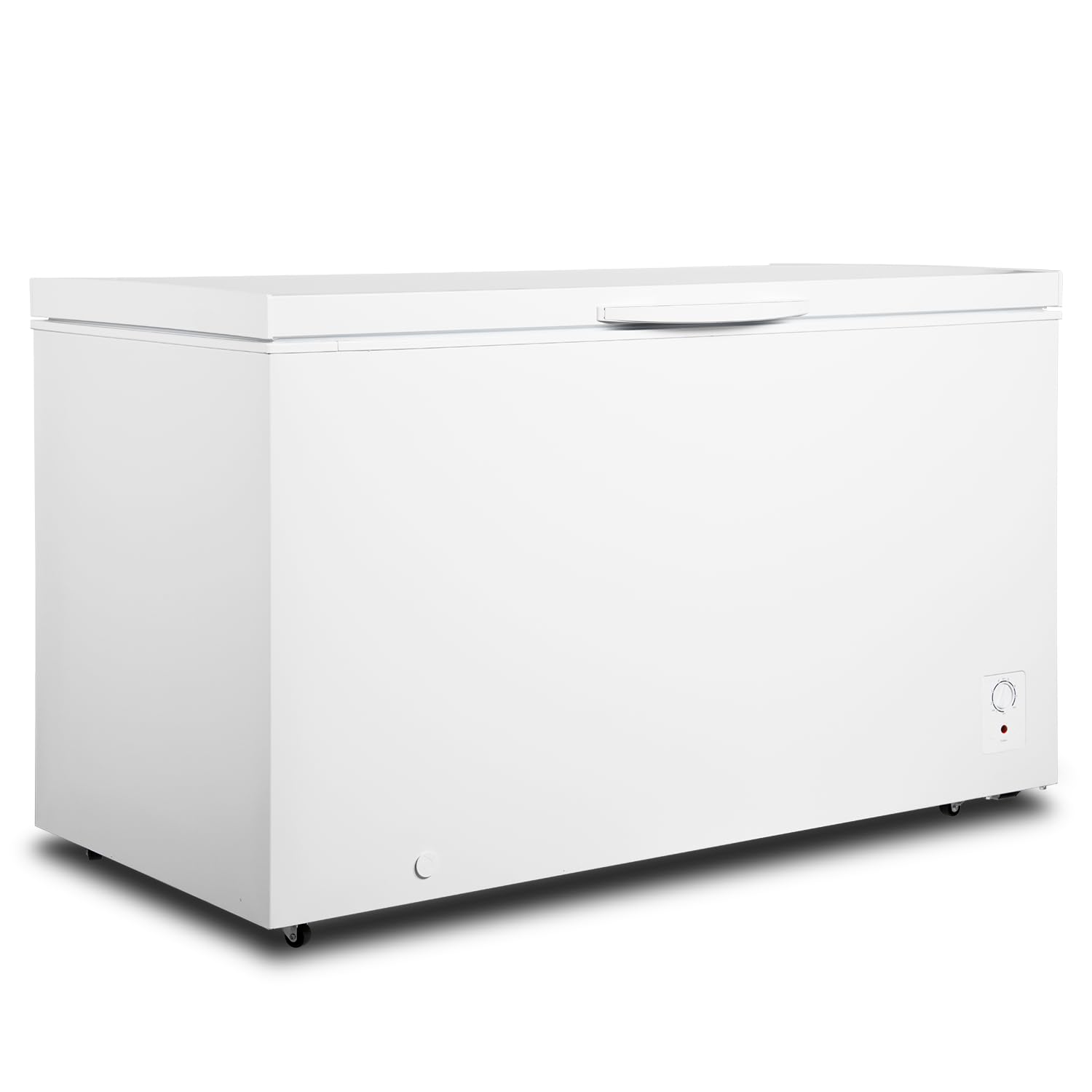
How To Choose The Best 18 Cubic Foot Freezer
Picking a big freezer depends on four decisions stacked on top of each other: how much it holds, how you keep it defrosted, whether it can live in a cold garage, and whether it opens from the top or the front. Get those four right and the brand barely matters.
Sizing: the 18 cubic foot range is a spectrum
Treat “18 cubic feet” as a shopping range, not a stamped measurement. Chest freezers in this bracket commonly run from about 16.2 cubic feet up to 18 cubic feet, and the difference shows up in how much you can lay flat on the bottom. A bottom-freezing chest stacks awkwardly, so the flat floor area matters more than the headline number. If you freeze whole birds, quartered deer, or stacked pizza boxes, lean toward the larger end of the range. For weekly grocery overflow, the smaller end frees up space in a tight laundry room or basement corner.
Defrost type: manual or frost free
A manual defrost freezer is the simpler machine — one compartment, no fans, no auto-defrost cycle — and it tends to hold a steadier temperature because there is less hardware to fail. The trade-off is you have to chip out ice buildup yourself, usually once or twice a year, and drain it out. A frost free upright never needs defrosting, but it uses a fan to circulate cold air, which dries the air inside slightly and can pull a bit more electricity.
Garage readiness and the cold-room catch
A freezer in a garage faces temperatures it was never designed around. On a hot summer day the compressor works harder; on a freezing night an ordinary freezer can struggle to run at all. Garage-ready models are built to tolerate that swing, and many buyers in this category park the unit exactly there — a detail you will see come up again and again in owner feedback.
Top-open chest versus front-open upright
A chest freezer opens upward, so cold air stays inside instead of spilling out every time you dig for something. The trade-off is a smaller footprint of usable surface — you bend and reach to the bottom. An upright stands like a fridge with shelves you can see at a glance, but it loses more cold air each time you open the door and takes up a vertical column of space instead of a wide, low one.
Quick Comparison
| Model | Best For | Capacity | Defrost Type | Weight | Amazon |
|---|---|---|---|---|---|
| BLACK+DECKER 16.2 Cu. Ft. Chest Freezer★ Best Overall | Garage and apartment overflow | 16.2 cubic feet | Manual defrost | 141.1 pounds | Amazon |
| Techomey Chest Freezer 18 Cu FtBest for Bulk | Restaurant and bulk meat storage | 18 cubic feet | Manual defrost | — | Amazon |
| SMETA Deep Freezer 18 Cubic Feet | Roll-anywhere basement backup | 18 cubic feet | Manual defrost | 128 pounds | Amazon |
| Smad Chest Freezer 18 Cu. Ft. | Meat smokers and shaved ice | 14 cubic feet | Manual defrost | 51 kg | Amazon |
| VEVOR Chest Freezer 17.2 Cu.ft | Lockable commercial kitchen storage | 17.2 cubic feet | Manual defrost | 145.5 pounds | Amazon |
| BLACK+DECKER 14 Cu. Ft. Convertible | Fridge-today, freezer-tomorrow flexibility | 14 cubic feet | Frost free | 156.5 pounds | Amazon |
| VEVOR 17 Cu.Ft Convertible Upright | Narrow kitchens and office break rooms | 17 cubic feet | Frost free | 165.4 pounds | Amazon |
In‑Depth Reviews
1. BLACK+DECKER 16.2 Cu. Ft. Chest Freezer, R600a Refrigerant, BCF1620E, White
Our pick — 4.5★ from 500+ verified ratings; the strongest balance of quality and price.
The 16.2-cubic-foot chest that disappears into a small kitchen but still swallows a bulk-buy haul.
This is the pick for the household that keeps running out of freezer room. At 16.2 cubic feet it is the smallest capacity on this list, but it goes bigger than that sounds in daily use — the top-opening chest layout means cold air sits in the box instead of falling out, so you can fill it and walk away.
It carries 504 owner ratings at 4.5 out of 5, the strongest score-and-volume combination here. Owners repeatedly report quiet operation and fast pull-down to temperature. As owners put it, it is “perfect if you’re looking for a deep freezer that can hold small overstock and quick things for kids to grab and go.”
The setup quirk is worth knowing before the box arrives. One owner stressed that the unit should sit unplugged for about 72 hours before first use so the oil and refrigerant can resettle, and that skipping that step risks a compressor that never pulls down properly. Compare it with the SMETA 18-cubic-footer further down: the BLACK+DECKER holds 16.2 cubic feet against the SMETA’s 18, so the SMETA is the bigger box by 11%, and it weighs 141.1 pounds against the SMETA’s 128 pounds. Heavier, but a stouter build. Storage is organized by two removable baskets that lift out for easy reaches.
Where this freezer runs away with it
- 16.2 cubic feet packed into a footprint that fits a small apartment kitchen, per the owners who bought it for exactly that
- Two removable baskets make the deep bottom layer reachable without unloading the whole top
- Mechanical temperature dial and indicator lights sit on the outside, so you adjust the cold without breaking the seal
- Manual defrost with an easy-access drain — simpler maintenance than a fan-driven system, and one fewer part to fail
The honest truth you should know
- You have to defrost it yourself, usually once or twice a year — this is not a frost-free machine
- First run needs that 72-hour settling period, which is easy to overlook
- The 60.4-inch width demands serious floor space — this is a garage or laundry-room freezer, not a countertop appliance
Best fit for the space-strapped buyer: You are in an apartment, condo, or small kitchen and every inch counts — the 16.2 cubic feet here is where the “big freezer” category starts for tight quarters.
Go bigger if: You freeze entire animals or bulk restaurant quantities — the Techomey and SMETA picks further down give you a full 18 cubic feet with fewer trade-offs on capacity.
2. Chest Freezer 18 Cu Ft, Deep Freezer with 7 Level Adjustable Thermostat, Large Capacity Chest Freezer for Garage, Basement, Restaurants, White
A full 18 cubic feet on four industrial casters — built to be pushed around a garage or commercial floor.
The headline number here is the one you came for: a true 18 cubic feet of capacity, the largest on this list alongside the SMETA. That size is aimed at families, restaurants, and homesteaders who need to park a serious load of frozen meat. The adjustable thermostat runs a range that bottoms out at -11.2°F, cold enough for long-term bulk storage.
The cooler story is what a workhorse it is. The 4 industrial-grade casters (heavy-duty wheels) and external handle mean one person can wheel a loaded box across a concrete floor to reposition it. The scratch-resistant PCM exterior (a tough plastic coating that resists scuffs) is what makes that a garage or restaurant unit rather than a kitchen-only box. Fitting the extra-space need is what owners praise most, and the size lands exactly where buyers in tight rooms wanted it — a laundry room fit, in one case, with the freezer starting to chill the moment it was plugged in. Feedback also flags that this box feels heavier than its outward dimensions suggest, which is a bonus on the inside and a two-person job on the inside only.
There is one packaging reality to budget for. A small number of buyers received their unit with cosmetic dents, and one noted that dents with shipping cannot always be avoided. The double-boxed units that arrived clean worked flawlessly. Stack that against how the rest of the group is built — the BLACK+DECKER up top has the same manual-defrost setup with a different footprint, while this one trades the basket count for a taller 33.5-inch frame that clears floor clutter.
Trade-off worth knowing: This is a manual-defrost freezer, so you will be draining and scraping ice periodically rather than relying on a fan-driven cycle.
Worth a look if: You are buying for a family business, a serious meat stockpile, or a homestead that needs real commercial-scale capacity and wants to move the box to wherever the cold is.
Think twice if: You plan on a tight corridor — 54.2 inches of width and a heavier-than-it-looks build make this a wide, deliberate placement.
3. SMETA Deep Freezer 18 Cubic Feet, Chest Freezer Garage Ready, 4 Wheels, White
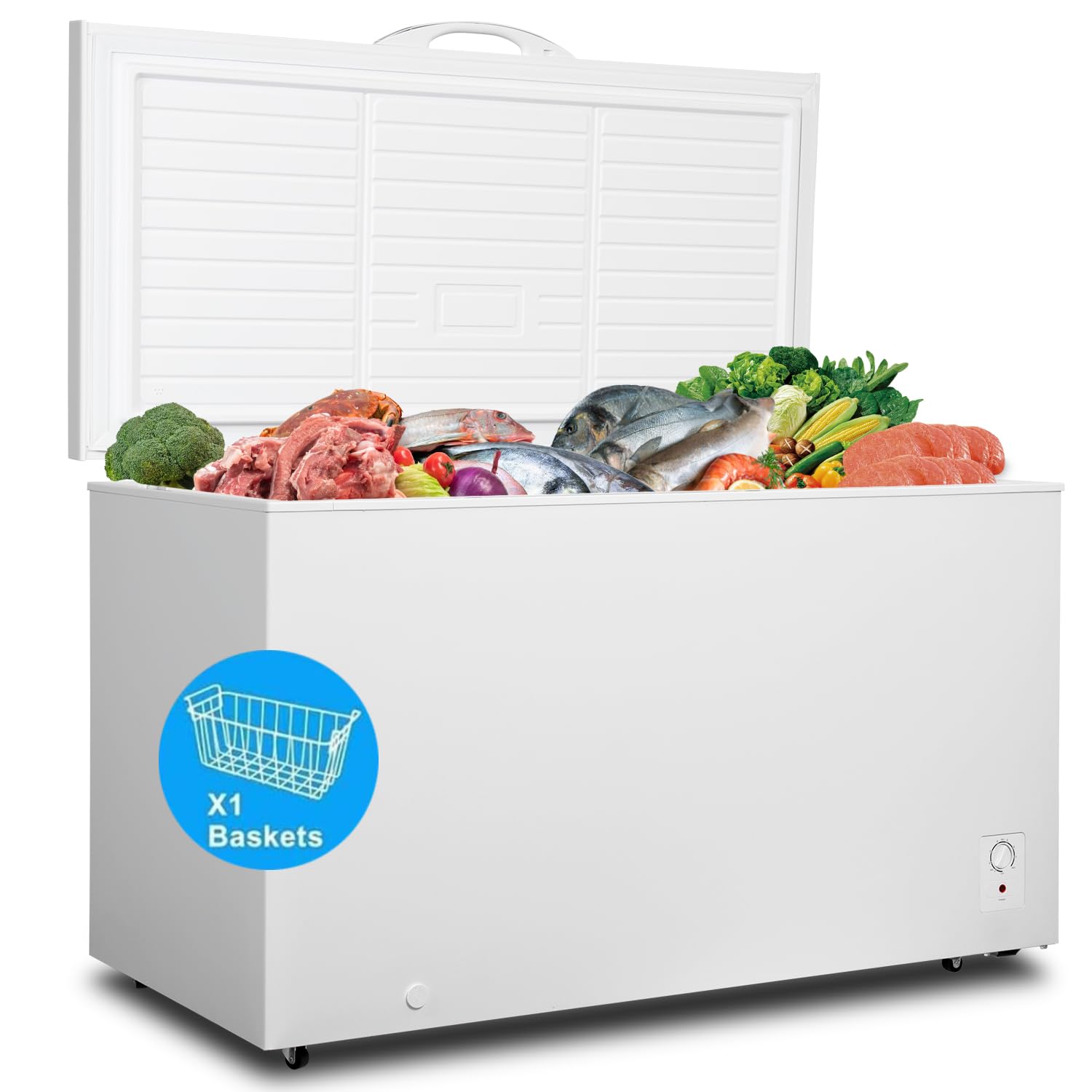
An 18-cubic-foot garage-ready chest with wheels — the freezer that actually gets relocated instead of staying put.
Here is the freezer for the buyer who has a spot in mind but knows plans change. At 18.0 cubic feet it matches the biggest box on the list, and it sits on four wheels that make single-handed repositioning real. That mobility is the whole pitch for a garage, basement, or RV.
The mechanical stats back it up: a range that goes down to -4°F, a quiet rating of 43 decibels or less — roughly the sound of a quiet room — and a 128-pound body that is the lightest full-sizer here. The auto-hold hinge holds the door open between 45 and 90 degrees, so you can load with both hands. The aluminum liner and front drain are set up so a defrost does not become an event. What buyers notice on arrival is temperature speed: within a couple hours, one owner saw the box drop to 0°F and had it half-loaded with frozen food, all working perfectly.
The honest catch is packaging. The mixed feedback on quality in the review pages centers less on the freezer itself and more on what shipping does to it — dents at the corners, occasionally arriving cosmetically scuffed. Itself it is a plug-and-play device; the setup is simply a matter of uncrating, waiting the recommended period, and switching it on.
Matches a garage or RV setup best: You want full 18-cubic-foot capacity that can be wheeled into position by one person and lives happily outside the kitchen.
Look elsewhere if: You need the freezer sealed into a specific cabinet or built-in spot — the SMETA is designed to be moved, not built around.
4. BLACK+DECKER 14 Cu. Ft. Convertible Freezer Refrigerator, Frost Free, BUC1400XB, Black
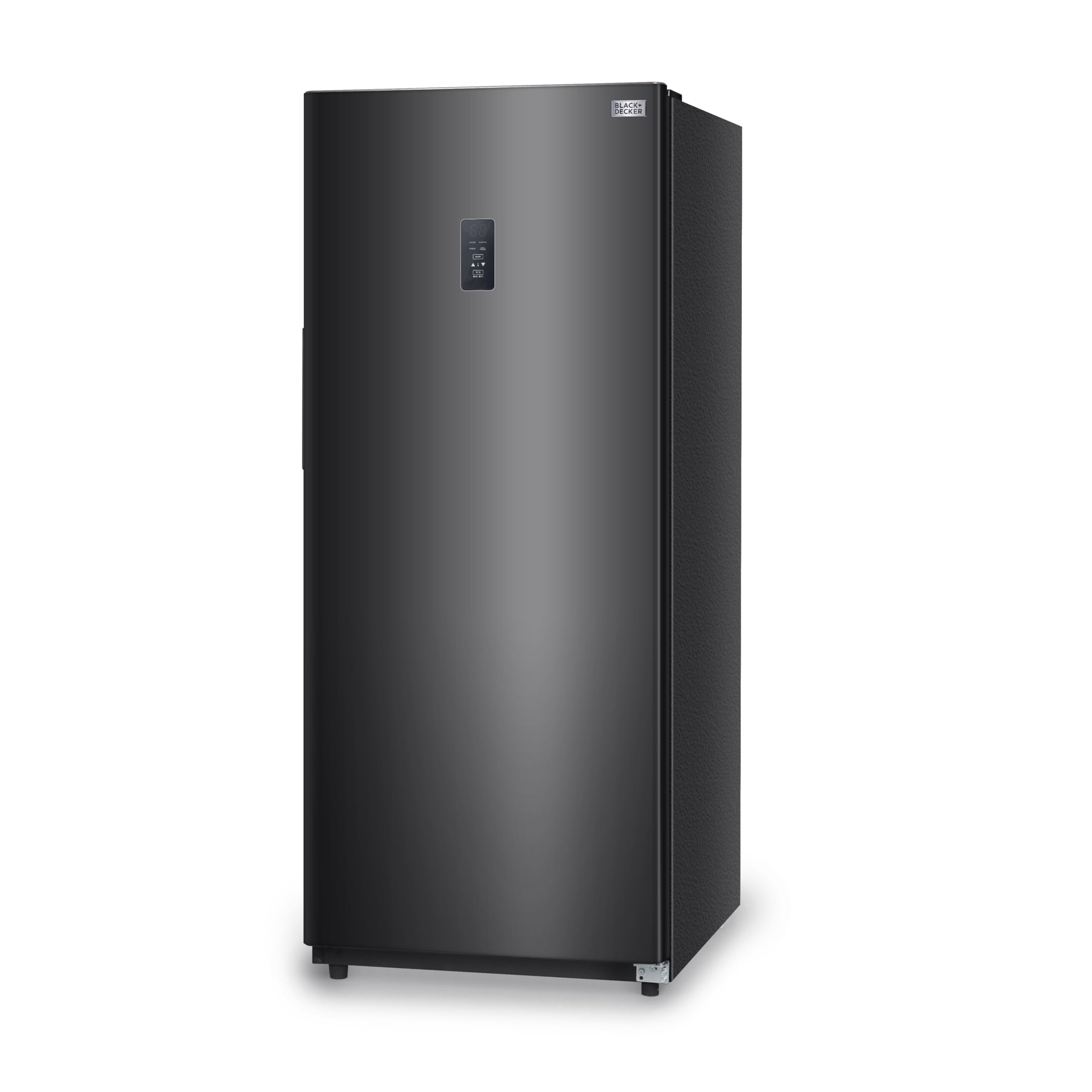
A freezer that becomes a refrigerator — two appliances in one footprint, and it never needs defrosting.
Of course a convertible box flips the buying question entirely. This BLACK+DECKER is really two appliances sharing a shell: freeze one week, refrigerate the next, all from an electronic control panel and LED display. At 14 cubic feet it is the smallest capacity on the list — deliberately, because it stands upright and slots against a wall rather than sprawling across a floor.
The energy story is where it pulls away. This is an ENERGY STAR qualified unit, so it was built to run efficiently in both modes. Buyers running it as a refrigerator describe it cooling to 32°F within hours, and those running it as a freezer report it dropping to -9°F. Both are real, and owners sort themselves into camps based on which mode they chose. Frost free technology means no scraping, no drain, no ice-caked floor under the basket.
What makes this a serious option for specific households: Sabbath mode pauses displays and sounds to comply with religious law, a niche feature almost never found on a freezer this size. Add the stainless-look door and the fact it hides smudges well, and this becomes the unit for the buyer who wants an upright that does double duty. The catch is temperature consistency. A few owners reported the freezer side fluctuating enough to cause minor concerns, and the door design also drew mixed feedback around the door shelf arrangement. Buyers who leave it on default settings and avoid sub-zero freezer temps have been happy.
Why it earns a slot: Convertible in one direction, ENERGY STAR-rated, and frost-free, this is the only pick here that solves two household storage problems at once.
What to expect: At 27.9 inches deep and 68.1 inches tall, it needs a tall, narrow bay — think a closet, pantry nook, or garage corner rather than a chest freezer’s wide, low space.
Reach for this if: You want one upright that can serve as a fridge today and a freezer later, with frost-free convenience and Sabbath mode support.
Give it a miss if: You need the biggest frozen-food capacity — 14 cubic feet stores noticeably less than the full-size chests above.
5. Smad Chest Freezer 18 Cu. Ft. Deep Freezer with Removable Basket, Low Noise, White

A commercial-style chest with 7 temperature settings that reaches -11.2°F and runs at just 42 decibels.
What you get here is a freezer dressed for commercial duty. The 7-setting temperature dial runs from 14°F down to -11.2°F, and the operating noise comes in at 42 decibels — quieter than the SMETA above by one notch, which matters when the freezer lives near a bedroom wall or a bar area.
The build spec is unusual for this price tier. The cabinet and interior are metal rather than plastic, which owners of both call a longevity advantage. The external handle and four wheels combine to make repositioning easy, and the 90-degree opening door with a stay-open lid means you are not fighting the top while loading. One reviewer noted that the casters make it simple to roll the freezer over to a sump pit for defrosting — a small detail that makes a real difference on defrost day. One owner measured the freezer hitting -30°F, colder than the manual spec.
The glaring catch is the manual. There is one capacity-facing reality: the listing naming says 18 cu ft, but the real specification line lists 14 cubic feet, and at least one buyer openly questioned whether the box holds as much as advertised. That is a listing inconsistency, not a build flaw, but buyers who need every usable cubic foot should note it. A separate gripe is the lack of a power-on indicator light — one owner wished for a visible sign that the unit is actually running. Neither issue is a dealbreaker for a freezer built this tough.
Best for the commercial-curious buyer: You want metal construction, low noise, and heavy-duty casters without going to a full restaurant supply store.
Second-guess it if: You need an exact 18 cu. ft. capacity confirmation from the listing — the specification section here reads 14 cubic feet, so verify before you buy.
6. VEVOR Chest Freezer, 17.2 Cu.ft with 4 Removable Baskets, Locking Lid, 6 Wheels

A lockable, LED-lit 17.2-cubic-foot chest with four baskets and six casters — the most organized box here.
Organization is the theme for anyone looking at this VEVOR. Four removable baskets mean you can sort your frozen goods by category and lift them out individually, which is a big improvement over a single basket that buries everything under everything else.
The details list reads like an operator built it. A lockable lid secures the contents, 6 casters roll the whole thing across a hard floor, and internal LED lighting lets you serve yourself at night without a flashlight. The balanced hinge keeps the lid propped between 45 and 90 degrees so both hands stay free. Daily consumption lands at 1.62 kWh, which is a useful spec for buyers tracking the running cost of a commercial freezer. Owners six months in report it keeps up, and note the near-black cabinet matches modern kitchen appliances.
Weigh the complaints. A couple of buyers flagged that the lid seal is a little too tight — a freshly-closed door resists reopening for a few minutes while the seal breaks loose. That is a physical characteristic of a well-sealed freezer, not a fault, but worth knowing. Post-purchase support holds up: buyers who received a dead-on-arrival unit worked through it and got a working replacement, and the replacement then ran well.
What stands out on the spec sheet
- 17.2 cubic feet with four separate removable baskets — the most organized storage layout in this group
- Locking lid for commercial spaces, garages, or any freezer that sees foot traffic
- Six casters and a balanced hinge mean the freezer rolls easily and loads with both hands free
- 1.62 kWh per day consumption, stated directly so you can estimate running cost
What to plan around
- 65.2 inches of width makes this the widest pick here — measure the spot before ordering
- The lid seal resists a quick reopen for a few minutes after closing, which takes some getting used to
- No frost-free option, so defrosting is a recurring task
The right pick if: You want a lockable, well-basketed freezer for a commercial kitchen, a bar, or a stocked home garage where things need to stay organized and secure.
Think about the tape measure first if: Your space is under about 65 inches wide — this VEVOR needs a genuinely generous wall.
7. VEVOR Convertible Freezer/Refrigerator, 17 Cu.Ft Frost Free Upright with Temp Control Panel
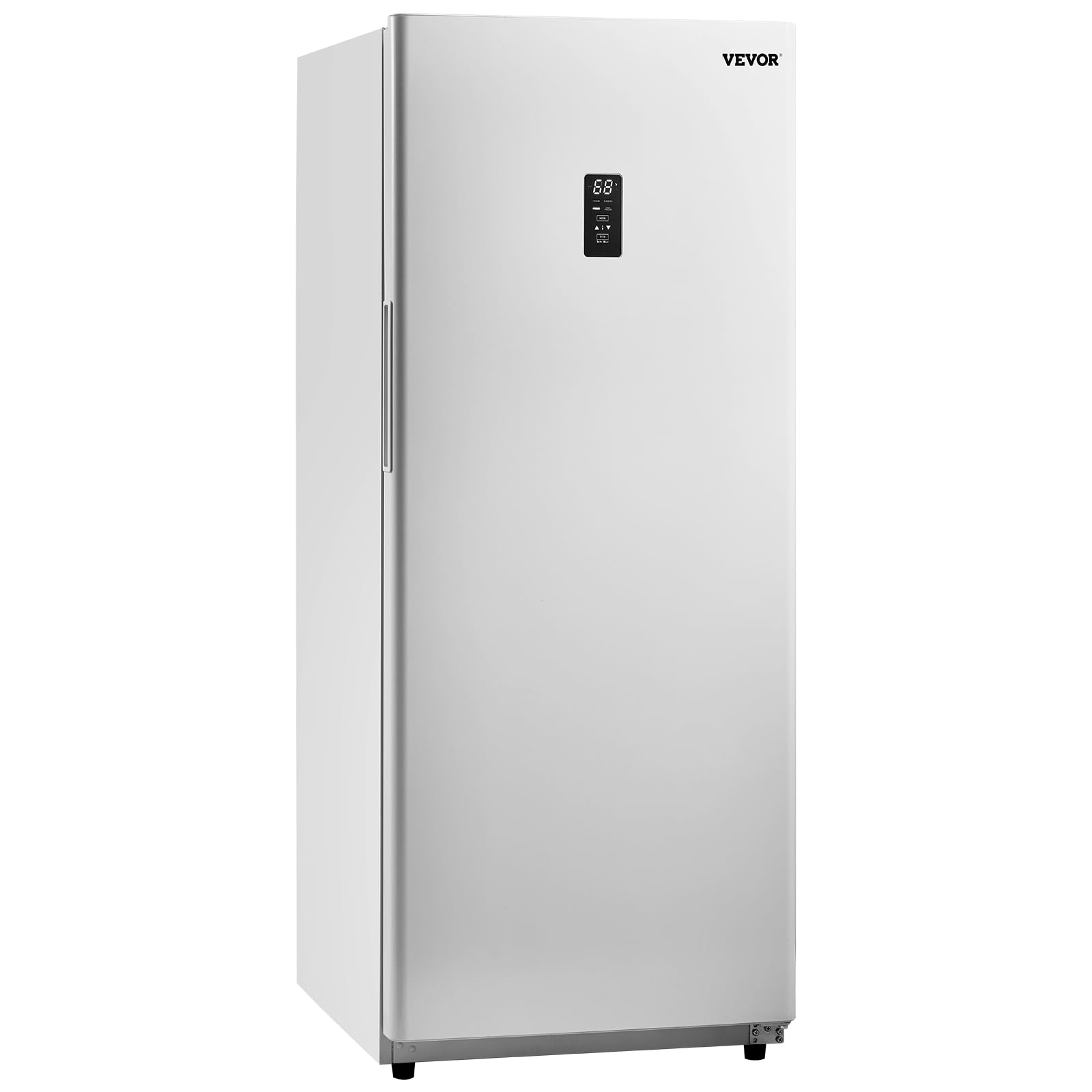
A 17-cubic-foot upright that flips between fridge and freezer and guards itself against an open door.
Standing at 17 cubic feet, this is the pick for the buyer with a tall, narrow slot in a kitchen, office, or garage who does not want to bend for a chest. The upright design uses vertical space, and 4 adjustable shelves plus a basket and door racks let you lay out storage however your groceries actually stack.
Two features make living with it easier. First, it is frost free — a fan cooling system means no manual defrosting ever. Second, a door-open-too-long alarm sounds if the door stays open for more than 3 minutes and keeps going until you close it. That alarm alone saves an afternoon of thawing. The digital control panel lets you pick refrigeration mode between 32°F and 46°F or freezing mode between -11°F and 7°F, with 4 cooling modes and accuracy to within 1°F. Running cost is stated as 1.1 kWh per day. Owners praise its quiet operation and steady freezer temperatures.
The seal is a little aggressive. Several buyers noted the door takes a firm pull to open, enough that a one-handed open sometimes drags the whole unit forward. Keeping a second hand on the freezer solves it, and the front leveling legs plus 2 rear wheels stabilize the footprint. A 17-cubic-foot freezer in a 6.18-square-foot floor plan means the vertical real estate stays compact while the capacity is real.
Perfect for narrow installs: 6.18 square feet of floor space and 4 adjustable shelves make this the upright that works in kitchens and offices where a chest simply will not fit.
A feature to eye: The freezer versus refrigerator modes operate at different temperature ranges, so pick the mode that matches how you plan to stock the unit.
This is your freezer if: You want frost-free upright convenience, digital temperature readout, and a door alarm to protect against a stray open-door thaw.
skip it if: You plan to load it with oddly-shaped bulk items like whole turkeys or large cuts — a chest’s flat floor handles those better than upright shelving.
Understanding the Specs
Cubic Feet: The Real Number in the Sales Pitch
Cubic feet measure internal volume — how much food the box holds, not how big it is on the outside. That is why an 18 cu. ft. chest can sit in the same spot as a smaller fridge. The catch is that freezer size is a range: models sold as “18 cubic feet” actually come in sizes like 16.2, 17, 17.2, and 18, and the smaller ones often hide just as much flat surface area. When comparing, look at the physical footprint and the depth of the well rather than the badge number. A chest freezer’s usable space lives in the flat floor, so an 18-cubic-foot box with a narrow footprint can hold less usable volume than a 16.2-cubic-foot box with a wider, deeper well.
Manual Defrost vs Frost Free
Manual defrost means a simple compartment with no fans and no auto-defrost cycle — you periodically scrape or melt ice and drain it out. Frost free means a circulation fan keeps the internal air moving so ice never builds up, and you never touch a scraper. Manual runs colder and steadies more easily on temperature, but demands maintenance. Frost free trades a small amount of energy and an always-moving fan for a completely hands-off experience. In this list, the chests are all manual defrost; the uprights and convertible models are frost free.
FAQ
What does 18 cubic feet actually hold in real frozen food?
Do I need to wait before plugging the freezer in after delivery?
Will an 18 cubic foot freezer work in a garage that gets below freezing?
How often does a manual defrost chest freezer need defrosting?
How much does an 18 cubic foot chest freezer cost to run?
Is a chest freezer better than an upright for a small space?
Can I run an 18 cubic foot freezer on a standard outlet?
What causes dents on delivery and how do I avoid them?
How loud is an 18 cubic foot freezer in a home?
Can I use a chest freezer for breast milk storage?
Final Thoughts: The Verdict
For most buyers, the win here is the BLACK+DECKER 16.2 Cu. Ft. Chest Freezer — the crowd favorite here, with a 4.5-star rating across 500+ owners and a 16.2-cubic-foot footprint that fits where a full-size freezer cannot. If you want the true 18-cubic-foot capacity and commercial-style casters, grab the Techomey 18 Cu Ft Chest Freezer. If you would rather skip defrosting forever and want a fridge-today, freezer-tomorrow upright, the BLACK+DECKER 14 Cu. Ft. Convertible does the double duty. Whichever 18 cubic foot freezer you pick, verify the actual capacity number in the spec sheet, plan your floor space before ordering, and give the unit its full settling time before you plug it in.
How We Picked
We do not accept paid placement. Every pick is matched to a real buyer and a real use-case; we do not hands-on test units.
Sources & Methodology
Specifications: manufacturer listings and product documentation. Review insights: verified customer reviews, as of September 2026. Pricing: not shown on this page (it changes often); check the current price via the retailer link.
As an Amazon Associate, KitchPrep earns from qualifying purchases. This does not affect which products we feature.
Related Guides
