
Specs are compiled from manufacturer listings and verified buyer reviews and can change over time — please confirm the key details on the product page before buying.
You just unboxed a smart thermostat and realized the old cable running down your wall only has two wires. That is the exact moment you need 18/5 thermostat wire — five separate solid copper conductors inside one outer jacket that let you power a modern thermostat and its Wi-Fi brain. This guide sorts the best spools for the job by what actually matters: conductor quality, jacket toughness, and how easily you can pull it through a wall.
I’m Mohammad Maruf — the founder and writer behind KitchPrep. This guide is built by comparing the manufacturers’ published specifications and the patterns across verified customer reviews, so you get each pick’s real strengths and trade-offs instead of marketing spin.
You will learn which five-conductor cable handles the common thermostat swap, what the color coding really means, and where the bargain spools cut corners. Find the right 18/5 thermostat wire for your HVAC project below.
Our Picks at a Glance

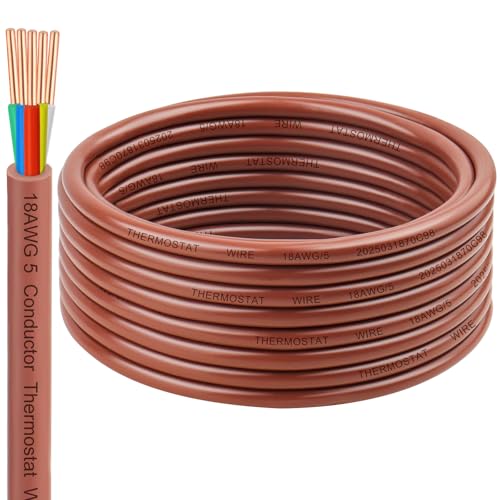
How To Choose The Best 18/5 Thermostat Wire
Buying thermostat wire is simpler than it looks once you know the two numbers. “18” is the thickness of each copper conductor (18 AWG), and “5” is the number of separate wires bundled inside the outer jacket. Most basic heating-only systems use two or four wires, but a smart thermostat that needs constant power for its display and Wi-Fi requires that fifth “common” wire.
The fifth wire is the whole point
If your current setup only has two wires, you are likely missing the common wire (often called the “C” wire) that supplies steady 24-volt power. Without it, many smart thermostats run on battery or trickle power, which can cause connectivity drops or a blank screen in winter. Buying a 5-conductor cable now gives you the spare capacity for any future upgrade.
Jacket ratings tell you where it can go
The outer jacket rating determines where the cable is legally allowed to run inside your home. A CL2 rating (Class 2) is the standard for power-limited circuits like thermostats and doorbells. A CMR or CL3R rating (riser-rated) means it can run vertically between floors in a building. If you plan to run wire outdoors, look for an explicit “sunlight resistant” claim on the jacket.
Quick Comparison
| Model | Best For | Length | Conductor | Jacket Rating | Amazon |
|---|---|---|---|---|---|
| THE CIMPLE CO 18/5★ Best Overall | DIY Smart Thermostat Swap | 50 Feet | Solid Copper | CL2R/CMR | Amazon |
| XRDS-RF 18/5Compact Pick | Short Fixes & Repairs | 20 Feet | Bare Copper | PVC | Amazon |
| Syston 18/5 | Indoor & Outdoor Runs | 50 Feet | Solid Copper | CL3R/FT4/CMR | Amazon |
| YDDECW 18/5 | Budget Whole-Home Runs | 50 Feet | Solid Copper | CL2, ETL | Amazon |
| eastwire 18/5 | Easy Stripping in Tight Spots | 50 Feet | Bare Copper | ETL CL2 | Amazon |
| Southwire 18/5 | Long Runs & Whole Homes | 250 Feet | Solid Copper | CL2, Sunlight Resistant | Amazon |
In‑Depth Reviews
1. THE CIMPLE CO 18/5 Thermostat Wire 50 FT
Our pick — over 4.5★ from 550+ verified ratings; the strongest balance of quality and price.
The spool that turns a two-wire dinosaur into a five-wire modern system with zero electrician drama.
Reviewers consistently report this cable gets a Nest or ecobee wired up in under 30 minutes. It carries five individually insulated solid copper conductors inside a CL2R/CMR rated brown jacket, which means it is approved for both standard power-limited wiring and vertical runs between floors. The 50-foot length covers most single-room thermostat pulls, and the large wind on the spool is designed to prevent kinks, breaks, and twists while you work.
Buyers report completing a full 5-wire install in under 30 minutes, avoiding a costly service call. Owners mention this works smoothly with both Nest and ecobee units, noting the wire feels heavy-duty and the color-matched terminals make hookup straightforward. The main advice owners repeat is to order extra footage—running out mid-project is the only real frustration.
Reviewers praise its build quality more than any other feature. The value is in a reputable, CL2R/CMR-rated cable that eliminates guesswork for a rare, decade-level job.
What Owners Rave About
- Easiest DIY installs — one owner swapped a 45-year-old 4-conductor cable without a hitch
- CL2R/CMR rating means it is legal for most in-wall and floor-to-floor runs
- Large wind spool stops the tangles that ruin other brands
Watch Out For
- 50 feet can come up short on longer or multi-room pulls — buy extra
- Solid copper is stiff, so take care when bending tight corners
Reach for this if: you are upgrading an old thermostat to a smart model and want the most reliable, best-reviewed cable for the job.
Look elsewhere if: your run is very long and you would rather have one continuous spool instead of splicing two lengths together.
2. XRDS-RF 18/5 Thermostat Wire 20FT
The short, no-fuss spool for patching a single thermostat without buying 30 feet you will never use.
At just 20 feet, this is the smallest spool in the lineup, and that is its superpower for a quick fix. It gives you five color-coded solid bare copper conductors (red, green, yellow, white, and blue) wrapped in a flexible PVC jacket that the data says is easy to route indoors. The 1.02mm wire diameter is the same as the other 18-gauge picks, so terminal fit is identical.
The trade-off is a non-standard orange conductor instead of the usual yellow, per reviews. Customers note it works perfectly but note you may need to wrap a little yellow electrical tape on the ends so you do not confuse it with the red wire when wiring a thermostat. It is a minor cosmetic quirk, not a functional flaw, and the owner feedback otherwise lands on “good quality” and “worked as intended.”
This is the budget-friendly choice for a same-room swap or a repair where the run is short.
Best for the quick fix: It is the cheapest way to add the fifth “C” wire you need for a smart thermostat, provided the thermostat is close to the equipment.
Think twice if: you need to fish wire across a whole house — 20 feet will not get you there.
3. Syston 18/5 Thermostat Wire 50FT
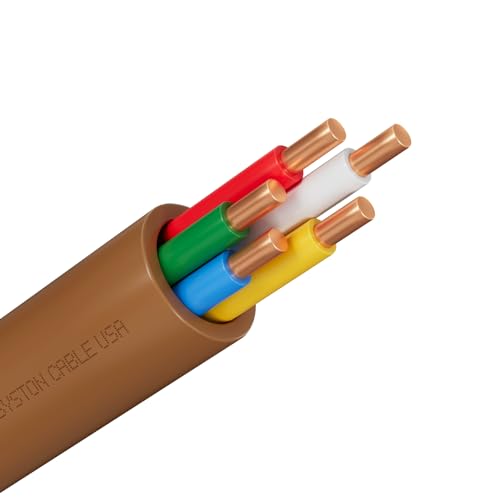
The riser-rated cable that slides through walls with a rip cord built in for clean stripping.
This is the pick for anyone running wire in trickier spots. The Syston cable carries a 300-volt CL3R/FT4/CMR rating — the highest voltage rating in this lineup — and its round, slick jacket slides through rough corners and rafters easily. Reviewers point out clean stripping of both outer and inner insulation, turning a frustrating job into a quick one.
The standout feature is the rip cord: a built-in string that lets you slice the outer jacket open along the whole length without nicking the conductors underneath. It is also explicitly sunlight resistant and RoHS compliant, so it is safe to run outdoors, unlike basic indoor-only cables. Reviewers agree it feels premium, works flawlessly for thermostat relocation, and has the correct 18-gauge thickness.
Compared to the 50-foot CIMPLE CO pick, this one adds the outdoor approval and the higher voltage margin, which makes it the more flexible choice if you are not sure exactly where the wire will end up.
Most versatile: You get indoor, outdoor, and riser approvals in one spool, which is rare at this length.
Only if: you are strictly wiring indoors and never plan to run cable between floors, a basic CL2 cable saves you money.
4. YDDECW 18/5 Thermostat Wire 50FT
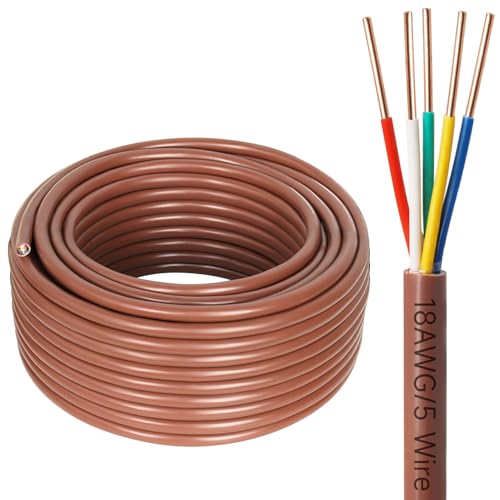
The honest budget pick: real solid copper, a waterproof jacket, and a quirk with the wire colors.
This spool delivers the essentials without the premium price tag. The jacket is the practical highlight — it is built for harsh outdoor environments, and owners confirm it pulls through walls without snagging. One reviewer noted it was the cheapest real copper furnace wire they could find, and the gauge was exactly as claimed.
Reviews note the actual wire colors sometimes differ from the listing photos. The reviews call this “mixed” feedback, with a couple of owners noting the colors differ from what is advertised. It does not affect functionality — the conductors still work perfectly — but if you rely on color coding to avoid mistakes, it is worth double-checking each wire with a continuity tester before you land the terminals.
For the value, the trade-off is fair. You get the same 50-foot length and solid copper as pricier brands, with the color quirk as the main compromise.
The Good Stuff
- ETL-listed CL2 rating for safe in-wall use
- Waterproof jacket handles outdoor runs and damp areas
- Quality and ease of use get the most praise in reviews
Know Before You Buy
- Wire colors may not match the listing photos — label them yourself
- Solid 18-gauge is a bit stiff for tight terminal blocks
Best for: the budget-conscious DIYer wiring a single thermostat who can spare a minute to verify colors.
Not for: color-coding purists who want the standard red/green/yellow/white/blue scheme from the start.
5. eastwire 18/5 Thermostat Wire 50FT
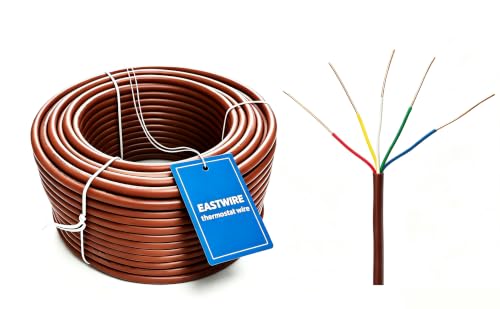
The supple, non-stiff cable that strips easily and feels tougher than the price suggests.
Three words come up again and again in the reviews for this one: easy, durable, and tough. The eastwire cable is an ETL-listed CL2 rated wire with bare solid copper conductors inside a heat, moisture, and sunlight resistant PVC jacket. Unlike stiffer competitors, owners describe this as a “not stiff” wire that is genuinely easy to run, strip, and attach — which matters when you are working in a cramped attic or tight wall cavity.
The jacket is rated for 150 volts and handles temperatures from -20°C to +60°C, matching the YDDECW pick on specs. Where it pulls ahead is the handling: the data repeatedly notes it resists tearing and reduces burn-through while stripping, which saves both time and material on a long pull. The main ding in the reviews is a slightly slow delivery time, not a product flaw.
If you have ever fought with a stiff cable that refuses to bend around a corner, this is the one that behaves.
Easiest to work with: The flexibility and clean stripping make it the friendliest option for a first-time DIY install.
Consider instead: the Syston if you need a riser rating for floor-to-floor runs — this one is CL2 only.
6. Southwire 18/5 Thermostat Wire 250 ft
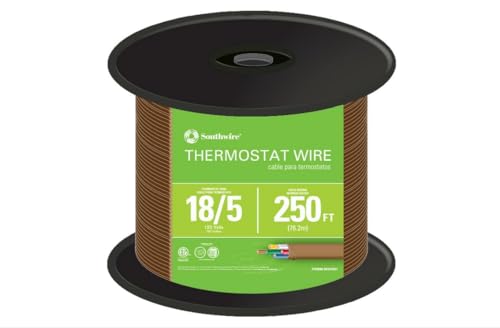
The 250-foot American-made workhorse for whole-home runs — buy once and wire every thermostat you own.
This is the big spool for the big job. At 250 feet, it is 25 times the length of the XRDS-RF 20-foot pick, and it is the only cable in this lineup that can handle wiring multiple smart thermostats across an entire house without splicing. It is made in America by Southwire, a name contractors know, and it meets sunlight-resistant, PVC insulation, and solid bare copper standards per UL Standard 13 while staying RoHS compliant and OSHA acceptable.
The review pattern here is about value and versatility. Owners repeatedly mention upgrading from an old 2-wire or 4-wire setup to a full 5-wire run that includes the blue “C” wire needed for Wi-Fi thermostats. They note the jacket strips easily, resists abrasion, and the solid copper is slightly stiff but manageable. The recurring caution is to avoid kinking the wire, since a sharp bend can break a conductor inside the jacket.
At 16 ounces total weight, it is remarkably light for its length, and the price per foot works out well below what local hardware stores charge for the same spec.
Why It Wins
- 250 feet covers multiple rooms or a whole home with one spool
- Sunlight resistant and OSHA acceptable for pro-grade installs
- Owners praise the value — it is cheaper per foot than retail stores
The Trade-Off
- Some owners find the exterior insulation thin and loose
- Solid copper can kink and break if you bend it sharply
Reach for it when: you are wiring new thermostats in several rooms or replacing every old cable in the house at once.
skip it if: you only need 50 feet — the shorter spools are cheaper to start and you avoid storing a giant coil.
Understanding the Specs
18 AWG Gauge
This spec tells you the thickness of each copper conductor inside the cable. 18 AWG (American Wire Gauge) is the standard for thermostat wiring because it carries the low-voltage 24V signal reliably over normal household distances, yet stays flexible enough to pull through walls. It sits between thinner 20-gauge (harder to fit in some terminal blocks but easier to bend) and thicker 16-gauge (sturdier but stiffer). For a thermostat, 18-gauge is the balance almost every manufacturer designs for.
CL2, CL3R, and CMR Ratings
These letters on the jacket tell you where the cable is allowed to run. CL2 (Class 2) is the baseline rating for power-limited circuits in residential walls — most thermostat jobs need this at minimum. A CMR or CL3R rating means “riser-rated,” so the cable can run vertically between floors in a multi-story building. If your cable has CL3R and CMR both, it is approved for almost any in-wall residential use. For outdoor runs, you want an explicit “sunlight resistant” claim on the jacket, since UV rays will degrade standard PVC over time.
Solid vs. Stranded Conductors
Solid copper means each of the five wires is one continuous piece of metal, while stranded wire is made of many tiny threads braided together. Solid copper is the standard for thermostat wire because it holds its shape when you wrap it around a terminal screw and provides slightly better conductivity for low-voltage signals. The trade-off is stiffness — solid wire is harder to fish through tight spaces and can break if kinked sharply. All the picks here use solid copper, which is the right call for a permanent in-wall installation.
The Fifth “C” Conductor
A 5-conductor cable gives you the four wires most heating and cooling systems use (typically red for power, white for heat, green for fan, yellow for cooling) plus a fifth wire. That fifth wire is the all-important “common” or “C” wire, which provides a constant return path for 24-volt power. Smart thermostats with Wi-Fi, color screens, and built-in sensors need that steady power supply to function reliably. If your old system only ran 2 or 4 wires, upgrading to 18/5 gives you the spare capacity for a modern thermostat.
FAQ
Why does my smart thermostat need a fifth wire?
Can I use 18/5 wire outside?
What is the difference between CL2 and CL3R rated wire?
How much 18/5 wire do I need for a thermostat install?
Is there a difference between the color-coded wires in 18/5 cable?
Can I pull 18/5 wire through an existing wall?
Is solid copper wire better than copper-clad aluminum for thermostats?
What voltage does 18/5 thermostat wire carry?
Can I use 18/5 wire for a video doorbell or alarm system?
Final Thoughts: The Verdict
The best 18/5 thermostat wire for most homeowners is the THE CIMPLE CO 50-foot because it pairs a riser-rated jacket with an easy-pull spool and a proven track record with Nest and ecobee installs. If you need outdoor approval and a rip cord for clean stripping, the Syston is the more versatile pick. And for whole-home rewiring, the Southwire 250-foot spool gives you the most coverage for your money in one continuous run.
How We Picked
We do not accept paid placement. Every pick is matched to a real buyer and a real use-case; we do not hands-on test units.
Sources & Methodology
Specifications: manufacturer listings and product documentation. Review insights: verified customer reviews, as of September 2026. Pricing: not shown on this page (it changes often); check the current price via the retailer link.
As an Amazon Associate, KitchPrep earns from qualifying purchases. This does not affect which products we feature.
Related Guides
