
Specs are compiled from manufacturer listings and verified buyer reviews and can change over time — please confirm the key details on the product page before buying.
Your video doorbell keeps dropping offline, the chime buzzes instead of clunking, and the app shows a low-voltage warning — that is almost always a tired transformer, not a bad camera. The fix is a 16-volt transformer with enough VA (the load it can carry before the voltage sags) to feed the camera and your chime at once. Here is what that actually looks like on your wall, in plain terms, across nine wired transformers.
I’m Mohammad Maruf — the founder and writer behind KitchPrep. This guide is built by comparing the manufacturers’ published specifications and the patterns across verified customer reviews, so you get each pick’s real strengths and trade-offs instead of marketing spin.
Most doorbell trouble traces back to a builder-grade transformer that was sized for a simple push button and nothing else. This guide splits nine wired units by what they power, how they mount, and where they quietly fall short. If you are wiring a camera that needs steady low-voltage AC, you want the 16v doorbell transformer that matches your chime and your wall box.
Our Picks at a Glance
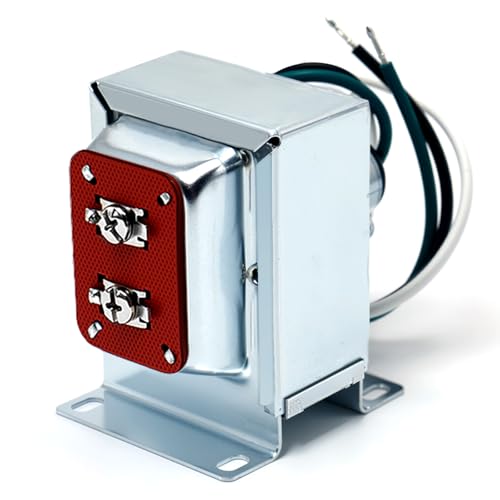

How To Choose The Best 16V Doorbell Transformer
You can pick the right transformer by answering three questions: does it put out the voltage your doorbell wants, does it carry enough VA (volt-amperes, the total load it can push) to run the camera and the chime together, and will the body physically fit where your old one sat. Get those three right and the swap takes about 15 minutes.
Match The Voltage First, Then The Capacity
For most Ring, Nest, Eufy, Wyze, Arlo and Blink wired doorbells, a 16-volt output (16V AC, alternating current that the doorbell steps down from your home’s 120-volt line) is the balance. Volts set the pressure; VA sets how much total load it can push before the voltage sags and your camera reboots. A unit rated 16V at 10VA is fine for a single mechanical chime and nothing more. Step up to 30VA and it can carry a camera plus a chime over a long wire run without browning out, so your doorbell keeps running instead of resetting.
Read The Open-Circuit Number Before You Panic
A transformer rated 16V will read higher on a multimeter with nothing connected — open-circuit voltage is the resting number, not the working number. Units here read in the high teens with no load and settle closer to 16V once a doorbell and chime pull on them. If your chime is fussy about over-voltage, check the loaded reading, not the resting one.
Check The Mount And The Box Before You Buy
Most of these clamp onto a standard junction box knockout with a threaded connector, and some also screw down flat with a bracket. Some can only be mounted horizontally or vertically, and one of the picks here is strictly indoor-only and must sit exposed for heat to escape — never buried in a wall cavity. Find your existing transformer first, note how it is fastened, and buy to match.
Quick Comparison
| Model | Best For | Output | Pack / Items | Mount | Amazon |
|---|---|---|---|---|---|
| 2PC Doorbell Transformer 16V 30VA★ Best Overall | Homes wiring two doorbells at once | 16V at 30 VA | 2 | Wall Mount | Amazon |
| WUYELIN 16v 30va Doorbell TransformerBudget Champion | Cheapest path to a wired smart doorbell | 16V at 30 VA | 1 | Wall Mount | Amazon |
| GIVEUBED Doorbell Transformer 16V 30VAMost Versatile | Chime plus thermostat on one unit | 16V AC at 30 VA | 1 | Wall Mount | Amazon |
| BOJACK Doorbell Transformer 16V 30VA | Standard knock-out box swaps | 16V AC at 30 VA | 1 | Wall Mount | Amazon |
| TytonClaw TC2012 Dual-Volt Transformer | Future-proofing 16V or 24V setups | 16V at 30 VA or 24V at 40 VA | 1 | Wall Mount | Amazon |
| Heath Zenith SL-125-90 Trivolt Transformer | Multi-voltage retrofits on old wiring | 8V, 16V or 24V AC | 1 | Junction Box | Amazon |
| HQRP 16V 30VA Doorbell Transformer | Always-on smart devices | 16V AC at 30 VA | 1 | Wall Mount | Amazon |
In‑Depth Reviews
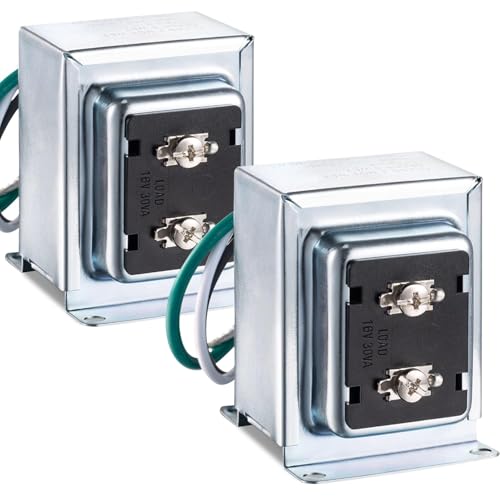
1. 2PC Doorbell Transformer 16V 30VA Compatible with Ring Wired Video Doorbell
Our pick — 4.5★ from 8,500+ verified ratings; the strongest balance of quality and price.
Two UL-listed transformers in one box, sized 16V at 30 VA to feed a camera and a loud chime together.
If you are wiring a front door and a back door, the Maxdot two-pack skips the second trip to the store. You get two units rated 16V at 30 VA from a 120V, 60 Hz input, so each one has plenty of headroom to power a video doorbell and a mechanical chime at once. The two-pack is the deciding feature — the GIVEUBED below ships as a single unit, while this one covers both door positions in one order. Both bodies measure 6.1″D x 4.33″W x 3.86″H and weigh 3.4 pounds as a set.
The power is what wins people over. Owners see a 16V 15A transformer swapped out for this 16V 30A unit and the mechanical chime goes from a weak tap to a louder, faster strike, with Ring Doorbell Pro firing up reliably on the first try. Nest buyers report the flashing white light from an underpowered Nutone 515T disappearing and the setup light going blue. An Amcrest doorbell that was dropping its Wi-Fi connection settled into a steady signal once the old 5/10V unit came out. One buyer compared the immediacy of Ring’s live view to a noticeably slower Arlo feed on the same network.
UL listing is the safety piece — that certification means the unit passed a third-party test that uncertified transformers skip, which matters on a device that sits energized inside your wall full-time. There is an internal thermal fuse that trips if the unit overheats, and the wiring can be screwed, threaded, or clamp-mounted to the electrical box. Be careful with the wiring, though: a few owners note the box can carry more than one live circuit, so shut off the breaker and treat every wire as live until you prove it is not. Strip the wires 3/4-1 inch before you land them.
What buyers keep praising
- Two transformers in one order covers both door positions without a second purchase
- 16V at 30 VA gives a Ring Pro and a mechanical chime enough headroom to run together
- UL listed with an internal 115°F thermal fuse for thermal protection
- Mounts three ways — screw, thread, or clamp to the electrical box
Where it asks for care
- The unit can run warm and a small number of owners mention early failures, so size your box with a little airflow
- At 3.4 pounds for the pair, it is heavier than a single-unit transformer
- No wire is included, so buy doorbell wire separately
Reach for this if: you have two doorbells to power or want a spare on the shelf for a weekend install.
Look elsewhere if: you only have one door and want the smallest possible footprint.
2. WUYELIN 16v 30va Doorbell Transformer Compatible with Ring Video Doorbell Pro, Nest Hello and Nest, Eufy, Wyze, Blink Smart Video Doorbell
The no-frills single unit that quietly ends a buzzing chime and gets a hardwired camera online.
This is the cheapest way into a 16V at 30 VA transformer, and it does the one job it exists for. If your Ring doorbell has that low electronic hum, it usually means the old transformer is starving the camera — this unit ships rated at 16V and 30VA, which is the spec that current draws from. At 2.87″D x 2.09″W x 2.61″H it is far more compact than the two-pack above, which makes it easier to tuck into a tight chime box or a small junction box.
What owners actually notice is what stops happening. The loud humming from an underpowered Eufy setup fades once this lands in place, and hardwired Blink and Ubiquiti G4 Pro customers note a clean install that finally lets the camera run without shutting down a few seconds after boot. A G4 Pro owner who switched from a Nest setup found the doorbell kept cutting out until the right transformer was in — the local hardware-store unit did not solve it, this one did. The install is a 15-minute job for anyone comfortable with basic wiring; the brand names on the box are compatibility examples, not endorsements.
The honest catch is quality control. It meets UL specs and works when it works, but if yours arrives with a cold solder joint or a buzz that will not quit, use the replacement policy rather than fight it. Expect slightly lighter build feel than the heavier, pricier units.
Where the savings show: the internal size is the standout — it is the most compact of the single-voltage units here, so it fits boxes that the wider two-pack cannot.
The sharpest pencil pick: for a single wired doorbell and a mechanical chime, this delivers the same 16V at 30 VA spec as units costing more.
Trade-off to weigh: build tolerance is looser, so inspect the unit before you wire it in.
3. GIVEUBED Doorbell Transformer 16V 30VA Thermostat Transformer
One small transformer that can carry a doorbell, a camera, and a smart thermostat at the same time.
Here is the number that matters: this unit is packed into a body just 1.1″D x 1.9″W x 2.6″H — far smaller than the Maxdot two-pack, which measures 6.1″D x 4.33″W x 3.86″H. That slim profile is the whole reason to pick it. If your existing transformer is wedged into a cramped chime box or a shallow junction box, this is the one that will physically fit without a fight. It carries ETL and UL listings and runs on 120V AC at 60 Hz in, 16V AC at 30 VA out.
Owners reach for this to do double duty. It revives a 25-year-old Nutone Ding Dong as easily as it powers a modern smart doorbell, and it handles a doorbell ringer, an Arlo camera, and a Nest thermostat off one supply. Wyze owners who swapped out a 10-amp transformer for this had the intermittent function stop as soon as the higher-amp unit was in. Wiring is three terminals — green, white, black — and install takes about 5 minutes.
The trade-off worth knowing is heat. Some owners note the unit runs warm inside the box, and a small number report one that gave out after extended use. That is normal for a transformer under continuous load, but it means airflow matters — do not seal it into a tight space. The company’s refund policy covers the occasional dud.
Why the small size sells it
- 1.1″D x 1.9″W x 2.6″H body fits tight chime and junction boxes the wider units will not
- Powers a doorbell, a video doorbell camera, and a smart thermostat on one 16V 30VA supply
- ETL and UL listed for safety and longevity
- Three-terminal install (green, white, black) done in about 5 minutes
The honest caveats
- Runs warm under load — box ventilation matters
- A small number of units gave out after a few years of continuous use
- No wiring diagram is a step-by-step graphic, so basic electrical confidence helps
The fit-first pick: choose this when a compact body and thermostat compatibility matter more than raw VA headroom.
Not for: a deep, sealed wall pocket where heat has nowhere to go.
4. Auspow Doorbell Transformer 16V 30VA Compatible with Ring Wired Video Doorbell
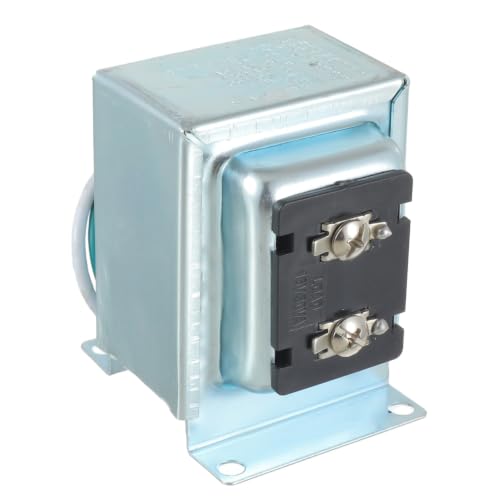
A straightforward 120V-to-16V swap that mounts solidly to a standard knockout hole on the box cover.
The BOJACK is a single-unit 16V at 30 VA transformer for conventional doorbell chimes and smart doorbells alike. It runs on 120V AC at 60 Hz and can be screwed or threaded-clamped to the electrical box. It weighs 0.63 kg and its body measures 3.8″D x 2.4″W x 8.2″H, so measure your cavity before you commit — it is taller than the compact GIVEUBED.
The mounting gets real love here. Owners swapping from a flimsier transformer note this one mounts solidly in a standard knockout hole on the box cover, which is much better than the mounting on the unit it replaced. The measured numbers back up the specs too: one owner read about 19.5V AC open-circuit and just under 18.2V AC under a real video doorbell load, both consistent with a healthy 16V transformer. Wiring is three terminals with a mounting nut included, and install takes about 10 minutes.
This is also the one that quietly fixes camera-plus-chime conflicts. A 10VAC transformer that powered a camera but not the chime gets replaced here, and the chime starts working again — the higher open-circuit voltage pushes it through a mechanical adapter. The one nitpick is the hardware: the screws are Philips rather than slotted, so bring the right driver.
The mounting wins
- Mounts solid in a standard knockout hole on a box cover
- Open-circuit and loaded voltage both track the 16V spec — measured under load at ~18.2V
- 10-minute install with three terminals and a mounting nut included
- Fixes camera-powered/chime-dead setups by lifting low chime voltage
What to plan around
- Taller body (3.8″D x 2.4″W x 8.2″H) needs a slightly bigger cavity
- Philips screws only — bring the right driver
- No wire included in the box
The solid-mount choice: pick this if your mounting point is a knockout hole and you want the fit to feel permanent.
skip it if: your transformer bay is shallow — the taller body will not squeeze in.
5. TytonClaw TC2012 Dual-Volt (16V/30VA or 24V/40VA) Wired Doorbell Transformer
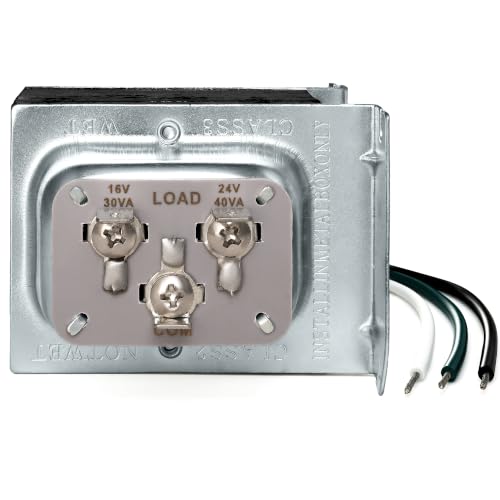
One transformer you can flip between 16V at 30 VA and 24V at 40 VA depending on the doorbell.
This is the only pick on the list besides the Heath Zenith that lets you choose your output voltage, and it goes higher on current. You set it to 16V at 30 VA for a standard setup or 24V at 40 VA when a device needs more push, but only one output can be used at a time. It runs on low-voltage AC only — it will not work with DC-powered devices — and it is indoor-use only, mounted to a standard electrical box or junction box with the housing exposed for heat to escape. Do not bury it in a wall cavity.
The real appeal is the fix-it-once angle. Owners replacing a builder-grade 8V/10VA or 16V/10VA transformer that could not handle a smart camera’s draw found the dropouts, delayed motion detection, and random resets stop once 24V came online — live view and smart functions ran consistently with no low battery alerts. Others stayed on 16V for a Ring doorbell and chime and measured a clean 16V at the door. The housing uses a precision copper coil and heat-resistant materials, and it mounts on a standard knockout (the pre-cut hole in an electrical box).
Two things to know before you buy. First, the instructions for switching voltages could be clearer, so read the terminal labeling carefully. Second, it is strictly the wrong tool for a DC-powered device, so confirm your doorbell’s power type before ordering. For AC-wired video doorbells and mechanical chimes, it is a strong one-and-done upgrade.
Future-proof angle: switching between 16V at 30 VA and 24V at 40 VA means one purchase can cover a standard install today and a heavier device later.
The read: if you might swap to a power-hungry device down the road and want one box that handles both, this is worth a look over the single-voltage units above.
Worth it if: you want one transformer that can shift to 24V later without another purchase.
Wrong tool if: your doorbell is DC-powered or your only mounting spot is inside a sealed wall cavity.
6. Heath Zenith SL-125-90 Silver Finish Wired Trivolt Clamp-On Transformer

A three-tap transformer that lets you pick 8V, 16V, or 24V depending on what the doorbell demands.
This is the versatile one — it taps 8V at 10VA, 16V at 10VA, or 24V at 20VA, which makes it the pick when you have mixed devices or old wiring that misbehaves at the wrong voltage. It takes 120V AC input and mounts on most junction boxes. The body measures 2.2″D x 2.52″W x 2.2″H and weighs 14.4 ounces, with a silver finish and an included wiring instruction sheet.
The real value shows up when a chime is weak. Owners with a chime that barely tapped found that stepping the transformer up to 24V restored the volume, fixing the weak strike that long wire runs and accumulated resistance cause. Ring Pro, Nest, and August Gen2 reviewers point out the swap working cleanly in about 10 minutes. Slotted and configurable, it replaces old failing transformers including a 1940s-era factory unit a buyer described.
The voltage honesty is worth flagging. Some owners measure the actual output higher than the printed tap — the 16V setting reading close to 19V on a meter is common, and one buyer measured 10/19/28.5VAC against the printed 8/16/24. That slight over-voltage is normal for an unloaded transformer, but if your chime is fussy about it, size down or load-test. A small hum is also reported on some units. The takeaway: this is a legacy-wiring fixer, not the first pick for a brand-new smart doorbell install.
When three voltages matter: if you have a mix of an older chime and a newer camera, this tap configuration lets you tune to the right one.
Best for: older homes with mixed-voltage chimes and long, resistive wire runs.
Not the fit if: you need a simple fixed 16V output — the extra taps add a step to the setup.
7. HQRP 16V 30VA Doorbell Transformer – Hardwired Power Supply
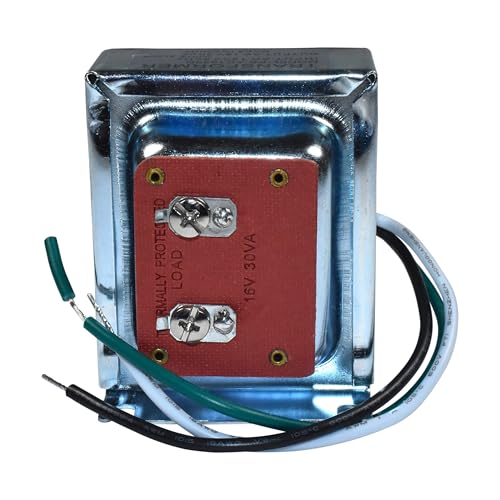
A UL-listed 16V at 30 VA unit with overload and short-circuit protection for always-on devices.
This is the one for households that want a set-and-forget install. It outputs 16V AC at 30 VA from a 120V AC input, carries a UL listing, and has built-in overload and short-circuit protection. It supports Nutone and Zmodo wired chime setups along with the usual smart doorbell brands, and can also feed a Nest, Ecobee, Sensi, or Honeywell thermostat.
The reason owners reach for this is a hot old transformer. Replacing a transformer that was getting hot and causing Ring issues ended the problems, and the replacement runs cool to the touch over an extended period. Eufy owners who stepped up from a 10-amp unit report the doorbell camera running without interruption. It is rated for continuous low-voltage AC power, so a device that stays powered around the clock is exactly its use case.
The one honest caveat is a hum. Some units buzz on first power-up until the body is tapped, and the buzz can recur, so this is not the quietest option if the transformer sits somewhere you can hear it. If it lands in a utility closet or a garage, that is a non-issue. For a device that needs constant steady power and a UL listing in the box, this is a solid answer.
What earns the pick
- UL listed with overload and short-circuit protection
- 16V AC at 30 VA holds steady for always-on doorbells and thermostats
- Heavier build than the compact units — runs cool under load
- Works with Nutone and Zmodo chimes plus smart doorbells and thermostats
What to accept
- Some units hum at first and can hum again later — best for a spot you cannot hear
- Heavier body needs a mount that can carry it
- Not the smallest choice for a tight bay
Best for: a permanently powered doorbell or thermostat where a UL listing and protected output matter.
Think twice if: the transformer sits somewhere you will hear a hum.
Understanding the Specs
Voltage (V) vs. Capacity (VA)
Voltage is the pressure the transformer pushes out — 16V is the balance for most wired smart doorbells. VA (volt-amperes) is the capacity, meaning how much total load it can carry before the voltage drops. A 16V 10VA unit handles a single chime; a 16V 30VA unit handles a camera plus a chime at once. If your doorbell reboots, drops offline, or triggers phantom rings, the VA is usually the number that was undersized.
Why The Reading Is Higher Than The Print
A transformer rated 16V reads higher on a meter when nothing is drawing from it — this is called open-circuit voltage, and readings in the high teens are normal. Once a doorbell and chime pull current, the voltage settles closer to the rated 16V. Judge the transformer on its loaded reading, not the resting one. If your chime is sensitive to over-voltage, this is the number to check first.
FAQ
Will a 16V 30VA transformer work with a Ring Video Doorbell Pro?
Can a 16V transformer power two doorbells or a doorbell plus a thermostat?
My doorbell transformer is buzzing or humming — will replacing it fix that?
Where do I mount a doorbell transformer — inside the wall or on the box?
Do I need the power turned off before installing a transformer?
How do I know if I need a 16V or a 24V transformer?
A transformer without UL or ETL listing — is that a problem?
Will a 16V transformer still run my old mechanical chime?
Does the transformer work with Nest, Eufy, Wyze, and Arlo doorbells too?
How do I find my existing doorbell transformer?
Final Thoughts: The Verdict
For most people, the winner is the Maxdot 2PC Doorbell Transformer 16V 30VA because you get two UL-listed 16V at 30 VA units in one order, so both door positions are covered and you have the chime power for a Ring Pro and a mechanical chime together. If you want the most compact single unit that also handles a thermostat, grab the GIVEUBED Doorbell Transformer 16V 30VA — its 1.1-inch depth fits tight boxes the wider units cannot. And for someone wiring a fresh smart doorbell from scratch, the Auspow 16V 30VA adds overload and short-circuit protection for a little more confidence. Every unit here works — match the voltage printed on your doorbell and size the VA to everything you want to power.
How We Picked
We do not accept paid placement. Every pick is matched to a real buyer and a real use-case; we do not hands-on test units.
Sources & Methodology
Specifications: manufacturer listings and product documentation. Review insights: verified customer reviews, as of September 2026. Pricing: not shown on this page (it changes often); check the current price via the retailer link.
As an Amazon Associate, KitchPrep earns from qualifying purchases. This does not affect which products we feature.
Related Guides
