
Specs are compiled from manufacturer listings and verified buyer reviews and can change over time — please confirm the key details on the product page before buying.
Before you buy, ask yourself one honest question: do you need a true 16-cubic-foot French door model, or is a slightly smaller convertible unit the smarter fit for your space and your grocery habits? Your answer decides everything — door style, energy appetite, freezer layout, and what owners actually live with after the honeymoon phase ends.
I’m Mohammad Maruf — the founder and writer behind KitchPrep. This guide is built by comparing the manufacturers’ published specifications and the patterns across verified customer reviews, so you get each pick’s real strengths and trade-offs instead of marketing spin.
Because kitchens and grocery habits vary, one pick runs a bit smaller and one runs a bit larger than the exact search number. The goal is finding the 16 cu ft refrigerator that genuinely fits your kitchen, your family, and your electric bill.
Our Picks at a Glance
How To Choose The Best 16 Cu Ft Refrigerator
Before you fall for a glossy finish or a door count, measure the actual nook where the fridge will live and think about how you shop. A 16-cubic-foot class fridge is a mid-size workhorse — big enough for a family, compact enough for an apartment — but the configuration changes everything about daily use.
French Door vs. Convertible Upright vs. Bottom Freezer
French door models put fresh food at eye level behind two narrow doors, which opens wide for loading but narrows what fits on each shelf. A convertible upright flips between fridge and freezer modes, which is a lifesaver if you bulk-buy meat one season and meal-prep the next. Bottom-freezer designs keep the most-used fresh section on top so you stop bending over for milk.
Energy Appetite and Annual Cost
The single most telling number on a fridge spec sheet is annual energy consumption in kilowatt hours. A smaller difference here quietly changes your utility bill every single month for the life of the appliance, so it deserves as much weight as the sticker price.
Counter Depth vs. Full Depth and Door Clearance
Counter-depth models sit flush with your cabinets for a built-in look, but they usually need a few inches of wall clearance so the doors can swing fully open. Full-depth units hold more but stick out past the counters. Measure the depth of your space and check whether a drawer or wall will block a door swing before you commit.
Quick Comparison
| Model | Best For | Capacity | Energy Use | Style | Amazon |
|---|---|---|---|---|---|
| BLACK+DECKER BUC1400XB★ Best Overall | Flexible fridge-or-freezer use | 14 cu ft | — | Convertible Upright | Amazon |
| Hamilton Beach HBF1662 | Families wanting French door convenience | 16.6 cu ft | 378 kWh/yr | French Door | Amazon |
| Galanz 3-Door | Compact kitchens wanting bottom freezer | 16 cu ft | 490 kWh/yr | French Door | Amazon |
In‑Depth Reviews
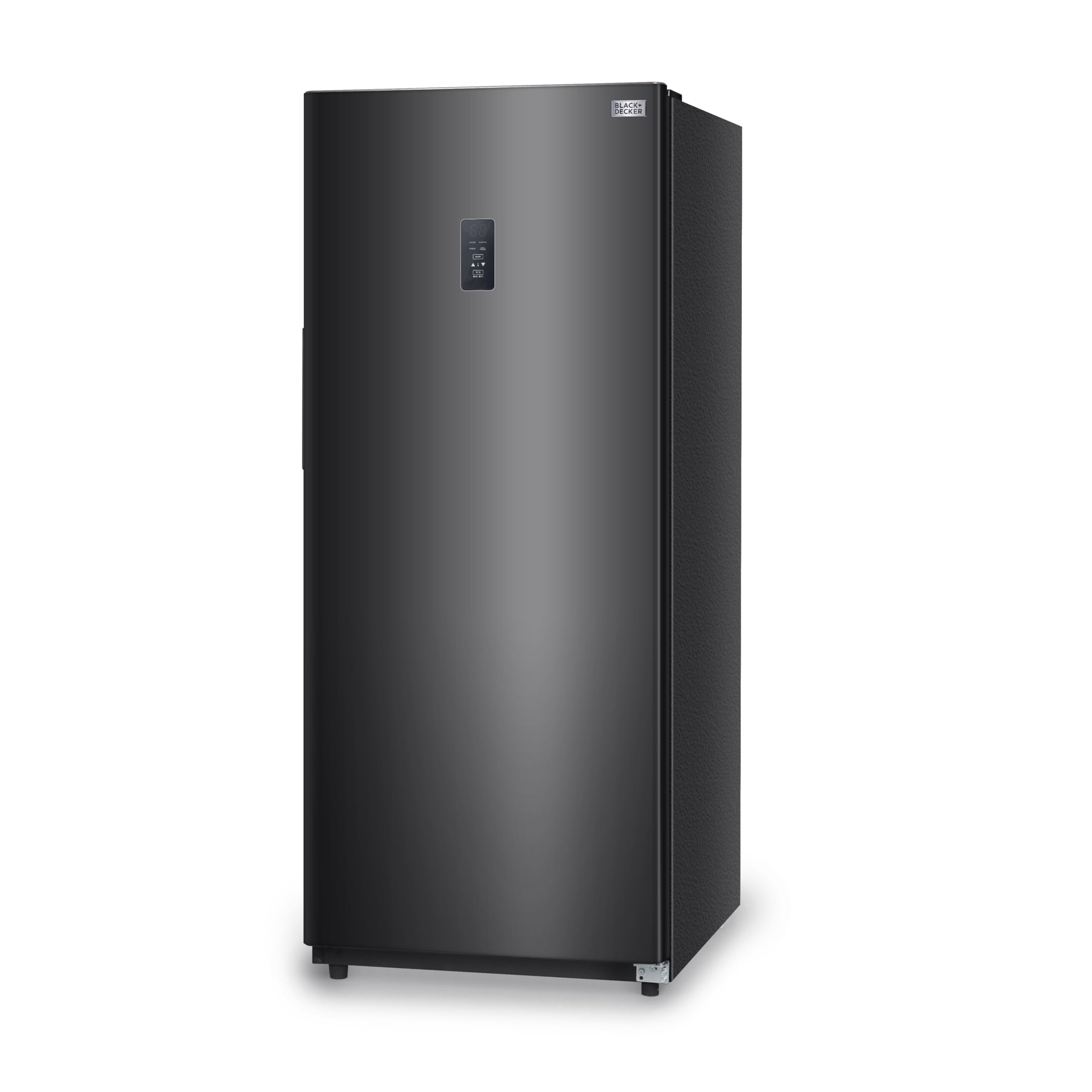
1. BLACK+DECKER 14 Cu. Ft. Convertible Freezer Refrigerator
A fridge and a freezer in one upright that switches modes based on your season.
This pick runs smaller than the exact search number at 14 cubic feet, but it earns its place by doing something neither French door model can: it converts from a full refrigerator into a full upright freezer at the touch of an LED control. That flexibility is the whole personality of this unit — bulk-buy meat in the fall, then flip it to fridge mode for holiday leftovers and spring meal-prepping.
Owners who bought two units at once called them “25% bigger and cheaper than alternatives,” a value refrain echoed across reviews. Performance tops owner praise—over forty highlight smooth running—and the spacious interior with large glass shelves earns its own acclaim. It also handles the smudge test well, with a stainless look that hides fingerprints, and the reversible door swing suits both left- and right-handed kitchens.
The frost-free operation means no manual defrosting ever, and the Sabbath Mode pauses displays and sounds for religious holidays — a rare touch in this price tier. The honest caveat: temperature control draws mixed feedback, with a few owners reporting fluctuations, and an occasional unit has arrived with shipping damage. Owners mention the control panel reaches 32°F in fridge mode and -9°F in freezer mode within hours, so when it works, it works fast.
The flexibility win: no other fridge in this guide can double as a deep freezer, which makes this the smart pick for anyone whose storage needs change across the year.
Know the risk: a handful of buyers dealt with temperature drift or damage in transit, so inspect yours promptly and test the cooling curve in the first week.
2. Hamilton Beach HBF1662 French Door Refrigerator

The true 16-cubic-foot French door that sips the least power per year in this lineup.
This is the fridge that actually matches the “16 cubic foot” search, and it backs that space with a 4.9-cubic-foot freezer drawer so frozen food stays organized instead of buried. The fresh food section spans 11.73 cubic feet, which is where you feel the real difference — tall double doors each carry big gallon-sized bins, freeing up shelf space for the everyday chaos of milk jugs and snack containers.
The energy story here is the quiet headline: it pulls 378 kilowatt hours per year. That is noticeably lighter than the Galanz model below, which runs 490 kilowatt hours per year, so over a year of running both, this one asks less of your outlet.
The smudge-resistant stainless finish and recessed handles give it a professional look, while the LED interior lighting makes late-night snack runs genuinely easy to see. Buyers report it slid into a 33W x 26D x 70H nook without complaint, cooled quickly, and ran quietly from the start. The catch worth knowing before you commit: warranty service is handled by a third party, and a few owners who needed support found that process frustrating and slow to respond.
What wins people over
- True 16.6 cu ft capacity with a 4.9 cu ft freezer drawer
- Lowest energy draw here at 378 kWh per year
- Tall doors with gallon-sized bins free up shelf space
- Reversible door swing and adjustable glass shelves add flexibility
The honest trade-offs
- Warranty runs through a third party, not the brand directly
- A few owners hit slow support when something failed
- Counter-depth footprint may need wall clearance for full door swing
The crowd favorite: grab this if you want a true 16-cubic-foot French door with the best energy appetite in this group.
Think twice if: you are buying for a tight space and cannot confirm the doors will swing open fully against your cabinets.
3. Galanz 3-Door French Door Refrigerator

A space-saving 16-cubic-foot French door built for tight kitchens and small households.
At 28.3 inches wide and 70 inches tall, this Galanz squeezes a full 16 cubic feet into a footprint that suits a small kitchen or a grandmother’s apartment without protruding far past the counters. The bottom-mounted freezer slides open to reveal two full-width storage drawers, so frozen goods stay organized and visible rather than lost in a deep pit. Owners note it needs about 6 inches of wall clearance for the French doors to swing fully open—a real planning detail.
The fresh food section earns its keep with three full-width glass shelves that slide out for easy cleaning after spills, plus two half-width crisper drawers with humidity control to keep produce fresher. Buyers praise the quality and appearance most, and the low-energy compressor paired with a hydrocarbon refrigerant cools quietly while keeping the environmental footprint light. The catch is the energy number: at 490 kilowatt hours per year, this model draws noticeably more power than the Hamilton Beach above, which runs 378 kilowatt hours per year.
Reliability is the genuine mixed note in the review pages — some units run flawlessly for years while a frustrating subset fail within months and hit an unresponsive support line. That split makes this a value-conscious pick for buyers who accept some risk in exchange for the compact French door layout. When it works, owners describe it as a good value for the money that holds all their food with easy access to everything inside.
Where it shines
- Full 16 cu ft in a slim 28.3-inch-wide footprint
- Slide-out glass shelves make spill cleanup simple
- Humidity-controlled crispers keep produce fresher
- Quiet low-energy compressor with eco-friendly refrigerant
Where it asks for patience
- Highest energy draw here at 490 kWh per year
- Reliability is genuinely mixed in owner feedback
- Needs about 6 inches of wall clearance for full door swing
Reach for it when: counter space is tight but you still want a true 16-cubic-foot French door with a usable bottom freezer.
Look elsewhere if: you want the lowest long-term energy bill or you need rock-solid reliability assurances over a lower price.
Understanding the Specs
Annual Energy Consumption (kWh/yr)
This single number tells you how much electricity the fridge uses over a full year of running. Lower is better for your wallet and the planet — a fridge pulling 378 kilowatt hours per year will cost noticeably less to run than one pulling 490 kilowatt hours per year, month after month, for the entire life of the appliance.
Fresh Food vs. Freezer Capacity
Total cubic feet mixes the fridge and freezer sections together, which can hide what you actually need. Check the split: a 16.6-cubic-foot French door with an 11.73-cubic-foot fresh food section and a 4.9-cubic-foot freezer serves a family that shops fresh daily, while a convertible unit you can flip to full freezer mode suits bulk buyers.
FAQ
Is a 16 cubic foot refrigerator big enough for a family of four?
What is the difference between a French door fridge and a bottom freezer fridge?
How much clearance does a counter depth refrigerator need?
What does frost free mean and why does it matter?
Can a convertible refrigerator really switch between fridge and freezer modes?
Is a higher annual energy consumption number a big deal?
What is Sabbath Mode on a refrigerator?
How long should a new refrigerator last before needing replacement?
Final Thoughts: The Verdict
For most people, the 16 cu ft refrigerator winner is the Hamilton Beach HBF1662 because it delivers a true 16.6-cubic-foot French door layout with the lowest energy appetite in this group at 378 kilowatt hours per year. If you want a unit that doubles as a deep freezer when your storage needs shift, grab the BLACK+DECKER Convertible. And for a tight kitchen that still wants a space-saving French door with a bottom freezer, the Galanz 3-Door is the one to reach for, as long as you accept its higher energy draw and mixed reliability record.
How We Picked
We do not accept paid placement. Every pick is matched to a real buyer and a real use-case; we do not hands-on test units.
Sources & Methodology
Specifications: manufacturer listings and product documentation. Review insights: verified customer reviews, as of September 2026. Pricing: not shown on this page (it changes often); check the current price via the retailer link.
As an Amazon Associate, KitchPrep earns from qualifying purchases. This does not affect which products we feature.
Related Guides
