
Specs are compiled from manufacturer listings and verified buyer reviews and can change over time — please confirm the key details on the product page before buying.
If you have ever cut a hole in a wall or ceiling to reach a shut-off valve, you already know the drill: the plumber leaves, and you are staring at an ugly rectangle of missing drywall. A 14 x 14 access panel solves that problem in one step. It covers the opening with a door you can open again, so the next repair takes seconds instead of a fresh drywall patch. The catch: some panels list the 14 x 14 hole you cut, others the outside frame size — often 15.5 x 15.5 or 16 x 16 inches — and mixing those up is the top reason these get returned. This guide sorts out nine real panels so you pick the right one the first time.
I’m Mohammad Maruf — the founder and writer behind KitchPrep. This guide is built by comparing the manufacturers’ published specifications and the patterns across verified customer reviews, so you get each pick’s real strengths and trade-offs instead of marketing spin.
Whether you are hiding a shower valve, a water shut-off, or a run of cable, the nine panels below cover wall and ceiling openings from 8.5 x 10 to 16 x 16 inches. Here is a clear, plain-English breakdown of the 14 x 14 access panel options worth your time.
Our Picks at a Glance
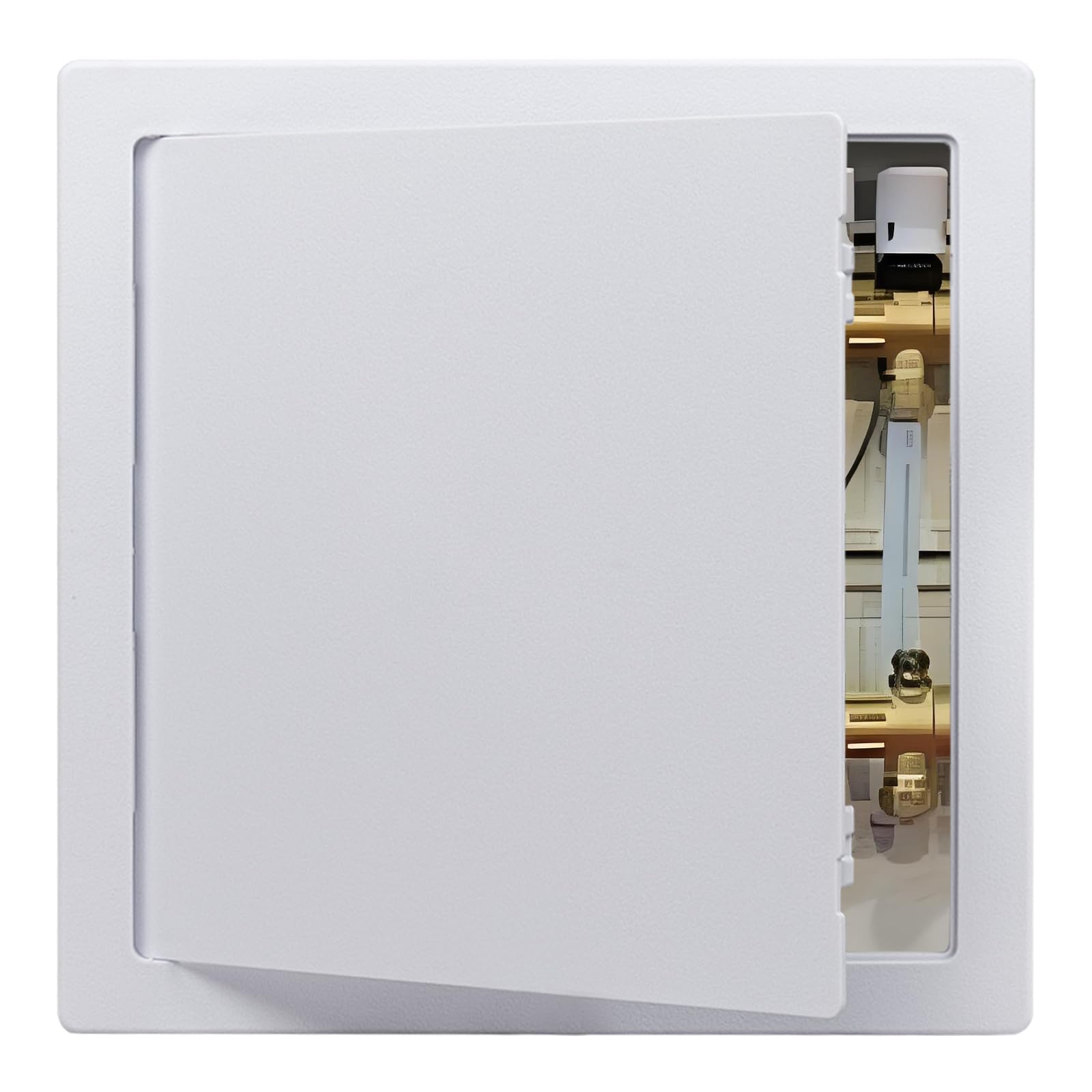
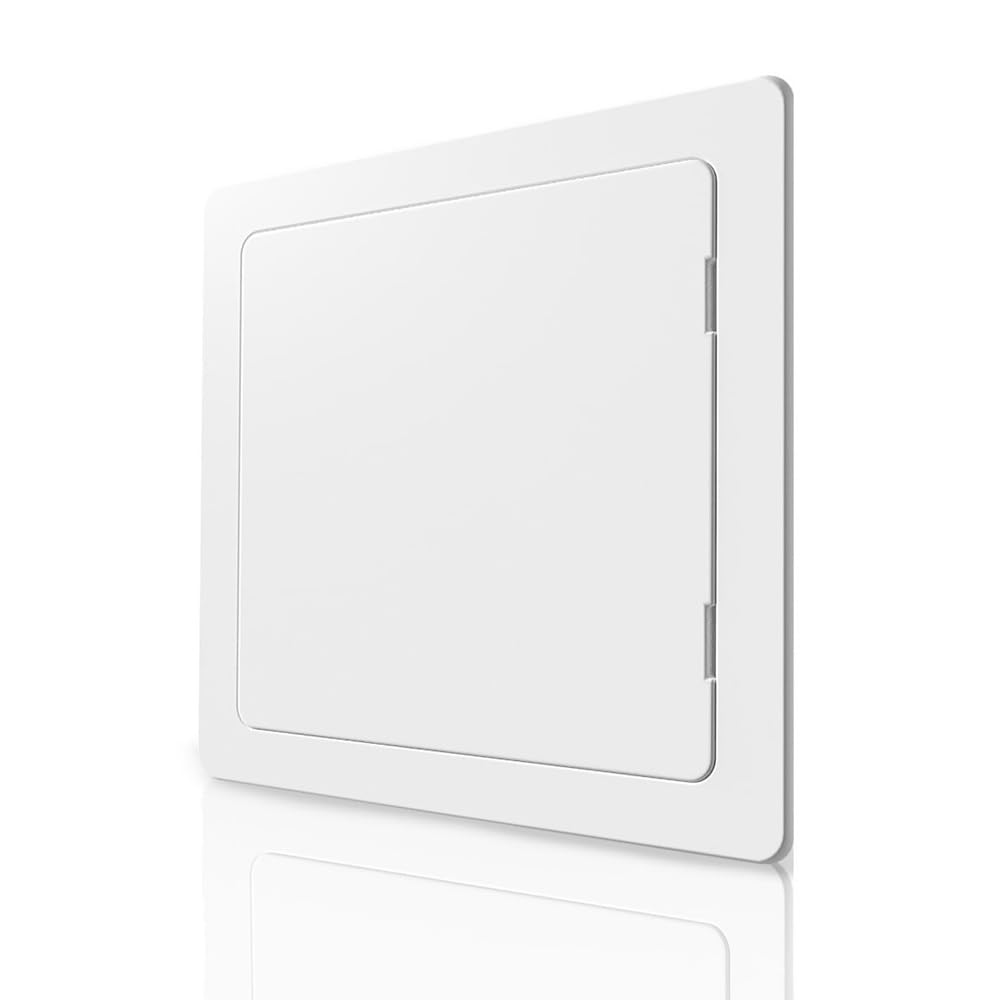
How To Choose The Best 14 X 14 Access Panel
Getting this right depends on two measurements your tape measure already knows: the hole you cut and the space you have around it. Everything else — plastic versus metal, how the door opens, whether it comes with a lock — is a supporting detail. Start here before you cut anything.
Cut-Out Size Versus Overall Size
Most 14 x 14 panels sit over a 14 x 14 opening but the frame itself measures bigger — often around 15.5 x 15.5 inches or 16 x 16 inches — so the frame has something to rest against. Read the listing’s own wording carefully, because a few panels quote the cut-out, not the frame. If your opening is already there and slightly off, an adjustable spring panel can bridge a range of hole sizes instead of forcing you to re-cut.
How You Want To Open The Door
Plastic panels commonly use two small notches so you open them with a flat tool like a screwdriver, and the notches disappear into the surface when closed. Metal panels often use a screwdriver latch that stays shut tighter, which matters if kids or busy feet are near the wall. Spring-fit panels pull straight out and press back in with no tools and no screws at all.
Wall Or Ceiling, Wet Or Dry
Most of these panels handle both walls and ceilings. For bathrooms, basements, and attics, look for a water-repellent or UV-stabilized material so it does not yellow or warp over time. If you want it to vanish, pick a textured, paintable white so it takes paint and blends with the wall around it.
Mounting, In Plain Terms
Almost none of these come with adhesive, so plan on a tube of construction adhesive or a few screws. Some models are trim-ring designs that snap in and hold by tension, which is why reviewers keep telling you to cut the hole carefully. Cut the opening square and level and the install takes about ten minutes.
Quick Comparison
| Model | Best For | Panel Type | Cut-Out / Frame | Door Opening | Amazon |
|---|---|---|---|---|---|
| TICONN 14″ x 14″ Access Panel★ Best Overall | All-round drywall and ceiling access | Plastic (ABS) | Frame 16.14 x 16.14 in | Notch, pry open | Amazon |
| Donext 14″x14″ Plastic Access PanelBudget Champion | Cheap fix for a plumber’s ceiling hole | Plastic (polystyrene) | Fits 14 x 14 opening | Hinged cover | Amazon |
| BOZZON Access Panel 14 x 14 inMost Versatile | Wide open frames that vanish in paint | Plastic | Frame 16 2/9 in, mount 14 x 14 | Hinged door, opens 180° | Amazon |
| EASY-EXS Spring-Fit 14″x14″ | No-screw install, odd-sized openings | Plastic (spring-fit) | Frame 16 x 16 in, fits 10–14 in | Spring pop-out | Amazon |
| Morvat Adjustable Spring Access Panel | Sloppy or already-too-big holes | ABS plastic (spring) | Frame 16 x 16 in, fits 8.5×10–15×15 in | Spring pop-out | Amazon |
| fengze Plastic Access Panel 14×14 | Ceiling vents and HVAC service points | Plastic | Frame 15.75 x 15.75 in, opening 14 x 14 | Removable hinged door | Amazon |
| Joogto Thicken 1mm 14 x 14 Metal Panel | Ceilings where plastic feels flimsy | Metal (aluminium + steel) | Hole 13.58 x 13.58 in | Screwdriver latch | Amazon |
| EXCELFU Metal Access Panel 14×14 | Lockable access to shut-off valves | Metal (aluminum frame, steel door) | Frame 15.5 x 15.5 in, fits 14 x 14 | Key lock door | Amazon |
| Premier Flush Access Panel 14×14 | Heavy-duty commercial-grade steel door | Steel (powder-coated) | Fits 14 x 14 wall opening | Screwdriver latch | Amazon |
In‑Depth Reviews
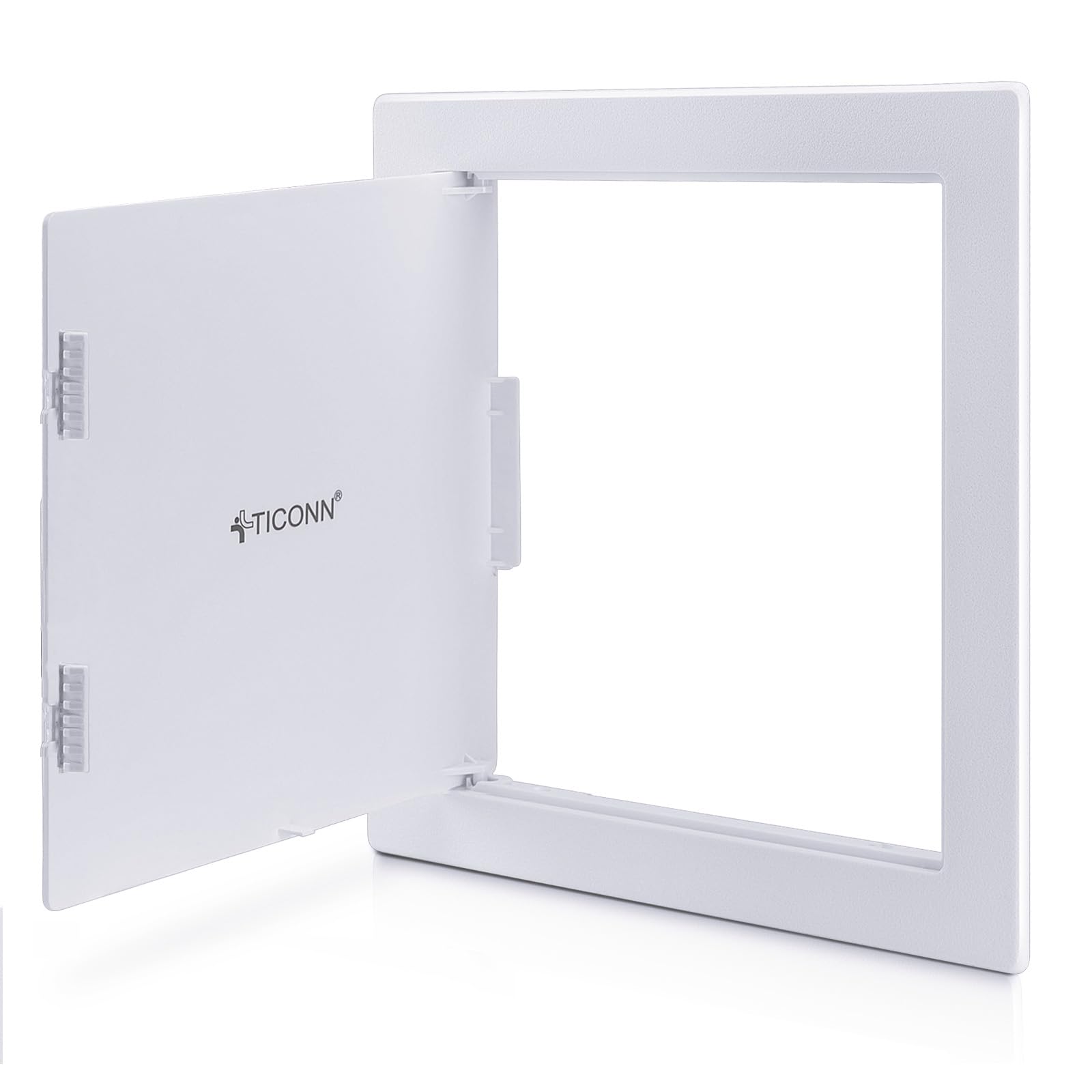
1. TICONN 14″ x 14″ Access Panel for Drywall
Our pick — over 4.5★ from 750+ verified ratings; the strongest balance of quality and price.
The panel that gets the door-to-frame fit right, so it closes solid and looks built in.
For most people covering a wall or ceiling hole, this is the one to start with. The TICONN is made from ABS plastic — a hard, impact-resistant plastic that also has water-repellent properties and UV protection, so it holds up in a bathroom, attic, or basement instead of warping or yellowing. What wins people over is simply that it does its job: the fit of door to frame comes out clean, it installs in the standard three steps (mark the opening, cut the drywall, secure the panel with adhesive or screws), and the textured surface takes paint so it disappears into your wall.
The two discreet notches on the front let you pop the door with a flat tool like a screwdriver or a knife edge. Closed, those notches blend into the surface, which is exactly why this reads as a built-in detail rather than an added-on cover. You can mount it on a wall or a ceiling, and it is sized to hide the sort of thing you would rather not stare at — a plumbing shutoff, a bundle of electrical wiring, or a tangle of cables. The overall frame measures 16.14 x 16.14 inches, so leave yourself room for that footprint in the opening you cut.
Set against the cheaper Donext panel further down the list, the TICONN builds in sturdier impact and UV resistance, which is why it holds the edge for wet rooms and sunny ceilings. The honest trade-off is that there is no handle — you need a tool or a fingernail to open it — and the opening action is deliberately stiff. That stiffness is a feature, not a fault: it means the door stays firmly closed on its own.
Where it earns its keep
- ABS build is impact, UV, and water-repellent resistant — suits bathrooms and basements
- Textured white surface paints or wallpapers to match your décor
- Three-step install for walls or ceilings, no framing needed
- Door closes securely and stays shut without a latch
What to plan around
- No handle — opening it requires a flat tool or a fingernail
- Frame measures 16.14 x 16.14 in, larger than the 14 x 14 opening
- Adhesive and screws are not included
Top pick for most walls: If you want a clean, paintable panel that covers a shutoff or cable run and stays put, this is the safest all-rounder.
Think twice if: You want to open the door by hand with no tool at all — the notches are designed for a screwdriver.
2. 14″x14″ Plastic Access Panel, Drywall Ceiling Access Door White
The budget panel that turns a plumber’s rough ceiling cut into a clean, paintable hatch.
If a tradesman just cut a hole in your ceiling and left, this is the quick fix. The Donext panel is a single-piece plastic door with no separate frame, screws, or fasteners in the box — you measure the wall cut, then fix it in place with adhesive. It is made from high-strength polystyrene, a rigid plastic chosen for impact resistance and resistance to corrosion, fading, or deformation, so a damp garage ceiling will not destroy it. The surface has a deliberately rough texture so paint grips well and you can colour-match it to the wall.
Buyers report this as a perfect fit after plumbing work — the story that keeps coming up is a plumber cutting a small hole in a garage ceiling and the panel popping right in and looking clean and nice. The hinge is what buyers call out as the nice part: it swings open for access to any in-wall installation or repair, then closes back over. Weight lands at 0.91 kg, light enough to hold with one hand while you set it.
As an affordable alternative to the pricier brands, this one is on the slimmer side, and the listing is upfront that no adhesive is included — you choose your mounting method based on the wall. Treat it as the smart pick for a utility ceiling or a closet wall where nobody is grading the finish, not as a showpiece panel for a main living room.
Best for the money: A single-piece adhesive-mount door for garage, attic, and basement ceilings where function matters more than a flush architectural finish.
One thing to know: It is thinner than metal panels and skips included hardware, so buy adhesive separately and press it firmly on a straight, level cut.
Reach for this if: You want a low-cost cover for a ceiling opening and you are fine mounting it with construction adhesive.
Look elsewhere if: You need a panel thick enough to feel rigid under daily handling — a metal unit suits that better.
3. BOZZON Access Panel for Drywall – 14 x 14 in
A wide-opening hinged door built for people who want to reach in and actually see what is behind the wall.
The BOZZON door opens a full 180 degrees, and if you need even more room it lifts off the frame entirely — genuinely useful when you are working behind a shower valve or a water shut-off. Install is a cut-and-press job: cut along a pencil outline, run a bead of sealant, and press the panel firmly into place. No screws required, and it can sit flush or surface mounted depending on your wall.
The material is impact-resistant, UV-stabilized plastic that resists fading and corrosion, with a water-repellent, paintable white finish that suits basements and bathrooms. The frame runs 16 2/9 x 16 2/9 inches to cover a 14 x 14 mounting cut, so it is the widest-footprint option here and worth checking against the space you have. It is also the most popular pick on this list by owner count, and the pattern across its reviews is steady approval for looks and value.
One recurring gripe is the hinge — it is the part that occasionally gives out, so treat the door gently rather than yanking it open. Otherwise, owners describe it doing exactly what a panel should: covering plumbing access cleanly and staying out of sight.
What buyers rave about
- Door opens a full 180° or lifts off entirely for maximum reach
- Impact-resistant, UV-stabilized plastic resists fading and corrosion
- Flush or surface mount, no screws needed
- Paintable white finish blends into the wall
The fine print
- Frame measures 16 2/9 in — needs room around the 14 x 14 cut
- The hinge is the weak point owners flag most — open it gently
Worth it for: Anyone who needs a big doorway to a shower valve or wiring box and wants the door to swing fully clear.
Choose another if: You have a tight frame allowance — the 16 2/9 in outer size needs a little more wall than a slim panel.
4. EASY-EXS Access Panels Spring-Fit 14″x14″ (External 16″x16″)

No screws, no framing, no tools — it presses into the hole and the spring holds it there.
Here is the trick that makes this panel different: instead of a frame you painstakingly line up, a flat spring sits behind the cover and presses it against the back of the drywall. That means the same panel covers openings anywhere from 10 x 10 inches up to 14 x 14 inches, so a slightly ragged cut still works. The outside frame is 16 x 16 inches. Install is a genuine pop-in: cut the opening, push the panel in, and the spring holds it securely without screws, framing, latches, or fasteners.
Owners consistently point to how much leeway the spring gives you when cutting the hole, and how easy the panel is to remove and reattach later. The high-quality plastic is scratch-resistant and takes paint and wallpaper if you want it to match. The spring has good tension and holds the panel flush to the wall with no gaps — one detail that comes up a lot is how the flat spring lets the panel bridge studs while still sitting flat.
Compared with the screw-in BOZZON above, this trades the 180-degree swing door for a straight pop-out that needs zero hardware, which is a real advantage on a finished wall you do not want to mark up. The one caveat: a few owners mention wanting a touch more spring tension for an even tighter hold, which is minor on a panel that already installs this fast.
Why it is so quick: The self-tensioning spring covers a range of opening sizes, so precision-cutting matters far less than it does with a frame-style panel.
Keep in mind: Tension is the design’s backbone, so if you want an extra-tight grip, expect good-but-not-maximum hold.
Pick this if: Your opening is already cut and not perfectly square, and you want the fastest install with no adhesive or fasteners.
skip it if: You prefer the reassurance of a visible hinge and a fixed frame around the door.
5. Morvat Adjustable Spring Access Panel 14″x14″

The adjustable panel that saves a hole someone already cut too big.
When a plumber has hacked out an opening that is nowhere near square, this is the panel that forgives you. The Morvat adjusts across a wide range — from a minimum cut-out of 8.5 x 10 inches all the way up to 15 x 15 inches — so it fits the hole you have rather than the hole you wish you had. Even its own owners run into this: it fits odd-sized openings without extra cutting. Install is draw, cut, sand the edges, adjust the panel, and pop it in.
The body is high-impact ABS plastic with UV stabilization, textured for maximum paint adhesion, and the white surface can be left as is or painted or wallpapered. The frame is 16 x 16 inches. Owners describe placing it over a hole in about 30 seconds, and it also blocks drafts — which is exactly what you want on an outside wall. Older houses full of plumbing trouble are a natural fit, since it lets you seal up a past repair cleanly.
It is rated for indoor surfaces and can also go on an outdoor wall, and it comes with a one-year manufacturer warranty. The honest limit is size: a couple of owners wanted a smaller 6 x 6 version and could not get one, so if you have a tiny hole, this panel is overkill. For a standard-to-large opening, the adjustability is the selling point.
Strength in reserve
- Adjusts to fit cut-outs from 8.5 x 10 in up to 15 x 15 in
- UV-stabilized ABS with textured, paint-ready surface
- Breathable draft seal reported by owners on outside walls
- 12-month manufacturer warranty
Where it falls short
- No small sizes — a 6 x 6 opening has no fit here
- Oversized look if you only have a tiny hole to cover
Best used when: The cut-out is already done and a bit too big, and you would rather cover it than re-cut the drywall.
Not for you if: Your opening is small and precise — the wide frame would look oversized.
6. fengze Plastic Access Panel (14x14inch) Ceiling Vent

A vent-style panel aimed at HVAC and duct service points, with a door that lifts right off.
This panel is built with air-conditioning and duct systems in mind, though it works just as well for electrical, plumbing, wiring, and sprinkler access. The door is hinged but removable from the frame, so when you really need to get your hands in there, the whole door comes away for better reach. The white textured surface can stay as-is or be painted, and it is rated to withstand temperatures up to 90 degrees Celsius, which is why it suits ceiling and duct areas where the air runs warm. The overall panel measures 15.75 x 15.75 inches and covers a 14 x 14 rough opening.
One installation detail is worth repeating before you cut: the maker advises allowing a 14 x 14 opening and, for the best fit, intentionally overcutting by about 5 mm. Mount it to the wall or ceiling surface with caulking adhesive, which is not included. It is a light panel at 620 grams, so holding it overhead while the adhesive sets is not a fight.
The thing to be aware of is the tabs — the small plastic tabs that help seat the panel can break off if you force them, so the setup advice is to install it perfectly level and straight and let the adhesive do the holding. Treat the tabs as a guide, not a clamp, and this stays a solid, low-cost ceiling cover.
Best fit for: Ceiling and duct access where a removable door and warm-air tolerance matter more than heavy-duty structure.
The one caution: Seat it level and let the adhesive set — the small plastic tabs are brittle and can snap if you lever them.
Go with this if: You are covering an HVAC, duct, or sprinkler access point on a ceiling and want a removable door.
Think about metal instead if: You need a panel that takes hard handling without any concern about the tabs.
7. Joogto Thicken 1mm 14 x 14 Metal Access Panel

A metal door thickened to 1 mm for people who are done with flimsy plastic panels.
When a plastic panel feels too light for the job, this is the step up. The Joogto door is thickened to 1 mm and built from aluminium with galvanised steel, and the frame carries rust-resistant galvannealed steel to keep it from deteriorating. The baking-paint finish is applied evenly with no bubbles or marks, and you can install it as-is or field-paint it. Two stiffeners are welded into the outer frame to add rigidity, and the smooth welding leaves a smooth surface with no sharp corners. The frame sits 14 x 14 inches, and it is designed to sit flush with the drywall or ceiling — this listing quotes a hole size of 13.58 x 13.58 inches with an inset depth of 1.18 inches, so measure before you cut.
Owners lean on this one for ceiling work, and the reason is simple: it is described as much easier than repairing a drywall ceiling, and it lets you keep access for the future instead of sealing the problem behind new board. The door uses a screwdriver latch rather than a handle. Two habits owner reports show up: the latch is short and can vibrate loose, and a couple of people added insulation inside the door for a tighter seal.
The frame takes the most criticism — one owner reported a bent corner straight from the start, so check it on arrival before you cut. Get a straight one and the thick metal door is a genuine upgrade over thin plastic. If you are covering a hole in a ceiling where the door needs to feel solid, the extra thickness is what you are paying for.
Built to last
- 1 mm thickened metal door — far more rigid than plastic panels
- Rust-resistant galvannealed steel frame with two welded stiffeners
- Baking-paint finish is uniform and field-paintable
- Flush fit with no sharp corners — good for ceiling installs
Worth a careful look
- Frame is the weak spot — inspect it for bends right from the start
- Latch is short and can work loose over time
- Hole size runs 13.58 in, so the opening is slightly smaller than a full 14 x 14
Fits best when: You want a rigid metal door on a ceiling or utility wall and are happy to pre-check the frame for damage.
Consider plastic instead if: You want the simplest possible install and do not need the extra structural weight.
8. EXCELFU Metal Access Panel for Drywall – 14×14 inch

A metal door with a key lock, for access you want to keep shut on purpose.
If your child-safety or security concern is someone poking at the panel, the key lock on this one is the whole point. The rust-resistant aluminum frame is welded for strength, and the smooth door panel is galvanized steel with a white powder-coated finish that resists rust, fading, and discoloration. It is built to sit surface or flush mounted on drywall, stucco, or masonry, and it has smooth edges with no sharp corners so nobody catches a hand on it. The frame measures 15.5 x 15.5 inches and fits a 14 x 14 inch opening, sized to hide a plumbing line, an electrical box, a run of TV cable, or an HVAC pickup in an attic, bathroom, or basement.
Owners put it over water shut-off valves and behind home-entertainment cables, and one common note is that it arrives well packaged at the right size. The included key matters to a lot of buyers for exactly the reason you would guess: it keeps small hands from opening the panel. If the existing hole is already oversized, be ready to patch a little drywall first to get a clean seat.
The sturdiness holds up in the reviews — it feels solid and thick enough to be worth keeping — and this is the pick when a simple cover will not do and you want a lockable metal door. Compared with the heavier Premier steel panel further down, this one is lighter to handle while still giving you the key-locked security the plastic panels simply cannot.
The draw: A welded aluminum frame and galvanized steel door with a real key lock — the pick for anyone who wants controlled access.
Watch for: A corner occasionally arrives bent even from a sealed box, so inspect the panel before you mount it if the finish matters to you.
Ideal for: Concealing a shut-off valve or media wiring you want to keep locked behind a sturdy metal door.
Skip if: You just need a cheap basic cover and never expect to lock it — the plastic picks cost less for simple access.
9. Premier Flush Access Panel, 14×14, Steel, Screwdriver Latch

The heavyweight: a solid steel door with a screwdriver latch that feels like it will outlast the wall.
This is the panel you buy when “strong” is the only requirement that matters. The Premier is a full steel door with a durable white powder-coated finish, weighing in at 6.5 pounds — several times the mass of the plastic options, which is exactly the point. It installs in drywall, stucco, or masonry walls, works on ceilings, and uses a screwdriver latch that holds the door closed tight and secure. The finish goes on as a clean white or you can paint it to match your décor.
Owners describe it as a heavy-duty steel door that works as a water shut-off cover in basements, and the thing that lands over and over is how sturdy and well-made it feels. It installs with minimal protrusion from the wall, so it sits close to flush rather than standing proud. Everything about it signals it was made for a job that needs to stay put for a long time.
Two honest details to plan around. First, the panel size and the hole size are not the same thing — this line-up includes panels where the door measurement and the required wall opening differ, so check the exact dimensions before cutting. Second, owners note the screwdriver latch can mar the metal over time, since a flathead is doing the locking. It is not fire rated. None of that changes the core value: for durable, flush, residential or light-commercial access, this is the sturdier end of the list.
Where it leads
- Full steel build with a white powder-coated finish
- Screwdriver latch holds the door closed tightly and securely
- Installs with minimal protrusion — sits close to flush
- Suits drywall, stucco, and masonry walls
Before you order
- Panel size and required opening size differ — confirm dimensions first
- The screwdriver latch can scratch the metal finish over time
- Not fire rated
Buy this when: You want the most durable door here and are installing somewhere sturdiness is the priority over cost.
Not the match if: You want the lightest, cheapest cover for a quick hide — a plastic panel does that job for less.
Understanding the Specs
Cut-Out Size vs Overall Size
Two different measurements both get called “14 x 14”: the cut-out you cut in the drywall and the larger outside frame that overlaps it. The cut-out is the hole you actually cut in the drywall. The overall size is the outside face of the frame, which is bigger so it has something to rest against — think 15.5 x 15.5 or 16 x 16 inches on a 14 x 14 cut-out. Some listings quote the hole, and the Joogto metal panel here even asks for a slightly smaller 13.58 x 13.58 inch hole. Match the listing’s wording to your hole, and if the opening is already cut, measure it before ordering.
How The Door Opens
There are three common systems. Notch and pry uses two small notches you open with a flat tool — clean-looking when closed, but you need a tool handy. A screwdriver latch uses a flathead to lock the door, which holds tighter and is common on metal panels. Spring-fit panels have no latch at all: a spring presses the cover against the back of the drywall, and a few of them — like the EASY-EXS and Morvat here — adjust to cover a range of hole sizes, which is a real help when the opening is not perfectly square.
Plastic vs Metal
Plastic panels are light, easy to cut around, and cheap to replace if you damage one. They resist fading and corrosion well when the material has UV stabilization. Metal panels — steel, aluminum, or a mix — feel far more solid, hold a flush line better, and stand up to repeated opening. The trade-offs are weight and the occasional dinged corner in transit, which is why the metal picks here all carry a note about inspecting the frame on arrival.
Wall Or Ceiling Fit
Almost every panel here handles both a wall and a ceiling, so the deciding factor is more about the environment than the surface. A bathroom or basement wall wants a water-repellent or UV-stabilized material. A ceiling near a duct or air handler wants to tolerate warmth, so look for a panel rated for higher temperatures, like the 90 degrees Celsius rating on the fengze pick, or a rigid metal door like the Joogto where rigidity matters more. Match the material to the room — water-repellent or UV-stabilized plastic for bathrooms and basements, a 90°C-rated or metal panel near ducts — and it stays looking new.
FAQ
What size hole do I cut for a 14 x 14 access panel?
Can I install an access panel on a ceiling instead of a wall?
Do these access panels come with adhesive or screws?
What is the difference between a spring-fit panel and a hinged access door?
Are these access panels paintable so they blend into the wall?
Will a metal access panel rust in a bathroom or basement?
Can I fit an access panel if the opening is already cut too big or uneven?
Do I need a special tool to open an access panel?
Which is stronger, a plastic or a metal access panel?
How long does an access panel installation take?
Final Thoughts: The Verdict
For most walls and ceilings, the 14 x 14 access panel to beat is the TICONN 14″ x 14″ Access Panel, because its ABS build is impact, UV, and water-repellent resistant and it paints to disappear into the wall. If your opening is already cut and a bit off-square, grab the Morvat Adjustable Spring Access Panel, which adjusts to fit cut-outs from 8.5 x 10 up to 15 x 15 inches with no fasteners. And for a ceiling or utility wall where you want the door to feel solid, the Joogto Thicken 1mm Metal Access Panel is the one to reach for. Whichever you choose, measure the opening before you cut — that step is what keeps a quick cover-up from becoming a redo.
How We Picked
We do not accept paid placement. Every pick is matched to a real buyer and a real use-case; we do not hands-on test units.
Sources & Methodology
Specifications: manufacturer listings and product documentation. Review insights: verified customer reviews, as of September 2026. Pricing: not shown on this page (it changes often); check the current price via the retailer link.
As an Amazon Associate, KitchPrep earns from qualifying purchases. This does not affect which products we feature.
Related Guides
