
Specs are compiled from manufacturer listings and verified buyer reviews and can change over time — please confirm the key details on the product page before buying.
If your stretched canvas does not sit right in its frame, you get rattling or a painting that will not fit. Two numbers decide this: how deep your canvas is, and how the frame holds it. A floating frame with a 0.9-inch rabbet (the recessed channel the canvas sits inside) fits the widest range of ready-made canvases. The FOLKOR two-pack is the strongest all-rounder here, at 4.6 stars across 800+ ratings.
I’m Mohammad Maruf — the founder and writer behind KitchPrep. This guide is built by comparing the manufacturers’ published specifications and the patterns across verified customer reviews, so you get each pick’s real strengths and trade-offs instead of marketing spin.
Every pick below is a genuine 12×16 floater or poster frame, ranked by how well it fits real stretched canvas. The guide covers depth matching, hanging hardware, and which finish hides wall scuffs best, all so you can choose the right 12×16 canvas frame without ordering twice.
Our Picks at a Glance

How To Choose The Best 12×16 Canvas Frame
The single most common mistake with a 12×16 canvas frame is ordering by the canvas size alone. A frame listed as 12×16 refers to the inner opening — the space your stretched canvas must fill. Whether it actually sits flush depends on how deep the canvas is, which is a separate measurement entirely.
Measure the depth of your stretched canvas first
Canvas depth is the thickness of the wooden stretcher bar underneath the fabric. Grab a ruler and measure the side edge of your painting. A frame with a 0.9-inch rabbet comfortably holds anything up to about that depth. If your canvas is closer to half an inch thick, it will sit further back inside the frame — which is fine, and in fact makes the floating gap look wider.
A floater frame is designed so the canvas never touches the outer edge. That leaves a small reveal around all four sides — usually around 0.12 inches — which is what creates the illusion that your artwork is suspended in mid-air. That gap is the whole point, not a sizing error.
Decide how the canvas attaches to the frame
Adhesive strips are the fastest method and need no tools at all: peel, centre, press. Screws and pre-drilled holes hold more securely but take longer, and you have to centre the canvas yourself while the screws go in. If you plan to swap artwork, adhesive strips and hook-and-loop fasteners win on convenience.
Match the finish to the room, not the painting
Black disappears into almost any wall and lets the colours in your art carry the room. Natural woodgrain softens bright, busy pieces and suits neutral interiors. Gold and warm metallics read as deliberate and work well where you want the frame itself to be part of the decoration. The bigger the contrast between frame and wall, the more the frame draws the eye.
Quick Comparison
| Model | Best For | Canvas Depth Fit | Mounting Method | Frame Material | Amazon |
|---|---|---|---|---|---|
| FOLKOR Vintage Gold 2-Pack★ Best Overall | Two canvases at once | 0.9″ rabbet | Screw holes + hangers | Plastic with wood back | Amazon |
| MCS Canvas Float FrameBest Wood Look | Best woodgrain look | Up to 3/4″ | Adhesive hook and loop | Wood with paper wrap | Amazon |
| Abtgt Canvas Floating FrameBest Value | Tool-free gallery look | 0.9″ deep | 4 Velcro strips + sawtooth | Engineered wood | Amazon |
| Americanflat Canvas Floating Frame | Thick 1″ canvases | Up to 1″ thick | 8 adhesive strips + hardware | Engineered wood (MDF) | Amazon |
| GVS-ART Metal Floater Frame | Humid rooms | 1.5″ matte black profile | Screw assembly kit | Aluminum | Amazon |
| VAREIHNAZ Canvas Floater Frame | Arrives ready to use | 0.6″–0.9″ deep | Wall mount hardware | Plastic | Amazon |
| HUACANVAS Floating Frame White | Pre-drilled simplicity | 7/8″ deep | Pre-drilled holes + hangers | Plastic | Amazon |
| ArtToFrames Antique Black | Flat art and prints | 0″ rabbet (flat art only) | Sawtooth hanger | Wood with glass | Amazon |
In‑Depth Reviews
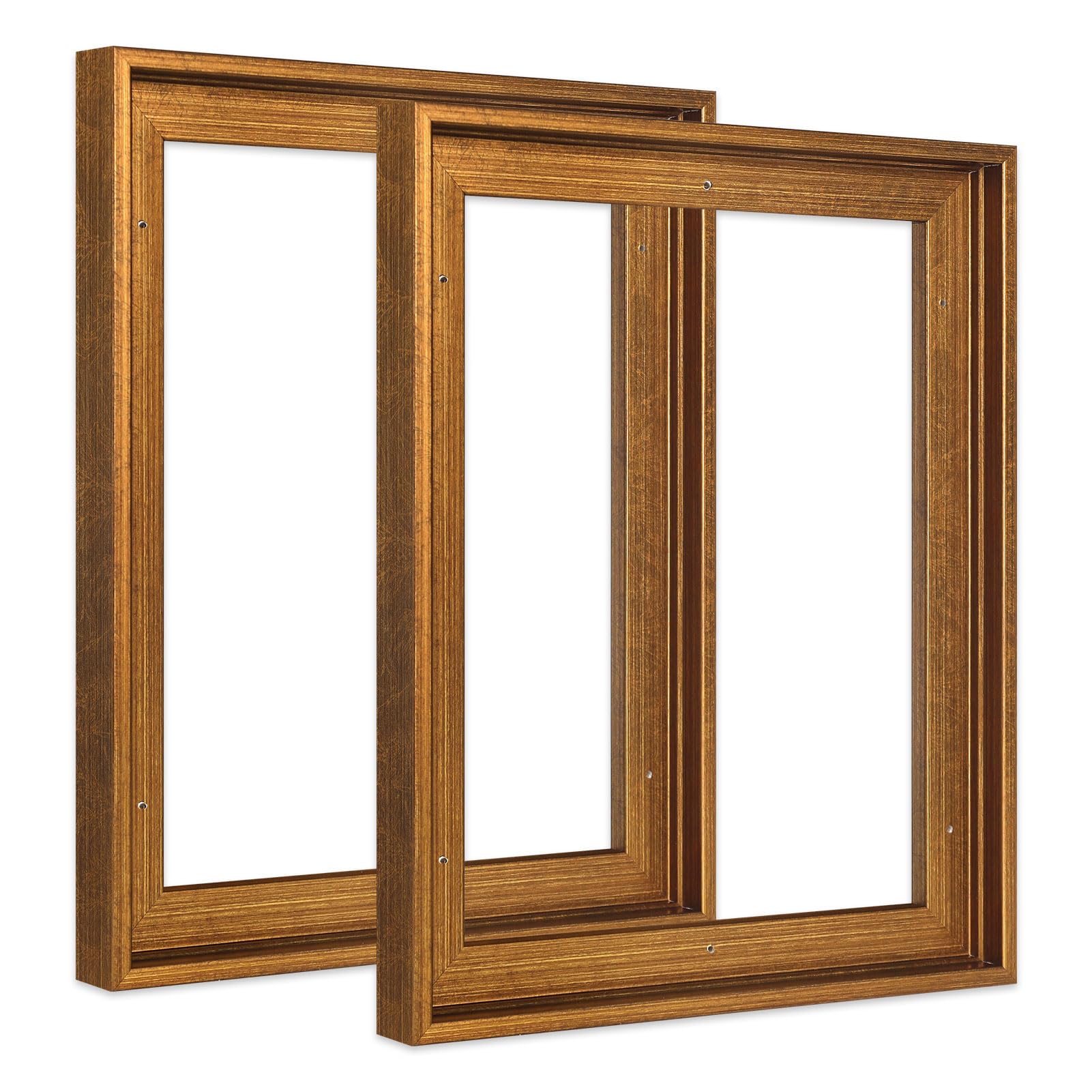
1. 12×16 Vintage Gold Canvas Frame for Wall Art Print, 0.9″ Deep, 2 Pack
Our pick — over 4.5★ from 800+ verified ratings; the strongest balance of quality and price.
Two gold floater frames for the price of a single shop visit, and they fit right the first time.
If you have two stretched canvases sitting unframed, this is the box that ends the problem in one order. You get a pair of floater frames built for artwork printed or painted on stretched canvas — oil paintings, prints, mixed media, paint-by-number panels. The rabbet depth is 0.9 inch, which is the number to check against your canvas before anything else. A 0.12-inch gap runs on each side, and that small reveal is what makes the canvas look like it is hovering inside the frame instead of being pressed into it.
What wins people over is the build quality, and it is the thing buyers bring up more than anything else in their write-ups. The frame ships with reserved screw holes and all the hardware and instructions you need, so a screwdriver is the only tool required. Some buyers report: “Accurate sizing fits unfinished birch wood panels perfectly.” Others mention that a panel sized for mixed media slotted straight in. Portraits look deliberate once they are floating in that gold profile rather than leaning against a wall.
Weighing 1.14 kg for the pair, these carry noticeably more heft than the Abtgt floating frame at 0.74 kg, and the extra mass shows up in how solid the corners feel when you lift one. The finish is textured rather than smooth, so it picks up light instead of throwing it back.
On the wall, a pair of these reads as a small gallery rather than two separate pictures. Hang them side by side for a diptych effect, or split them across a hallway and a bedroom.
What earns its keep
- 0.9-inch rabbet swallows the stretcher bars on most ready-made canvases
- Two complete frames with hangers and screws included in the box
- Reserved screw holes mean no drilling and no measuring twice
- Textured vintage gold finish hides fingerprints and small marks
Before you order
- Empty frames only — no glass, no backing board
- Heavier than the black floating frames at 1.14 kg for the pair
- Gold is a statement; on a bright yellow wall it will compete
Buy this if: you already own two stretched canvases and want them both framed properly, with hardware in the box.
Think twice if: your artwork is a flat print or poster with no stretcher bar behind it — a floater frame has nothing to grip.
2. MCS Canvas Float Frame, 12×16, Natural Woodgrain, 1-Pack
A woodgrain floater that makes a raw canvas look like it belongs in a rented gallery.
The MCS frame gives your wall a more substantial look than the FOLKOR pair. It measures 13.75 x 17.75 inches overall, while the opening holds one 12×16-inch stretched canvas up to 3/4 inches deep. The FOLKOR’s own 17 x 13 dimension runs smaller on both the length and the width, and the MCS frame’s taller profile is part of why it reads as a more substantial piece on the wall.
You can set this frame up with no tools at all. Adhesive-back hook-and-loop fasteners stick to the frame, you press your canvas in, and pre-attached sawtooth hangers let it hang vertically or horizontally. Buyers keep coming back for the same reason — one repeat purchaser put it plainly: “I have purchased several of these because they’re so easy to use.” What owners rave about most is the overall build; the modern, expensive-looking finish is a close second.
Here is the honest catch. The paper-wrap natural woodgrain finish is a vinyl wrap over engineered wood, so it can scratch and a deep mark will show the lighter material underneath. A canvas on the thinner side around 0.5 inch will not sit flush inside the deeper channel. And the hook-and-loop tape that holds the canvas in place is the part buyers trust least — fine for a light canvas, worth adding a couple of small screws for a heavier one. The frame itself carries some weight behind it, which is what makes the finished result hold its shape.
The value read: For a small frame, you are getting a wood-look profile with portrait and landscape hanging options and a fit range that covers most ready-made canvases. The mounting system is the compromise you are accepting.
Reach for this: when you want a neutral natural finish that lets a bright painting carry the room.
Skip it: if your canvas is noticeably thinner than 3/4 inch and you want it sitting flush and immovable.
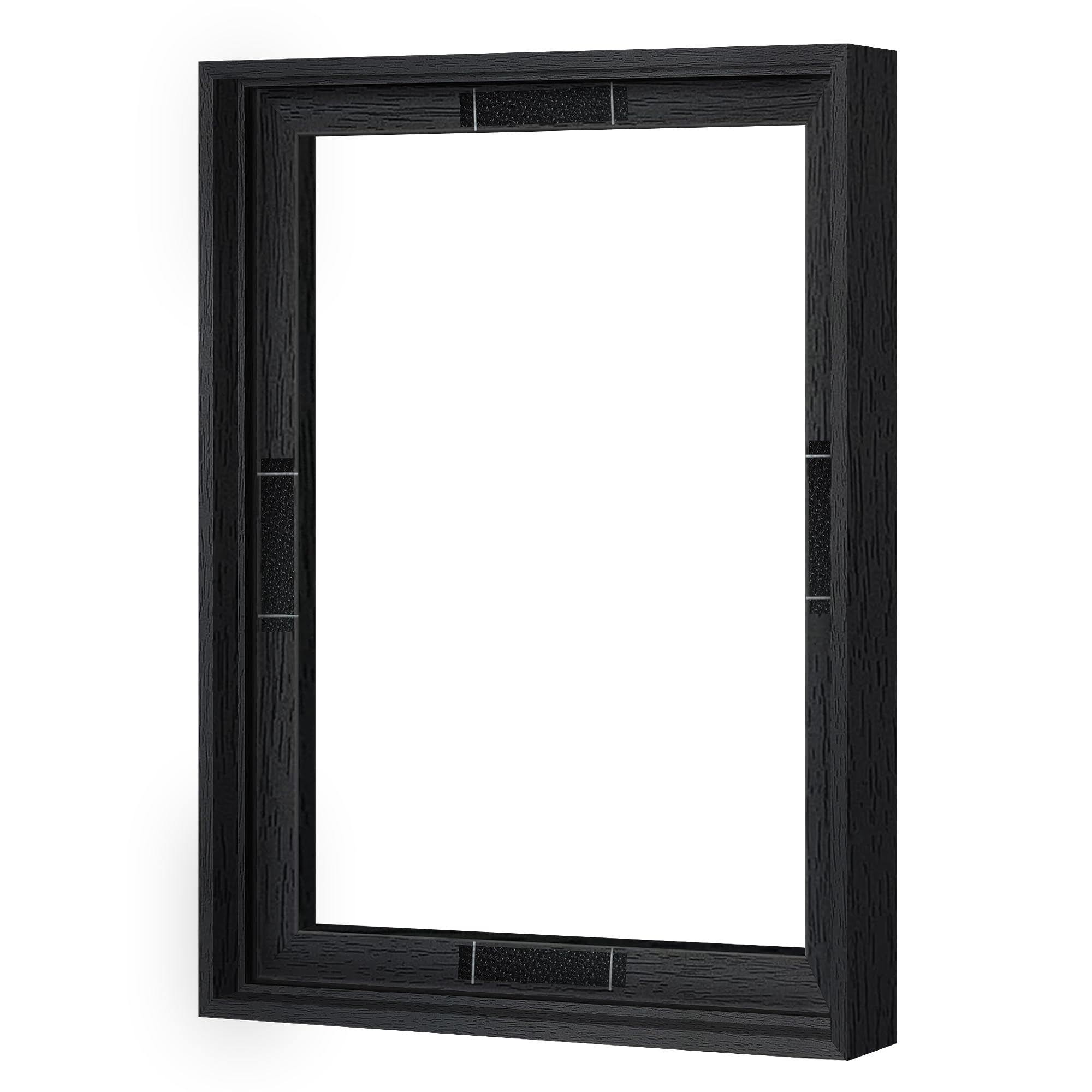
3. Abtgt Canvas Floating 12×16 Frame with 0.9″ Deep, Black, With Adhesive
The black floater that makes a paint-by-number panel look like it came from a print shop.
This is the pick for anyone whose artwork is a paint-by-number canvas, an oil study, or a print they want to look pricier than it was. It holds one 12×16-inch canvas painting, and the 0.9-inch depth keeps the stretcher bars tucked well inside the frame. The maker states the Velcro support keeps the canvas from deforming after long-term hanging.
Swapping artwork needs no tools at all. Four Velcro strips press the canvas against the frame, so if you get bored of what is on the wall, you peel and re-press with no hardware to unfasten. Two black sawtooth hooks are already mounted on the frame, so it goes up vertically or horizontally the moment it arrives. The whole thing weighs 0.74 kg — light enough that the sawtooth hooks have almost nothing to hold up.
The honest trade-off sits in two places. Fit is where buyers split: the frame is built around a 12×16 opening, so a canvas of a different size will leave an uneven reveal or sit loose rather than snug. The Velcro method is the other one — it is fast and damage-free, but it is tape, not screws, so a heavy or unevenly stretched canvas may need reinforcing. A small scratch can also arrive on the finish, though on a black frame that is easy to touch up at home.
Who this suits: a first-time framer with a single 12×16 canvas and no interest in tools or wall anchors.
Best for: gallery-style display of one canvas, hung the day it arrives.
Not for: canvases that stray from 12×16 or weigh enough to test the tape.
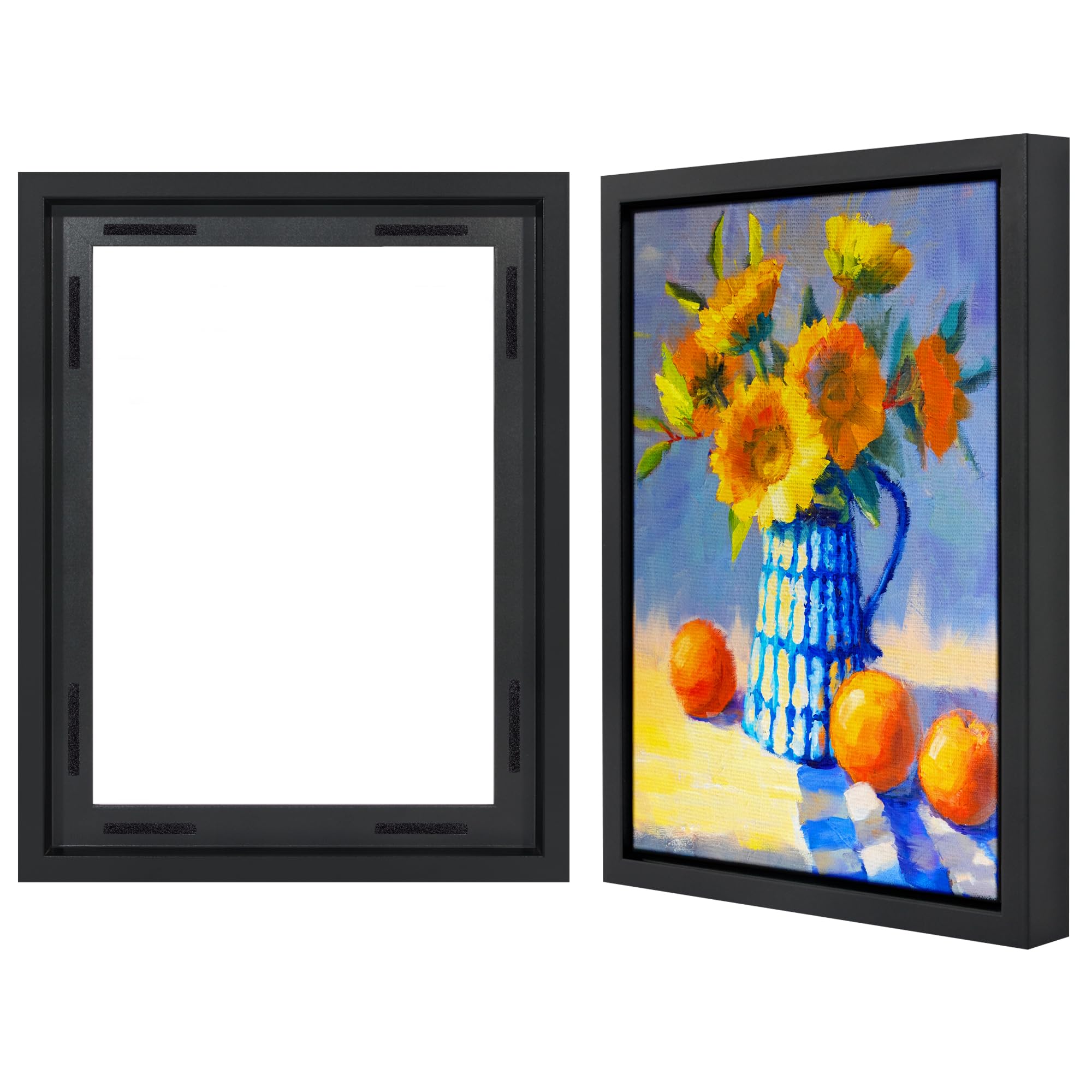
4. Americanflat 12×16 Canvas Floating Frame – Engineered Wood – Black
Built for chunky canvas panels and heavy acrylic work that other floaters cannot take.
Most floating frames quietly cap out around 3/4 inch of canvas depth. This one goes further and fits canvases up to 1 inch deep, which opens the door to impasto acrylic on thick wood panels and anything with a heavy stretcher bar behind it. It is an open-back frame, so there is no glass and no backing board pushing your artwork forward — the canvas simply sits inside and the black profile floats around it.
Getting it on the wall takes minutes. Eight adhesive strips come in the box, along with the hanging hardware. The routine is peel, stick the strips onto the frame, centre your canvas, and press. No assembly, no measuring jigs, no screwdriver. Owners describe framing a decade-old raw canvas in about five minutes and hanging it as part of a gallery wall that same afternoon.
Before you check out, know that the adhesive is the part that gets the most pushback. It is generous and it makes positioning easy, but plenty of people use it exactly as intended and never have a problem. A fair number instead use the strips to hold the canvas in position while they drive in a couple of small screws — the engineered wood is soft enough for a manual screwdriver, so that workaround costs you five extra minutes and nothing else. The size also catches some buyers out; a few find it larger than the listed 12×16 suggests, which is worth checking against your wall space.
At 1.5 pounds it is heavier than the Abtgt floating frame at 0.74 kg, and that weight is felt in the frame rather than the wall mount. Engineered wood beats a hollow plastic shell every time you pick it up.
Arguments for it
- Handles canvas up to a full inch deep — the deepest fit on this list short of the metal pick
- Arrives assembled and hangs the same day, no tools needed
- Eight adhesive strips give you plenty of peel-and-stick coverage
- Black veneer profile works in both a home and an office
What to plan around
- The adhesive is the weak link on heavier canvases — screws are the fix
- Some buyers find the finished frame larger than expected on the wall
- Open back means no protection from dust or knocks
Worth it when: your canvas is thick, heavy, or built on a chunky panel.
Consider elsewhere if: you want a sealed enclosure with glass over the art.
5. DIY 12x16in Metal Canvas Floater Frame Painting 1.5″ Matte Black

An aluminum floater that shrugs off damp basements, and asks you to build it first.
This is the one to choose when a wooden or plastic frame would be a mistake. The profile is aluminum with a matte black finish, and the listing is explicit that it is built to handle humid or hot weather without warping or swelling the way wood can. If your 12×16 canvas is headed for a bathroom wall, a sunroom, or a garage studio, that material choice is the entire reason to pick this over the cheaper plastic options above it.
Be ready to build this frame yourself. It arrives unassembled with an assembly kit and the only tool you need is a screwdriver. Assembly time is roughly an hour, and the smart move is to attach the hanging hardware before you join the four sides — the included instructions skip that step, and skipping it makes the last stretch of the build noticeably harder. The corner brackets are two sandwiched L-pieces, and an advantage of the design is that a slightly warped canvas gets straightened out once it is mounted.
Weight lands at 1.9 pounds, which is the heaviest frame here and the reason it feels like proper hardware rather than a decoration. Buyers praise the build and the assembly experience, and the finish has drawn compliments for reading as a warm bronze rather than plain black in some colorways. The caution worth knowing: the inner corner edges are sharp enough that cotton gloves are included in the kit to protect your hands, so wear them. A minority of buyers also find the corners harder to line up cleanly than the marketing photos suggest, and the inner opening runs slightly generous, which makes centring the canvas a patient exercise.
What you are paying for: a metal frame built to outlast the artwork inside it, at the cost of an hour of your time and a screwdriver.
Choose this one: for damp rooms, hot rooms, and anyone who wants a frame that will still be square in a decade.
Look past it: if you want to hang your canvas tonight with zero assembly.
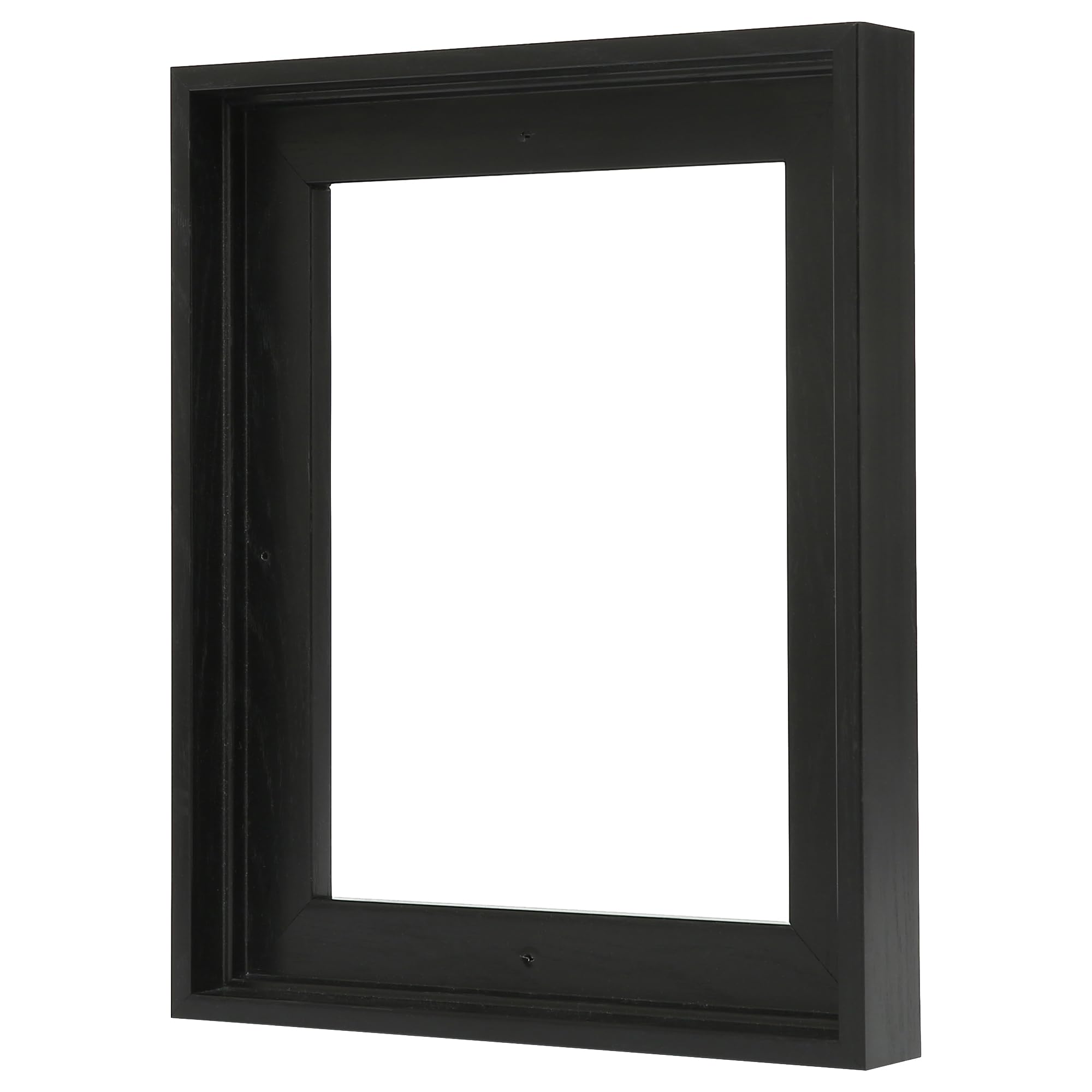
6. Canvas Frames for 12″x16″ Paintings with 0.6″~0.9″ Deep Black
No screws, no Velcro, no assembly — just slot the canvas in and hang it.
This frame arrives already built, so all you do is fit the canvas. That makes it the least fiddly option for anyone who does not want to touch a screwdriver or peel adhesive strips. It handles canvas between 0.6 and 0.9 inches deep, which covers the majority of ready-made stretched panels, and the 0.12-inch gaps on each side give you the floating reveal that makes the artwork look deliberately positioned rather than crammed.
It weighs 14.4 ounces, which is light enough to hang on a single nail without hunting for a stud. The material is plastic finished to read as wood, so it looks far more expensive than it feels in the hand. For a canvas destined for a kitchen or a hallway — somewhere casual where the art rotates with the season — that light weight is a real advantage, and going up on the wall takes seconds.
The honest caveat is durability. This is a light plastic frame, and the mounting hardware is where it shows: a few buyers have found the fittings brittle, and there are reports of frames arriving damaged or coming apart. That is not the norm across the board, but if your canvas is valuable or heavy, or the frame is going somewhere it might get knocked, a sturdier build is the safer call. For a standard lightweight canvas on a quiet wall, this delivers a clean professional look with almost no effort.
Why it works
- Arrives assembled — nothing to build or fasten
- 0.6″–0.9″ depth range fits most standard stretched canvases
- 14.4 ounces means a single nail holds it fine
- Black finish looks like wood and suits a kitchen or hallway
Where it falls short
- Plastic construction with fittings some buyers find brittle
- A small number of units arrive damaged in transit
- No screws or wall anchors guaranteed in every box
Ideal pick for: a light canvas in a casual spot where you want it up in under a minute.
Better options exist if: your artwork is heavy, valuable, or headed anywhere it might get bumped.
7. 12×16 Canvas Floating Frame, 0.9″ Deep Canvas Frame, White

A bright white floater for pale walls where a black frame would cut the room in half.
White is the finish you want when your walls are light and a black frame would look like a smudge against them. This one is built for canvas that measures 7/8 inch deep, and the pre-drilled holes mean the frame lines up straight without you marking and measuring anything. It ships with the hangers included, so the whole job is a screwdriver and a few minutes of your time.
The size is stated as the inner measurement, which is the correct way to list a floater frame: the opening matches your canvas exactly, and the outer profile extends past it. That means if you own a 12×16 panel, you order the 12×16 frame and the canvas drops in with the reveal showing on all four sides. The frame is plastic with a painted wood-look finish that resists the yellowing cheaper painted frames develop.
The one thing to plan for is centring. When you drive the screws in, the canvas can shift slightly, so the even gap you want around all four sides takes a little trial and error to nail. Work slowly, snug the screws in opposite corners first, and check the reveal before you tighten everything down. Buyers who take that extra minute report a professional-looking result; the mounting method works, it simply rewards patience.
The straight verdict: the right white floater for a light-walled room, provided you are willing to fine-tune the canvas position as you fasten it.
Pick it for: bright rooms and canvases measuring 7/8 inch deep, where a white profile blends with the wall.
Leave it for another: if your canvas is closer to half an inch thick and you want it sitting deeper inside.
8. ArtToFrames 12×16 Inch Black Picture Frame, Antique Black, with Glass

Not a floater at all — a wood frame with glass for flat prints and posters that need protecting.
Read this one carefully, because it works differently to everything above. This is a traditional picture frame, not a floater. It comes with regular glass and one backing board, and the frame is solid wood in an antique black finish. That combination means it protects your artwork behind a sheet — dust, fingerprints, and light knocks all stay off the surface, which is the entire reason to choose it over an open-back floater.
The opening fits a 12×16-inch print, while the finished outer size measures 14×18 inches. It is a heavier build at 3.4 pounds, and the wood construction is what owners single out most — the antique finish reads as deliberate and slightly aged rather than plain matte black, so it suits watercolours, photographs, and gift prints. A sawtooth hanger is included for wall mounting, and the corners are joined so they blend rather than sitting as obvious seams.
Two details matter before you buy. The rabbet measures 0.0000 inches, so this frame holds flat art only — no canvas, no mat, nothing with thickness. If you are trying to frame a stretched painting, a floater frame from earlier in this list is the correct tool. The other note is durability: the glazing is a flexible panel rather than rigid glass, and it can flex if you handle it roughly. Treat it gently during installation and it looks the part on the wall.
Where it wins
- Wood frame with an antique black finish that suits prints and photographs
- Glass and backing board protect flat artwork from dust and contact
- Finished outer size of 14×18 inches gives prints a generous border
- Sawtooth hanger included — no extra mounting kit to buy
Know before ordering
- 0.0000-inch rabbet means flat art only — no stretched canvas fits
- The flexible glazing panel needs careful handling
- At 3.4 pounds it is the heaviest pick here and needs a solid fixing
Go with this: for watercolours, photos, and flat prints that need glass protection and a classic wood look.
Wrong tool if: you are framing a stretched canvas — that needs a floater frame, not this.
Understanding the Specs
Rabbet depth and what it means for your canvas
The rabbet is the recessed channel behind the frame’s front lip where your artwork sits. On a floater frame, that channel is deep enough to swallow the stretcher bars behind your canvas. A 0.9-inch rabbet handles the vast majority of ready-made stretched canvases without any struggle, while a 7/8-inch depth suits thinner panels. Measure the side edge of your canvas before you order and match it to the frame’s stated depth.
The floating reveal and why it exists
A floater frame is deliberately built larger than the canvas it holds. That leaves a small gap — on many models about 0.12 inches — running around all four sides. That gap is the design, not a defect: it makes the canvas appear to hover inside the frame and adds a sense of depth to the whole piece. A canvas that fills the opening edge to edge is in the wrong kind of frame.
Mounting: adhesive strips versus screws
Adhesive strips and hook-and-loop fasteners hold the canvas against the frame using pressure alone. They need no tools and let you swap artwork freely, but they rely on tape strength rather than mechanical fixing. Screws and pre-drilled holes are more secure and better for heavier canvases, but they take longer and the canvas can shift while you tighten them. Speed or security — whichever matters more decides the right frame for you.
Frame material and where it can live
Plastic frames are light and inexpensive, and they read surprisingly well as wood from a normal viewing distance. Wood and engineered wood feel more substantial and hold their shape. Aluminum is the outlier here: it resists humid and hot conditions that can warp wood over time, which makes a metal frame the sensible pick for bathrooms, sunrooms, and garages. Match the material to the room, not just the price.
FAQ
Will a 12×16 canvas frame fit my stretched canvas exactly?
How deep does my canvas need to be for a floater frame?
Why is there a visible gap around my canvas inside the frame?
Are adhesive strips strong enough to hold a canvas frame on the wall?
Can I use a floating frame with a flat print or poster?
Does the metal frame come assembled like the others?
Which finish should I choose for a room with light walls?
Can I swap the artwork in a floater frame later?
Will a floating frame work in a bathroom or a humid room?
Do I need any tools to install a 12×16 canvas frame?
Final Thoughts: The Verdict
The right pick depends on what you are framing. If it is a stretched canvas, the FOLKOR two-pack is the safest bet — a 0.9-inch rabbet that fits most ready-made panels, hardware in the box, and two frames so a second painting does not wait its turn. If your canvas runs thick, the Americanflat frame reaches a full inch of depth; if it is heading somewhere damp, the GVS-ART aluminum build will not warp the way wood can. And if you are framing a flat print rather than canvas, the ArtToFrames wood frame with glass is the one to reach for, and a floater frame is simply the wrong tool.
Whichever way you go, measure your canvas edge depth before you order. That one number decides whether a 12×16 canvas frame fits more than anything on the box.
How We Picked
We do not accept paid placement. Every pick is matched to a real buyer and a real use-case; we do not hands-on test units.
Sources & Methodology
Specifications: manufacturer listings and product documentation. Review insights: verified customer reviews, as of September 2026. Pricing: not shown on this page (it changes often); check the current price via the retailer link.
As an Amazon Associate, KitchPrep earns from qualifying purchases. This does not affect which products we feature.
Related Guides
