
Specs are compiled from manufacturer listings and verified buyer reviews and can change over time — please confirm the key details on the product page before buying.
A 12V submersible water pump is a small, rugged workhorse that you drop directly into the water so it can push that water out of a boat bilge, a pond, a livewell, or even a camping shower setup. The most important thing to know before you buy is that these pumps are rated by gallons per hour (GPH) — and that rating tells you exactly how fast it will clear the water you are dealing with.
I’m Mohammad Maruf — the founder and writer behind KitchPrep. This guide is built by comparing the manufacturers’ published specifications and the patterns across verified customer reviews, so you get each pick’s real strengths and trade-offs instead of marketing spin.
From a tiny 500 GPH unit for a kayak to a 1500 GPH beast for a cruiser, the right 12v submersible water pump matches flow, durability, and power draw to the job you actually do.
Our Picks at a Glance


How To Choose The Best 12V Submersible Water Pump
Before you pick a 12V submersible water pump, check the flow rating — the gallons per hour — because that single number decides if the pump keeps up with the water coming in. Measure your needs first, then choose the pump size.
Match the GPH to the Job
A small jon boat that takes on a slow trickle is fine with a 500 GPH pump. A larger cruiser that can ship real water over the bow needs a 1500 GPH unit with serious capacity. Think of it like this: the higher the gallons per hour, the more water it can move at once, and the safer you are in rough conditions.
Decide Between Auto and Manual
A manual pump turns on only when you flip a switch. An automatic pump has a built-in float switch that senses rising water and turns itself on, then shuts off when the water is gone. Going automatic means you don’t have to remember to switch it on before water reaches your battery — but check the float switch reviews carefully, since that mechanism is where some fail.
Quick Comparison
| Model | Best For | Flow Rate | Max Lift | Weight | Amazon |
|---|---|---|---|---|---|
| Rule 1500 GPH★ Best Overall | Serious marine duty | 1500 GPH | — | 3.1 lb | Amazon |
| SEAFLO 01 Series 500 GPHBest Value | Compact backup pump | 8.33 GPM | 9 ft | 7.2 oz | Amazon |
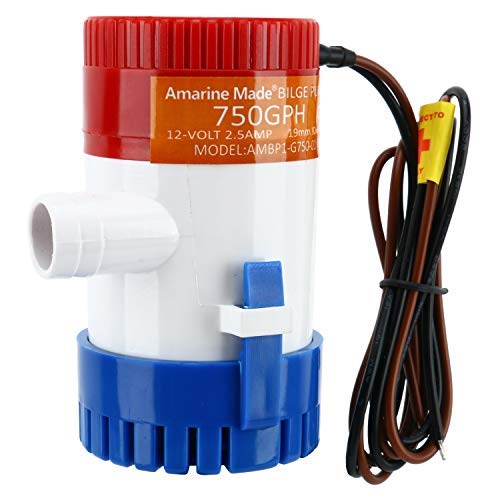
| Amarine Made 750 GPHBudget Champion | Ponds and small boats | 12.5 GPM | — | 0.18 kg | Amazon |
| ISURE MARINE 1200 GPH | Hands-off auto pumping | 1200 GPH | 2.5 M | 0.55 kg | Amazon |
| SEAFLO 05 Series 800 GPH | Angled livewell aeration | 13.33 GPM | 8.85 FT | 1.3 lb | Amazon |
| Rule 500 GPH | Trusted compact reliability | 8.33 GPM | — | 12.8 oz | Amazon |
| Whale High Flow | Diesel and freshwater transfer | 4 GPM | — | 2.4 oz | Amazon |
| ANTARESWORLD 2 GPM | Compact camp and RV sinks | 2.5 GPM | 5.5 M | 4.96 oz | Amazon |
| Superior Pump 91012 | Rapid emergency draining | 1380 GPH | 20 ft | 8.1 lb | Amazon |
In-Depth Reviews
1. Rule 02 Bilge Pump, 1500 GPH
Our pick — over 4.5★ from 800+ verified ratings; the strongest balance of quality and price.
The heavy hitter that clears a flooded bilge before you can even panic
If you need water gone now, this is the pump you want doing the work. The Rule 02 moves a massive 1500 gallons per hour — buyers report it clears water from a boat quickly — and that kind of flow is the difference between a damp floor and a swamped hull. Its 1500 GPH spec is built for real marine conditions, not light tidy-up duty.
Build quality is why this unit has such a loyal following. The pump uses plastic and stainless steel materials, weighs 3.1 pounds, and the collective buyer experience says it is a reliable, easy-to-install unit that represents good value. One owner replaced a 20-year-old pump of the same model, a two-decade run that shows this brand’s durability. A 4.7-star rating across 800+ owners is a vote of confidence few pumps match.
Owners mention the one real quirk: the bottom outlet needs a hose and elbow to route upward, and some prefer a straight-up output instead. It is not a reason to skip, just something to plan for during installation. People replace it with the same brand for a reason — “you can’t beat Rule,” as the review pages sum it up.
The strong points
- Powerful 1500 GPH flow moves serious water fast
- Proven longevity — a 20-year lifespan reported by an owner
- Good value for the performance level
Installation notes
- Bottom outlet requires a hose and elbow to route upward
- Might be overkill flow for tiny boats
Your pick if: you run a larger boat and want flow you can trust in an emergency.
Think twice if: you only need a small backup and want a cheaper, lighter option.
2. SEAFLO 01 Series 500 GPH
A featherweight backup that hides in tight bilges until you need it
Keep the SEAFLO 01 Series as a spare or a livewell circulator because it fits where bigger pumps won’t: it weighs just 7.2 ounces and measures 3.57″L x 2.77″W x 4.25″H. It delivers a steady 8.33 gallons per minute (that is 500 gallons per hour), and customers note it is almost plug-and-play with Rule fittings, so it drops into many existing setups without modification.
What wins people over here is the installation story. The #1 praise is how easy it is to set up — one buyer connects it directly to the battery as a backup so it is ready the moment the fixed pump fails. The anti-airlock protection means it won’t get stuck with air in the impeller, a classic failure point for submersibles. It is also fully submersible, rated CE and RoHS certified, and built with a stainless steel shaft and moisture-tight seals for saltwater resistance.
SEAFLO backs this with a 4-year warranty, which is strong for a pump in this class. The honest caveat: it is not a high-volume pump, so do not expect big-boat flow rates — treat it as the dependable small unit it is. If you want a compact backup you can install and forget, this is tough to top for the money.
Why it wins: compact, saltwater-resistant, and simpler to wire than most — the classic reliable spare.
Grab it for: a backup bilge position or a small livewell.
Look elsewhere for: heavy pumping jobs where you need big flow.
3. Amarine Made 750 GPH
The featherweight all-rounder that costs little and does a lot
This is the value pick that handles the odd jobs without drama. The Amarine Made pump pushes 12.5 gallons per minute — that is 750 GPH — from a body that weighs just 0.18 kg and slips into tight corners. Its 19mm outlet keeps plumbing simple, and the 12V design draws low current while still moving enough water for a leaky lake boat, a pond, or a bait tank.
What buyers rave about is how well it works as a replacement part. “Exactly what I needed,” is the recurring theme — a straightforward swap for an aging pump that gets a boat dry without fuss. The stainless steel shaft and thermoplastic body are built to shrug off saltwater corrosion, and the water-cooled motor keeps it from overheating during long runs. It is fully submersible with a corrosion-resistant ABS housing, so you can drop it in and forget it.
Being the budget-friendly option, it skips some premium extras. There’s no built-in float switch, so you’ll need to control it manually or add your own. For simple jobs on boats, RVs, pools, and fountains, this gets the job done reliably — buyers confirm it works as expected for a great price.
What it nails
- Very light at just 0.18 kg
- Solid 12.5 GPM flow for ponds and small boats
- Corrosion-resistant build for saltwater use
What’s missing
- No built-in float switch for automation
- Not a high-volume pump for big hulls
Reach for it if: you want an affordable, easy swap for a pond or small boat.
Pass it by if: you need automatic operation or serious flow.
4. ISURE MARINE 1200 GPH Automatic

Set it in the bilge and let the float do the thinking for you
This ISURE MARINE pump works hands-free thanks to its built-in float switch (a sensor that turns the pump on when water rises and off when it is gone) — no separate switch to wire or mount. It pumps a strong 1200 GPH and lifts water up to 2.5 meters, so it handles a slow leak by itself. Owners love that an old fishing boat seeping water overnight drains itself in seconds.
The motor runs water-cooled for a long life, with moisture-tight seals, an anti-airlock design, and a stainless steel shaft inside a tough thermoplastic body. At 0.55 kg and 6.1″L x 3.54″W x 4.53″H, it is bigger than the tiny backups — that’s the trade-off for holding the auto switch and the higher flow. It draws 3.5A at 12V, so make sure your wiring can handle that draw.
Here’s the honest part: reliability gets mixed reviews. While many say it works well and moves water fast, a few report the auto mode stopped working and the pump didn’t last past 5 months. That makes it a better fit for boats where you check on it regularly, not a mission-critical unit on a boat you rarely visit.
the balance: automatic protection against slow leaks with strong flow — if you accept that the float switch may occasionally need attention.
Choose it for: a leaky boat that needs self-starting protection.
Be cautious if: you need a unit that must fire every single time without fail.
5. SEAFLO 05 Series 800 GPH Angled

The angled pump that fits sideways spaces and keeps bait kicking
Anglers, this is your pump. The SEAFLO 05 Series moves 13.33 gallons per minute (800 GPH) with a 90-degree angled design that mounts flush against a hull side or in a tight transom compartment where a straight pump won’t fit. It’s built to keep livewells circulating so your bait stays lively — a job owners say it does with plenty of water pressure.
The standout feature is maintenance. A push-button release lets you detach the motor cartridge for cleaning without tools — a big deal when you’re dealing with fish slime and scale buildup. The water-cooled motor runs quiet and vibration-free, and the corrosion-resistant ABS housing with fiberglass-reinforced nylon handles both fresh and saltwater. It draws 4.0A at 12V and has a max head of 8.85 feet, which is plenty for a deck-mounted livewell.
Quality is the #1 reason buyers pick this — 85 owners call it out as a strong point. That said, some reviewers point out durability issues, with a few mentioning failure after 8 hours of use, and there are notes about the intake thread being a bit sensitive. For a livewell or baitwell on a fishing boat, this angled design is a smart, specialized choice.
Angler perks
- 90-degree angle fits tight hull-side spots
- Tool-free motor removal for easy cleaning
- Water-cooled motor runs quiet and cool
The trade-offs
- Some units reported failing early
- Intake thread can be finicky to seal
It’s for you if: you need a livewell pump that fits an angled mount.
Look past it if: you want a simple straight bilge pump instead.
6. Rule 25DA 500 GPH Standard
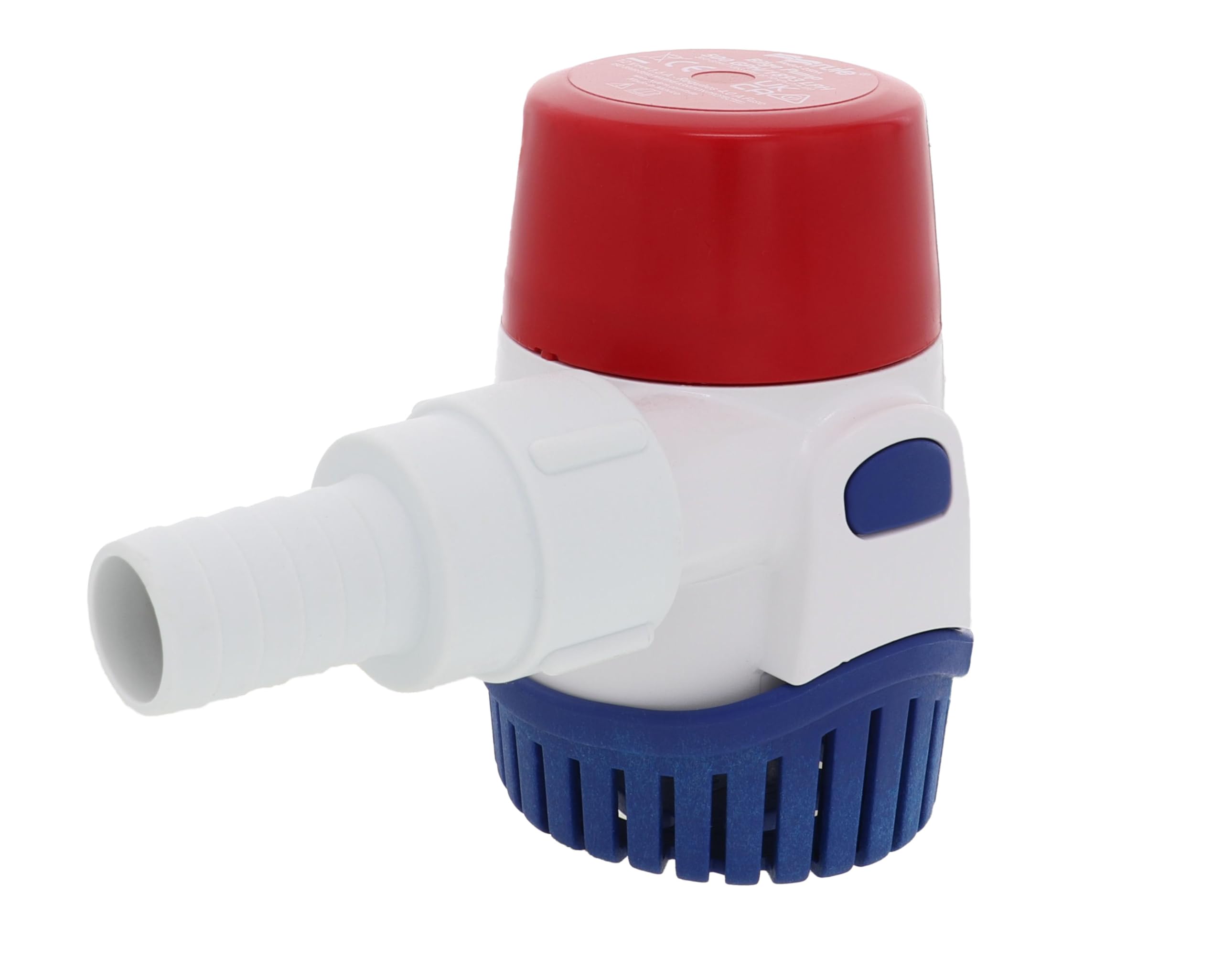
The small Rule that outlasts its rivals in continuous duty
This is the pint-sized Rule that punches above its weight. It moves 8.33 gallons per minute (500 GPH) from a body weighing just 12.8 ounces, yet it brings the engineering that makes Rule famous. The built-in thermal cut-off guards against overheating, hidden air vents prevent air lock issues, and built-in check valves stop water from flowing back in — three features that keep it running reliably when you need it most.
The durability story here is remarkable. One owner ran it continuously in a landscape fountain, outlasting other small bilge pumps by 2-10x — surviving 9-10 months versus 3.5 months for the next best. The reasons are superior bearings, motors, and cooling. It uses a stainless steel build with threaded 3/4″ discharge ports, so setup is low-maintenance.
Owners call it “rugged, easy to install, made with quality materials,” and note it keeps up with incoming water even in rough waves on a canoe. The one negative thread is mixed durability — some report it lasted only one summer, so it’s not bulletproof in every installation. For a compact livewell on a pontoon or a solar-powered canoe, this is a quality, reliable choice.
The takeaway: a small pump with big-brand engineering — thermal protection and check valves make it a standout for continuous use.
Pick it for: continuous-duty jobs where others burn out.
skip it if: you need more than 500 GPH of flow.
7. Whale High Flow Submersible Pump
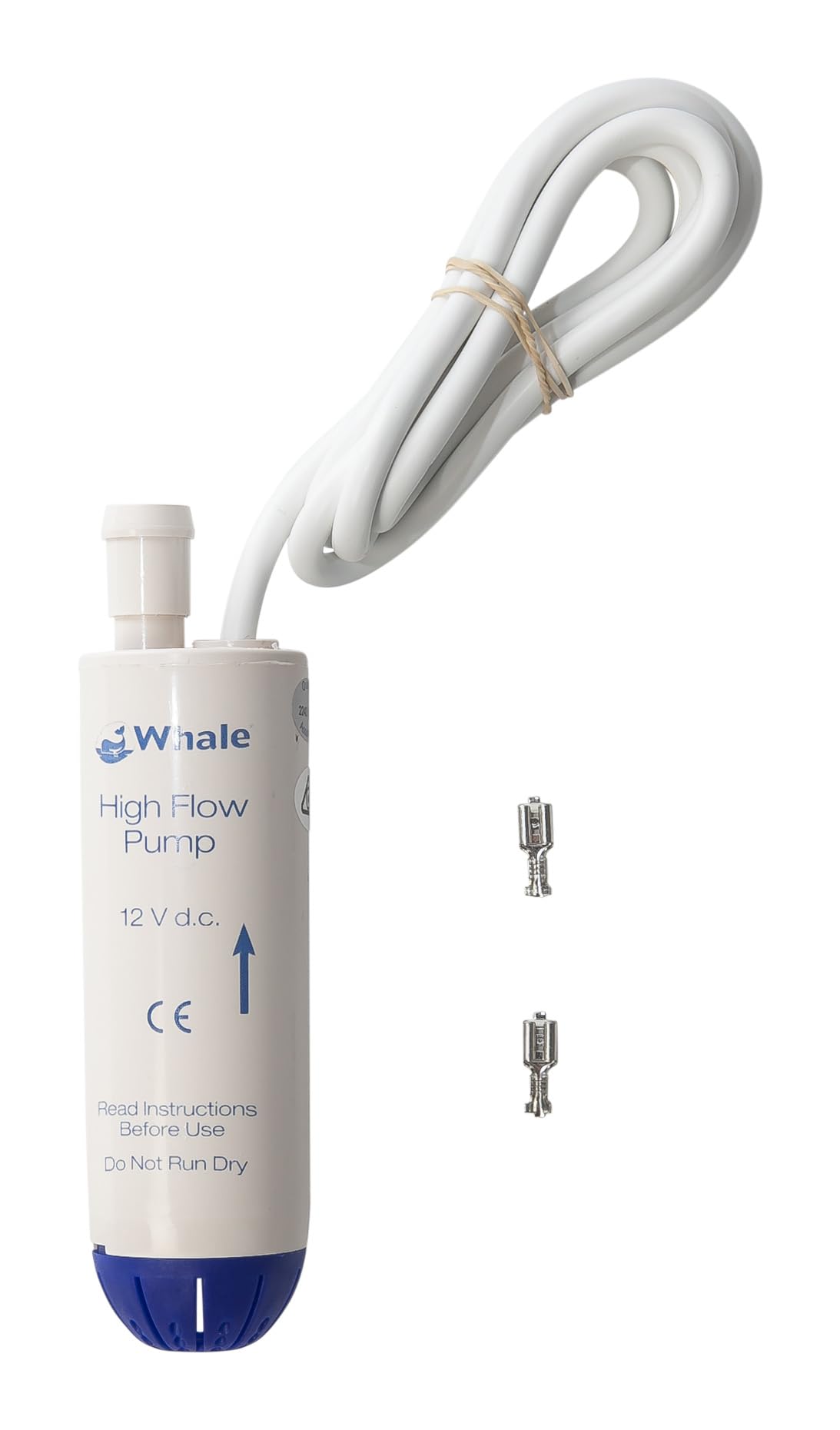
The slim diesel-safe sipper for tanks, caravans, and camper vans
Most bilge pumps are strictly for water — this Whale is different. It handles freshwater, diesel, or kerosene, making it the specialist for transferring fuel or water in a caravan, campervan, or marine tank. Its slim profile drops straight into tight tanks, and the 4 GPM flow is enough for everyday use. Owners love that it works even in the low spots of a bilge that other pumps can’t reach.
The 12V DC design is certified CE, meets ISO 8849, ISO 15083, and ISO 8846 standards, and is IP67 rated — meaning it’s fully protected against dust and immersion in water up to 1 meter. It works with pressure or microswitch systems, which gives you flexibility on how you control it. At just 2.4 ounces, it’s remarkably light, and buyers describe it as quiet with strong performance — some even note it beats the Comet brand they previously used.
Versatility is the theme: one owner runs it off a LiFePO4 battery for a camping shower and dishes from 20L jerry cans, while another used it to drain a bathtub daily for 2 months with no failures. The catch is that the impeller is tricky to clean, so give it a rinse if you’re switching between diesel and water. It’s a niche pick, but there’s nothing else like it on this list.
Why it stands out
- Handles freshwater, diesel, and kerosene
- Slim profile fits tight tank spaces
- IP67 rated for full submersion
Limits to know
- Modest 4 GPM flow rate
- Impeller is tricky to clean
It suits: campervan and caravan owners moving fuel or water.
It doesn’t suit: anyone needing high-volume water evacuation.
8. ANTARESWORLD 12V Submersible Pump

A German-made whisper-quiet pump that drops into narrow jugs
Van lifers and campers, this pump was built for you. The ANTARESWORLD unit is tiny — just 1.5″L x 1.29″W x 4.14″H and 4.96 ounces — yet it pushes water up 5.5 meters (18 feet) at a rate of 10 liters per minute (about 2 GPM). It fits through the small mouth of a 5-gallon jug, which makes it the go-to for running water in a camper van, boat sink, or off-grid shower setup.
The quality is the standout: buyers call it top-quality German engineering that runs much quieter than non-submersible pressure pumps. It’s designed to work with microswitch 12V faucets, so it pairs easily with a push-button or faucet setup. You can even power it from a small 12V battery or solar panel thanks to its low draw of just 15-24 watts. One owner fills a 6-gallon jug in under 5 minutes with this little workhorse.
What impresses owners most is its compact strength — it powers a full vehicle water system for a kitchen, bath, and shower. The catch: it runs best in short bursts, rated for up to 30 minutes of runtime with 10-20 minutes rest for optimal longevity. It’s not designed to run dry or for heavy continuous pumping, but for camp sinks and small tanks, it’s a purpose-built gem.
The real appeal: matchbox size with real pressure — quiet enough for a camper, smart enough for a microswitch system.
Take it if: you’re outfitting a camper van or tiny boat sink.
Leave it if: you need bilge-style flow, not a microswitch supply pump.
9. Superior Pump 91012 12V Utility
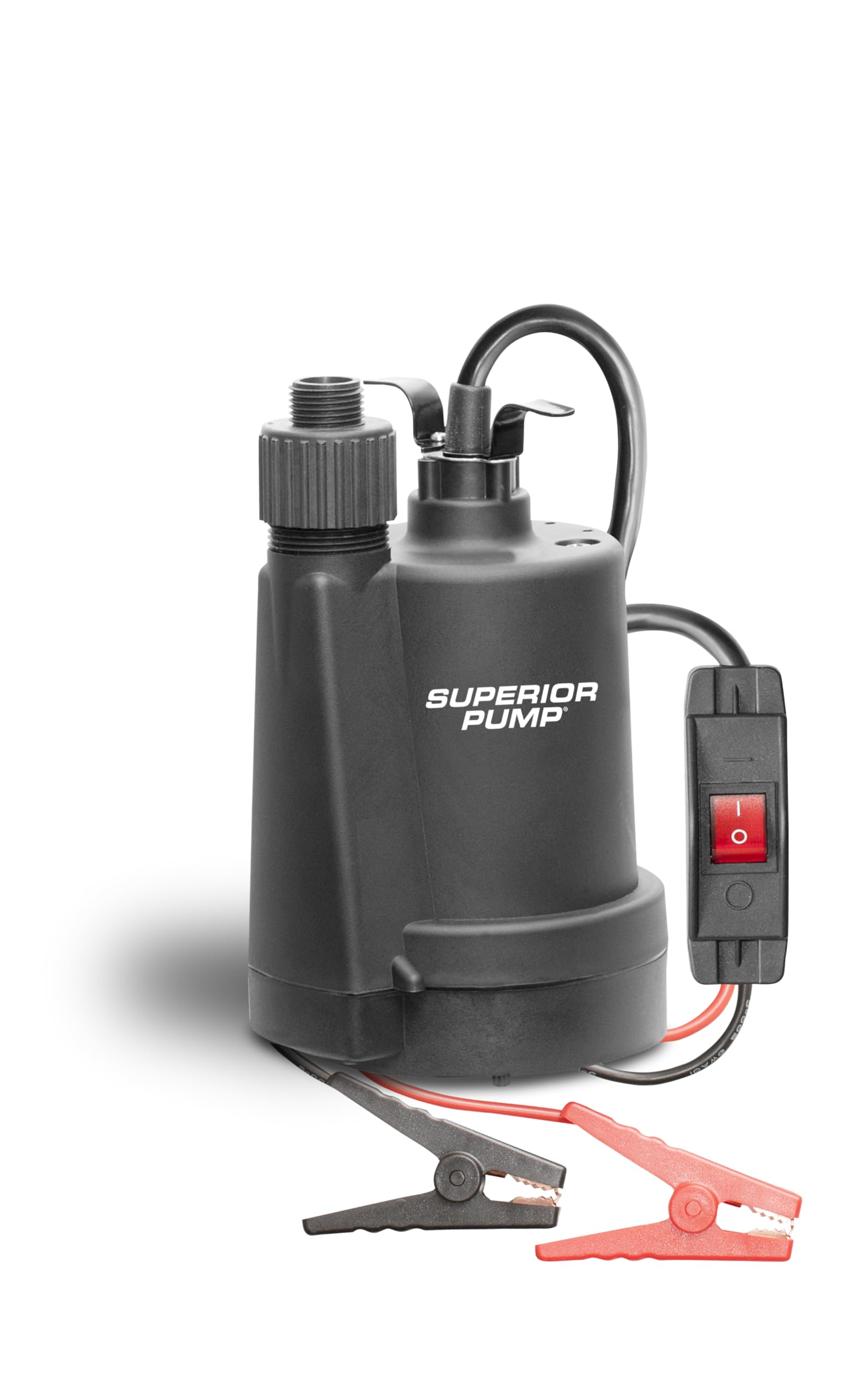
A truck battery-powered flood fighter with a 20-foot reach
When you need to drain water far from any shore power, this Superior Pump is your mobile answer. It moves up to 1380 gallons per hour and pumps water up to 20 vertical feet — so a flooded construction site, a 350-gallon tote, or a low spot in a field is no match for it. The included 20-foot cord with on/off switch and battery alligator clips means you clip it to any 12V vehicle battery and start pumping.
The design is built for raw utility. The 1-1/4 inch discharge moves high volumes fast, and it includes a 3/4 inch garden hose adapter so you can send water wherever a standard hose reaches. The oil-free motor won’t harm aquatic life, making it safer around ponds. At 8.1 pounds, it’s the heavyweight here — not a pump you hide in a bilge, but one you throw in a truck bed for serious drainage jobs.
One owner measured over 20 gallons per minute through a 1-inch hose at a 3-foot lift. Here’s the honest trade-off: durability is a real concern, with multiple owners reporting failures after a dozen uses. The good news is the manufacturer’s customer service gets strong marks, sending replacements quickly when units fail. For occasional heavy-duty draining with vehicle power, this is a beast — just keep the warranty card handy.
Heavy hitter specs
- High 1380 GPH flow for fast draining
- 20-foot cord clips right to a battery
- Lifts water up to 20 vertical feet
Know before buying
- Durability is the risk — some fail early
- Heavy at 8.1 pounds for transport
Bring it along for: off-grid draining jobs where a vehicle is nearby.
Rethink it if: you need a permanent, always-on mount.
Understanding the Specs
Flow Rate (GPH vs GPM)
This is the one spec that decides if the pump keeps up. You’ll see it written two ways: gallons per hour (GPH) and gallons per minute (GPM). To compare apples to apples, remember that 1 GPM equals 60 GPH, so an 8.33 GPM pump moves about 500 GPH. For a slow leak, 500 GPH is plenty; for an emergency, you want the 1200-1500 GPH range to clear water before it rises.
Max Head / Max Lift
The “max head” is the tallest vertical distance the pump can push water upward — not how far it can throw water sideways. A pump rated at 9 feet of head will struggle on a long vertical run in a deep bilge, so measure your actual lift height before buying. Flow drops as you approach the max head, so it’s always safer to buy a pump with more head than you think you need.
Auto Float Switch vs Manual
An automatic bilge pump uses a float switch to sense rising water and turn itself on with no action from you. This means your boat stays dry even when you’re away, and the pump shuts off when the water is gone. A manual pump requires you to flip a switch, which means you need to be there when the leak happens — and it won’t protect a boat sitting at the dock.
Anti-Airlock Protection
Air trapped inside the pump chamber can stop it from priming, which leaves you with a pump that hums but moves no water. Anti-airlock vents or fins let that trapped air escape, so the pump starts moving water reliably every time. On an automatic pump, this is crucial — no one is standing over it to restart it if it airlocks.
FAQ
What size pump do I need for a small fishing boat?
Will a 12V pump work with my boat’s battery?
What is the difference between GPH and GPM flow ratings?
What is a float switch and do I need one?
Can a bilge pump handle saltwater without corroding?
Why does my pump stop working when there’s an air bubble?
How long can a submersible pump run continuously?
Is a 12V pump safe to run inside a water tank?
What outlet size do I need to connect the pump to a hose?
Can I use a bilge pump for a pond or fountain?
Final Thoughts: The Verdict
For most boat owners, the 12v submersible water pump winner is the Rule 1500 GPH because it combines the highest flow with proven two-decade longevity that owners trust. If you want a compact, saltwater-resistant backup that’s easy to rig, grab the SEAFLO 01 Series. And for off-grid campers and van lifers, the German-made ANTARESWORLD is the quiet, compact pick that turns a 5-gallon jug into running water.
How We Picked
We do not accept paid placement. Every pick is matched to a real buyer and a real use-case; we do not hands-on test units.
Sources & Methodology
Specifications: manufacturer listings and product documentation. Review insights: verified customer reviews, as of September 2026. Pricing: not shown on this page (it changes often); check the current price via the retailer link.
As an Amazon Associate, KitchPrep earns from qualifying purchases. This does not affect which products we feature.
Related Guides
