
Specs are compiled from manufacturer listings and verified buyer reviews and can change over time — please confirm the key details on the product page before buying.
If your trolling motor, camper, or solar setup keeps dying after two seasons, a lithium iron phosphate (LiFePO4) pack — a lithium battery that lasts far more charge cycles than lead-acid — is the upgrade most buyers never go back from. The short answer: the Litime 200Ah Mini is the strongest overall pick here, and the smaller ECO-WORTHY 20Ah is the smartest first purchase if you just need to run a fish finder or a fountain pump. Everything below tells you which one fits your boat, van, or off-grid shed — and why.
I’m Mohammad Maruf — the founder and writer behind KitchPrep. This guide is built by comparing the manufacturers’ published specifications and the patterns across verified customer reviews, so you get each pick’s real strengths and trade-offs instead of marketing spin.
You will see how amp-hours translate into real run time, why cell chemistry matters, and what separates a battery that handles cold nights from one that quits early. This breakdown of the best 12v solar battery covers capacity, weight, and cycle life side by side.
Our Picks at a Glance
How To Choose The Best 12V Solar Battery
Buying a 12-volt solar battery is really three decisions stacked together: how much power you need, what chemistry you want, and whether it physically fits where you plan to mount it. Get those right and everything else falls into place.
Start with amp-hours, not brand names
Amp-hours (Ah) tell you how much energy the battery stores. A 100Ah pack holds more than five times the energy of a 20Ah pack, so a motor that drains a small battery in an hour can run for a full day on a larger one. Match the number to your heaviest load, then round up.
Chemistry decides weight and lifespan
Lithium iron phosphate packs in this group weigh a fraction of a comparably rated lead-acid battery, which matters when you carry the battery by hand onto a boat or into a camper. They also handle far more charge cycles before they fade.
Check the BMS and cold protection
A BMS (battery management system) is the built-in circuit that shuts the battery off if it is overcharged, over-discharged, or running too hot. Some picks here also stop charging below freezing, which prevents cold-weather damage over winter.
Quick Comparison
| Model | Best For | Capacity | Weight | Chemistry | Amazon |
|---|---|---|---|---|---|
| Litime 12V 200Ah Mini★ Best Overall | Long trolling runs and big RV banks | 200Ah | 28 lb | LiFePO4 | Amazon |
| ECO-WORTHY 12V 20AhBest Value | Small solar projects and fish finders | 20Ah | 5.7 lb | LiFePO4 | Amazon |
| GOLDENMATE 12V 20Ah (2 Packs)Best for Outdoors | Wet or dusty outdoor installs | 20Ah x2 | 5.4 kg | LiFePO4 | Amazon |
| Rvpozwer 12V 100Ah Group 31 | Budget 100Ah RV replacement | 100Ah | 23 lb | LiFePO4 | Amazon |
| Mighty Max 12V 100Ah | Set-and-forget solar sheds | 100Ah | 28 lb | Sealed Lead Acid | Amazon |
| WEIZE 12V 100Ah | Whole-home backup banks | 100Ah | 60 lb | Lead Acid / AGM | Amazon |
| Yeagulch 12V 150Ah | Compact high-capacity solar storage | 150Ah | 41 lb | LiFePO4 | Amazon |
| Litime 12V 100Ah Group 24 | Phone-monitored camper power | 100Ah | 10.05 kg | LiFePO4 | Amazon |
In‑Depth Reviews
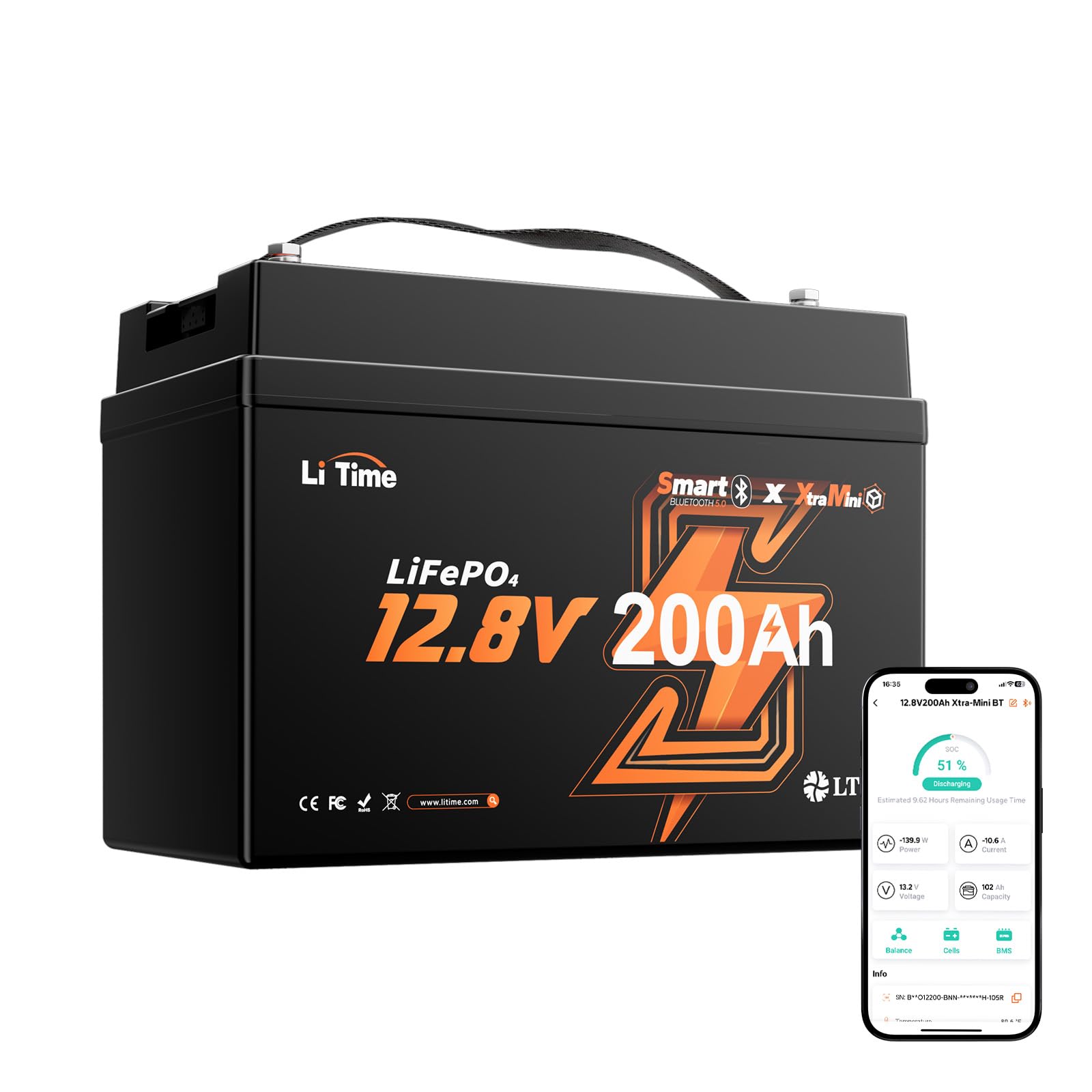
1. Litime 12V 200Ah Mini Trolling Motors LiFePO4 Lithium Battery for RV
Our pick — over 4.5★ from 600+ verified ratings; the strongest balance of quality and price.
The featherweight powerhouse that keeps a trolling motor running through gusty afternoons.
Two hundred amp-hours is the number that makes this the pick to beat. In plain terms, that is ten times the stored energy of the 20Ah ECO-WORTHY pack on this list, so a motor or fridge that sips from a small battery can draw all day here. It is the first 200Ah lithium iron phosphate battery built to the Group 31+ footprint, a standard case size many boats and RVs already have a slot for.
What wins people over is how little it weighs for that capacity. At 28 pounds it is dramatically lighter than the lead-acid packs of similar power, and that matters because lighter means your boat sits higher, planes faster, and steers with less effort. Owners running two in series for a 24-volt trolling motor report roughly three-quarters charge left after four hours of fishing in 25mph gusts. If you ever need to move it by hand, you simply pick it up.
The Bluetooth 5.0 link pairs with the Litime app, so you can read state of charge and voltage from your phone instead of lifting a cover to check a meter. That removes the classic lithium worry of not knowing how much is left. The 200A BMS adds dust, water, and salt-spray protection along with the usual overcharge and short-circuit guards, and the low-temperature cutoff stops charging below 32°F to protect the cells through winter.
Where this battery pulls ahead
- 200Ah of storage at just 28 pounds — a fraction of the weight of an equivalent lead-acid pack
- Bluetooth 5.0 with the Litime app for reading charge level and running system checks from your phone
- Built to the Group 31+ case size, so it drops into many existing marine and RV battery boxes
- Smart low-temperature cutoff stops charging below 32°F and discharging below -4°F
What to plan around
- This is an energy storage battery — it is not made for starting engines, golf carts, or jacks
- You need a lithium-activation or MPPT charger to wake the Bluetooth on first use
- Its 200A BMS and marine sealing suit bigger installs, so it is more battery than a tiny solar project needs
Reach for this one if: you want the most capacity per pound for a trolling motor, RV, or home backup bank and you like reading charge level from your phone.
Look elsewhere if: your project is a small fish finder or a single fountain pump — a 20Ah pack is lighter on your wallet and still plenty.
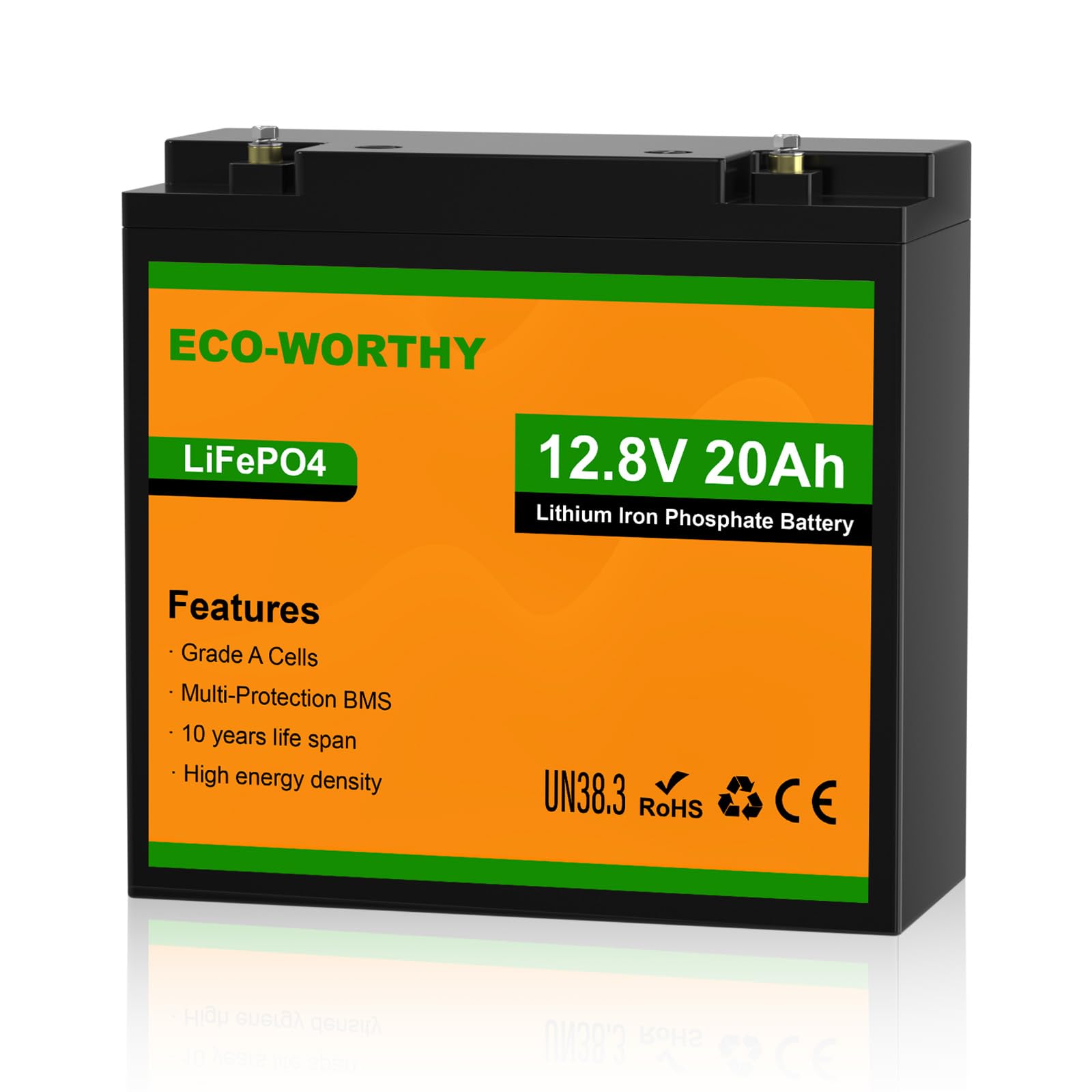
2. ECO-WORTHY 12V 20Ah LiFePO4 Lithium Battery, 4000+ Deep Cycle Rechargeable Battery with BMS for Fish Finder, Ham Radio, Solar System, Outdoor Camping
The tiny 5.7-pounder that quietly outruns the lead-acid bricks it replaces.
This is the entry point for anyone whose power needs are small: a fish finder on a kayak, a ham radio, a set of LED lights, or a fountain pump that runs all day in the yard. At 20 amp-hours it stores a modest amount of energy, and the whole thing weighs 5.7 pounds, which is why it slips into a small bag and mounts in almost any position. Compare that to the 28-pound Litime 200Ah, which is 4.9 times heavier — the trade-off is capacity, not convenience.
The chemistry is lithium iron phosphate, the rechargeable kind designed to be drained and refilled rather than kept topped up like a starting battery. A built-in BMS (the protection board that guards against overcharge, over-discharge, and short circuits) keeps the cells balanced, and the maker rates it for more than 3000 deep cycles.
The real limit is capacity. Twenty amp-hours will not carry a big trolling motor or a household fridge for long, and one owner did report inconsistent power in a tennis-ball machine after about two years. It is also not for starting a motorcycle. For anything small and steady, though, it is the least fussy battery in this group, and you can wire up to four of them together in series or parallel when you outgrow a single unit.
Who it fits: first-time solar buyers, kayak anglers, and campers who want reliable small-battery power without a heavy case to lug around.
The honest catch: 20Ah fills light loads and little else — if your plan includes a large motor or a full cabin, pick a higher amp-hour pack and skip this one.
A smart starting point: buy this if your load is a fish finder, radio, lights, or a small pump and you value shaving off every ounce.
Not for you if: you need a battery that starts something or runs a heavy trolling motor all day.
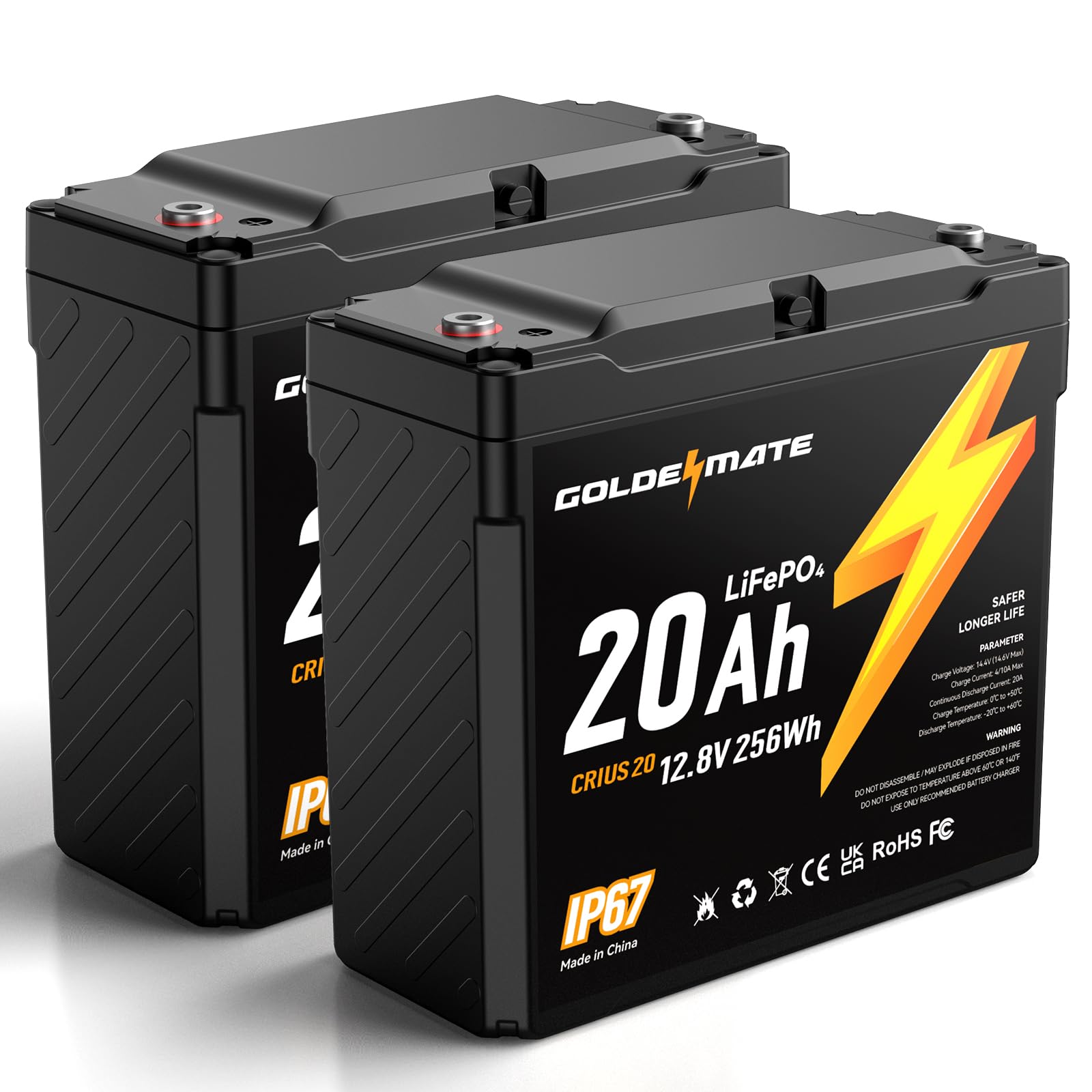
3. GOLDENMATE 12V 20Ah Lithium LiFePO4 Battery (2 Packs), IP67 Waterproof
Two sealed packs that shrug off rain, dust, and a full day in the field.
This pair is the one in the group you can leave outdoors without worry, thanks to its IP67 rating — a seal rating meaning the case keeps out dust and survives a short dunk in water. That makes it the pick for a boat deck or under a tarp. You get two 20Ah packs, each 5.4 kilograms, so you can split the load between two spots or run them side by side. Against the single ECO-WORTHY 20Ah, the appeal is redundancy plus weather sealing rather than raw capacity.
Under the case sits a 20A BMS that watches for overcharge, over-discharge, over-current, and short circuits, and the cells are rated for more than 5,000 charge cycles. A low self-discharge rate means you can park one for up to a year and expect it to still hold a useful charge. The sealed build and the cycle rating line up with what serious buyers want for a marine or off-grid location that is hard to reach and even harder to service.
Real-world use backs up the outdoor claim. Owners running a pair in parallel for a solar webcam and LED setup drawing 16Ah a day found a 200W panel refilled them in about two hours. Another pair replaced an AGM bank that had needed three swaps in eight years. The trade-off is that two 20Ah packs still add up to modest capacity, and one mobility-scooter build needed wiring extensions because of where the posts sit. It is a fit-your-setup situation, not a defect.
Best for wet, dusty, out-of-the-way installs: boats, docks, remote cameras, and solar jobs where the battery has to survive the weather.
Think twice if: you need high amp-hours in one box — this is two smaller sealed packs, not a single high-capacity unit.
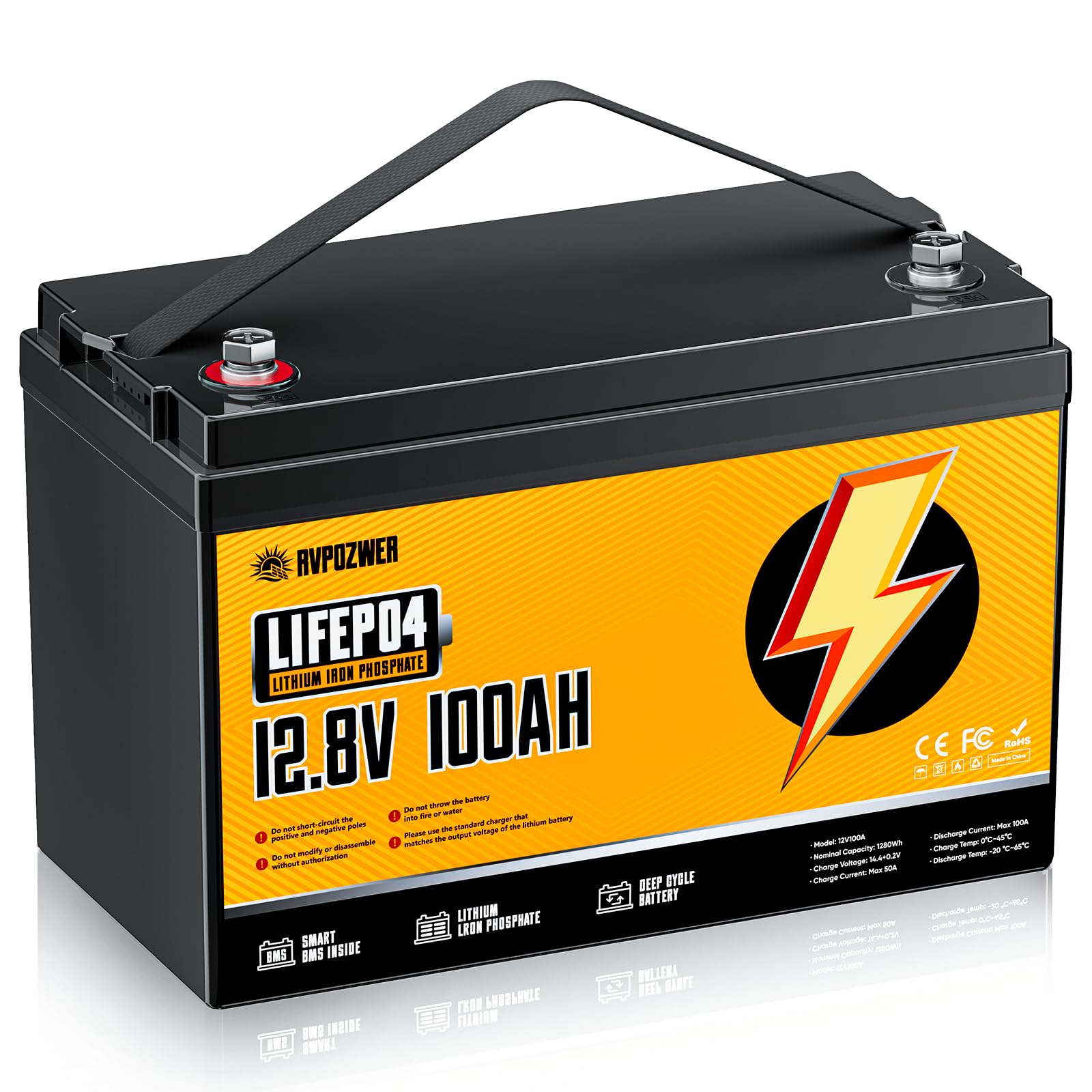
4. 12V 100Ah LiFePO4 Lithium Battery Group 31 with Built-in 100A BMS
A mid-capacity lithium pack priced to tempt anyone still weighing lead-acid.
If you want the jump to lithium without paying full premium, this 100Ah Group 31 pack is the value play. The 100A BMS and built-in handle make daily use straightforward.
Run time is the story here. Buyers describe installing one in an RV, hooking it up easily, and watching it hold a strong charge trip after trip, with enough stored power to run a sump-pump backup through an inverter. For an entry lithium battery, that is exactly the quiet dependability buyers are after, and the price sits well below the premium lithium picks in this group.
Where this differs from the Litime and Yeagulch packs is honestly in the finer points. There is no Bluetooth here, so no phone readout of state of charge, and the 120A BMS (battery management system — the chip that guards against overcharge and over-discharge) is smaller than the beefier units up the list. A handful of owners also report a unit arriving that would not wake or hold a full charge, and a separate review concerns a different product from the same seller, so it pays to test your battery within the return window. Most owners are happy; a small number are not, which is exactly what a lower star score tells you.
The appeal: real lithium capacity at a near-budget price, with the light weight and cycle life that lead-acid cannot match.
The compromise: no Bluetooth monitoring and a smaller BMS — fine for straightforward solar and RV use, less so if you want to watch every cell from your phone.
Worth it for: budget-minded buyers stepping up from lead-acid into a 100Ah lithium pack for a camper or cabin.
Skip the gamble if: you need app monitoring and you cannot easily return a heavy parcel — pay up for a Bluetooth model instead.
5. Mighty Max Battery 12V 100AH Battery for Solar Wind DEEP Cycle VRLA 12V 24V 48V

The old-guard sealed battery that just keeps powering sheds and trolling motors.
Sealed lead acid is the chemistry most buyers already understand, and this 100Ah Group 27 pack is the set-and-forget example of it. It is spill-proof and maintenance-free, so there is no water to top up, and it can be mounted in any position, which matters in a cramped battery locker. You get a full year of warranty coverage on a battery that has been a fixture in off-grid setups for a long time.
Performance is the aspect owners lean on hardest. Buyers report running a 44-pound trolling motor for eight-plus hours on a 1700-acre lake with roughly a third of charge left. They also report powering a 32-inch TV with a Roku on a 500W inverter for four hours with barely any charge drop. It also slots into house-battery duty in a camper van, showing a fuller reading after a night of lights and electronics than the old battery did.
The honest caveat is lifespan and weight. This is a lead-acid pack at 28 pounds, and battery life is the one thing owners are divided on — some get years of service, others see a pack fade faster, so how you treat it matters. Discharging gently and recharging promptly is the best way to get the most out of it. Unlike the lithium picks above, it will not outlast them by cycle count, but it is simple, proven, and easy to live with.
Simple and sturdy: a maintenance-free sealed battery that suits solar sheds, backup lighting, and small trolling motors without any special charger.
The real limit: lead-acid is heavier and shorter-lived than lithium, and it wants gentle discharge to last — treat it well and it repays you.
A familiar choice: perfect if you want a no-fuss drop-in for an existing lead-acid setup and do not need Bluetooth or app monitoring.
Look elsewhere if: you want maximum cycle life and minimum weight.
6. WEIZE 12V 100Ah Deep Cycle Battery, Group Size 31 for RV, Solar, Camping, Cabin, Marine and Off-Grid System

The heavy sealed battery you wire into a bank and forget about.
This is a 100Ah sealed lead-acid AGM pack (AGM means the acid is soaked into glass mats, so it cannot spill), and it is built for the job of sitting in one place and feeding a bank of stored energy. At 60 pounds it is the heaviest single battery in this group — far heavier than the 23-pound Rvpozwer lithium and miles beyond the 5.7-pound ECO-WORTHY — but that weight is the point: it is meant to be installed, wired, and left alone, not carried around. It replaces common part numbers like UB121000 and the Renogy 100 amp hour.
It can deliver a hard pull when needed and will not drain itself flat while sitting idle, thanks to a 1150A max discharge current and a 3% self-discharge rate (the share of charge it loses per month just sitting). Owners run four in parallel with an inverter as a home backup bank for lights, fans, and garage openers during outages, and others use a pair for two years of off-grid RV life on solar. The maintenance-free, spill-proof design means no distilled water and no fuss, which suits anyone who will not check a battery regularly.
The trade-off is weight and how it compares to lithium. Owners do flag that it is very heavy — fine when it is bolted down, awkward when you have to move it. And while it is a strong lead-acid value, it will not match a lithium pack on cycle life or weight. If you are building a stationary bank and value the lower upfront cost, that math works; if you carry your battery in and out, the lighter picks above are the better fit.
What it does best
- 100Ah of sealed AGM storage rated to replace UB121000 and Renogy 100Ah packs
- 1150A max discharge current for a hard pull when a load kicks on
- 3% self-discharge rate keeps it charged and ready during long idle stretches
- Maintenance-free, spill-proof build with no water to add
Weigh before you buy
- 60 pounds makes it a permanent install, not a portable one
- Lead-acid cycle life trails the lithium options here
- You need an inverter to turn its 12V output into household power
Built for banks: the right call if you are wiring multiple batteries into a stationary solar or backup system and want a low-maintenance workhorse.
Wrong fit if: you need to carry your battery to a boat or campsite by hand.
7. Upgrade 12V 150Ah LiFePO4 Lithium Battery 100A BMS 15000+ Deep Cycle
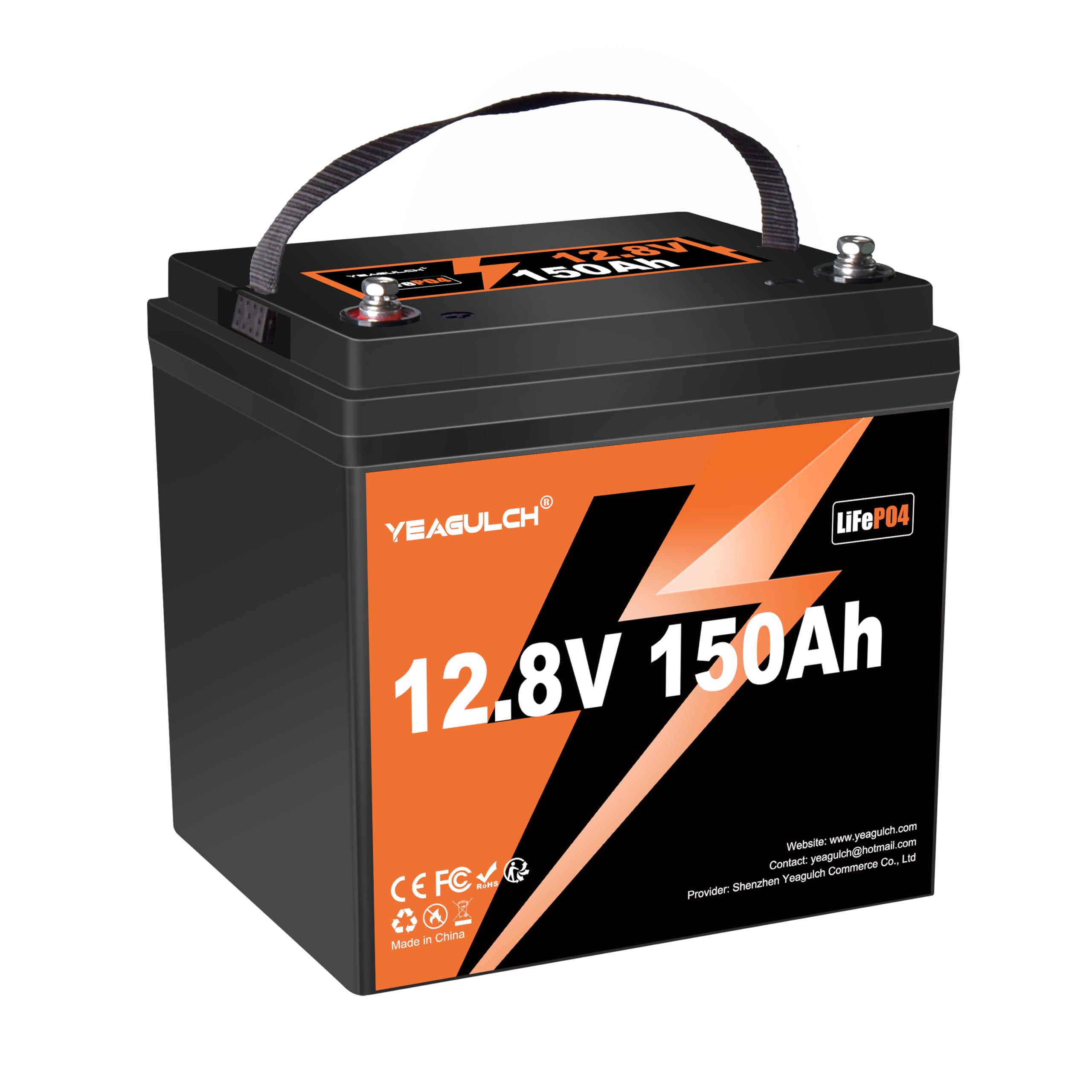
A compact 150Ah lithium pack that fits where a bigger battery never could.
Fifty percent more storage than a 100Ah pack, packed into a case just 10.01 by 7.68 by 9.84 inches in size and weighing 41 pounds. That combination is what makes it useful: the 150Ah capacity gives you a longer run for solar storage or a marine setup at 1290Wh, while the tight footprint slides into spaces a bulky battery would not. A 100A BMS watches overcharge, over-discharge, short circuits, and overheating.
Cold protection is a genuine plus for anyone storing a battery outdoors. Charging cuts off at 32°F and resumes when it warms up, which keeps the cells from taking cold damage through winter, while high-temperature charging halts at 149°F for safety. The cells are rated for 15,000 cycles at 60% depth of discharge, and you can stack up to four in series for a 51.2V system or four in parallel for 600Ah. Buyers running a solar station report a full charge in about half a day and full power still holding after six months.
Two things are worth knowing before you buy. This pack has no Bluetooth, so you monitor charge with a shunt or your charge controller rather than your phone. It is also not meant to start a gas engine or run golf carts and jacks. Some owners note it lacks the self-heating that the pricier lithium packs add for winter use, so a 100Ah Litime with built-in heating may suit a deep-winter install better even though it stores less.
Great for: solar storage and marine installs where 150Ah in a small case beats a bigger 100Ah battery that will not fit.
Add a monitor if: you want phone-level tracking — this pack has none, so plan on a shunt or controller readout.
8. Litime 12V 100Ah Group 24 LiFePO4 Lithium Battery for RV Solar Van Marine
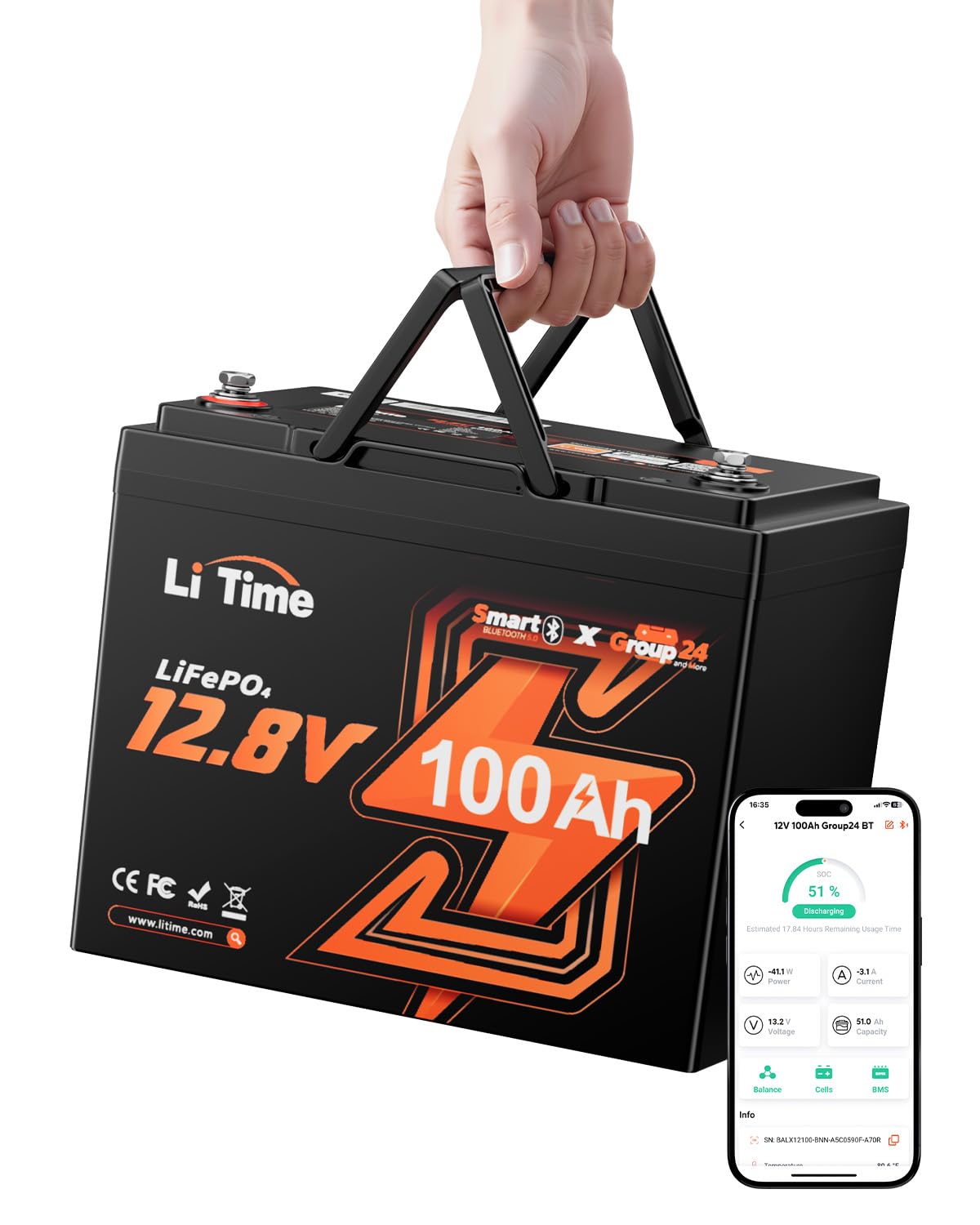
Phone-in-your-pocket battery monitoring with winter-proof charge protection.
If you hate guessing how much charge is left, this is the pack for you. The Bluetooth link shows state of charge, voltage, and charging status on your phone, so there is no crawling under a seat or into a storage bay to check a meter. It carries 100Ah in a case that fits Group 24, 27, and 31 boxes, so it swaps into most standard battery compartments, and at 21.9 pounds it is a fraction of a lead-acid pack’s weight.
The cold protection here works the same way as on the bigger Litime packs: charging stops below 32°F and discharging below -4°F, keeping the cells safe through freezing nights. An advanced 100A BMS guards against overcharging, over-discharging, overheating, and short circuits, and the cells are rated for up to 15,000 deep cycles. Owners powering a heater, fridge, and TV off one of these report it holding a strong charge through winter and outlasting the lead cells it replaced.
what separates it from the cheaper 100Ah Rvpozwer is the combination of app monitoring and the universal Group 24 fit (a standard battery size that drops into most camper and van trays), which makes installation easier in a camper or van. Buyers also use it as a trolling battery for multi-day fishing trips and for a sump-pump backup, both of which lean on that real-time charge readout. The catch is simply cost — this sits in the premium tier, so if you do not need Bluetooth, a plainer 100Ah lithium pack costs less.
Why it stands out: one of the few 100Ah packs that combines phone monitoring, a universal fit, and cold-weather protection in a single case.
Note if budget rules: the app is a genuine convenience, not a necessity — drop to a non-Bluetooth 100Ah pack and you give up the readout but keep the capacity.
Pick this for: camper, van, and boat owners who want to glance at charge level instead of lifting a lid.
Overkill if: you never check your battery and just want the lowest-cost lithium 100Ah.
Understanding the Specs
Amp-hours (Ah): how long the battery runs
Amp-hours measure stored energy. A 20Ah pack holds a small reserve suited to a fish finder or lights, while a 200Ah pack stores enough to run a motor or fridge for hours. If your device draws roughly one amp, a 100Ah battery tends to run about 100 hours at that load. Match amp-hours to your heaviest use, then leave headroom.
BMS: the built-in safety board
A BMS, or battery management system, is the circuit inside the battery that watches for overcharge, over-discharge, overheating, and short circuits, then shuts things down before damage happens. A higher amp rating on the BMS means the battery can deliver a bigger burst of power. Some models also add low-temperature cutoff to stop charging below freezing.
Chemistry: lithium compared to lead acid
Lithium iron phosphate packs are much lighter and rated for far more charge cycles than sealed lead acid. Lead-acid is heavier and cheaper up front but fades sooner. In this group, the lithium picks commonly weigh 23 to 41 pounds, while the lead-acid packs run 28 to 60 pounds for similar capacity.
Case size and expandability
Group 24, 27, and 31 are standard case sizes. Matching one means the battery drops into your existing box. Many packs here can also be wired in series for higher voltage or in parallel for more capacity, so you can grow a solar bank by adding identical batteries later.
FAQ
How many amp-hours do I need to run a trolling motor all day?
Can I connect these batteries in series or parallel?
Will a 12V solar battery run my RV fridge?
What kind of charger do these batteries need?
Does cold weather damage a lithium solar battery?
How long will one of these batteries last?
Is a lithium battery worth the cost over lead acid?
Can I use a 12V solar battery to start an engine?
What does the BMS amp rating mean for my setup?
Do I need Bluetooth monitoring on my battery?
Final Thoughts: The Verdict
Of all the batteries here, the Litime 12V 200Ah Mini is the strongest overall pick because it pairs 200Ah of storage with a 28-pound body and app monitoring that make big-capacity power genuinely easy to live with — and it is the crowd favorite at 4.7 stars from 600+ owners. If your loads are small, grab the ECO-WORTHY 12V 20Ah and pocket the difference. And for a camper or van where you want to check charge from your phone, the Litime 12V 100Ah Group 24 fits the bill — a light, winter-safe pack that a whole class of owners keeps buying for exactly that reason.
How We Picked
We do not accept paid placement. Every pick is matched to a real buyer and a real use-case; we do not hands-on test units.
Sources & Methodology
Specifications: manufacturer listings and product documentation. Review insights: verified customer reviews, as of September 2026. Pricing: not shown on this page (it changes often); check the current price via the retailer link.
As an Amazon Associate, KitchPrep earns from qualifying purchases. This does not affect which products we feature.
Related Guides
