
Specs are compiled from manufacturer listings and verified buyer reviews and can change over time — please confirm the key details on the product page before buying.
You want a portable power station that actually runs your 12V gear — car fridges, dash cams, telescopes, CPAP machines, phone chargers during a blackout. The real answer lies in the DC output (the 12V cigarette-lighter port) and the battery capacity (measured in watt-hours, or Wh) behind it.
I’m Mohammad Maruf — the founder and writer behind KitchPrep. This guide is built by comparing the manufacturers’ published specifications and the patterns across verified customer reviews, so you get each pick’s real strengths and trade-offs instead of marketing spin.
These picks range from a pocketable 2.2-pound unit for weekend trips to a 25-pound home-backup powerhouse, so the 12v power station that fits your life depends on what you need to keep running.
Our Picks at a Glance

How To Choose The Best 12V Power Station
Before you buy, match the station’s output to the devices you actually own. A station that powers your phone may not start your car fridge, and one that runs a fridge may be overkill for a weekend of dash cam charging.
Check the 12V DC Port First
Not every station has a true 12V output. Some only offer USB and AC. For gear like dash cams, telescopes, or car refrigerators that expect 12V power, you need a dedicated 12V DC outlet or cigarette lighter socket. Look for the wattage rating on that port, not just its voltage.
Understand Watt-Hours vs. Watts
Watt-hours (Wh) tell you how much energy the battery stores — think of it as the size of the fuel tank. Watts (W) tell you how fast it can deliver that energy — the size of the engine. A 100W station can run a 60W device, but not a 300W kettle.
Know Your Battery Chemistry
Many modern stations use lithium iron phosphate (LiFePO4) cells. These last far longer than standard lithium-ion batteries — often rated for thousands of charge cycles — making them a smarter long-term investment even when the upfront cost is higher.
Quick Comparison
| Model | Best For | Capacity | AC Output | Weight | Amazon |
|---|---|---|---|---|---|
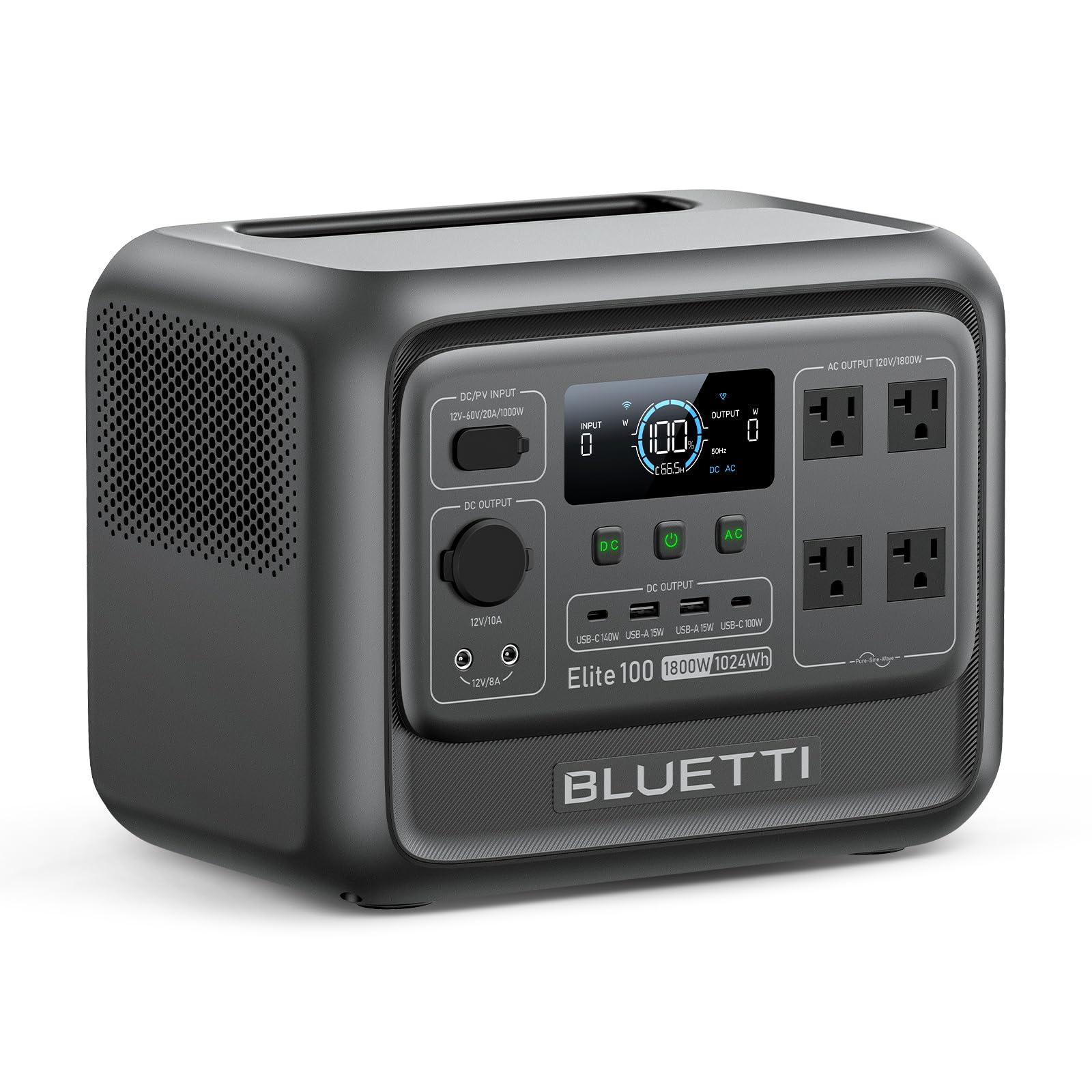
| BLUETTI Elite 100 V2★ Best Overall | Whole-home backup | 1024Wh | 1800W | 25 lbs | Amazon |
| Portable Power Station 120WBudget Champion | Ultra-light camping | 97.6Wh | 120W | 2.2 lbs | Amazon |
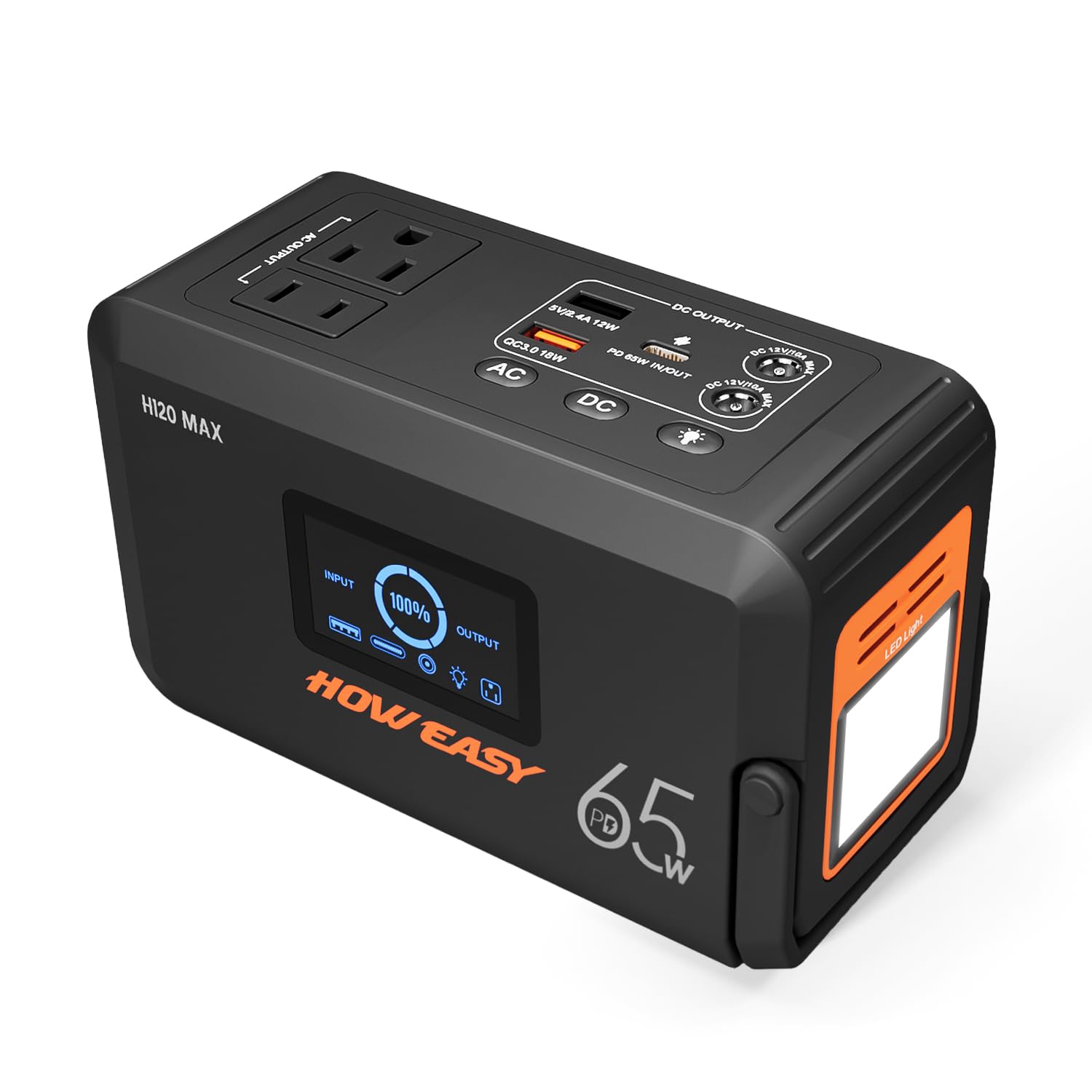
| HOWERASY 98WhTravel Pick | Airline-safe travel | 98Wh | 135W | 2.3 lbs | Amazon |
| Daran 89.6Wh | Silent overnight use | 89.6Wh | 100W | 2.54 lbs | Amazon |
| RoyPow 86.58Wh | Dash cam parking mode | 86.58Wh | — | 1.4 lbs | Amazon |
| BailiBatt 300W | CPAP & travel use | 266Wh | 300W | 6.5 lbs | Amazon |
| DaranEner NEOZ 192Wh | Weekend camping pair | 192Wh | 300W | 5.73 lbs | Amazon |
| VTOMAN FlashSpeed 300 | Fast recharge on the go | 230Wh | 300W | 7.4 lbs | Amazon |
| BLUETTI Elite 30 V2 | Mid-size UPS backup | 288Wh | 600W | 9.4 lbs | Amazon |
In‑Depth Reviews
1. BLUETTI Elite 100 V2 Portable Power Station
Our pick — 4.5★ from 600+ verified ratings; the strongest balance of quality and price.
A 25-pound home-backup anchor with a 1024Wh battery that still fits under one arm
This is the pick when a power outage or a week off-grid is a real event, not a novelty. The 1024Wh capacity feeds a 1800W rated AC output, with a 3600W surge for the moment a fridge compressor kicks in. You get 11 ports to run a microwave, lamps, and a laptop simultaneously — which is why owners call it a genuine outage backup rather than a toy.
Its 1800W output and 30dB silent mode win over buyers needing both power and peace. In silent mode it runs at just 30dB — about 50% quieter than other 1kWh stations — so you can sleep next to it while it keeps a Wi-Fi router alive. Buyers who run astrophotography rigs report 6.5–7 hours on a ~34–60W draw, and a full recharge takes about 70 minutes with 1200W TurboBoost AC charging or up to 1000W of solar input.
The trade-offs are a 25-pound weight and a premium price tag. Owners joke that “portable power station” sounds more sophisticated than “really expensive battery,” and at this size it’s overkill for a simple overnight camp. The built-in 10ms UPS switchover (an uninterruptible power supply that kicks in within 10 milliseconds) keeps PCs and routers running through flickers, and the hidden handle makes the 35% smaller body easy to grab — but this is a station you drive to a site, not one you pack on a hike.
Where It Dominates
- Huge 1024Wh capacity with 1800W rated output handles most home appliances
- Charges to full in about 70 minutes from AC or fast solar input
- Whisper-quiet 30dB silent mode for overnight indoor use
Reality Check
- At 25 pounds it’s heavy to move around regularly
- LiFePO4 cell chemistry means a premium price for the capacity
The anchor pick: Choose this if you need whole-home backup or serious off-grid power that outlasts a storm.
Consider twice if: You only need to top up phones for a night — a smaller, lighter station will save you money and effort.
2. Portable Power Station 120W, 110V Power Bank
A 2.2-pound cube that inflates five air mattresses without its battery meter even flinching
This is the station for the “just in case” crowd — toss it in a backpack for a motorcycle camp or stow it in a storm shelter. At 2.2 pounds and roughly the size of a large sandwich, the 97.6Wh battery packs 2 AC outlets and a DC 12V port into a seriously small frame. Owners love that it inflates five mattresses without the battery dropping, and a trio of units played a full 2h15m movie for a projector, speakers, and Apple TV.
The built-in lithium-ion pack pairs with a cigarette lighter adapter for car recharging and a USB-C wall adapter for home. A small screen shows remaining power and AC/DC status, and the built-in LED flashlight offers reading and SOS modes. It’s a genuinely capable companion for 2–4 day camps, charging phones about 4 times over a trip.
The catch is the 120W ceiling and slow recharge. Charge speed tops out around 2.3W even with a 100W charger, so plan to leave it plugged in overnight. It’s the right tool for light duty, not for powering coffee makers or hair dryers, which the maker itself warns against.
What Owners Rave About
- Featherlight 2.2-pound build slips into any backpack
- Multiple ports including 12V DC for car-style accessories
- Outshines pricier brands on value for casual camping
Fair Warning
- 120W power ceiling means no high-draw appliances
- Recharging is slow — expect hours from a wall outlet
Reach for this if: You want the lightest possible backup for phones, mattresses, and small electronics on weekend trips.
Look elsewhere if: You need to run a fridge or power tools — the 120W limit will frustrate you quickly.
3. HOWERASY Portable Power Station 98Wh, 135W
The FAA-friendly 98Wh brick that charges a laptop to 80% in an hour from a 65W PD port
If you fly with your power, this is the one. The 98Wh battery sits under the FAA limit for carry-on lithium batteries, so it clears airport security without drama. At 2.3 pounds and 6.6 x 4 x 3 inches, it doubles as a tidy personal generator for a weekend of camping or a sudden home outage, with a foldable handle for easy grabs.
The standout is the 65W USB-C PD port that charges a laptop to 80% in one hour — a rare speed at this size. Around it sit 2 AC outlets at 110V/135W, a QC3.0 port, a 5V/2.4A port, and 2 DC ports, letting you power 7 devices at once. Owners call it the best power station they’ve bought, with one running a 250-watt amp for at least 5 hours. Recharging runs through the same 65W PD input, solar panels at 15V–24V, a 12V car charger, or a wall adapter.
The honest gripes are minor but real. There’s no true on/off switch, so the unit slowly drains itself in storage, and the cooling fan can get loud during charging. Owners recommend topping it up every 1–2 months to keep the battery healthy. If you need a portable that flies with you and charges a real laptop fast, this is a hard pick to beat.
Why It Stands Out
- 65W PD port refills a laptop to 80% in about an hour
- 98Wh capacity is airline-safe for carry-on travel
- 7 output ports handle a full gadget bag at once
Watch Out For
- No true power switch means slow idle drain
- Fan noise during charging can be noticeable indoors
Perfect for: Frequent fliers and motorcycle campers who need laptop-speed charging in a carry-on-friendly shell.
Not ideal for: Anyone who wants to leave it stored for months — the idle drain demands periodic top-ups.
4. Daran Portable Power Station 89.6Wh LiFePO4
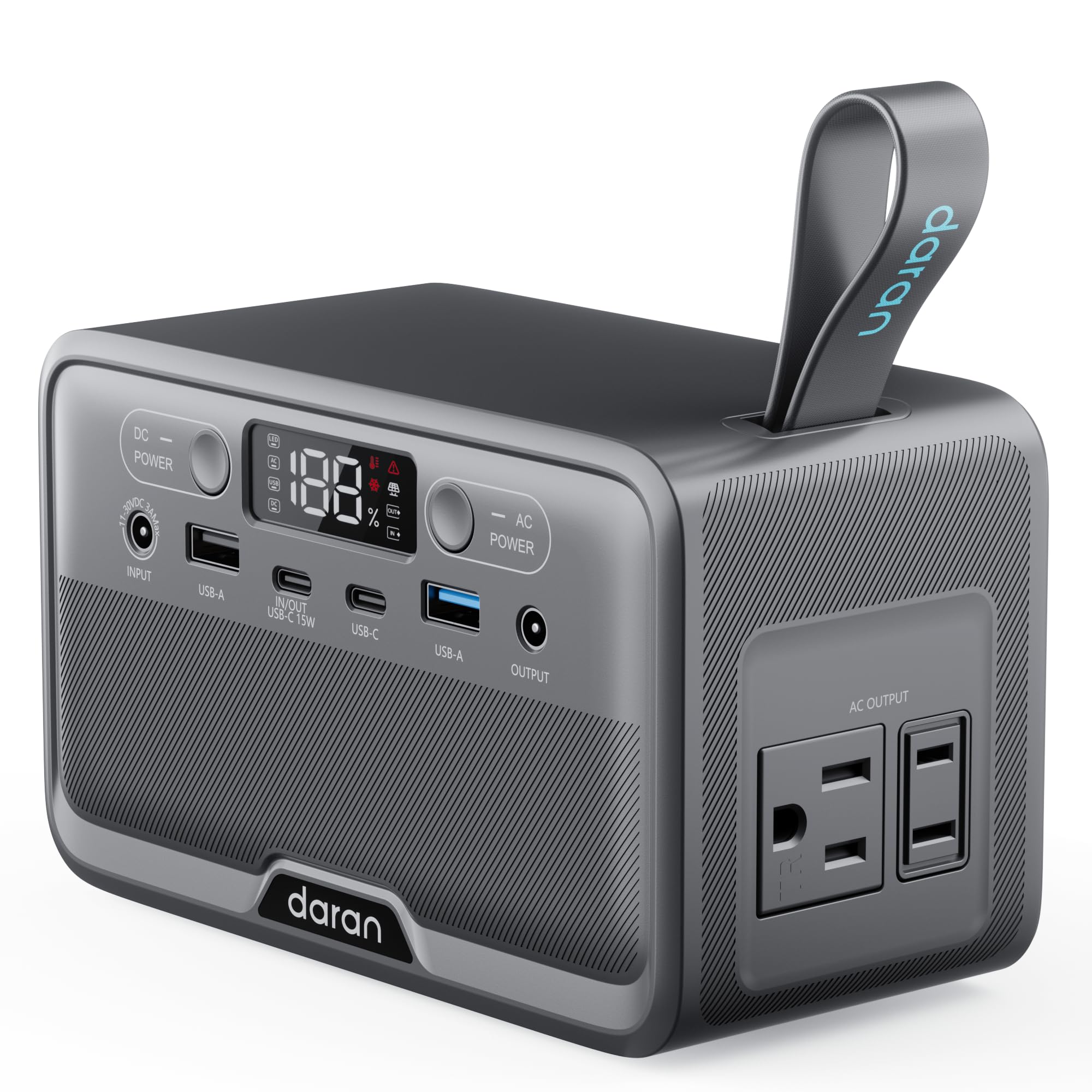
A fanless 2.54-pound station that powers a Starlink Mini for two hours — silently
Here’s a station that thinks different: it uses a LiFePO4 battery pack rated for 3500+ life cycles, which the maker says lasts 3x longer than standard lithium batteries. The chemistry choice matters if you want a unit that still holds a charge years from now. At 2.54 pounds and about the size of a smartphone, it fits in a glovebox or backpack while offering 7 output ports including 2 AC sockets at 100W.
The a neat extra is the fanless operation. Owners describe it as ultra-quiet and perfect for sleeping or working, with an accidental-touch-proof design that needs a long press to activate. One owner ran a 150W industrial misting fan from it, while another found the AC outlet maintained voltage well enough to run a Starlink Mini for about 2 hours — a real-world win for remote work.
What’s less impressive is the charging speed, which draws mixed feedback. The dual AC and USB-C input can refill 0–80% in about 1.5 hours, but some owners find the fan kicks on loudly during that AC charge, which defeats the “silent” promise slightly. The 100W ceiling means it’s strictly for phones, laptops, cameras, and small gear — not appliances.
What You Gain
- LiFePO4 chemistry rated for 3500+ charge cycles
- True fanless operation for quiet overnight use
- Small enough to tuck into a glovebox
What Holds It Back
- Charging speed and fan behavior draw mixed reviews
- 100W output won’t touch high-draw devices
Grab it for: Silent overnight device charging where fan noise would ruin the peace.
skip it if: You need fast recharges or appliance-level power — this stays in the small-device lane.
5. RoyPow 30W PD Portable Charger with 12V 10A Socket

The 1.4-pound cube that keeps a dash cam recording for 18 hours while your car sits parked
This one solves a very specific problem: keeping a dash cam alive in parking mode when the car’s ignition is off. The 86.58Wh battery feeds a regulated 13.5V 6A cigarette lighter socket that acts as a UPS, preventing the camera reboots that kill your footage. Buyers report running a 360 cam for 14–18 hours straight — exactly what you want for overnight street parking.
Beyond the 12V socket, you get 30W USB-C PD output, 18W USB-A QC 3.0, a 12W USB-A port, and a 12V DC barrel output. The regulated power supply handles DC appliances that need steady input, from telescopes and dash cams to car refrigerators and air compressors. At 1.4 pounds and about 5 inches long, it slips into a cupholder or camp bag easily.
The durability record is the honest split. While many owners run it for months or years without issue, at least one saw the battery degrade to 75% capacity after 8 months with a failed fast-charge feature. The charger also lacks a low-voltage shutoff, so it can trickle-drain if left connected. The advertised 3-hour charge time is optimistic — real-world owners see closer to 6 hours with a 45W charger.
Its Superpower
- Regulated 12V socket keeps dash cams running 14–18 hours parked
- Featherweight 1.4-pound design with a grab handle
- Multiple output types cover USB and DC gear
Keep In Mind
- No low-voltage shutoff means possible trickle drain
- Some units show battery wear before the first year
The right call if: You need dash cam parking mode or regulated 12V power for telescopes and small DC motors.
Think twice if: You want an all-purpose station — the small capacity and mixed longevity reports point elsewhere.
6. BailiBatt Portable Power Station 300W, 266Wh

A 6.5-pound pure sine wave station that gave a CPAP user two full nights on one charge
For CPAP users who camp or face storm outages, this is a seriously reassuring pick. The 110V pure sine wave AC outlet — meaning it delivers clean, grid-quality power that protects sensitive electronics — runs at 300W continuous with a 600W surge. Owners took it camping and got two nights from a full charge by turning off the humidifier and heated tube, and others use it to power two light towers at conventions.
The 266Wh capacity feeds a rare setup for this class: 2 USB-C PD ports at 24W and 18W, 2 QC3.0 USB-A ports, a 12V car port, and a DC output — 7 outputs total. That dual Type-C PD arrangement lets two laptops fast-charge simultaneously, which is uncommon at this capacity. The large LCD screen shows real-time input and output wattage, plus remaining battery, so you always know the actual draw.
Durability is a real concern here. Many owners praise its light weight and fast recharge — one found it still fully charged after 3 weeks idle — but at least one unit died after a year in storage, with the USB-C charging becoming ineffective before the unit failed. It’s rated with a 24-month warranty, so there’s a safety net, but treat long idle storage as a risk. This is best as an active companion for trips and outages, not a forever shelf queen.
Why It Delivers
- Pure sine wave AC output protects laptops and CPAP machines
- 7 outputs including two USB-C PD ports for dual laptop charging
- 6.5-pound build slides into a backpack or trunk
The Fine Print
- A rare unit failed after long idle storage
- 300W continuous power limits what you can plug in
Choose this if: You need clean power for a CPAP machine or sensitive electronics while traveling light.
Pass on it if: You want a station to sit idle for months between emergencies — that’s not its strong suit.
7. DaranEner Portable Power Station 192Wh LiFePO4
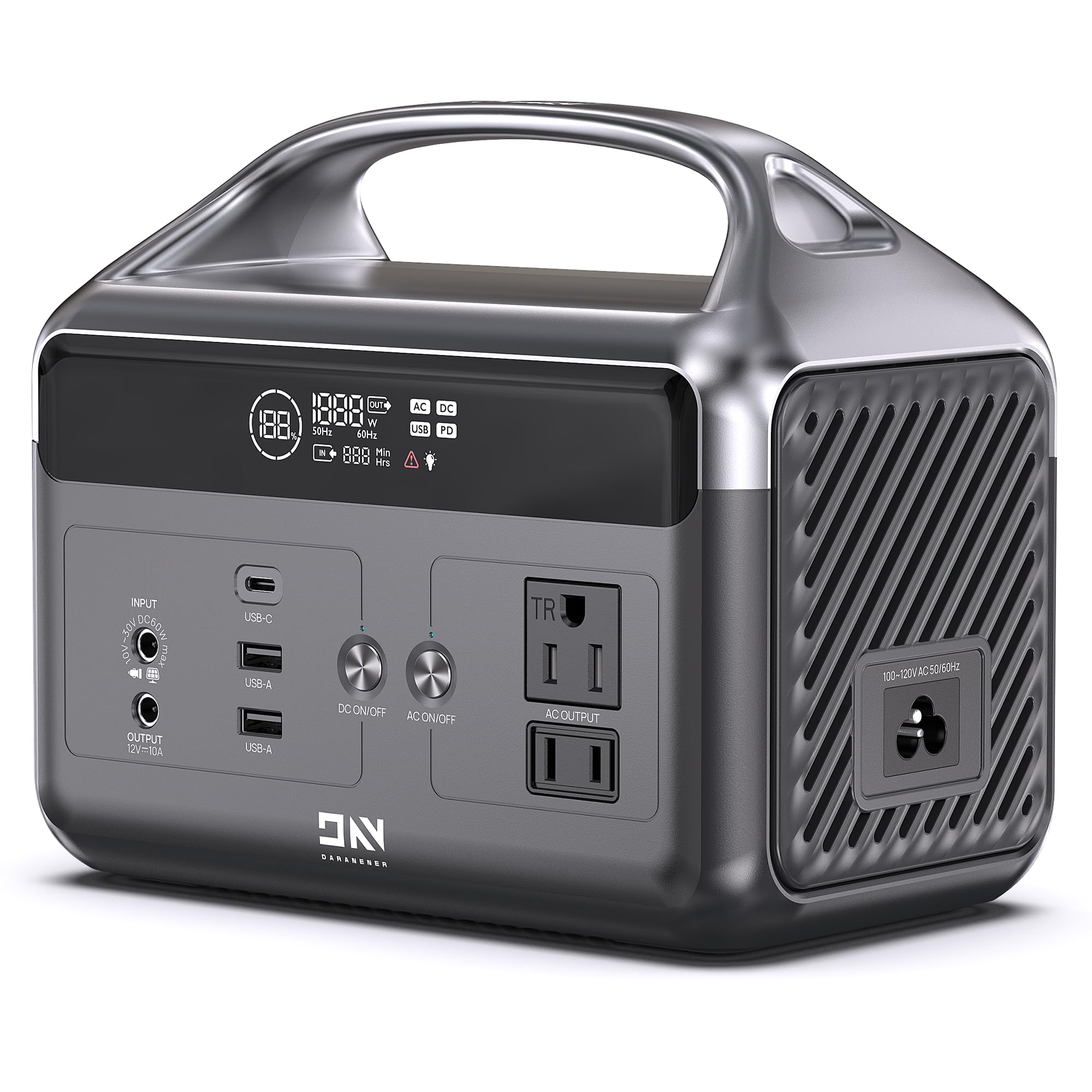
A 5.73-pound LiFePO4 unit that kept a queen air mattress inflated all weekend and still had juice
For two-person camping crews, this is the balance. The 192Wh battery (watt-hours, a measure of total energy storage) delivers 300W of pure sine wave output (clean, stable power that’s safe for sensitive electronics) with a 600W surge — enough for phones, tablets, laptops, fans, and CPAP machines — while staying smaller than a toaster at 5.73 pounds. Owners mention it filled and maintained a queen air mattress all weekend, then still charged phones and watches without a sweat.
The LiFePO4 cells are rated for 3500+ cycles, making this a station built to last a decade rather than a season. A smart Battery Management System guards against overcharging, overheating, and short circuits. Recharging runs through AC wall output at up to 100W, a car charger, or a compatible solar panel with max 60W DC input using an MPPT controller for efficiency. The built-in LED flashlight offers 4 brightness modes plus an SOS setting.
Performance reviews are strong, with owners praising how it charges everything to full within 2 hours and noting it provided emergency lighting during a blackout. The recurring caution is to give it two full charge-discharge cycles when new and to recharge every 1–2 months for maintenance. A few units ship fully drained, which risks battery damage, so check the charge level on arrival and top it up before first use.
Where It Shines
- 3500+ cycle LiFePO4 cells for multi-year service
- Pure sine wave output keeps sensitive gear safe
- 6 outputs run a full campsite gadget load
Before You Buy
- Some units ship fully drained — charge immediately
- 300W cap excludes rice cookers and hair dryers
Best for: Two campers or a household wanting a dependable, long-lived station for weekends and short outages.
Not for: High-wattage cooking or appliances that exceed 300W with startup surges.
8. VTOMAN FlashSpeed 300 Portable Power Station
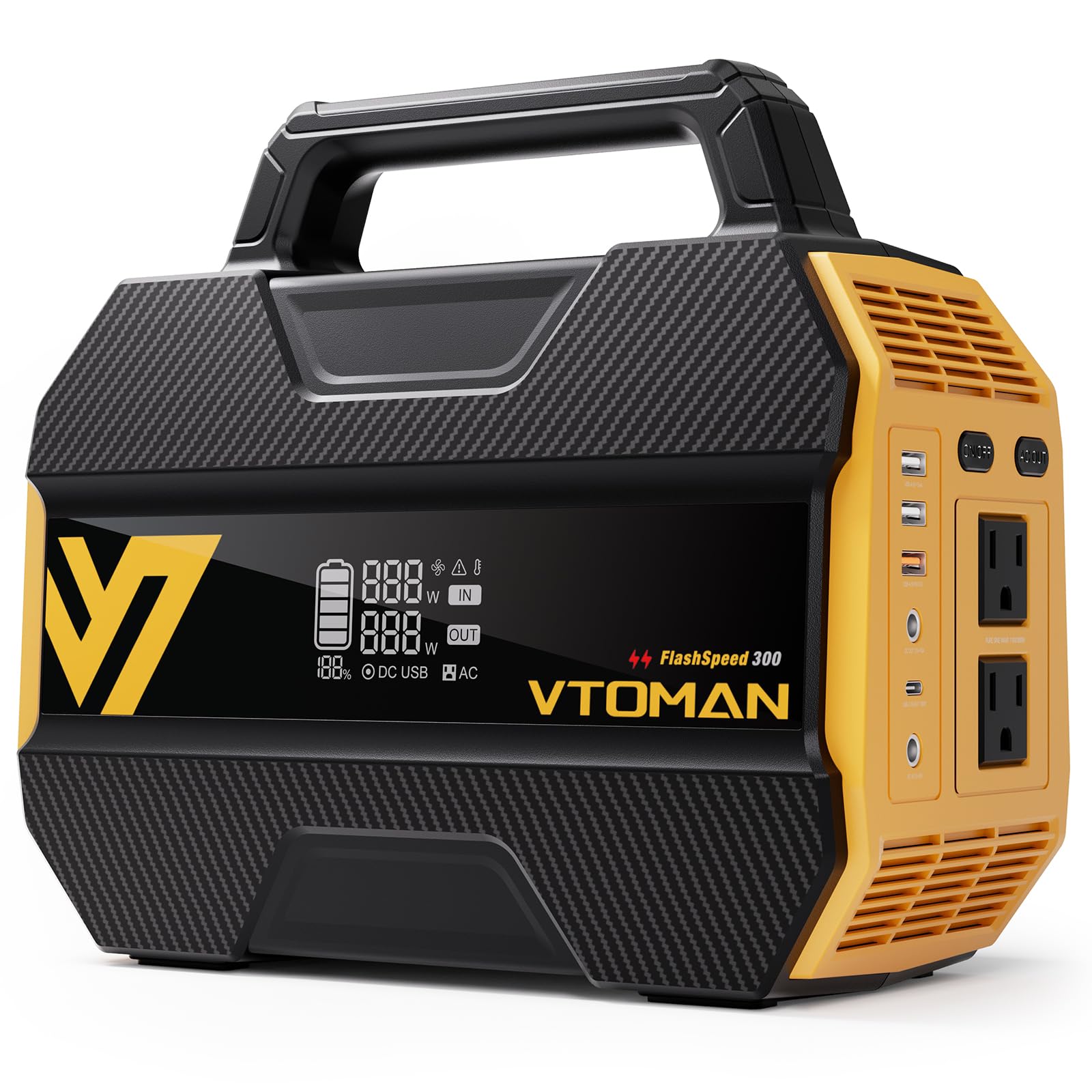
The storm-season veteran whose 100W PD input refills 80% of its 230Wh battery in about two hours
Florida hurricane survivors swear by this one. The FlashSpeed 300 packs a 300W output and 230Wh capacity into a 7.4-pound shell, with owners reporting it survived month-long outages and powered everything from kitchen appliances to air fryers. The secret weapon is the 100W USB-C PD input, which recharges the station to 80% in about 2 hours — far faster than typical USB-C topping.
The LiFePO4 core is engineered for over 3000 cycles, delivering what the maker rates as a lifespan 6 times longer than conventional batteries. Seven outlets handle the load: 2 AC outputs, the 100W USB-C, 3 USB-A ports, and a DC port. Four recharging methods — wall socket in 2.5 hours, solar panel, car outlet compatible with 12V/24V vehicles, or the fast PD input — mean you’re never stuck waiting for a single source.
Long-term customers note the unit still works wonderfully after 3 years of near-daily use, and it functions as a constant pass-through for computing equipment, auto-switching to battery during outages. The honest notes are that the AC drain keeps the battery active even unplugged, and fast charging may need a higher-amp breaker. It also failed to inflate an air mattress for one owner despite the USB output rating — a minor miss for an otherwise dependable station.
It Wins On
- Rapid 100W PD input refills 80% in about 2 hours
- 3000+ cycle LiFePO4 battery built for a decade
- Proven through month-long hurricane outages
Watch These
- AC drain keeps battery active even when unplugged
- Not every high-USB device triggers full output
Reach for it if: You want fast recharges and a proven track record through real storm seasons.
Consider otherwise if: You need the lightest possible carry — the 7.4-pound weight sits mid-pack.
9. BLUETTI Elite 30 V2 Portable Power Station
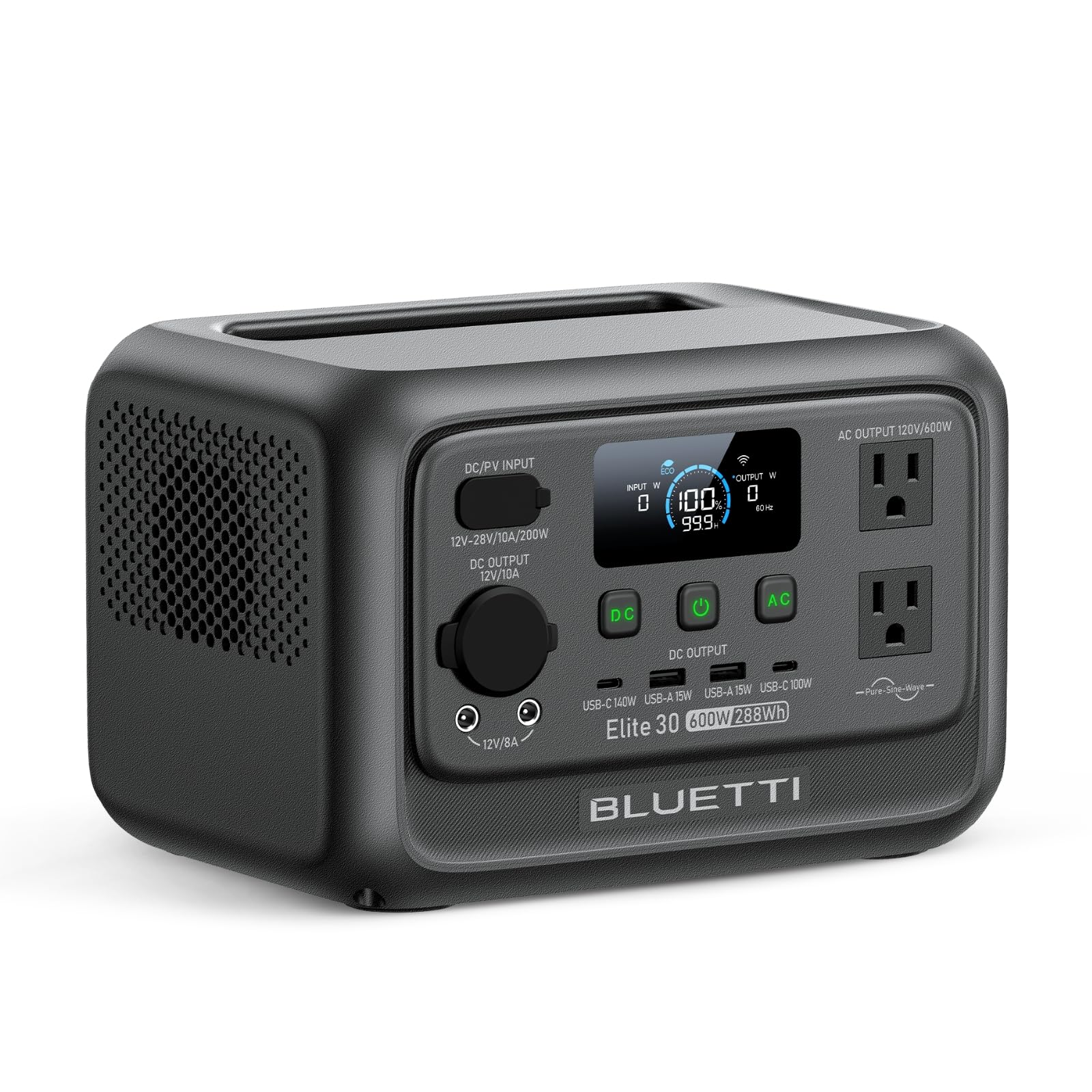
The 9.4-pound storm kit that runs a Wi-Fi router for 6 hours and doubles as a PC UPS
Think of this as a bridge between a camping battery and a serious home UPS. The 288Wh capacity feeds a 600W continuous output — roughly twice that of comparable units — with a 1500W surge available in Power Lifting Mode for brief high-draw moments. Owners run electric blankets all night, small fans for 8 hours, and Wi-Fi routers for 6 hours on a single charge, with battery to spare.
The 10ms UPS switchover (uninterruptible power supply that activates in 10 milliseconds) is the hidden gem. It protects CPAP machines, laptops, and routers when power cuts suddenly, which is why several owners replaced traditional 1500VA UPS units (volt-ampere, a measure of electrical load) with this. One ran a home server on it smoothly, praising the accurate gauge and app that shows real-time wattage. The upgraded UltraCell tech cuts power consumption by 50%, with standby draw at just 4.5W.
Recharging is fast and flexible: 8 charging modes including 380W AC wall charge that hits 0–80% in 45 minutes, or full in 70 minutes battery-safe. At 9.4 pounds it’s light enough to carry to a campsite or beach, though it’s no pocket companion. The battery life draws mixed feedback — some owners see over 8 hours of use, others find it drains faster than expected — so match your loads to the 288Wh capacity realistically.
What Makes It Special
- 600W continuous output doubles many competitors at this size
- 10ms UPS switchover protects servers and routers
- 0–80% recharge in 45 minutes from wall power
Balance This
- 288Wh capacity needs realistic expectations for big loads
- App settings required for UPS mode configuration
Pick this for: Home offices needing reliable UPS protection plus a carry-anywhere camping station in one box.
Look past it if: You only need a phone charger — the power and price overshoot simple needs.
Understanding the Specs
Watt-Hours (Wh) vs. Watts (W)
Watt-hours measure the battery’s total energy storage — the fuel tank size. Watts measure the instantaneous power delivery — the engine size. A 97.6Wh station can run a 60W device for roughly 1.6 hours, but it cannot start a 300W appliance at all. Always match the station’s wattage rating to your device’s draw first.
12V DC Output and Why It Matters
A true 12V output — either a cigarette lighter socket or a DC barrel port — is what powers car fridges, dash cams, telescopes, and CPAP machines that expect 12V input. Some stations regulate that output for steady power, which matters for sensitive gear. If your device runs off a car charger, you need a station with a 12V port, not just USB.
FAQ
What size power station do I need for a 12V car fridge?
Can a 12V power station run a CPAP machine all night?
What does the 12V DC output wattage rating actually mean?
Is a LiFePO4 battery worth the higher price?
Can I charge a 12V power station from my car?
How long does a 12V power station hold its charge in storage?
Will a 100W station run my laptop?
What is the difference between a power station and a power inverter?
Can I take a power station on an airplane?
What happens if I plug too many devices into a power station?
Final Thoughts: The Verdict
The strongest 12v power station is the BLUETTI Elite 100 V2 for its rare blend of 1024Wh capacity, 1800W output, and whisper-quiet operation. If you want a storm-season workhorse with fast 100W recharging, grab the VTOMAN FlashSpeed 300. And for a carry-anywhere companion that flies with you, the HOWERASY 98Wh is the one to reach for.
How We Picked
We do not accept paid placement. Every pick is matched to a real buyer and a real use-case; we do not hands-on test units.
Sources & Methodology
Specifications: manufacturer listings and product documentation. Review insights: verified customer reviews, as of September 2026. Pricing: not shown on this page (it changes often); check the current price via the retailer link.
As an Amazon Associate, KitchPrep earns from qualifying purchases. This does not affect which products we feature.
Related Guides
