
Specs are compiled from manufacturer listings and verified buyer reviews and can change over time — please confirm the key details on the product page before buying.
Before you buy a 12-volt lithium battery, the one thing you need to know is this: amp-hours (Ah) tell you how long it lasts, but lithium’s real win is weight and cycle life. A 12V 25Ah LiFePO4 battery weighs around 4.8 pounds, while a lead-acid with the same rating is closer to 12 pounds. That weight difference changes what you can carry in a kayak, a golf cart, or an RV.
I’m Mohammad Maruf — the founder and writer behind KitchPrep. This guide is built by comparing the manufacturers’ published specifications and the patterns across verified customer reviews, so you get each pick’s real strengths and trade-offs instead of marketing spin.
You are here because you want a dependable power source that lasts. This breakdown of the best 12 volt lithium ion battery options cuts through the jargon to show you which ones actually earn their place in your gear.
Our Picks at a Glance
How To Choose The Best 12 Volt Lithium Ion Battery
Choosing the right 12-volt lithium battery means matching the chemistry and capacity to where you will actually use it. A small 5Ah pack for a power drill is a completely different tool than a 150Ah deep-cycle battery for an RV. This section explains the few specs that actually decide the outcome.
Match Capacity (Ah) to Your Device
The amp-hour (Ah) figure is the total energy the battery holds. A 5Ah battery running a power tool gives you a full day of light work. A 100Ah deep-cycle battery can run a 7-cubic-foot fridge in an RV for hours. Think about what you are powering; the larger the Ah, the longer the runtime, but also the heavier and pricier the unit.
Choose the Right Chemistry
Lithium-ion (Li-ion) and Lithium Iron Phosphate (LiFePO4) are the two common options here. LiFePO4 batteries offer thousands of deep cycles and a very low self-discharge rate (around 3%), making them ideal for solar storage and trolling motors. Standard Li-ion packs, found in power tools, are smaller and tune for high power output rather than deep cycling.
Don’t Skip the BMS
The Battery Management System (BMS) is a built-in circuit board that prevents overcharging, over-discharging, and short circuits. Without it, a lithium battery can be damaged or become unsafe. Look for a 100A BMS on a 100Ah battery; it shows the system can handle the current your device draws.
Quick Comparison
| Model | Best For | Capacity | Weight | BMS | Amazon |
|---|---|---|---|---|---|
| Milwaukee 48-11-2450★ Best Overall | Power Tools | 5 Ah | 2.1 lbs | — | Amazon |
| HWE Energy 12V 25AhBest Value | Fish Finders & UPS | 25 Ah | 4.9 lbs | 20A | Amazon |
| ECO-WORTHY 12V 20AhCompact Pick | Portable Solar & Camping | 20 Ah | 5.7 lbs | Built-in | Amazon |
| Bosch GBA12V30 | Bosch & Dremel Tools | 3 Ah | 6.4 oz | — | Amazon |
| DEWALT DCB126-2 | DEWALT 12V Tools | 5 Ah | 1.9 lbs | — | Amazon |
| DUMFUME 12V 150Ah | RV & Off-Grid | 150 Ah | 41.03 lbs | 100A | Amazon |
| WattCycle 12V 100Ah | Trolling Motors & Solar | 100 Ah | 23.2 lbs | 100A | Amazon |
| Redodo 12V 100Ah | RVs & Boats | 100 Ah | 22 lbs | 100A | Amazon |
| power queen 12V 100Ah | RVs & Marine | 100 Ah | 24 lbs | 100A | Amazon |
In‑Depth Reviews
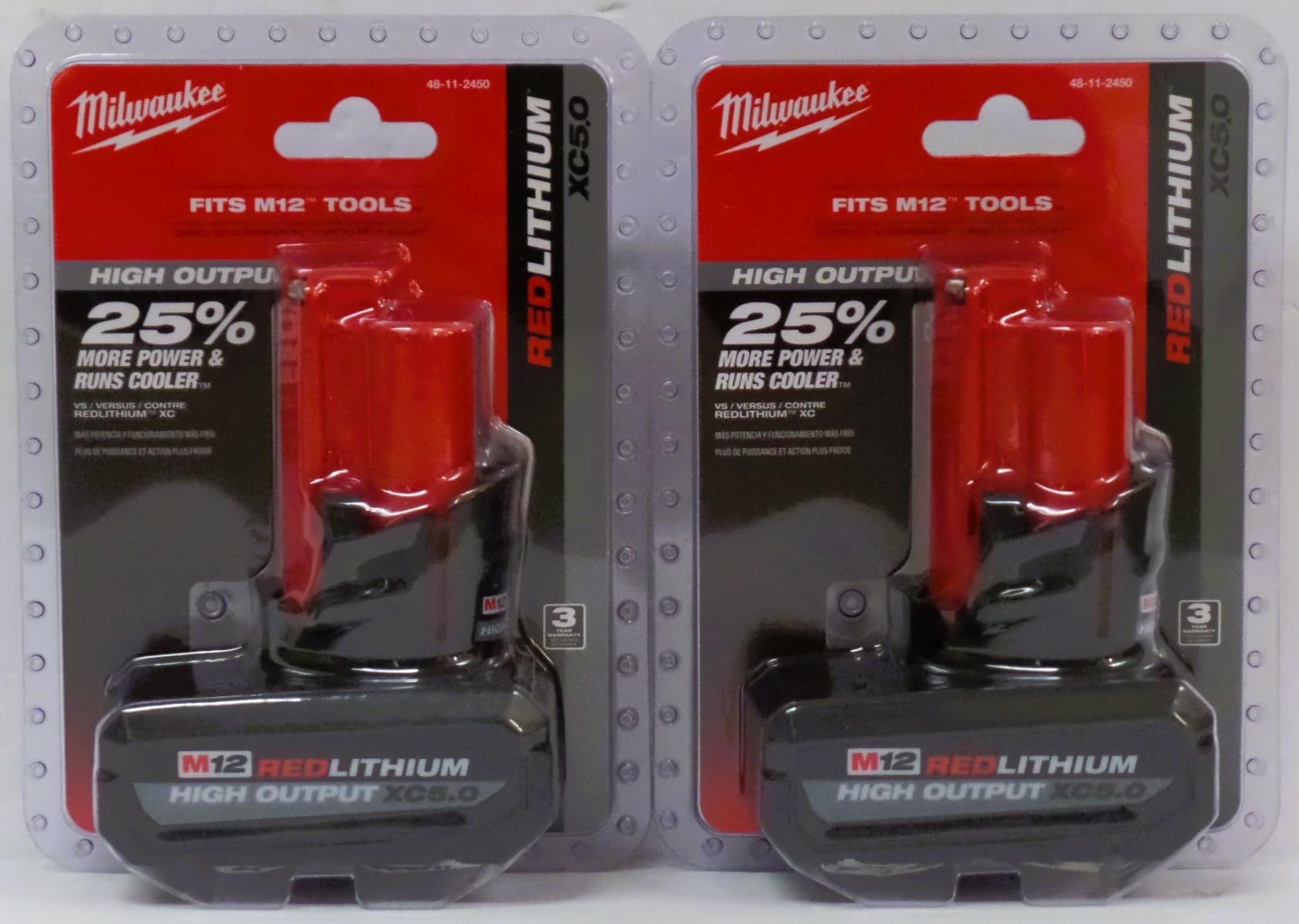
1. Milwaukee 48-11-2450 12V Lithium-Ion High Output 5Ah Battery 2 Pack
Our pick — over 4.5★ from 650+ verified ratings; the strongest balance of quality and price.
The shop-floor workhorse that outlasts the stock pack without adding bulk to your grip.
The first thing to know is that this is a tool battery, not a deep-cycle unit. Milwaukee designed it for their M12 line, and it works with more than 125 cordless power tools. The 5 amp-hours of capacity mean a daily impact driver user can go six or seven days a week without seeing the charge bars drop, as buyers report.
Owners mention that these run “noticeably more power than standard M12 batteries” while running cooler and keeping full power in all weather. The housing resists oils, greases, and solvents, which is a real advantage on a messy job site. Each battery weighs about 2.1 pounds, and the pack ships with two of them.
The honest trade-off is that the 5Ah High Output cells are physically bigger than the standard 2.0Ah packs. If you are used to a slim M12 grip, this one feels larger in hand. It is built for users who prioritize runtime over compactness.
Why it wins for tool users
- Fade-free power across a huge tool ecosystem
- Runs cool even under high-demand loads
- Resistant housing shrugs off oils and solvents
What to know before you buy
- Larger footprint than slim 2.0Ah packs
- Requires M12 charger, not included with all kits
The pick for pros: This is the crowd favorite for anyone living inside the M12 ecosystem, backed by 4.8 stars from 650+ owners.
Consider the fit: If you only own one M12 tool and rarely stress it, the extra runtime may be more than you need.
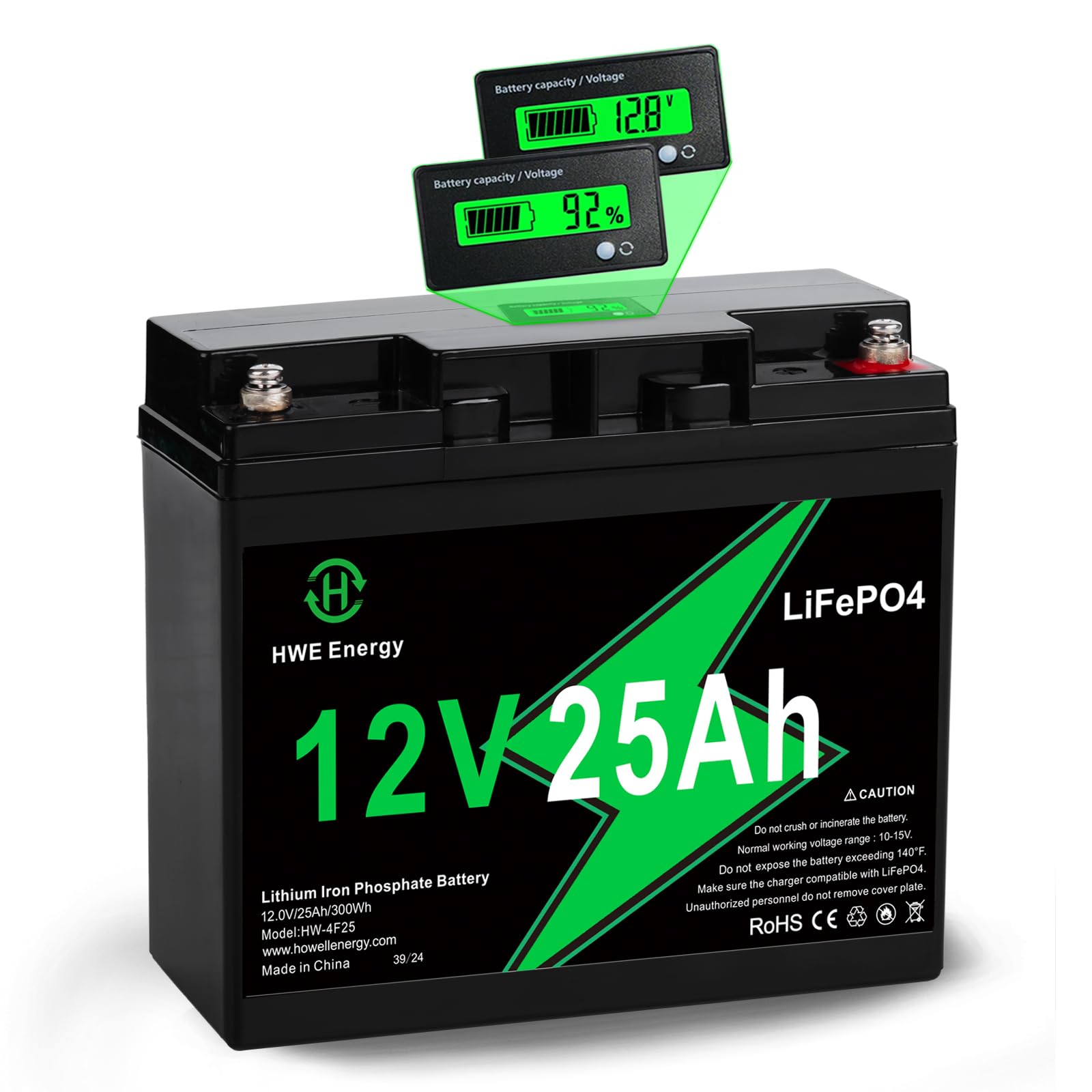
2. HWE Energy 12V 25Ah LiFePO4 Rechargeable Battery
A deep-cycle featherweight with a built-in screen so you always know your charge level.
This is where you go when you leave the tool bench and head outdoors. The HWE Energy pack delivers 25 amp-hours of stored power at just 4.9 pounds, which is less than half the weight of a comparable 12-volt lead-acid battery. For a kayak fish finder or a deer feeder, that is the difference between a comfortable paddle and a heavy drag.
The stand-out feature is the dedicated LCD meter. One button press shows real-time voltage and state of charge, so you are not guessing whether you have enough power for an eighth hour of fishing. Customers note running it in parallel with another 20Ah battery flawlessly on three 8-hour trips with power to spare.
A smart 20A BMS guards against overcharge, over-discharge, and short circuits. It is a direct drop-in replacement for SLA batteries in sizes like 12200 and UB12200 across security systems, solar setups, and UPS backups. The catch? This is not a starter battery; it is built for steady discharge, not a big cranking surge.
Built for the outdoors: It powers Garmin chartplotters, ride-on toys, and gate openers with the same quiet reliability buyers praise.
Reach for this if: You want a lightweight drop-in SLA replacement with a useful charge meter for under worth of value.
Look elsewhere if: You need to crank an engine; this is a deep-cycle power source, not a starter.
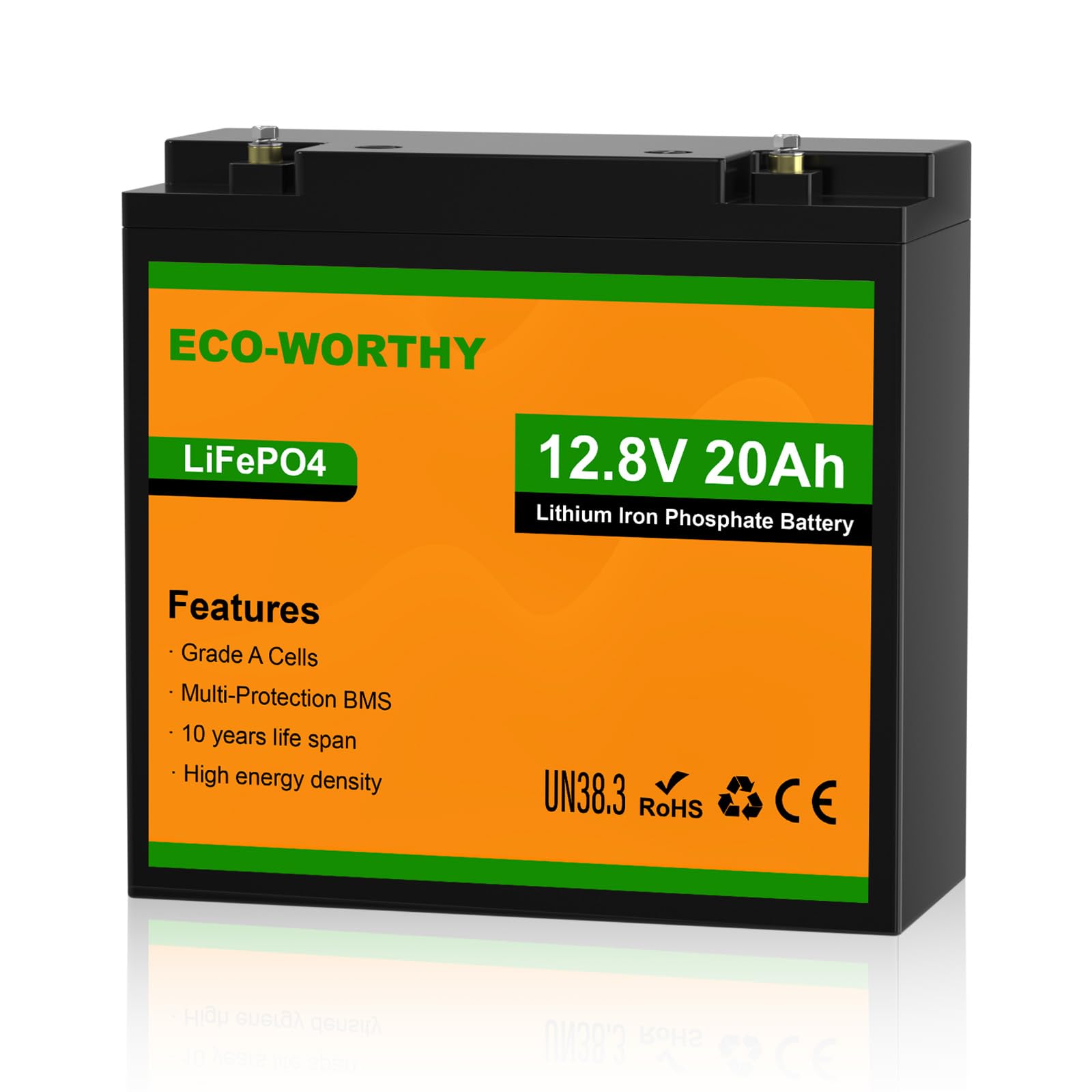
3. ECO-WORTHY 12V 20Ah LiFePO4 Lithium Battery
The solar-friendly block that keeps a fountain pump or ham radio singing for years.
ECO-WORTHY targets the portable crowd with a 20Ah pack that weighs only 5.7 pounds. It is a favorite among ham radio operators who need clean, stable 12-volt power in the field. The LiFePO4 chemistry allows recharging more than 3000 times in deep cycles, which the maker claims is more than 8 times the cycle life of lead-acid.
The built-in BMS handles overcharge, over-discharge, and short circuits while keeping the cells balanced. It supports up to 4 batteries in series or parallel for larger builds.
Weight is the defining spec here. At 5.7 pounds versus a lead-acid unit of similar rating, it is easy to carry into the woods or stash in a kayak hatch. It is best for steady loads, not for the sudden surge of an engine starter motor.
Field-tested reliability: Owners note hours of power with no voltage drop, making it a solid choice for LED lights and phone charging while camping.
Who it fits: Campers and radio operators who want a tough, light block that recharges from solar panels.
The honest limit: A few reviewers point out failures after extended use in heavy-drain devices like tennis ball machines.
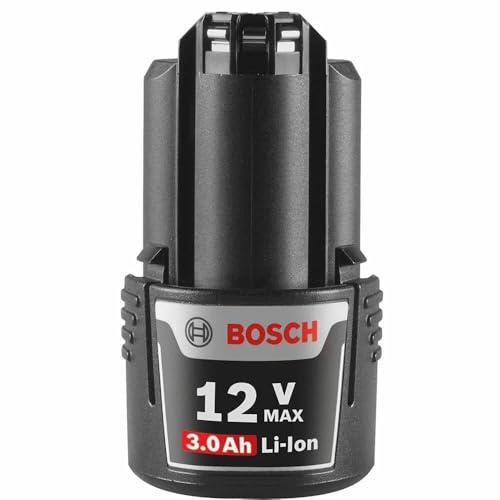
4. Bosch 12V Max Lithium-Ion 3.0 Ah Battery GBA12V30
The featherweight 3.0Ah that gives Dremel users and heated-coat wearers an all-day run.
You get the lightest battery in this guide at just 0.4 pounds, so your tool feels balanced and your jacket stays comfortable. Despite the size, it delivers up to 50% more runtime than the previous-generation 2.0Ah pack at the same weight. That makes it a genuine upgrade for anyone running Bosch 12V tools, Dremel 8250, or heated jackets.
The defining story here is runtime in real-world gear. Shoppers say the 2Ah pack that ships with a heated coat lasts only a couple hours on high, while this 3Ah unit lasts all day. It also handles cold weather operation down to -4°F, which is a big deal for outdoor winter work.
It uses standard Bosch 12V Max charging and works across all Bosch 12V Max tools and chargers. The main caveat is cost—it sits at a premium per amp-hour compared to bigger packs. But that premium buys the lightest, most portable option on this list.
Compact and mighty: It fits Bosch Pocket Drivers and Dremel 8260 perfectly, with owners noting months of trouble-free use.
Best for: Bosch users who value featherweight portability and need one battery to last through a full day.
Think twice if: You need high capacity for heavy drilling; a 3Ah pack is for light to medium duty.
5. DEWALT 12V MAX 5Ah Battery, Lithium-Ion, 2-Pack (DCB126-2)
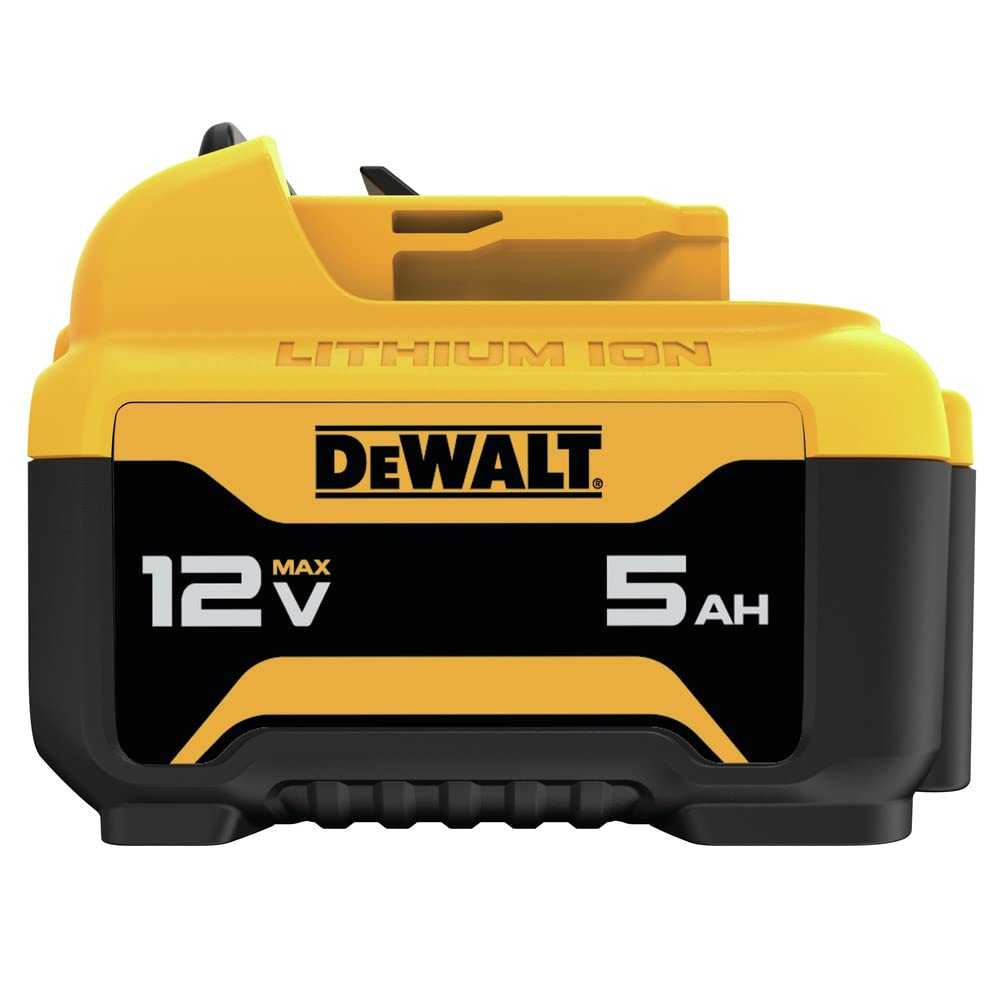
The two-pack answer to constantly swapping batteries on your 12V kit.
If you own DEWALT 12V tools and hate stopping to recharge, this 2-pack of 5Ah batteries is the fix. Buyers report the batteries last up to a week of regular use in a 12V kit, which is a huge step up from smaller packs. You get two batteries in the box, so one can charge while the other works.
The 5 amp-hours of capacity is the standout spec here, matching the Milwaukee at the same rating but in the DEWALT ecosystem. Owners note the power bars on the battery give clear feedback on remaining charge, so you know when to plan a swap. The whole pack weighs just 1.9 pounds.
The comparison to other picks is direct: this is the same 5Ah capacity as the Milwaukee 48-11-2450, but built for DEWALT’s 12V line instead. Buyers are split on the weight, with some noting it feels heavier than the slim 2Ah packs. But the added runtime justifies the bulk for most.
Built for longevity: Owners say you “have to have 5ah batteries if you don’t want to be charging batteries all the time.”
Choose this if: You are invested in DEWALT 12V tools and want the longest runtime between charges.
skip it if: You need a deep-cycle battery for a trolling motor; this is a power-tool pack.
6. DUMFUME 12V 150Ah Max LiFePO4 Battery
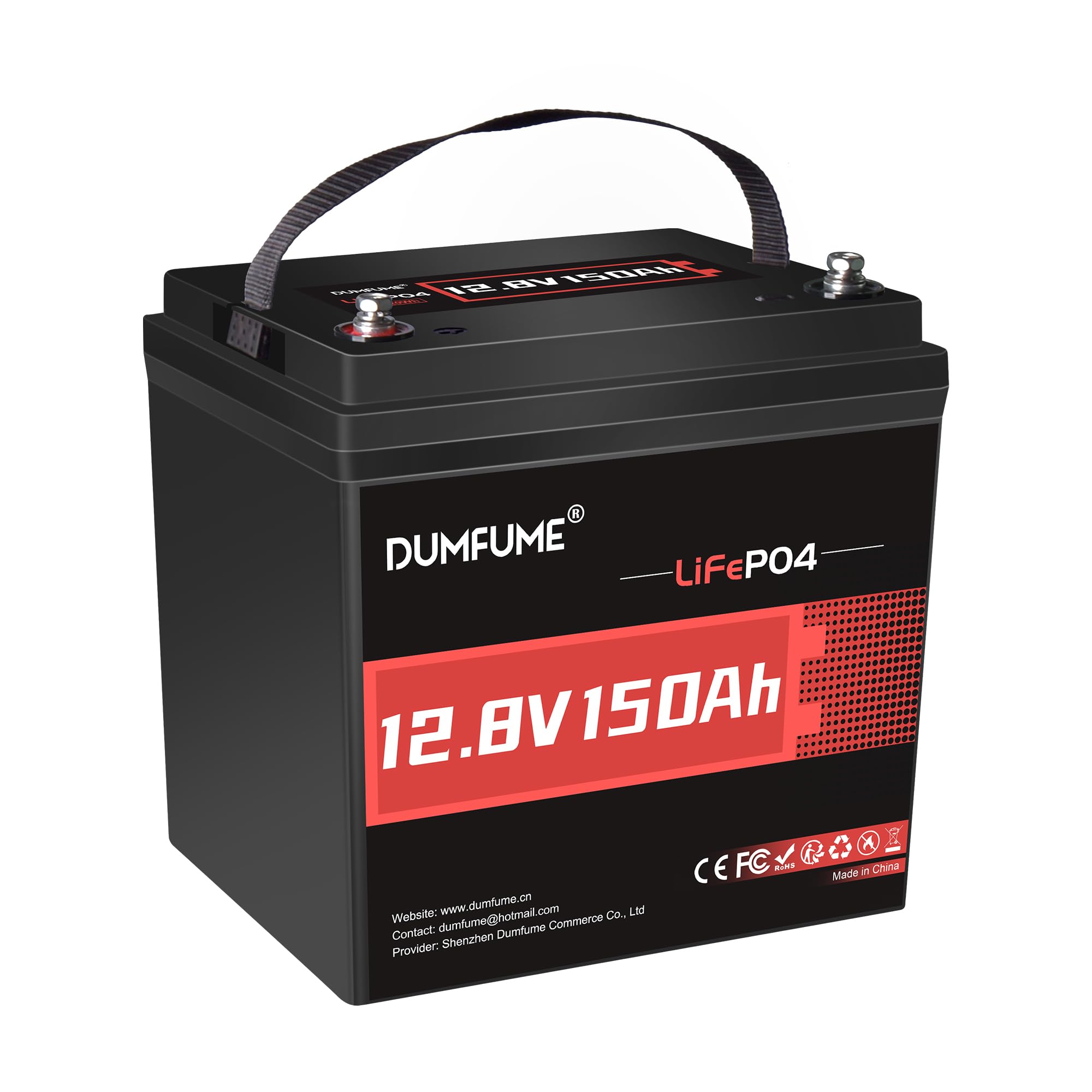
The 1920Wh powerhouse that turns a camper van into a mobile energy station.
This is the biggest capacity battery in the guide, with 150 amp-hours delivering 1920Wh of energy. It weighs 41.03 pounds, which sounds heavy until you compare it to the lead-acid equivalent that would take up far more space. The IP65 waterproof rating means it can handle splashes and dust in an RV compartment.
The 100A BMS is the safety backbone, protecting against overcharge, over-discharge, and short circuits. Buyers have run two of these in a Class C RV to power a 7-cubic-foot fridge easily. It supports series and parallel connections up to 4S4P, so you can scale to a massive 48V system.
The caveat with this big pack is the charging quirks. Some buyers received units with low voltage that would not charge until jump-started in parallel, and durability reports are mixed on long-term reliability. It requires temperatures of 5°C or higher for charging, so it is not ideal for freezing winter storage.
What the big build gets you
- 1920Wh of stored energy for RVs and solar
- IP65 protection against dust and water
- Over 4000 cycles to 80% capacity
Where it gets tricky
- Some units arrive needing a parallel jump to charge
- Not designed for low-temperature charging
- Heavy at 41.03 lbs
The verdict: A high-capacity premium choice for serious RV and off-grid builds where weight and energy density matter.
The catch: Verify the charging behavior early and keep it in a warm compartment.
7. WattCycle 12V 100Ah LiFePO4 Battery, BCI Group 24
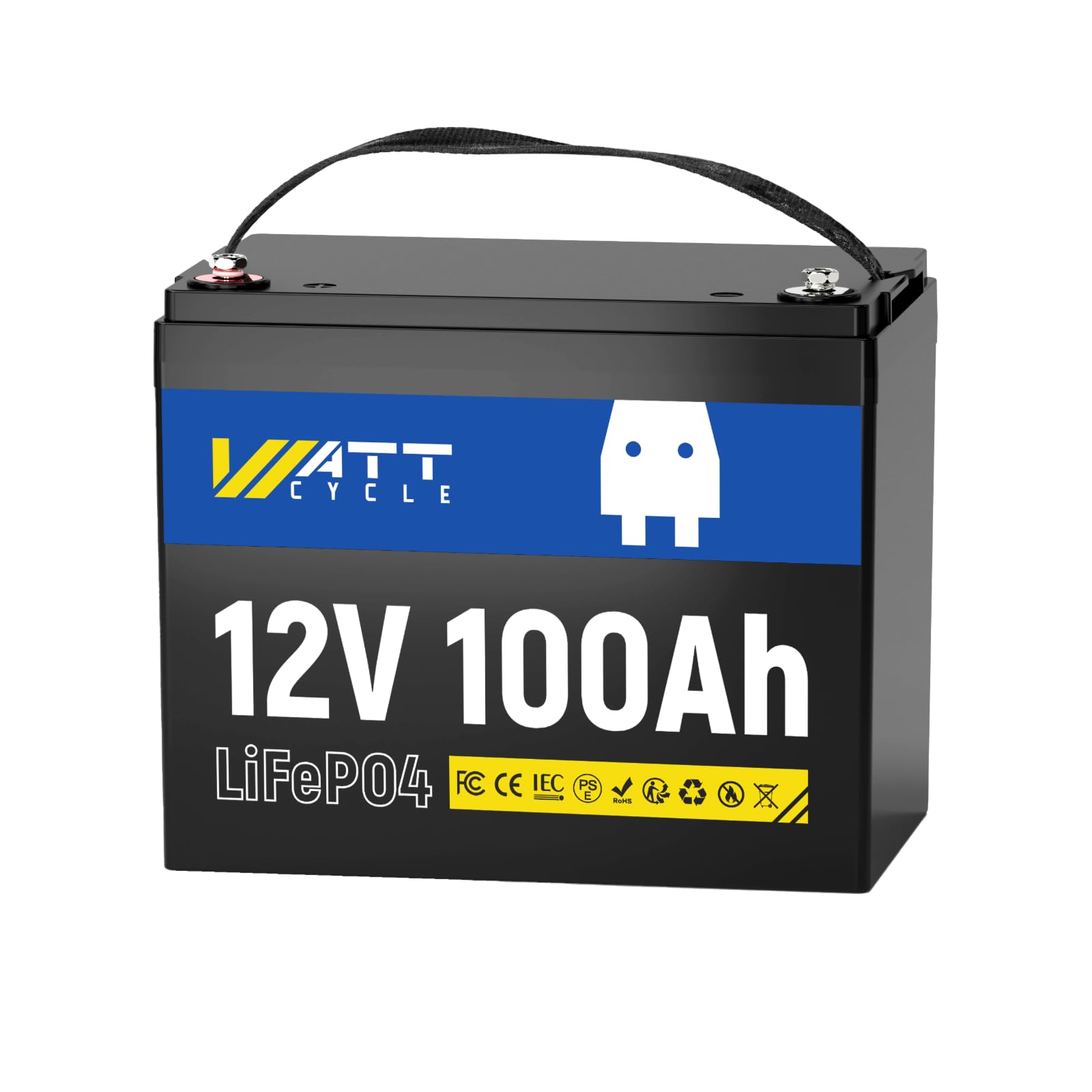
The group-size-perfect block that keeps a trolling motor humming all day long.
You can drop this straight into your existing Group 24 battery box because it matches the BCI Group 24 size at 10.2 x 6.6 x 8.2 inches, weighing just 23.2 lbs. That size fits many boaters and RV owners who already have a Group 24 box. The 100Ah capacity at 12.8V standard voltage is the balance for trolling motors and solar.
Owners mention the battery powers two telescopes for a week without recharging, and it handles trolling motors with voltage that never drops below 25V after a full day in a 24V series setup. The 100A BMS auto-disconnects if discharge current exceeds 300±50A, which is strong protection for a motor surge.
It can handle temperatures from -4°F to 158°F, so it adapts to most climates. The low-temperature charging protection is a feature, not a bug—it stops charging in freezing conditions to protect the cells. It also supports up to 4S or 4P connections for larger builds.
Off-grid solid: Buyers praise the real capacity confirmation, with units charging to ~47Ah and holding voltage during heavy use.
Reach for this if: You want a reliable Group 24 replacement for trolling, solar, or small RV systems at a value price.
Look elsewhere if: You need a wider Group 31 footprint or Bluetooth monitoring, which this unit lacks.
8. Redodo 12V 100Ah LiFePO4 Battery, Group 31
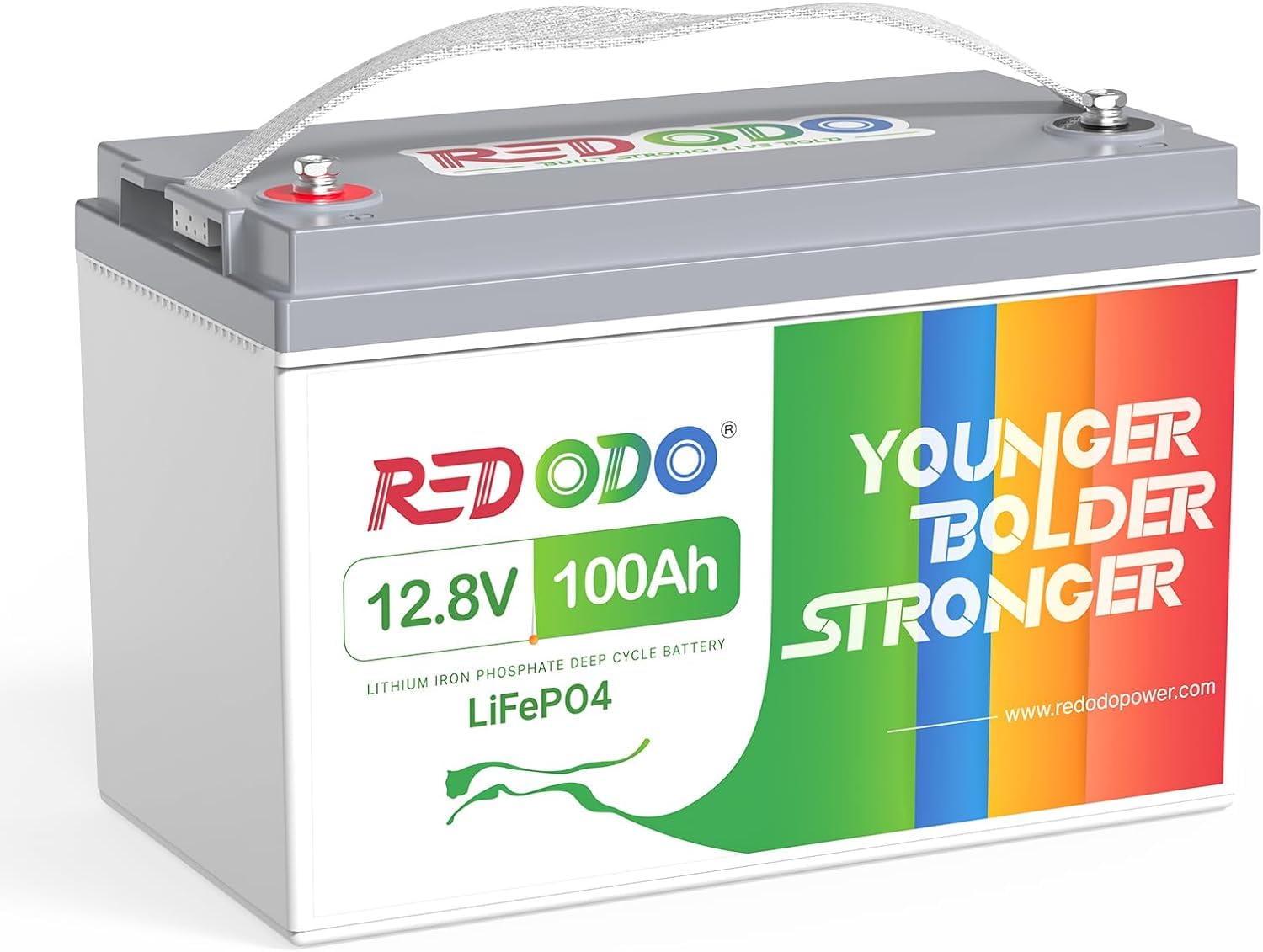
The full-time van-life battery that measures over its rated capacity straight from the start.
This Group 31 battery is the choice for full-timers. Customers note it measures more than 100% of its rated capacity, with one unit outputting 105Ah—5Ah over spec. At just 22 lbs, it is 60% lighter than a comparable lead-acid unit, which makes a real difference when you are lifting it into a camper van battery bay.
The 100A BMS protects against overcharge, over-discharge, and short circuits. Buyers running a full-time van setup with a fridge, TV, and laptop use 40-60Ah overnight and recharge in about 5 hours of full sun on a 200W solar array. A pool company replaced lead-acid units that failed every few months and now runs all day with no mid-day swaps.
The comparison to the WattCycle is direct: both offer 100Ah, but the Redodo fits the slightly larger Group 31 box and weighs a touch less at 22 lbs. The warranty support gets regular praise, with buyers noting dead units replaced quickly even after three years of ownership.
Why van-lifers love it
- Measured output above 100Ah in testing
- 60% lighter than lead-acid at 22 lbs
- Charges from solar, alternator, or generator
The honest trade-offs
- Requires a lithium-compatible charger for best results
- Heavier than the Group 24 options
Who it beats: This outperforms pricier smart batteries on raw capacity and has the owner track record to prove it.
Who it doesn’t fit: Golf carts or starter applications, which this is explicitly not designed for.
9. power queen 12V 100Ah LiFePO4 Battery, Group 31
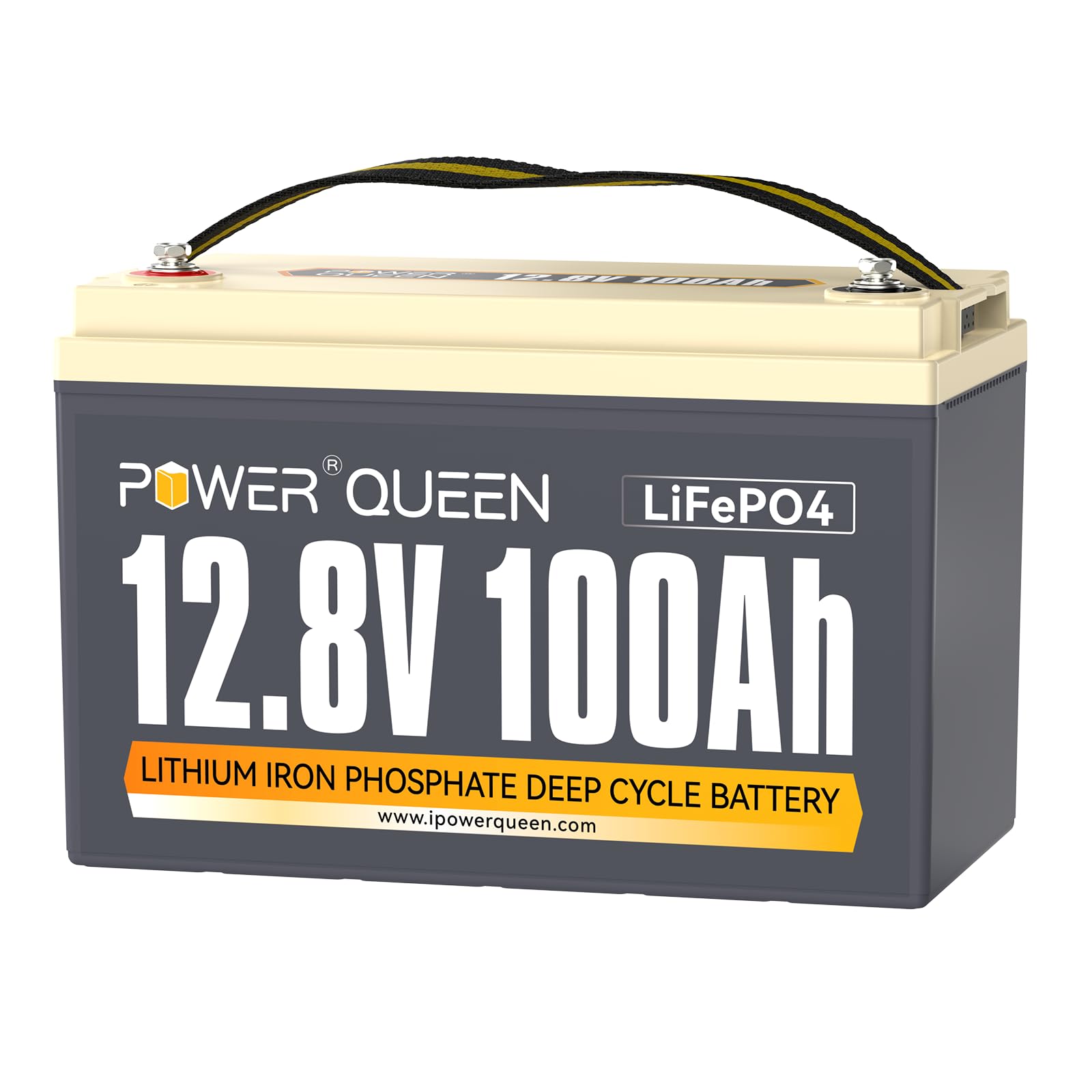
The 24-pound block that powers a trolling motor 12 miles and still has room to spare.
This Group 31 battery packs 100Ah and 1280Wh of energy into a 24-pound package, which the maker claims is about one-third the weight of lead-acid. Reviewers point out running a trolling motor for roughly 12 miles across three trips with capacity left over, and one owner with arthritis specifically praised how easy it is to lift.
The 100A BMS is standard, covering overcharge, over-discharge, and short circuits. The LiFePO4 chemistry offers a very low 3% self-discharge rate, so it holds a charge for months in storage. It supports up to 4S4P connections for a maximum 51.2V 400Ah system at 20.48kWh.
Buyers also note the real-world endurance, with one running a 300-watt guitar and 85-watt PA system for 6 hours straight. The included components list a Mini Bluetooth battery, though most owners rely on the solid cell performance rather than app connectivity. The recurring note is on the 6mm bolts, which some find fragile.
Endurance tested: From trolling motors to solar inverters, shoppers say four-plus days of kid-friendly use without recharging.
Grab this if: You need a light, high-capacity Group 31 for trolling, RVs, or home backup where weight is a daily concern.
Handle with care: The terminal bolts feel delicate, so use an adapter kit for heavy wiring.
Understanding the Specs
Amp-Hours (Ah) and Runtime
This is the single most important spec. Amp-hours tell you how much energy the battery holds; a higher number means longer runtime. A 5Ah tool battery powers a drill for a day of light work, while a 100Ah deep-cycle battery runs a fridge for hours. Match the Ah to the draw of your device, and you will not be left stranded.
BMS and Safety
The Battery Management System (BMS) is your safety net. It prevents the battery from overcharging, over-discharging, and short-circuiting. A 100A BMS on a 100Ah battery means the system can safely handle a high current draw, like a trolling motor surge. Never skip a battery without BMS protection.
FAQ
What is the difference between a 12V tool battery and a 12V deep-cycle battery?
Can I replace my lead-acid battery with a LiFePO4 battery directly?
How long does a 12V 100Ah lithium battery last?
Why is a 100Ah lithium battery so much lighter than a lead-acid one?
Can I connect multiple 12V lithium batteries in series or parallel?
Is a 12V lithium battery safe to use with a fish finder?
What does the BMS do if the battery gets too cold?
Will a 5Ah tool battery work in a heated jacket?
Final Thoughts: The Verdict
For most buyers, the 12 volt lithium ion battery winner is the Milwaukee 48-11-2450 because it is the single most trusted pack in the power-tool world, with a crowd rating of 4.8 stars from hundreds of owners. If you want a lightweight deep-cycle option for a fish finder or UPS, grab the HWE Energy 25Ah. And for the serious RV or off-grid builder, the Redodo 100Ah is the one to reach for.
How We Picked
We do not accept paid placement. Every pick is matched to a real buyer and a real use-case; we do not hands-on test units.
Sources & Methodology
Specifications: manufacturer listings and product documentation. Review insights: verified customer reviews, as of August 2026. Pricing: not shown on this page (it changes often); check the current price via the retailer link.
As an Amazon Associate, KitchPrep earns from qualifying purchases. This does not affect which products we feature.
Related Guides
